When most people picture dinosaurs, they imagine the mighty Tyrannosaurus rex with its massive head and razor-sharp teeth. Yet the prehistoric world was filled with creatures so bizarre that they make look absolutely ordinary. These ancient animals evolved into forms that seem almost impossible, defying everything you thought you knew about dinosaurs.
From herbivorous giants wielding claws longer than baseball bats to duck-faced raptors that swam like modern waterfowl, evolution crafted some truly mind-bending creatures. Some had spines jutting from their necks like punk rock mohawks, while others possessed vacuum cleaner-like mouths packed with hundreds of teeth.
Prepare yourself for a journey through time to meet seven of the most extraordinary dinosaurs that ever lived. You’ll discover creatures so strange that scientists initially thought some were fake, and others so unique they’re still debating what they actually ate. Let’s dive into the wonderfully weird world of prehistoric oddities that make look downright conventional.
Therizinosaurus: The Herbivore with Claws Like Scythes
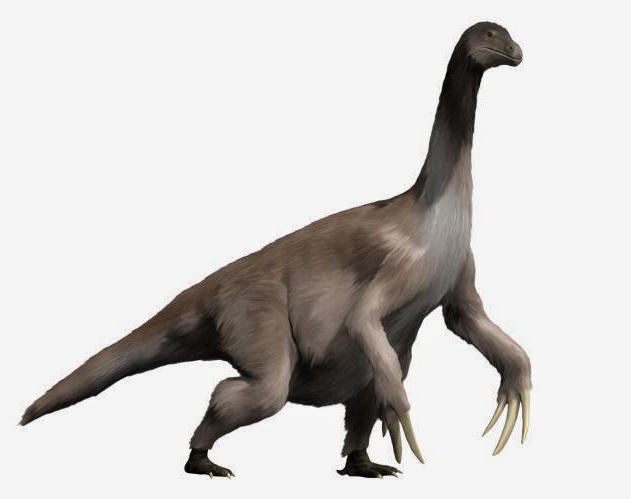
Picture a dinosaur standing as tall as a two-story building, weighing as much as an elephant, but sporting claws that could reach over three feet in length. Therizinosaurus possessed the most distinctive feature of long, scythe-like claws, which could reach lengths of up to 3.3 feet, with each of the three digits of its hand bearing these claws, which reached nearly a meter in length. Yet despite looking like nature’s ultimate killing machine, this massive beast was actually a gentle plant-eater.
The elongated hand claws of Therizinosaurus were more useful when pulling vegetation within reach rather than being used for active attack or defense because of their fragility, and it is more likely that Therizinosaurus made use of its hands in a hook-and-pull fashion to pull or grasp vegetation within reach. Imagine a dinosaur with a long neck, a rounded belly, beak and covered in feathers, showing us that dinosaurs were more diverse than we once thought. The paradox of this herbivorous theropod perfectly illustrates how evolution can take the most unexpected turns.
Carnotaurus: The Meat-Eating Bull with Useless Arms
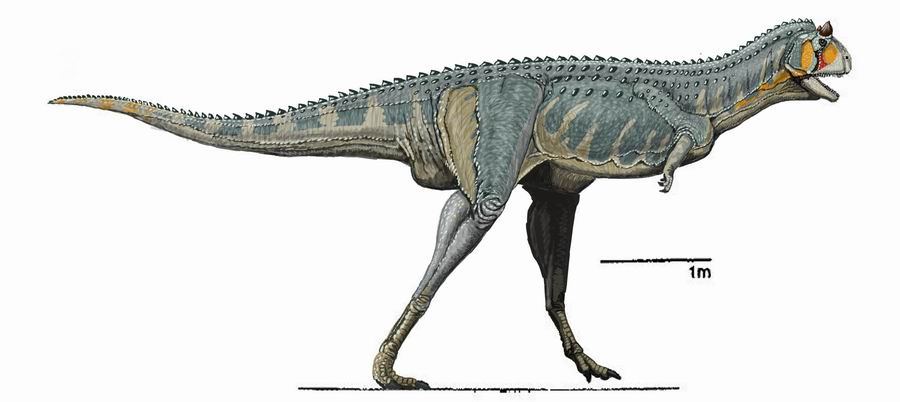
Carnotaurus had bull-like horns, a deep skull, and incredibly tiny arms – even smaller than those of T. rex, with its name meaning “meat-eating bull,” and it may have been one of the fastest large predators of its time. This South American predator looked like someone had grafted devil horns onto a and then shrunk its arms even further into complete uselessness.
Imagine the short-armed T. rex dinosaurs evolved with extra and thick horns on its head to get this weird dinosaur called the Carnotaurus, which despite its looks, was a meat-eating dinosaur that hunted large sauropods and could run as fast as 56 kilometers per hour. Despite its fearsome appearance, the functionality of its vestigial arms remains a puzzle, as they seem too diminutive to have been of much use. Scientists believe those horns weren’t just for show – they might have been used for ramming prey or intimidating rivals during territorial disputes.
Halszkaraptor: The Duck-Faced Raptor That Went Swimming
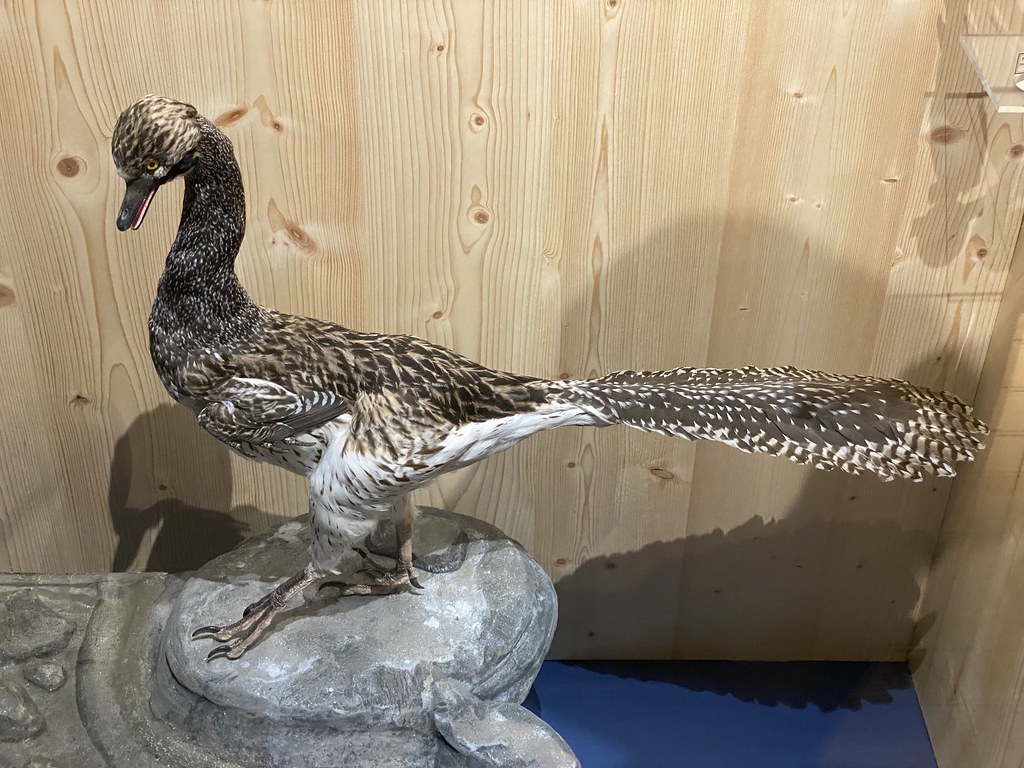
Forget everything you think you know about raptors. Halszkaraptor was about the size of a mallard duck, but this wasn’t your typical feathered predator. It had many sharp, backward-curving teeth in its mouth, a long neck and sensory neurons in its snout that may have allowed it to detect vibrations in water, leading scientists to believe that it hunted aquatic prey.
When paleontologist Andrea Cau saw the fossil the first time, he was shocked, saying “The fossil was so complete, beautifully preserved, and at the same time so enigmatic and bizarre, with a completely unexpected mix of strange features”. This duck-sized, long-necked, heavy-boned “raptor” dinosaur may have lived in and around the water and hunted fish by diving and quickly extending its neck. Imagine a creature that combined the predatory instincts of a Velociraptor with the swimming abilities of a cormorant – that’s Halszkaraptor.
Deinocheirus: The Mysterious Giant with Terrible Hands
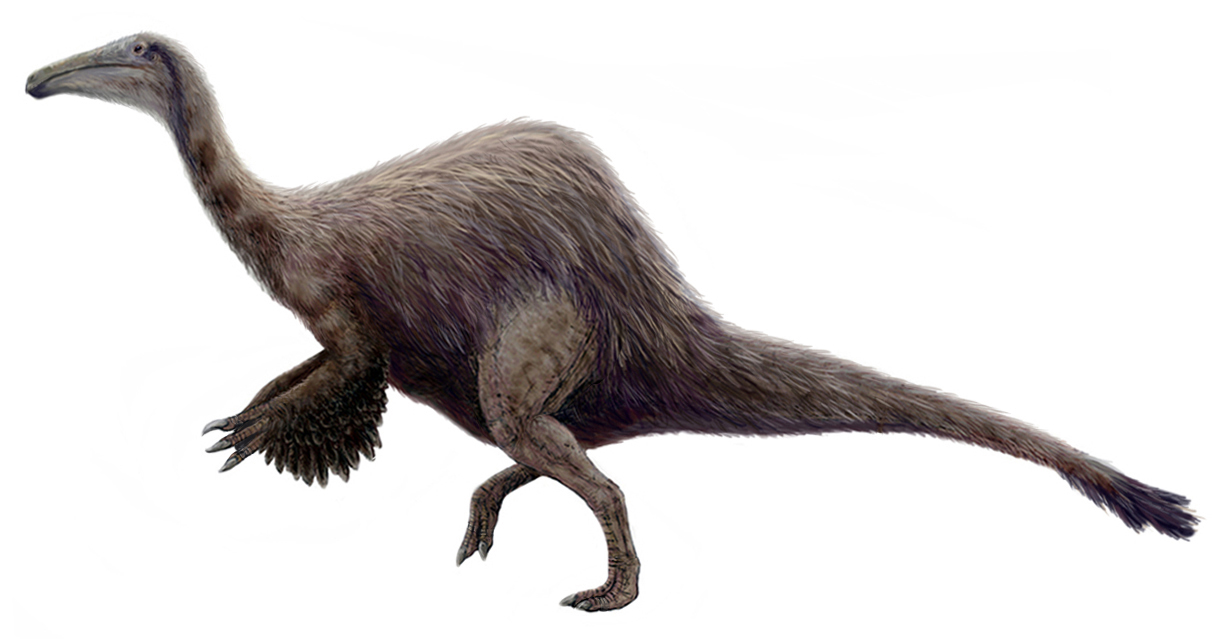
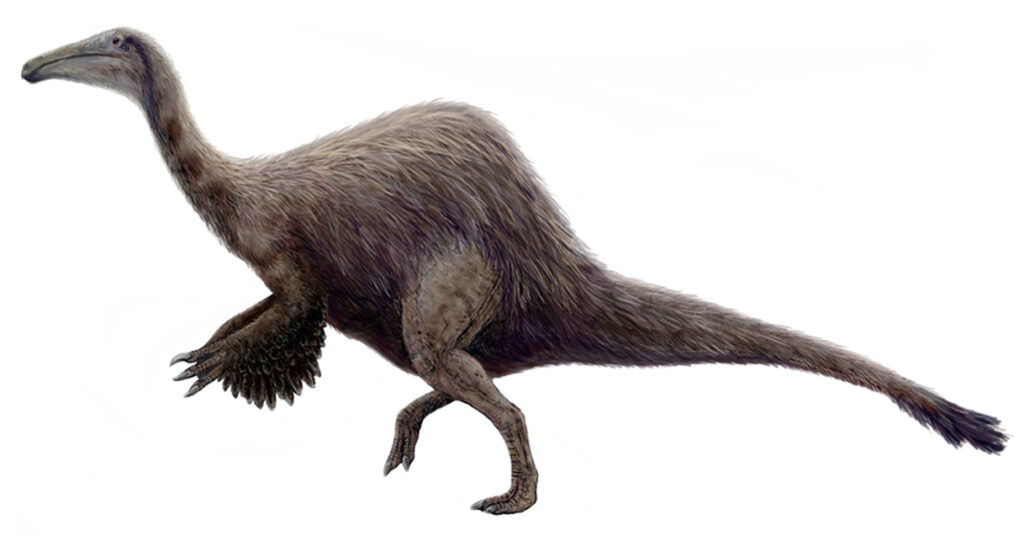
For nearly fifty years, paleontologists knew Deinocheirus only by a pair of massive eight-foot-long arms with enormous claws. For half a century, the world knew this species only by two 8-foot arms with massive claws excavated in 1965 in Mongolia, then in 2014, new specimens finally filled in the rest of the picture, an amalgam so strange it rivals the platypus.
When scientists finally discovered the complete skeleton, they couldn’t believe what they found. Besides its blunt talons (perhaps used to dig up plants), this stout, lumbering beast had a duck’s bill, a camel’s hump, and possibly a set of fan-like tail feathers. University of Edinburgh’s Stephen Brusatte described it as “a colossal, slow-moving, horse-headed, hump-backed dinosaur that looks like something out of a bad sci-fi movie”. This bizarre creature essentially looked like nature had mixed and matched parts from completely different animals.
Amargasaurus: The Punk Rock Sauropod
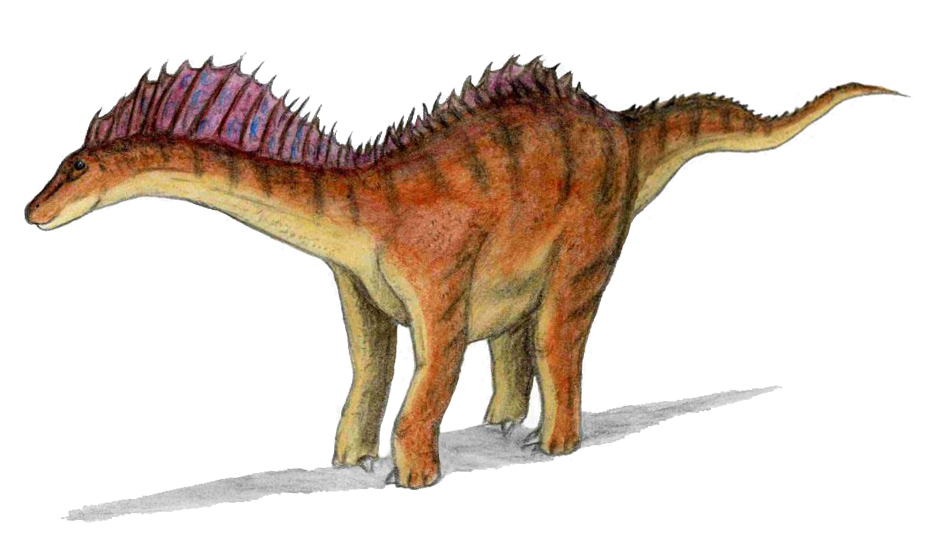
Amargasaurus possessed a bizarre double row of parallel spines along its neck and back, taller than any other sauropod. Unlike its massive cousins like Brachiosaurus, this South American sauropod was relatively small and sported what can only be described as a prehistoric mohawk running down its neck and back.
Discovered in 1991 in Argentina, Amargasaurus was a sauropod that maxed out at around 35 feet long, and what makes Amargasaurus so awesome is that it was punk rock dinosaur, complete with Mohawk. These spectacular elongated spines pointing forward from its neck formed almost like an arched fence, perhaps for sexual display, passive defense or even thermoregulation. These spines might have been covered with skin to form impressive sail-like displays, making this dinosaur the ultimate prehistoric showoff.
Nigersaurus: The Mesozoic Lawn Mower
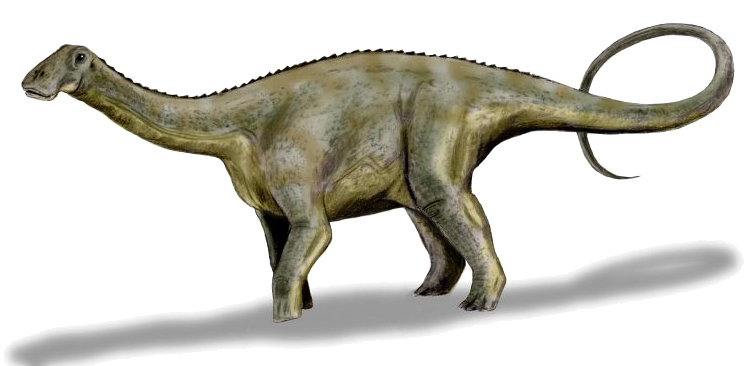
If you thought all sauropods had the same basic head shape, think again. Nigersaurus had an unusually small sauropod with a unique head and jaw shape not seen in any other animal, with all its 500 teeth at the end of its jaw at the front of the mouth, making its head look like the attachment to a vacuum cleaner. This African dinosaur possessed one of the most bizarre skulls in the entire fossil record.
Nigersaurus, known as the “Mesozoic cow”, was a peculiar sauropod from the Middle Cretaceous Niger with a broad snout and over 500 active and replacement teeth, and this dinosaur is famed for its grazing specialization, feeding close to the ground akin to modern cattle. Each mature tooth had nine replacement teeth stacked up behind it ready to take over when it wore down. Picture a dinosaur that essentially had a built-in lawn mower for a mouth, perfectly designed for cropping low-growing plants with mechanical precision.
Concavenator: The Humped Hunter with Proto-Feathers
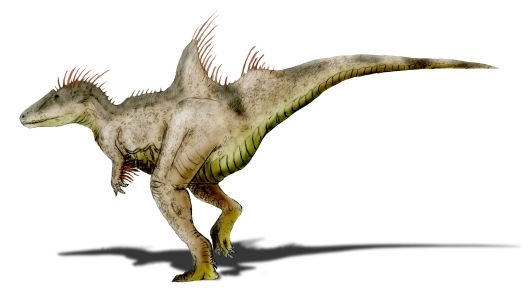
Concavenator was an Early Cretaceous reptile whose name is translated as the “Cuenca hunter with a hump”, and they’re weird dinosaurs whose teeth are as sharp as sharks’, had sharp humps on their backs like camels’, and feathers on their arms like birds. This Spanish predator looked like evolution couldn’t decide what it wanted to be.
Concavenator was a small carcharodontosaurid from Early Cretaceous Spain, notable for its unusual back, which featured a prominent, sail-like hump supported by elongated vertebrae, and stretched around 6 meters long and moved bipedally. What makes this dinosaur particularly fascinating is that it represents one of the earliest examples of proto-feathers in a non-bird dinosaur, suggesting that the evolution of feathers began much earlier than scientists previously thought. This bizarre combination of shark-like teeth, camel-like hump, and bird-like arm feathers makes Concavenator one of nature’s most eclectic experiments.
Conclusion
These seven remarkable dinosaurs prove that the prehistoric world was far stranger and more diverse than any Hollywood movie could imagine. From swimming raptors to gentle giants with massive claws, evolution experimented with forms that challenge our understanding of what a dinosaur could be.
Each of these creatures found their own unique way to survive in their ancient environments, developing specializations that seem almost impossible today. They remind us that life has always been creative, adaptive, and wonderfully weird. The next time you think of dinosaurs, remember that was just one member of an incredibly diverse family tree filled with nature’s most extraordinary experiments.
What fascinates you most about these prehistoric oddities? Tell us in the comments which of these bizarre dinosaurs surprised you the most!