Think of science as this fortress of truth, right? A place where facts are tested and validated. Reality has different plans sometimes. Throughout history, clever hoaxers have managed to slip past the gatekeepers, planting fraudulent discoveries that misled experts for years, sometimes decades. These weren’t just harmless pranks either. They derailed research, wasted money, and sent scientists chasing shadows.
Let’s be real here. What makes these hoaxes so fascinating is the human element. People wanted to believe. Whether it was national pride, confirmation bias, or simply the thrill of a groundbreaking discovery, experts sometimes saw what they hoped to see rather than what was actually there. These seven cases remind us that even the brightest minds can be fooled when deception meets desire.
The Piltdown Man: Britain’s Fake Missing Link

You have to wonder what drives someone to create one of the most consequential scientific frauds in history, but that’s exactly what happened when amateur archaeologist Charles Dawson presented skull fragments to the world in 1912, claiming he’d found the missing link between apes and humans. This fake remained broadly accepted for over four decades. Here’s the thing though. The “fossil” was actually a human skull of medieval age combined with a 500-year-old lower jaw from an orangutan, plus chimpanzee fossil teeth.
Dawson went to great lengths to fool experts, staining the bones with an iron solution and chromic acid to create the appearance of age, and microscopic examination later revealed file marks on the teeth where he’d modified them to appear more human-like. The hoax worked so well because it told British scientists exactly what they wanted to hear during a time of rising national tensions before World War I. It wasn’t until 1953 that scientists at Oxford University used fluorine dating techniques to expose the fraud, revealing that the bones weren’t even the same age and were actually an amalgam of carefully carved and stained human and ape bones.
The Cardiff Giant: America’s Stone Colossus
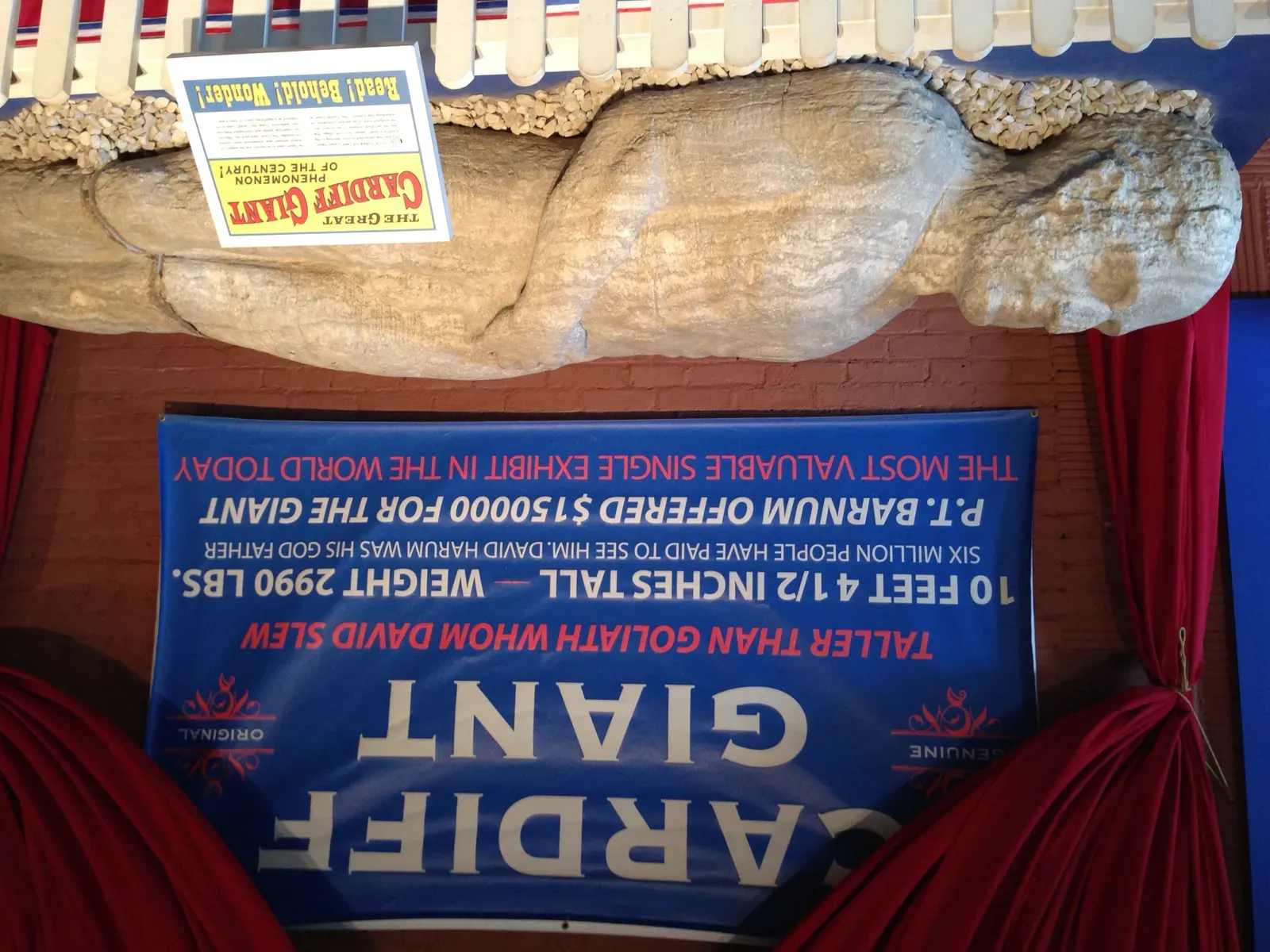
On October 16, 1869, workers digging a well behind a barn in Cardiff, New York uncovered what appeared to be a roughly 3,000-pound, 10-foot-tall petrified man. Honestly, you’d think people would’ve been more skeptical. The giant was the creation of George Hull, a New York tobacconist and atheist who got into an argument with a Methodist minister about biblical giants, and Hull wanted to prove how easily he could fool people with a fake giant.
Hull had a block of gypsum quarried near Fort Dodge, Iowa, shipped to Chicago where it was carved in the shape of a human figure in 1868, then buried on a farm near Cardiff, New York, only to be discovered in 1869 by well diggers. Within two days, Hull’s cousin William Newell was charging fifty cents per person for fifteen-minute viewing sessions, attracting hundreds of visitors daily. The hoax eventually crumbled when Hull confessed in December 1869, though people continued to pay to see it for years afterward. What’s wild is that showman P.T. Barnum created his own replica and claimed it was the real one.
Archaeoraptor: National Geographic’s Fossil Fiasco
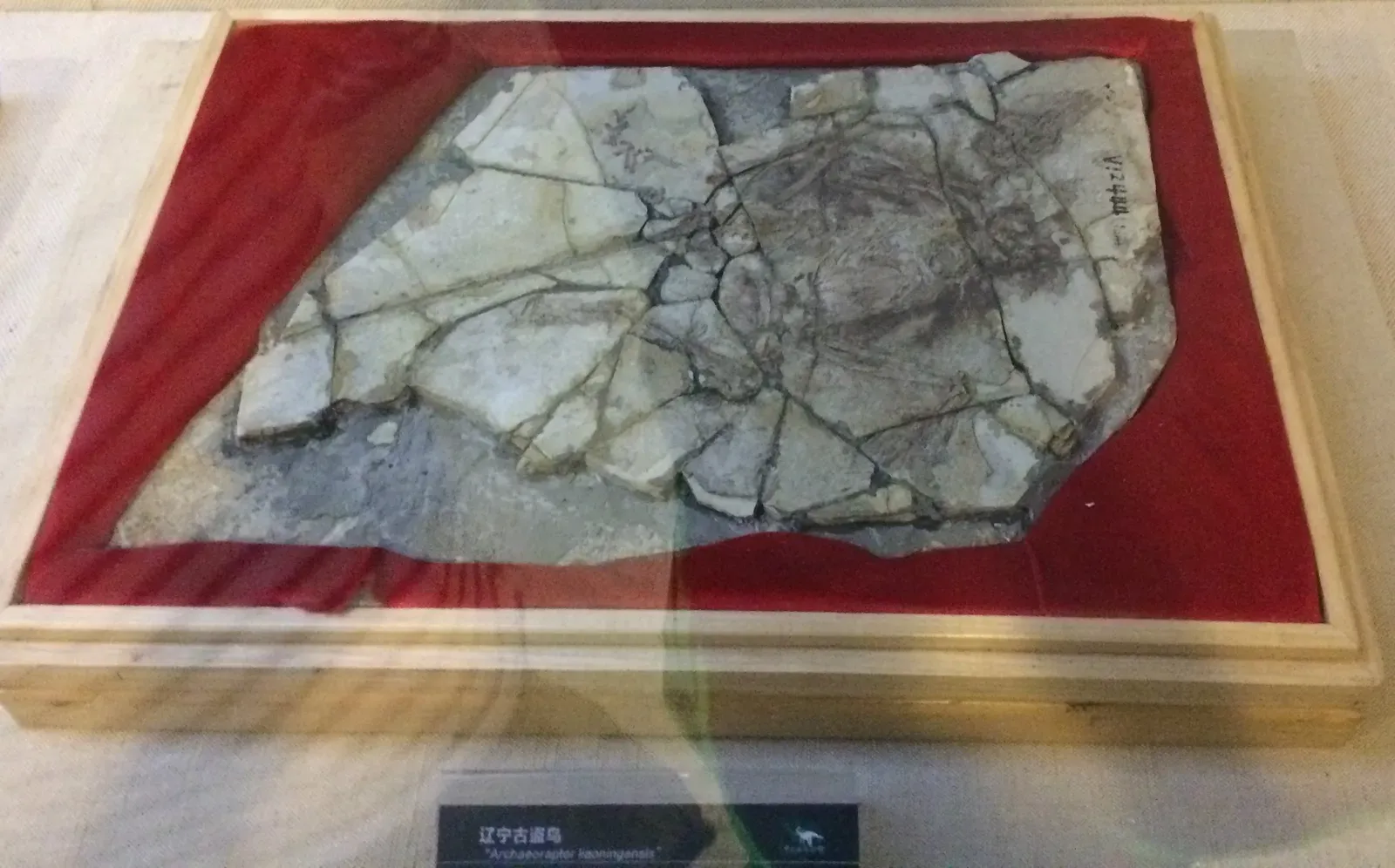
In 1999, National Geographic magazine published an article about Archaeoraptor, claiming the fossil was a missing link between birds and terrestrial theropod dinosaurs, though even before publication there had been severe doubts about the fossil’s authenticity. This one stings because it involved one of the most respected scientific publications in the world. According to National Geographic’s own report, the story began in July 1997 in China where farmers illegally dug fossils and sold them to dealers, and one farmer found rare bird fossils which he cemented together to make a more complete-looking specimen before it was smuggled to the United States.
Chinese paleontologist Xu Xing discovered in October 1999 that the tail of Archaeoraptor matched exactly with a tiny dromaeosaur he was studying, even down to two matching yellow oxide stains, and on December 20, 1999, he informed the authors by email that the fossil was a fake. Subsequent CT scans revealed that Archaeoraptor was glued together from 88 different pieces of fossils from several different animals. The damage was done though. Millions of schoolchildren had already seen the exhibit, and the scientific community had to reckon with how easily they’d been duped.
Jan Hendrik Schön: The Bell Labs Physics Fraud

German physicist Jan Hendrik Schön briefly rose to prominence in the early 2000s after a series of apparently successful experiments with semiconductors that were later discovered to be fraudulent, and before being exposed he’d received multiple prestigious awards including the Otto-Klung-Weberbank Prize for Physics in 2001, all of which were later rescinded. It’s hard to say which is more shocking: the scope of the fraud or how long it took to uncover. Schön claimed spectacular ability for changing the conductivity of organic materials, with measurements that in most cases confirmed theoretical predictions about superconductivity and lasers, and his findings were published in prominent journals including Science and Nature, gaining worldwide attention.
Lydia Sohn at Princeton University noticed that two experiments carried out at very different temperatures had identical noise patterns, and when Nature editors asked Schön about it, he claimed to have accidentally submitted the same graph twice, but Paul McEuen of Cornell then found the same noise in a third experiment. When the investigation committee requested copies of raw data, they discovered Schön had kept no laboratory notebooks and his raw data files had been erased from his computer. Between 1998 and 2001, this guy fabricated or falsified data in at least 16 scientific papers. The fallout was massive, with researchers worldwide having wasted millions trying to replicate his fake results.
The Lying Stones of Würzburg
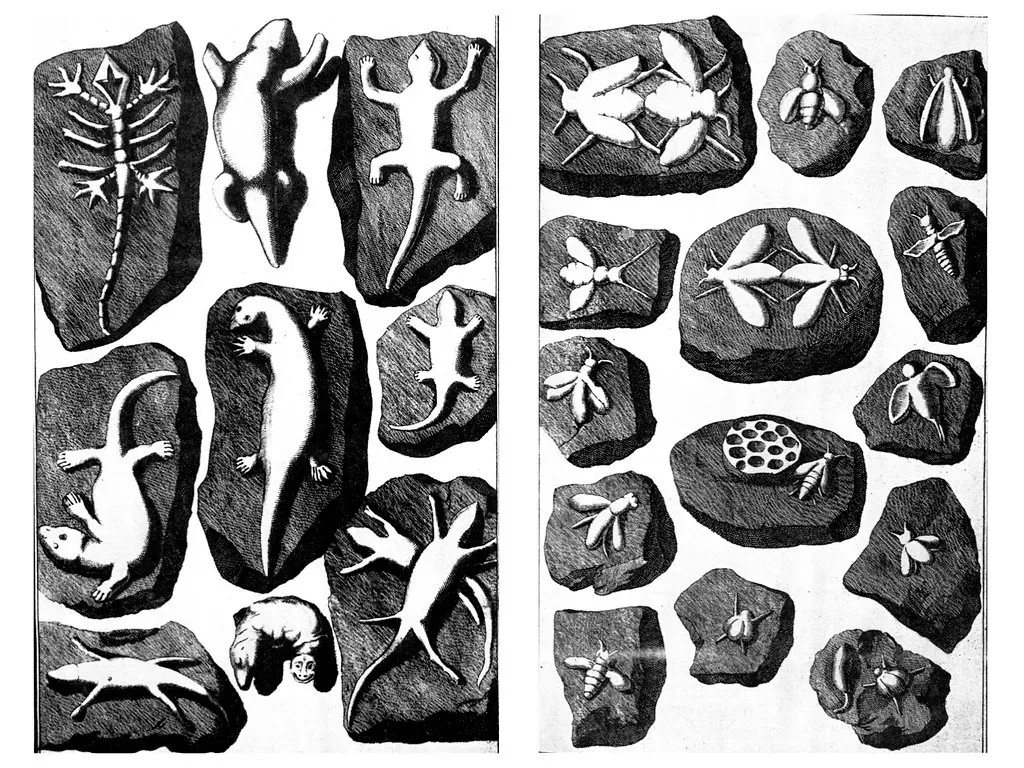
You’d think a university professor would be harder to fool, yet that’s exactly what happened in the early 1700s when Johann Beringer, a professor at the University of Würzburg, fell for an elaborate prank. Colleagues who were annoyed with his arrogance carved fake fossils depicting everything from lizards to Hebrew letters and buried them where Beringer would find them during his fossil hunting expeditions. The poor guy was so thrilled with his discoveries that he wrote an entire book about them in 1726.
What makes this particularly cruel is that Beringer’s colleagues tried to warn him before publication, but his ego wouldn’t let him believe he’d been tricked. Some accounts suggest he found a stone with his own name on it and still didn’t catch on. When the truth finally emerged, Beringer was financially ruined and professionally humiliated. He spent years trying to buy back every copy of his book. This hoax serves as a cautionary tale about pride and the importance of skepticism, even when findings seem to support your theories.
The Fujimura Affair: Japan’s God Hand

For nearly two decades, Japanese archaeologist Shinichi Fujimura was celebrated as the “God Hand” for his uncanny ability to discover ancient artifacts and stone tools at dig sites across Japan. From the 1970s through the 1990s, his findings pushed back the date of human habitation in Japan by hundreds of thousands of years. Museums displayed his discoveries, textbooks were rewritten, and Fujimura became a national hero. The problem? He was planting the artifacts himself.
In November 2000, the Mainichi Shimbun newspaper published photographs showing Fujimura burying artifacts at a site the day before their official discovery. The images were damning and undeniable. In the aftermath, roughly 180 artifacts connected to Fujimura came under suspicion, forcing museums to remove displays and historians to revise the timeline of Japanese prehistory. What’s particularly troubling is how confirmation bias played a role. People wanted Japan to have ancient human origins, and Fujimura gave them exactly what they craved.
The Tasaday Tribe: The Lost Stone Age People

In 1971, the world was captivated by reports of the Tasaday, a small group of people discovered living in complete isolation in the Philippine rainforest, apparently untouched by modern civilization. They wore leaves, lived in caves, and seemed to represent a genuine Stone Age culture frozen in time. Anthropologists rushed to study them, National Geographic published features, and the Philippine government created a protected reserve around their territory. It seemed like an incredible window into humanity’s distant past.
Then the questions started piling up. In the 1980s, journalists and researchers who visited the area found the Tasaday wearing Western clothing and living in houses, claiming they’d been coerced into performing for visitors. The truth remains somewhat murky even today, with debate continuing about whether the Tasaday were a complete hoax or simply a group whose authenticity was exaggerated and manipulated for political and financial gain. Either way, it represents a cautionary example of how badly researchers wanted to find an untouched primitive society and how that desire clouded their judgment.
Conclusion

These seven hoaxes share common threads that still resonate today. They succeeded because they told people what they wanted to hear, whether that was national pride, revolutionary breakthroughs, or confirmation of existing theories. The experts who fell for them weren’t stupid. They were human, vulnerable to the same cognitive biases that affect us all.
What’s changed since these frauds? Modern technology certainly helps. DNA analysis, isotope dating, and advanced imaging can now detect forgeries that fooled earlier generations. Yet technology alone won’t prevent future hoaxes. That requires something harder: maintaining rigorous skepticism, encouraging open debate, and having the courage to question spectacular findings even when they align perfectly with our hopes and expectations.
These stories remind us that science is a human endeavor, messy and fallible. The good news? Eventually, truth wins out. Every one of these hoaxes was exposed, often by the very scientific process they exploited. What do you think is the most valuable lesson from these historical frauds? Share your thoughts in the comments below.