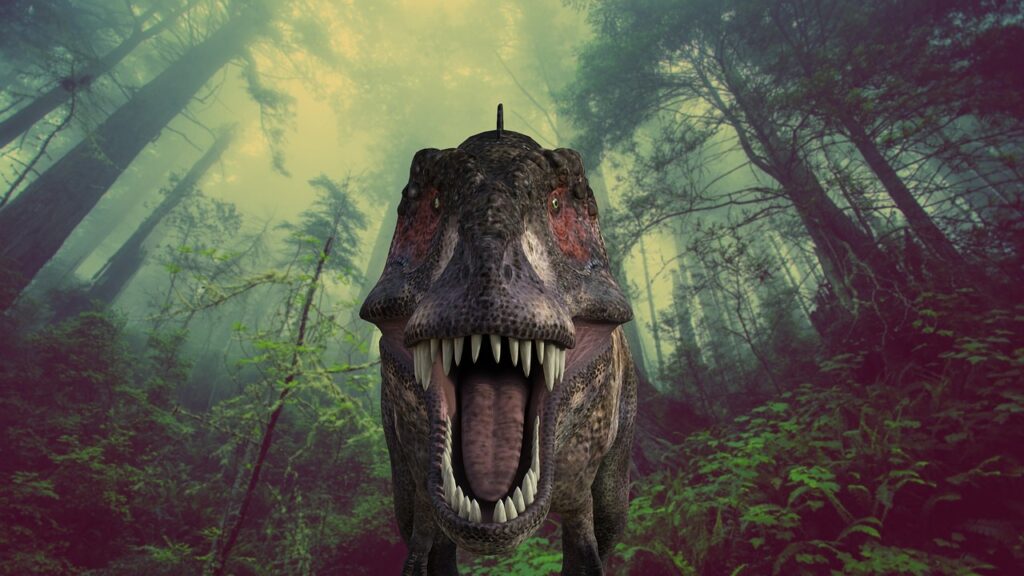
When most people think of prehistoric life, the mind immediately jumps to T. rex, Triceratops, and those familiar giants we grew up drawing in school notebooks. Honestly, that’s understandable. Dinosaurs have had incredible marketing for decades through blockbuster films and museum exhibits. They dominate the cultural conversation around ancient life so completely that we’ve almost forgotten the rest.
Here’s the thing, though. The prehistoric world was absolutely teeming with creatures that make even the most fearsome dinosaur look somewhat ordinary by comparison. We’re talking about animals so weird that when scientists first discovered their fossils, they genuinely struggled to figure out what they were even looking at. So if you think you know strange, buckle up. Let’s dive in.
Anomalocaris: The “Abnormal Shrimp” That Ruled Before Fish Even Existed
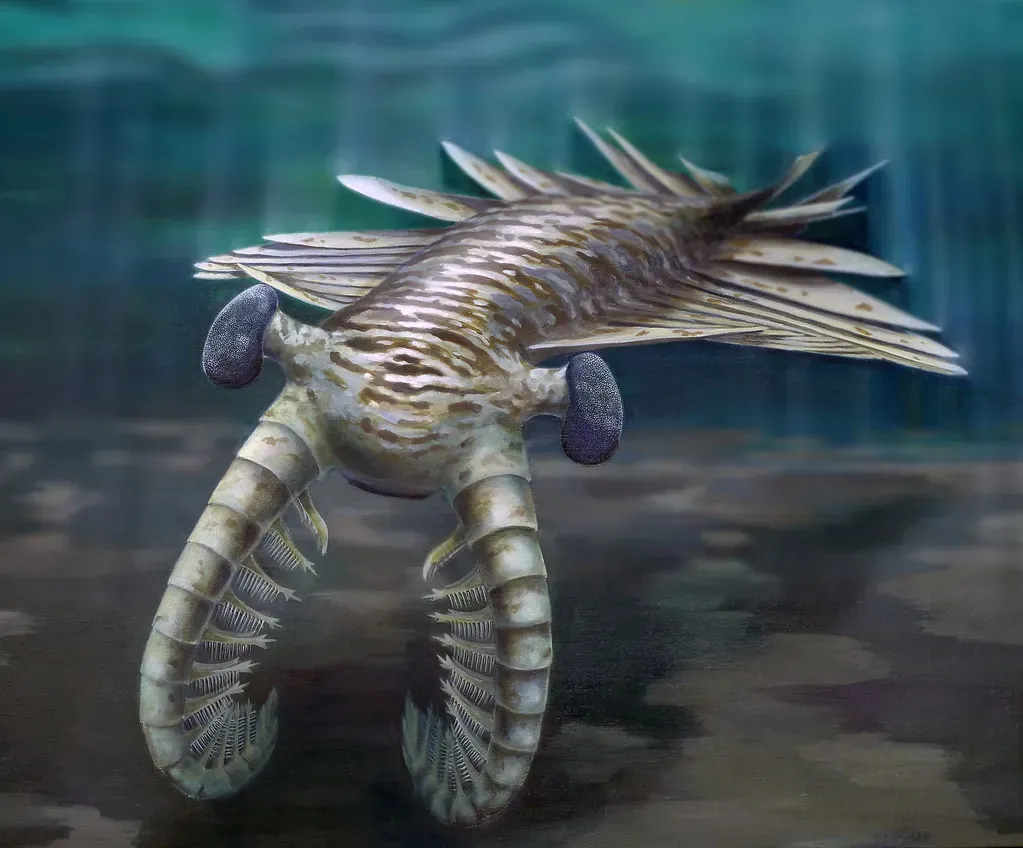
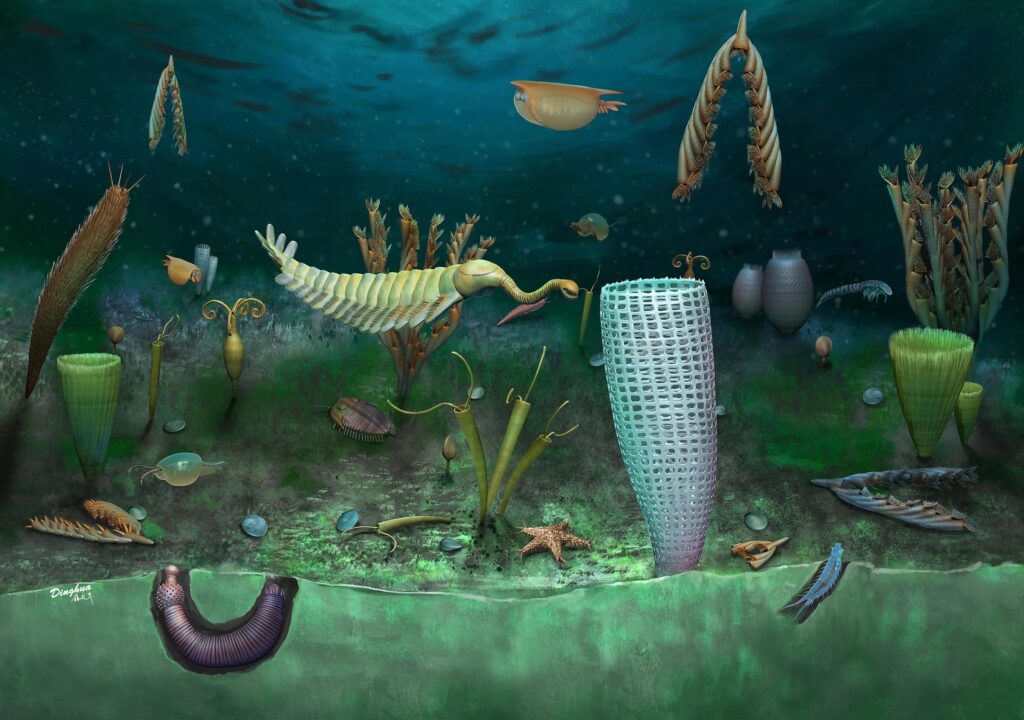
Picture a creature so alien-looking that when palaeontologists first found its fossilized parts, they thought they had discovered three completely different animals. That’s the level of bizarre we’re working with here. Anomalocaris, often translated as “abnormal shrimp,” was one of the most peculiar and formidable predators of the Cambrian period, living around 520 million years ago. Measuring nearly three feet long, this marine creature had a soft, segmented body and a mouth full of radiating plates, resembling a pineapple slicer, which it used to crush its prey.
This bizarre-looking animal is widely regarded as the world’s first apex predator – the killer whale of its day. Anomalocaris was the largest hunter of the Cambrian period, measuring up to a metre in length from its grasping, frontal appendages to the tips of its tail fans. What truly makes it astonishing is that it predates fish, reptiles, and basically every animal group you’ve ever heard of. Think about that. Before fish even properly figured out how to exist, this thing was already the top dog of the ocean.
For a long time, hard-shelled marine arthropods known as trilobites were assumed to have been Anomalocaris’s favourite snack, but new research has suggested that this predator was more of a weakling, incapable of cracking tough trilobite armour. It’s now believed Anomalocaris was a hunter that relied on speed, agility, and superior sight rather than strength. It probably targeted other fast, soft-bodied animals that lived in open water. So even its hunting strategy was more sophisticated than you’d expect from something half a billion years old. Surprising, right?
Opabinia: The Five-Eyed Sea Creature That Left Scientists Speechless
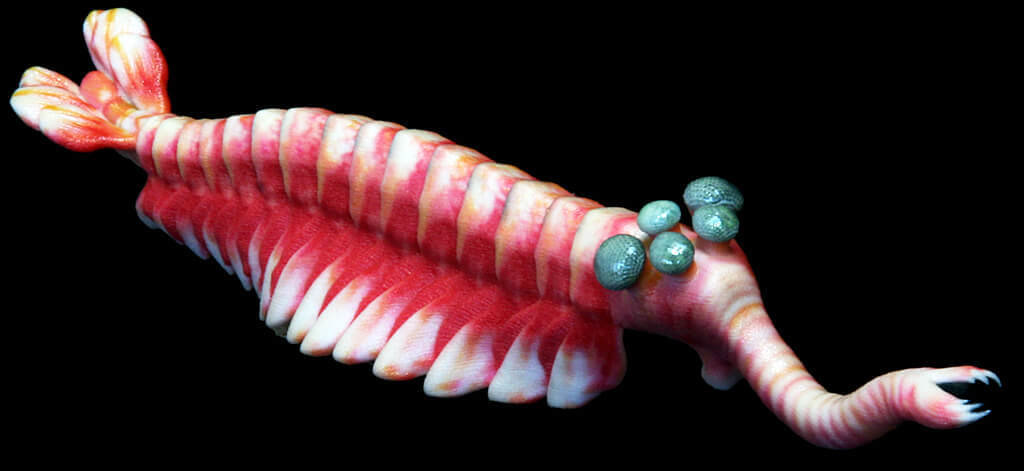
I know it sounds crazy, but when scientists first formally presented Opabinia at a scientific conference in 1972, the audience reportedly burst out laughing. Not because it was a joke. Because the creature itself looked like one. The small, soft-bodied Opabinia measured about three inches long and inhabited the shallow seas of what is now the Burgess Shale during the Middle Cambrian period, approximately 505 million years ago. Distinctive for its five stalked eyes and a long, flexible proboscis used for catching prey, Opabinia is one of the most bizarre creatures ever discovered.
Only a few inches long with five eyes to navigate its seafloor home, Opabinia looks like it could have been a mad scientist’s invention. Though not a fierce predator, Opabinia was an odd-looking prehistoric creature sporting a unique, vacuum hose-like attachment at its mouth which it used to bring food back to its mouth, much like an elephant’s trunk. Beyond its five eyes, it also had 30 flippers. Thirty flippers. On something the size of your thumb. Nature was clearly just experimenting at this point, tossing features at creatures to see what stuck.
Opabinia is one of the rarest fossils found in today’s world. There are fewer than twenty quality specimens of the creature, and archaeologists hope to discover more in time. The known fossils were mostly found in the Burgess Shale of British Columbia. That scarcity makes every fossil that much more precious and every new discovery potentially rewriting what we think we know about early animal life.
Arthropleura: The Giant Millipede That Would Have Made You Run Screaming
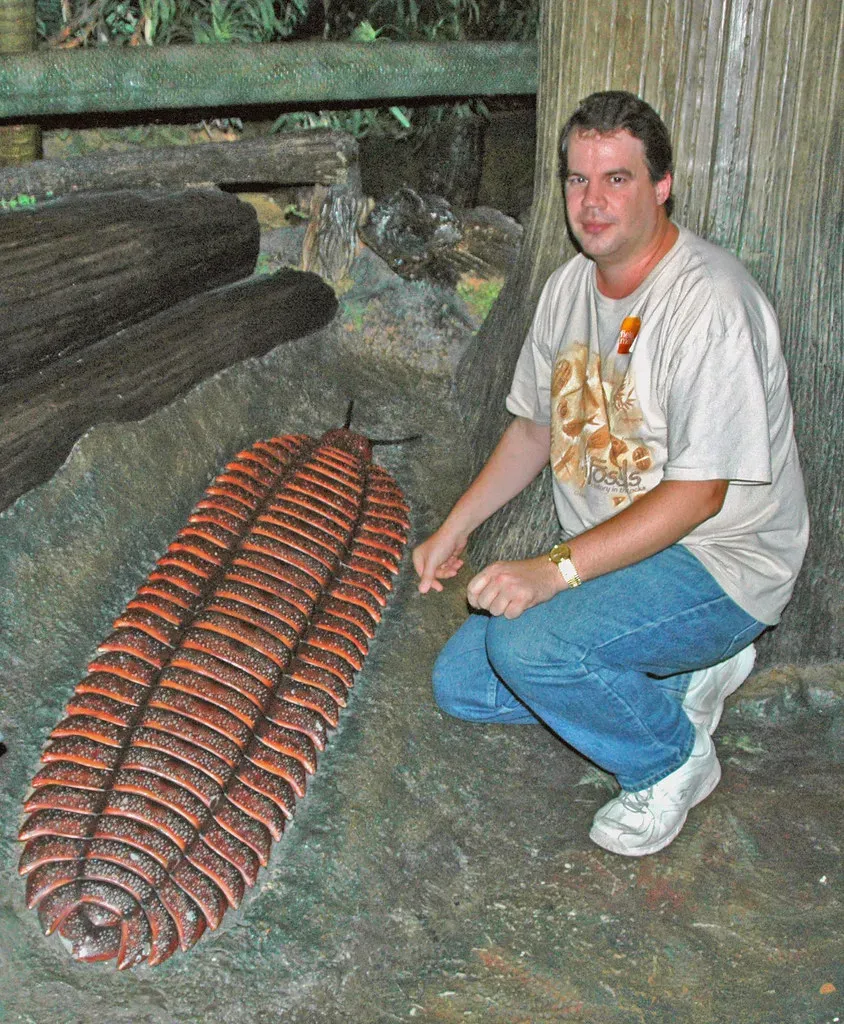
If you’re even mildly uncomfortable around regular millipedes, here’s a fact that might ruin your day. The Arthropleura was a colossal millipede-like creature that roamed the lush coal forests during the Carboniferous period, roughly 340 million years ago. Growing over eight feet long, it holds the title of the largest known land invertebrate. Its extensive, armor-like segments and jointed legs made it a formidable presence in its environment, likely feeding on decomposed plant material.
Arthropleura’s size and survival are credited to the vast array of vegetation and high oxygen levels of the time, offering a glimpse into a period when invertebrates ruled the forest floors. Think of it like this: high oxygen levels in the Carboniferous atmosphere acted like a performance-enhancing drug for insects and their relatives. Everything just grew massive. Largest among them was Arthropleura, a 2.6m-long, mulch-eating millipede that roamed the beaches and forests of ancient England. This giant creepy-crawly lived during the Carboniferous period, a time when sprawling rainforests acted as the Earth’s ‘lungs’, drawing in carbon dioxide and breathing out masses of oxygen.
Honestly, the fact that it was a herbivore doesn’t make it any less terrifying. An eight-foot armored millipede is still an eight-foot armored millipede. You can hold the comfort of knowing it probably wasn’t interested in eating you, but you’d still be sprinting in the opposite direction.
Dunkleosteus: The Armored Fish With Bone Blades Instead of Teeth
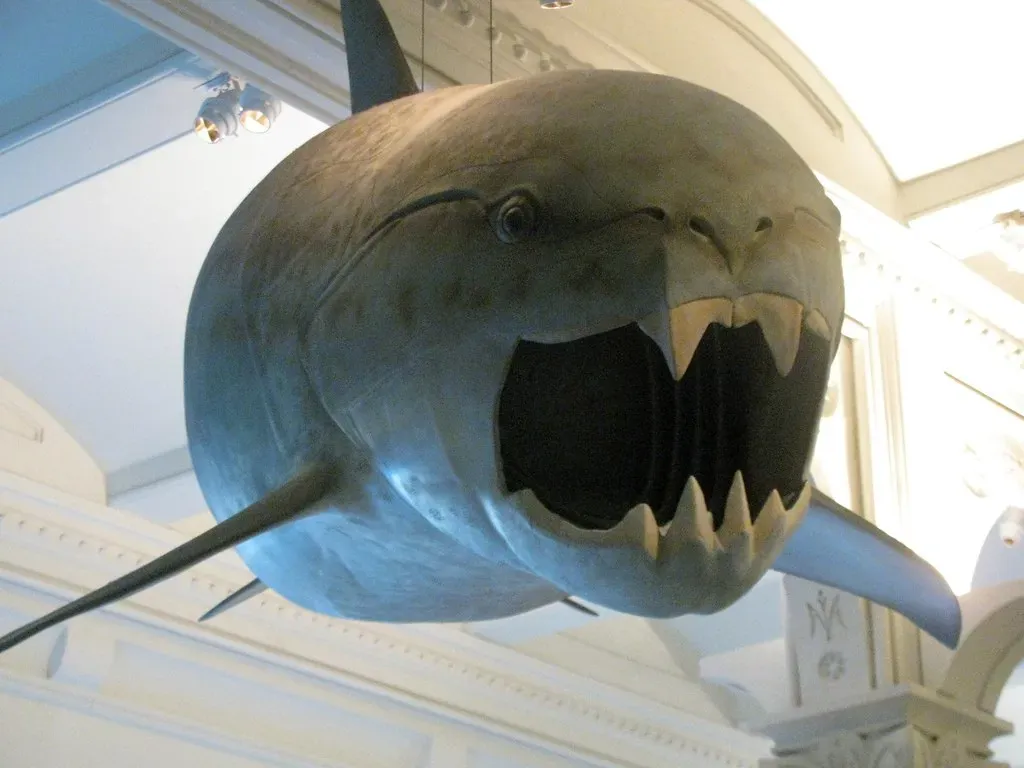
Forget what you know about scary fish. Dunkleosteus didn’t even bother with teeth. It did something far more disturbing. This 33-foot-long armored fish from the Devonian era lacked teeth, but its jaw contained razor-sharp protrusions of bone that it could use to pierce and cut through its prey. These bones grew continuously and as they did, the edges rubbed together with those of the opposing jaw, acting like self-sharpening shears. This would ensure the “fangs” were always ready to chomp into armored prey like arthropods, ammonites and other fish.
This four-ton monster fish patrolled inshore waters and could snatch prey up by opening and closing its jaws within 50 to 60 milliseconds. To put that in perspective, that’s faster than a human eye blink. It grew up to 33 feet long and possessed a heavily armored head with sharp, beak-like jaw plates capable of slicing through prey with tremendous force. Despite lacking true teeth, Dunkleosteus could crush and consume anything from fish to other armored residents of the ancient seas. As one of the top predators of its time, Dunkleosteus illustrates the incredible diversity and size that vertebrate life achieved before the age of dinosaurs.
This was essentially a self-maintaining, self-sharpening killing machine wrapped in armor plates. No wonder it dominated the Devonian seas for millions of years. It’s hard not to feel a tiny bit relieved that this thing existed 360 million years ago and not today.
Megatherium: The Giant Ground Sloth That Might Have Been a Killer
You probably think of sloths as the ultimate chill animals, hanging lazily from trees, moving at a pace that makes everyone around them anxious. So the idea of a “giant sloth” might sound adorable rather than terrifying. You’d be mistaken. Megatherium was actually a giant ground sloth related to modern sloths. An inhabitant of South America during the Quaternary period, an adult standing on its hind legs could reach a height of 20 feet. That’s roughly the height of a two-story building. Towering over you like a prehistoric apartment block.
Megatherium was a giant ground sloth that lived in South America from the Pliocene to the end of the Pleistocene. Thought to have weighed up to 4 tonnes and being 20 feet in length, it was one of the biggest animals of its day. Megatherium had large claws, which may have been used for burrowing rather than for climbing. So what exactly were those enormous claws doing? Scientists have debated it for years.
Megatherium was previously regarded as a slow tree ripper. Recent studies show that its great claws might have been used for stabbing and killing. If this was the purpose of its claws, it would make the giant sloth the largest predator of the South American plains. So your lazy backyard sloth might actually be descended from a line of terrifyingly large ambush hunters. It’s hard to say for sure, but that reframing alone is enough to keep you up at night.
Tully Monster: The Creature That Baffled Science for Decades
Here’s a creature with a name that sounds like a character from a children’s cartoon, yet it’s one of the most scientifically controversial animals ever discovered. Meet Tullimonstrum. The Field Museum has the world’s best collection of these fossils, including some bizarre ones called Tully monsters that flummoxed scientists trying to identify them for decades. The foot-long “monsters” have eyes on stalks, a jaw attached to a noodly proboscis – decidedly weird.
In the ancient seas, the Tullimonstrum, or more affectionately the Tully Monster, was a torpedo-shaped lamprey with an extendable claw. This thing looked like it was designed by someone who had never seen an animal before. Eyes protruding on rigid stalks from either side of the body, a long fleshy snout tipped with a tiny jaw full of teeth, and a body shaped like a torpedo. It didn’t fit into any known animal category for the longest time, and that alone makes it extraordinary.
Field Museum scientists finally determined that Tully monsters are jawless fish, distant relatives of the horrifying lampreys that are alive today and currently invading the Great Lakes. So distantly related to something alive today, yet looking like something assembled from leftover parts in a biology lab. The Tully Monster is proof that nature has always been stranger than our wildest imagination. Still not convinced prehistoric life is weirder than dinosaurs? We’ve saved the best for last.
Helicoprion: The Shark With a Circular Saw for a Jaw
Let’s be real. Sharks are already unsettling enough. So imagine stumbling across a fossilized shark that appeared to have a circular saw blade permanently embedded in its mouth. That’s not science fiction. That’s Helicoprion. When an abundance of spiral fossils were uncovered around the world, scientists thought they were the imprints of ammonite shells. Further research revealed a much stranger conclusion: that the fossils displayed the mouth of a deadly fish.
With the later discovery of some portions of a jaw, the location of its buzzsaw-like teeth were finally determined to fill the lower jaw. Strangely, there were no upper teeth, so this creature could disgustingly gum and bite you at the same time. The jaw would close, rotating the teeth backwards, much like a circular saw blade. It probably fed on the soft bodies of squid and other cephalopods.
The whorl of teeth was formed as they continuously grew outwards, creating a spiral as it aged; the teeth at the beginning of the whorl were small and gradually increasing in size toward the end. So every tooth Helicoprion ever grew stayed in its mouth, forming an ever-expanding spiral of dental terror. Think of it like a living record of every meal it ever attempted. Honestly, it makes the T. rex look almost conservative in design.
The Prehistoric World Was Weirder Than You Think
Looking back at these seven creatures, a clear theme emerges. Evolution doesn’t follow a script. After the emergence of the first true animals around 700 million years ago, evolution ran amok, creating countless bizarre groups before the dinosaurs finally arrived 450 million years later. Dinosaurs, for all their dramatic flair, were just one chapter in an incredibly long, strange, and wonderful story.
Each creature on this list challenges you to rethink what “prehistoric life” really means. It wasn’t just big lizards stomping around in swamps. It was a constantly shifting experiment, full of dead ends and triumphs, spiral-toothed sharks and five-eyed sea dwellers. Nature had millions of years and seemingly no aesthetic boundaries whatsoever.
The most humbling part? We’ve only scratched the surface. New fossils are being discovered every single year, each one potentially rewriting what we thought we understood. So the next time someone asks you about your favorite prehistoric creature, maybe skip the T. rex and tell them about the shark with a circular saw for a mouth. That tends to get a reaction. What creature on this list surprised you the most? Drop your thoughts in the comments below.