Every time you think dinosaurs were just big scaly lizards stomping around and roaring at each other, the fossil record taps you on the shoulder and says: think again. The weirdest dinosaurs look less like movie monsters and more like the result of a sleep‑deprived artist mashing together random animals at 3 a.m. – parrots, ostriches, crocodiles, even vacuum cleaners.
What makes them so fascinating is that every bizarre horn, sail, and claw had to earn its keep in the brutal economy of evolution. These creatures were not fantasy; they were real animals that walked, ran, glided, and hunted on the same planet we live on now. Let’s dive into eight dinosaurs so strange that, if we did not have fossils, you’d probably accuse anyone describing them of making it all up.
1. Therizinosaurus: The Freddy Krueger Herbivore
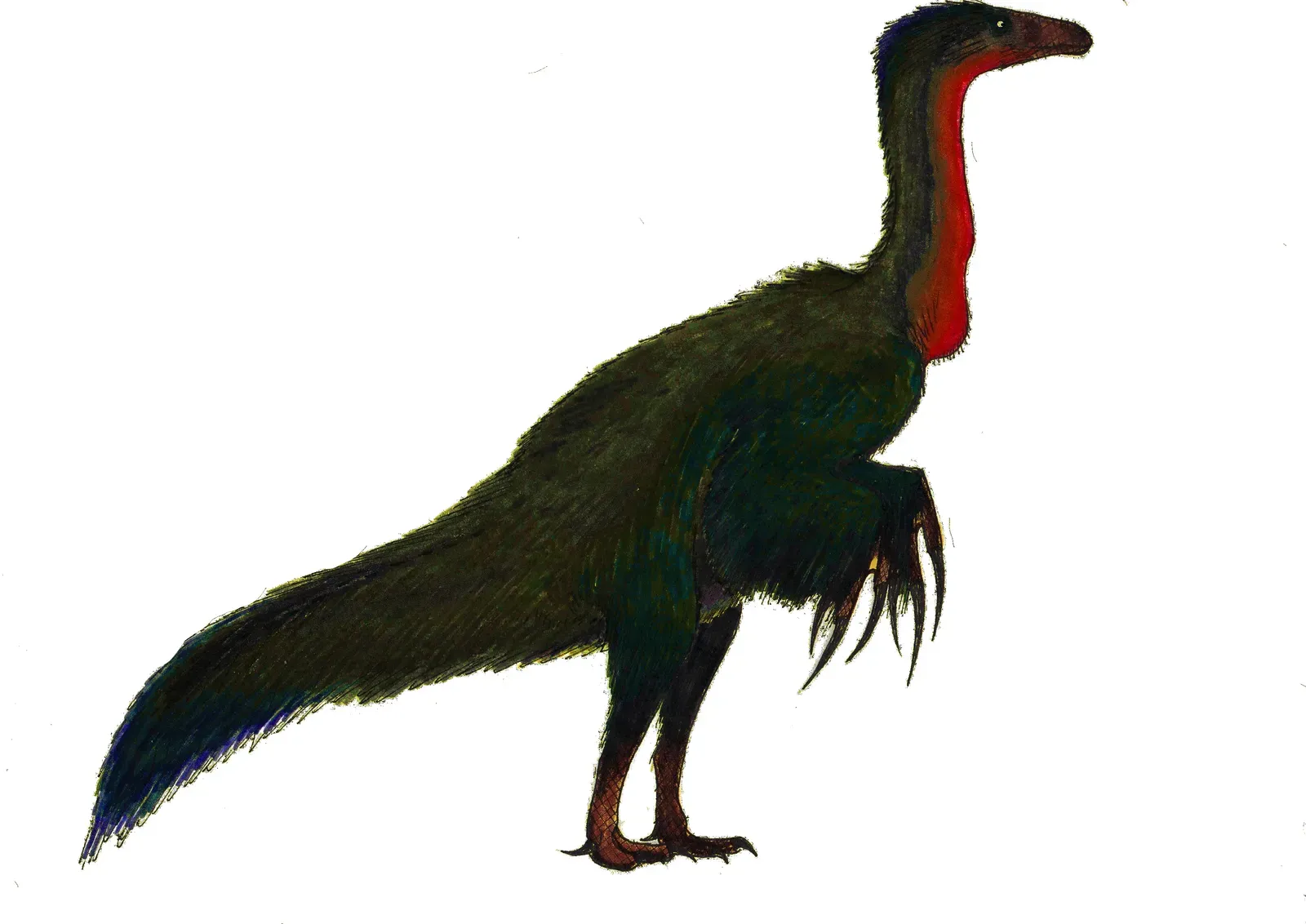
Imagine a giant, pot‑bellied dinosaur with a long neck, a tiny head, a feathered body, and hands tipped with claws longer than swords. That is Therizinosaurus, an animal that looks like evolution tried to build a sloth, a bird, and a nightmare all at once – and then, just to mess with expectations, made it a plant‑eater. Those claws could stretch over a meter in length, some of the longest ever found on any land animal.
For a long time, scientists thought Therizinosaurus might be a predator because of those horror‑movie claws. The twist is that most evidence points to it being a slow, bulky browser, probably using its claws to hook and rake vegetation from trees, a bit like a giant ground sloth with a bird’s skull. I still remember the first time I saw a museum reconstruction of its hands; I actually stepped back. If you had to design the least reassuring herbivore in history, you would probably end up with Therizinosaurus.
2. Spinosaurus: The Semi‑Aquatic River Monster
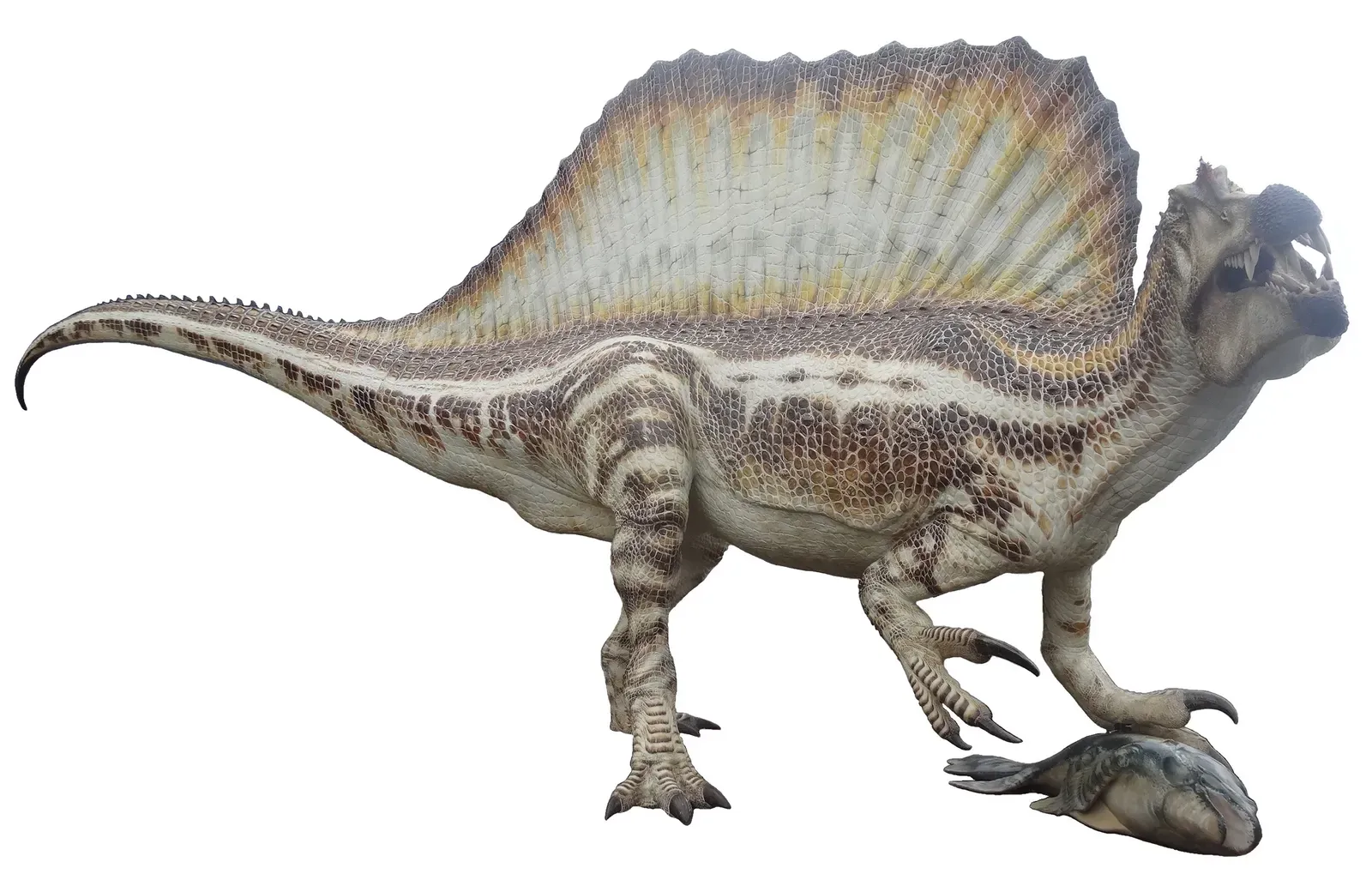
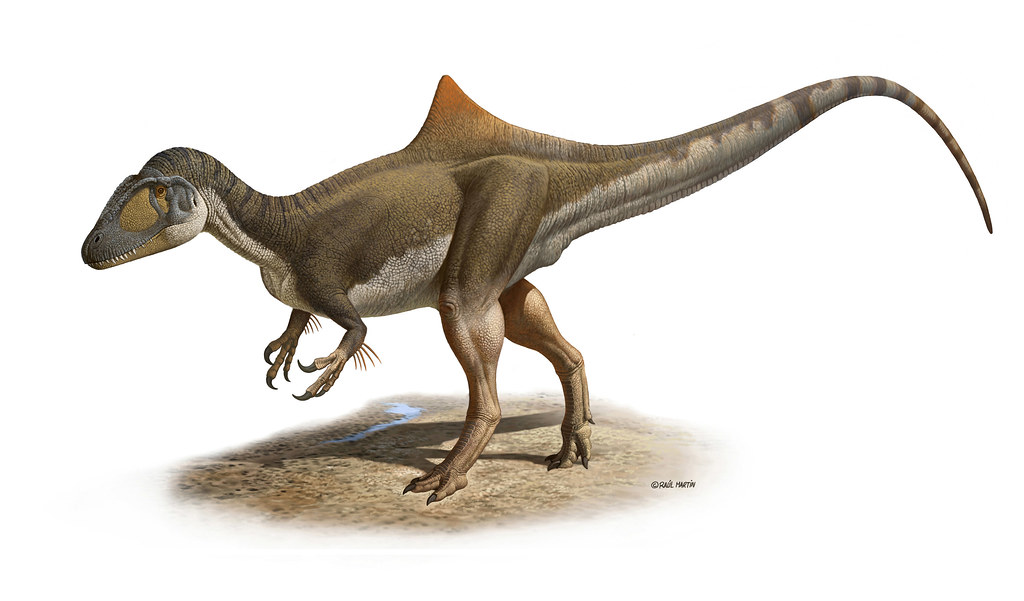
Spinosaurus already sounded over the top when people thought it was just a very large cousin of Tyrannosaurus rex. As fossils improved, its story got stranger: shorter back legs, crocodile‑like jaws, dense bones, and an enormous sail on its back. It now looks less like a classic land predator and more like a river‑stalking, semi‑aquatic hunter, somewhere between a heron, a crocodile, and a dragon.
That huge sail, made of elongated vertebral spines, is still debated – maybe it helped regulate body temperature, maybe it was a visual billboard for display, or both. Its long, narrow snout packed with conical teeth looks perfect for grabbing slippery prey like fish, and evidence from bone density suggests it spent a lot of time in the water rather than just wading at the edge. If any dinosaur deserves to be called a monster in the old mythological sense – a creature that breaks the rules of what an animal is “supposed” to look like – it is Spinosaurus.
3. Deinocheirus: The “What On Earth Am I Looking At?” Giant
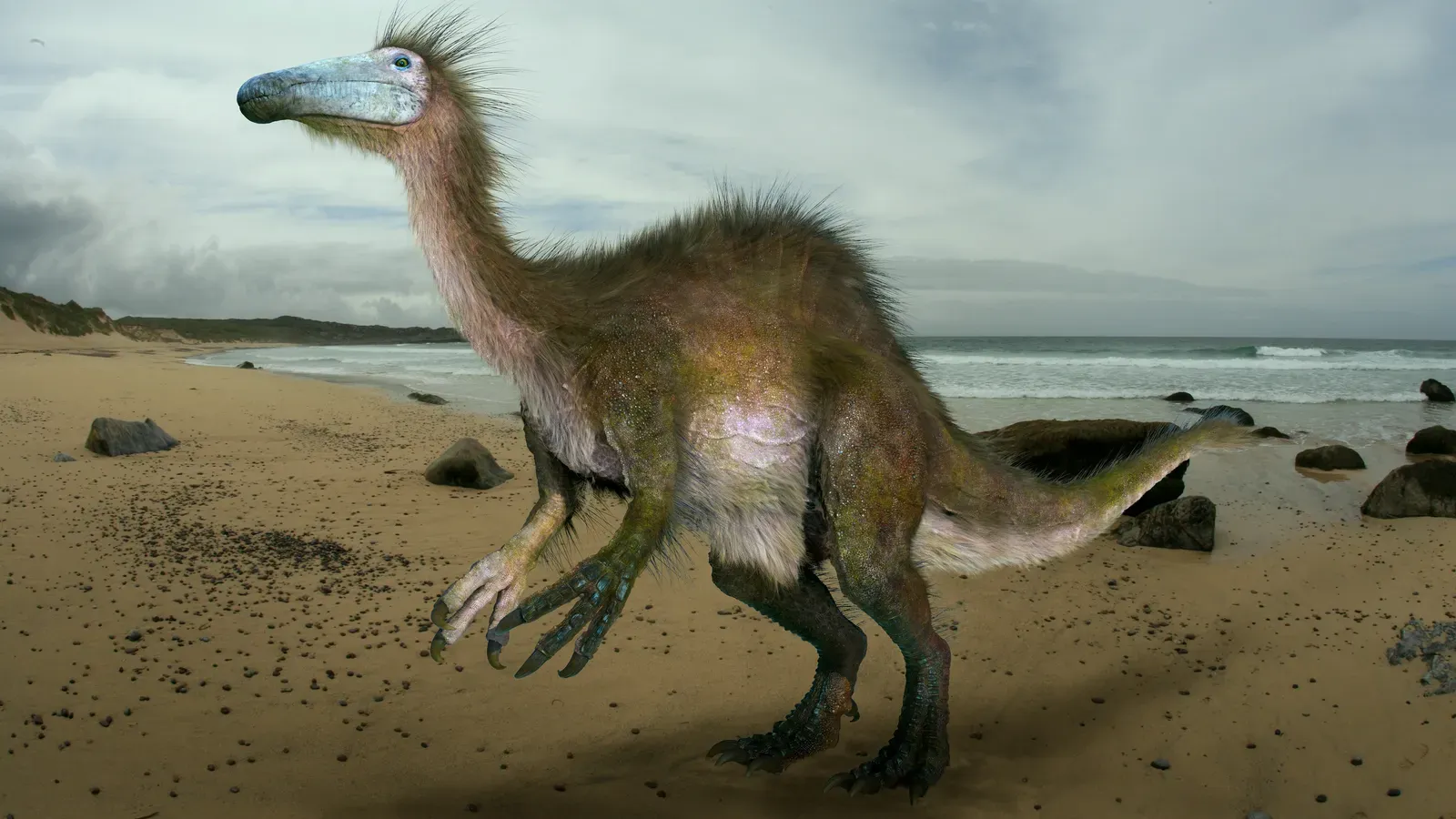
For decades, Deinocheirus was known only from two massive arms with giant claws, and paleontologists could only guess at the rest. When more complete fossils were finally found, the reveal felt like opening a mystery box and discovering something way weirder than expected. This dinosaur turned out to be a huge, hump‑backed, duck‑billed, pot‑bellied creature with long arms and a shaggy, feathered look.
It probably ate a mix of plants and small animals, trundling through ancient river plains on long legs, using its broad bill to scoop and sift like a giant, weirdly armed water bird. Its back had tall spines forming a sort of hump or low sail, and its arms, once thought to belong to a terrifying predator, most likely helped it dig, forage, or pull down vegetation. Deinocheirus is a perfect reminder that evolution does not care whether we find something aesthetically pleasing; it only cares whether the design works.
4. Ankylosaurus: The Walking Tank With a Tail Mace
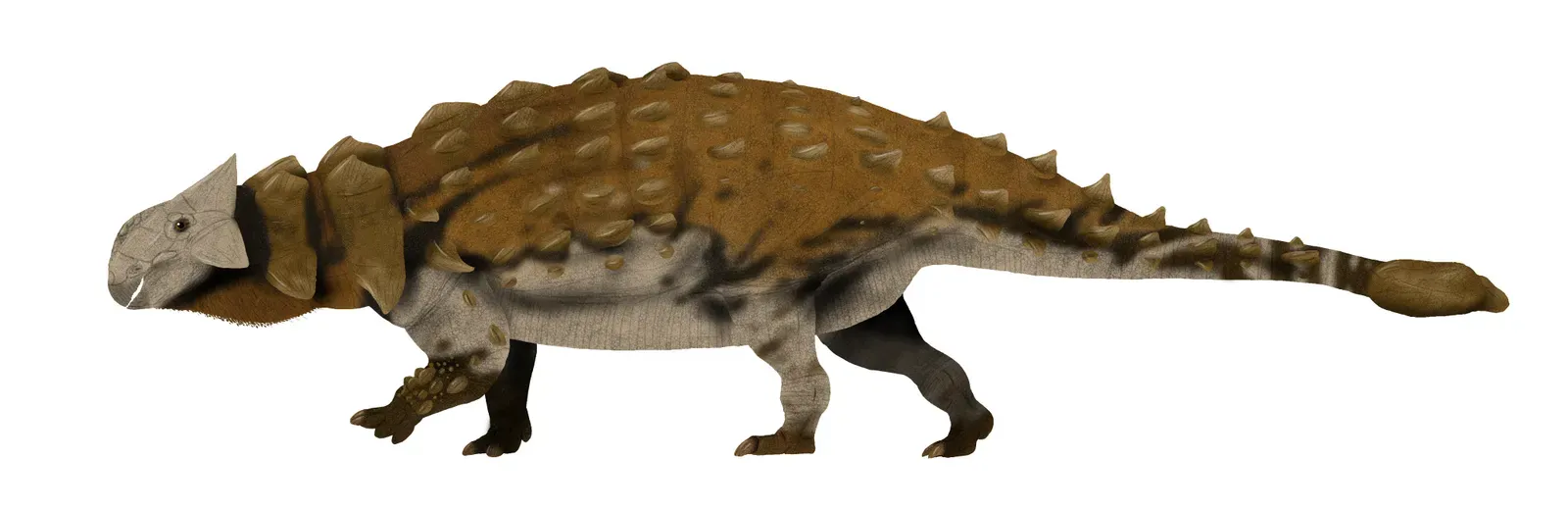
If you have ever watched a nature documentary and thought, “What if a tank and a crocodile had a kid?” you are already halfway to Ankylosaurus. This dinosaur was covered in heavy bony armor plates, with some segments fused in a way that turned its back into a living shield. Its most iconic weapon was its tail club: fused vertebrae and big knobs of bone forming a built‑in sledgehammer.
That tail was not just for show. Studies of its structure suggest it could swing with bone‑shattering force, enough to seriously injure the legs of big predators. It fed low to the ground, slowly lumbering along like the world’s angriest tortoise, using its armor and club as a last‑ditch defense when stealth and size were not enough. The sheer overengineering of Ankylosaurus makes it feel almost satirical, as if evolution anticipated every bite and said, “Fine, let’s just turn the whole thing into a medieval weapon rack on legs.”
5. Pachycephalosaurus: The Hard‑Headed Enigma
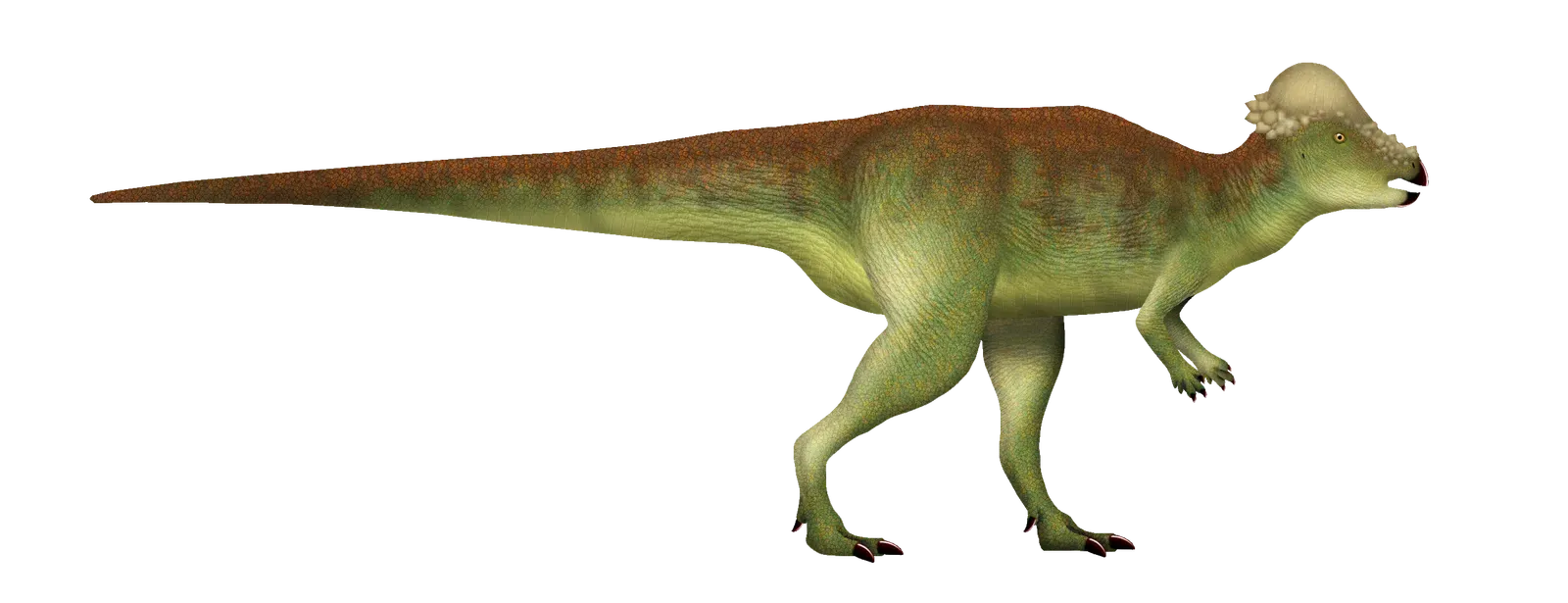
Pachycephalosaurus is best known for that ridiculous dome of solid bone on its skull, sometimes more than twenty centimeters thick. It looks like a dinosaur wearing a built‑in crash helmet, complete with small spikes and bumps around the edges. The classic image is two of them ramming each other head‑on like bighorn sheep, turning their weird anatomy into a full‑contact sport.
The truth is more complicated and still actively debated. Some researchers argue that head‑butting was likely, but maybe more in glancing blows or shoving contests than dramatic cartoon charges, while others suggest the dome was mostly for display and species recognition, like a bold billboard saying “I’m healthy, I’m strong, and I’m your species.” Either way, the idea that a lineage of dinosaurs invested so heavily in forehead real estate is deeply strange. It is as if evolution doubled down on the skull and said, “This is your brand now.”
6. Carnotaurus: The Demon‑Faced Speedster
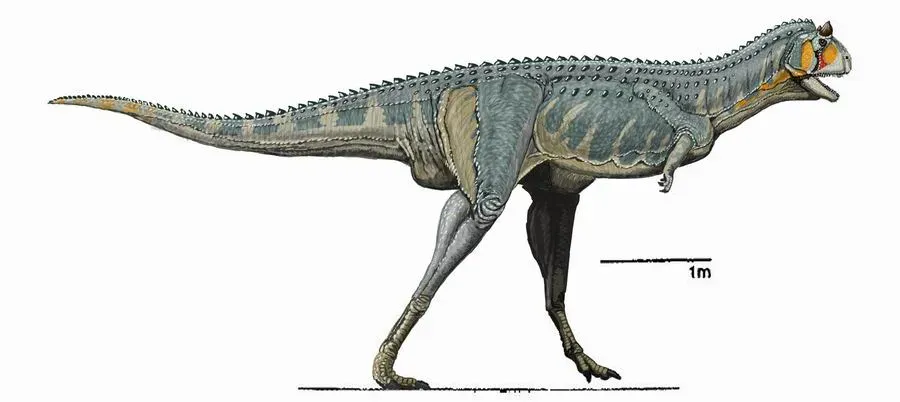
Carnotaurus looks like someone tried to design the ultimate villain dinosaur in a video game: short, bull‑like horns over the eyes, a deep, muscular neck, a short snout, and almost comically tiny arms that make T. rex look well equipped. Those horns are unusual among big carnivorous dinosaurs and probably played a role in display or head‑to‑head shoving matches with rivals. The skull itself is thick and heavily built, giving its face a blunt, almost bulldog‑like profile.
Its body, though, hints at speed. The legs were long and slim, and the tail had special muscle attachments that suggest it was built for quick, powerful strides and rapid turns, like a cheetah scaled up and given a mouth full of steak knives. The arms, meanwhile, were so reduced they almost seem like an evolutionary afterthought, a reminder that not every body part gets a starring role. Carnotaurus is one of those dinosaurs that makes you wonder whether the rules of proportions were temporarily suspended in the Late Cretaceous.
7. Parasaurolophus: The Dinosaur With a Built‑In Brass Instrument
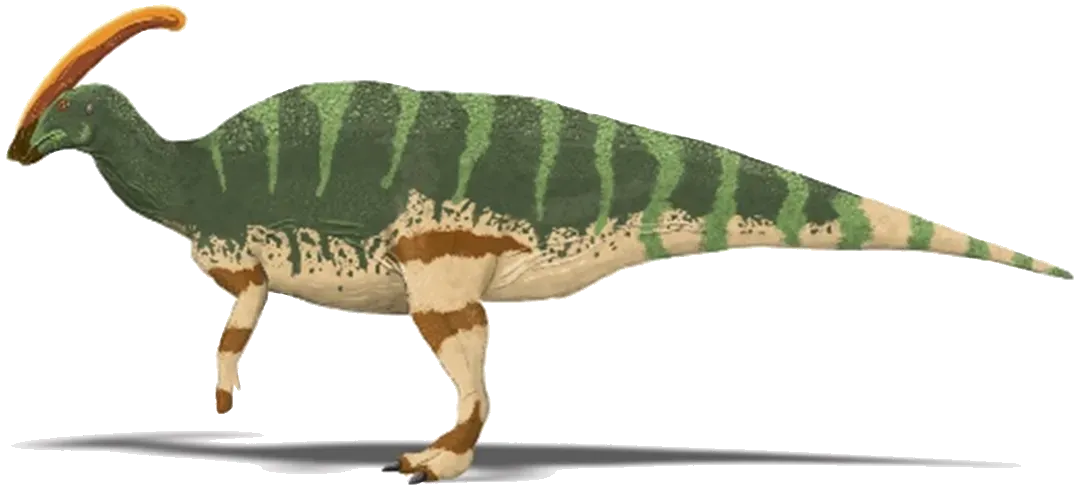
Parasaurolophus is the dinosaur you remember as “the one with the weird tube on its head,” and that description honestly undersells how strange it is. The crest was a long, backward‑curving hollow structure connected to the nasal passages, looping through the skull like an organic trombone slide. To human eyes it looks extravagant, even a bit impractical, like evolution decided to accessorize.
Most evidence points to the crest playing a role in sound production and communication, possibly helping Parasaurolophus produce deep, resonant calls that traveled far across its environment. It might also have helped with display and species recognition, like an elaborate headdress broadcasting age, sex, or social status without a word. Picture an entire herd moving across a floodplain at dusk, their voices rolling out in low, foghorn‑like tones from those bizarre crests. It is hard not to feel that, if any dinosaur could have inspired ancient myths about trumpeting beasts, it would be this one.
8. Microraptor: The Four‑Winged Shadow in the Trees
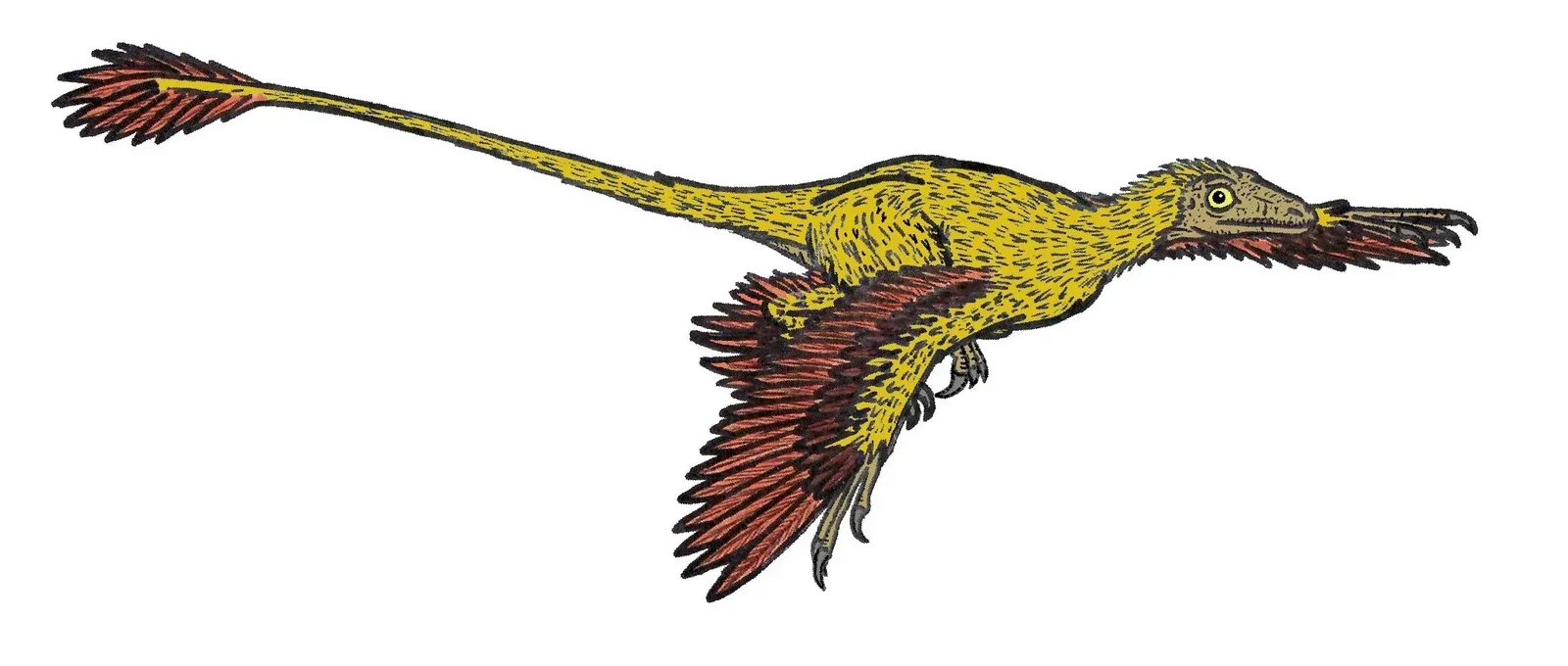
Microraptor is small compared to many dinosaurs, but it might be one of the strangest of all because of what it reveals about how flight evolved. This crow‑sized predator had long flight feathers not only on its arms but also on its legs, effectively giving it four wings. Fossils show beautifully preserved, iridescent‑looking feathers, suggesting it was sleek and glossy, more like a modern bird of prey than a lizard.
It probably lived in forested environments, gliding or perhaps even flapping short distances between trees, hunting small animals in the shadows. Its body plan looks like a transitional experiment, an evolutionary test drive of different ways to conquer the air before the classic two‑winged bird design became dominant. There is something almost poetic about that: countless evolutionary “prototypes” leaping through ancient forests, some of them so peculiar that, millions of years later, we still stare at their fossils and think, “No way that was real”… and yet, it was.
Conclusion: When Reality Outweighs Imagination
The more we uncover about dinosaurs like Therizinosaurus, Spinosaurus, and Microraptor, the harder it becomes to pretend that our imagination is wilder than reality. Movies gave us roaring monsters, but the fossil record gives us sword‑clawed herbivores, semi‑aquatic sail‑backed hunters, armored tanks with tail maces, and four‑winged tree gliders. To me, that is infinitely cooler – and a little humbling. We are not inventing fantasy creatures so much as catching up with the sheer creativity of deep time.
My own opinion is that the strangest dinosaurs are not outliers; they are the clearest proof that evolution is less a straight ladder and more a chaotic, branching, never‑ending design contest where usefulness beats elegance every time. These animals look unbelievable to us because we only see the survivors of today, not the full, glorious backlog of evolutionary experiments. Next time someone says dinosaurs were all basically the same, pick your favorite oddball from this list and ask them, honestly: would you have guessed this thing ever existed?