When you picture a dinosaur, you probably think of a giant reptile with teeth, claws, and maybe a big tail for balance. But the real prehistoric world was far weirder than anything in a blockbuster movie. Some dinosaurs had backs covered in sail-like spines, skulls like living battering rams, or claws so huge they seemed useless – until you look closer.
In this article, we’ll walk through eight dinosaurs whose bodies looked almost wrong at first glance, yet made perfect sense in their ancient ecosystems. We’ll keep it grounded in what science actually knows, skip the made-up drama, and still let ourselves say what everyone is thinking: a lot of these animals looked completely ridiculous – and that’s exactly what makes them amazing.
1. Therizinosaurus: The Freddy Krueger of the Cretaceous
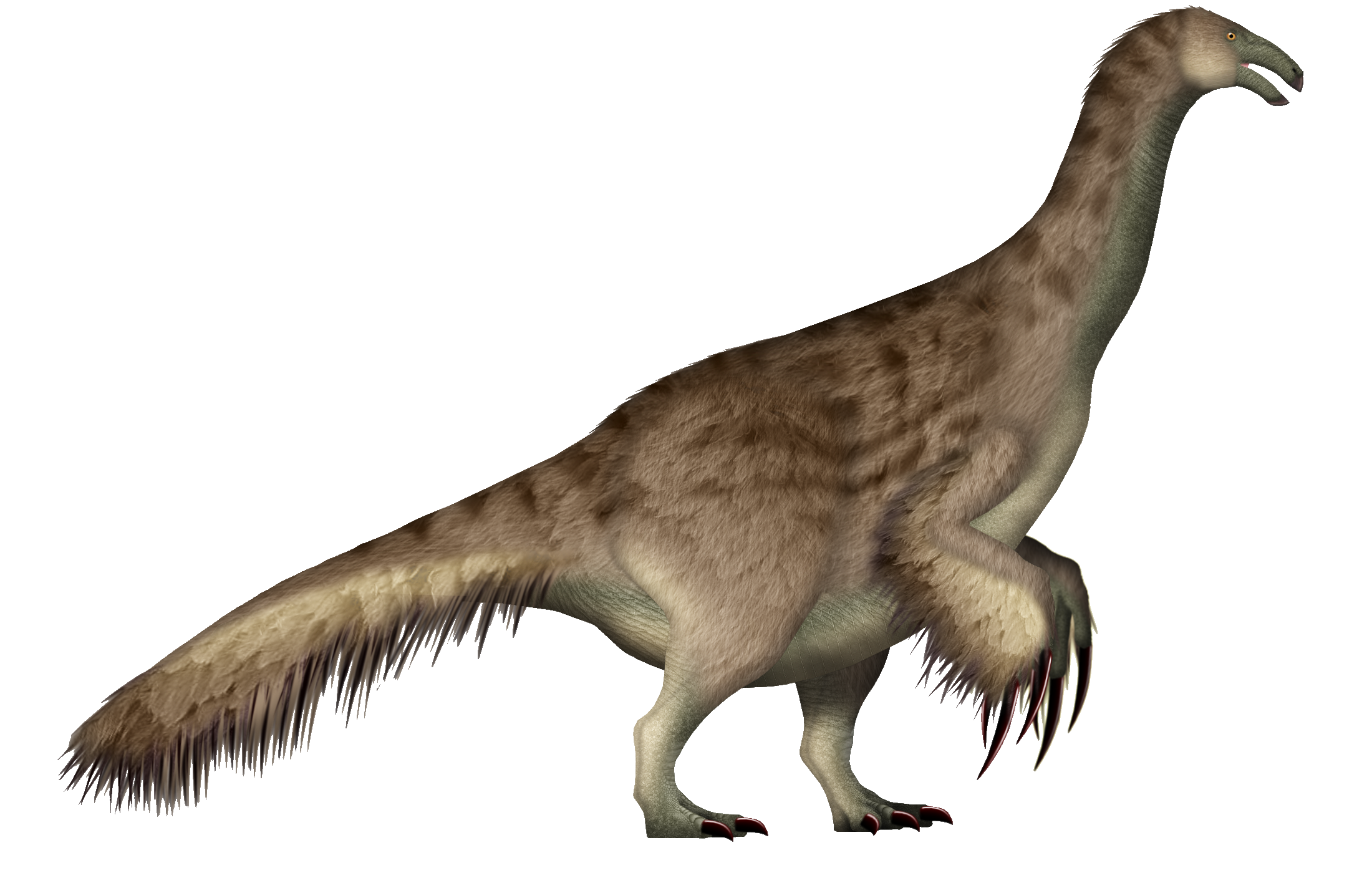
Therizinosaurus is one of those dinosaurs that looks like a prank the fossil record is playing on us. Its most shocking feature is the set of enormous hand claws, each one stretching longer than a human forearm. These claws were thin, curved, and blade-like, so strange that early scientists even thought they might be from a giant turtle.
What makes it even weirder is that Therizinosaurus was likely herbivorous or at most an omnivore, not a classic meat-eating predator. Picture a tall, pot-bellied, feathered dinosaur with a long neck, waddling through a forest and using those nightmare claws to hook branches, pull leaves closer, or maybe defend itself from real killers. To me, this is the best example of how evolution does not care what looks scary or cool – it only cares what works, and for Therizinosaurus, absurdly long claws apparently worked very well.
2. Deinocheirus: The Dinosaur That Looked Wrong From Every Angle
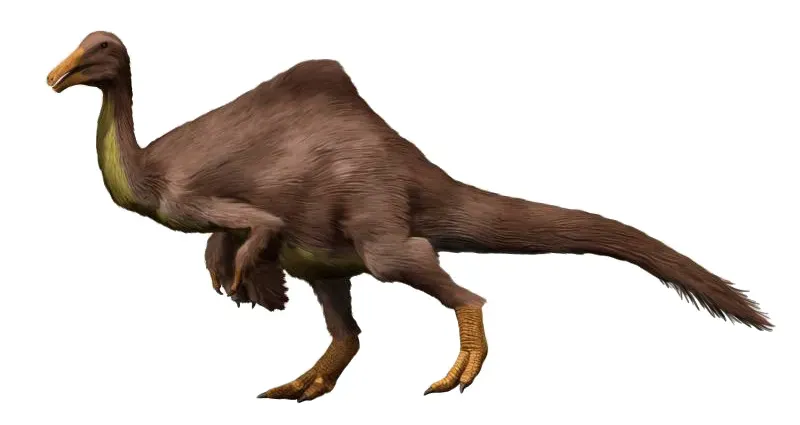
For decades, all paleontologists had of Deinocheirus were two gigantic arms with huge claws, and that mystery alone made it legendary. When more complete fossils were finally found, the full picture was almost comical: a huge hump-backed animal with a duck-like beak, long arms, a bulky body, and a strangely wide pelvis. It looked like someone had built a dinosaur from spare parts and refused to read the instructions.
Despite the odd look, its point to a very particular lifestyle. The duckish beak and broad muzzle suggest it sifted through plants and maybe small animals in river systems, while the high spines on its back vertebrae helped support a heavy, muscular body. It was massive – more like a weird, dinosaurian moose or hippo than a sleek predator. Personally, I love that Deinocheirus breaks every “cool dinosaur” rule and still comes out as one of the most fascinating animals ever found.
3. Carnotaurus: The Horned, Tiny-Armed Speed Demon
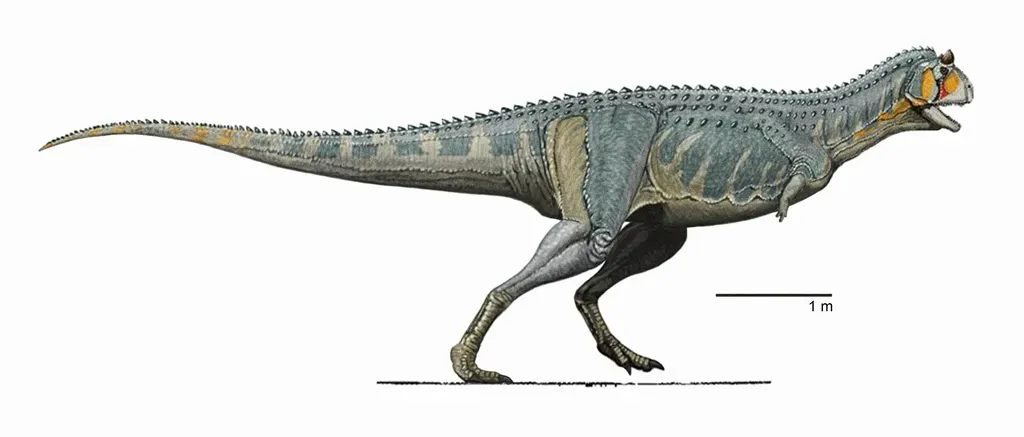
Carnotaurus is often described as a strange cousin of Tyrannosaurus, but in some ways it is even more visually shocking. It had a short, deep skull with thick bony horns over its eyes, giving it a very bull-like profile. The name literally means “meat-eating bull,” and that alone makes it feel like nature was trying out a heavy metal album cover as a real animal.
Then there are the arms. If you think T. rex had tiny arms, Carnotaurus takes it to another level: its forelimbs were even shorter and more reduced, with limited movement. On the flip side, its legs were long and built for speed, and its tail muscles suggest strong running ability. The whole package screams specialized pursuit predator, with a head designed for quick, powerful bites. In my opinion, Carnotaurus looks like evolution went all-in on speed and headbutting aesthetics, and just decided arms were optional.
4. Amargasaurus: The Dinosaur With a Double-Neck Sail
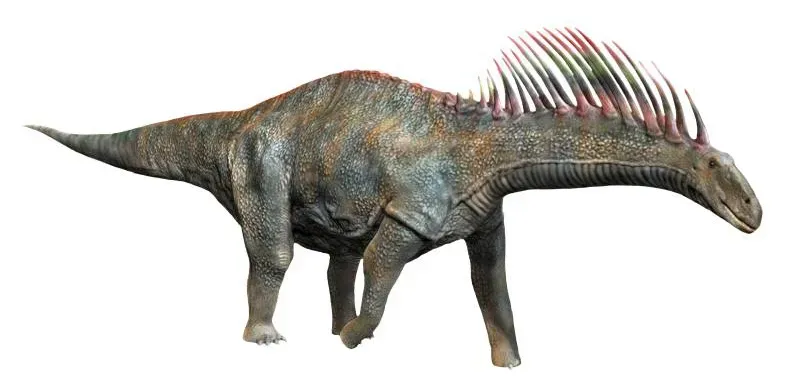
Amargasaurus is a sauropod – one of those long-necked, long-tailed plant eaters – but it refused to be plain. Running down the back of its neck and part of its spine were tall paired spines, each one rising like a narrow mast from the vertebrae. Some researchers think these spines were connected by skin to form a sail; others argue they were bare or covered with a keratin sheath, more like wicked-looking spikes.
Whatever the exact look, the result was spectacular. The most likely roles for those neck structures include display, species recognition, and possibly thermoregulation, helping with heat exchange in certain climates. To me, Amargasaurus feels like proof that even among giant plant eaters, style mattered: in a world full of towering sauropods, this one showed up with a custom spiked neck and guaranteed that nobody confused it with the neighbors.
5. Pachycephalosaurus: The Dome-Headed Battering Ram
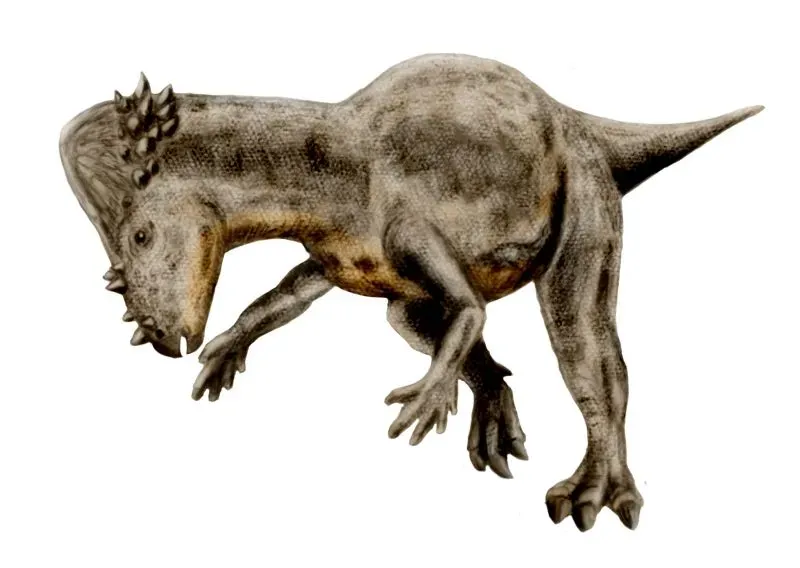
Pachycephalosaurus is instantly recognizable for its thick, domed skull, which could be more than twenty centimeters of solid bone in places. Surrounding that dome were bony knobs and spikes, giving the head a knobby, armored look. This bizarre construction has long pushed scientists toward one question: what on Earth was it using that helmet for?
The classic idea is that Pachycephalosaurus used its head like a battering ram, ramming others of its kind in contests over mates or territory. Some more recent work has questioned whether the skull and neck could really handle full-on, head-on collisions, suggesting more of a flank-butting or display role. Either way, the animal clearly invested a lot of biological “budget” into that skull, and I think it is fair to say that, for Pachycephalosaurus, the head was both billboard and weapon in one very strange package.
6. Ankylosaurus: The Walking Tank With a Wrecking-Ball Tail
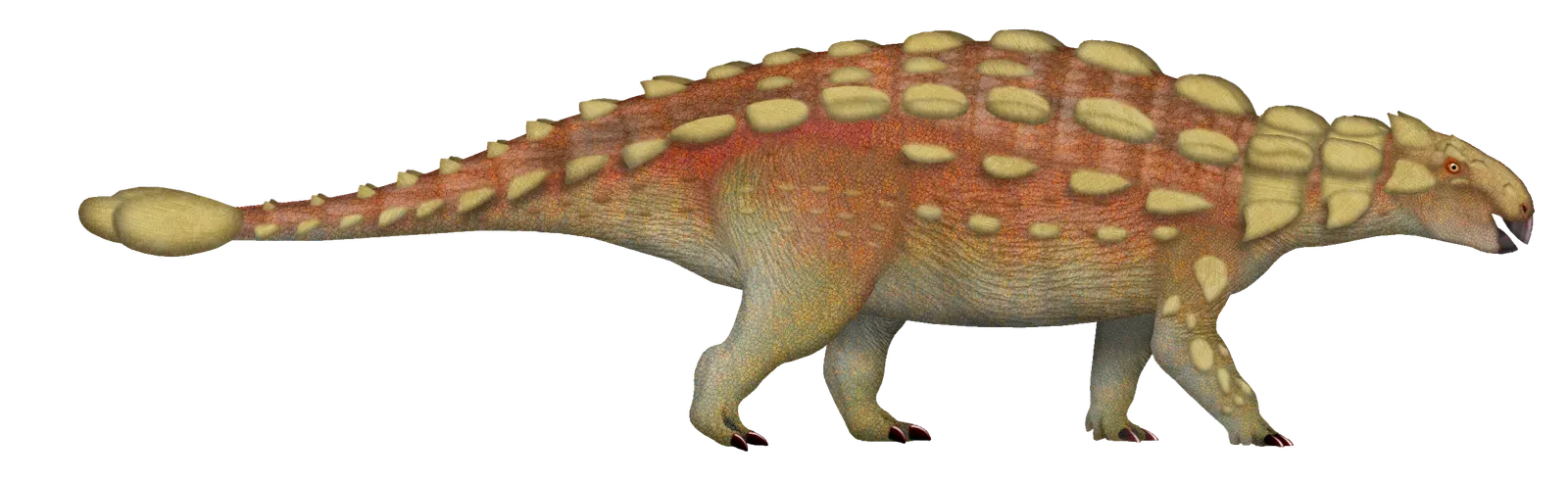
Ankylosaurus is often described as an armored tank, and for once the cliché is completely accurate. Its entire back and sides were covered in osteoderms – bony plates embedded in the skin – forming a tough shield against predators. This natural armor was complemented by rows of spikes and bumps, making the dinosaur look like a low-slung, spiky fortress on legs.
The most bizarre and impressive feature, though, was the tail club: a massive, bony mass at the end of a reinforced tail, swung by strong muscles. Studies suggest that a determined Ankylosaurus could deliver tail blows strong enough to break bone, meaning even a large predator risked serious injury if it attacked the wrong angle. To me, Ankylosaurus is the clearest argument that defense can be just as extreme and awe-inspiring as offense – its entire body says, very loudly, “Try me and see what happens.”
7. Spinosaurus: The Aquatic Giant With a Sail on Its Back
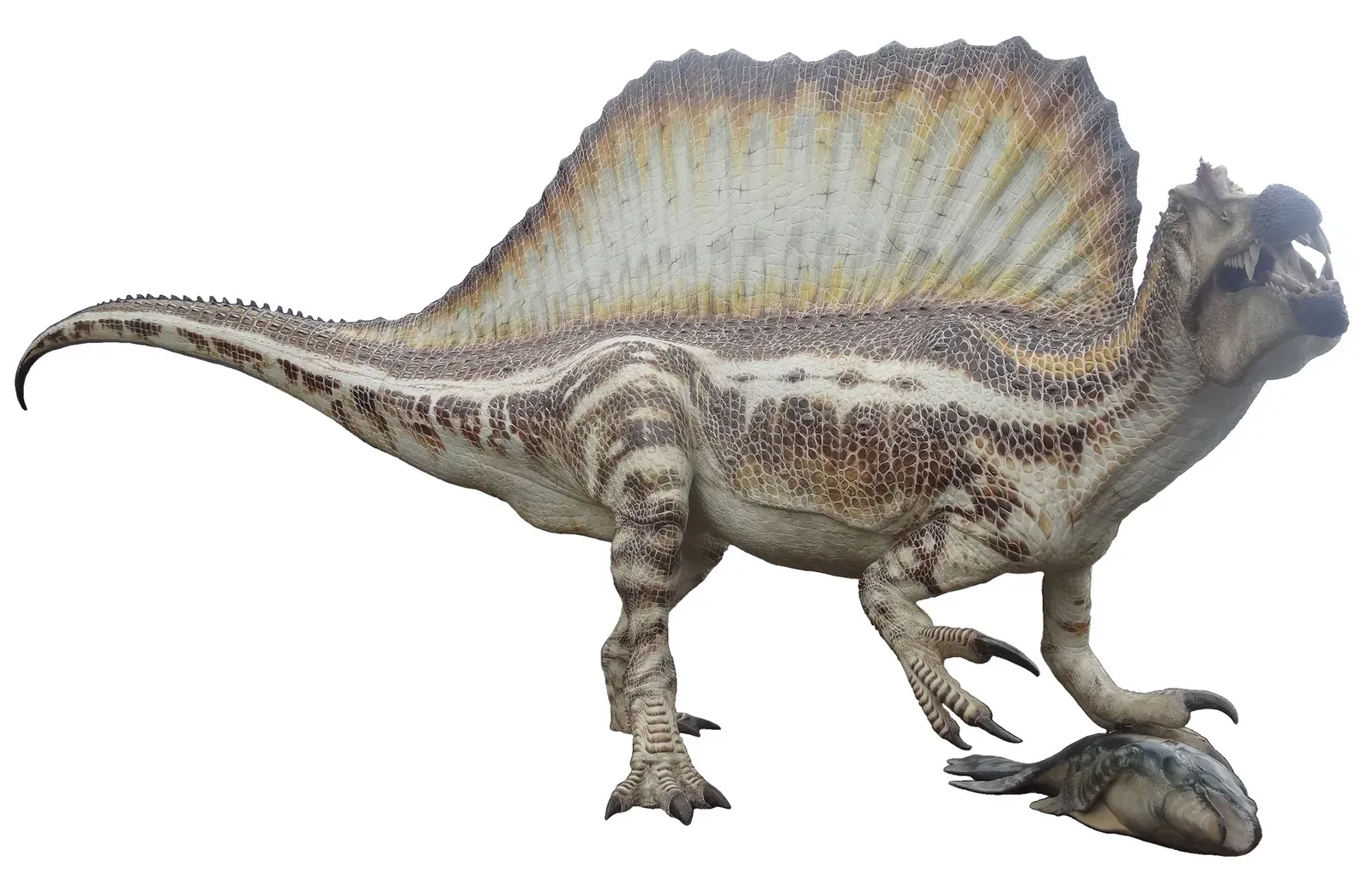
Spinosaurus has gone through multiple scientific makeovers, but one thing has stayed consistent: it is deeply weird. Its tall neural spines formed a huge sail or hump along its back, likely covered in skin or flesh. The function of this structure is still debated – ideas range from display and species recognition to heat regulation or fat storage – but visually, it turned an already huge predator into something almost dragon-like.
Even stranger, growing evidence points to Spinosaurus being semi-aquatic, with a crocodile-like snout full of conical teeth adapted for catching fish, a body mass distribution that favored life in water, and possibly even a paddle-like tail. That combination – a giant predator with a back sail, long narrow jaws, and partially aquatic habits – makes it an outlier among large theropods. In my view, Spinosaurus feels like the universe’s reminder that not all top predators follow the land-stalking T. rex model; some of them hunted rivers like oversized, sail-backed crocodiles.
8. Stygimoloch: The Demon-Headed Misfit With Spikes
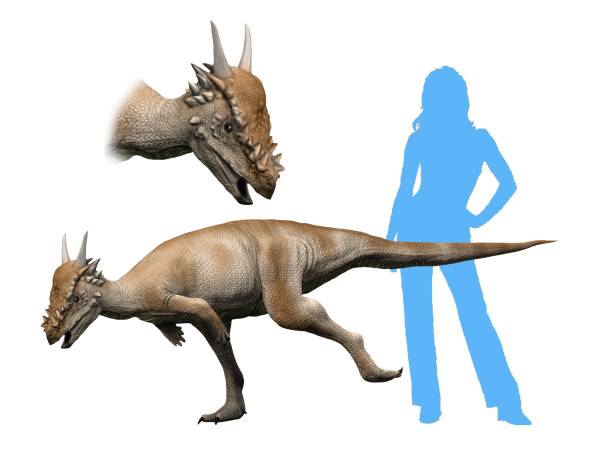
Stygimoloch has one of the most dramatic names of any dinosaur, inspired by the River Styx of Greek mythology and its devilish-looking skull. It sported a smaller dome than Pachycephalosaurus but was surrounded by long, sharp spikes and knobs that flared out from the back of the skull. Fossil reconstructions make it look like a punk-rock version of a dome-headed dinosaur, all attitude and spikes.
There is ongoing debate about whether Stygimoloch is its own genus or a growth stage of another dome-headed dinosaur, but that does not make its skull any less bizarre. If it is a younger growth stage, that might actually explain the extreme spikes as part of a visual signal system that changed as the animal matured. My own take is that, classification aside, Stygimoloch shows how social signaling and display can push anatomy into what looks like pure fantasy territory – yet it still fits squarely within the rules of evolution.
Conclusion: When “Ridiculous” Is Exactly What Works
Looking across these eight dinosaurs, a pattern comes into focus: the that seem most bizarre to us today were perfectly reasonable solutions in their own time and place. Oversized claws, sails, domes, spikes, and tail clubs all evolved because they helped these animals eat, fight, show off, survive, and reproduce in incredibly specific environments. What we see as ridiculous or over-the-top is really evolution’s way of fine-tuning a body for the pressures of life, whether that pressure came from predators, rivals, or the climate itself.
Personally, I think these strange species are more exciting than the usual toothy celebrities, because they prove that nature is willing to get weird if weird works. They also remind us to be humble: if someone dug up our skeletons millions of years from now, they might find our proportions and just as odd and try to guess what our “bizarre adaptations” were for. When you look at it that way, the real question is not why these dinosaurs were so strange – but whether, in the long story of life, we are actually the normal ones at all. What do you think: which of these prehistoric oddballs would you have guessed was real and which one sounds made up?