There is something almost disorienting about standing on a patch of American soil, knowing that hundreds of millions of years ago, enormous creatures walked, hunted, and died right where you’re standing. The United States, it turns out, sits on top of one of the most spectacular prehistoric archives on the planet. Layers upon layers of ancient rock hold secrets that scientists are still unraveling in 2026.
From sun-scorched desert badlands to canyon country carved by ancient rivers, these geological formations are far more than scenic landscapes. They are time capsules, each one preserving a different chapter in the long story of how dinosaurs rose to dominate the Earth. So let’s dive in.
Dinosaur National Monument, Utah and Colorado: The Jurassic Bone Bank
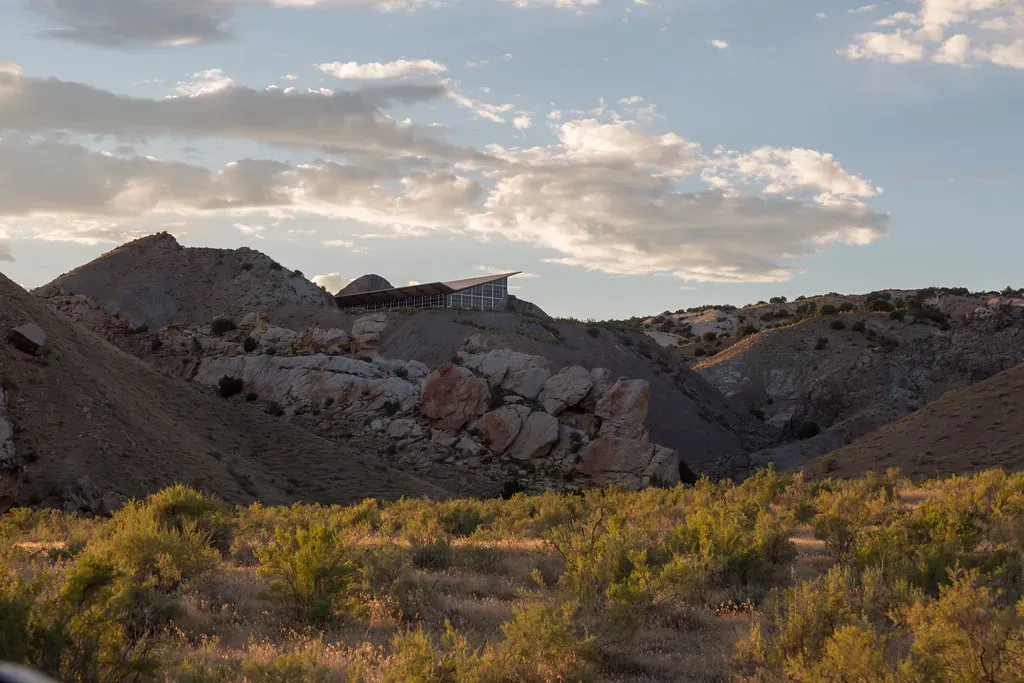
If there’s one place in the US that deserves the title “real Jurassic Park,” this is it. This scenic site at the confluence of the Green and Yampa Rivers is the real Jurassic Park, and if you love dinosaurs, you will love this monument’s exceptional quarry, which features a dense concentration of bones from a variety of prehistoric species. Honestly, the sheer scale of it is hard to wrap your head around until you’re actually there.
First protected under the Antiquities Act by President Woodrow Wilson and later expanded by President Franklin D. Roosevelt, Dinosaur National Monument is aptly named. Situated between Utah and Colorado, this stretch of mountains, canyons, and desert comprises a major chunk of the Morrison Formation, an expansive sedimentary rock unit that is considered the most productive source of near-complete dinosaur skeletons in North America. You can see over 1,500 dinosaur fossils exposed on the cliff face inside the Quarry Exhibit Hall. To touch one with your own hands is genuinely one of the most humbling experiences imaginable.
The Morrison Formation: The Backbone of American Dinosaur Science
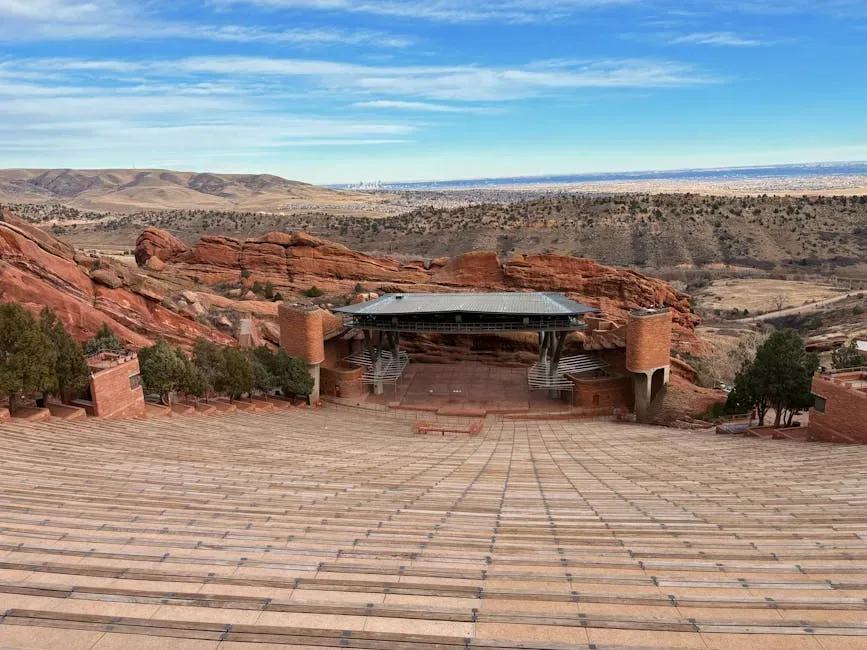
The Morrison Formation is a distinctive sequence of Upper Jurassic sedimentary rock found in the western United States and has been the most fertile source of dinosaur fossils in North America. Think of it less like a single place and more like a geological superhighway of ancient life, running beneath the feet of millions of unsuspecting Americans. It is centered in Wyoming and Colorado, with outcrops in Montana, North Dakota, South Dakota, Nebraska, Kansas, the panhandles of Oklahoma and Texas, New Mexico, Arizona, Utah, and Idaho.
The Morrison Formation dates from the Late Jurassic, or about 157 to 150 million years ago, and dinosaur bones and other fossils are found in the ancient river channels, lakes, and floodplains of the formation. Fossils of nearly 50 different species of dinosaurs have been discovered in the Morrison Formation, including the large predatory Allosaurus, along with other meat-eaters like Coelurus, Ornitholestes, and the horn-nosed Ceratosaurus. Here’s the thing: paleontologists are still making new discoveries here, and the formation likely holds many species we haven’t even named yet.
Ghost Ranch, New Mexico: Where Dinosaurs Were Just Getting Started
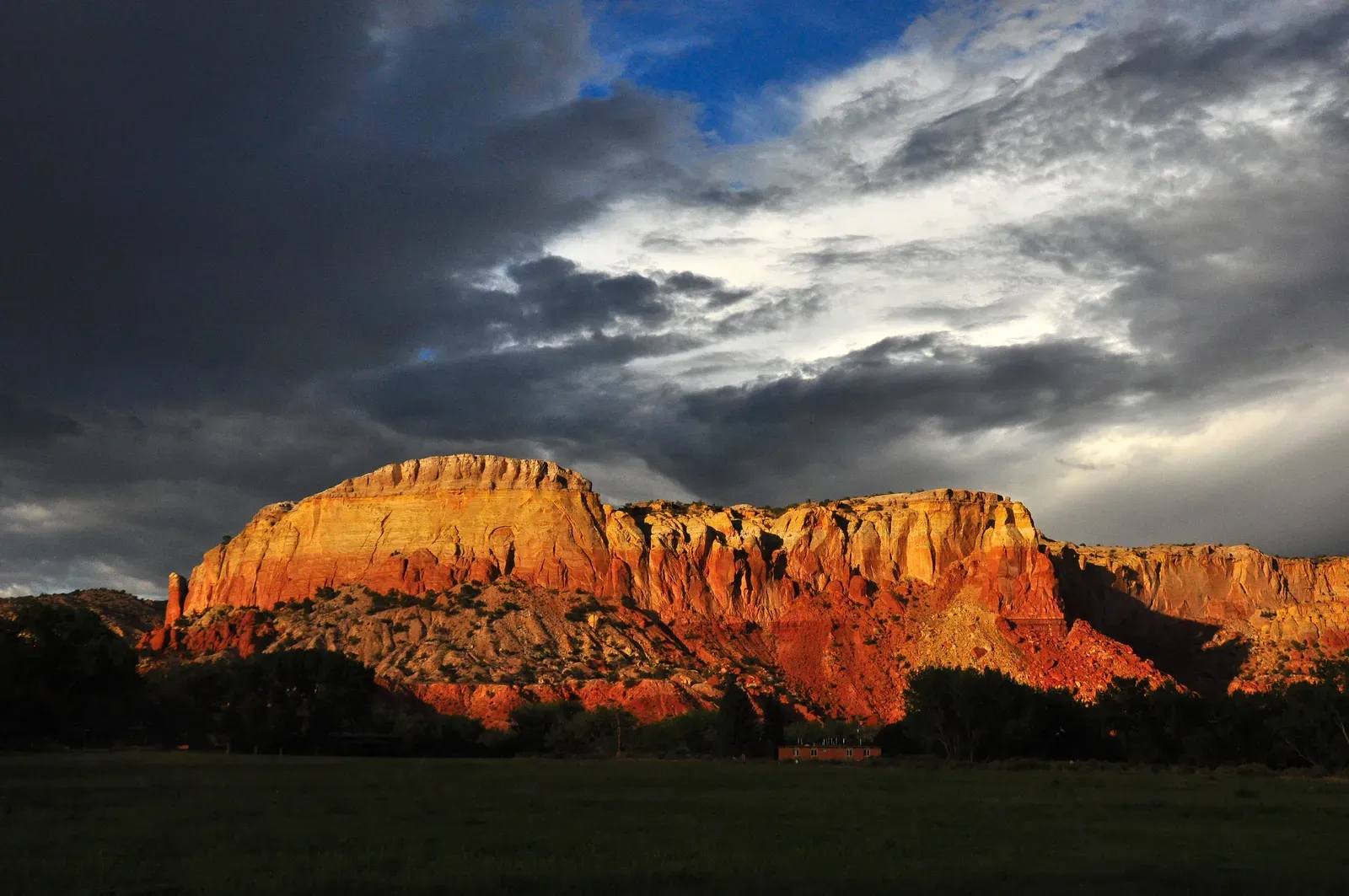
Uploaded by PDTillman, CC BY 2.0)
In the 1940s, paleontologists from the American Museum of Natural History discovered rich fossil beds in the high desert of northern New Mexico. The area, called Ghost Ranch, would shed new light on how dinosaurs evolved, and the 12,000 feet of rock layers preserve the entire age of dinosaurs, beginning when they first appeared on Earth. It sounds almost too good to be true, but that’s exactly what’s buried in those colorful desert cliffs.
In 1947, paleontologists discovered a rich fossil quarry of Coelophysis skeletons in Chinle rocks. Thousands of bones were found, including intact skeletons that represent hundreds of individuals. The large number of Coelophysis suggests that possibly they gathered in packs, although groups might also have been drinking from a water hole or feeding on a group of spawning fish. Death swept in with a catastrophic flash flood, washing the animals into a topographic low, possibly a small pond, where they were quickly and simultaneously buried. That’s a moment frozen in time for over 200 million years.
Petrified Forest National Park, Arizona: A Window to the Triassic Dawn
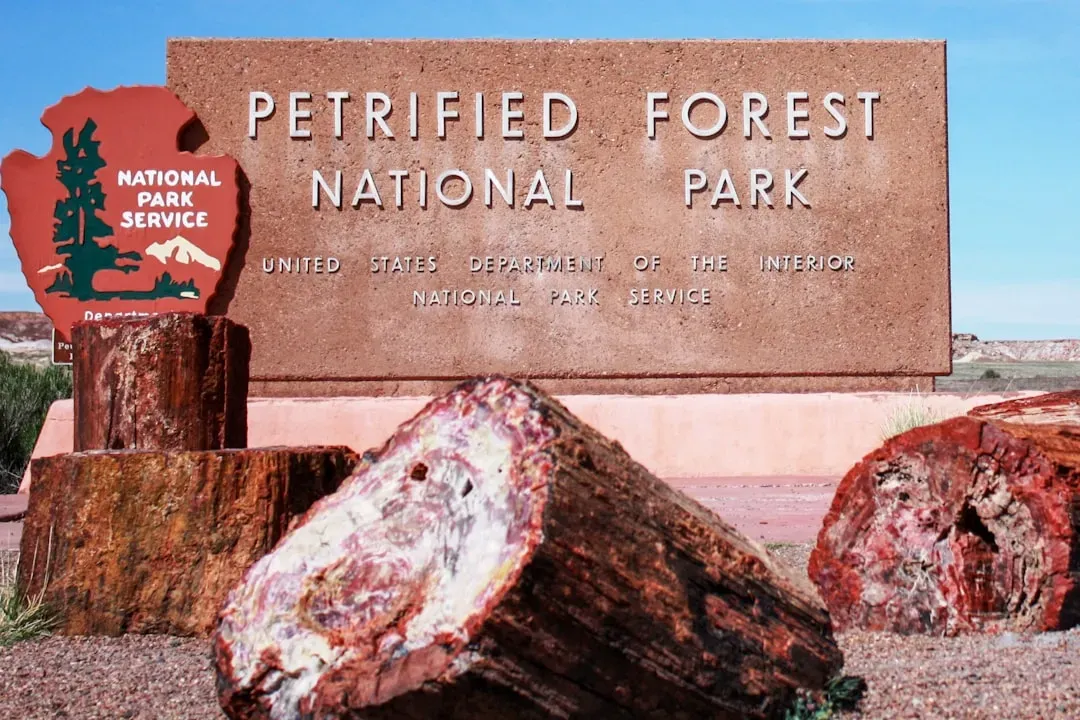
The Petrified Forest is known for its fossils, especially fallen trees that lived in the Late Triassic Epoch, about 225 million years ago. The sediments containing the fossil logs are part of the widespread and colorful Chinle Formation, from which the Painted Desert gets its name. You might visit expecting to see pretty rocks and leave realizing you’ve walked through one of the most scientifically important landscapes on the continent.
The park has also produced one of the most diverse assemblages of fossil vertebrates from the Late Triassic. Among the groups represented are early theropod dinosaurs, crocodile-line archosaurs, temnospondyl amphibians, lissamphibians, and other dinosauromorphs and archosauromorphs. During the Late Triassic, downed trees accumulating in river channels in what became the park were buried periodically by sediment containing volcanic ash. Groundwater dissolved silica from the ash and carried it into the logs, where it formed quartz crystals that gradually replaced the organic matter. Traces of iron oxide and other substances combined with the silica to create the varied colors in the petrified wood. It’s essentially nature’s version of a slow-motion miracle.
Cleveland-Lloyd Dinosaur Quarry, Utah: The Carnivore Mystery
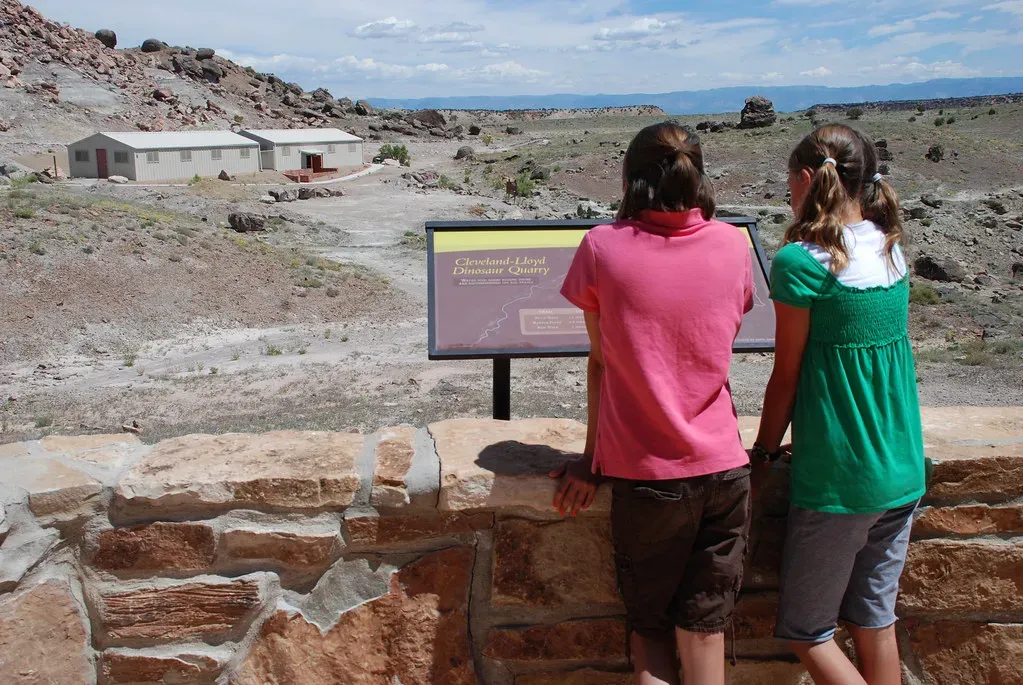
The Cleveland-Lloyd Dinosaur Quarry contains the densest concentration of Jurassic-aged dinosaur bones ever found, and scientists are still puzzled as to why more than three quarters of the bones found in this area are from carnivores. Let that sink in. Most fossil sites are dominated by the plant-eaters. Here, the predators vastly outnumber them, and nobody fully knows why.
During the Jurassic, the quarry was likely an ephemeral pond, where dinosaurs gathered and died due to severe drought. Their bodies were reworked by seasonal flooding events, which also added other partial carcasses from elsewhere. Allosaurus fragilis is by far the most common dinosaur at this site, making it a model organism for studies of paleobiology in basal theropods. The rare theropods Stokesosaurus and Marshosaurus specimens were also first discovered here. It’s hard to say for sure, but the picture this quarry paints is one of ancient desperation, a world on the edge of drought, with predators crowding around a dying water source.
Hell Creek Formation, Montana and the Dakotas: The Last Chapter of the Dinosaurs
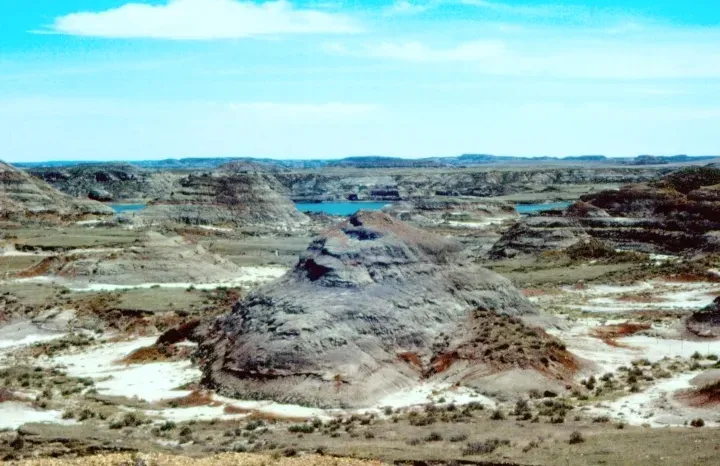
The Hell Creek Formation is an intensively studied geological formation of mostly Upper Cretaceous and some Early Paleocene rocks in North America, named for exposures studied along Hell Creek, near Jordan, Montana. The formation stretches over portions of Montana, North Dakota, South Dakota, and Wyoming. This is where the story of the dinosaurs ends, and it’s as dramatic as endings get. The site is famous for yielding fossils of the last non-avian dinosaurs, including Tyrannosaurus and Triceratops.
These rocks preserve the remains of dinosaurs that lived at the very end of the Age of Dinosaurs, and the top of the formation is capped by what is known as the KT boundary layer. This layer was deposited after a huge meteorite slammed into the ocean near the Yucatan Peninsula in Mexico, and the massive plume of smoke and dust that entered the atmosphere fell back to the ground and laid down a thin layer of ash. The climate of the region was warm, humid, and subtropical, and a high diversity of flowering plants, ferns, and conifers ensured an abundance of large herbivorous dinosaurs. You can literally walk the line between the age of dinosaurs and the world that came after.
Glen Canyon National Recreation Area, Arizona and Utah: Tracks Frozen in Stone
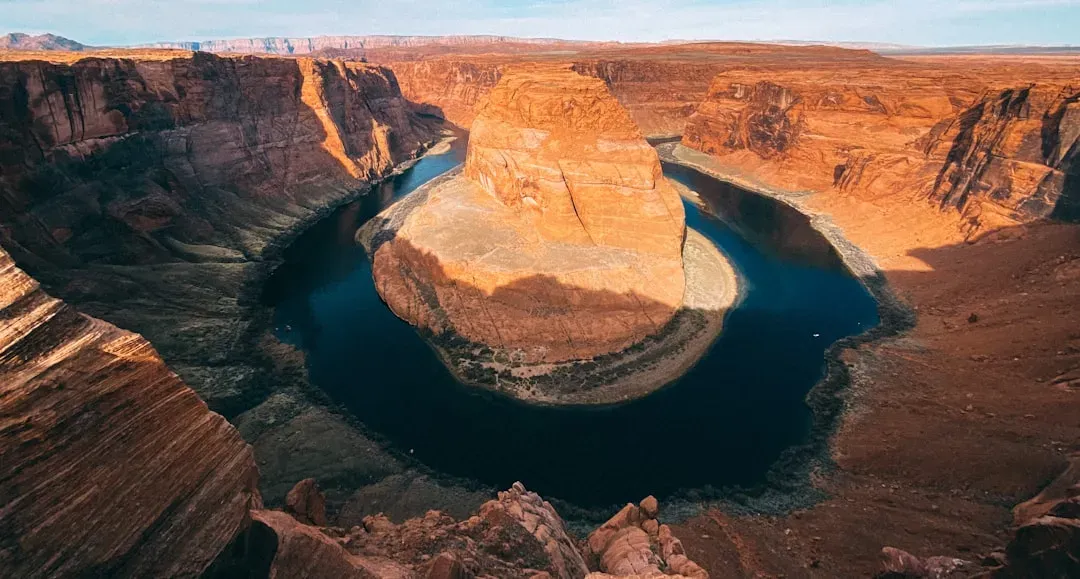
The Colorado Plateau, one of the last regions in the United States to be thoroughly mapped, is also a treasure trove of Mesozoic fossils. Head to Glen Canyon National Recreation Area to check out dinosaur tracks, the preserved footprints of dinosaurs, located in the area’s visitor centers. There’s something about footprints that feels more personal than bones, more immediate. A skeleton tells you what an animal looked like. A footprint tells you it was actually here, moving, living.
Glen Canyon National Recreation Area protects a piece of the expansive Colorado Plateau between Arizona and Utah, and like the broader region, Glen Canyon serves as a geological moment-in-time from the age of dinosaurs, the Mesozoic era, and beyond. Fossils, footprints, and geological marvels abound and are made highly accessible thanks to the region’s many well-maintained parks, monuments, and trails, with no shortage of camping and outdoor adventure to be had. It’s a region of vast desert expanses and spectacular rock formations, so for those who have a passion for nature and history, it’s well worth a week’s exploration.
The Chinle Formation Badlands: A Painted Desert Full of Prehistoric Secrets
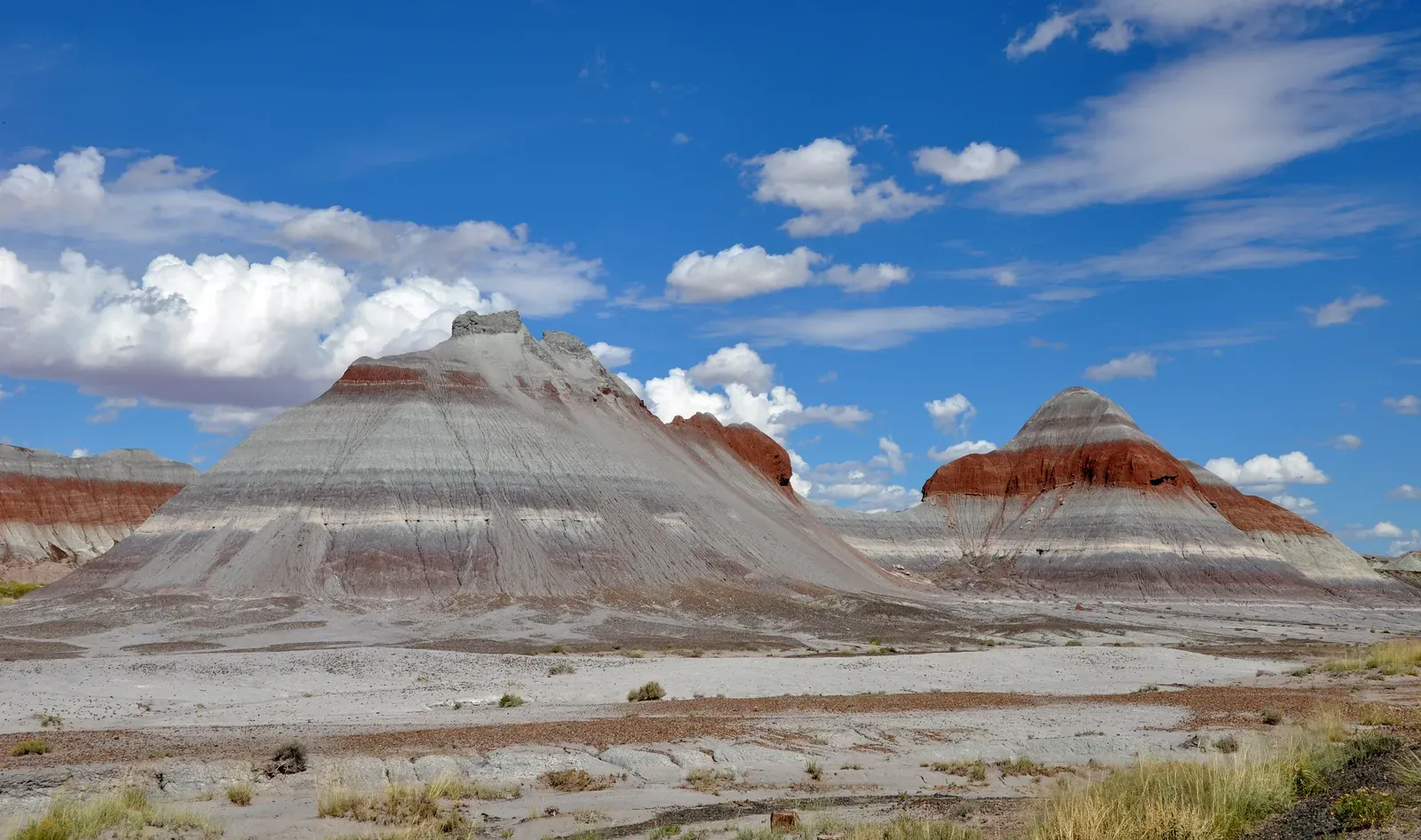
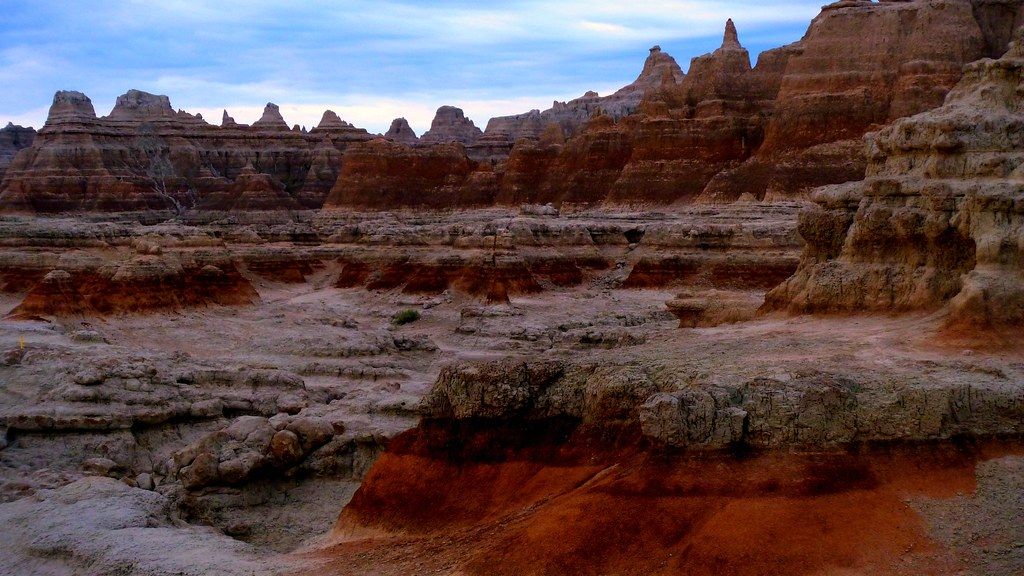
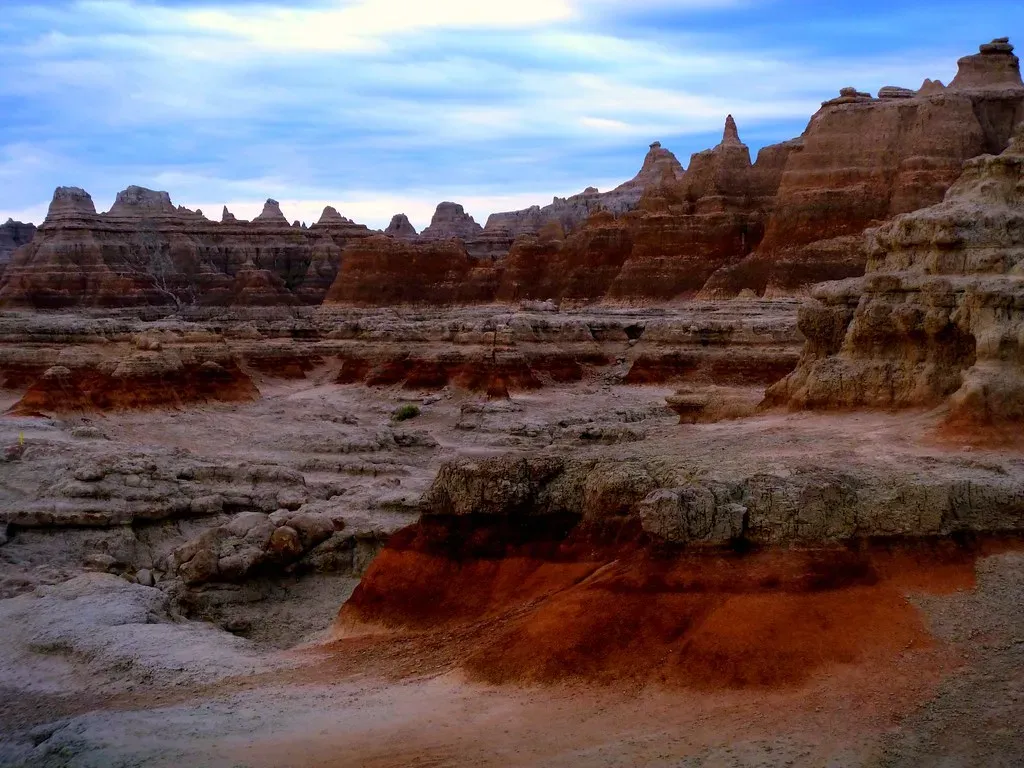
The Chinle Formation is fossiliferous, with a diverse array of extinct reptile, fish, and plant fossils, including early dinosaurs and the famous petrified wood of Petrified Forest National Park in Arizona. The Chinle Formation is one of those geological wonders that does double duty. It’s breathtakingly beautiful on the surface, an eruption of purples, reds, and yellows across the desert. Beneath that beauty, though, lies an extraordinary record of life from a time when dinosaurs were just getting their foothold on the planet.
Around 200 million years ago, the Ghost Ranch region was part of the supercontinent Pangea, when North and South America, Africa, and Europe were merged together. Located close to the equator, the area had a warmer and wetter, monsoon-like climate with heavy seasonal rainfall. Much of this land was a broad coastal plain crossed by meandering rivers where fine silt and clay were deposited. These rocks now compose the Chinle Formation, a widely distributed and distinctive rock sequence of siltstones and shales that are easily eroded. The Chinle is considered to be one of the richest Late Triassic fossil-plant deposits in the world, containing more than 200 fossil plant taxa. For anyone willing to slow down and look, this ancient painted landscape is practically shouting its history at you.
Conclusion: The Earth Beneath Your Feet Has a Story Worth Knowing
You don’t need a time machine to travel back to the age of dinosaurs. You just need to know where to look. The United States is sitting on an extraordinary archive of prehistoric life, and these eight geological wonders are among the finest chapters in that story.
From trilobites to dinosaurs, the United States has an incredibly rich fossil record that tells the story of how ancient animals and plants evolved, lived, and went extinct. What makes these places remarkable isn’t just the fossils themselves. It’s the realization that the same land you’re standing on, right now in 2026, has been changing, shifting, flooding, and drying for hundreds of millions of years. The dinosaurs didn’t disappear. They left evidence everywhere.
So the next time you visit one of these incredible sites, take a moment before rushing to the exhibit hall. Stand on that ancient rock and feel the weight of deep time beneath you. Which of these eight geological wonders would you most want to visit first? Tell us in the comments below.