

Some of the strangest things about being human only seem strange because we’ve forgotten where we came from. Our moods, our gossip, our hunger for status, even the way we fall in love are not random quirks of a modern mind; they are echoes of millions of years spent as highly social primates trying not to die. Once you see yourself the way an evolutionary biologist or primatologist would, your own behavior starts to look less mysterious and a lot more… predictable.
I still remember watching a troop of macaques at a zoo and suddenly thinking, with mildly uncomfortable clarity: that looks like a group chat in fur. The alliances, side-eyes, grooming, and squabbles were eerily familiar. From that point on, every awkward meeting, every family drama, and every craving for social media likes felt different. In this article, we’ll walk through eight very human traits that click into place once you see them as primate features, not personal failings.
1. Our Obsession With Social Status

It can feel embarrassing to admit how much we care about what other people think of us, but in primate terms, status is not vanity; it is survival math. In many primate species, higher-ranking individuals get better access to food, safer spots to rest, and more mating opportunities, while lower-ranking ones are pushed to the margins. Humans inherited that sensitivity: reputations can decide whether people help us, hire us, trust us, or quietly exclude us from crucial opportunities.
If you watch a group of chimpanzees or baboons, you will see careful attention to who outranks whom, who is allowed to interrupt whom, and who gravitates toward the center versus the edges of the group. Swap the watering hole for a conference room and the patterns look uncomfortably familiar. Our drive for status symbols – titles, blue checkmarks, luxury brands – is really a re-skinned version of seeking visible cues of rank that others can quickly notice and respond to, just as a primate troop watches who sits near the alpha.
2. Gossip As A Survival Tool, Not A Moral Failing

People often talk about gossip like it’s a moral disease that modern society should eradicate, but from a primate perspective, gossip is social radar. In a large group you simply cannot interact deeply with everyone, so you rely on others’ stories to know who is trustworthy, who shares resources, who cheats, and who might turn on you. That kind of secondhand information can dramatically improve your odds of surviving and thriving in a complex social web.
Primates groom each other not just to remove dirt or ticks, but to build alliances, soothe tension, and share attention. Human gossip is a kind of verbal grooming: instead of picking through fur, we pick through stories. When you and a friend whisper about a coworker’s behavior, you are doing a fast, verbal version of the same alliance-building and risk-mapping that a pair of monkeys does when they sit together and groom. It is not always kind, and it can absolutely be harmful, but its deep root is strategic: information is protection.
3. Our Fear Of Rejection And Craving For Belonging

The sting of social rejection can feel absurdly intense, especially when the trigger is something as small as being left on read or not being invited to a party. But for our primate ancestors, being pushed out of the group was potentially lethal: fewer allies to defend you, fewer eyes to spot predators, and less access to food and mates. The brain treats social exclusion like an existential threat because, for a very long time, it was one.
In many primate species, solitary individuals live shorter, harsher lives than those embedded in stable groups. Young primates cling furiously to their caregivers and react with panic when separated, a pattern that feels very close to human attachment behavior. Our modern fear of being ghosted, unfollowed, or publicly shamed is wired into that same circuitry. It is not that we are melodramatic; it is that our nervous system reads isolation as danger and belonging as safety, even when the “troop” is just a handful of names in a messaging app.
4. Dominance, Submission, And Why Conflict Exhausts Us

Have you ever walked into a meeting, sensed the unspoken tension, and immediately felt tired? Hierarchies are not just abstract structures; they are felt in our bodies. Among primates, dominance is constantly negotiated through stares, posture, vocalizations, and small acts of yielding or pushing. Every confrontation carries the risk of injury, so it is energy-efficient to have a pecking order and subtle signals that prevent every disagreement from becoming a physical fight.
Humans do the same thing with eye contact, tone of voice, seating choices, and how much we interrupt others. When you avoid speaking up in front of a boss who intimidates you, your behavior mirrors a lower-ranking primate avoiding direct challenge to a dominant individual. Chronic workplace or family conflict can be draining because your primate brain thinks each clash could escalate into something very costly, even if the modern “injury” would only be an email or a bad performance review.
5. Our Love Of Touch, Hugs, And Physical Closeness

In an age where so much interaction is digital, it can be surprisingly powerful to simply hold someone’s hand or get a long hug. Primates rely heavily on touch-based grooming to regulate stress and maintain bonds; they literally calm each other down through stroking and close contact. That same system sits inside us, which is why a comforting touch can slow our heartbeat and soften our breathing even when no words are exchanged.
When you see monkeys or apes resting with limbs draped over one another, it looks almost like a family on a couch. Human cuddling, handshakes, high-fives, and back pats are all modern variations of that same primate language. We sometimes act as if needing touch is childish or weak, but biologically, it is extremely old and very practical: touch signals safety, reinforces alliances, and reassures the nervous system that you are not alone in a dangerous world.
6. Food Cravings, Sweet Tooth, And “Emotional Eating”

It is easy to beat yourself up for craving sweets or salty snacks, but our primate past stacked the deck against permanent restraint. For ancestral primates, high-calorie foods like ripe fruit and fatty nuts were patchy and unpredictable. Those who experienced intense pleasure when they found sugar or fat were more likely to gorge when food was available, putting on reserves that could be lifesaving during lean times. We inherited that intense motivation, but now we live in a world where high-calorie food is everywhere.
Many primates spend a large chunk of the day foraging, scanning, and tasting to find enough energy-rich food. In that context, a powerful drive to seek out sweet, energy-dense items makes obvious sense. Our modern “emotional eating” is often a collision between that ancient reward system and modern stressors: your brain associates calorie bursts with safety after a tough patch, so it pushes you toward comforting, rich foods. The environment changed much faster than our metabolism or reward circuits did, so your cravings are old software running on new hardware.
7. Aggression, Cooperation, And Moral Outrage

Humans can be heartbreakingly kind and shockingly cruel, sometimes in the same afternoon. That contradiction sits at the heart of primate life. Many primates show fierce in-group loyalty alongside aggression toward outsiders, especially when competing for territory or resources. Cooperation within the group allows for shared protection and childcare, while aggression can serve to defend those same bonds. Our sense of moral outrage often flares when we see someone betray the group’s rules, because those rules historically kept everyone safer.
When you feel a rush of anger at someone cutting in line, cheating a system, or harming a vulnerable person, your primate brain is reacting to a perceived violation of fairness and group safety. In primate troops, individuals who repeatedly break social norms may be punished, excluded, or challenged until they fall in line or leave. Human justice systems, schoolyard dynamics, and online pile-ons all echo that basic pattern: we rally others to enforce invisible rules. The challenge, of course, is that our groups are now massive and overlapping, so our ancient enforcement systems can misfire in messy modern contexts.
8. Romantic Love, Pair Bonds, And Jealousy

Romantic love can feel like the most uniquely human experience, but long-term bonds are common in several primate species. Forming a stable pair or close partnership can help with cooperative parenting, territory defense, and mutual support, improving the survival odds of any offspring. The intense emotions we wrap into dates, weddings, and anniversaries sit on top of this deep biological function: creating a durable alliance that is hard to walk away from when things get difficult.
Jealousy, as uncomfortable as it is, also makes more sense in this light. For a primate investing heavily in a partner and offspring, losing that partner’s attention or resources to a rival could be extremely costly. That is why jealousy can feel disproportionate to the situation, like a blaring siren over a small change in behavior or attention. It is not proof that you are irrational or broken; it is an old alarm system trying (sometimes clumsily) to protect an important bond in a world where social temptations and alternatives are constantly visible.
Conclusion: Owning Our Inner Primate Instead Of Fighting It
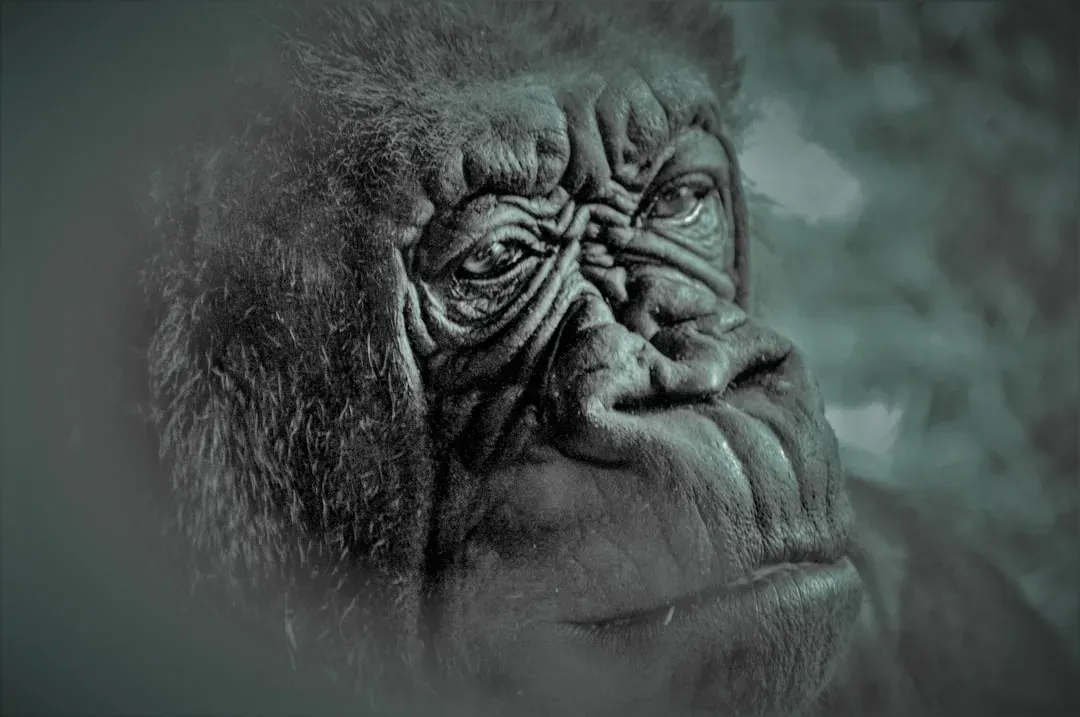
When you start seeing yourself as a slightly overcomplicated primate rather than a clean-slate rational being, a lot of self-judgment softens. Our obsession with status, sensitivity to rejection, hunger for touch, and turbulent mix of love, anger, and loyalty did not appear out of thin air; they are legacy features shaped by brutal realities our ancestors faced. That does not mean we are doomed to repeat the past, but it does mean that fighting your own wiring without understanding it is a losing game.
My own view is that growing up, psychologically, is not about transcending our primate nature but about getting honest with it and then choosing where to steer. Once you recognize that your brain is running ancient code, you can design your life – your relationships, your media diet, your work – in ways that respect those instincts instead of constantly triggering them. We are primates with smartphones, not angels with occasional glitches, and that truth can be strangely liberating. Now that you see how much of your daily life is shaped by this hidden inheritance, which of your own habits suddenly makes more sense?