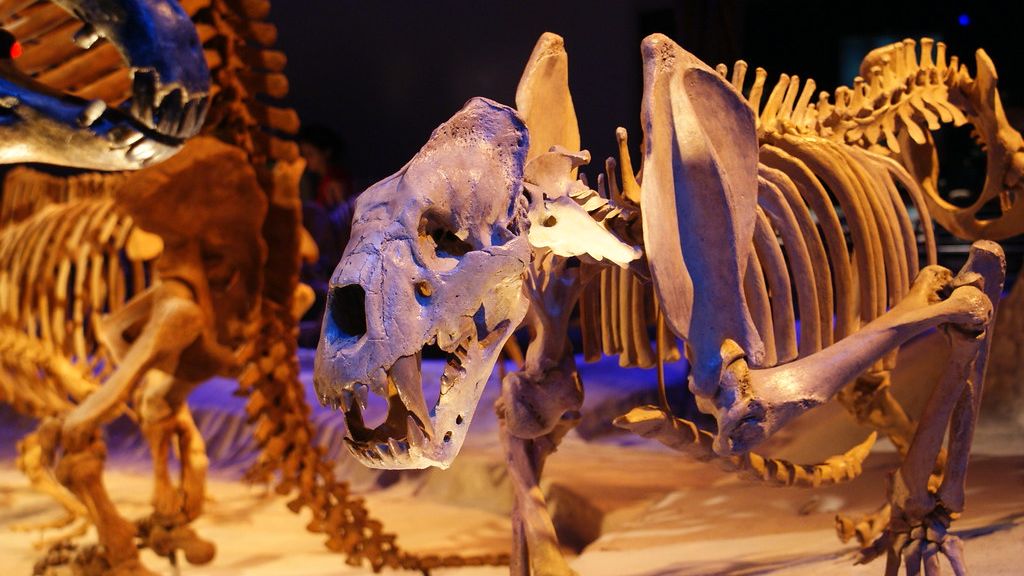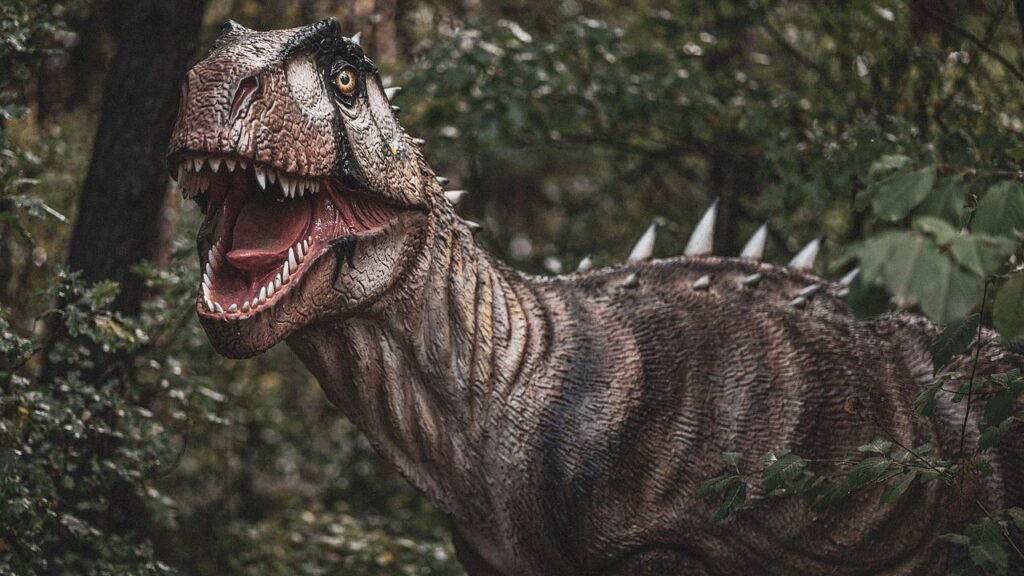
There is something deeply unsettling about imagining the world as it once was. A place where the skies were ruled by winged reptiles with wingspans the width of a small airplane, where oceans concealed creatures longer than a city bus, and where land predators were built more like armored tanks than anything you would recognize today. The sheer scale of prehistoric life has captivated scientists, children, and curious minds for centuries.
Yet here is the part that keeps researchers up at night: we still do not fully know why they grew so massive. New fossil discoveries, improved analytical techniques, and bold rethinking of old theories are reshaping everything we thought we understood about gigantism in prehistoric predators. Some of the answers are surprising. Some are genuinely jaw-dropping. Let’s dive in.
Theory 1: The Atmospheric Oxygen Boost That Changed Everything
You have probably never thought about the air you breathe as a size-determining factor, but science suggests it absolutely was. One prominent theory revolves around the oxygen levels in Earth’s ancient atmosphere, with periods like the Carboniferous period showing atmospheric oxygen levels significantly higher than today. More oxygen in the air means more fuel for metabolic processes, and bigger bodies require far more fuel to operate. Think of it like upgrading the engine in a car: richer fuel mix, bigger potential output.
All global giants are aerobically active animals, not gentle giants with low metabolic demands, and oxygen concentration in the atmosphere correlates with gigantism in the Paleozoic, though not thereafter, likely because of the elaboration of efficient gas-exchange systems in clades containing giants. What this tells you is that evolution eventually found workarounds once oxygen levels dropped, which is why predators kept growing massive even in later periods. Honestly, it is a remarkable biological pivot that science is only beginning to appreciate in full.
Theory 2: Cope’s Rule and the Relentless March Toward Bigness
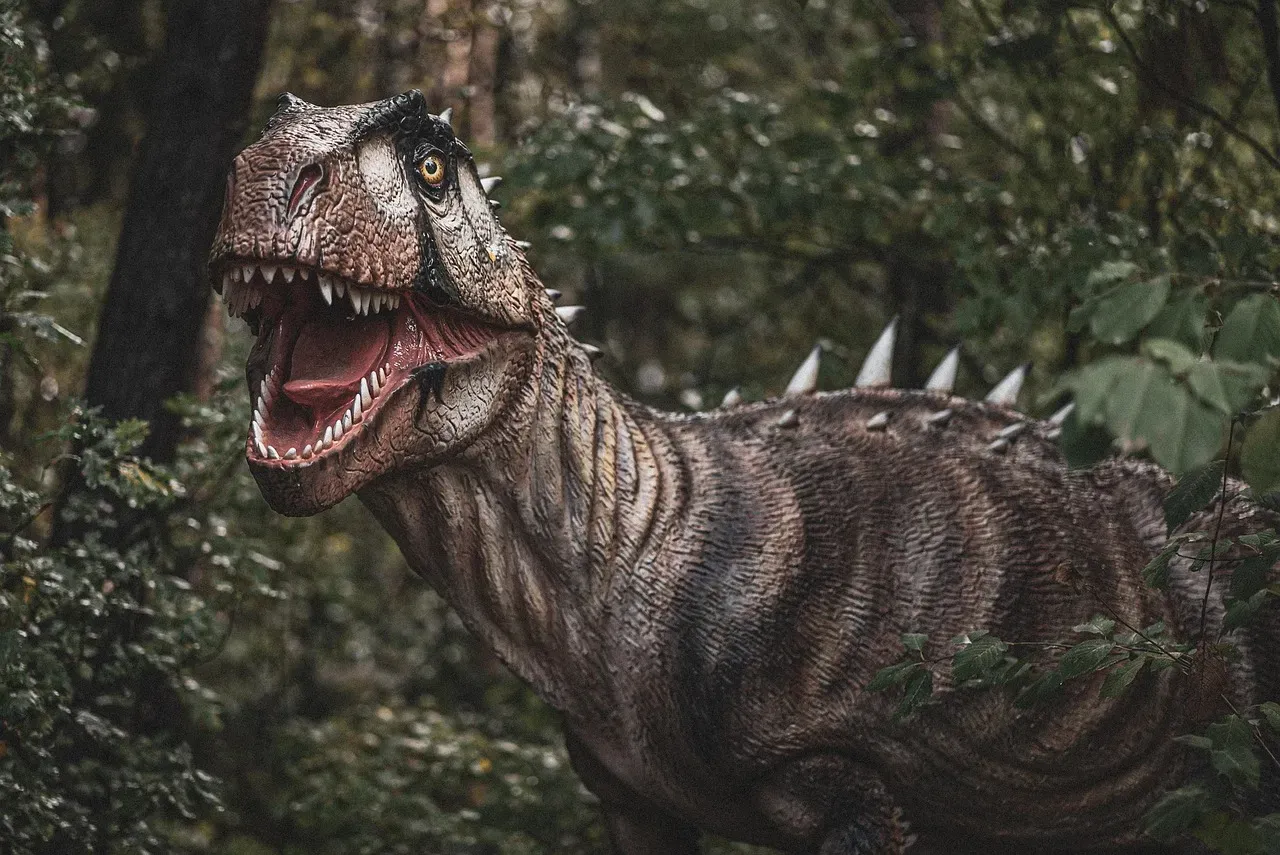
Cope’s rule, named after famed paleontologist Edward Drinker Cope, states that animals tend to increase in size across generations. Over time, each new generation of an animal species is a bit bigger than the last. It sounds almost too simple, doesn’t it? But when you project this trend across millions of years of evolution, the cumulative effect is staggering. Small advantages compound. Bigger individuals survive longer, reproduce more, and pass their size advantage down the line.
Gigantism at this level appeared tens to hundreds of millions of years after mass extinctions and long after the origins of clades in which it evolved. This tells you that gigantism was not an overnight accident but a slow, grinding, generational process. The largest predators you can imagine did not simply appear. They were the result of countless tiny size increments, stacked across deep evolutionary time. It is less like a sudden upgrade and more like compound interest playing out over geological epochs.
Theory 3: The Predator-Prey Arms Race as a Size Engine
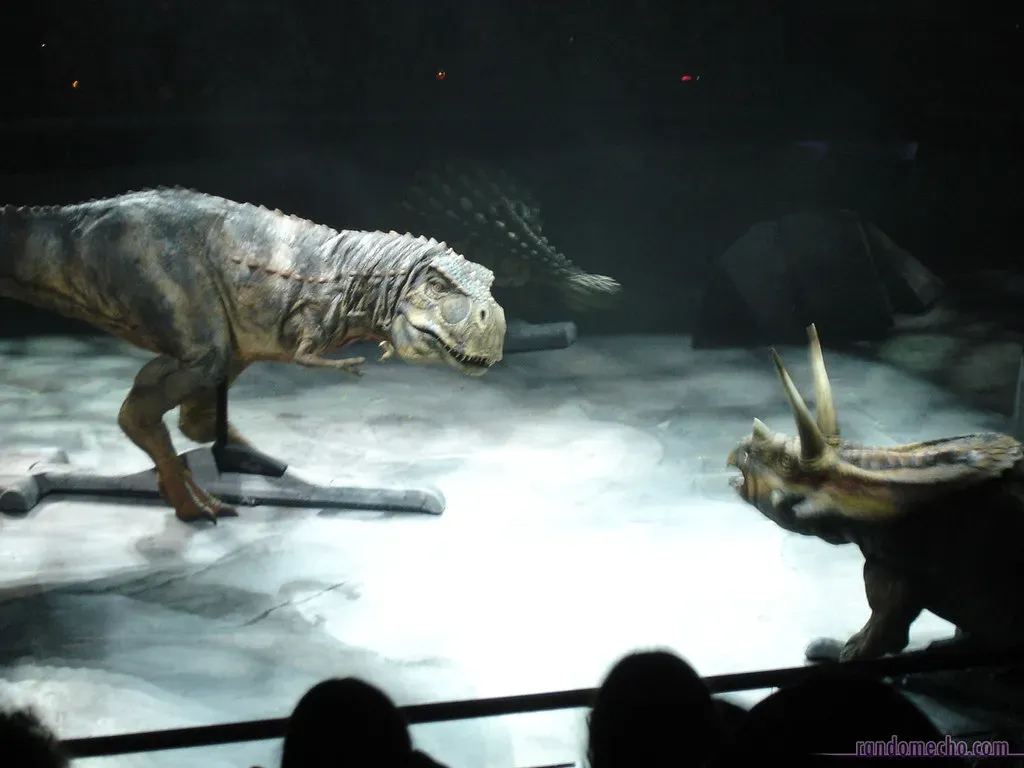
Here is a theory that has real drama to it. Throughout the natural world, there are many examples of what scientists call an evolutionary arms race, a type of ongoing cycle of adaptation between competing species that leads to increasing specialization and can be seen in the relationships between predators and prey. When your prey grows larger to defend itself, you as a predator must also grow larger to keep hunting it. The cycle feeds itself almost endlessly. It is arms race dynamics that have been reshaping ecosystems since life first developed the habit of eating other life.
A study led by researchers at the American Museum of Natural History presents the oldest known example in the fossil record of an evolutionary arms race, with 517-million-year-old predator-prey interactions occurring in the ocean covering what is now South Australia. The study was described in the journal Current Biology and provides the first demonstrable record of an evolutionary arms race in the Cambrian. This record demonstrates that predation played a pivotal role in the proliferation of early animal ecosystems and shows the rapid speed at which such phenotypic modifications arose during the Cambrian Explosion event. The implications are staggering: this size-escalating dynamic was already operating more than half a billion years ago.
Theory 4: Ecological Vacuums Left by Mass Extinction Events

Mass extinction events, while devastating, also created evolutionary opportunities. The extinction of the dinosaurs, for example, paved the way for mammals to diversify and evolve into larger forms, and the absence of dominant reptiles allowed mammals to exploit previously unavailable ecological niches. Think of it like a massive corporate shakeout: when the old giants leave, ambitious newcomers rush in to fill every available role. Nature abhors a vacuum, and prehistoric ecosystems were no different.
About 252 million years ago, the end-Permian mass extinction devastated life on Earth and was followed by intense global warming. In the recovery that followed at the start of the Mesozoic era, modern-style marine ecosystems began to take shape, and among the most important newcomers were early sea-going tetrapods, which quickly became dominant aquatic apex predators. It is a recurring pattern in Earth’s history: catastrophe clears the board, and whoever moves fastest into the empty ecological space tends to grow fast and grow large. Extinction is brutal. What follows it is extraordinary.
Theory 5: The Seventh Trophic Level and the Complexity of Ancient Food Webs
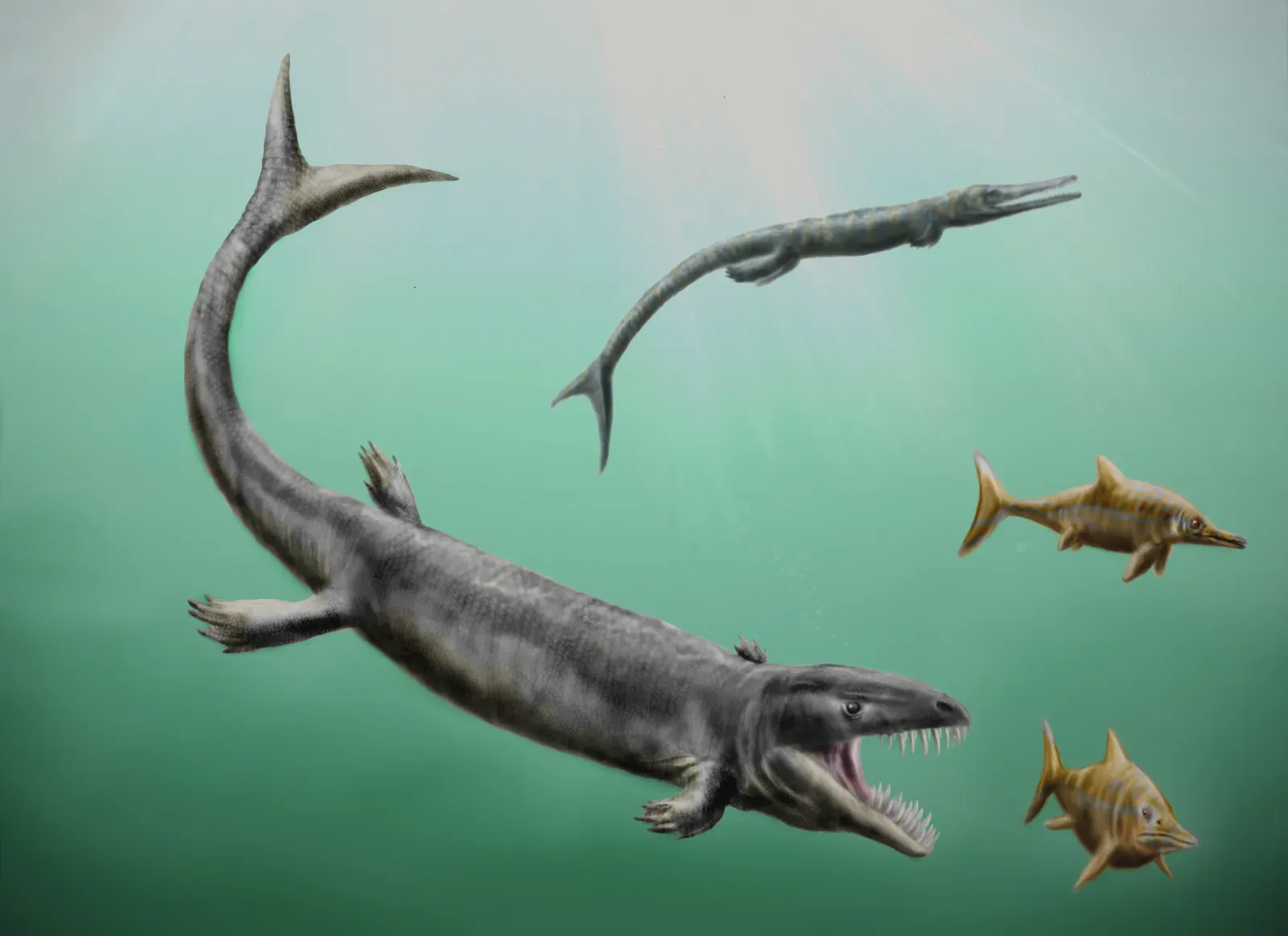
Most people assume food chains top out at a certain point. Killer whales, great white sharks, apex predators at the summit. But prehistoric oceans apparently played by entirely different rules. In today’s oceans, food chains typically reach only six levels, with animals such as killer whales and great white sharks sitting at the top, yet the discovery of predators operating at a seventh trophic level highlights just how rich and complex ancient ecosystems once were. A seventh level. Let that sink in for a moment.
Research shows that one prehistoric sea was filled with enormous marine reptiles, some growing longer than 10 meters, that occupied a previously unseen seventh level of the food chain. Trophic levels describe an organism’s position in a food chain based on how it gets energy and nutrients. This also offers rare insight into a deep evolutionary struggle, where predators and prey continuously adapted in response to one another. The more complex the food web, it seems, the greater the pressure and the resources available to push predators toward ever-larger sizes. Complexity itself may have been the engine of prehistoric gigantism.
Theory 6: Hollow Bones, Air Sacs, and the Engineering of Gigantism
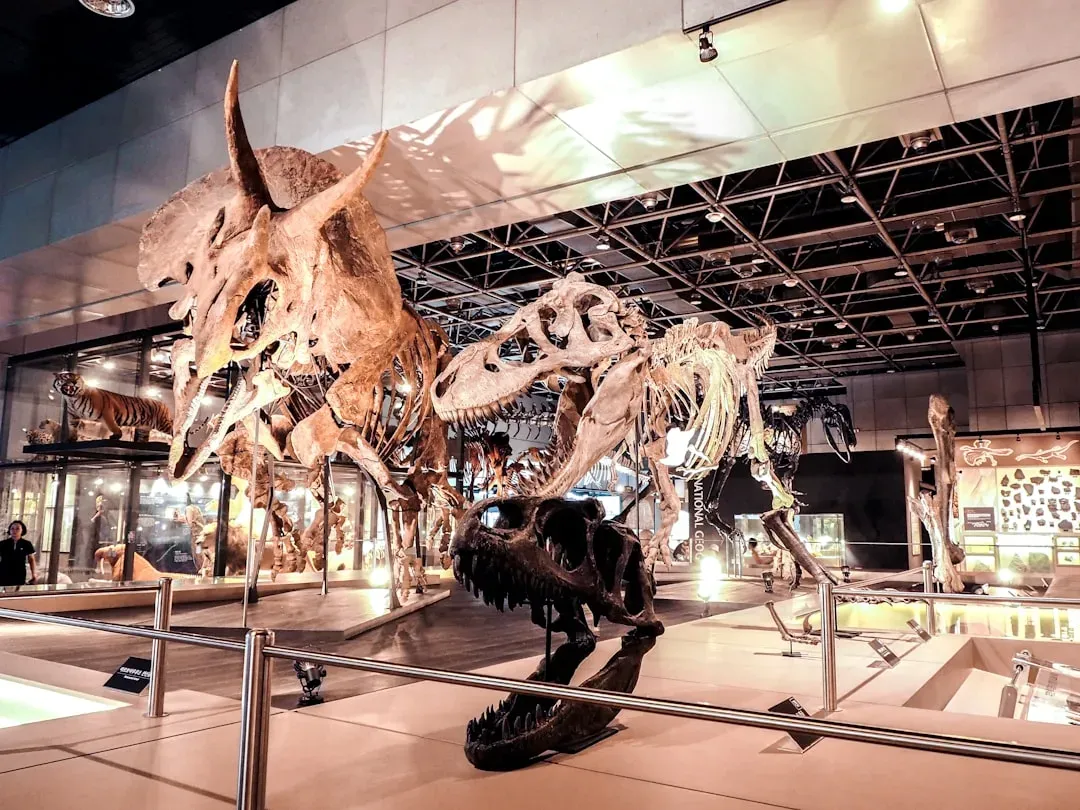
You might wonder how a predator the size of a school bus could even support its own weight, let alone chase prey. The answer lies in some remarkable biological engineering. Prehistoric animals often had unique anatomical features, such as lightweight bones and air sacs, which helped support their large sizes, and these adaptations allowed them to maintain mobility and breathe efficiently despite their massive body structures. It is like building a skyscraper with hollow steel beams: the structure retains strength while shedding unnecessary mass.
Pterosaurs had a highly effective flow-through respiratory system, which allowed them the ability to sustain flight, and azhdarchids were one of the largest flying pterosaurs in the world, with wingspans of 32.8 feet and weighing as much as 440 pounds. Studies have shown their bones were intricate structures that made them super strong and stable, but also super light so these reptiles could fly. I think what is most amazing here is that gigantism was not just about raw size. It required a complete redesign of the skeletal and respiratory system. Without those adaptations, the largest predators simply could not have existed, let alone hunted.
Theory 7: Trophic Cascades and the Top-Down Shaping of Prehistoric Ecosystems

A trophic cascade is an ecological phenomenon triggered by the addition or removal of top predators and involving reciprocal changes in the relative populations of predator and prey through a food chain. Apply this logic backward into deep prehistory and you get a fascinating picture: in ecosystems where herbivore populations were truly enormous, there was both the pressure and the energy surplus needed to sustain equally enormous predators. The cascade ran in both directions. Large prey populations encouraged large predator populations, which then kept herbivore numbers in check. A self-reinforcing system of size.
Trophic cascades are powerful indirect interactions that can control entire ecosystems, occurring when a trophic level in a food web is suppressed. A top-down cascade will occur if predators are effective enough in predation to reduce the abundance or alter the behavior of their prey, thereby releasing the next lower trophic level from predation. In prehistoric environments, where plant biomass was often vastly more abundant than today, the base of the cascade was enormously productive. That abundance rippled upward, providing the caloric foundation for predators of truly mind-bending scale. It is a bottom-up fuel supply meeting top-down evolutionary pressure, and the result was prehistoric monsters.
Theory 8: Geographic Dispersal, Competition, and the Continental Size Race
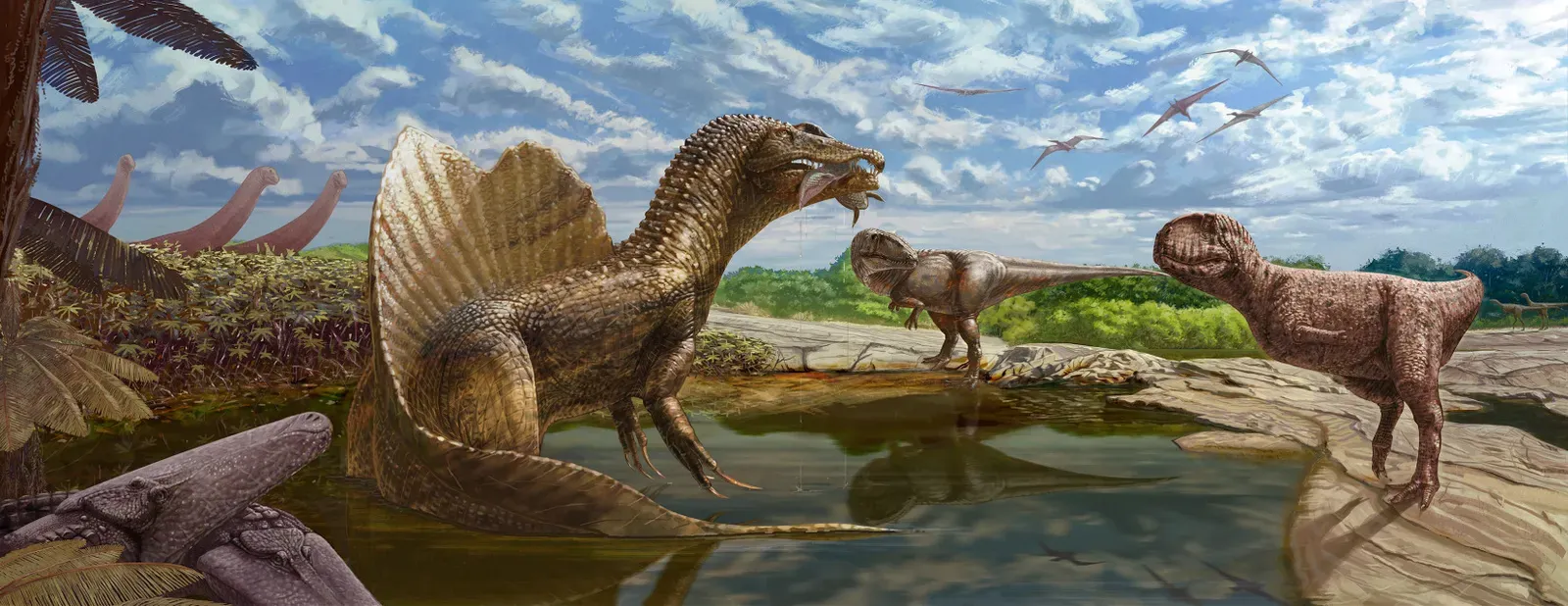
Findings suggest that some of the earliest Mesozoic marine tetrapods expanded quickly into multiple ecological roles and spread widely across the planet, and they may have traveled along the coastlines of interconnected supercontinents during the first two million years of the Age of Dinosaurs. This geographic spread is critical. When species colonize new territories, they face fresh competition and new prey, and both pressures can accelerate evolutionary change, including size increases. It is like being the first fast-food chain in a new city: the rewards go to whoever scales up fastest.
Joaquinraptor was found in rocks dating close to the end of the Cretaceous, and its placement in time and in prehistoric South America indicates that megaraptors were apex predators in Patagonia while tyrannosaurs filled the same role in North America. Different continents, separated by geography, independently produced their own giant apex predators. Competition for resources drove size increases, with larger animals often better equipped to compete for food, territory, and mates, leading to an evolutionary arms race where species grew larger and larger to outcompete rivals. The conclusion is striking: geographic isolation did not slow down gigantism. It multiplied it, producing separate evolutionary experiments that all arrived at roughly the same answer: get bigger, dominate, survive.
Conclusion: The Giant Question That Still Has More Answers to Give
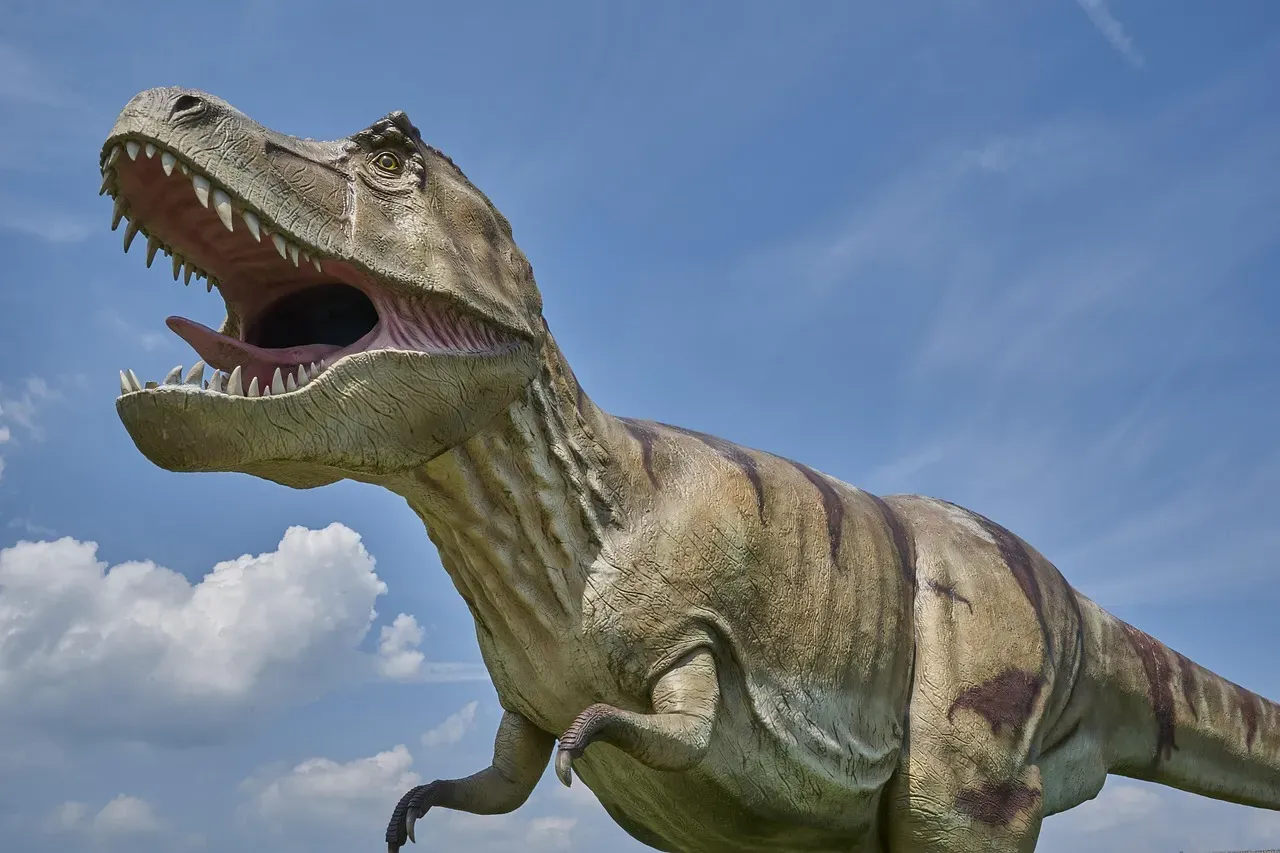
What emerges from all of this is not a single tidy explanation for why prehistoric predators grew so enormous. It is something far more interesting: a complex web of interacting forces that pushed life toward size from multiple directions at once. Atmospheric chemistry, evolutionary drift, competitive pressures, ecological vacuums, biological engineering, food web complexity, and continental geography all played their roles. Remove any one factor and the story changes entirely.
The truly humbling part is that we are still uncovering pieces of this puzzle. New fossil discoveries in Colombia, Australia, Thailand, and South America keep rewriting what we thought we knew. The bones that science has not yet found may contain the most important answers of all. Perhaps the most honest thing you can say about is this: the deeper we dig, the more extraordinary the story becomes. So what do you think: is there a prehistoric giant out there whose story science has not yet told? Tell us in the comments.