
There’s a quiet moment when smart people stop, look around the office, and think: “Wait… why is everyone okay with this?” It might be an endless meeting that goes nowhere, a bad process everyone tiptoes around, or a culture where showing off matters more than doing the actual work. What most people accept as “just how it is” often hits high-IQ minds like nails on a chalkboard.
This isn’t about feeling superior; it’s about seeing the hidden cost of these supposedly “normal” habits: burned-out teams, wasted time, and opportunities that never quite turn into anything real. If you’ve ever felt like the odd one out for questioning what others take for granted, you’re not alone. Let’s walk through eight things high-IQ people quietly refuse to tolerate at work, even when everyone else shrugs and calls it business as usual.
1. Pretending Busyness Is The Same As Real Productivity

High-IQ people notice that in many workplaces, being constantly busy is treated like a badge of honor, even when very little of that “busyness” actually matters. They see colleagues racing from meeting to meeting, living in their inboxes, and frantically responding to every notification while meaningful projects inch forward at a snail’s pace. To them, this obsession with activity over outcomes feels like watching someone run on a treadmill and calling it traveling.
Instead, they care about leverage: what single task, decision, or conversation will make everything else easier or unnecessary. Rather than boasting about working late or having a jam-packed calendar, they want evidence that something important moved forward. This is why they tend to cut through noise, ask uncomfortable questions like “Why are we doing this at all?”, and resist pressure to look busy for the sake of appearances.
2. Endless Meetings That Exist Just To Avoid Decisions

Most people roll their eyes at pointless meetings, but still show up, sit through them, and accept them as part of adult life. High-IQ people see something more troubling: meetings are often a socially acceptable way to postpone responsibility. When every issue leads to another “sync,” “touch base,” or “check-in,” they recognize a pattern of decision paralysis dressed up as collaboration. It’s not that they hate meetings; they hate meetings that could have been a clear email and one firm decision.
Because they process information quickly, they get impatient when a one-hour slot is spent rehashing old points or circling around an obvious conclusion nobody wants to say aloud. They gravitate toward structures like tight agendas, clear owners, and defined next steps, and they mentally check out when a meeting has none of these. Over time, they quietly filter which meetings genuinely require their brain and which ones are just institutionalized procrastination.
3. Rewarding Optics And Politics Over Actual Competence

High-IQ people are acutely sensitive to the difference between looking good and being good. In many workplaces, performance is judged less on the quality of thinking or long-term results, and more on how confidently someone talks in front of senior leaders, how often their name shows up in email threads, or how skillfully they align themselves with powerful people. To a sharp mind, this feels less like a company and more like a popularity contest with a dress code.
They notice when promotions go to the loudest voice instead of the person who solved the hardest problem, or when someone’s main talent is rewriting other people’s work and presenting it as leadership. While others may shrug and say, “That’s just office politics,” high-IQ people find it fundamentally demotivating. They still play the game enough to survive, but they never fully accept a system that consistently undervalues depth, expertise, and quiet competence.
4. Treating Burnout As A Badge Of Honor

In many workplaces, running on empty is weirdly romanticized: late-night emails, proud mentions of skipping lunch, and stories of surviving on coffee and adrenaline are framed as proof of dedication. High-IQ people see the math behind this and know it doesn’t add up. Chronic overwork erodes attention, memory, creativity, and decision-making – the very cognitive strengths they rely on most. To them, burnout is not a sign of commitment; it’s a sign that the system is badly designed.
They are more likely to ask questions such as, “If we keep needing heroics, what’s broken in the process?” Rather than glorifying emergency sprints, they prefer sustainable workflows, clear priorities, and realistic timelines. They might choose to put in intense effort for short bursts when it truly matters, but they refuse to normalize exhaustion as the default setting. Deep down, they know that a tired brain is an unreliable brain, no matter how impressive the timesheets look.
5. Following Arbitrary Rules That Make No Logical Sense
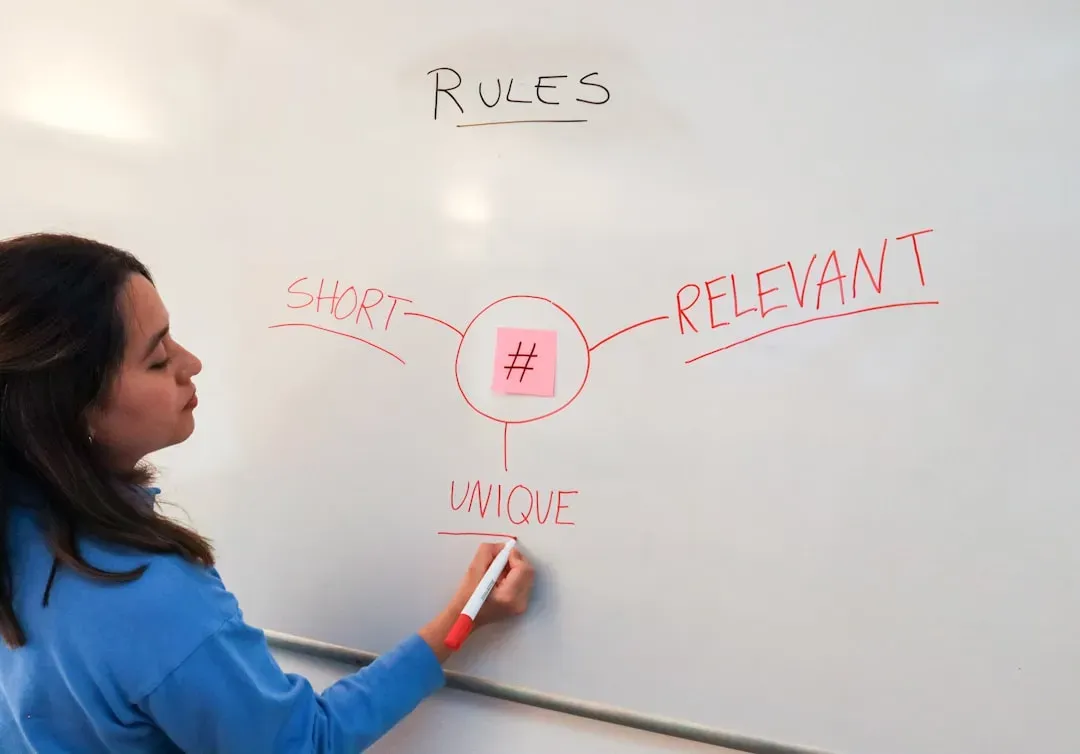
High-IQ people rarely accept rules just because “that’s the way we’ve always done it.” When they encounter policies that contradict reality, waste talent, or block obvious improvements, they feel an almost physical irritation. Things like forcing everyone into the office for work that is clearly asynchronous, requiring multi-step approvals for tiny decisions, or insisting on outdated formats simply because a senior person prefers them are all red flags to a logically oriented mind.
What others experience as mildly annoying, they experience as structurally absurd. They instinctively ask, “What is this rule trying to protect or achieve, and is it actually doing that?” If the answer is no, they start probing, suggesting alternatives, or quietly bypassing the rule where they can. Over time, this can make them look rebellious or difficult, but from their perspective, they’re just trying to remove friction that serves no real purpose beyond keeping everyone comfortably stuck.
6. Treating Data As Decoration Instead Of A Decision Tool

In modern workplaces, people love to say they are data-driven, but high-IQ employees spot very quickly when data is only being used as a prop. They notice when charts are cherry-picked to justify a decision that was made emotionally weeks ago, or when numbers are presented without any sense of context, causality, or uncertainty. To them, that feels like using a microscope as a paperweight – impressive in appearance, useless in practice.
They want data to challenge assumptions, refine strategies, and sometimes overturn comfortable beliefs, not just to dress up a slide deck. When they see leadership ignoring inconvenient numbers or clinging to vanity metrics that look good but mean little, they mentally downgrade their trust in the organization’s judgment. While others might be dazzled by dashboards and buzzwords, high-IQ people care far more about the simple questions: What does this number really tell us, and what are we actually going to do differently because of it?
7. Confusing Constant Availability With Being A Good Employee

Modern work often subtly encourages employees to be always reachable: instant replies to messages, late-night pings, and an unspoken expectation that people will respond, “just quickly,” no matter the hour. High-IQ people see how this shatters deep focus, which they know is essential for complex thinking, problem solving, and original ideas. To them, a workday chopped into tiny reactive fragments is like trying to write a book while someone taps you on the shoulder every three minutes.
They refuse to fully buy into the idea that responsiveness equals value. Instead, they value long stretches of uninterrupted time, delayed replies when they are doing serious work, and clear communication about when they are offline. This might make them seem less “plugged in,” but their actual output – especially on cognitively demanding tasks – tends to be far higher. They would rather be occasionally slow to respond than permanently shallow in their thinking.
8. Accepting Vague Goals And Fuzzy Responsibility As Normal

Many workplaces operate in a haze of ambiguity: projects with unclear owners, goals that sound inspiring but are impossible to measure, and overlapping responsibilities that allow everyone to claim credit and dodge blame. High-IQ people find this deeply unsatisfying because their brains naturally look for structure, causality, and clear definitions. When no one really knows what success looks like, they see a breeding ground for confusion, politics, and quietly wasted potential.
They push for clarity: Who is truly accountable? What does “done” actually mean? How will we know if this worked? Others may roll their eyes and accuse them of overthinking, but they understand that vague expectations are a hidden tax on every project. When the destination is fuzzy, even talented teams wander in circles. High-IQ people do not accept that as normal; they see it as fixable, if someone is willing to ask sharper questions and tolerate a bit of discomfort.
Conclusion: The Cost Of “Normal” Is Higher Than It Looks

What many people call normal at work – constant busyness, endless meetings, fuzzy goals, performative politics – high-IQ people experience as an unnecessary drag on human potential. They are not rejecting work itself; they are rejecting inefficiency, incoherence, and the quiet erosion of thought that happens when bad habits harden into unquestioned norms. In my own experience, the smartest and most grounded colleagues were rarely the ones who adapted perfectly to all the nonsense; they were the ones who quietly refused to play along where it mattered.
This resistance can make them seem impatient, difficult, or even arrogant, but often it is simply a refusal to sacrifice clarity, depth, and integrity on the altar of “how we’ve always done it.” Whether you consider yourself high-IQ or not, you probably recognize some of these patterns in your own workplace. The real question is not whether they exist – they almost always do – but how much of them you are willing to accept before you start saying, “No, this doesn’t have to be normal.” Which of these so-called norms are you ready to stop tolerating first?