There is something almost impossible to put into words about standing on a patch of earth and realizing that, roughly 150 million years ago, a creature the size of a school bus walked right where you’re standing. It’s the kind of moment that shrinks you down to size in the best possible way. The United States, honestly, is one of the most extraordinary places on Earth for exactly that experience.
From the sandstone canyons of Utah to the limestone riverbeds of Texas, this country hides an astonishing number of places where you can get up close to real, tangible dinosaur history. Not behind thick glass. Not on a screen. Right there, in the open air, under a wide sky. Let’s dive in.
1. Dinosaur National Monument, Utah and Colorado – The Undisputed King of Dino Parks
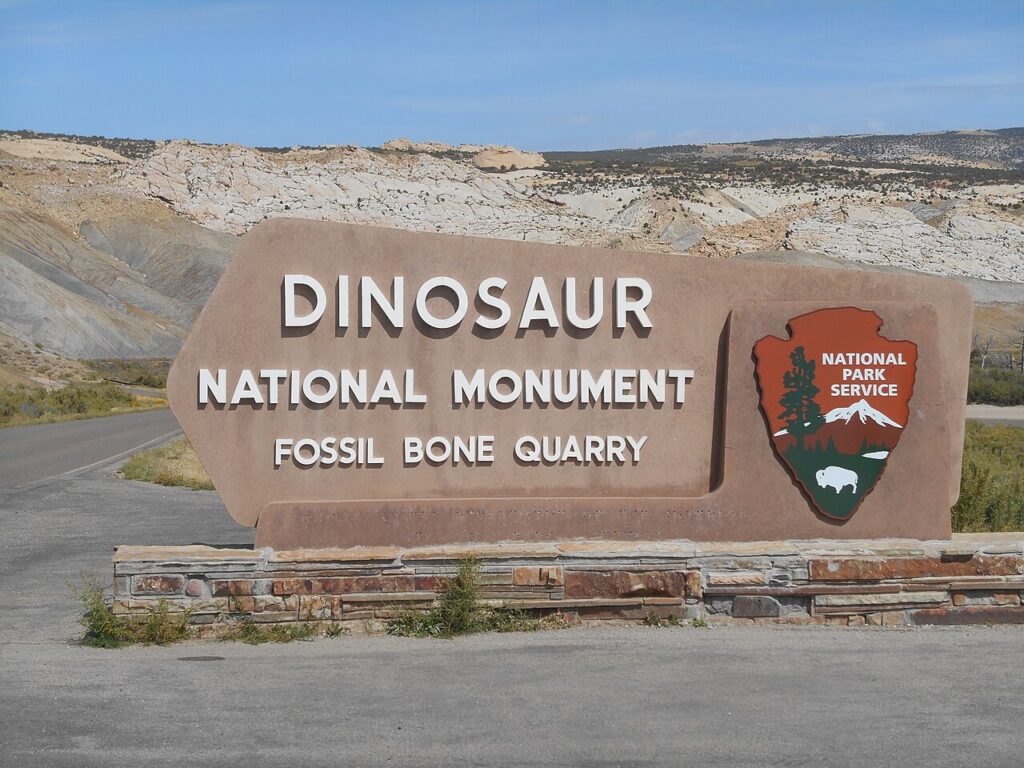
If you’re only ever going to visit one dinosaur site in America, let’s be real, this is probably the one. Dinosaur National Monument is a fantastic place to see dinosaur fossils – it may just be the absolute best dinosaur fossil park in the United States. The sheer scale of what you’ll find here is genuinely jaw-dropping.
Located on the border of Colorado and Utah, where the Yampa and Green Rivers meet, this spectacular national monument was created in 1915 specifically to protect the world-famous Dinosaur Quarry, and later expanded to preserve the region’s extraordinary landscapes. There are over 800 paleontological sites across the monument. Think about that number for a moment. Eight hundred sites. You could visit this place every weekend for years and still not absorb it all.
Visitors can see over 1,500 dinosaur fossils exposed on the cliff face inside the Quarry Exhibit Hall. You can even touch dinosaur remains from 149 million years ago. The most common species are sauropods, including the Diplodocus, one of the longest known dinosaurs. The site also contains remains from species such as the Stegosaurus and the Apatosaurus. Touching a fossil that old does something strange and wonderful to your sense of time.
Situated between Utah and Colorado, this stretch of mountains, canyons, and desert comprises a major chunk of the Morrison Formation, an expansive sedimentary rock unit that is considered the most productive source of near-complete dinosaur skeletons in North America. Beyond the fossils, you can experience Dinosaur’s remote canyons and wilderness by rafting on the Green or Yampa rivers. It’s the kind of park that rewards you whether you’re a serious paleontology nerd or just someone who loves an incredible landscape.
2. Dinosaur Valley State Park, Glen Rose, Texas – Walk in Their Actual Footprints
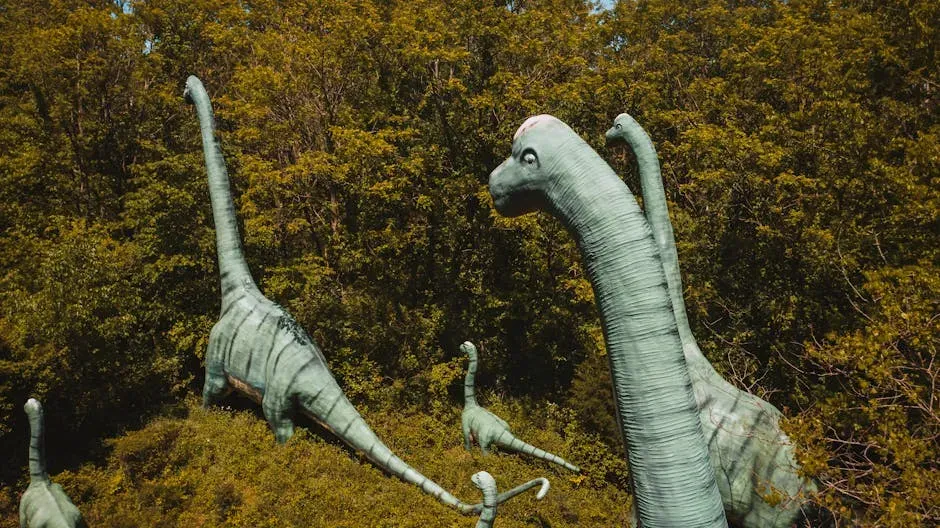
Most parks let you look at dinosaur fossils through a barrier or from a designated path. Dinosaur Valley in Texas has a completely different offering, and honestly, it’s one of the most thrilling in the country. On the banks of the Paluxy River, the tracks of dinosaurs are preserved in the riverbed. At Dinosaur Valley State Park, this surreal experience is a reality – the park is home to some of the best-preserved dinosaur tracks in the world, allowing visitors to literally walk in the footsteps of these ancient giants.
More than a century ago, locals spotted strange three-toed footprints pressed deep into the limestone riverbed. Turns out, they belonged to sauropods and theropods that walked here over 113 million years ago. The park is known for its hundreds of visible fossilized dinosaur tracks in the bed of the Paluxy River, left by Acrocanthosaurus and Sauroposeidon dinosaurs. When the river runs low in late summer, the prints reveal themselves in spectacular clarity – some so sharp you can trace the outline of each toe.
You can explore over 20 miles of scenic trails, and the park’s river offers opportunities for swimming, fishing, and paddling, providing a refreshing escape from the Texas heat. Admission is typically $8 per adult, and kids 12 and under are free. For the price of a fast-food meal, you get one of the most memorable prehistoric experiences in the entire country.
The best time to visit is late summer or early fall, when the Paluxy runs low and the tracks are clear. Pro tip: check the park’s daily track visibility updates before you drive out, because heavy rain can submerge the prints completely. Patience and timing will reward you with a moment you’ll remember for the rest of your life.
3. Petrified Forest National Park, Arizona – Where Ancient Trees Became Stone and Dinosaurs Left Their Mark
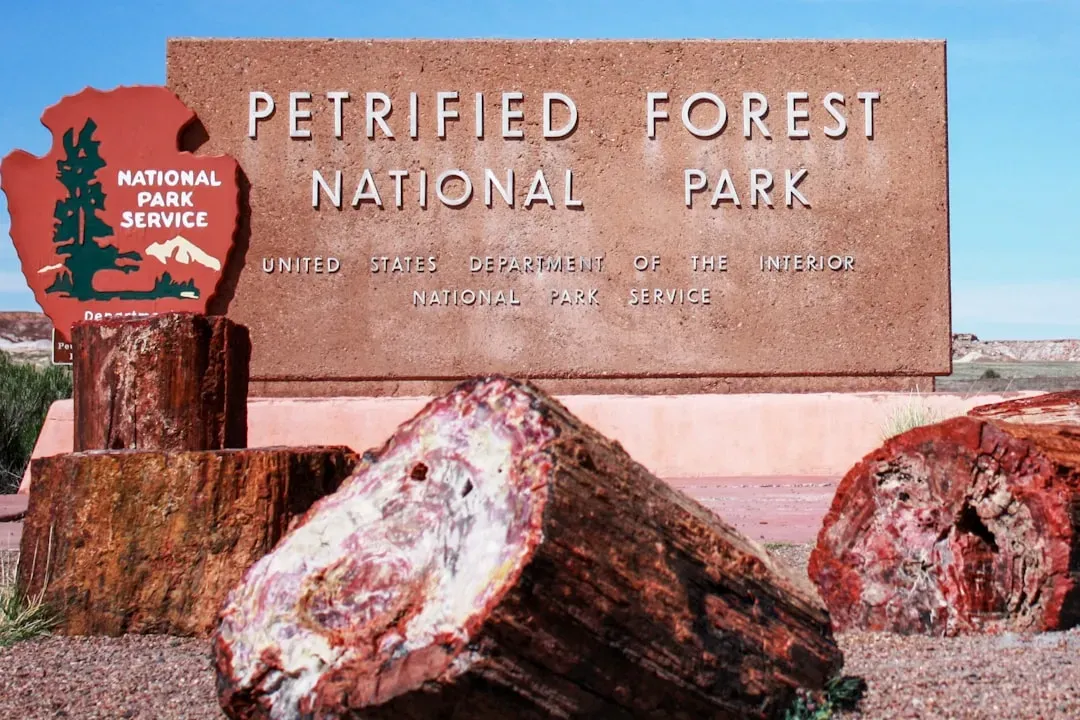
Most people visit Petrified Forest for the obvious reason – those impossibly gorgeous logs of crystallized wood scattered across the desert floor like the ruins of some alien civilization. Petrified Forest National Park is known for its fossils, especially of fallen trees that lived in the Late Triassic Epoch of the Mesozoic era, about 225 to 207 million years ago. During this epoch, the region was near the equator on the southwestern edge of the supercontinent Pangaea, and its climate was humid and subtropical. Hard to believe when you’re staring at a scorched Arizona landscape, right?
Petrified Forest covers more than 220,000 acres in northeastern Arizona and contains exposures of the Chinle Formation. The sediments were deposited between 228 and 208 million years ago, when Arizona was close to the equator – a landscape of floodplains, ponds, and meandering rivers. Some of the earliest dinosaurs, such as Chindesaurus bryansmalli and Coelophysis, have been unearthed there. These weren’t the massive giants of the Jurassic era – they were lean, fast, early pioneers of what would become one of evolution’s most dominant dynasties.
The park discovers a new species of dinosaur from the late Triassic period two or three times a year. That’s a staggering rate of discovery for a place that’s been studied for over a century. Visiting the Museum Demonstration Laboratory at the Painted Desert Community Complex lets you speak to a paleontologist and watch them prepare fossils in real time. That kind of access to active science is genuinely rare.
If ancient trees are your thing, try the Giant Logs Trail behind the Rainbow Forest Museum and Visitors Center, or the paved Crystal Forest Trail. Among the park’s archaeological features are petroglyphs, such as Newspaper Rock, and the ruins of ancient Ancestral Pueblo pueblos. It’s a park that layers prehistoric biology, geology, and human history all into one remarkable visit.
4. Badlands National Park, South Dakota – Fossils Around Every Bend
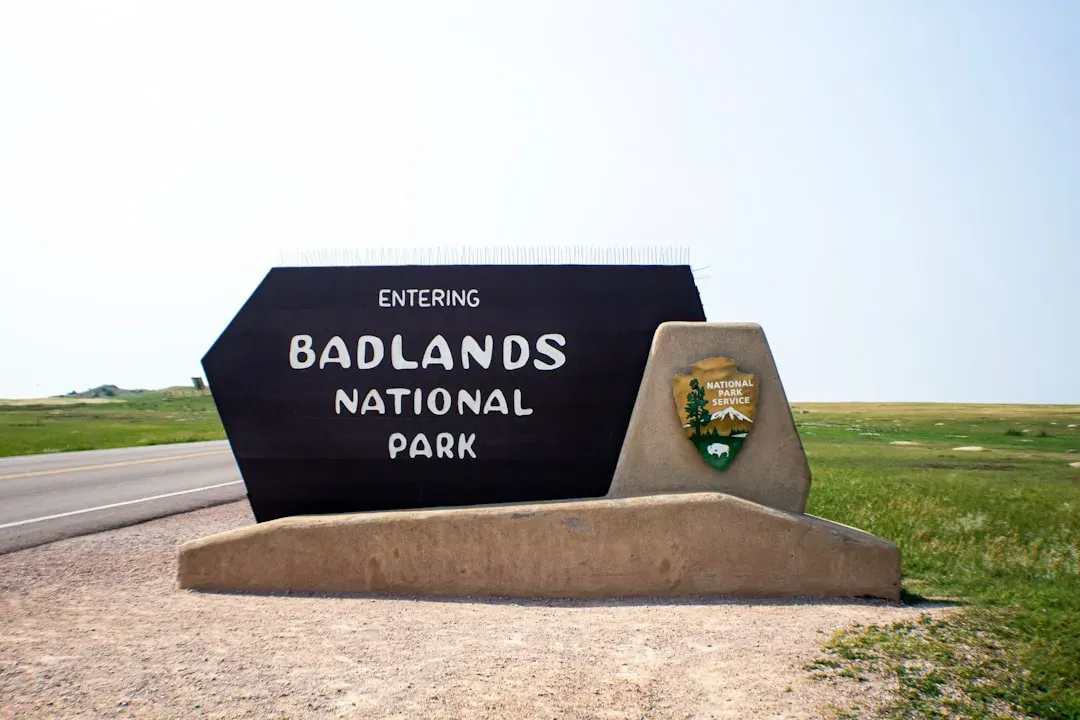
The Badlands have an almost otherworldly quality – jagged spires and sculpted buttes rising out of the South Dakota plains like something from a science fiction film. What most people don’t know is that this dramatic scenery is also one of the richest fossil landscapes in the entire country. In 1846, Dr. Hiram Prout described ancient remains of a titanothere in an area of southwestern South Dakota known for its dramatic landscape. That began the illustrious fossil-hunting legacy of what would later become Badlands National Park.
Everyday visitors have found fossils within the park by taking designated trails or blazing their own paths. You can take the Fossil Exhibit Trail along a boardwalk to see fossil replicas and exhibits about the extinct animals that once called the Badlands area home. You may fossil hunt on your own in the park, but any fossil found within the park must be turned into park headquarters by law. Before you leave, visit the Fossil Preparation Lab where you can interact with park paleontologists. That last detail is what separates Badlands from a passive museum visit – it’s a living dig site.
Nearly all major national parks with fossils are in the West. This is mainly because of the West’s vast open spaces, geological formations, canyons, and deserts. The specific characteristics of these landscapes have helped fossilize prehistoric plants and animals thanks to dry conditions, and then expose them again through natural processes like wind and water erosion. The Badlands is perhaps the purest expression of this geological storytelling – the land here constantly erodes and reveals new finds every single year.
Honestly, the Badlands strikes me as the most democratic of the dino parks. You don’t need a guided tour or specialized knowledge to wander those trails and feel the weight of deep time. The horizon stretches forever, the rock is ancient, and somewhere under your feet, something extraordinary is waiting to be found.
5. Dinosaur Ridge, Morrison, Colorado – Where It All Began for American Paleontology
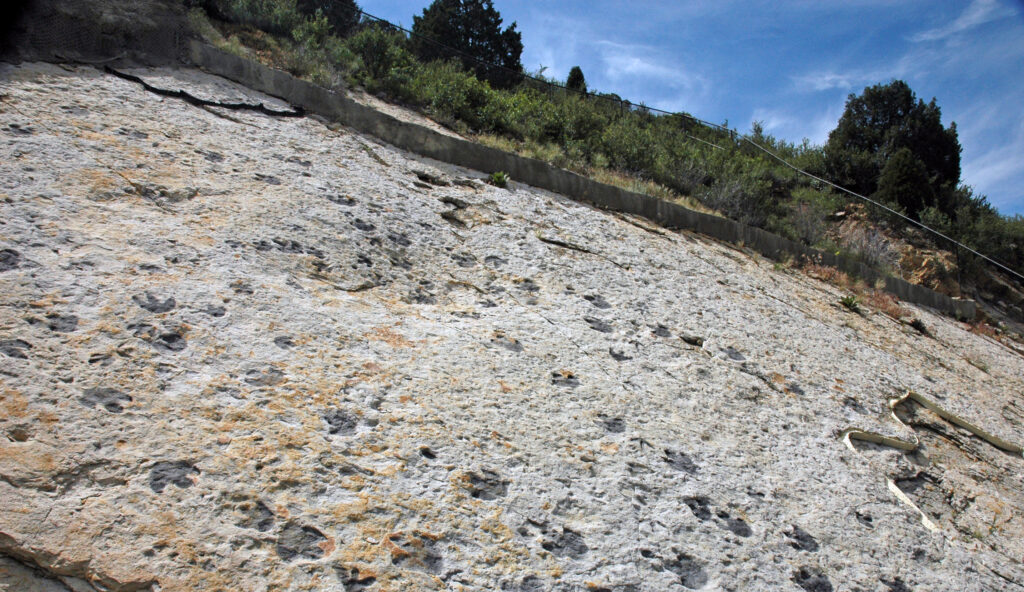
There’s a particular kind of magic that comes from visiting a place where the story of dinosaur science in America effectively began. It was back in 1874 that a large tooth was discovered in this part of Colorado. Paleontologists would later learn that it came from a Tyrannosaurus Rex. A few years later, the world-famous Morrison Ridge yielded a treasure trove of fossils – species including Stegosaurus, Diplodocus, and Allosaurus. This place didn’t just contribute to dinosaur science. It essentially launched it in North America.
At Dinosaur Ridge, you can trace the steps on the Dinosaur Trail or the Triceratops Trail and see a simulated dig site to touch and experience real dinosaur bones and fossils. The Trek Through Time exhibit is extremely popular, and there are more than 37 trackways and 300 prints to see. Three hundred prints. You’ll need comfortable shoes and a solid block of time.
Even if your dinosaur knowledge only extends as far as Jurassic Park, Dinosaur Ridge is a fascinating day out and offers the rare chance to see where some of paleontology’s most exciting and iconic discoveries were made. You can join guided tours of the site, either by tour bus or on a special walk guided by an expert geologist. The guided geology walk is worth every cent, in my opinion – the context you gain transforms a rocky hillside into something profound.
There is a large visitor center on-site, where you can see a replica of an Allosaurus skeleton, as well as a wall-mounted Stegosaurus. There are also many fascinating exhibits in the center, so visitors can explore the remarkable prehistoric discoveries made in the area. Colorado’s Front Range has quietly become one of the most important dinosaur corridors in the world, and Dinosaur Ridge sits right at the heart of it all.
6. John Day Fossil Beds National Monument, Oregon – The Age of Mammals Preserved in Color
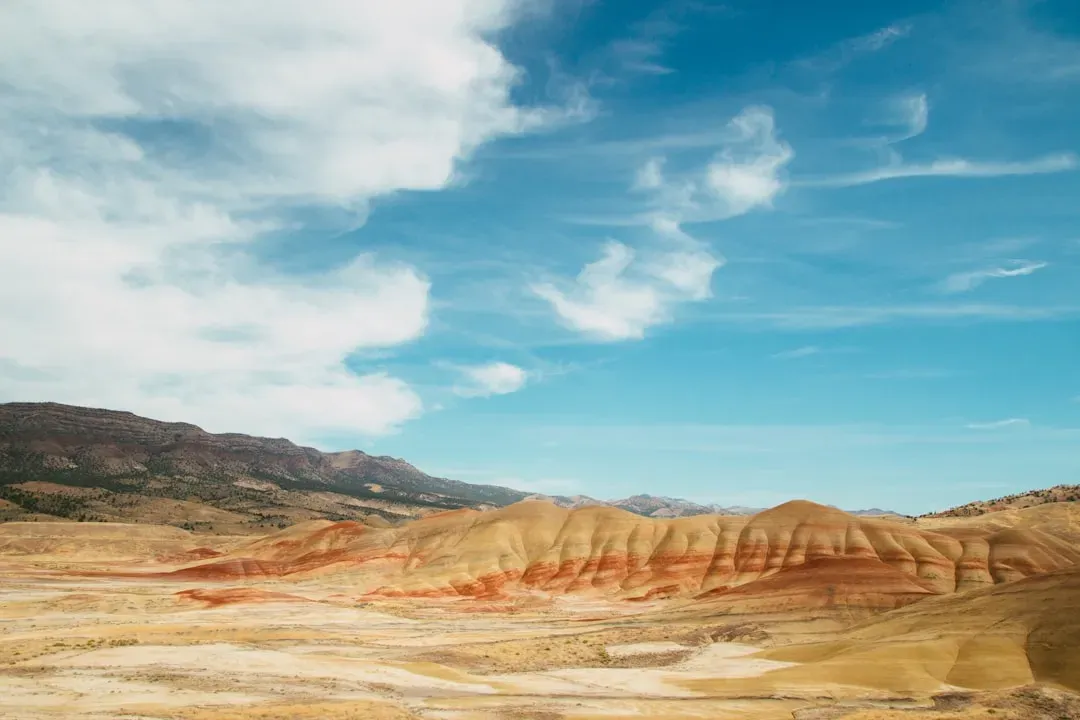
Most people who think of dinosaur parks picture the American Southwest. Oregon doesn’t typically make the list – which is a shame, because the John Day Fossil Beds are breathtaking, both scientifically and visually. Located in the John Day River basin in north-central Oregon, this landscape of canyons and cliffs, desert plains, and multi-colored badlands is spectacular. The fossil record of John Day Fossil Beds spans no fewer than 40 million years, from the late-Eocene to the late-Miocene, and includes fossils of countless plants and animals, as well as evidence of ancient climate change.
Among the most important paleontological finds in John Day Fossil Beds National Monument are many Cenozoic-era mammals, including rhinoceros, horse and beaver precursors, and proto-saber-tooth cats now known as “John Day tigers.” Though the monument is justifiably famous, it draws comparatively few visitors – and those who do come are thoroughly rewarded for their time. Here’s the thing about fewer crowds: you actually get to breathe, look around, and absorb what you’re seeing.
Other highlights of the Sheep Rock Unit include the Thomas Condon Paleontology and Visitor Center. There are over 500 fossil specimens to view at the center, as well as an area to view scientists studying fossils. Watching active paleontological work through a viewing window is one of those experiences that’s surprisingly affecting – science happening live, right in front of you.
The most famous unit in John Day Fossil Beds National Monument is the Painted Hills Unit, which features stunning color-banded hills and is spectacular at sunrise or sunset. The Painted Hills feature hills of black, red, gold, and yellow that change amongst the seasons, turning white with snow in winter and yellow with wildflowers in spring. It’s hard to say for sure, but this might be the most visually beautiful prehistoric site in the entire country.
7. Cleveland-Lloyd Dinosaur Quarry, Utah – The Predator Trap That Still Puzzles Scientists
This one doesn’t get nearly the attention it deserves, and I think that’s partly because it isn’t as easy to find on a map as the marquee parks. Nearly all major national parks with fossils are in the West, mainly because of the West’s vast open spaces, geological formations, canyons, and deserts – landscapes that have helped fossilize prehistoric animals thanks to dry conditions, and then expose them again through natural processes. Cleveland-Lloyd sits squarely in that tradition, tucked away in the high desert of central Utah.
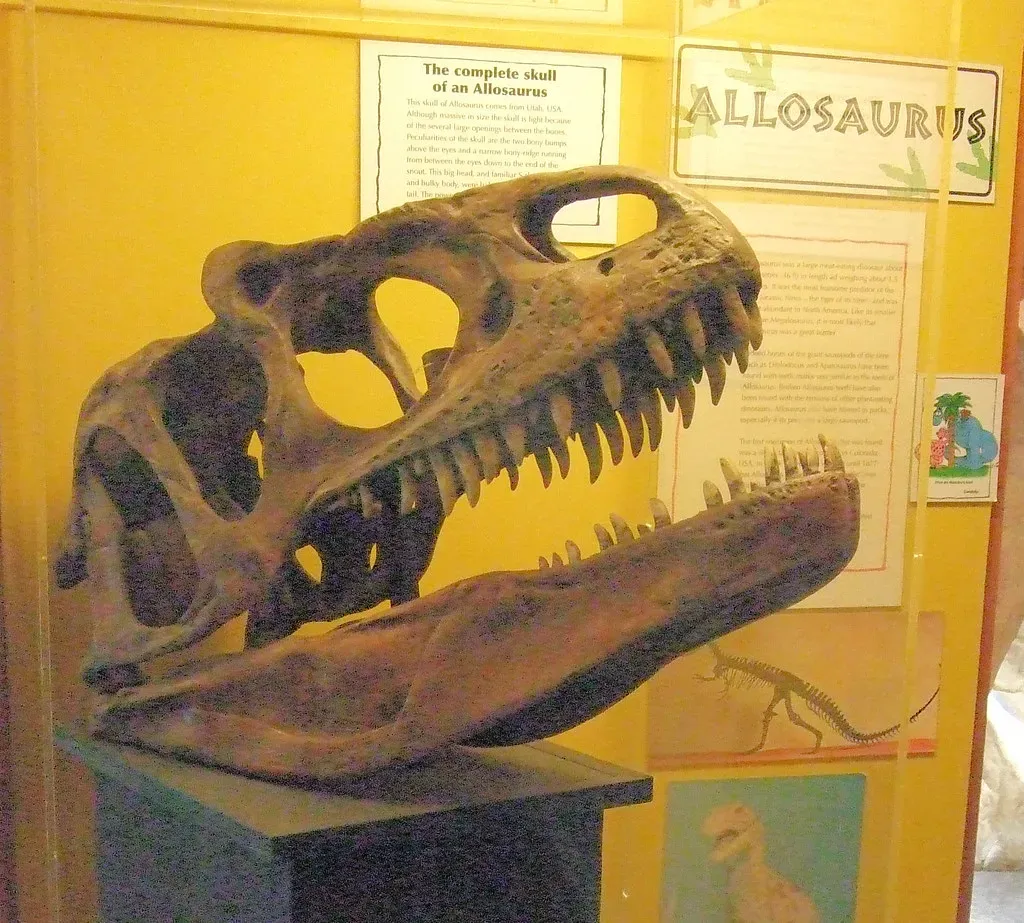
What makes Cleveland-Lloyd uniquely fascinating is that it is a predator trap – meaning an unusually high proportion of the bones found here belong to carnivorous dinosaurs, particularly Allosaurus. The site not only features an excellent reconstruction of the Allosaurus, but also showcases a rare and exceptionally well-preserved skull from this fearsome 30-foot predator that paleontologists believe may have literally eaten other dinosaurs for lunch. Scientists still debate exactly why so many predators ended up fossilized in this one spot – which means the mystery is still open, which means every visit feels like stepping into an unsolved crime scene.
Visitors can learn about the history of the area and the dinosaurs, see accurate dinosaur models, and check out dinosaur remains found on the premises. There is a gift shop and museum on site, and visitors can support the preservation of this incredible site. The site is managed cooperatively by the Bureau of Land Management and is one of the more quietly impressive destinations in the state.
Cleveland-Lloyd is the kind of place that draws return visitors, mostly researchers but also passionate amateurs who just can’t get enough. It’s not flashy. It doesn’t need to be. The bones tell the whole story, and they tell it spectacularly.
8. Florissant Fossil Beds National Monument, Colorado – A Snapshot of Ancient Life Frozen in Time
Florissant does something remarkable that most dino parks can’t quite pull off – it preserves not just bones or tracks, but an entire snapshot of an ecosystem. Florissant Fossil Beds National Monument is one of only nine National Park Service lands set aside expressly for the protection of fossils. Centered around the site of an ancient lake, the monument captures the ecosystem of central Colorado circa 34 million years ago and is considered one of the best and most diverse paleontological resources on earth. That’s a serious credential.
The fossils here range from massive petrified tree stumps to incredibly delicate preserved insects, seeds, and leaves – a level of detail that is genuinely rare in the paleontological record. Think of it like a prehistoric photograph, frozen mid-moment. The National Park Service has a huge list of fossil parks containing all units where fossils are present – more than 250 of them. This includes fossils in the rocks, in museums, and in a cultural setting. You can see, and even find, dinosaurs and other fossils in a number of these parks.
Florissant sits at an elevation of roughly 8,400 feet, which means even summer mornings feel cool and fresh – a refreshing contrast to the desert heat of most other sites on this list. The hiking here is gentle and accessible, perfect for families or anyone who wants the experience without a strenuous climb. There’s a quality of stillness to Florissant that the larger, busier parks can’t replicate.
The National Park Service has a huge list of fossil parks – there are more than 250 of them. This includes fossils in situ, in museums, and in a cultural setting. Florissant reminds you that the story of ancient life isn’t just about the giants. Sometimes the most profound discoveries come in small, extraordinarily preserved details – a dragonfly wing, a leaf imprint, a beetle frozen in volcanic ash for 34 million years.
Conclusion – The Past Is Closer Than You Think
Here’s what strikes me most after thinking about all eight of these places: the prehistoric past of the United States isn’t locked away in some distant or inaccessible place. It’s right there, embedded in the rock beneath your feet, etched in riverbeds, stacked in canyon walls, and waiting patiently in the high desert air. You don’t need a research grant or a paleontology degree to experience it.
From the towering wall of bones at Dinosaur National Monument to the ghostly footprints in the Paluxy River, these eight parks offer something genuinely rare in the modern world – the unfiltered weight of deep time. Whether you’re bringing curious kids, a partner who loves the outdoors, or just your own restless curiosity, there is a version of this experience designed for you.
The giants of the past are still out there, still speaking. All you have to do is show up, slow down, and listen to what the rocks have to say. So which of these parks would you put at the top of your list? Share your thoughts in the comments below.