Dinosaurs ruled our planet for over 160 million years. That’s not a lucky streak. It’s a testament to biology so extraordinary, so brilliantly engineered, that scientists are still piecing it together in 2026. You might think you know dinosaurs from the movies, the museum skeletons, the childhood books. But the truth about how these creatures actually powered their bodies is far stranger, far richer, and in many ways far more surprising than anything Hollywood ever put on screen.
What fueled a 90-ton behemoth? How did a Tyrannosaurus rex manage to hunt without its heart exploding? Were these animals cold-blooded sluggards or fire-breathing metabolic machines? The answers will genuinely change how you picture these animals. So let’s dive in.
Neither Hot Nor Cold: Dinosaurs May Have Been Something Entirely Different
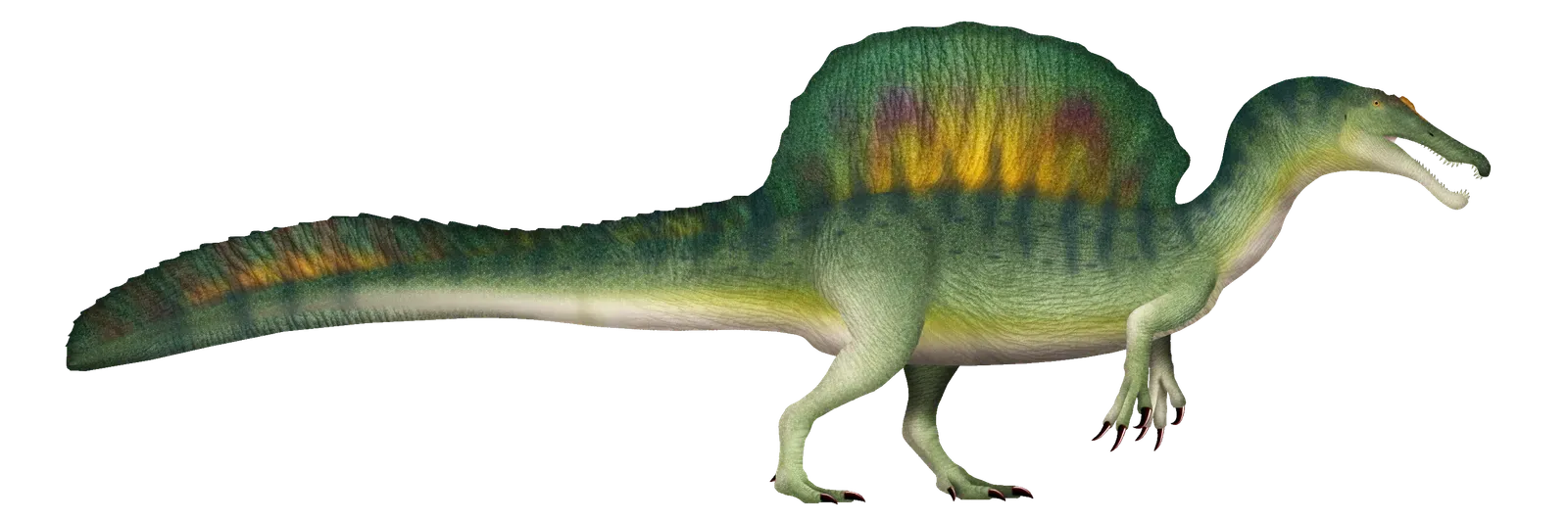
Here’s the thing that blew scientists’ minds just a decade ago. A landmark study concluded that dinosaur blood ran neither cold nor hot, but something in between. Researchers examining growth and metabolic rates of nearly 400 living and extinct animals found that dinosaurs, like a handful of modern creatures including tuna and the echidna, belonged to an intermediate group that can raise their body temperature but don’t keep it at a specific level. They coined a brand new word for it.
Dinosaurs took a middle path between warm-blooded mammals and cold-blooded reptiles. Most dinosaurs were probably mesothermic, representing a thermally intermediate strategy that only a few species, such as egg-laying echidnas or great white sharks, use today. Think about that. You’ve been picturing dinosaurs as either sluggish lizards or feathery hotbloods, and the reality turns out to be a third category that barely exists in the modern world.
Your Bones Tell the Story: What Fossilized Bone Reveals About Dinosaur Metabolism
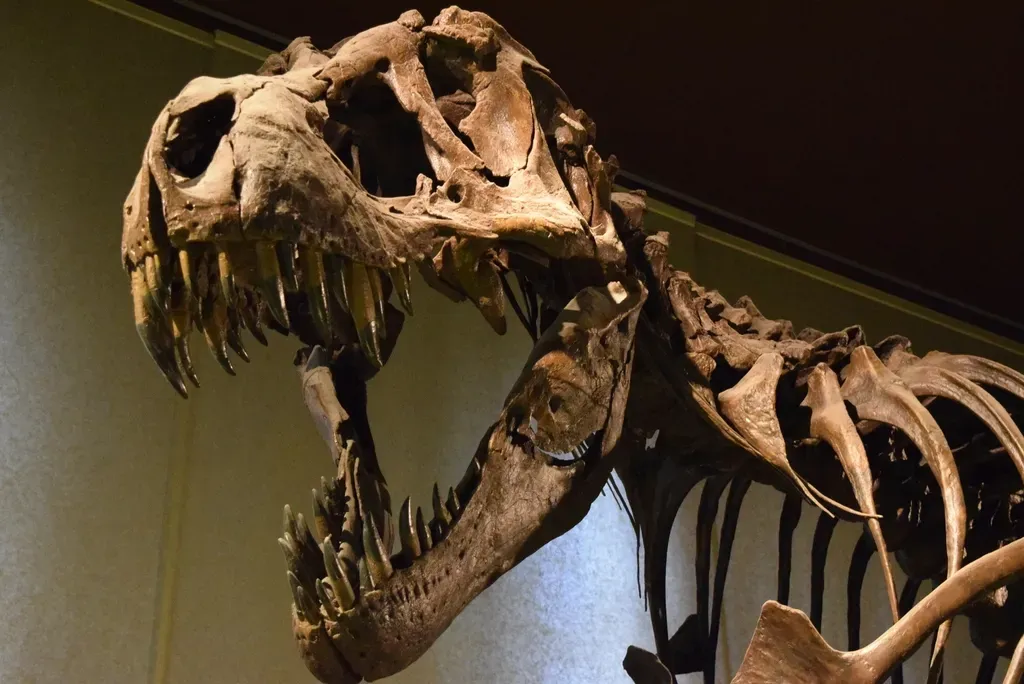
If you look at a cross section of dinosaur bone tissue, you can see a series of lines, like tree rings, that correspond to years of growth. Scientists have used these so-called lines of arrested growth, or LAGs, to estimate dinosaur ages and growth speeds for years. The debate was always whether those rings meant the animal was cold-blooded. Turns out, that argument doesn’t hold up anymore.
The type of bone tissue seen in between dinosaur LAGs indicates the animals grew rapidly and sustained high metabolic rates. Dinosaur bone tissue is indistinguishable from that of today’s endothermic ruminants, meaning that dinosaurs were endothermic too. Honestly, that’s remarkable. The same microscopic signature you’d find in a warm-blooded deer shows up in the fossil bones of creatures that died 66 million years ago.
T. rex Was Warm-Blooded, But Stegosaurus Probably Wasn’t
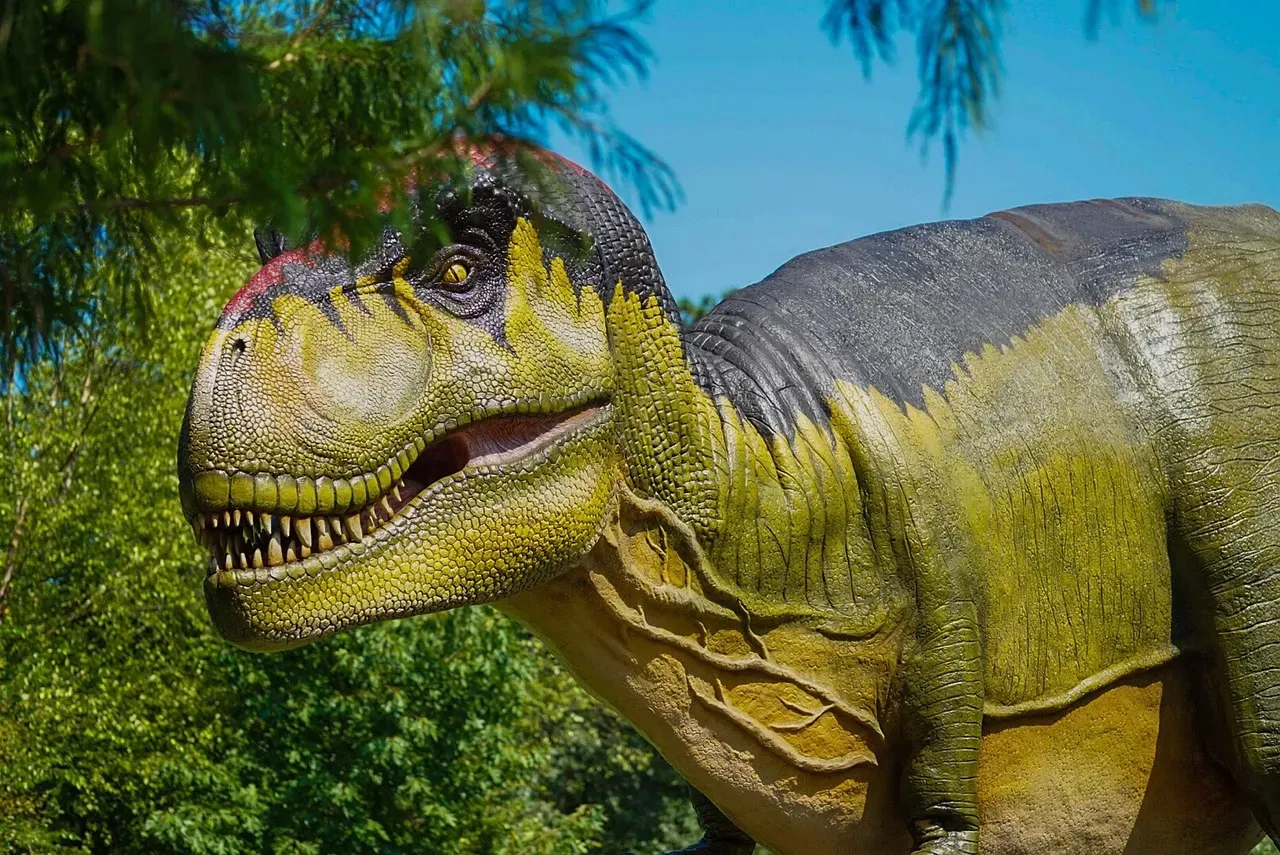
It gets even more complicated, and this is where things get genuinely fascinating. Research concluded that many iconic dinosaurs such as Tyrannosaurus rex and the giant sauropods were warm-blooded, but cold-bloodedness later emerged in some dinosaurs such as Stegosaurus. So the answer to “were dinosaurs warm-blooded?” is, well, it depends entirely on which dinosaur you’re talking about.
The dinosaurs were split, with theropods such as Tyrannosaurus rex, Deinonychus, and Allosaurus likely to be warm-blooded, as well as other animals such as sauropods. Other dinosaurs, including Triceratops, Stegosaurus, and hadrosaurs, were within the range of ectothermy. Picture this: two dinosaurs sharing the same Jurassic landscape, one generating its own heat internally and the other basking in sunlight like a lizard on a rock. Extraordinary.
Size Was a Metabolic Superpower: Gigantothermy and the Giants
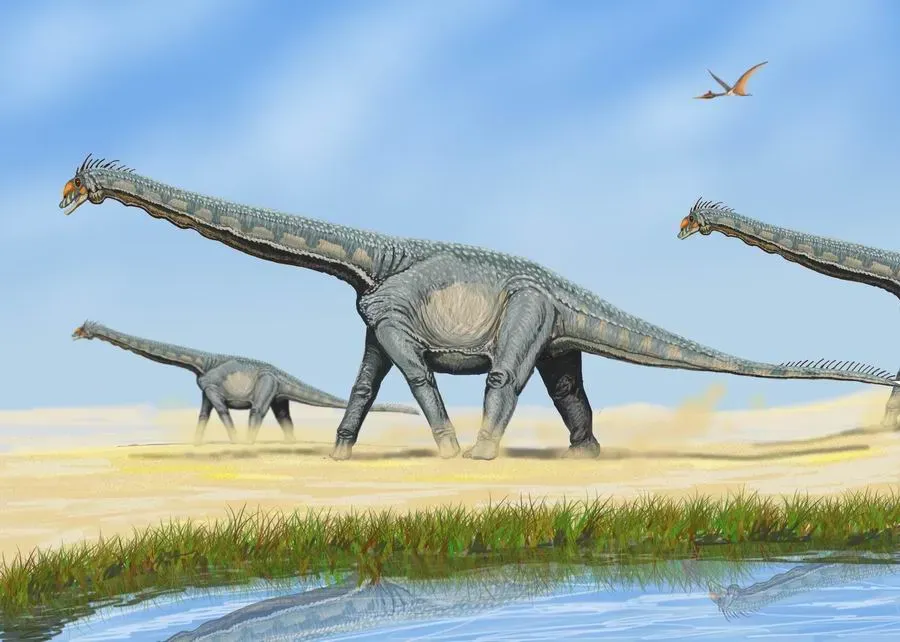
You’ve probably never thought about your body size as a thermal strategy. Dinosaurs, whether they planned it or not, stumbled onto one of nature’s most elegant tricks. Larger animals have a relatively lower surface area than smaller animals, giving a lower area for heat to escape over. The concept of gigantothermy suggests that large dinosaurs would have been able to maintain their body temperature by trapping more heat for longer. It’s like how a giant pot of soup stays warm long after a small cup has gone cold.
Dinosaur body temperature increased with body size, from roughly 77 degrees Fahrenheit at 26 pounds to 105.8 degrees Fahrenheit at 14 tons. These results suggest that the body temperatures of the smaller dinosaurs were close to the environmental temperature, just as occurs for modern smaller reptiles, which meant they acquired heat from external sources in addition to the internal heat generated by metabolism. In other words, being bigger wasn’t just about reaching leaves or scaring prey. It was a full-blown physiological strategy.
The Bird-Like Lungs Hidden Inside Dinosaur Fossils
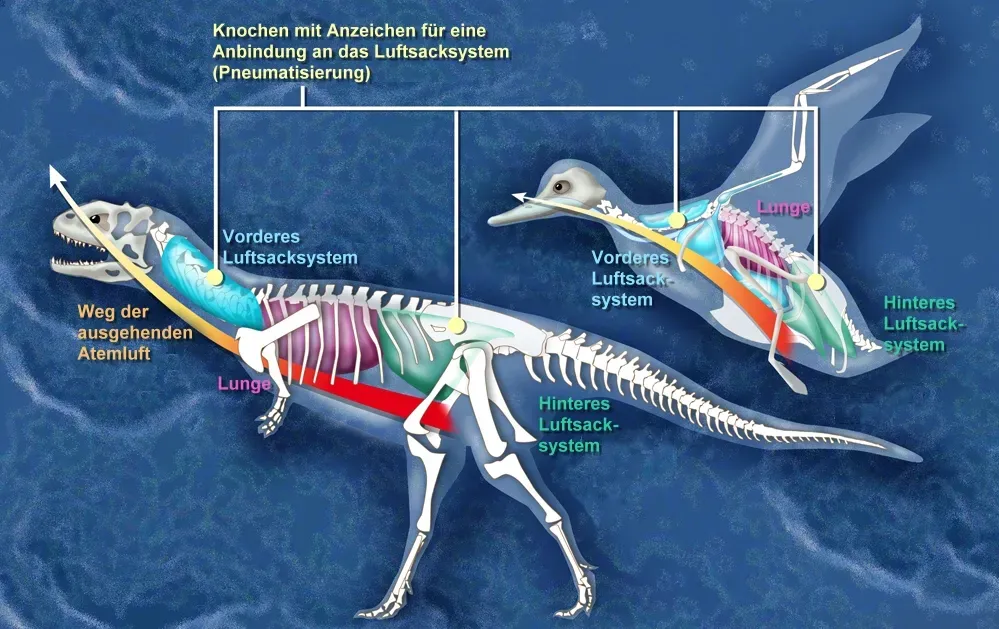
Few things in paleontology are as quietly mind-blowing as what scientists found when they looked closely at fossilized dinosaur bones. Like many modern birds, Tyrannosaurus, Apatosaurus, and other giants had complex networks of air sacs that grew out of their throats and lungs and into their bones. The resulting porousness made them lighter, saving energy while maintaining bone strength. The sacs also let the dinosaurs breathe more efficiently and may even have aided cooling.
A fossil find shows that the group of dinosaurs that included Velociraptor and Tyrannosaurus rex probably used the same super-efficient respiratory system that birds have today. The fossil, of a carnivorous dinosaur called Majungatholus atopus, shows that its bones included spaces for storing air. This would have allowed the species to have the quick metabolism necessary for an active predatory lifestyle. You’re essentially looking at a breathing system so efficient it was reinvented by evolution and is still being used by birds today.
A Teenage Growth Spurt Unlike Anything You Can Imagine
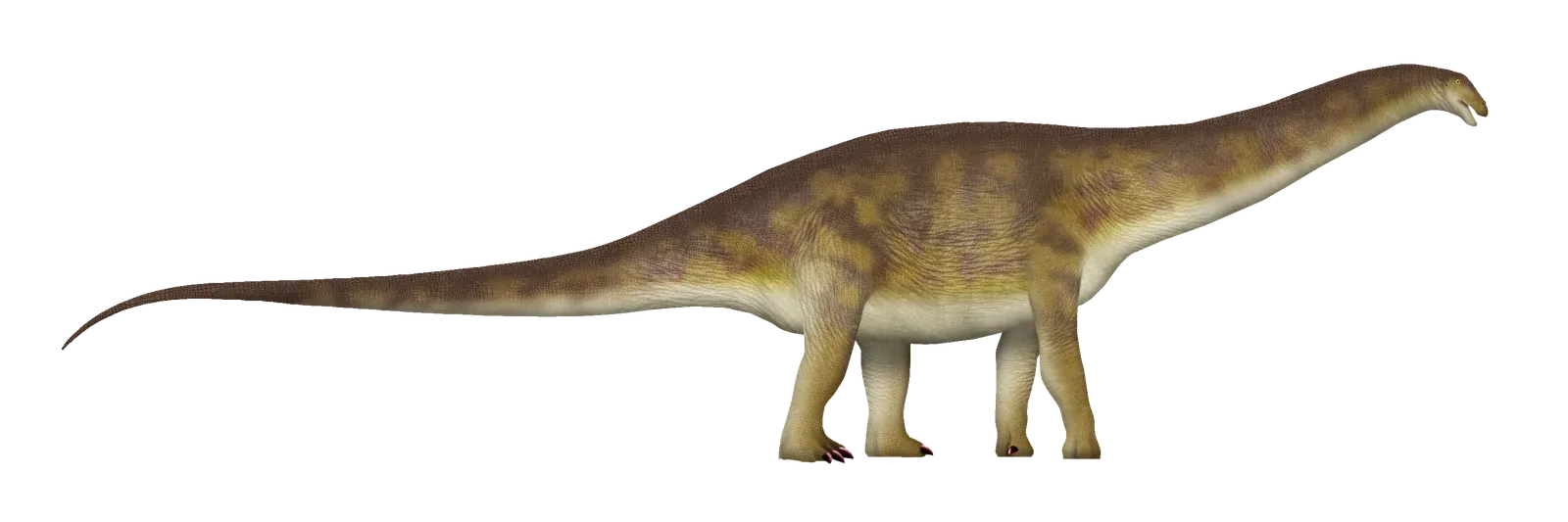
Let’s be real, the growth rates of dinosaurs are almost insulting to human biology. It has been estimated that Apatosaurus attained its adult body mass of about 25,000 kilograms in as little as 15 years, with a maximum growth rate exceeding 5,000 kilograms per year. This rate exceeds that projected for a precocial bird or eutherian mammal of comparable estimated body mass. For context, that’s the equivalent of gaining the weight of a rhinoceros every single month during peak growth.
Like mammals, dinosaurs stopped growing when they reached the typical adult size of their species, while mature reptiles continued to grow slowly if they had enough food. Dinosaurs of all sizes grew faster than similarly sized modern reptiles. This rapid growth points strongly toward elevated metabolism. You simply cannot pack on mass that quickly running on a cold, sluggish reptilian engine. The biology doesn’t allow for it.
Molecular Waste: The Newest Way Scientists Are Reading Dinosaur Metabolism
Scientists found a remarkable new window into dinosaur physiology that nobody expected. Researchers looked at one of the most basic hallmarks of metabolism: oxygen use. When animals breathe, side products form that react with proteins, sugars, and lipids, leaving behind molecular waste. This waste is extremely stable and water-insoluble, so it’s preserved during the fossilization process, leaving behind a record of how much oxygen a dinosaur was breathing in, and thus, its metabolic rate.
Inferred ancestral states reveal that the metabolic rates consistent with endothermy evolved independently in mammals and plesiosaurs, and are ancestral to ornithodirans, with increasing rates along the avian lineage. Molecular analyses of modern and fossil skeletal samples reveal that exceptional metabolic rates are ancestral to dinosaurs and pterosaurs and were acquired before energetically costly adaptations, such as flight. That means the metabolic toolkit that eventually powered bird flight was already in place long before any dinosaur left the ground. It’s hard to say for sure what that felt like from an evolutionary standpoint, but it’s thrilling to think about.
Polar Dinosaurs: What Living in the Arctic Tells Us About Their Metabolism
Dinosaur fossils have been found in regions that were close to the poles at the relevant times, notably in southeastern Australia, Antarctica, and the North Slope of Alaska. There is no evidence of major changes in the angle of the Earth’s axis, so polar dinosaurs and the rest of these ecosystems would have had to cope with the same extreme variation of day length through the year that occurs at similar latitudes today. Think months of total darkness. Think freezing temperatures. Cold-blooded animals simply cannot survive that.
The Alaska North Slope has no fossils of large cold-blooded animals such as lizards and crocodilians, which were common at the same time in Alberta, Montana, and Wyoming. A round trip between there and Montana would probably have used more energy than a cold-blooded land vertebrate produces in a year, meaning the Alaskan dinosaurs would have had to be warm-blooded, irrespective of whether they migrated or stayed for the winter. Their very presence in the Arctic is one of the strongest arguments in the entire metabolism debate. The geography itself becomes evidence.
When a Full-Grown T. rex Could Have Starved: The Food Paradox of Endothermy
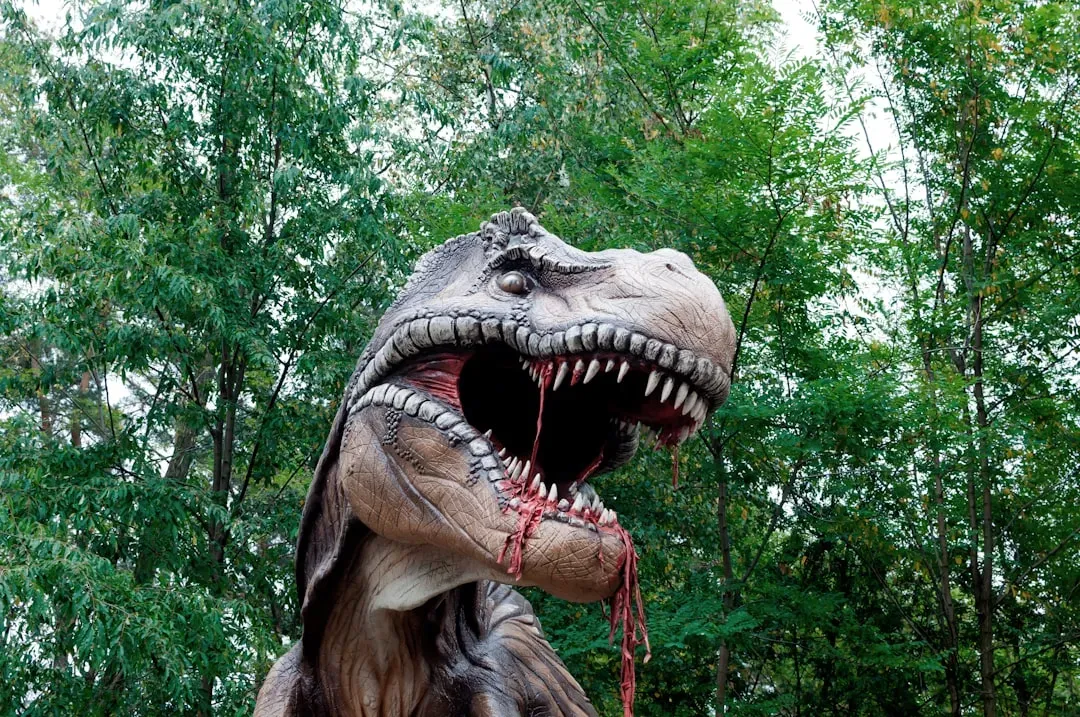
Here’s a scenario that genuinely keeps paleontologists up at night. If a T. rex were fully warm-blooded in the mammalian sense, how on earth would it have eaten enough? Giant endotherms pose their own puzzles, such as the huge quantities of food needed to sustain them. An endothermic Tyrannosaurus rex would probably have starved to death. A lion-sized T. rex would need constant, enormous meals just to fuel its internal furnace.
Mesothermy in dinosaurs may have helped them become ecologically dominant and probably also helped them become enormous. As Smith noted, a lion the size of a T. rex, while a frightening thought, would quickly starve to death because it would be so hard to find enough food. Mesothermy turns out to be the Goldilocks solution. Not too hot, not too cold. Just right for conquering a planet. Researchers proposed that many dinosaurs had low metabolic levels during resting or low-activity periods but could rapidly expand their lung ventilation levels for bursts of activity associated with running, attacking, and defensive maneuvers. This type of adaptation would also have allowed large dinosaurs to sustain life within a reasonable level of caloric intake.
Conclusion: The Metabolic Mystery That Keeps Rewriting History
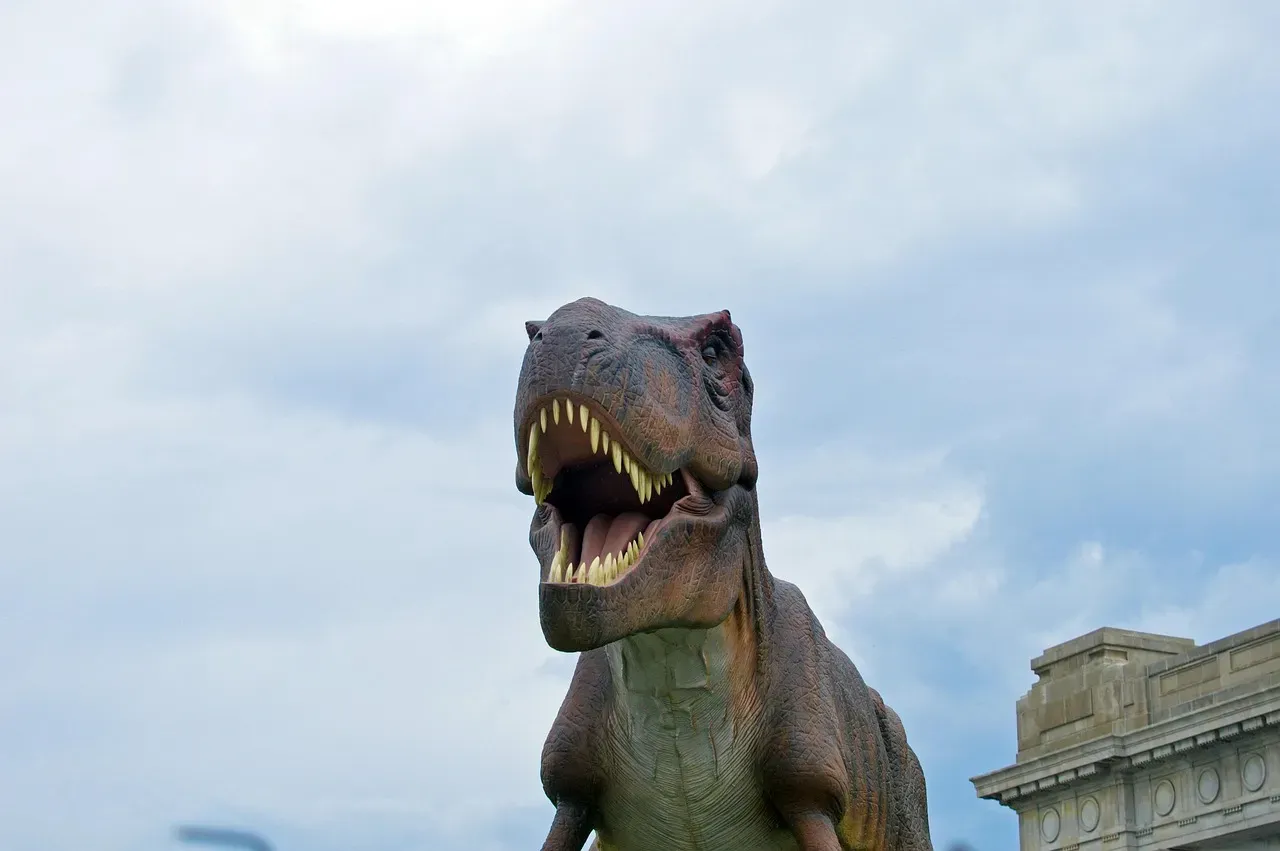
If there’s one thing studying dinosaur metabolism teaches you, it’s that the natural world resists our categories. We built the warm-blooded versus cold-blooded box and dinosaurs simply refused to fit neatly inside it. From the molecular waste preserved in ancient thigh bones to the incredible growth rings layered into fossilized ribs, every new discovery pulls back another curtain on creatures that were, by almost any measure, genuinely unlike anything alive on Earth today.
They had air sacs invading their bones, body temperatures tied to their body size, and metabolic strategies that let them thrive from the tropics to the Arctic Circle. They were, in the most literal sense, built differently. Science is still unraveling the details, and honestly, that’s part of what makes this subject so endlessly captivating. The bones keep talking, and researchers keep listening.
What surprises you most about how dinosaurs actually powered their bodies? Did you ever expect the answer to be this complicated?