Picture a world where the land is completely silent. No footsteps. No rustling. No creature casting a shadow across the dry earth. That was our planet for the vast majority of its existence, a place where life thrived only in the water while the continents sat barren and still. Then, something extraordinary happened.
The story of how life first crawled, hauled, and lumbered onto land is one of the most dramatic chapters in the entire history of Earth. It’s packed with strange creatures, jaw-dropping evolutionary leaps, and mysteries that scientists are still piecing together even today. So buckle up, because what you’re about to discover will make you see your own legs in a completely different way. Let’s dive in.
The Transition Was One of the Biggest Evolutionary Events in History
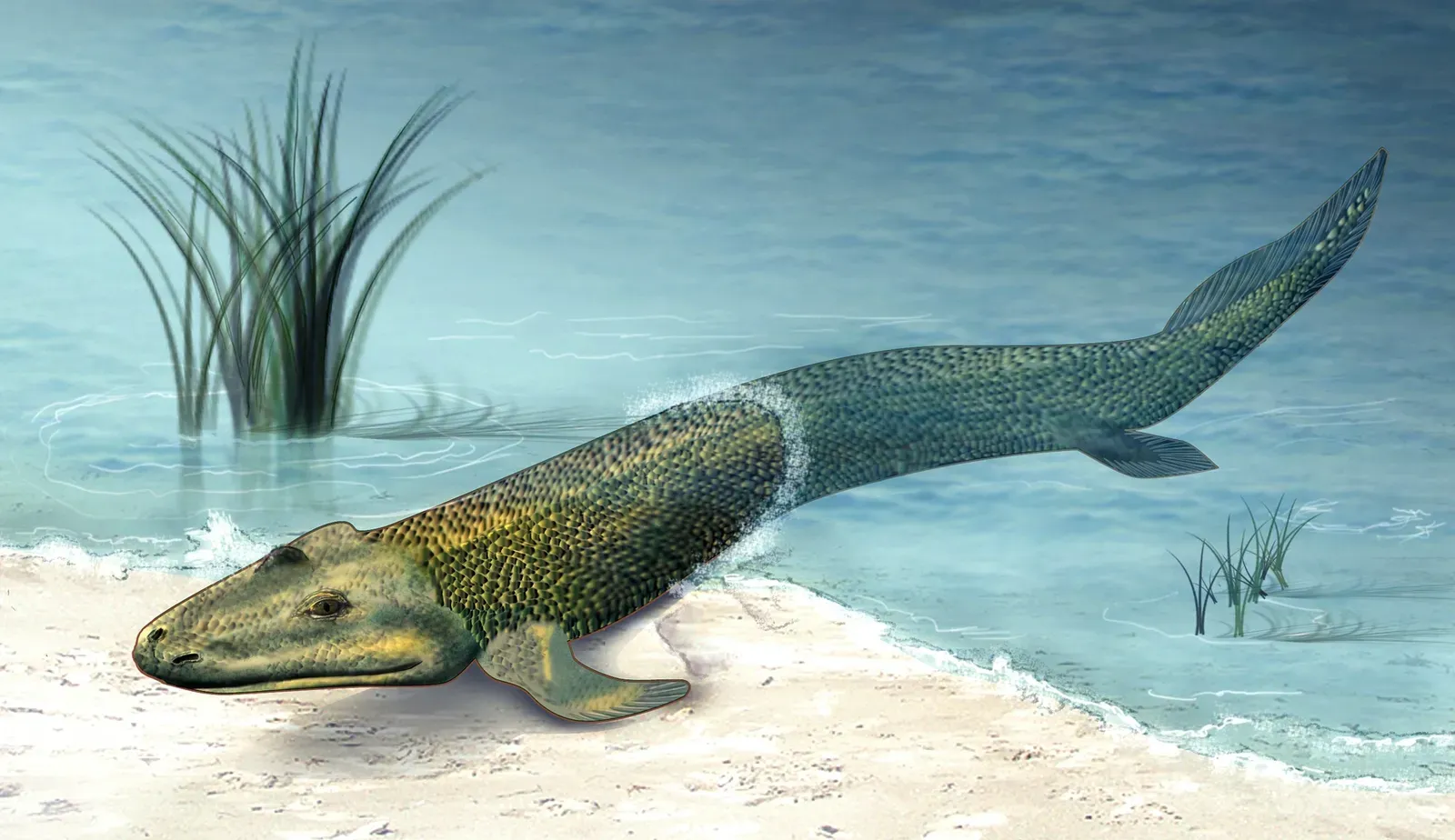
Let’s be real: few events in the history of life on this planet even come close to the moment vertebrates first left the water. It’s hard to overstate how much of a game-changer it was when vertebrates first rose up from the waters and moved onshore about 390 million years ago, as that transition led to the rise of the dinosaurs and all the land animals that exist today. Think about that for a second. Every bird, every reptile, every mammal – including you – owes its existence to that moment.
The transition from a body plan for gill-based aquatic respiration and tail-propelled aquatic locomotion to one that enables the animal to survive out of water and move around on land is one of the most profound evolutionary changes known. It wasn’t just about growing legs. It was a total redesign of how a living body functions – breathing, moving, reproducing – all of it had to adapt to a brand new world.
Arthropods Actually Beat Vertebrates to Land by Millions of Years
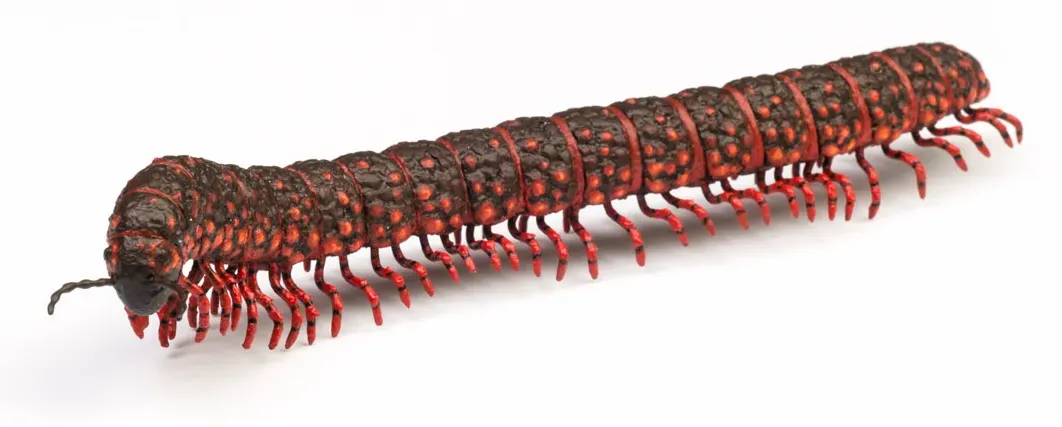
Here’s a fact that surprises most people. When we talk about the “first animals to walk on land,” many assume it was something with a backbone. It wasn’t. Arthropods – creepy-crawlies such as spiders, crabs and insects with a segmented body, jointed limbs and a hard outer exoskeleton – were the first animals to move onto land, and the oldest body fossil of a land animal is a millipede called Pneumodesmus newmani from the Late Wenlock Epoch of the Silurian period in Scotland, around 428 million years ago.
Pneumodesmus newmani may have been one of the first animals to live on land full-time, and it currently holds the Guinness World Record for being the oldest land animal. This earliest walker was a myriapod that looked like a millipede. Honestly, if you had to guess what conquered land first, a millipede relative probably wasn’t your first answer. Yet here we are, and the humble myriapod beat our vertebrate ancestors to the punch by tens of millions of years.
The First Vertebrates to Walk on Land Were Called Tetrapods
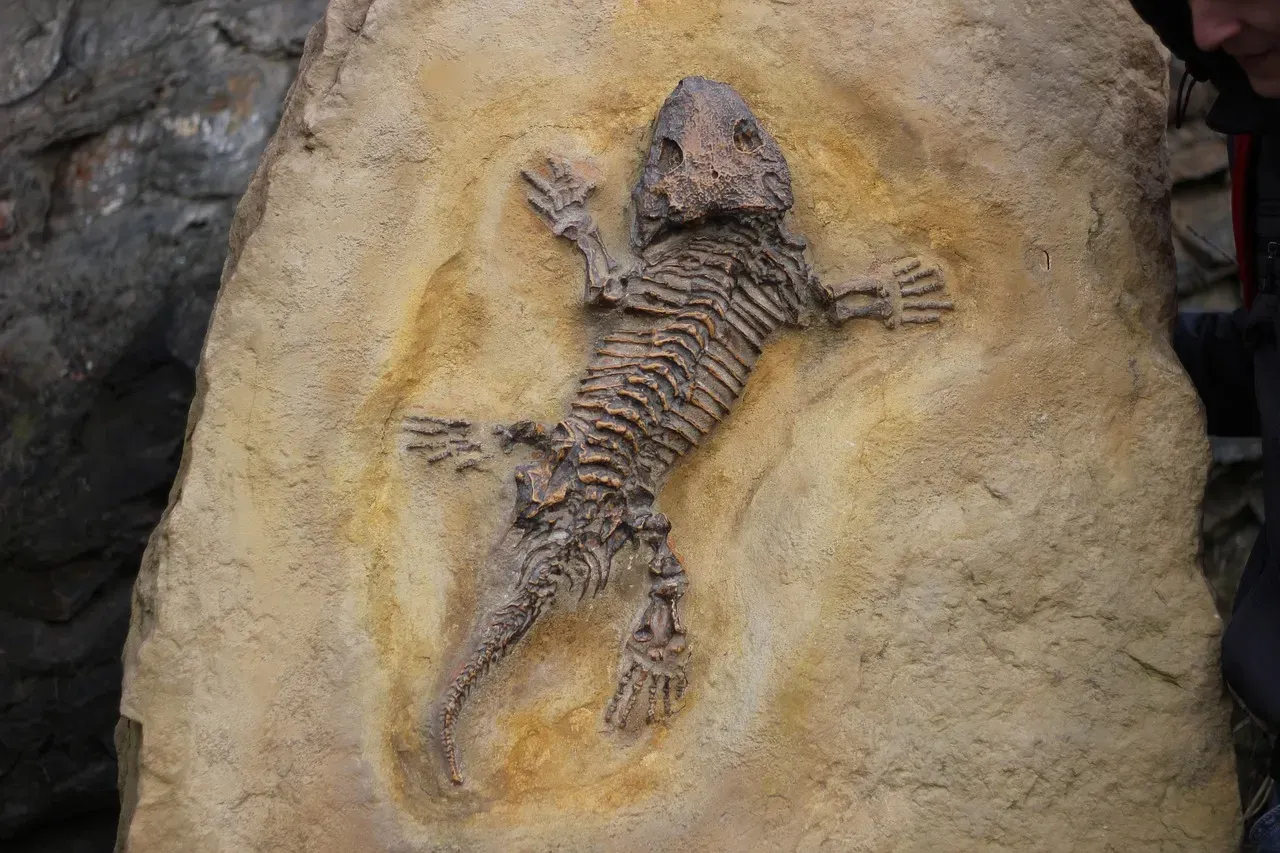
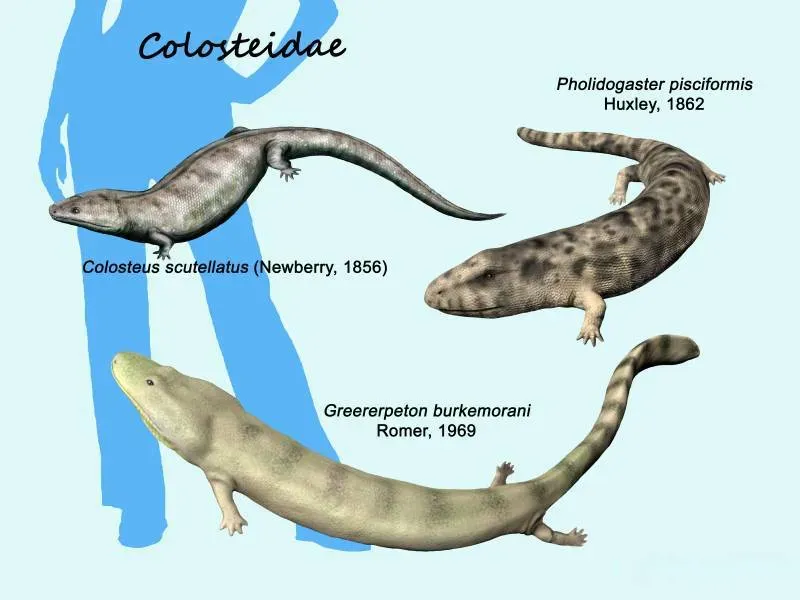
The first animals that walked on land were called tetrapods. The word itself literally means “four feet,” and it describes the group of backboned creatures whose descendants eventually included amphibians, reptiles, birds, and yes, mammals like us. Measuring one to two meters long, the earliest tetrapods were the first vertebrates to move from water to land, and are believed to have looked like a cross between a giant salamander and a crocodile.
Jennifer Clack, a paleontologist at the University of Cambridge who studied the fossils of these extinct creatures for more than two decades, says the earliest land vertebrates were more diverse than we could possibly imagine, noting that some looked like crocodiles, some looked like little lizards, some like moray eels, and some were snake-like. They varied dramatically in size too. The evolution of tetrapods began about 400 million years ago in the Devonian Period, with the earliest tetrapods evolved from lobe-finned fishes. It’s a lineage that would go on to dominate every corner of the planet.
Ichthyostega Did Not Walk the Way Scientists First Thought
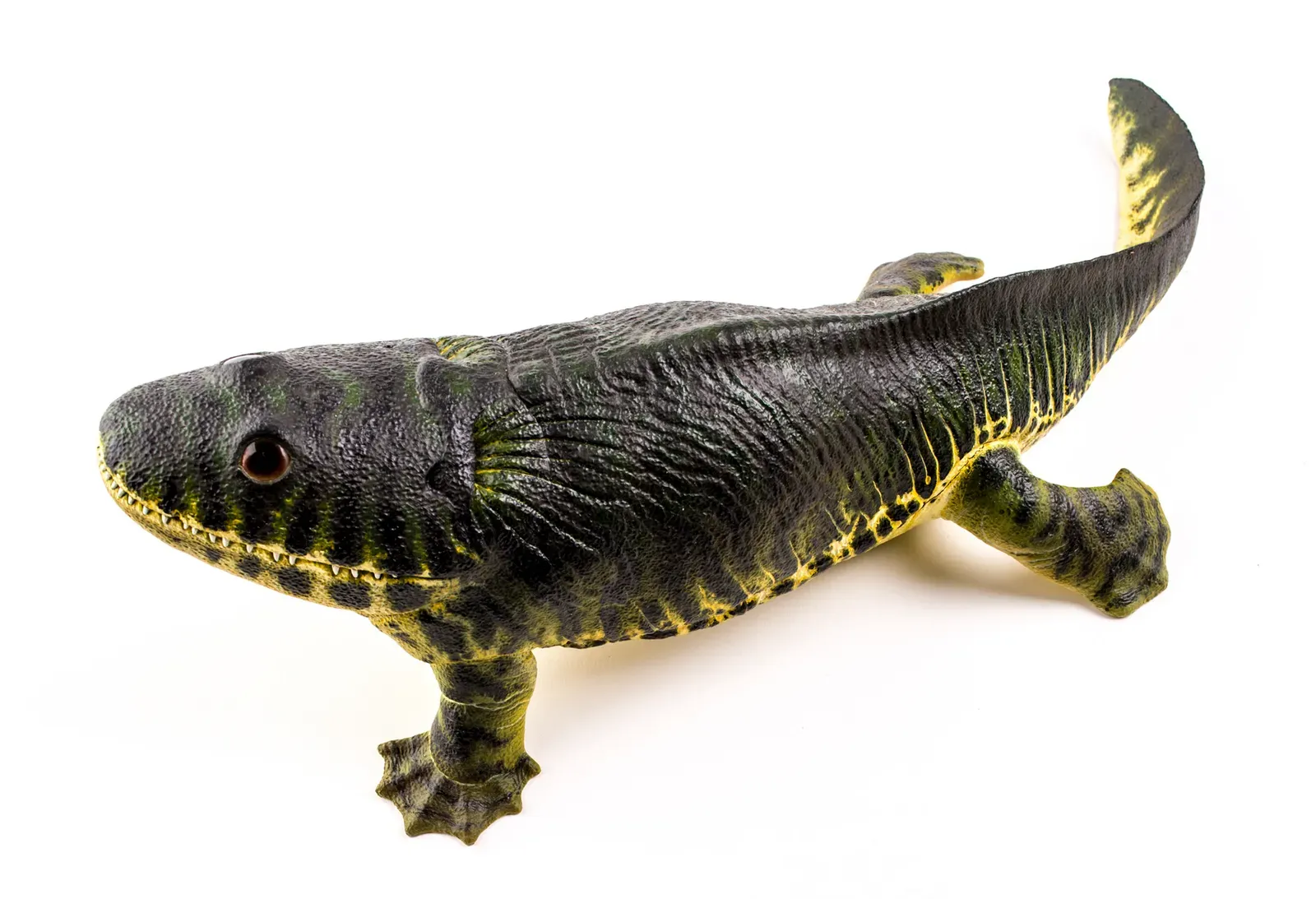
For decades, scientists imagined Ichthyostega strutting across the ancient shoreline like some kind of prehistoric salamander. Turns out, that picture was completely wrong. Scientists originally believed this early tetrapod walked on land like a salamander, however new research from the Royal Veterinary College shows that Ichthyostega could not walk like any living tetrapod and instead it dragged itself by its forelimbs like an amphibious fish.
Ichthyostega had less mobile joints than any of the living animals compared. In particular, it could not rotate either its hip or its shoulder, which is very important when walking on four legs. This lack of rotation means that Ichthyostega would have been unable to move its limbs one after the other, as in normal tetrapod walking. Instead, it would have moved both forelimbs at the same time. Think of it less like walking and more like a desperate seal-style crutch across wet ground.
The Early Tetrapods Had Way More Fingers Than You Do
You have five fingers on each hand, and you probably take that for granted. The earliest land-walking creatures, however, were operating with a much more extravagant setup. The first animals to get close to walking on land had eight digits on each limb, and over time, some of these digits were lost, leading to animals with seven digits, then six, and then five, which is the common condition now seen in living tetrapods. Eight fingers per hand. Imagine trying to play piano with that.
Their limbs could have seven or eight digits, depending on the species. The standardization down to five digits was a gradual process that happened over millions of years, and it wasn’t the only change happening to their bodies. Many would eventually lose their gills, which only work well for getting oxygen when wet, and their tail fins got smaller. Similarly they lost the lateral line system, a network of vibration-sensitive canals along the skull and jaw, which doesn’t work out of water. Each of those losses was actually a gain in terms of surviving on land.
Tiktaalik Roseae Was the Critical Missing Link
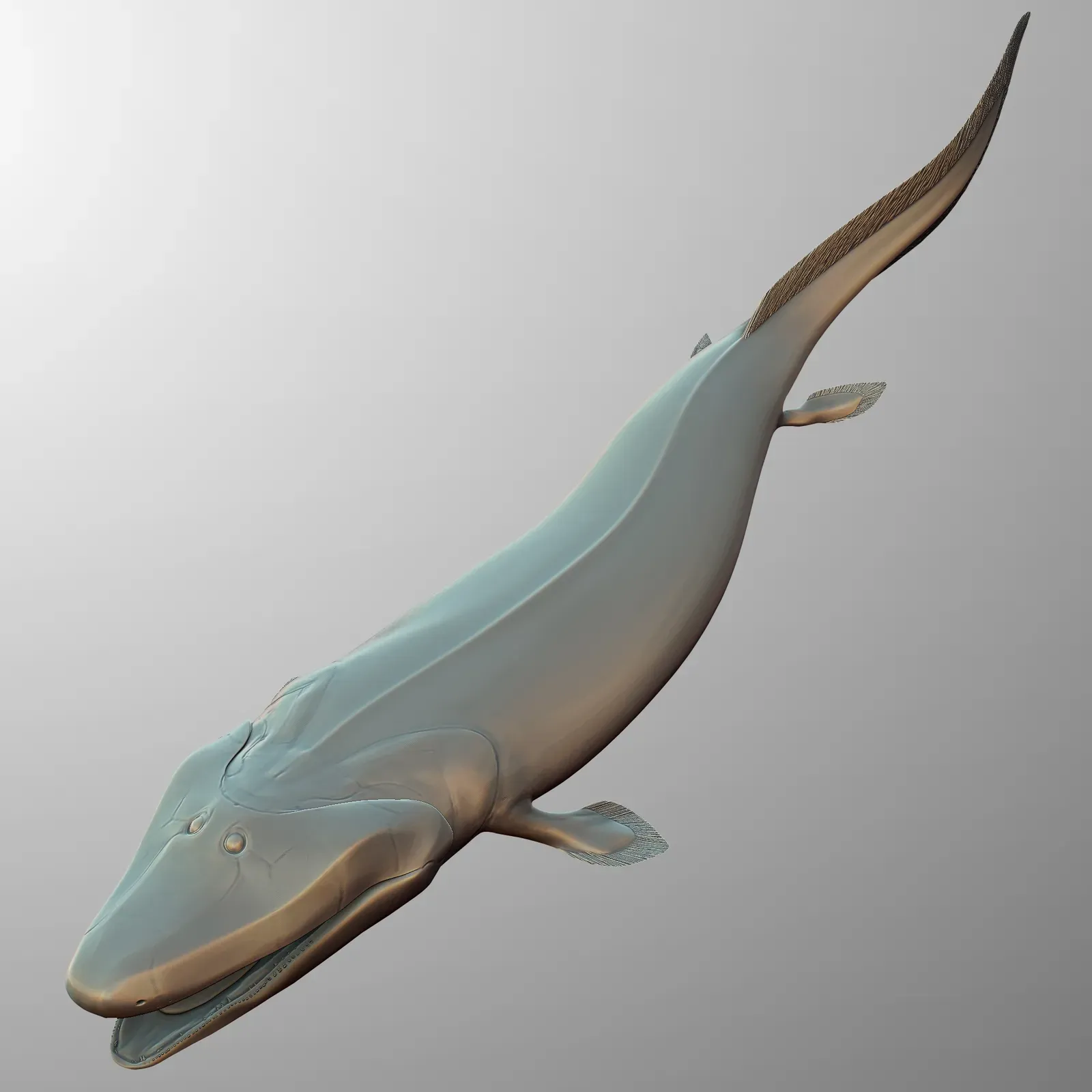
If you’ve ever heard the term “fishapod,” this is where it comes from. Tiktaalik is famous for being the perfect blend of aquatic and terrestrial animals by showing the moment when feet came from fins. While it still had fin rays that leaned toward being a fish, it had land animal-like wrist joints. It also had ears that heard well both in the water and on land.
Tiktaalik likely lived in a shallow water environment about 375 million years ago. It also had gills and lungs, but the loss of some gill elements gave it a neck, which would have allowed its head to move sideways for feeding. The eyes were on top of the head, and it had fins, but the attachment of the fin bones to the shoulder suggested they might be weight-bearing. It’s a genuinely spectacular creature, a snapshot frozen in rock right at the exact moment evolution was deciding what came next.
Their Skulls and Spines Were Completely Redesigned for Life on Land
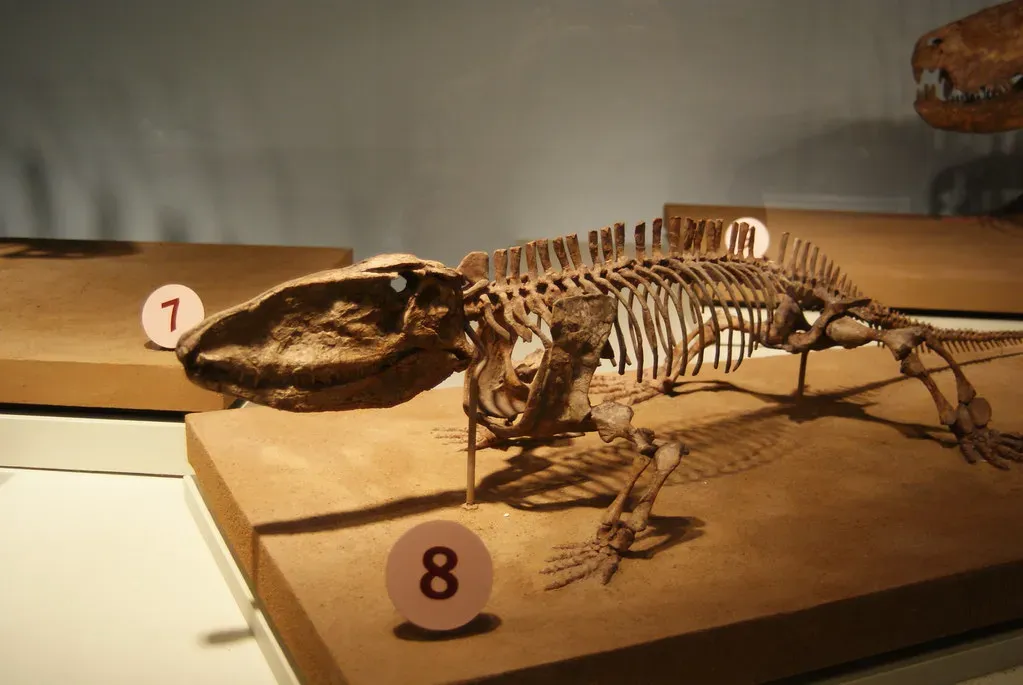
Going from water to land required an almost total architectural overhaul of the body. One of the most surprising changes involved the skull and the spine. As ancestors of the first tetrapods began to live in shallower waters, their skulls evolved to be flatter, with eyes on the tops of their heads, which probably allowed them to look up to spot food. Then, as tetrapods finally moved fully onto land and away from the water, many lineages once again evolved skulls that were tall and narrow, with eyes facing sideways and forwards, allowing them to look around their terrestrial environments for predators and prey.
The spine had its own transformation too. As lineages moved into shallower water and onto land, the vertebral column gradually evolved as well. Fishes have no necks – their heads are simply connected to their shoulders, and their individual vertebrae look quite similar to one another all the way down the body. Mobile necks allow land animals to look down to see the things on the ground that they might want to eat. It’s remarkable how much a simple neck changed the possibilities of what a creature could do in its environment.
The Oldest Footprints Are Found in Poland and Ireland, Not Where You’d Expect
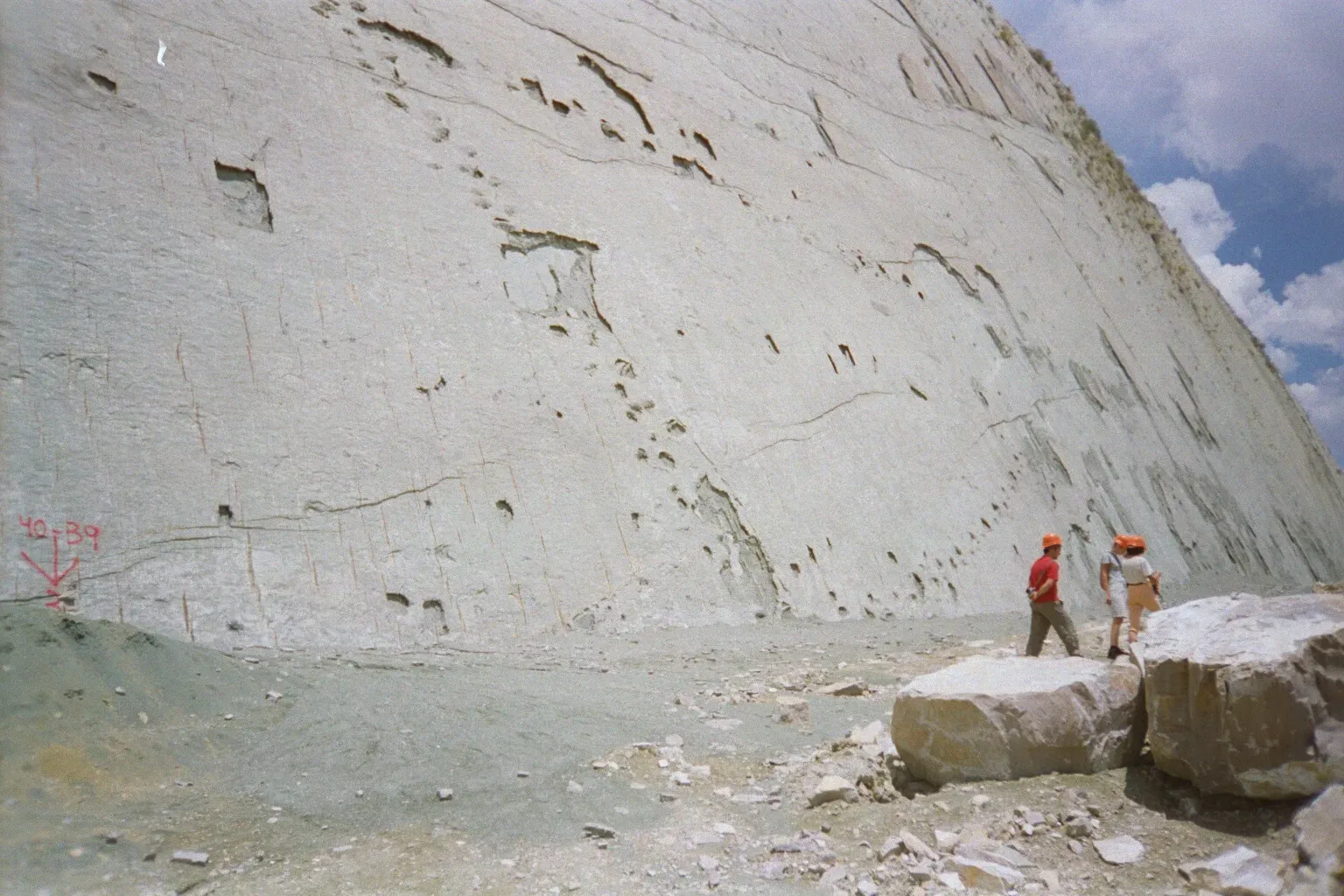
You might expect the oldest traces of land-walking creatures to be found in some exotic, remote corner of the world. The reality is a little more surprising. Perhaps fittingly, the only thing we have from the first known land-walking tetrapods are their footprints. In the Middle Devonian, the earliest we have now are a set in Poland dating to about 390 million years ago and a set in Ireland from about 384 million years ago. Just footprints. No bones. No bodies. Just the ghostly impression of something ancient pressing into the mud.
Based on a closer examination of these tracks, scientists can even tell if it was shallow water or dry land. As researcher Per Ahlberg noted, “If you get tail drag with no body drag, you’re probably looking at a track on land,” and the ones in Ireland seem to travel through both dry land and shallow water. It’s hard to say for sure, but there’s something poetically haunting about the fact that the first proof of life stepping onto land is nothing more than footprints in ancient stone. It is believed that the first tetrapods walked the parts of our planet where Scotland is situated today, with fossils of four-legged animals found near Chirnside in Scotland, in a place called Willie’s Hole, and these remains were believed to be from 360 million years ago.
You Are Directly Descended From These First Land Walkers
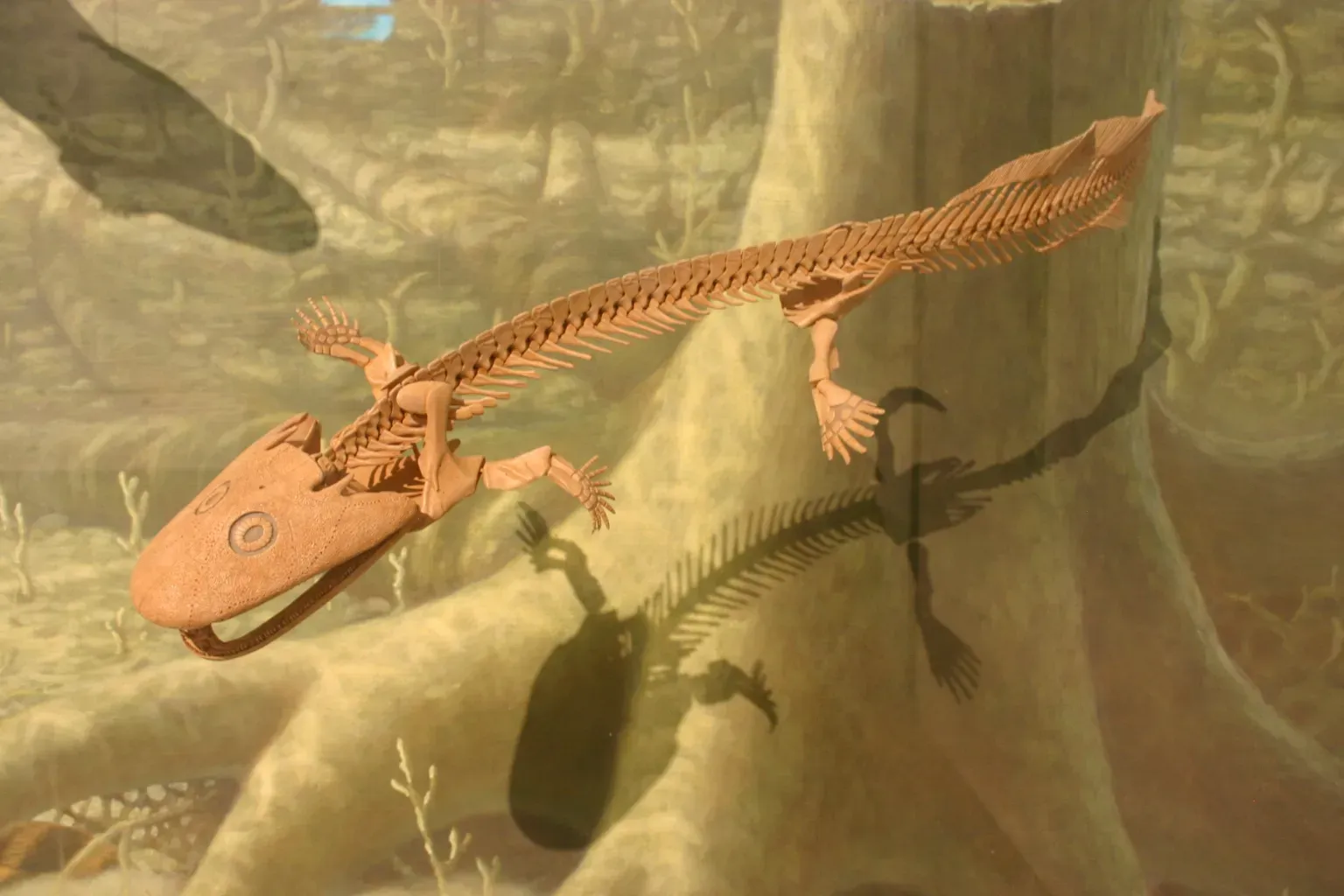
This might be the most mind-bending fact of all. These strange, cumbersome, eight-fingered, crutch-shuffling creatures that hauled themselves onto muddy shores hundreds of millions of years ago are your ancestors. Acanthostega and Ichthyostega represent the most complete surviving fossils we have discovered of the earliest tetrapods, a group whose descendants would be the first vertebrate creatures to leave the oceans and walk on land, and tetrapods like these would go on to have a successful run of the planet for the next 365 million years, diversifying along the way into animals that can sprint, crawl, lay eggs out of water or even give live birth.
Pretty early in the Carboniferous, amphibians split off from the group that evolved into the rest of tetrapods that still live today. The remaining amniotes then split off just over 300 million years ago into the group that became mammals and the group that became reptiles, and eventually dinosaurs and birds. Every time you take a step, you’re completing a journey that began in the shallow waters of the Devonian period. Modern humans still carry the evidence of our aquatic past in the way our arms and legs attach to our bodies, as well as in the many other features that link us to our fishy origins. That’s not just a fun fact. That’s a full-circle moment hundreds of millions of years in the making.
Conclusion
The story of is, at its core, the story of life refusing to stay put. From tiny millipede-like creatures dragging themselves along tidal shores, to four-limbed fish-monsters hauling their bodies out of shallow rivers, to the eventual explosion of all land life as we know it – every chapter of this saga is more extraordinary than the last.
What makes it even more extraordinary is how much of it is still being discovered. New fossils, new footprints, new methods of studying ancient bones continue to rewrite the timeline. I think that’s what makes paleontology one of the most thrilling sciences alive today – you’re never more than one discovery away from turning the entire story upside down.
You share your DNA with creatures that pulled themselves out of ancient seas before the first dinosaur ever walked the Earth. The next time you take a step, maybe give a quiet nod to Ichthyostega. It started this whole thing for you. What do you think – did you ever imagine your oldest ancestor looked more like a fish than a human? Drop your thoughts in the comments below.