Somewhere between the distant past and the world you walk through today, the ground beneath your feet holds secrets that stretch back hundreds of millions of years. Stone, sediment, and ancient rock layers carry the story of a world so dramatically different from ours that it might as well have been another planet. A world where colossal creatures ruled, continents were in completely different positions, and the air itself buzzed with prehistoric life.
The Mesozoic Era lasted from about 252 to 66 million years ago, comprising the Triassic, Jurassic, and Cretaceous Periods. That is a staggering amount of time. What makes it even more remarkable is that many of the geological formations from that era are still here, waiting for you to find them, walk through them, and feel a little awe-struck. Get ready to be surprised by what the rocks of our planet have kept for you.
1. The Morrison Formation, Western USA: A Jurassic Treasure Chest
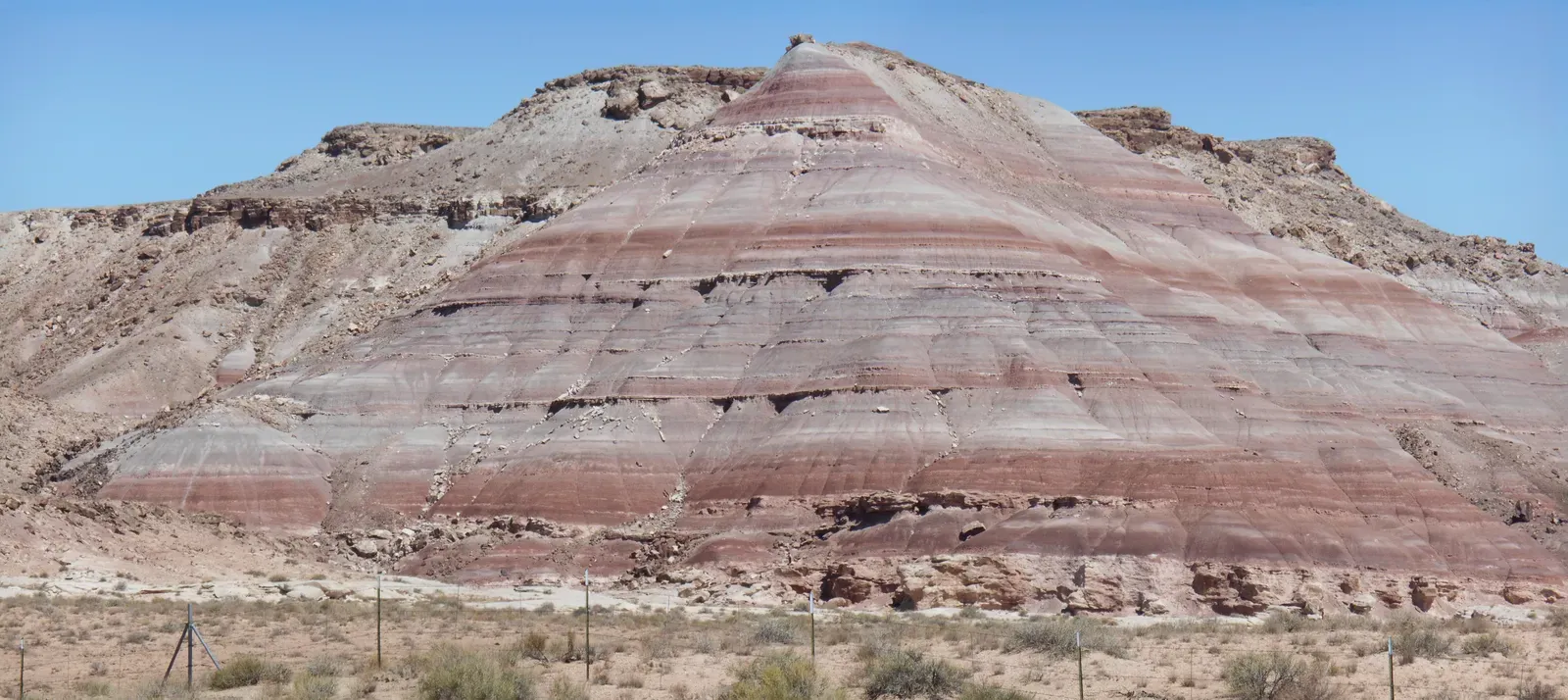
If you have ever wanted to stand where giants once roamed, the Morrison Formation is your destination. The Morrison Formation is a distinctive sequence of Upper Jurassic sedimentary rock found in the western United States, and it has been the most fertile source of dinosaur fossils in North America. You are not just looking at rock here. You are looking at the petrified memory of an entire lost world.
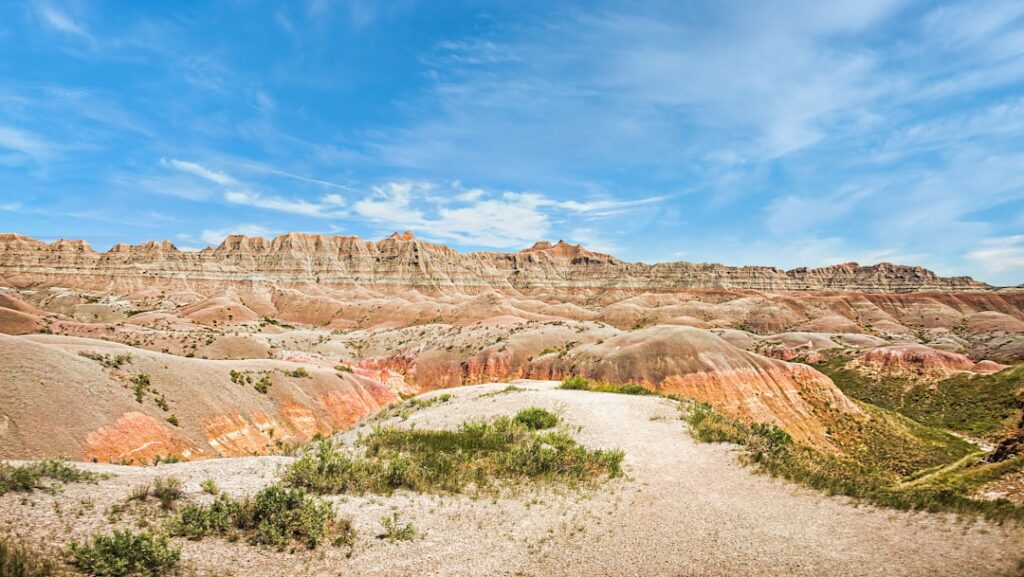
Radiometric dating indicates that the Morrison Formation is between 148 million and 155 million years old. It stretches across a breathtaking stretch of geography. It is centered in Wyoming and Colorado, with outcrops in Montana, North Dakota, South Dakota, Nebraska, Kansas, and reaching into Texas, New Mexico, Arizona, Utah, and Idaho. Walking through its multicolored landscape feels like thumbing through the most ancient chapters of a prehistoric encyclopedia. Hundreds of dinosaur fossils have been discovered here, including Allosaurus, Ceratosaurus, Torvosaurus, Camptosaurus, and a very broad range of sauropods – the giants of the Mesozoic era.
2. The Hell Creek Formation, Montana and the Dakotas: The Last Page Before Extinction
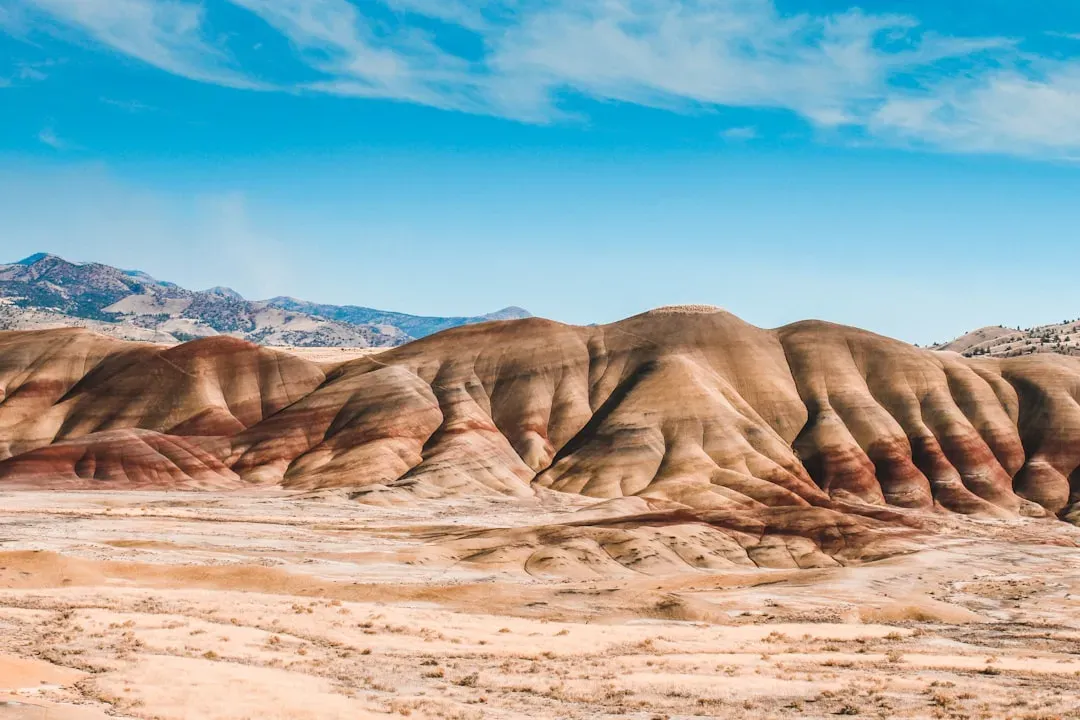
Here is the thing about the Hell Creek Formation. It is not just a geological formation. It is a document of final days. The Hell Creek Formation is an intensively studied geological formation of mostly Upper Cretaceous and some Early Paleocene rocks in North America, named for exposures studied along Hell Creek, near Jordan, Montana. This is ground zero for the very end of the dinosaur era, and you can feel that weight when you visit it.
The formation stretches over portions of Montana, North Dakota, South Dakota, and Wyoming. The rock layers tell a dramatic story. The famous iridium-enriched Cretaceous–Paleogene boundary, which separates the Cretaceous from the Cenozoic, occurs as a discontinuous but distinct thin marker bedding above and occasionally within the formation. You can literally see the geological line that marks the end of the dinosaurs in the rock strata. Important species uncovered from Hell Creek beds include Tyrannosaurus rex, as well as Triceratops, Troodon, and Ornithomimus.
3. The Solnhofen Limestone, Bavaria, Germany: Where Time Stood Perfectly Still
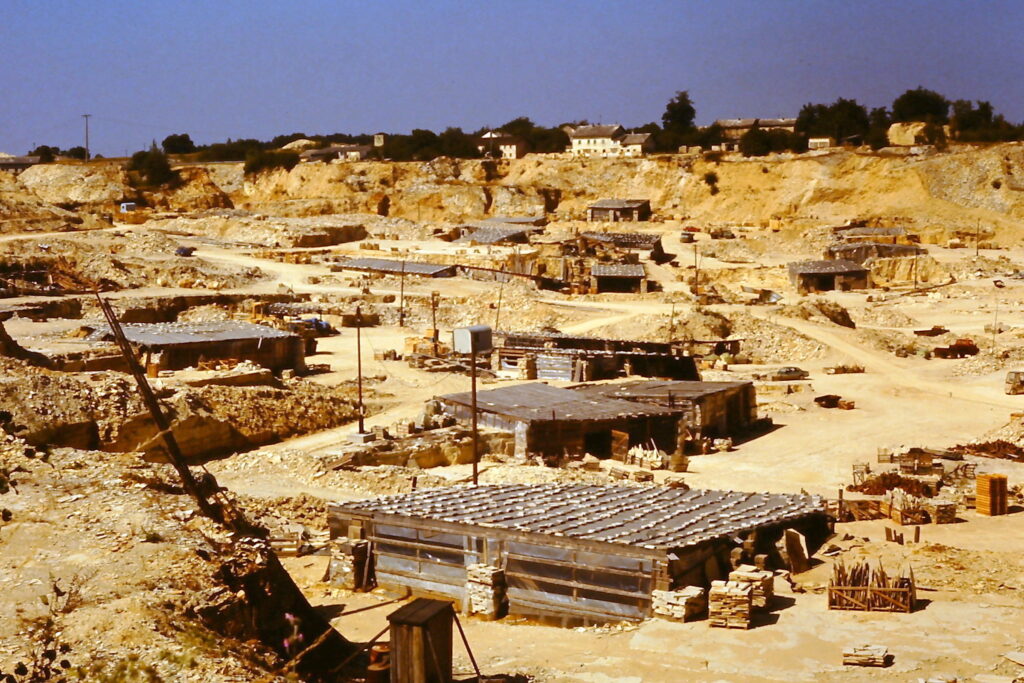
I think this one might be the most magical of them all. The Solnhofen Limestone is a famous Jurassic Period limestone unit located near the town of Solnhofen, southern Germany, that contains exceptionally preserved fossils from the Tithonian Age, spanning roughly 150.8 million to 145.5 million years ago. Think of it like nature’s version of a time capsule, sealed in fine limestone with extraordinary care.
The Solnhofen Plattenkalk preserves a rare assemblage of the biota that lived during the Jurassic, including exceptionally preserved soft-bodied tissues of animals and plants. Solnhofen is best known for the early feathered theropod dinosaur, Archaeopteryx. You could stand in that Bavarian landscape and realize you are near the very ground that gave us one of the most important fossils in scientific history. It is thought that the Solnhofen Plattenkalk formed in coastal lagoons protected from the open sea by sponge and coral reefs. That calm, sheltered lagoonal environment is exactly why so many creatures were preserved with such shocking detail.
4. The Nemegt Formation, Gobi Desert, Mongolia: Asia’s Dinosaur Capital
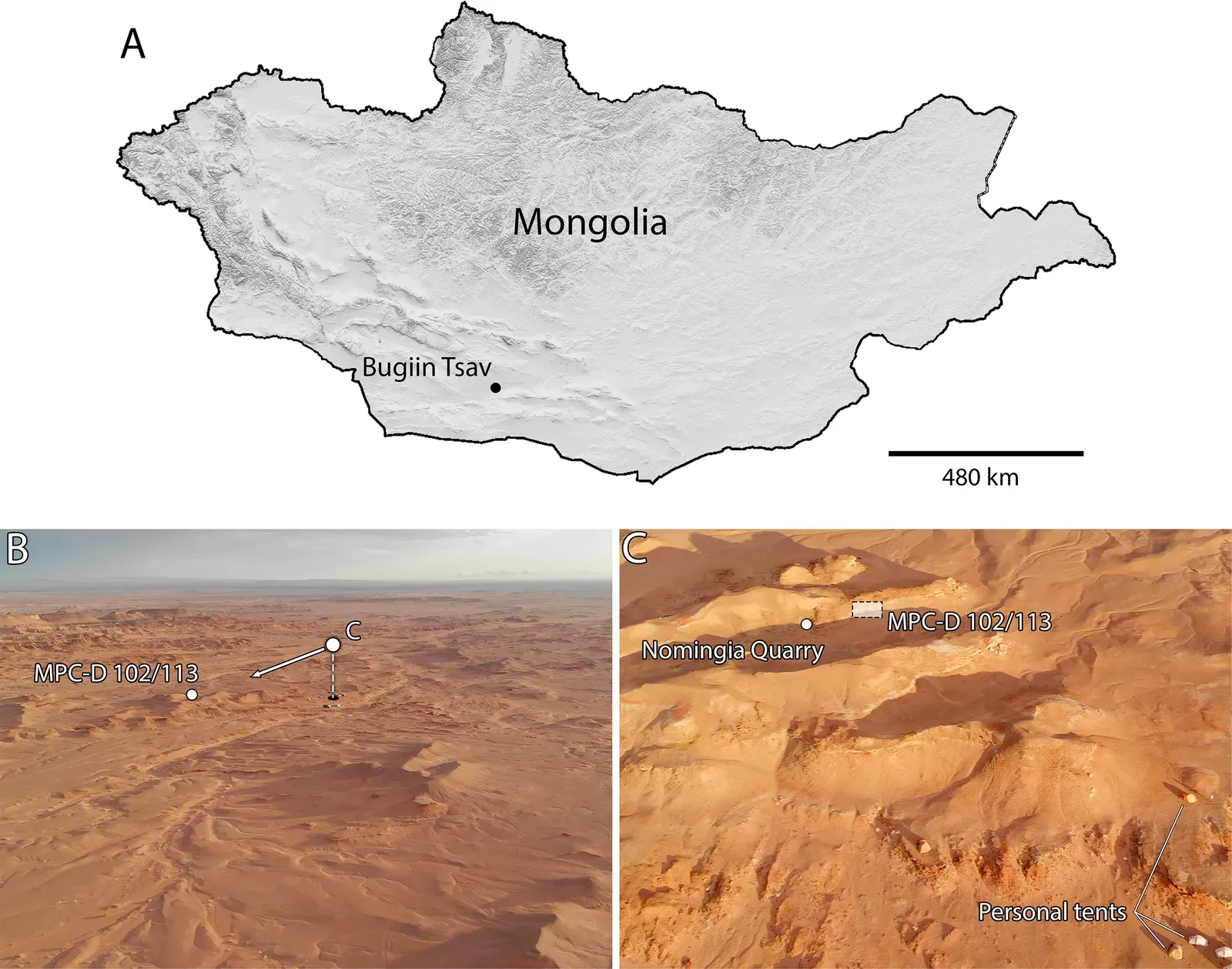
Honestly, the Nemegt Formation deserves far more attention than it typically gets outside of paleontological circles. The Nemegt Formation is a geological formation dating from the Late Cretaceous sedimentary layers from the Gobi Desert of Mongolia. If you ever imagined what an ancient river valley filled with massive dinosaurs might have looked like, the Nemegt is your reference point.
In sharp contrast with the present-day Gobi Desert, the Nemegt Formation shows evidence of a humid environment with large river channels, tidal flats, and forests, where ancient floodplains, lakes, and streams carved out canyons and steep cliffs from the sedimentary rocks. The diversity of life preserved here is extraordinary. The Nemegt environment was dominated by araucarian conifers, but it also supported a diverse array of other plants, including ginkgos and a wide variety of angiosperms, ranging from plane trees to duckweeds. Massive animals like Therizinosaurus and Tarbosaurus once wandered this landscape, and their fossilized remains are now revealing jaw-dropping secrets about Cretaceous ecosystems.
5. The Chinle Formation, Colorado Plateau, USA: Triassic Time Machine
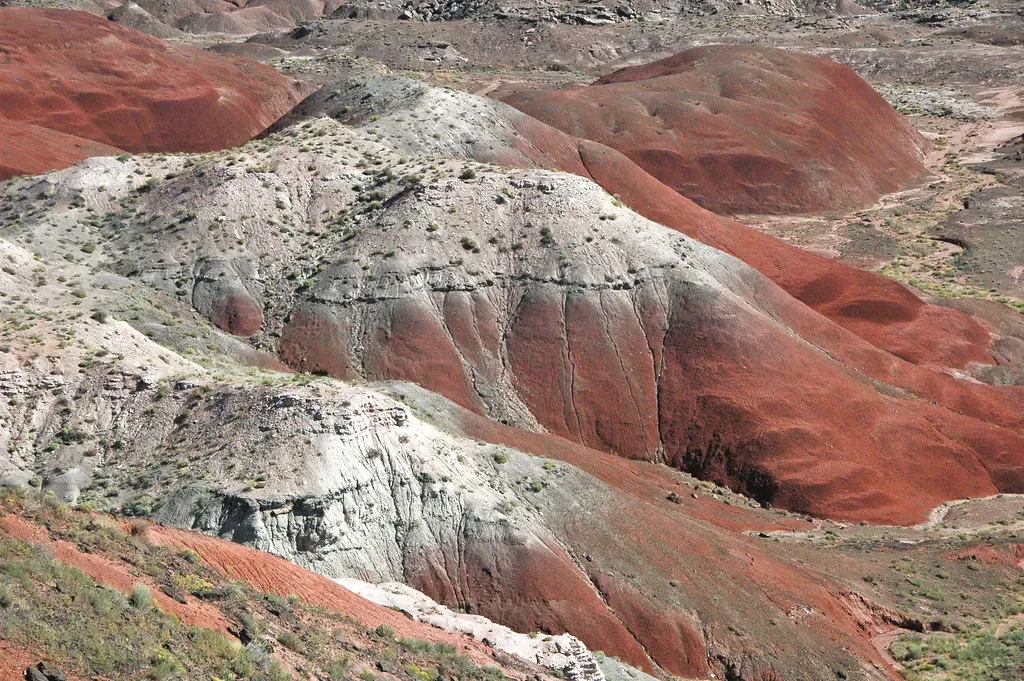
If you want to go back to the very beginning of the dinosaur story, the Chinle Formation takes you there. The Chinle Formation was deposited between about 227 and 205 million years ago, which was an important time for tetrapod, including reptile and dinosaur, evolution. That is a staggeringly early chapter of the dinosaur timeline, and you can experience it in some of North America’s most spectacular national parks.
The Chinle Formation is fossiliferous, with a diverse array of extinct reptile, fish, and plant fossils, including early dinosaurs and the famous petrified wood of Petrified Forest National Park in Arizona. The colors of this formation are like nothing else on Earth. Bands of red, purple, and blue-gray mudstones layer the landscape in ways that look almost painted on. The siltstone member at Ghost Ranch has produced the famous Whitaker Quarry, also known as the Coelophysis quarry, due to a high concentration of fossils belonging to the theropod dinosaur Coelophysis bauri. Ghost Ranch, made famous by the painter Georgia O’Keeffe, literally sits atop one of the greatest early dinosaur graveyards ever found.
6. Petrified Forest National Park, Arizona: A Forest Frozen in Stone
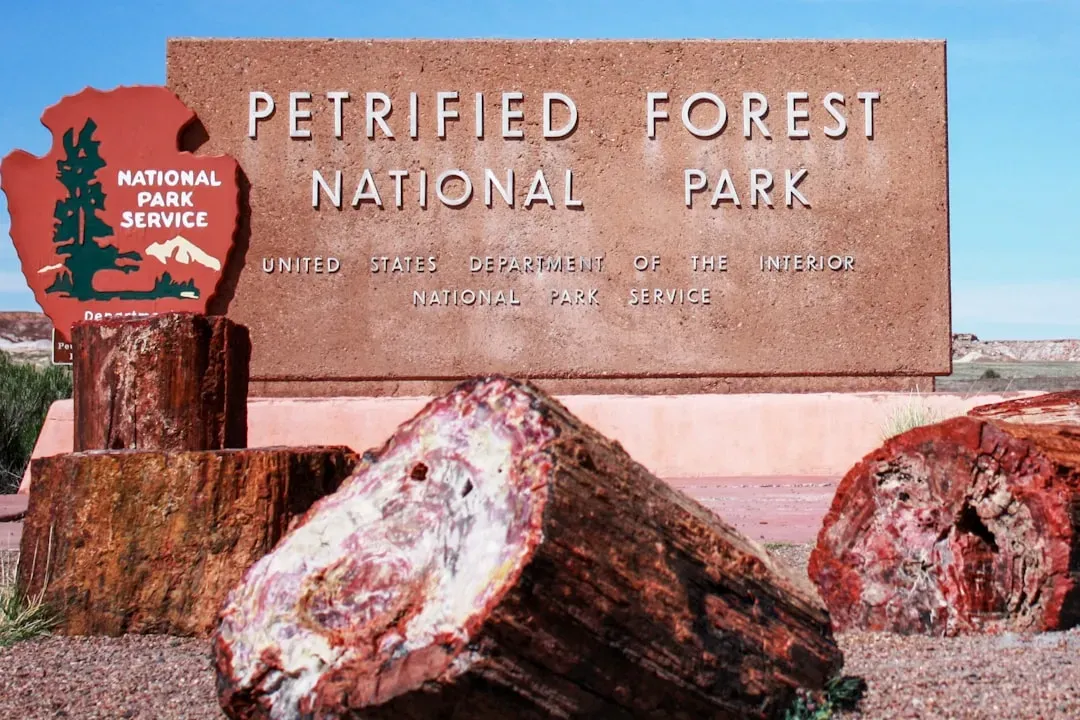
You would never guess it from its name, but Petrified Forest National Park is one of the most geologically rich windows into the Triassic world you can visit without a time machine. The Chinle Formation is especially famous for its fossil logs found in places like Petrified Forest National Park in Arizona. Enormous trees, dating back more than 200 million years, were buried so quickly by volcanic ash and sediment that silica gradually replaced their wood cell by cell, turning them into stone.
Walking through the park, you encounter trunks dozens of feet long, glittering with mineral colors that range from purple amethyst to deep red jasper. At Petrified Forest National Park, geologists dated zircons from volcanic ash in the Chinle Formation to provide age control for the fossils found in the park, using the radioactive uranium within them to obtain precise numeric ages. The landscape tells you something profound. It says that catastrophe and beauty are often the same thing, separated only by millions of years of perspective.
7. Dinosaur National Monument, Utah and Colorado: Where Bones Still Jut from the Rock
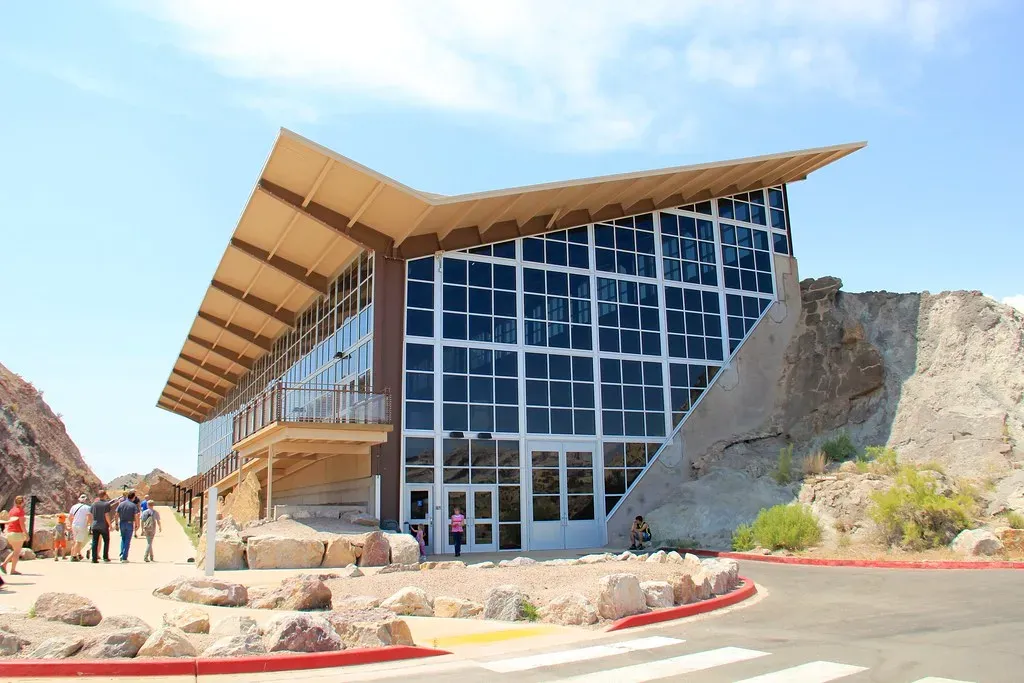
There are places in the world where the past refuses to stay buried. Dinosaur National Monument is one of them. Dinosaur National Monument is home to thousands of dinosaur fossils, making it a true “Jurassic Park.” The star attraction is the famous Quarry Exhibit Hall, where you can press your palm against rock that still contains actual dinosaur bones embedded in it, untouched.
Dinosaur National Monument in eastern Utah was established to preserve and exhibit fossils from the Morrison Formation, and many of the dinosaur fossils are found as jumbled accumulations consisting of dozens of partially disarticulated skeletons, which probably resulted from the transportation of dinosaur carcasses along streams and their subsequent burial on sandbars. That image alone is extraordinary to sit with. Ancient rivers, carrying the bodies of dead giants downstream, depositing them on bars of sand where they would lie undiscovered for more than 150 million years, waiting patiently for someone like you to find them.
8. The Bisti / De-Na-Zin Wilderness, New Mexico: A Badlands From Another Age
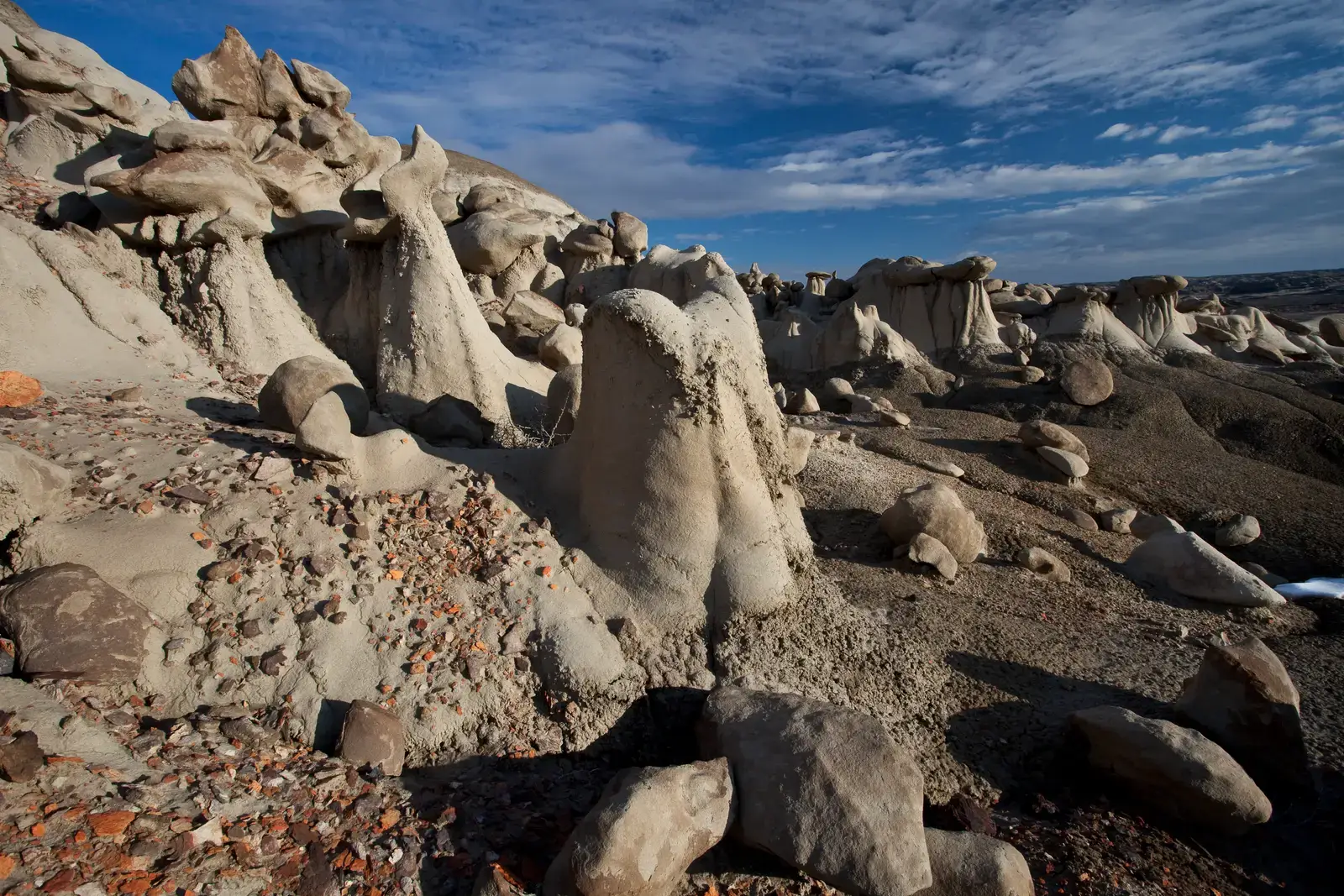
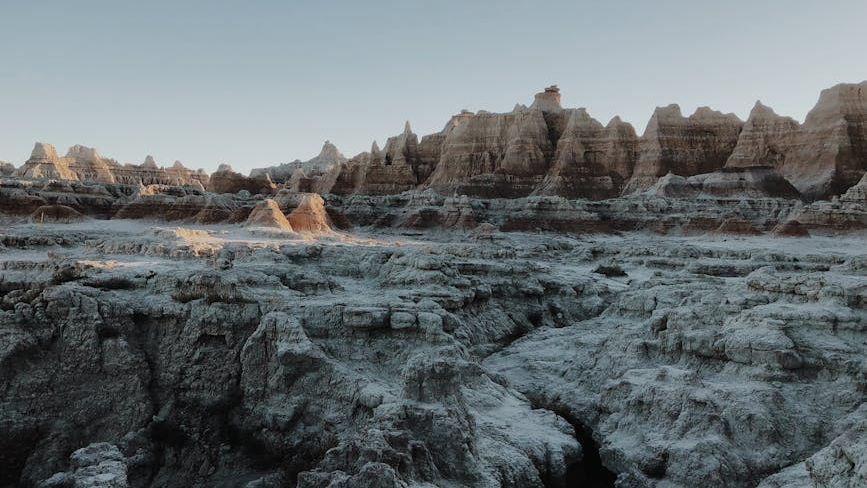
If you are someone who finds beauty in the strange and desolate, the Bisti/De-Na-Zin Wilderness will feel like another planet. At first glance, the windblown sandstone landscape looks like the most desolate place on Earth, but millions of years ago these badlands in what is now northern New Mexico were a coastal swamp in an inland sea, alive with large trees, reptiles, primitive mammals, and meat-chomping dinosaurs. The sheer contrast between then and now is almost difficult to process.
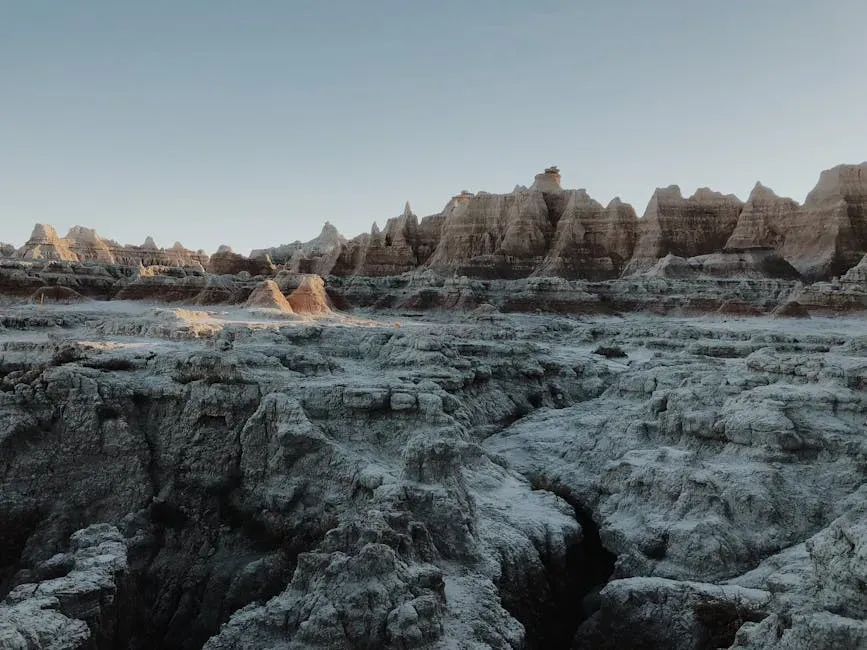
Millions of years of erosion formed this wilderness in the San Juan Basin. Once covered in swamps and deltas of the Western Interior Seaway, the area was filled with sediments and organic materials in prehistoric times. The result today is a surreal landscape of hoodoos and eroded rock formations. This erosion formed the distinctive hoodoos and exposed a wealth of fossils and petrified wood. It is hard to say for sure which is more astonishing. The eerily sculpted rock towers that dominate the landscape, or the knowledge that a 70-million-year-old tyrannosaur skull, nicknamed the “Bisti Beast,” was once pulled from the very earth you are standing on.
9. Dinosaur Fossil Sites of the Mongolian Gobi, Mongolia: A Desert Full of Dynasties
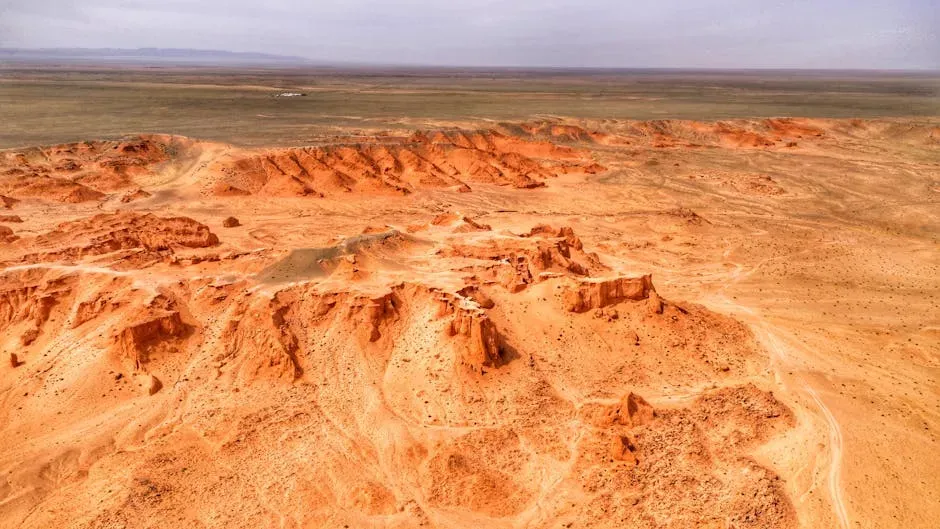
Let’s be real. The sheer scale of what the Mongolian Gobi holds in terms of prehistoric secrets is genuinely staggering. The Mongolian Gobi Desert is the largest dinosaur fossil reservoir in the world, and the region is especially important as regards dinosaur fossils from the later Cretaceous period, which represents the final phase of dinosaur evolution. You are not dealing with isolated patches of fossil ground here. You are dealing with an entire ancient landscape, vast and deep with history.
Nearly one fifth of the over 400 dinosaur genera known to science are found in the Mongolian Gobi Desert. That fraction represents an astonishing concentration of prehistoric diversity. In 1922, the Central Asiatic Expedition of the American Museum of Natural History discovered the first nest of dinosaur eggs at Bayanzag, and this discovery served as a turning point in paleontological history, establishing the fact that dinosaurs laid and hatched from eggs. Think about what it means to hold that fact. Before that discovery in the Gobi, scientists genuinely did not know with certainty how dinosaurs reproduced. The rocks of Mongolia gave us the answer.
Conclusion: The Earth Beneath Your Feet Is Still Talking
Every one of these formations is more than a geological curiosity. Each one is a record-keeper, holding on to evidence of a world that vanished in spectacular fashion roughly 66 million years ago. It is thought that a large meteor smashed into Earth 66 million years ago, creating the Chicxulub Crater in an event that resulted in the extinction of all non-avian dinosaurs. That catastrophe ended a chapter that had lasted for an almost incomprehensible stretch of time.
Yet the land itself survived. The rock layers remained. And now, when you stand in the Morrison Formation’s badlands, press your hand against a Solnhofen limestone quarry wall, or hike into the Bisti Wilderness under a blazing New Mexico sun, you are connecting to something almost impossibly ancient. The ancestors of major plant and animal groups that exist today first appeared during the Mesozoic, but this era is best known as the time of the dinosaurs. Their era shaped our world in ways science is still unraveling in 2026.
These formations are not just rocks. They are chapters in the longest story ever told. The question is: which one will you visit first?