
It’s wild to think that the peaceful hiking trail, quiet suburb, or beach you know today might once have been a hunting ground for some of the most terrifying predators Earth has ever produced. Long before humans showed up, the land that would become the United States was a shifting stage of ancient oceans, vast swamps, and open plains where giant reptiles, monstrous birds, and saber-toothed killers ruled without challenge. If you could peel back time, this familiar landscape would suddenly look like alien territory.
What makes these prehistoric predators so gripping is that many of them are not Hollywood inventions – they were real animals, with bones dug from the rocks beneath our feet. Some were bigger than today’s top predators, some were stranger, and a few were surprisingly familiar, like a nightmare version of animals we see now. Let’s walk through nine of the most fascinating hunters that once stalked what is now the United States – and imagine what it would feel like to meet them without the safety of a museum glass case.
Tyrannosaurus rex – The Apex Tyrant of the West
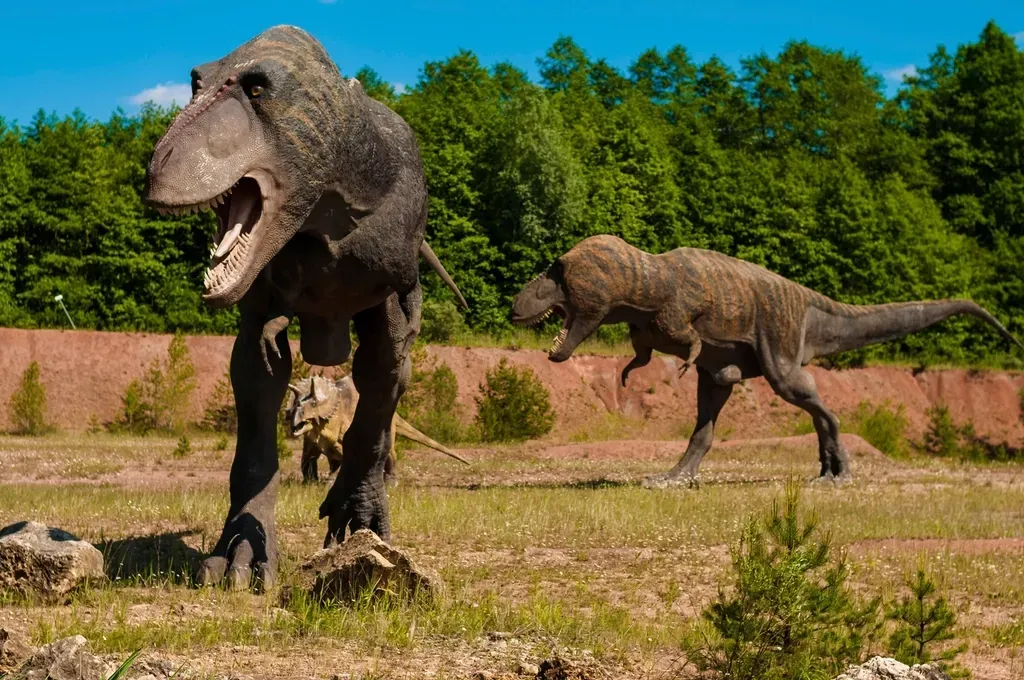
Tyrannosaurus rex is so famous it almost feels fictional, but its fossils are very real and heavily concentrated in western North America, especially Montana, South Dakota, Wyoming, and surrounding states. This predator lived near the end of the Cretaceous, roughly about sixty-six million years ago, prowling floodplains and coastal lowlands that bordered an ancient inland sea. With a skull nearly as long as an adult person is tall and jaws engineered to crush bone, T. rex sat at the absolute top of its food chain.
What’s easy to miss is how much science has changed our picture of this animal. Instead of a slow, lumbering movie monster, evidence suggests it was a dynamic, active predator and scavenger, with keen senses and a powerful, muscular body. I still remember seeing a T. rex skeleton in person for the first time and feeling a genuine jolt of panic, even though it was just bones. Standing there, you can’t help thinking: if this thing had ever decided you were on the menu, you simply wouldn’t have had a chance.
Allosaurus – The Jurassic Pack Hunter
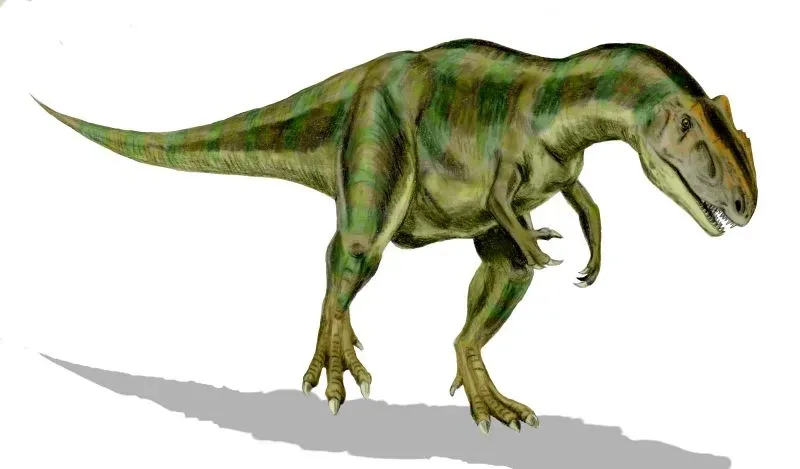
Long before T. rex showed up, Allosaurus was already ruling western North America during the Late Jurassic, in what’s now places like Colorado, Utah, and Wyoming. These predators lived roughly about one hundred fifty million years ago in a world dominated by long-necked sauropods and armored herbivores. Allosaurus was smaller than T. rex but still huge by modern standards, with sharp, laterally compressed teeth designed to slice flesh rather than crush bone.
Some bonebeds show multiple Allosaurus individuals preserved together, which has led to the provocative idea that they at least sometimes hunted or fed in groups around large carcasses. Whether they were true cooperative hunters like wolves or simply crowding around the same meal is still debated, but either way, it’s a chilling image. Imagine a half-dozen, multi-ton predators jostling and biting, a prehistoric feeding frenzy happening where a quiet canyon trail might be today.
Megalodon – The Giant Shark of Ancient American Seas
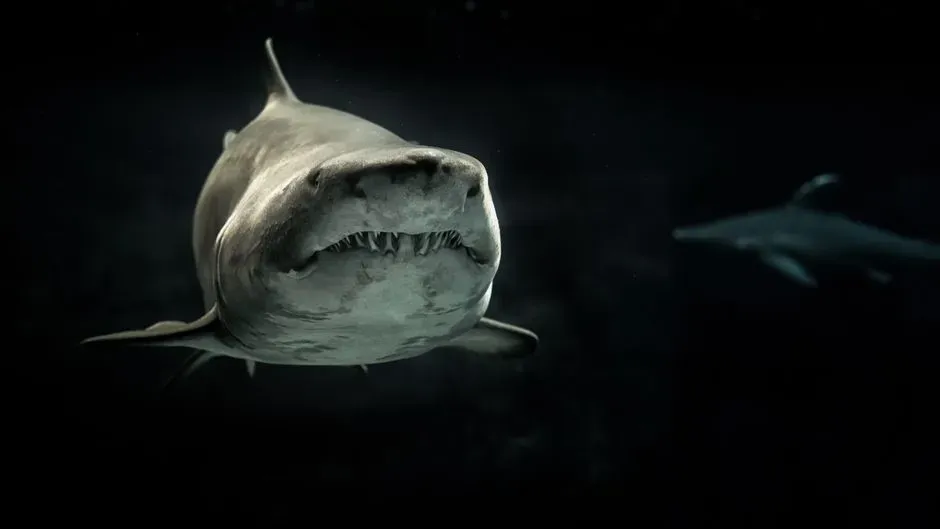
Move from land into the ancient seas that once covered parts of what’s now the United States and you run straight into one of the most infamous predators of all time: the giant shark often called megalodon. Its massive teeth – some longer than your hand – have been found on both coasts, from the Atlantic margins of the Carolinas and Florida to regions bordering the Pacific. This shark lived during the Miocene and Pliocene epochs, long after the dinosaurs vanished, when marine mammals like early whales and seals became its primary prey.
Even though only teeth and a few vertebrae survive, those teeth tell a brutal story: this shark targeted the most calorie-rich animals in the ocean and likely bit through bone and blubber with devastating force. I always think of modern great white sharks as scary enough, and then remember that this thing was significantly larger and probably specialized in hunting whales. The next time you stand on an American beach, it’s unsettling to realize that not too long ago in geologic terms, those same waters may have hidden a predator that makes any modern shark look modest.
Deinosuchus – The Giant Crocodilian Lurking in Cretaceous Rivers
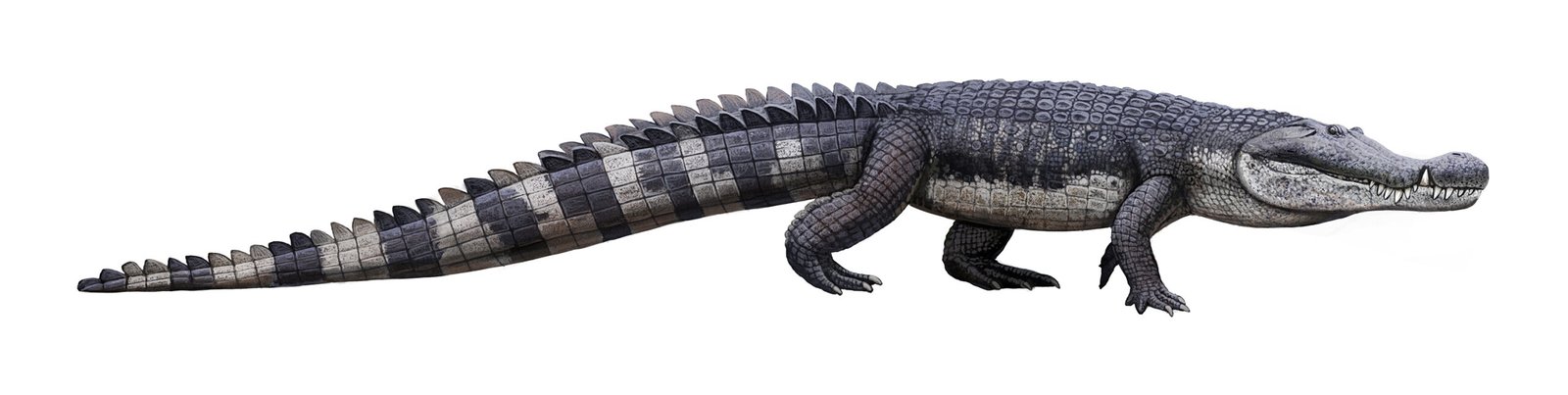
Deinosuchus, whose name translates to something like a terrible crocodile, lived along the shores and rivers of what is now the southern and eastern United States, as well as parts of the West. It roamed during the Late Cretaceous, lurking in estuaries and coastal waterways that lined the inland seaway. Although it was not a dinosaur, this massive crocodilian grew longer than most modern saltwater crocodiles and was built like an ambush machine.
Bite marks on dinosaur bones suggest Deinosuchus preyed on large herbivorous dinosaurs that ventured too close to the water’s edge, dragging them in with a crushing grip. Picture something larger than any alligator you’ve ever seen, perfectly camouflaged in murky water, lunging up in a blur of teeth and muscle. For all the focus on land predators like T. rex, an animal like Deinosuchus reminds us that in many ancient American ecosystems, the water’s edge was the most dangerous place to be.
Smilodon fatalis – The Saber-Toothed Icon of Ice Age America
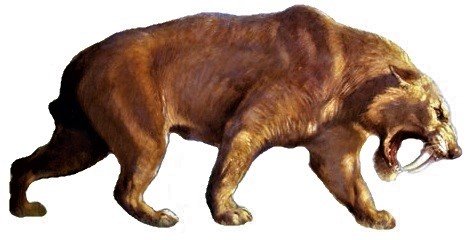
Smilodon fatalis, often lumped under the label saber-toothed tiger, is one of the most recognizably terrifying mammals to ever live in North America. Its fossils are famously abundant in the La Brea Tar Pits in California, but remains have been unearthed across a broad span of what is now the United States. This Ice Age predator combined a muscular, almost bear-like body with oversized upper canine teeth that looked exaggerated, even cartoonish, until you remember they were meant to pierce flesh.
Rather than sprinting down prey over long distances like a cheetah, Smilodon seems to have been built for ambush, overpowering large herbivores such as bison or young mammoths with strength and a powerful forelimb grip. I’ve always found saber-toothed cats strangely relatable because they lived relatively recently, sharing landscapes with early humans and familiar animals like horses and camels. Yet they also feel like something out of a fantasy game – proof that evolution sometimes takes a wild gamble on extreme weapons.
Dire Wolves – Real-Life Heavyweight “Game of Thrones” Wolves
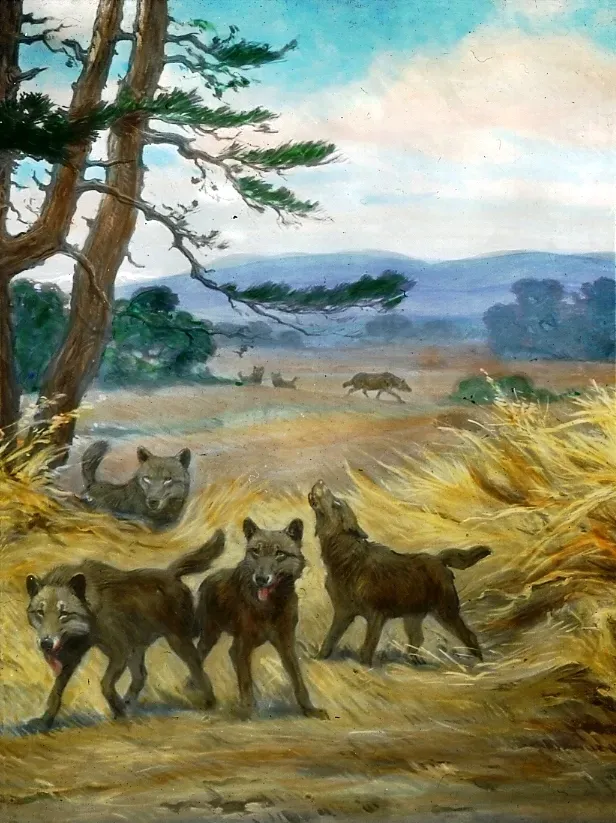
Dire wolves have become trendy in pop culture, but the real animals that lived across North America during the Pleistocene were not oversized fairy-tale beasts. They were robust, powerful canids a bit larger and heavier than today’s gray wolves, with stronger jaws and teeth tuned for crunching bone. Their remains are common in the fossil record of the United States, particularly in the West, where they shared the landscape with mammoths, bison, and other big game.
Evidence from bonebeds suggests that dire wolves were social animals, likely hunting in packs and competing with saber-toothed cats and other large carnivores. For me, these wolves make the Ice Age feel unnervingly close, because they are both familiar and lost – close cousins to modern wolves but adapted to a world of megafauna that no longer exists. Imagining a pack of them trotting through a snowy valley that might now hold a ski resort or a mountain town is both thrilling and a little haunting.
American Lion (Panthera atrox) – The Giant Cat That Ruled the Plains
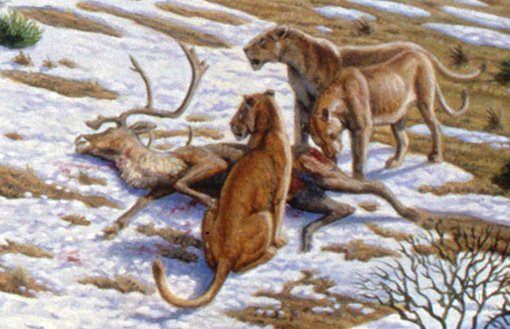
The American lion, or Panthera atrox, was one of the largest cats ever to walk the earth, living across much of what is now the United States during the last Ice Age. Its fossils have turned up from California to the Great Plains and beyond, hinting at a wide range that spanned open grasslands and possibly lightly forested regions. This predator was likely larger than modern African lions, with a build suited to tackling big prey like bison, horses, and perhaps young mammoths.
There is still ongoing debate about exactly how lion-like its social behavior was, but given the density of large herbivores on ancient American plains, it is hard not to picture them dominating open-country hunts. Personally, I find the American lion even more unsettling than the saber-toothed cats, because it feels like a supercharged version of something we still see on documentaries today. Imagine a lion big enough that our present-day top cats start to look almost modest, and then picture it ranging over areas that are now farmland or highways.
Hyaenodon and Its Relatives – Early Mammal Predators Before Modern Carnivores
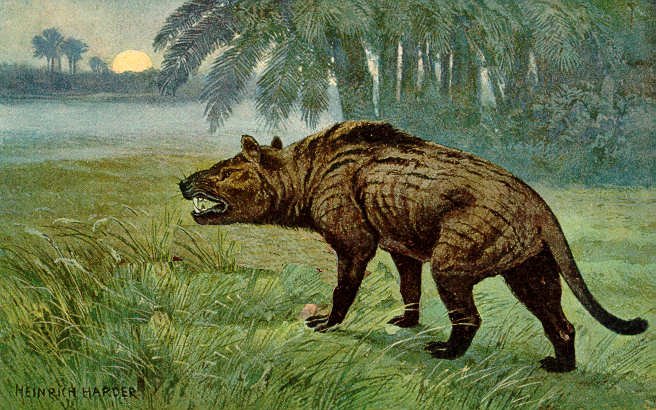
Long before cats and dogs took over as the main mammalian predators, groups like Hyaenodon and its kin dominated parts of North America, including regions that are now the western and central United States. These were not true hyenas or modern carnivores at all, but members of an extinct group of meat-eating mammals that thrived after the dinosaurs disappeared. Some species grew to the size of large dogs or even bigger, with long skulls, shearing teeth, and bodies built for ranging across open terrain.
The world they lived in, during the Eocene and Oligocene epochs, was a kind of experimental period in mammal evolution, when many lineages were trying out different ecological roles. I like to think of Hyaenodon as one of evolution’s earlier drafts of a top predator – fully functional and deadly in its time, but ultimately replaced by more modern designs like big cats and true canids. Knowing that predators came and went in waves helps put our current ecosystems in perspective: what feels permanent today is probably just another temporary chapter.
Quetzalcoatlus and Other Giant Pterosaurs – Aerial Predators Above Ancient Texas
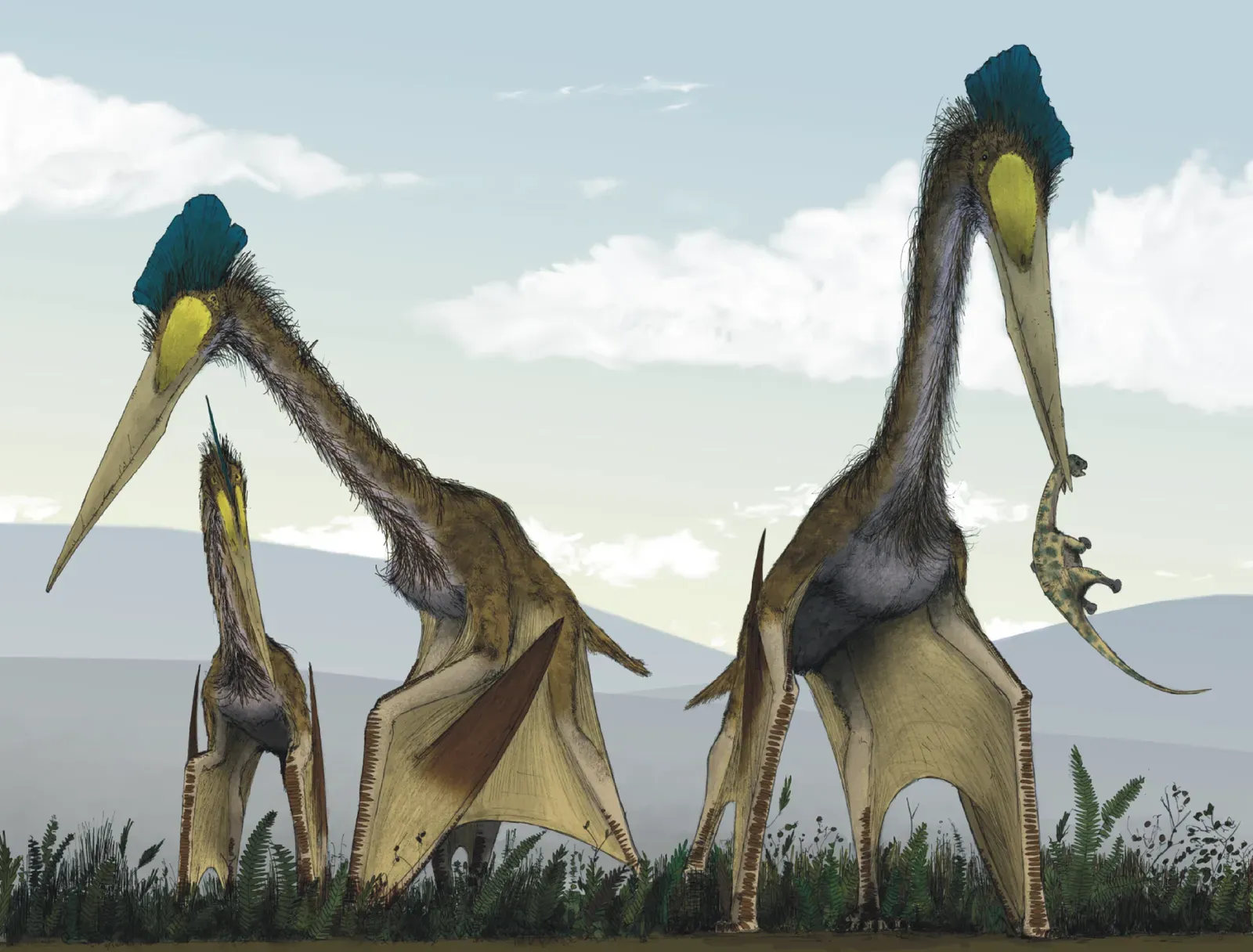
Not every prehistoric hunter stalked on land or swam in the sea; some ruled the skies. Quetzalcoatlus, one of the largest known flying animals of all time, is primarily known from what is now Texas. While scientists still debate exactly how much of a predator it was versus a scavenger or generalist feeder, its long toothless beak and towering stature suggest it could have hunted small vertebrates, snatching them from shorelines, river margins, or open flats.
Picture something with the wingspan of a small airplane and the height of a giraffe when standing on the ground, cruising above a Late Cretaceous landscape that would one day become the American South. Whether it was actively hunting or opportunistically feeding, being on the menu for a creature like that would have been an unnerving possibility for smaller animals. To me, the idea of a giant pterosaur gliding silently overhead is one of the most eerie images in paleontology – a reminder that danger in prehistoric America also came from above.
Conclusion: A Harsher, Wilder Version of the Land We Know
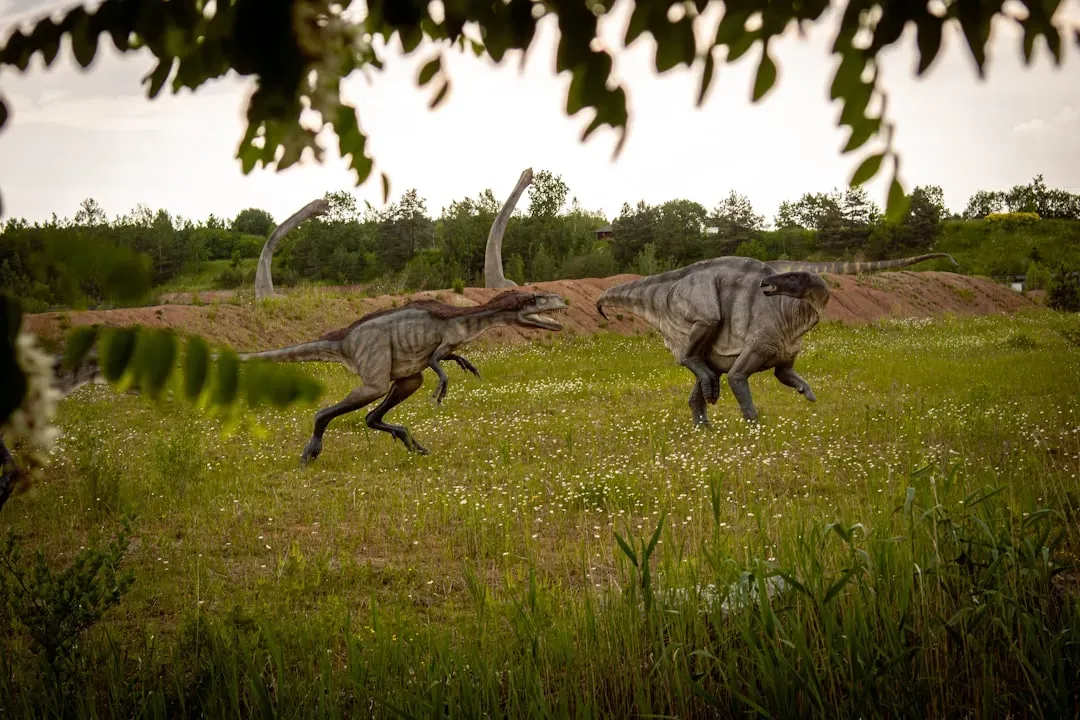
When you stitch all these predators together – towering theropod dinosaurs, ambush crocodilians, giant sharks, saber-toothed cats, heavyweight wolves, colossal lions, early carnivorous mammals, and sky-spanning pterosaurs – you start to see the United States not as a stable place, but as an endlessly reworked stage for one brutal drama after another. The same ground that holds cities, highways, farms, and suburbs once hosted worlds where survival meant outrunning a dinosaur, avoiding a lurking crocodilian, or staying invisible to a massive cat. That contrast hits me every time I see a familiar landscape and remember that deep time has layered countless lost ecosystems beneath it.
My honest opinion is that we tend to romanticize prehistory as some kind of simpler, purer age, but the fossil record from this part of the world tells a tougher story: life here has often been short, dangerous, and ruled by predators that make our modern top carnivores look almost gentle. At the same time, there is something inspiring in how ecosystems keep rebuilding themselves after each wave of extinction, with new hunters rising to fill the gaps. Next time you’re walking a trail or standing on a quiet shore, it’s worth asking yourself: if you could pull back the layers of time, which of these ancient predators would you be least willing to meet face to face?