Every now and then, one fossil shows up that basically tells scientists: everything you thought you knew… try again. These are the discoveries that flip textbooks, shatter neat timelines, and force paleontologists to argue late into the night over pizza and CT scans. They are rare, unsettling, and absolutely thrilling, because they remind us that prehistory is not a finished story but a draft with plenty of messy red ink.
I still remember the first time I saw a life-size dinosaur skeleton in a museum as a kid and realizing, almost uncomfortably, that grown adults spent their careers arguing about bones dug out of the ground. Now, watching how a single fossil can rewrite evolution, climate stories, or entire family trees, it feels less like dusty science and more like a crime thriller. The nine moments below are exactly those kinds of plot twists, when one skeleton, one skull, or even one feather sent the dinosaur world into full-blown chaos mode.
1. The First Archaeopteryx Skeleton: When a Single Feathered Dinosaur Blew Up the Bird Debate
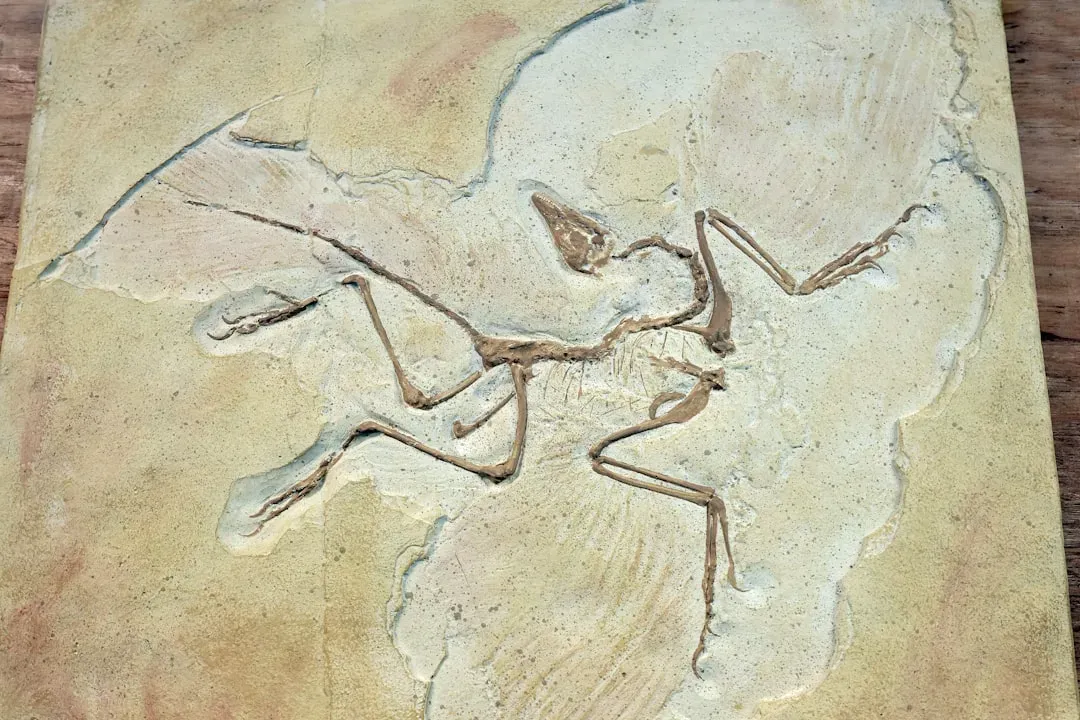
Imagine being a 19th‑century scientist convinced that reptiles and birds are totally separate worlds, and then someone drops a fossil on your desk that looks part crow, part lizard. That was essentially what happened with Archaeopteryx, the iconic feathered dinosaur from Germany’s Solnhofen limestone. It had flight feathers like a modern bird but also teeth, claws on its wings, and a long bony tail that screamed dinosaur, not robin. Overnight, the clean boundary between “bird” and “reptile” turned into a messy continuum.
The chaos did not come from a flood of fossils, but from the shocking completeness of this single discovery: one skeleton with feathers intact was enough to supercharge debates about evolution itself. Some researchers pushed it as a “missing link” supporting Darwin’s new ideas, while others argued it was just a weird bird, an odd side branch rather than a true transitional form. For decades, entire careers were built on reinterpreting that one creature: was it gliding, flapping, or something else entirely? Archaeopteryx forced scientists to accept an uncomfortable idea that feels almost obvious now: evolution is not a series of clean jumps, it is a blurry, overlapping gradient where categories melt into each other.
2. Deinonychus: The Single Skeleton That Killed the “Slow, Stupid Dinosaur” Myth
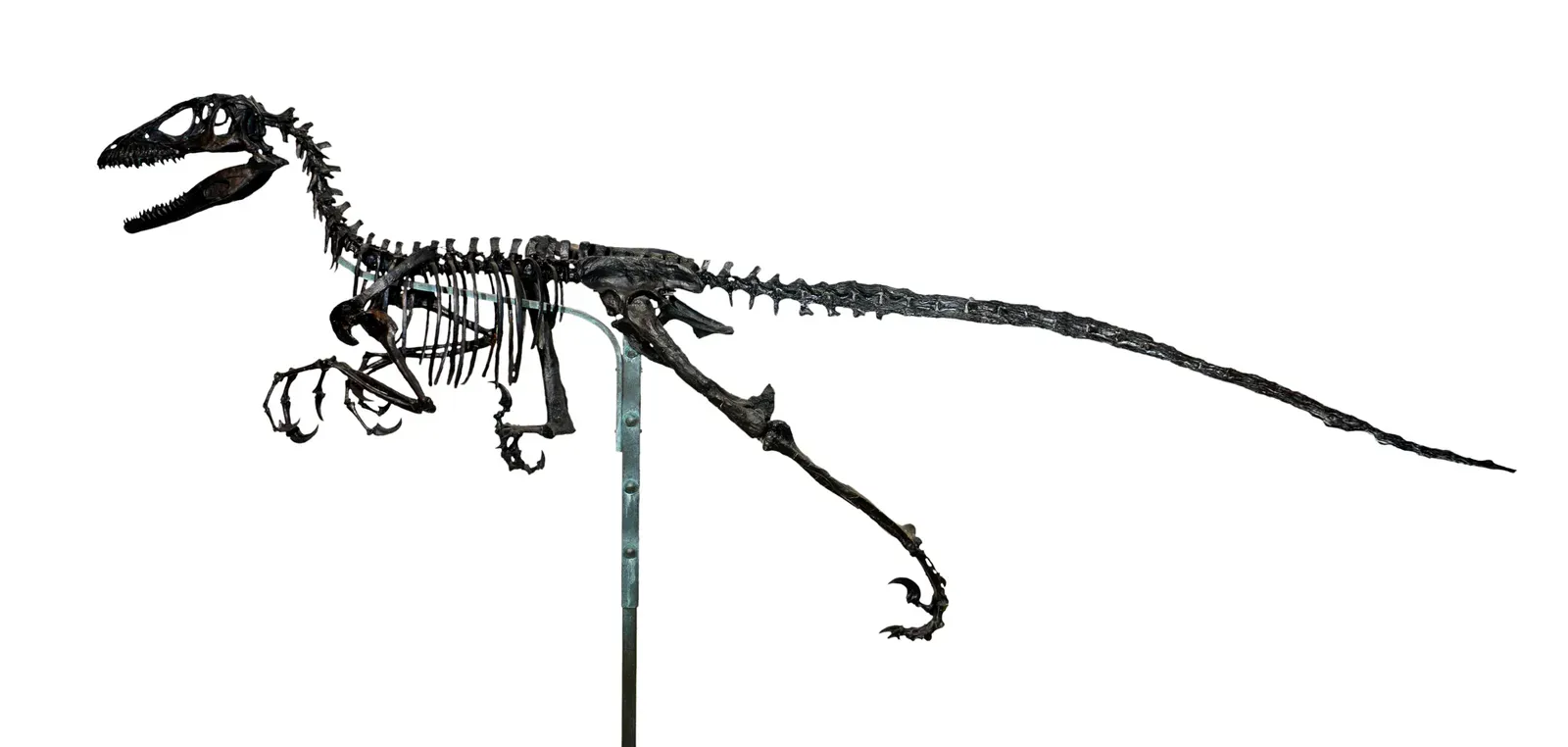
For much of the 20th century, popular science painted dinosaurs as lumbering, swamp-loving brutes that basically shuffled toward extinction. Then along came Deinonychus, a mid‑sized predator with a sickle-shaped claw on each foot and a skeleton that screamed speed, agility, and intelligence. One key skeleton, described in the late 1960s, showed a lightweight, birdlike frame, strong legs, and a stiffened tail that acted like a dynamic counterbalance. It did not match the stereotype of a lazy reptile; it looked like an athlete.
This fossil helped ignite what people now call the “dinosaur renaissance,” a scientific and cultural reset that treated dinosaurs as active, warm-blooded, socially complex animals. Suddenly, researchers were arguing about dinosaur metabolism, parenting, and behavior in ways that would have sounded almost ridiculous a generation earlier. To me, Deinonychus is the moment dinosaurs stopped being background monsters and became believable living creatures. One skeleton did not just change a species description; it rewired the entire emotional tone of paleontology from sleepy to electric.
3. Sinosauropteryx: The “Fluffy Raptor” That Proved Dinosaurs Wore Feathers
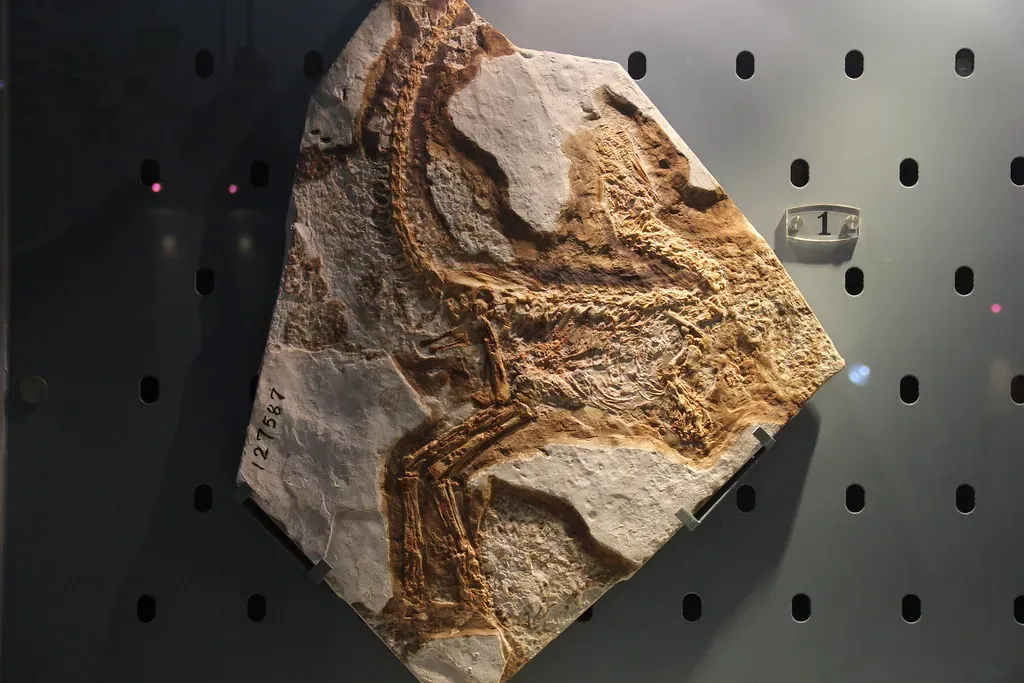
It is one thing to speculate that some dinosaurs might have had feathers; it is another to see the impressions preserved around an actual skeleton. Sinosauropteryx, discovered in China in the 1990s, was a small theropod with a halo of filamentous structures around its body. They were not scales, not skin artifacts, but clear evidence of primitive feathers or feather-like filaments. That single fossil helped slam the door on the long-running argument over whether feathers were just a bird thing.
The uproar went beyond technical anatomy papers. If non‑bird dinosaurs had feathers, then the visual image of dinosaurs in movies, museums, and children’s books was suddenly wrong. Some scientists pushed back, suggesting the filaments might be degraded collagen or something else, but more specimens kept lining up with the same pattern, and Sinosauropteryx remained the spark that lit the fire. Personally, I love that this discovery forced everyone, experts and casual fans alike, to confront how attached we get to outdated images. It was a humbling reminder: nature does not care about our nostalgia for scaly, naked T. rex toys.
4. The Velociraptor with a Protoceratops: A Fossil Snapshot of Dinosaurs Locked in Combat
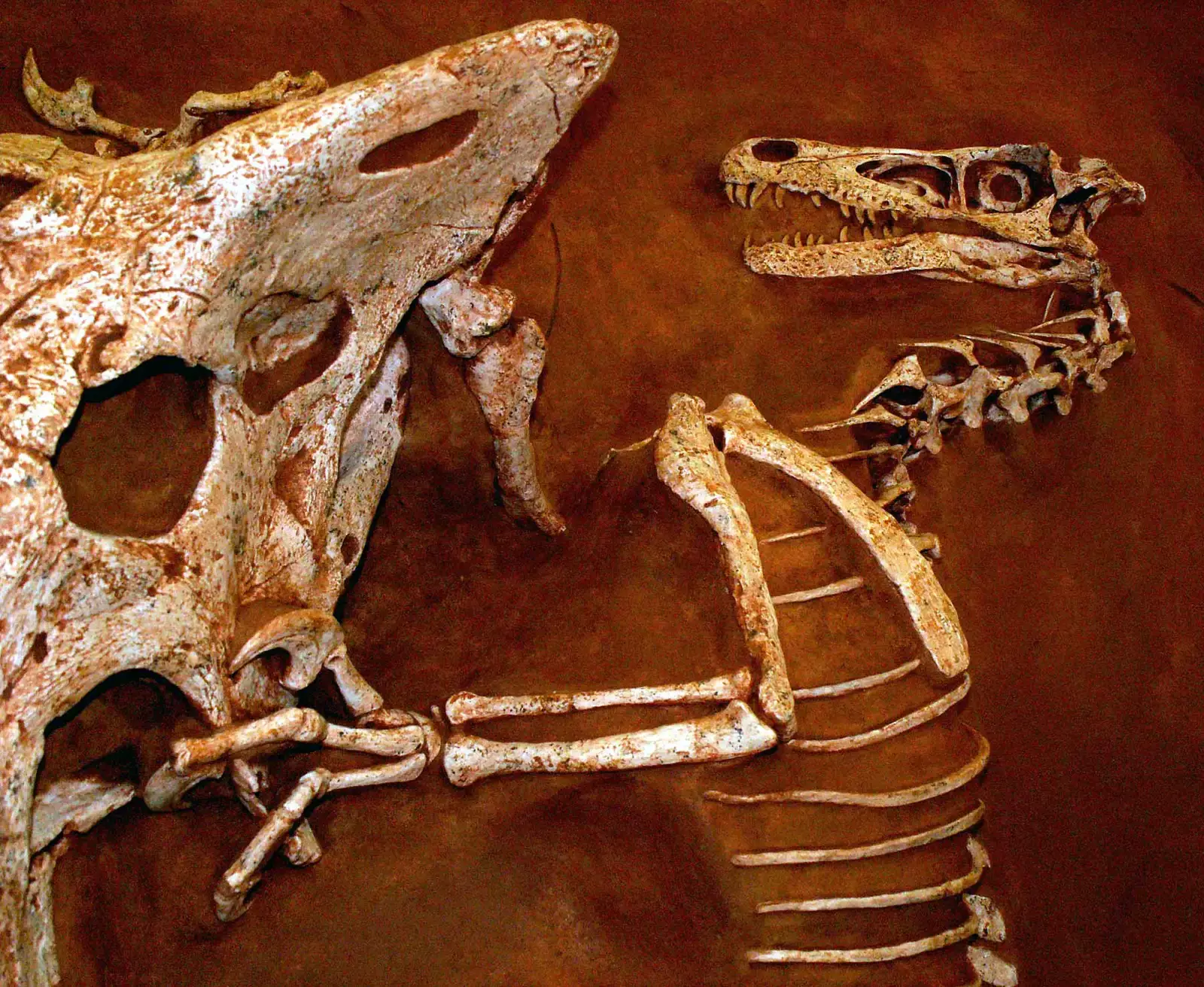
Most dinosaur fossils are scattered and incomplete, like crime scenes disturbed by erosion and time. Then there is the legendary pair from Mongolia: a Velociraptor and a Protoceratops apparently frozen mid‑fight. One fossilized tableau shows the raptor’s sickle claw embedded in the herbivore’s neck area, while Protoceratops seems to be biting down on the raptor’s arm. It is like someone paused a brutal wildlife documentary and then turned the screen into stone. For many researchers, this was the closest thing to direct fossil evidence of predatory behavior, not just educated guesswork.
The chaos came from the sudden boldness it allowed. Instead of cautiously stating that “Velociraptor may have preyed upon small ceratopsians,” scientists could talk about hunting strategies, ambush scenarios, and even social behavior with a new level of confidence. Of course, there were debates: did a sandstorm bury them mid-battle, or did water move them into that position? But regardless of the exact mechanism, the fossil forced paleontologists to treat dinosaur behavior as something they could reconstruct in detail, not just vaguely infer. It was a sharp reminder that these were not just skeletons; they were once desperate animals fighting for their lives.
5. The First Oviraptor on a Nest: From “Egg Thief” to Devoted Dinosaur Parent
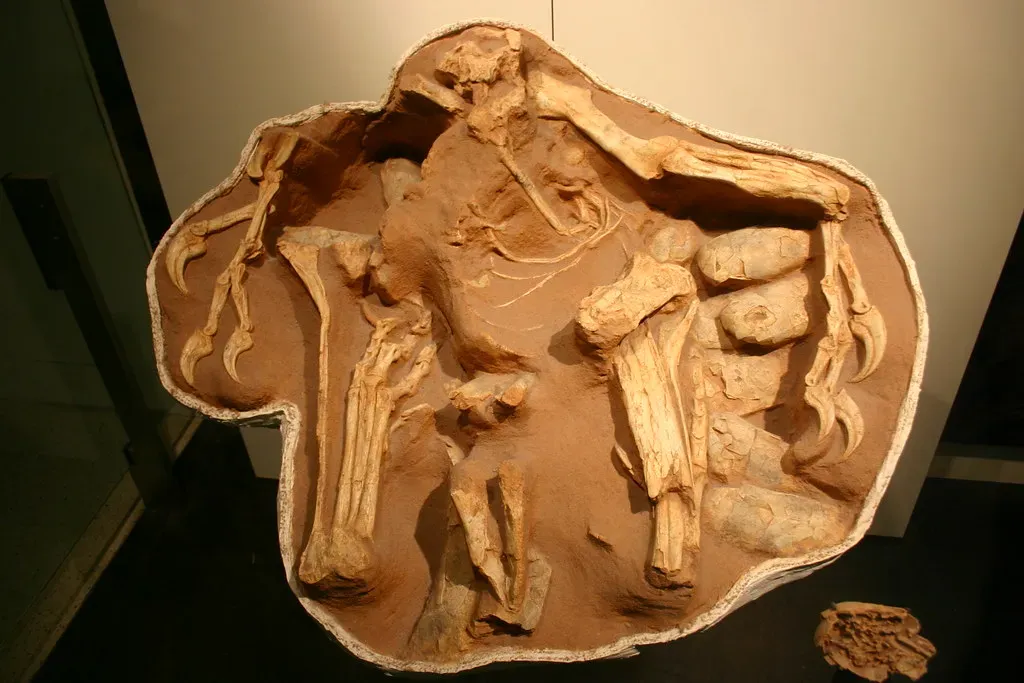
Oviraptor has one of the most ironic names in paleontology. It literally means “egg thief,” because the first skull was found near a nest of eggs and scientists jumped to the obvious conclusion: thief caught in the act. Decades later, a single fossilized oviraptorosaur crouching directly on top of a nest changed the entire story. The pose looked nearly identical to a brooding bird, with limbs positioned to cover and protect the eggs, not steal them. That one skeleton turned Oviraptor from villain to parent almost overnight.
The emotional whiplash here is what I find so compelling. We tend to project human morality onto animals, even extinct ones, and this fossil forced everyone to walk back a narrative that had stuck around for generations. It also cracked open a much bigger idea: many theropod dinosaurs likely engaged in complex nesting and brooding behaviors, not just bury-and-leave strategies. The discovery used to be treated almost like a scandal in paleontology circles, a live example of how fragile scientific “truth” can be when it leans too hard on assumptions and too little on direct evidence.
6. Dakotaraptor and the Question: How Big Could “Raptors” Really Get?
![6. Dakotaraptor and the Question: How Big Could “Raptors” Really Get? ([1], CC BY-SA 4.0)](https://nvmwebsites-budwg5g9avh3epea.z03.azurefd.net/dinoworld/fdb60b7d6947c412a203d63bd49a9c54.webp)
For a long time, the mental image of a “raptor” was split between the fictional movie version and the real, smaller Velociraptor known from fossils. Then a single partial skeleton from North America, named Dakotaraptor, shook up that tidy distinction. Here was a dromaeosaur roughly the size of a small car, with massive claws and long, robust limbs. It was not just a supersized version of a small predator; it suggested that true raptor‑style hunters could grow much larger than many researchers had assumed for that group.
The fossil reignited arguments over how these animals hunted, whether they acted alone or in groups, and how they shared ecosystems with giant tyrannosaurs. Some scientists questioned the interpretation of the bones, while others embraced it as long-awaited evidence that big raptors really did exist outside of fiction. To me, Dakotaraptor represents a recurring theme in dinosaur science: as soon as we get comfortable with a neat size range or behavioral box, a weird outlier arrives and wrecks the furniture. It is a healthy kind of chaos that keeps paleontology from slipping into lazy certainty.
7. A Tiny Feathered Tail in Amber: Dinosaur Color, Texture, and the Shock of Realism
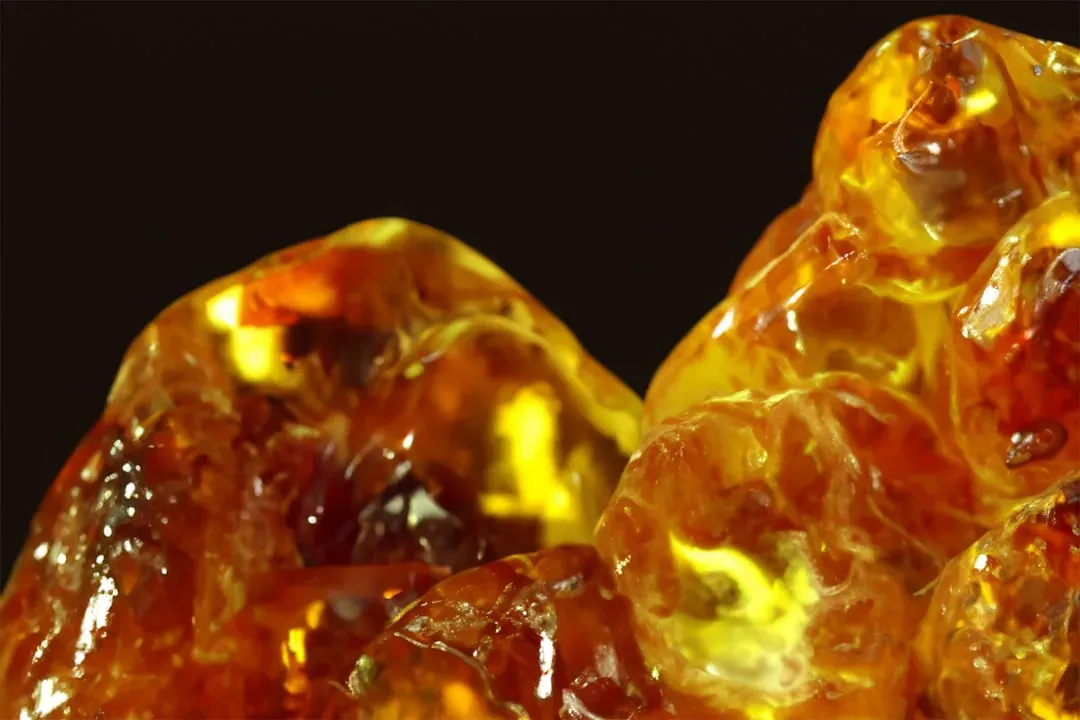
Finding dinosaur bones is one thing; finding a piece of an actual dinosaur body part, feathers and all, preserved in amber is on a completely different emotional level. The discovery of a small, feathered dinosaur tail embedded in Cretaceous amber from Myanmar did exactly that. You could see individual feathers, soft tissues, even microscopic details that no normal fossil could preserve. It was almost disturbingly intimate, like stumbling across a pressed flower of something that should have stayed purely imaginary.
This single specimen blew open the doors for serious conversations about dinosaur color, feather structure, and even how these feathers might have functioned for display or insulation. It also sparked ethical and political debates about sourcing fossils from conflict regions and commercial markets, which added another layer of chaos beyond the science itself. Personally, I think this fossil is one of those rare finds that makes dinosaurs feel alarmingly present. Instead of distant skeletons, you suddenly picture real animals with soft, delicate feathers catching the light, and it changes how you emotionally connect to the past.
8. Spinosaurus Rebuilt: One Skeleton That Forced Dinosaurs Back Into the Water
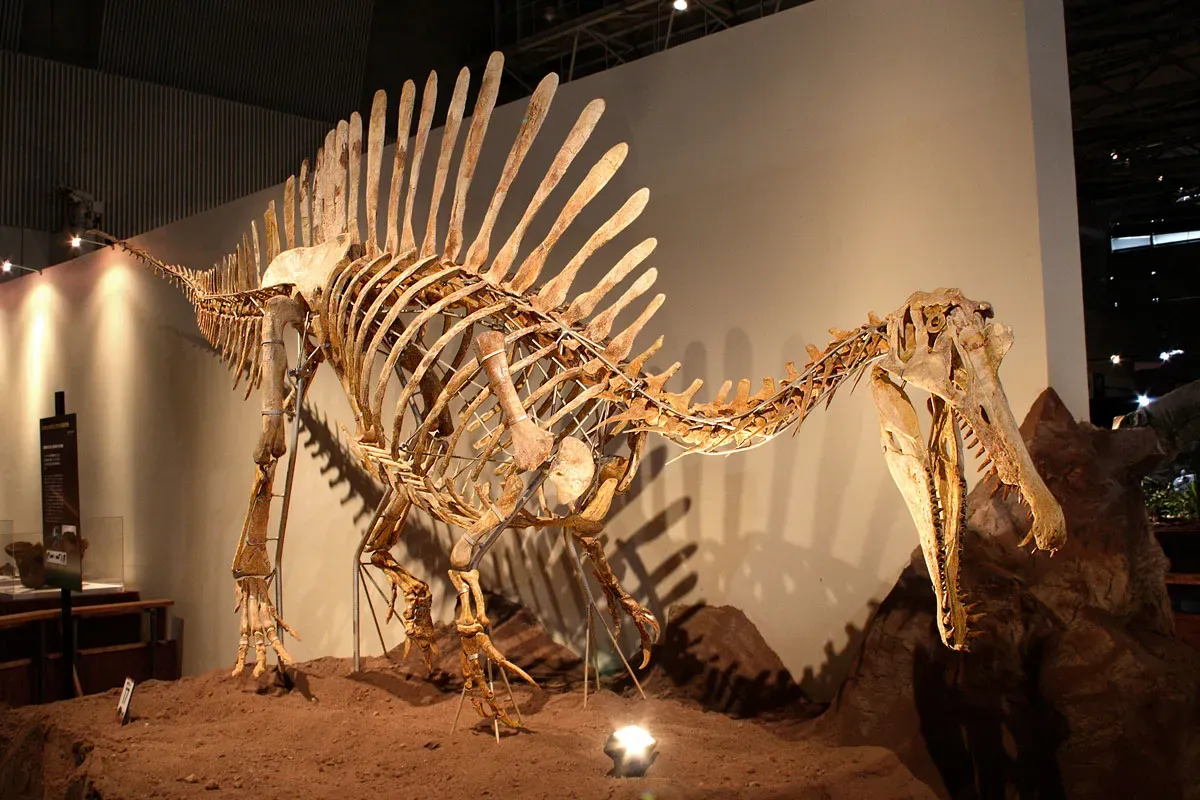
For years, Spinosaurus was known from fragmentary remains and dramatic illustrations, usually portrayed as a big terrestrial predator with a flashy sail on its back. Then more complete bones, including a controversial partial skeleton, suggested something far stranger: a dinosaur with short hind limbs, dense bones, and adaptations that pointed toward a semi-aquatic lifestyle. The idea that a giant predatory dinosaur might have spent much of its time in water sent shockwaves through the community. It challenged assumptions about what large theropods could do and where they could live.
The debates got heated, with some researchers arguing that the reconstruction was over-interpreted, while others doubled down on the aquatic hypothesis. Did Spinosaurus chase fish like a crocodile, wade like a heron, or behave more like something completely unique? The fossil evidence was tantalizing but incomplete, which only fueled the chaos. I actually like that this case remains controversial; it is a reminder that fossils do not “speak for themselves” but have to be interpreted, often through the filter of our own expectations. Spinosaurus forced scientists to confront how terrestrial their imagination had become, and that discomfort was productive.
9. A Giant Titanosaur in Argentina: When One Skeleton Redefined “How Big Is Too Big?”
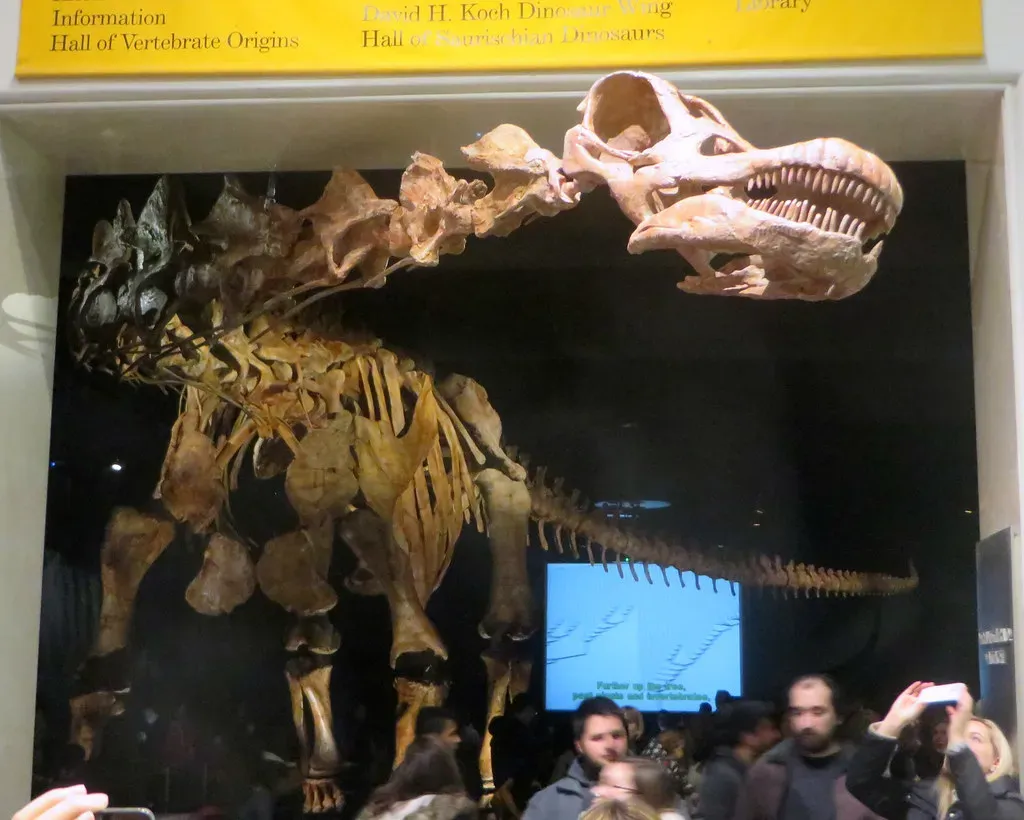
Every few years, headlines scream that a new dinosaur is the largest ever found, but a single, exceptionally complete titanosaur skeleton from Argentina genuinely rattled experts. Its gigantic limb bones and vertebrae pushed right up against the limits of what land animals are thought to physically handle. Engineers, anatomists, and paleontologists suddenly found themselves teaming up to ask oddly practical questions: how did this thing support its own weight, circulate blood, or simply stand up without wrecking its joints? One skeleton forced a complete recalibration of what was biomechanically plausible.
The chaos here was less about taxonomy and more about physics and life’s upper boundaries. If such a huge creature really walked the Earth, then our models of bone strength, muscle power, and even growth rates needed serious adjustments. Some scientists argued over exact mass estimates, pointing out the wide error bars, while others embraced the fossil as proof that evolution keeps pushing limits until something breaks. To me, this discovery undercuts a comforting belief that we already know the outer edges of possibility. Clearly, nature is more willing to roll the dice on absurdly large bodies than we are.
Conclusion: Why a Single Bone Can Be More Radical Than a Dozen Theories
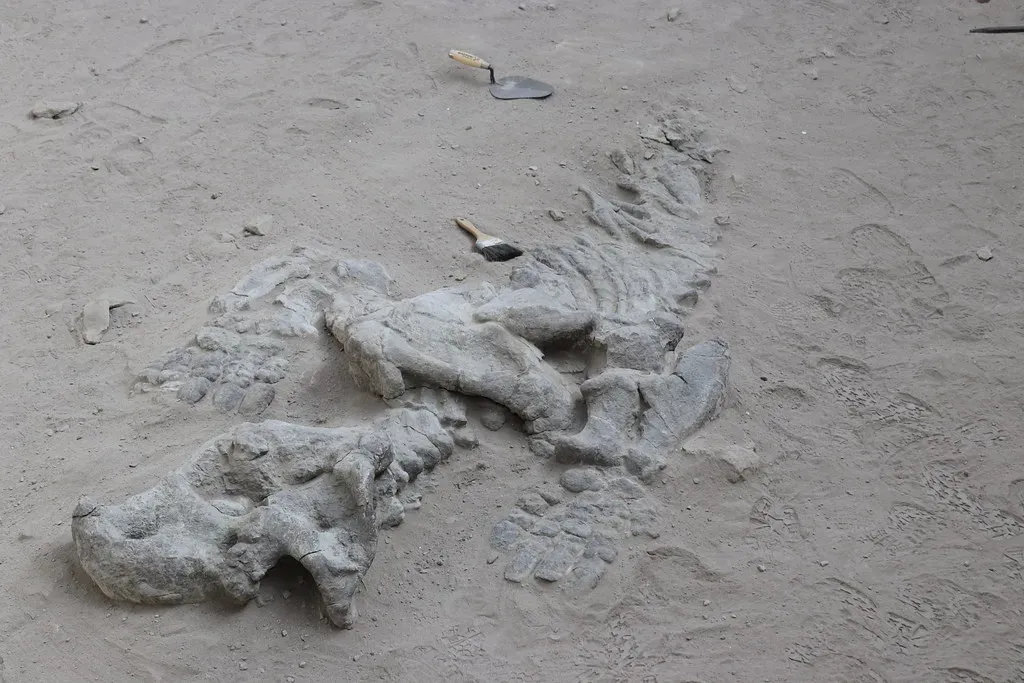
Looking at these nine moments side by side, a pattern jumps out: real upheaval in dinosaur science usually starts with something uncomfortably concrete. A skeleton on a nest, a claw embedded in another dinosaur, a feathered tail in amber – these are not vague ideas, they are stubborn facts that refuse to fit the old picture. The chaos comes not because the fossils are confusing, but because they are clear in ways our existing stories are not. Each time, the scientific community had to swallow its pride, admit that cherished models were too simple, and then rebuild a richer, messier vision of the past.
My own opinion is that this kind of disruption is not a bug of paleontology – it is the feature that makes it worth caring about. If one fossil can overturn decades of confident storytelling, then we should treat every “settled” idea with a bit of healthy suspicion. The dinosaurs themselves are gone, but their bones keep dragging us toward a more honest relationship with uncertainty and surprise. The next time you see a single fossil in a glass case, it might look quiet, but ask yourself: how many expert arguments, rewritten textbooks, and shattered assumptions has that one piece of stone already caused – and how many more will it trigger when someone finally looks at it the right way?