

Picture this: you’re standing beneath a towering skeleton that once ruled the Earth 67 million years ago, its massive jaws frozen in an eternal roar. The Natural History Museum in London isn’t just another dusty collection of old bones – it’s a time machine that transports millions of visitors annually into worlds lost to deep time. While countless museums worldwide display dinosaur fossils, London’s iconic institution stands apart through its unparalleled combination of scientific excellence, groundbreaking research, and theatrical presentation that makes prehistoric giants feel startlingly alive.
The Crown Jewel: Dippy’s Legacy and Hope’s Arrival
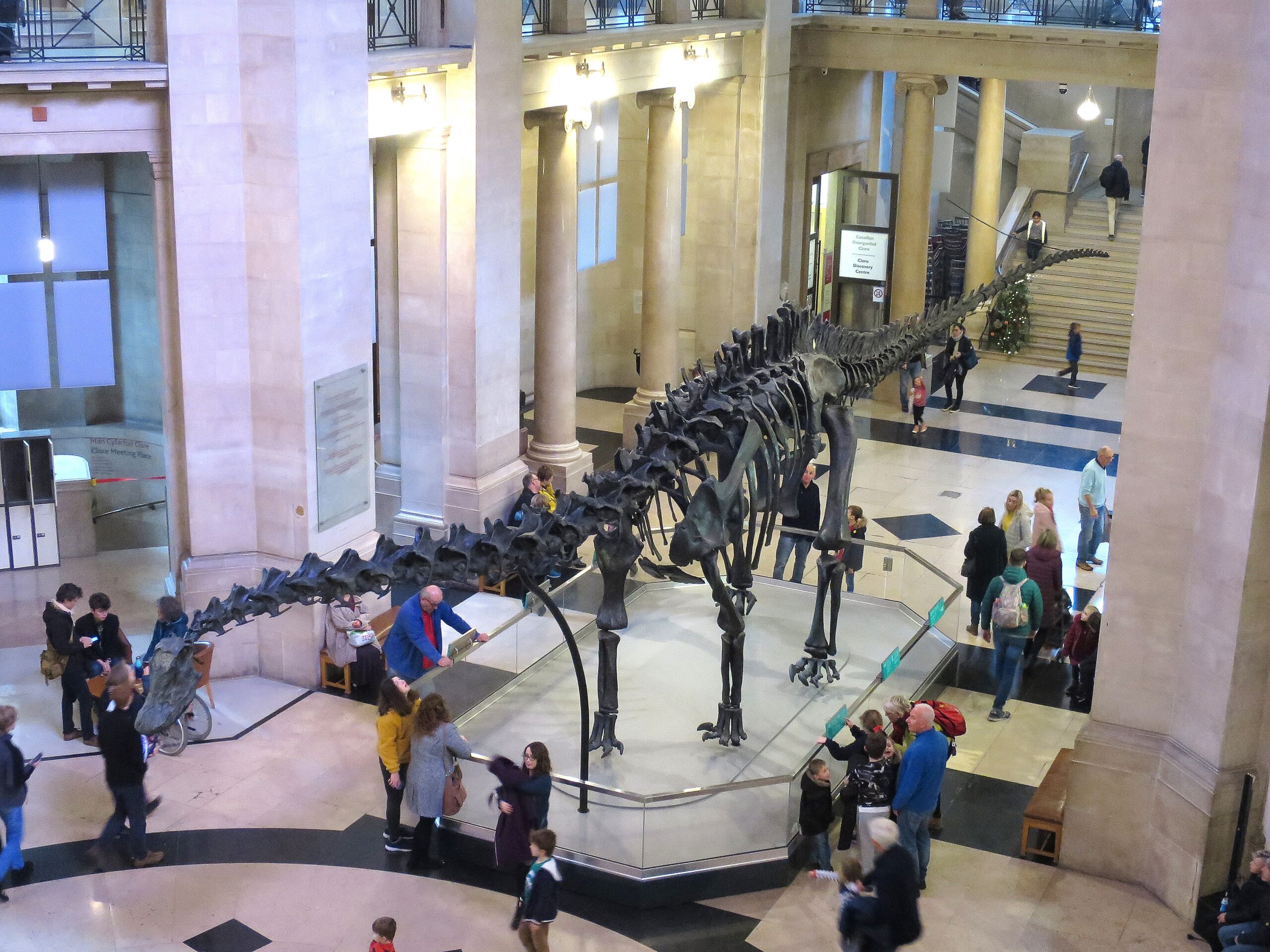
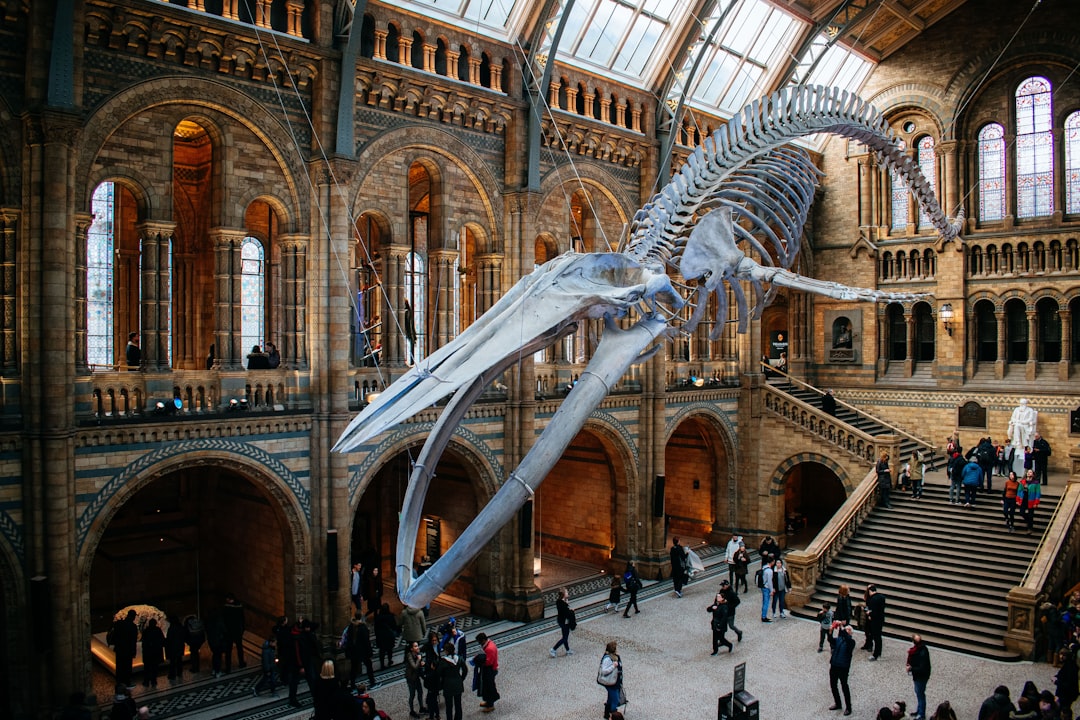
For over a century, Dippy the Diplodocus cast dominated the museum’s entrance hall, becoming synonymous with London’s paleontological identity. This 26-meter-long giant welcomed visitors with an imposing presence that few museums could match. The decision to replace Dippy with Hope, a blue whale skeleton, in 2017 sparked passionate debates among dinosaur enthusiasts worldwide.
Hope’s installation marked a revolutionary shift in museum philosophy – from celebrating Earth’s ancient past to confronting its uncertain future. The blue whale’s massive frame serves as a powerful reminder of both natural magnificence and environmental fragility. This bold move demonstrated the museum’s commitment to staying relevant in contemporary conversations about climate change and conservation.
Scientific Research Hub: Where Discoveries Are Born
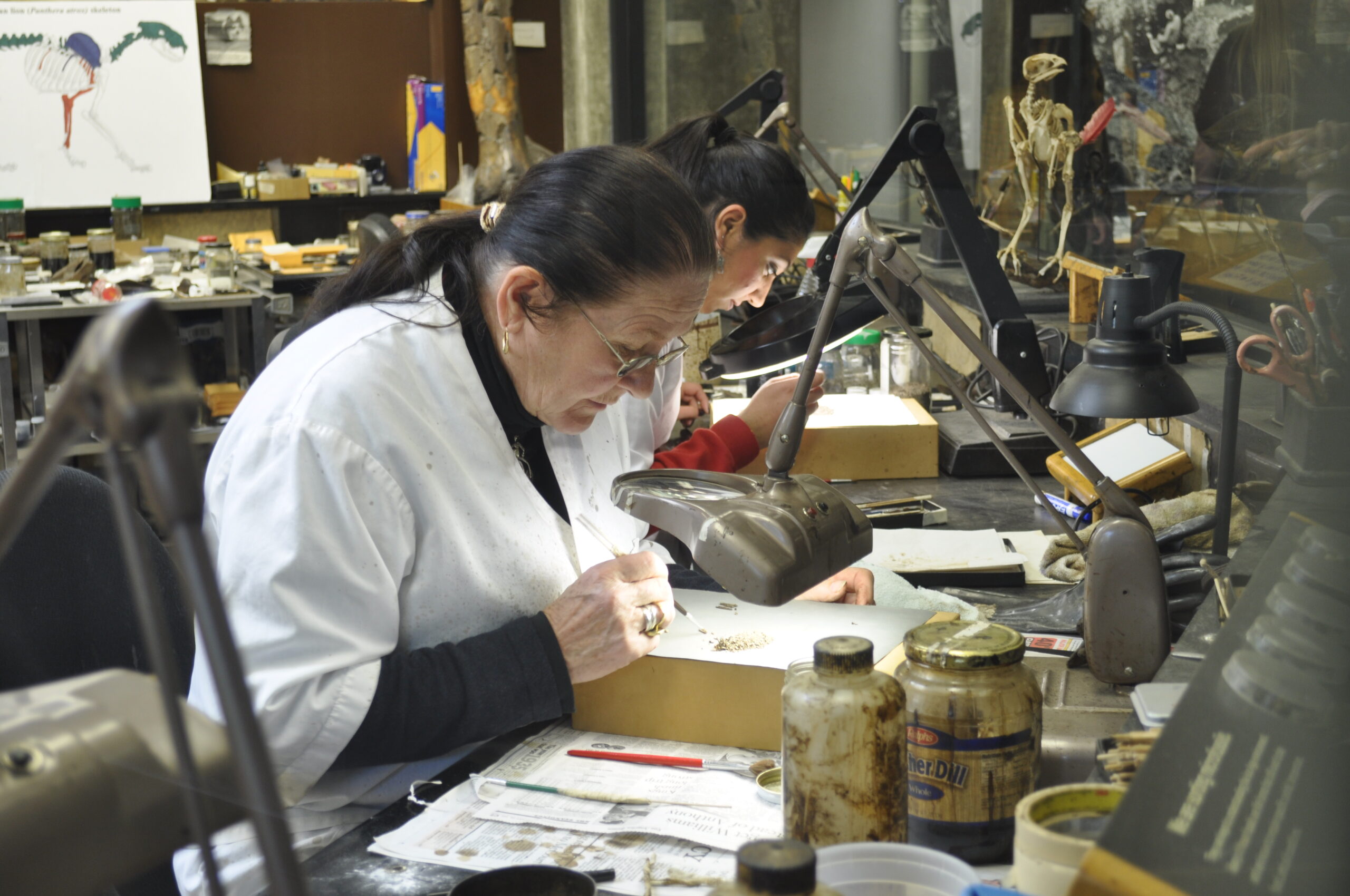
Behind the public galleries lies one of the world’s most active paleontological research centers, where over 300 scientists work tirelessly to unlock prehistoric mysteries. The museum houses approximately 70 million specimens, with new discoveries regularly reshaping our understanding of ancient life. Recent breakthroughs include identifying new dinosaur species and uncovering evidence of prehistoric behaviors previously unknown to science.
The research laboratories buzz with cutting-edge technology that would make any CSI team envious. CT scanners reveal internal bone structures without damaging precious fossils, while advanced chemical analysis unlocks secrets about ancient diets and environments. This isn’t just a museum – it’s a living laboratory where the past continuously informs the present.
The Spectacular Dinosaur Gallery: Theater Meets Science
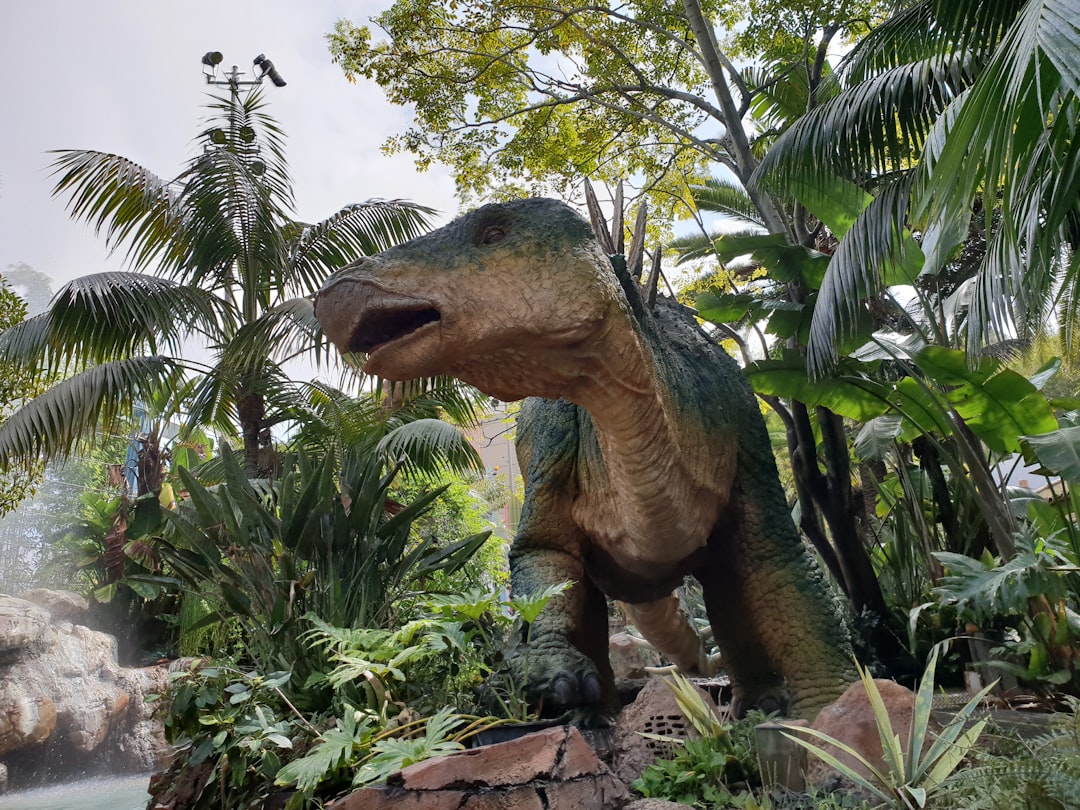
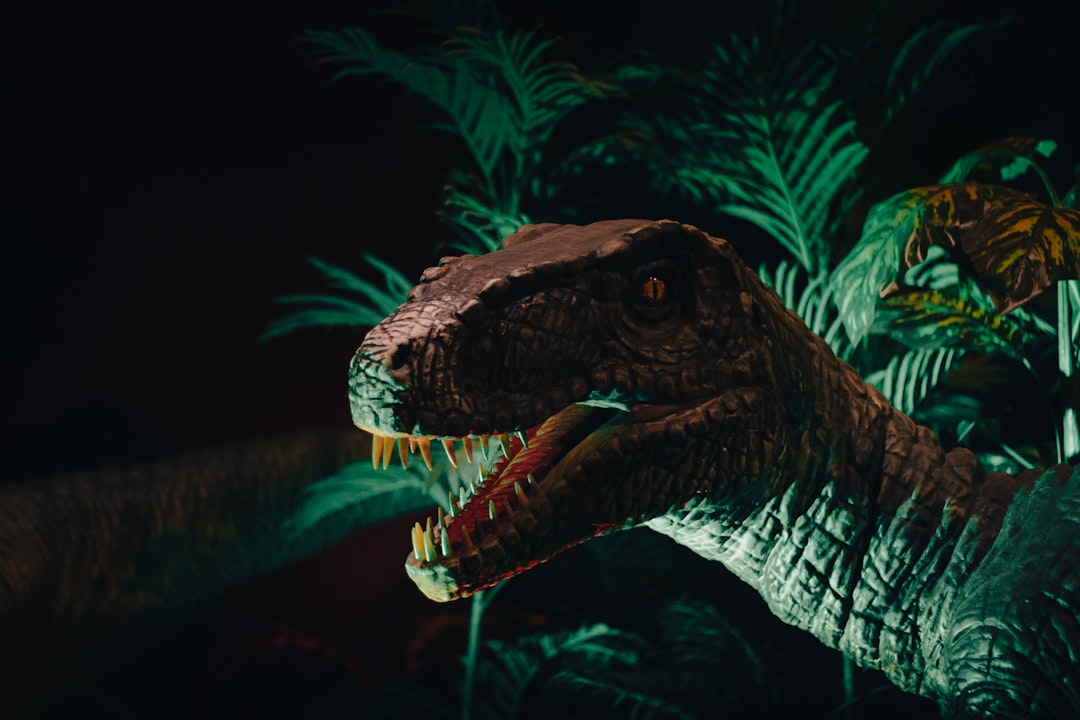
Walking into the Dinosaur Gallery feels like stepping onto a movie set, complete with dramatic lighting, immersive soundscapes, and carefully choreographed specimen placement. The animatronic T. rex, with its earth-shaking roar and piercing gaze, has traumatized and thrilled children for decades. This isn’t mere entertainment – it’s educational theater that makes paleontology accessible to audiences of all ages.
The gallery’s design cleverly guides visitors through evolutionary timelines, using interactive displays that respond to touch and movement. Fossil casts are positioned at eye level, allowing unprecedented close-up encounters with prehistoric predators. The combination of authentic specimens and theatrical elements creates an experience that textbooks simply cannot replicate.
Unparalleled Fossil Collection: Quality Over Quantity
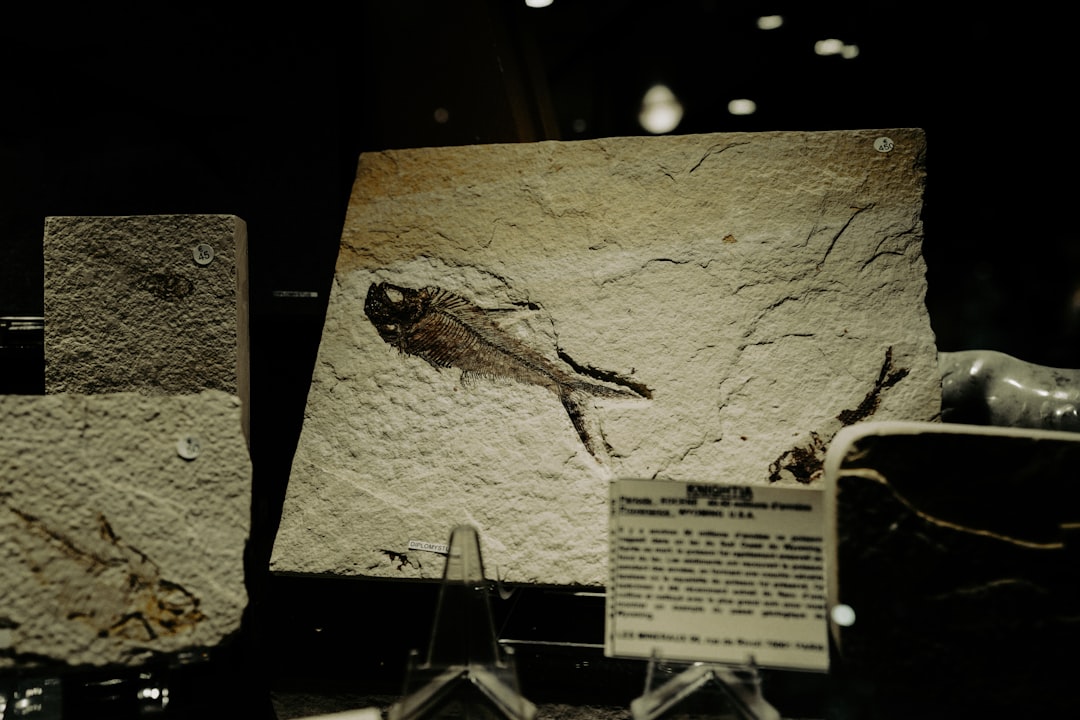
While many museums boast impressive fossil collections, London’s Natural History Museum distinguishes itself through the exceptional quality and historical significance of its specimens. The collection includes type specimens – the original fossils used to scientifically describe new species – which serve as permanent references for paleontologists worldwide. These aren’t just impressive displays; they’re scientifically invaluable treasures that researchers travel thousands of miles to study.
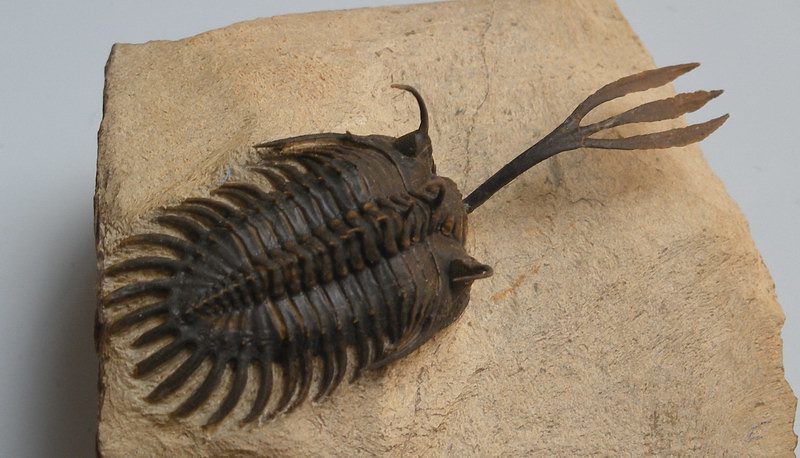
The museum’s Jurassic specimens tell stories spanning millions of years, from tiny trilobites to massive marine reptiles. Each fossil represents countless hours of meticulous excavation, preparation, and analysis. The Archaeopteryx specimen, often called the “missing link” between dinosaurs and birds, remains one of the most significant evolutionary discoveries ever made.
Interactive Technology: Bringing Bones to Life
Modern technology transforms static displays into dynamic learning experiences that engage multiple senses simultaneously. Augmented reality applications allow visitors to see how dinosaurs moved, breathed, and interacted with their environments. Touch-screen displays provide detailed information about fossil formation, geological time scales, and evolutionary relationships between species.
The museum’s innovative approach extends beyond simple digital overlays to include sophisticated modeling software that reconstructs ancient ecosystems. Visitors can explore virtual prehistoric landscapes, complete with accurate vegetation, climate conditions, and predator-prey relationships. This technology makes complex scientific concepts accessible to visitors who might otherwise struggle with traditional museum presentations.
Educational Impact: Inspiring Future Scientists

The museum’s educational programs reach far beyond its physical walls, inspiring countless young minds to pursue careers in paleontology, geology, and related sciences. School groups arrive daily to participate in hands-on workshops where students handle real fossils, conduct mock excavations, and learn about scientific methodology. These experiences often plant seeds that grow into lifelong passions for natural history.
The museum’s outreach programs extend into communities across Britain, bringing portable exhibits and educational materials to schools that cannot afford field trips. Online resources provide curriculum-aligned materials that teachers worldwide use to supplement their science lessons. This commitment to education ensures that the museum’s impact extends far beyond its impressive visitor numbers.
Conservation Efforts: Protecting Prehistoric Treasures
Preserving fossils for future generations requires sophisticated conservation techniques that few institutions can match. The museum’s conservation laboratories employ specialists who dedicate their careers to maintaining the integrity of ancient specimens. Temperature-controlled storage facilities protect delicate fossils from environmental damage, while advanced cleaning techniques remove centuries of accumulated dirt and mineral deposits.
The conservation team faces unique challenges when working with specimens that are millions of years old yet increasingly fragile. They develop new preservation methods that balance public accessibility with long-term specimen protection. Their work ensures that future generations will continue to benefit from these irreplaceable scientific resources.
Global Collaborations: Connecting Worldwide Research

The museum’s influence extends across continents through collaborative research projects that connect scientists from different countries and institutions. International expeditions led by museum researchers have discovered new species in remote locations from Argentina to Mongolia. These partnerships ensure that significant discoveries are properly studied and documented according to international scientific standards.
Data sharing initiatives allow researchers worldwide to access detailed information about London’s specimens without traveling to the museum. This democratization of scientific resources accelerates research and ensures that important discoveries can be verified and built upon by scientists anywhere in the world. The museum serves as a hub that connects global paleontological communities.
Public Engagement: Making Science Accessible
The museum’s commitment to public engagement goes beyond traditional exhibits to include evening lectures, behind-the-scenes tours, and citizen science projects. Regular “Dino Snores” sleepovers allow families to spend nights among the dinosaurs, creating memories that last lifetimes. These programs transform the museum from a passive viewing experience into an active learning environment.
Social media campaigns bring museum content to millions of followers who may never visit London. Virtual tours during the pandemic demonstrated the museum’s adaptability and commitment to maintaining public connections during challenging times. This digital presence ensures that the museum’s educational mission continues regardless of physical limitations.
Architectural Marvel: Building Design That Inspires
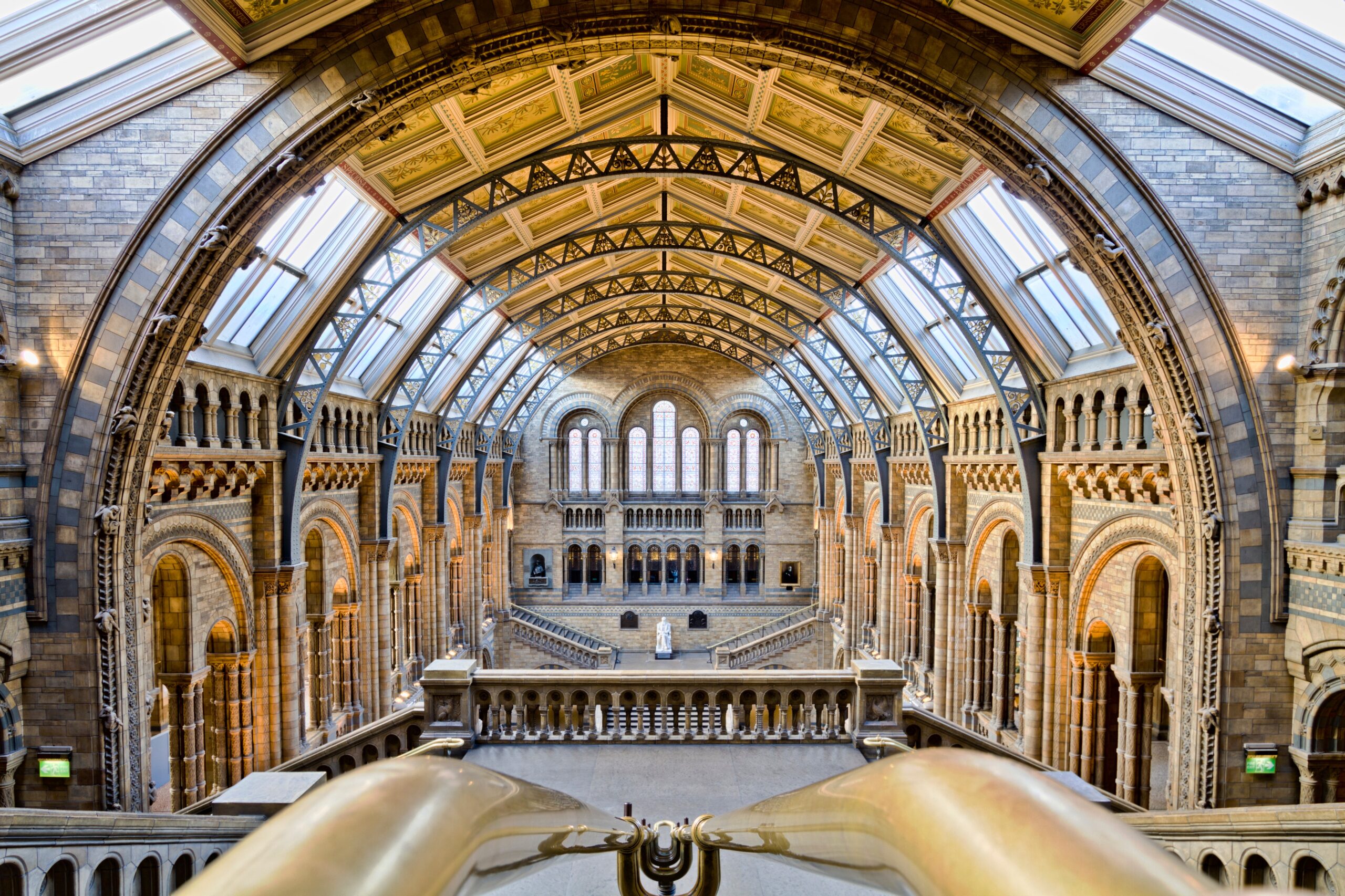
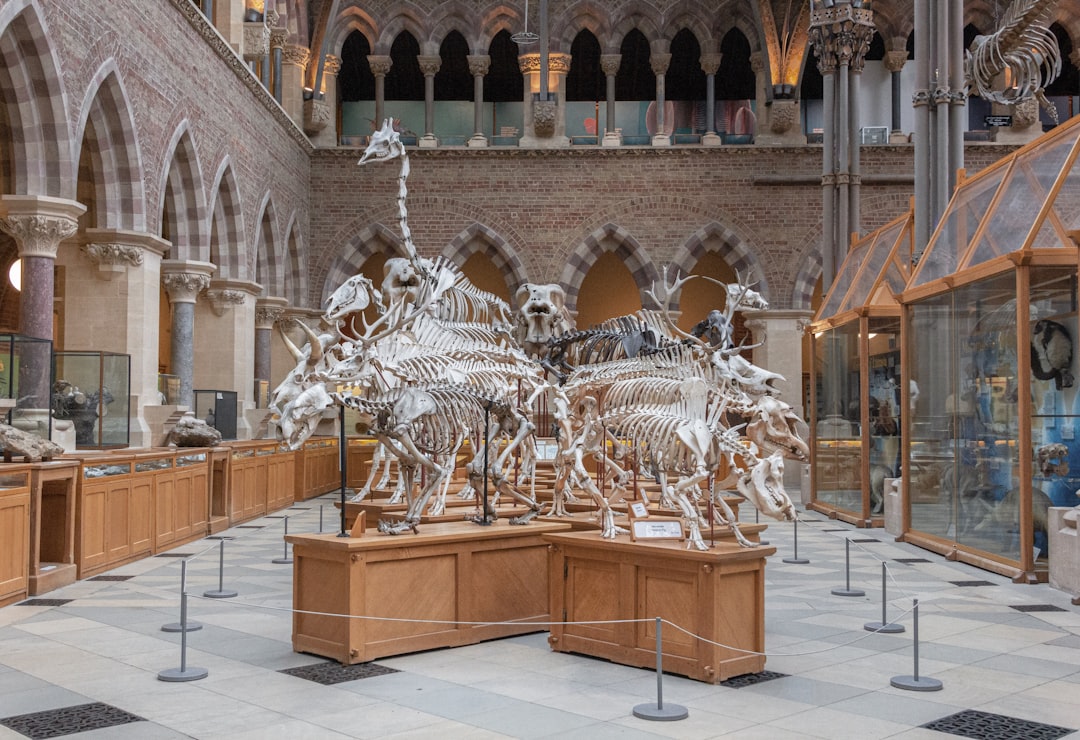
The museum’s Victorian architecture creates an appropriately grand setting for its prehistoric inhabitants. The Romanesque design, with its terra cotta facade and soaring arches, provides a sense of permanence and gravitas that modern buildings often lack. Walking through the ornate halls feels like entering a cathedral dedicated to natural history.
The building’s design cleverly integrates old and new elements, with modern climate control systems protecting ancient specimens while maintaining the structure’s historic character. The famous entrance hall, with its sweeping staircase and ornate ceiling, creates a sense of anticipation that builds as visitors approach the main galleries. This architectural drama enhances the emotional impact of encountering prehistoric giants.
Unique Specimen Preparation: From Field to Display
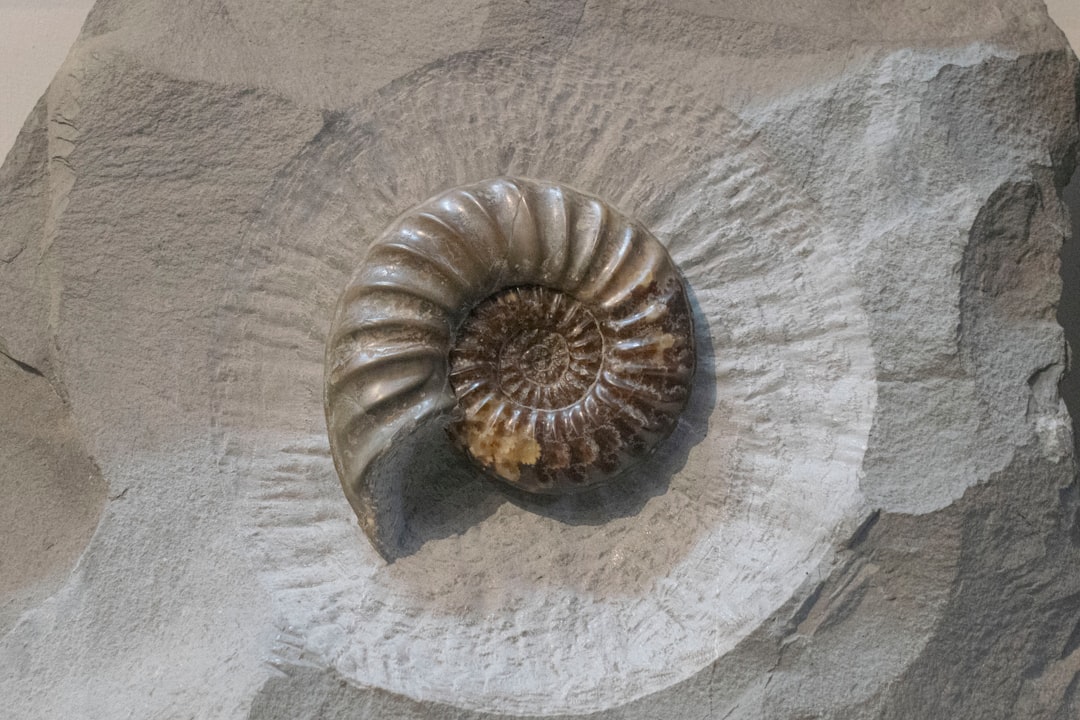
The journey from fossil discovery to museum display involves countless hours of painstaking preparation work that visitors rarely see. The museum’s preparation laboratories house specialists who spend months carefully removing rock matrix from delicate fossils using everything from dental picks to pneumatic chisels. This meticulous process requires artistic skill combined with scientific knowledge.
Each specimen tells a story not just of ancient life, but of the dedicated people who discovered, excavated, and prepared it for study. The preparation team works closely with researchers to ensure that scientific information is preserved during the cleaning process. Their expertise transforms rough field specimens into the polished displays that captivate museum visitors.
Research Publications: Advancing Scientific Knowledge

The museum’s scientists publish hundreds of research papers annually in peer-reviewed journals, contributing significantly to our understanding of prehistoric life. These publications often describe new species, reveal previously unknown behaviors, or challenge established theories about ancient ecosystems. The museum’s research output influences paleontological thinking worldwide.
The institution’s commitment to open-access publishing ensures that research findings are available to scientists globally, regardless of their institutional resources. This approach accelerates scientific progress by making important discoveries immediately accessible to the broader research community. The museum’s publications serve as essential references for paleontologists working in universities and museums worldwide.
Future Innovations: Evolution Never Stops

The museum continues evolving its presentation methods to engage new generations of visitors who expect interactive, multimedia experiences. Virtual reality installations allow visitors to experience prehistoric environments firsthand, while artificial intelligence helps researchers identify patterns in fossil data that humans might miss. These technological innovations ensure the museum remains relevant in an increasingly digital world.
Future plans include expanded research facilities, new gallery spaces, and enhanced digital resources that will further cement the museum’s position as a global leader in paleontological education and research. The institution’s commitment to innovation ensures that it will continue inspiring wonder and advancing scientific knowledge for generations to come. Climate-controlled storage facilities will protect specimens while new display technologies will bring them to life in ways we can barely imagine today.
Conclusion: A Legacy Written in Stone
London’s Natural History Museum stands apart not just because of its impressive specimens or grand architecture, but because of its unwavering commitment to making science accessible, exciting, and relevant to people from all walks of life. The institution successfully balances rigorous scientific research with engaging public education, creating an environment where ancient discoveries inspire modern wonder.
The museum’s influence extends far beyond its South Kensington location, touching lives through education programs, research collaborations, and digital outreach that span the globe. Its dedication to conservation ensures that these prehistoric treasures will continue educating and inspiring future generations. In a world where scientific literacy becomes increasingly important, institutions like this serve as beacons of knowledge and wonder.
What strikes visitors most deeply isn’t just the size of the dinosaurs or the beauty of the building, but the profound connection between past and present that the museum creates. Standing before these ancient giants, we’re reminded that our planet has hosted incredible diversity of life across vast spans of time. Could there be a more humbling or inspiring perspective on our place in the natural world?