Picture this: massive prehistoric beasts that ruled the waters and swamps millions of years ago, looking remarkably like today’s alligators but on a mind-boggling scale. While we often think of dinosaurs ruling the land, these crocodilian giants were just as impressive and far more terrifying than anything swimming in our modern rivers. These weren’t technically dinosaurs in the strict sense, but they shared the same ancient world and were every bit as fearsome as any T-Rex.
You might be surprised to learn that some of these ancient crocodilians were actually larger than most dinosaurs of their time. They dominated wetland environments across multiple continents, from the lush river systems of Cretaceous Africa to the swampy coastlines of ancient North America. What makes these creatures even more fascinating is how they evolved into forms that would seem alien today – some walked on land like wolves, others developed flippers for ocean life, while a few grew to absolutely monstrous proportions.
Deinosuchus – The Terrible Crocodile That Made Dinosaurs Look Small
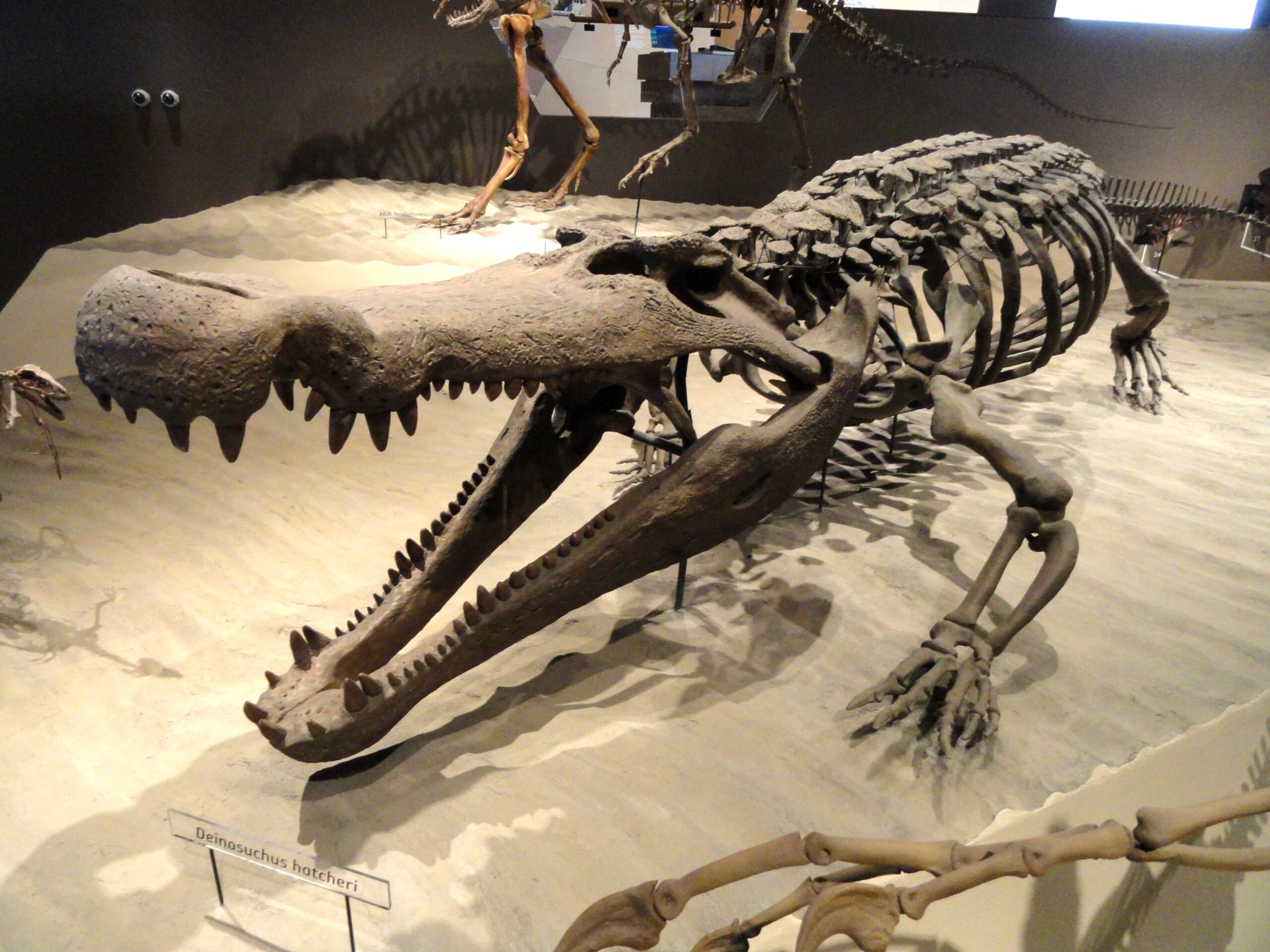
Deinosuchus lived during the Late Cretaceous around 82 to 73 million years ago and could reach more than 35 feet in length and weigh over five tons. Bite marks on bones leave no doubt that the immense reptile caught and ate dinosaurs. This apex predator was so massive that even the fearsome Tyrannosaurus Rex would have been just another meal on its menu.
The fossils of Deinosuchus are often found in the same formations as the carnivorous tyrannosaurs, but Deinosuchus could grow to be longer and more massive than the tyrant dinosaurs, making it a true apex predator. Deinosuchus is generally thought to have employed hunting tactics similar to those of modern crocodilians, ambushing dinosaurs and other terrestrial animals at the water’s edge and then submerging them until they drowned.
Sarcosuchus – The SuperCroc That Crushed Everything
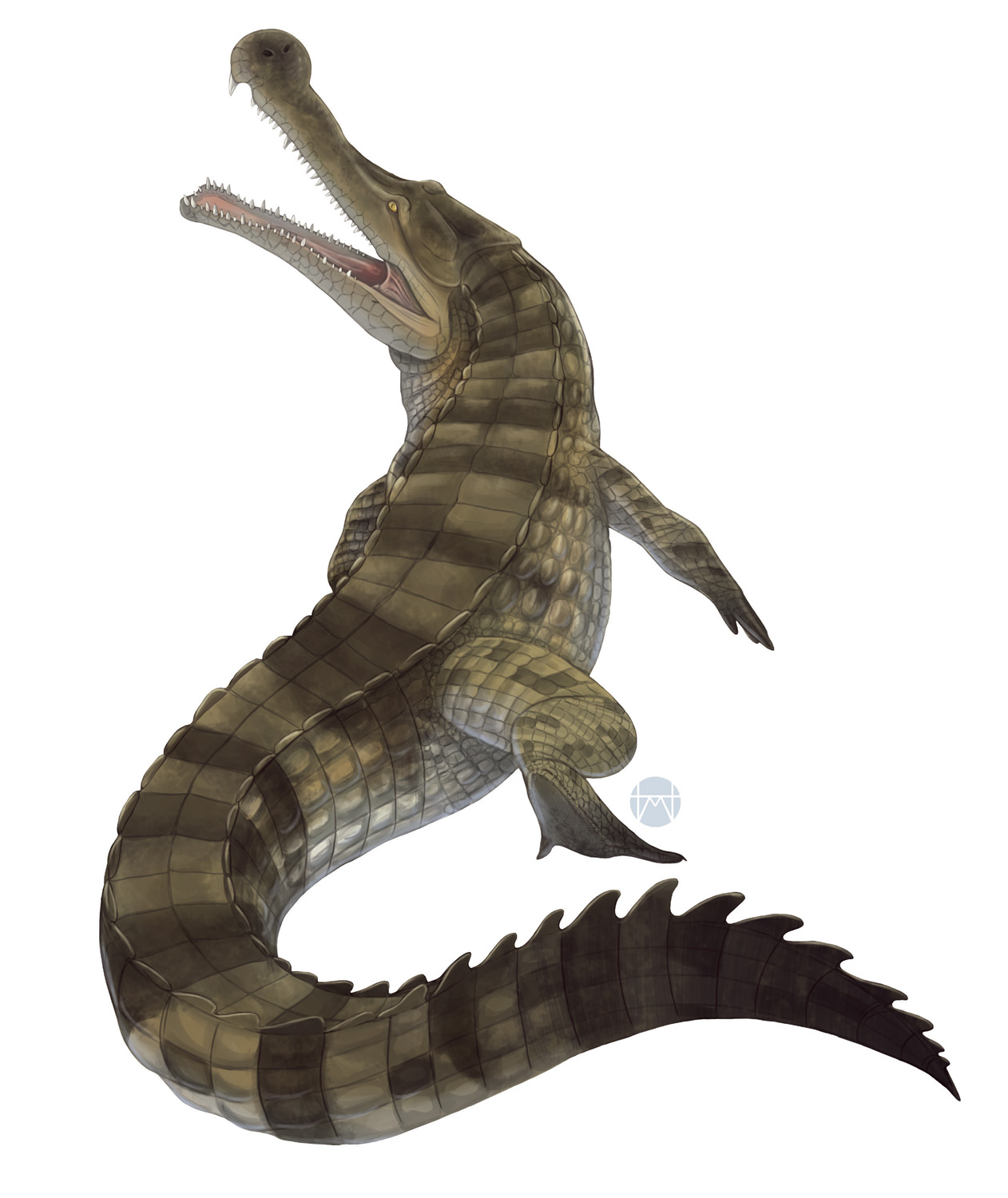
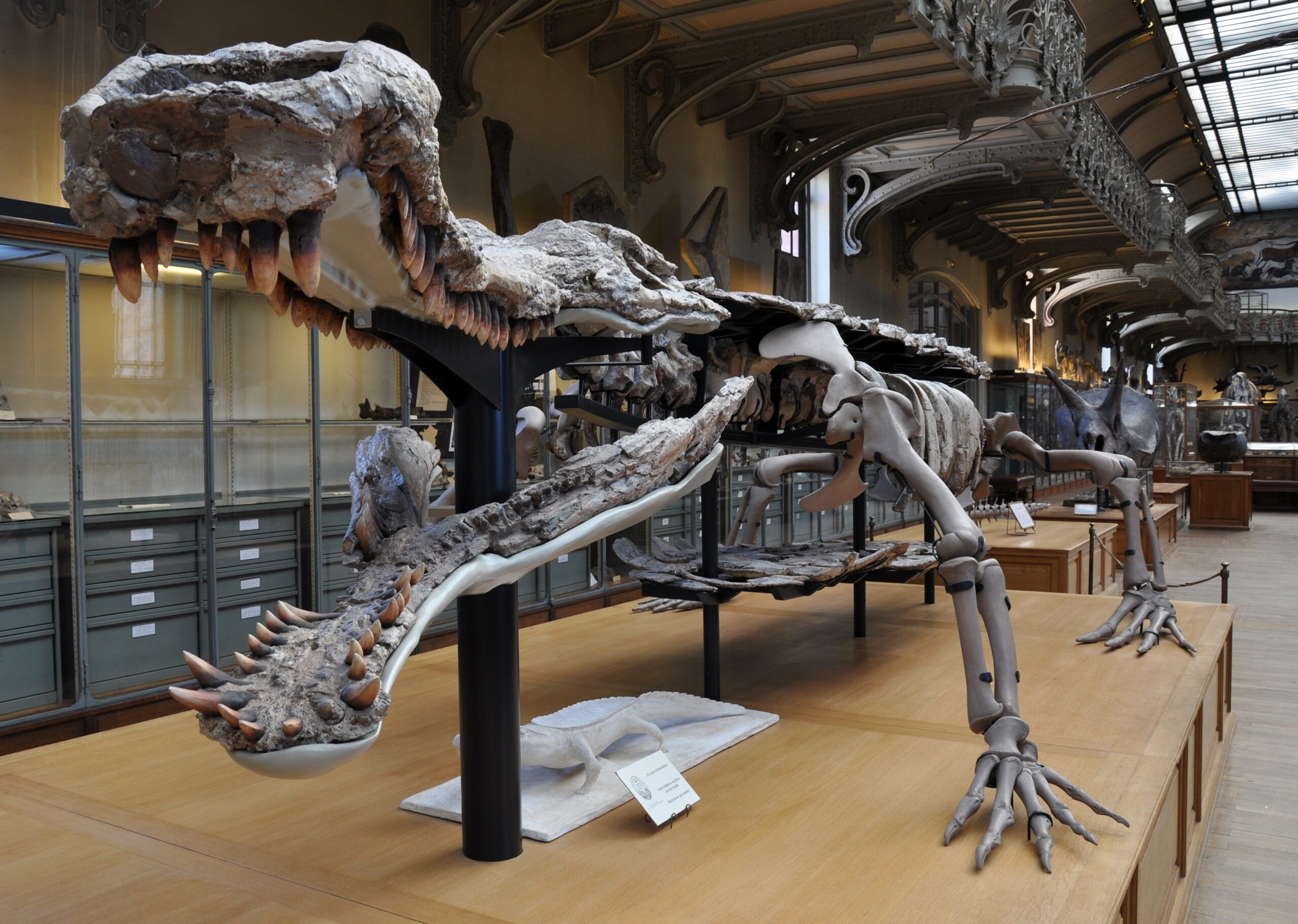
Sarcosuchus was one of the largest pseudosuchians, with fully grown individuals estimated to have reached up to 9 to 9.5 meters (29.5 to 31.2 ft) in total length and 3.45 to 4.3 metric tons (3.80 to 4.74 short tons) in weight. It had 132 huge, conical teeth inside its 5-foot (1.5-meter) long head, and could easily crush bone with its powerful jaws. Living in the rivers of ancient Africa and South America during the Early Cretaceous, this “flesh crocodile” was perfectly designed for terror.
Sarcosuchus has an expansion at the end of its snout known as a bulla, which has been compared with the ghara seen in gharials. However, unlike the ghara, which is only found in male gharials, the bulla is present in all Sarcosuchus skulls that have been found so far. Scientists believe this massive predator could have ambushed even the largest dinosaurs from murky waters, dragging them down to their doom with bone-crushing force.
Purussaurus – The Brazilian Giant That Ruled South America
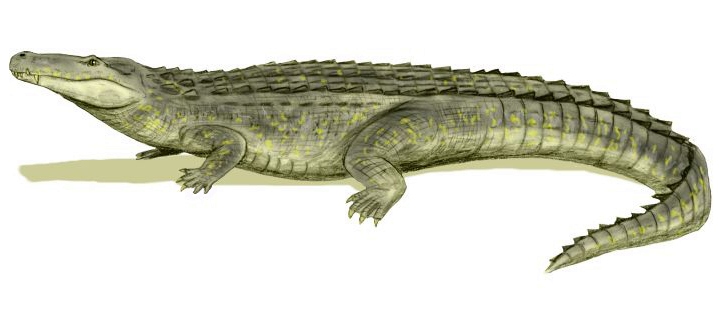
Purussaurus was actually a caiman that lived in South America during the Miocene epoch, 8 million years ago. This was one of the largest crocodiles ever, up to 41 feet in length and weighing up to 18,000 lbs., an apex predator of the Miocene epoch, thought to have the strongest bite force of any animal in the world. Just imagine a caiman the size of a school bus patrolling the ancient Amazon.
One difference between Purussaurus and other giant crocodiles was its speed. It could swim at 16 mph using its fleshy tail to propel it towards prey before performing the “death roll.” As well as this, Purussaurus had two-inch-long teeth that curved backward, indicating it caught fish and mammals, but experts think this giant croc also ate vegetation.
Kaprosuchus – The Boar Croc That Hunted on Land
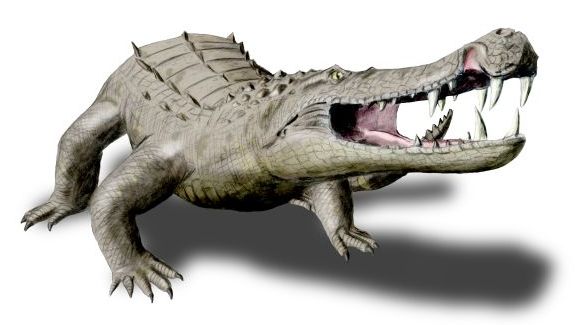
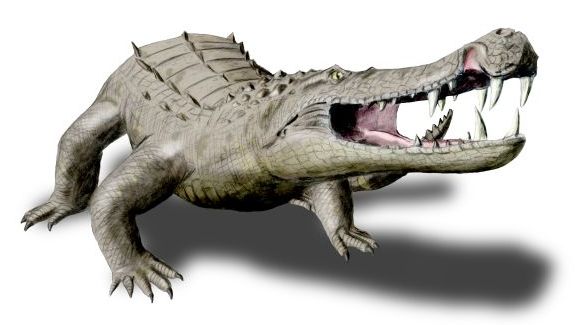
Kaprosuchus lived 100-95 million years ago, nicknamed “boar crocodile,” similar in size to modern Saltwater crocodiles, 20 feet long and 2000 lbs., with fossils found in Africa. The eyes of Kaprosuchus are set in front which allows them to have binocular vision. Binocular vision is important for predators to have as it provides them an accurate depth and distance in their sight. This wasn’t your typical swamp-dwelling crocodile – it was built for pursuit.
Just think of 3 meters (10 feet) long crocodile, galloping its way to you with teeth like you have never seen before in a crocodile. And a huge, opened mouth, it would be hard even for a human to outrun this animal. Unlike modern crocodilians that ambush from water, Kaprosuchus likely chased down its prey across the African landscape with terrifying efficiency.
Dakosaurus – The Ocean Wolf That Ruled Ancient Seas
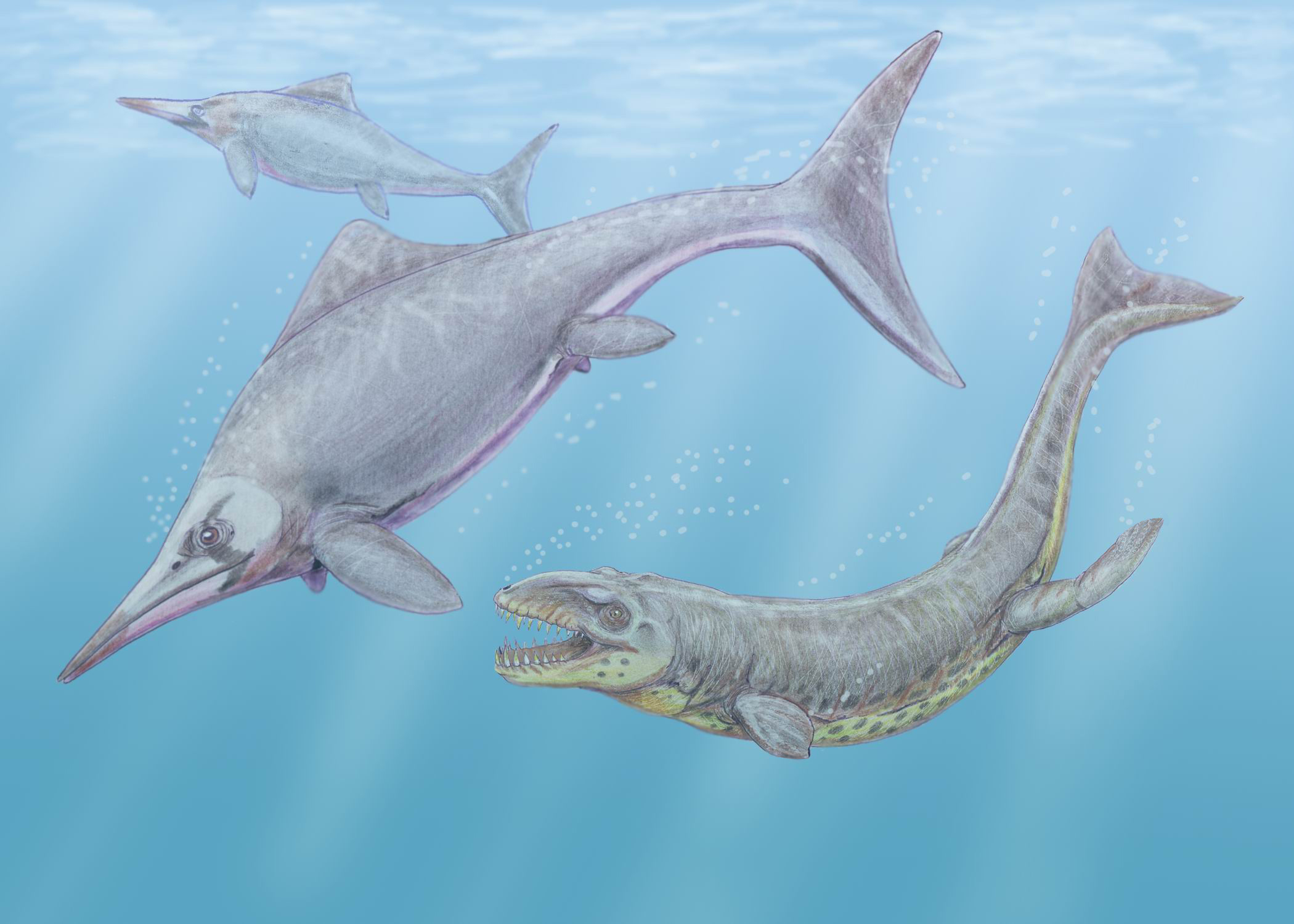
Dakosaurus lived 163.5-139.8 million years ago, was a marine croc with a tall deep skull, 13-16 feet long, nicknamed the “Biter Lizard,” with fossils found in North America, South America, Europe, and Russia. The name means ‘biter lizard’ in ancient Greek which describes how it would have dismembered its prey with its large serrated teeth. This marine predator was perfectly adapted for life in ancient oceans.
Flippers instead of crocodilian feet meant they didn’t walk on land like Sarcosuchus did, but spent the majority of their time in water. Experts think they may have been able to launch from the water to catch birds much like killer whales do today. Picture a crocodile with the hunting style of an orca – that was Dakosaurus in the Jurassic seas.
Carnufex – The Carolina Butcher That Walked Upright
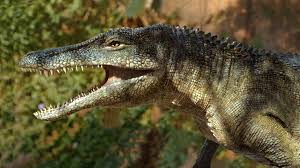
Recently, researchers out of North Carolina State University and the NC Museum of Natural Sciences have reported findings of an early bipedal crocodylomorph, a species fondly named the Carolina Butcher, aka Carnufex carolinensis. It’s one of the earliest of the ancient crocs to have been discovered so far and helps scientists to better understand the early evolutions of both crocodylomorphs and dinosaurs in the Late Triassic period in North America.
Carnufex lived 237-228 million years ago, nicknamed the “Carolina Butcher,” walked upright on two legs, 9 feet long, thought to be a major predator before the time of the dinosaurs, with fossils found in North Carolina. Given the Butcher’s size at over 3 meters, the new study adds further evidence to suggest that, while dinos may have been successful as competing predators in the southern hemisphere, in North America crocs ruled the land.
Gryposuchus – The Giant Gharial of the Amazon
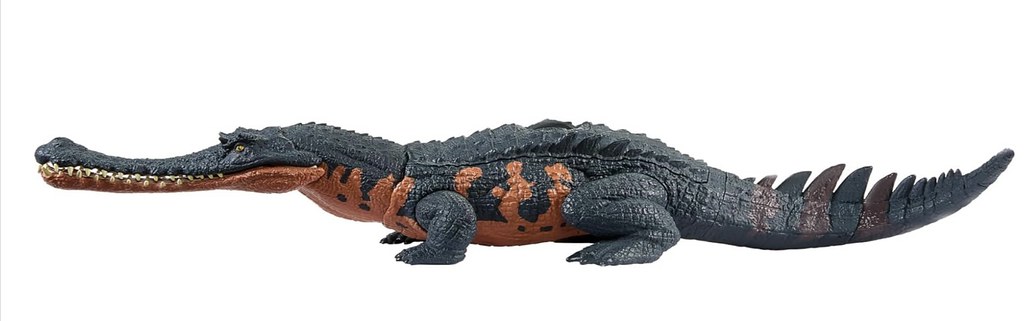
Gryposuchus is an extinct genus of gavialoid crocodilian. It was also a slender-snouted crocodile-like Euthecodon. Fossils have been found in Argentina, Colombia, Venezuela, Brazil, and the Peruvian Amazon. The genus existed during the early and middle Miocene epoch. One recently described species, G. croizati, grew to an estimated length of 10 meters (33 feet).
This ancient giant looked remarkably similar to today’s gharials but scaled up to terrifying proportions. Living in the river systems of prehistoric South America, Gryposuchus would have been the ultimate fish-eating machine. It coexisted with many other crocodilians, including the giant gharial, Gryposuchus, and the alligatorid Purussaurus. The competition between these massive predators must have been fierce in the ancient waterways.
Mourasuchus – The Duck-Billed Filter Feeder
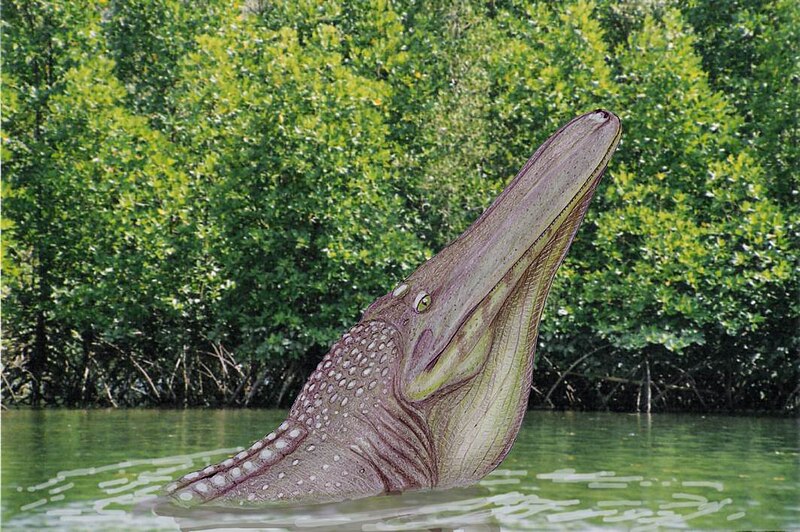
Mourasuchus is an extinct genus of giant crocodilians from the Miocene of South America. With an estimated length of up to twelve meters long, Mourasuchus was one of the biggest crocodiles of all time. However, despite this gigantic size, it had a relatively weak jaw and skull construction combined with quite small teeth for its size: the skull has been described as duck-like, broad, flat, and very elongated.
It presumably obtained its food by filter-feeding; the jaws were too gracile for the animal to have captured larger prey. It also probed the bottoms of lakes and rivers for food. Think of it as nature’s first experiment with a giant vacuum cleaner – Mourasuchus filtered massive amounts of water to catch small fish and invertebrates, proving that not all ancient crocodilians were apex predators.
Conclusion
These ancient giants remind us that the prehistoric world was far more diverse and terrifying than we might imagine. While dinosaurs get most of the attention, these crocodilian behemoths were equally impressive rulers of their domains. From the massive Deinosuchus that could crunch through dinosaur bones to the filter-feeding Mourasuchus that pioneered a completely different lifestyle, each species found its own way to thrive.
What’s truly remarkable is how these creatures managed to survive multiple mass extinctions that wiped out the dinosaurs, with their modern descendants still patrolling our rivers and swamps today. The next time you see an alligator basking in the sun, remember that you’re looking at the descendant of some of Earth’s most successful and terrifying predators. Makes you wonder what other giants might be lurking in the fossil record, waiting to be discovered, doesn’t it?