You’ve probably watched science fiction movies where objects float through the air using mysterious forces. What if that wasn’t fiction at all? Researchers across the globe are now conducting groundbreaking experiments that suggest our ancestors might have possessed acoustic technologies capable of lifting massive stones. Today’s scientists are racing to recreate these seemingly impossible feats using nothing more than carefully orchestrated sound waves.
Modern laboratories buzz with the hum of ultrasonic equipment attempting to decode ancient mysteries. From Tibet’s mountain peaks to the Egyptian pyramids, legends speak of stones that rose through air guided by chants and drums. While skeptics dismiss these stories as folklore, cutting-edge research reveals that acoustic levitation might hold the key to understanding how humanity’s most enigmatic monuments were constructed.
The Physics Behind Sound-Based Levitation
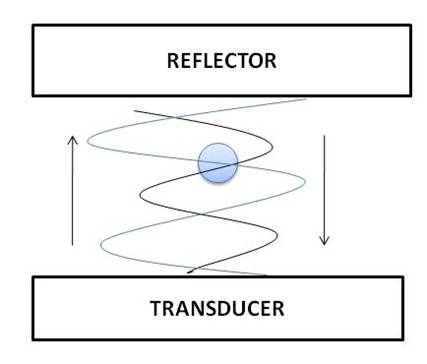
Acoustic levitation manipulates sound waves to suspend and move objects without physical contact by creating standing waves through constructive interference, generating high-pressure regions called antinodes and low-pressure regions called nodes where objects can remain stable. While Kundt’s Tube experiments in 1866 demonstrated standing wave patterns, they were designed to measure sound velocity rather than levitate particles.
Modern acoustic levitation works through precise manipulation of sound pressure. In standing wave acoustic levitation technique, a standing wave is obtained between a source and a reflector, where the nodes act as a linear spring to attract particles towards the pressure nodes, allowing particles to be suspended in air. This fundamental principle forms the basis for all contemporary acoustic levitation research.
Current Laboratory Achievements and Limitations
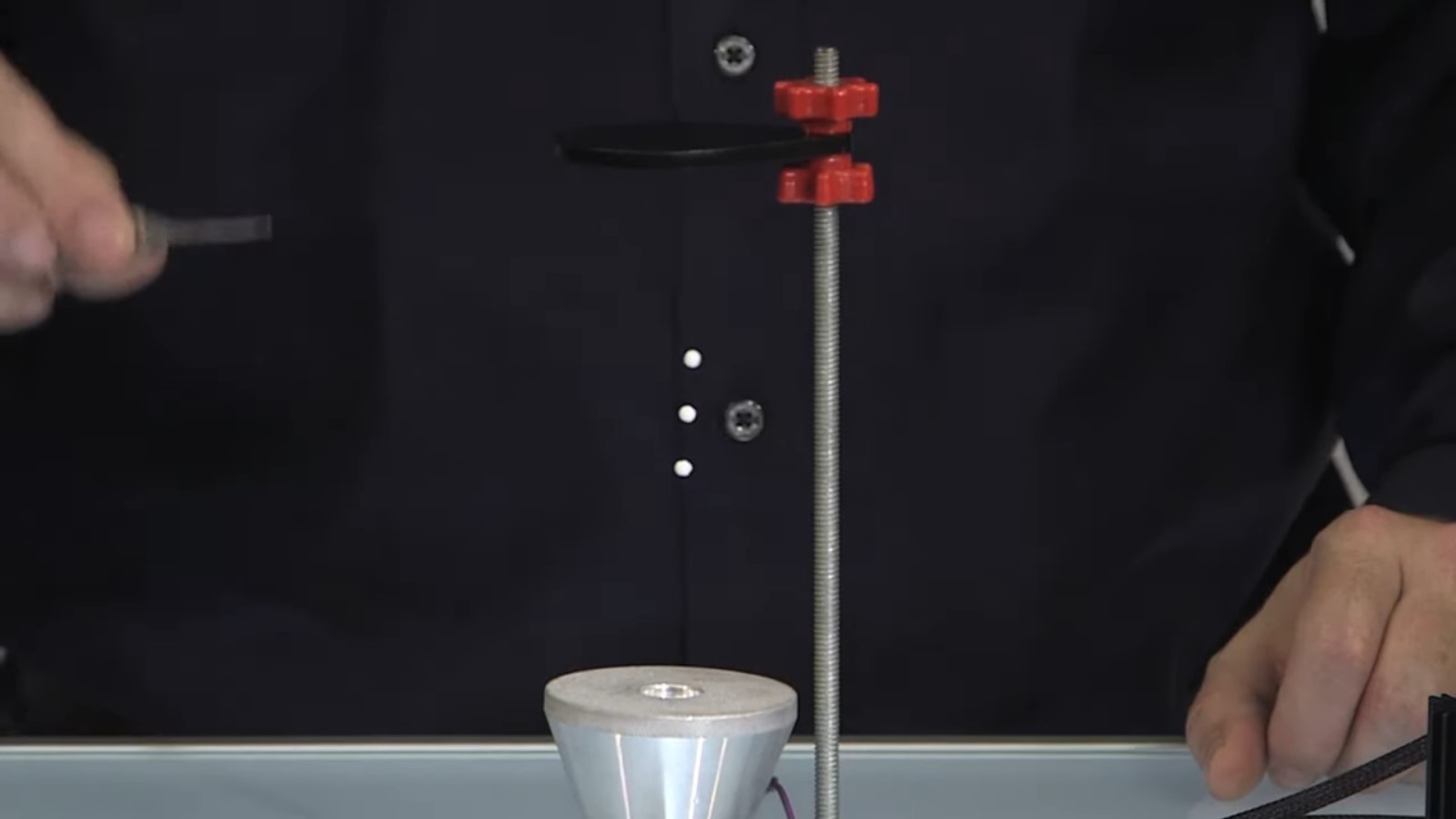
Experiments in sound or acoustic levitation are common and ongoing, with dozens of researchers managing to use sound waves to levitate and move tiny particles and liquid droplets using multiple vibrating plates to create different frequencies. With just 10 watts of power, modern levitators can trap objects up to about 0.15 inches (4 millimeters) in diameter.
However, significant challenges remain for larger objects. The power requirements would be astronomical, and for massive stones, you’d need wavelengths of hundreds of meters and sound so powerful it would kill anyone nearby. The techniques developed have not been used to lift heavy or large objects, and twenty-first century scientists do not yet know if such a thing is possible.
Ancient Accounts of Megalithic Sound Manipulation

Abul Hasan Ali Al-Masudi, an Arab historian from the 10th century A.D., wrote about ancient Egypt claiming that a magic papyrus imprinted with symbols was placed under each stone, after which a metal rod was struck against the stone to initiate levitation, with the stone guided along a fenced path with metal poles. Some believe these poles could have been used to create high-frequency sound vibrations responsible for creating the levitation effects.
In almost every culture where megaliths exist, legends also describe that the huge stones were moved by anti-gravity acoustic means. The Temple of Jupiter at Baalbek, Lebanon has a foundation containing the three largest stone blocks ever used in a man-made structure, each estimated to weigh approximately 800 tons, positioned together with such precision that not even a needle could fit between them.
The Controversial Dr. Jarl Account

One unverified account attributed to a Dr. Jarl claimed he was brought to a remote area of Tibet in 1939 to treat a Tibetan Buddhist holy man, eventually gaining their confidence and witnessing a demonstration where monks arranged 19 musical instruments (13 drums and six trumpets) in a 90-degree arc around a large, heavy stone. On cue, they began to play these instruments in unison while singing and chanting, and after a few moments the stone suddenly lifted into the air, continuing to rise until it landed on a hilltop perch approximately 250 meters above the ground.
The small drum had a very sharp sound and could be heard even with other instruments making a terrible din, with all monks singing and chanting while slowly increasing tempo, until after four minutes the big stone block started to rock and sway before taking off into the air toward a platform 250 metres high, landing after three minutes of ascent. The monks using this method transported 5 to 6 blocks per hour on a parabolic flight track approximately 500 metres long and 250 metres high.
Scientific Analysis of Ancient Acoustic Claims

Analysis suggests that the monks in Tibet were fully conversant with the laws governing the structure of matter, and that the prayers being chanted did not have any direct bearing on the levitation, with the reaction initiated by superior scientific knowledge rather than religious fervor. The secret appears to be in the geometric placement of the musical instruments in relation to the stones to be levitated, and the harmonic tuning of the drums and trumpets.
However, these acoustic levitation theories often stem from a problematic assumption that ancient peoples weren’t capable of impressive engineering feats without some kind of ‘magical’ or advanced lost technology, and the evidence strongly supports conventional construction methods. Many megalithic structures show evidence of incremental improvements in technique over time, consistent with humans gradually developing better traditional engineering rather than sudden application of advanced acoustic technology.
Modern Breakthrough Experiments

There have been breakthroughs significant enough to suggest that large-scale acoustic levitation may someday be possible, including experiments where scientists successfully levitated lightweight polystyrene balls greater in size than the wavelengths used to elevate them. Recent research has conducted levitation experiments on various multi-particle trajectories, recording particle positions and categorizing outcomes to offer the first extensive levitation dataset based on rigorous feature extraction.
Current research examines the potential of employing ultrasonic levitation as a handling tool for substrate-free additive manufacturing processes in microgravity environments, with experiments confirming the ability to manipulate particles with acoustic traps under microgravity conditions and plans to advance research using expanded acoustic levitation systems. Another growing approach uses 3D-printed components to apply phase delays necessary for levitation, sometimes referred to as Acoustic Holograms, Metasurfaces, Delay lines or Metamaterials.
Applications in Contemporary Research

Acoustic levitation has attracted attention in chemical and biochemical analysis because of its unique container-less environment for samples not reliant on specific material characteristics, with researchers proposing the use of polymer thin films as sample holders. Biological drop research through acoustic levitation has led to important achievements in cellular gene expression, live cell spectroscopy, cell purification, cell/bacterial aggregation, cell directional movement and rotation, and induced cell differentiation.
Researchers can use levitation to study physical properties in microgravity, and because no container is used to hold the object, samples can be examined without the complications of interactions with a test tube or other repository. There is particular interest in using a small levitated droplet as container of protein crystals for X-ray diffraction experiments to determine crystal structure at atomic resolution at room temperature.
The Coral Castle Mystery
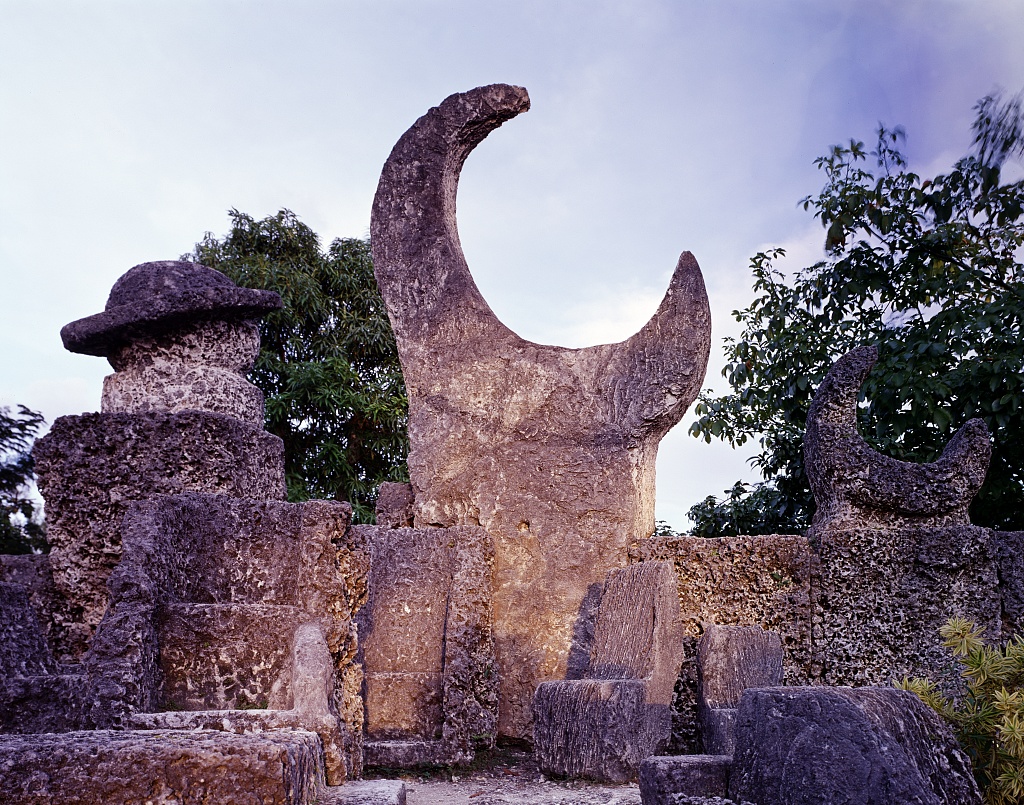
The Coral Castle is a sprawling stone city built by Latvian-American immigrant Edward Leedskalnin between 1923 and 1951, constructed from nearly 1,000 tons of rock which Leedskalnin somehow cut, shaped, lifted and maneuvered into place all by himself, refusing to allow visitors or observers onsite while working. There were no reports of mysterious sounds coming from the vicinity during construction, but sonic levitation generally relies on sound frequencies that are inaudible to humans.
Edward Leedskalnin single-handedly built the Coral Castle, and while some speculate about acoustic levitation, no evidence supports this theory despite his small stature and limited physical strength. The mystery of how one person could manipulate such massive stones without heavy machinery continues to fuel speculation about acoustic manipulation techniques.
Conclusion

Controlled experiments are more authoritative than unproven anecdotes from the distant past, and acoustic levitation is real as scientists learn more about how it works their ability to harness it will likely advance by leaps and bounds. While modern science has successfully demonstrated acoustic levitation on small scales, the gap between laboratory achievements and the massive stone manipulation described in ancient accounts remains vast.
While we cannot definitively conclude that ancient civilizations used sound technology as we do today, there is enough evidence to suggest they had a greater understanding of sound and vibration, and as our knowledge of sound physics continues to evolve, we may uncover more clues about the role of sound in ancient cultures. Whether these experiments will eventually unlock the secrets of megalithic construction or reveal the limits of acoustic manipulation remains an open question that continues to drive scientific curiosity.
What do you think about the possibility that our ancestors possessed advanced acoustic knowledge? Tell us in the comments.