
When we imagine prehistoric giants, dinosaurs typically spring to mind, but millions of years before these reptiles ruled the Earth, another group of creatures grew to astonishing proportions. During the Carboniferous period, approximately 359 to 299 million years ago, insects reached sizes that seem almost impossible by today’s standards. Some species grew larger than many modern birds, with wingspans stretching over two feet. These enormous arthropods thrived in oxygen-rich environments that would never be replicated again in Earth’s history. Their story represents one of the most fascinating chapters in evolutionary biology, revealing how environmental conditions can drive extreme adaptations and how the rise and fall of giant insects connect to broader patterns of our planet’s development.
The Oxygen-Rich World of the Carboniferous

The Carboniferous period created perfect conditions for insect gigantism through its uniquely oxygen-rich atmosphere. Scientific evidence suggests atmospheric oxygen levels reached approximately 35%, significantly higher than today’s 21%. This oxygen abundance resulted from the explosion of vascular plants and vast swampy forests that dominated the landscape, pumping unprecedented amounts of oxygen into the air through photosynthesis. Unlike vertebrates with lungs and circulatory systems that actively transport oxygen, insects rely on passive diffusion through a system of tubes called tracheae.
In the oxygen-saturated Carboniferous atmosphere, this respiratory system became remarkably efficient, allowing insects to grow to dimensions impossible under modern conditions. The relationship between oxygen levels and insect size represents one of paleontology’s most fascinating examples of how atmospheric composition directly influences evolutionary pathways.
Meganeura: The Griffinfly Giant
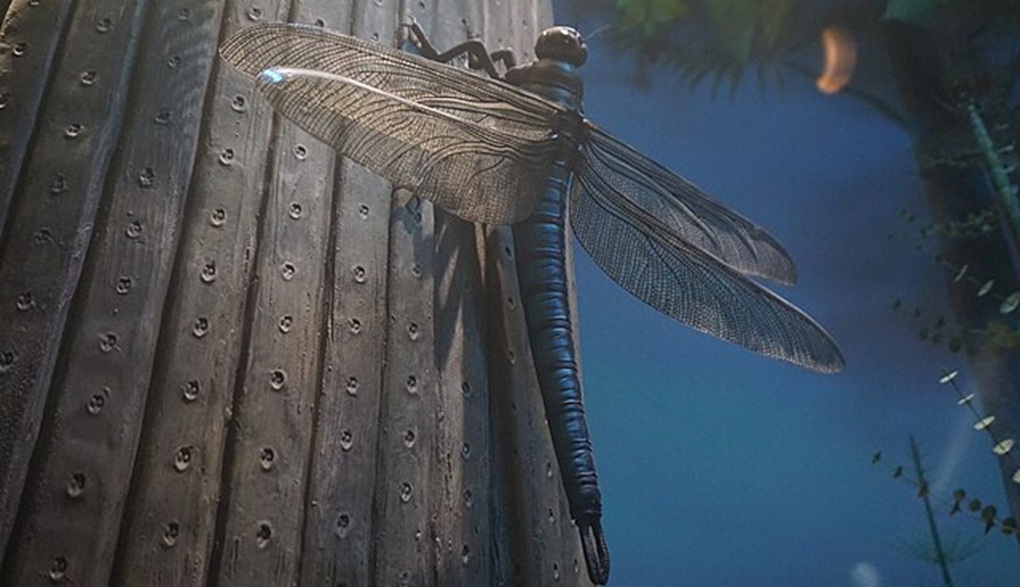
Perhaps the most iconic of all prehistoric insects, Meganeura was a dragonfly-like predator that ruled the Carboniferous skies with a wingspan reaching an astonishing 2.5 feet (75 cm). This enormous griffinfly dwarfed many modern birds, including robins, sparrows, and even some hawks. First discovered in 1880 in French coal deposits, Meganeura fossils revealed a predator with powerful mandibles and enormous compound eyes that would have provided excellent vision for hunting smaller insects.
Paleontologists believe Meganeura was an accomplished aerial predator, capable of speeds that would rival modern dragonflies despite its massive size. Computer modeling suggests these creatures could maneuver effectively despite their dimensions, creating a terrifying presence for smaller Carboniferous creatures who would have had no evolutionary experience with such large airborne hunters.
Arthropleura: The Terrestrial Giant
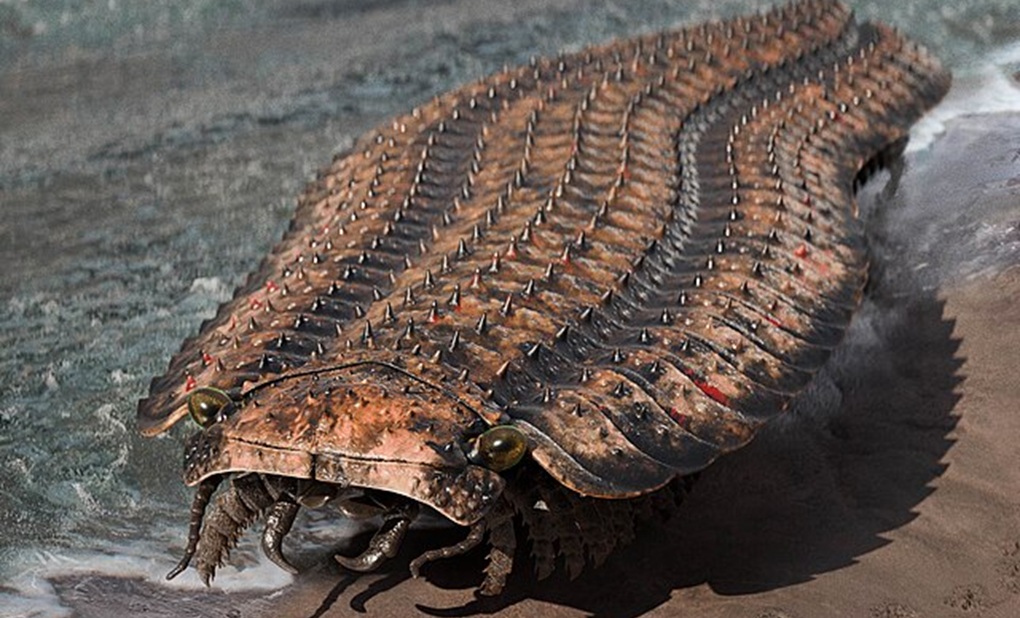
While technically not an insect but a relative of modern millipedes and centipedes, Arthropleura deserves mention as the largest known land-dwelling invertebrate of all time. This massive arthropod reached lengths of 8.5 feet (2.6 meters), with fossils suggesting some specimens may have grown even larger. Despite its intimidating size, paleontological evidence indicates Arthropleura was likely herbivorous, using its mandibles to process plant material rather than hunt prey. Its body consisted of approximately 30 armored segments, each supporting a pair of legs, creating a formidable appearance as it moved through the Carboniferous undergrowth.
Trackways attributed to Arthropleura suggest it moved with surprising speed and agility despite its massive size, navigating effectively through the dense forest environments of its time. The creature’s extinction coincided with the drying of swamp environments at the end of the Carboniferous, highlighting how specialized these giants were to their particular ecological niche.
Carboniferous Cockroaches: Ancestors of Modern Survivors

Cockroaches have earned their reputation as ultimate survivors, with a lineage stretching back over 300 million years to the Carboniferous period when they already displayed the hardy characteristics we recognize today. These ancient cockroaches, however, were significantly larger than their modern descendants, with some species reaching nearly 4 inches (10 cm) in length – larger than many of today’s songbirds. Unlike many Carboniferous giants, cockroach anatomy remained remarkably consistent through millions of years, with fossils showing the familiar flattened body and specialized legs that allow modern species to squeeze into tight spaces.
The evolutionary success of cockroaches stemmed from their omnivorous diet and adaptability rather than specialization for the oxygen-rich environment, which partly explains why their descendants survived through multiple mass extinctions while many giant insect lineages disappeared completely. These ancient cockroaches represent one of the most direct evolutionary links between Carboniferous giants and insects we encounter in our modern world.
Meganisoptera: The Forgotten Giants
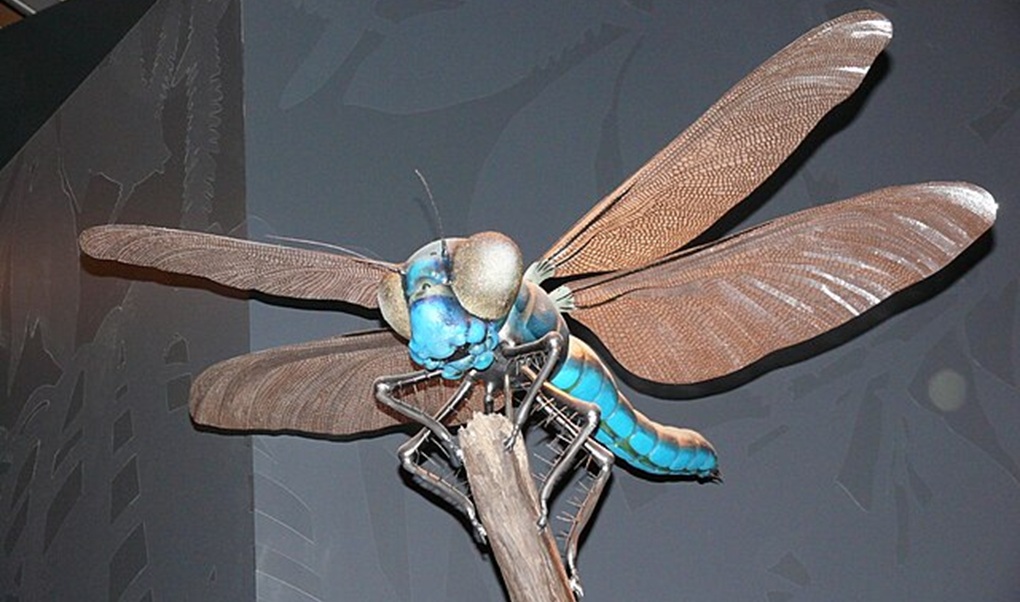
The order Meganisoptera encompassed numerous species of enormous predatory insects beyond just the famous Meganeura, creating an entire ecological guild of aerial hunters that dominated Carboniferous and early Permian skies. These creatures shared the distinctive elongated body plan of modern dragonflies but with wingspans regularly exceeding 18 inches (45 cm). Fossil evidence indicates Meganisoptera possessed uniquely reinforced wing structures that could support their massive size while maintaining the aerodynamic properties needed for active flight.
Their compound eyes were proportionally enormous, with some species showing evidence of specialized zones that likely provided enhanced visual acuity for tracking prey. The predatory adaptations of Meganisoptera included powerful serrated mandibles capable of seizing prey mid-air, making them the undisputed aerial predators of their time. While sometimes overshadowed by their cousin Meganeura in popular imagination, the diversity of Meganisoptera species reveals a highly successful evolutionary radiation that dominated for millions of years before their eventual decline.
The End of the Giants: Declining Oxygen and Rising Predators

The reign of giant insects came to a gradual end following the Carboniferous period as several critical environmental factors changed. Most significantly, atmospheric oxygen levels began a steady decline from their peak of 35% to levels closer to modern concentrations, directly impacting the respiratory efficiency that had enabled insect gigantism. Simultaneously, the Permian period saw the diversification of flying vertebrates, particularly early pterosaurs, which could have outcompeted large insects by combining efficient lungs with powerful flight muscles.
The Permian-Triassic extinction event, which eliminated approximately 95% of marine species and 70% of terrestrial vertebrates, likely delivered the final blow to many lineages of giant insects that may have already been struggling with changing atmospheric conditions. Geological evidence shows that the vast coal swamps that characterized the Carboniferous disappeared during this transitional time, eliminating the specialized habitat that had supported many of these remarkable creatures. This combination of factors ensured that insects would never again reach the extraordinary dimensions of their Carboniferous ancestors.
Modern Giants: The Largest Insects Alive Today

While nowhere near their Carboniferous ancestors in size, several modern insects still reach impressive dimensions that hint at their giant evolutionary heritage. The Goliath beetle (Goliathus) of equatorial Africa can reach lengths of nearly 4.5 inches (11 cm) and weights up to 3.5 ounces (100 grams), making it among the heaviest insects alive today. The Queen Alexandra’s birdwing butterfly (Ornithoptera alexandrae) of Papua New Guinea boasts the largest wingspan of any living butterfly at nearly 12 inches (30 cm), though this remains modest compared to Carboniferous flyers.
Among living relatives of ancient griffinflies, the prehistoric-looking damselfly Megaloprepus caerulatus of Central American rainforests holds the record with a wingspan approaching 7.5 inches (19 cm). These modern giants survive primarily in tropical environments where high oxygen availability, abundant food resources, and stable year-round temperatures create conditions somewhat reminiscent of the ancient forests where their much larger ancestors once thrived. Their existence demonstrates that the genetic potential for larger size remains within insect lineages, constrained primarily by environmental factors rather than inherent biological limitations.
The Respiratory Constraint: Why Size Matters for Insects
The fundamental limit on insect size stems from their unique respiratory system, which relies on passive diffusion rather than active breathing. Unlike vertebrates, insects lack lungs, instead utilizing a network of increasingly fine tubes called tracheae that deliver oxygen directly to tissues through tiny openings called spiracles on their exoskeleton. This system becomes progressively less efficient as body size increases because the surface area-to-volume ratio decreases, meaning larger insects require disproportionately more elaborate tracheal systems.
In today’s atmosphere, these respiratory constraints effectively cap insect size well below what was possible during the oxygen-rich Carboniferous. Research with modern insects in oxygen-enriched laboratory environments confirms this relationship, with specimens raised in higher-oxygen conditions growing significantly larger than control groups. Mathematical models suggest that even modest increases in atmospheric oxygen would enable substantial size increases in insects, though reaching the dimensions of Carboniferous giants would require oxygen levels incompatible with most modern vertebrate life. This respiratory limitation explains why insects, despite their remarkable evolutionary success and diversity, cannot compete with vertebrates in terms of maximum body size in our current atmosphere.
Paleozoic Food Webs: What Did Giant Insects Eat?

The ecological roles of Carboniferous giant insects varied dramatically across different groups, creating complex food webs that functioned without the presence of birds or mammals. Predatory forms like Meganeura likely dominated the aerial environment, consuming smaller flying insects and possibly even small amphibians that ventured from the water. Analysis of fossilized mouthparts suggests specialization among different predatory species, with some adapted for crushing prey with powerful mandibles while others developed piercing structures for extracting bodily fluids.
Herbivorous giants like Arthropleura consumed vast quantities of plant material, potentially including fibrous tissues that would challenge modern herbivores, with specialized gut bacteria to break down complex plant compounds. Detritivores among the giant cockroach lineages would have processed decaying plant matter on the forest floor, accelerating nutrient cycling in the swampy environments.
This ecological diversification allowed multiple giant insect species to coexist without direct competition, each exploiting different resources within the remarkably productive Carboniferous ecosystems. Paleobotanical evidence suggests that many plants developed early chemical defenses against these large herbivores, potentially driving the co-evolutionary relationships that would continue to shape plant-insect interactions for hundreds of millions of years.
Fossil Formation: How We Know About Prehistoric Insects

Our knowledge of Carboniferous insects comes primarily from exceptional fossil preservation in specific environments that captured these ancient creatures in remarkable detail. Coal deposits represent one of the richest sources of insect fossils from this period, as the anoxic conditions of ancient peat bogs prevented decomposition and allowed fine structures to be preserved during the coalification process.
Particularly important are locations like Mazon Creek in Illinois, where insects were rapidly buried in fine sediment within iron-rich nodules that preserved even delicate structures like wing membranes and antennae. Amber, the fossilized resin of ancient trees, rarely preserves Carboniferous specimens but becomes increasingly important for understanding later insect evolution through the Mesozoic and Cenozoic eras.
Modern imaging techniques, including CT scanning and synchrotron X-ray imaging, allow paleontologists to examine internal structures of fossilized insects without damaging precious specimens, revealing details about muscle attachments and tracheal systems that were previously inaccessible. These technological advances have revolutionized our understanding of ancient insects, allowing more accurate reconstructions of their appearance, physiology, and evolutionary relationships.
Experimental Paleontology: Testing Theories About Giant Insects

Scientists have developed ingenious experimental approaches to test hypotheses about how Carboniferous insects functioned despite their enormous size. Engineers have created robotic models of Meganeura with scaled wings to test flight mechanics, revealing that these creatures likely utilized gliding behavior extensively to conserve energy given their massive size.
Researchers raising modern insects in varied oxygen environments have demonstrated direct correlations between atmospheric composition and growth potential, with dragonflies raised in enriched oxygen environments growing significantly larger than control groups. Computer modeling of tracheal systems has allowed scientists to calculate theoretical maximum insect sizes under different atmospheric conditions, creating testable predictions that align remarkably well with the fossil record.
Some entomologists have even constructed sealed ecosystems with altered atmospheric composition to observe multi-generational effects on insect populations, documenting how quickly evolutionary pressures can shift body size when respiratory constraints change. These experimental approaches bridge the gap between paleontological observation and theoretical models, providing practical validation for our understanding of how giant insects evolved and functioned in their ancient environments.
Cultural Impact: Giant Insects in Science Fiction
The discovery of giant prehistoric insects has profoundly influenced science fiction across multiple media, reflecting our complex psychological relationship with arthropods. Early monster movies like “Them!” (1954), featuring giant irradiated ants, drew direct inspiration from paleontological discoveries of Carboniferous insects, magnifying our instinctive wariness of arthropods to create effective horror.
Modern science fiction frequently incorporates the concept of atmospheric manipulation leading to insect gigantism, as seen in novels like Frank Herbert’s “Hellstrom’s Hive” and films that speculate about terraforming scenarios. Video games, particularly those set in post-apocalyptic scenarios, often feature oversized insects as enemies, drawing on both prehistoric reality and radiation myths to create believable monster designs.
The persistent popularity of giant insects in fiction reflects both scientific fascination with their prehistoric reality and deep-seated cultural anxieties about creatures that represent such alien body plans and life cycles compared to our own vertebrate design. Interestingly, accurate scientific information about why insects grew so large during the Carboniferous often appears in these fictional works, making them vehicles for paleontological education despite their fantastical premises.
Future Possibilities: Could Giant Insects Return?
The question of whether giant insects could theoretically re-evolve under certain conditions fascinates both scientists and science fiction writers alike. Climate models suggest that significant increases in atmospheric oxygen concentration would be theoretically possible under certain scenarios, though these would likely require timeframes of millions of years through natural processes. Laboratory experiments have confirmed that even modest oxygen increases allow modern insects to grow larger over generations, suggesting the genetic potential for gigantism remains present in contemporary insect genomes.
However, multiple ecological factors beyond just oxygen levels would constrain any potential re-emergence of giant insects, including competition from birds, bats, and other vertebrate predators that did not exist during the Carboniferous. The complex web of ecological relationships in modern ecosystems creates selection pressures that generally favor smaller, more efficient body plans in insects rather than the energy-intensive giants of prehistoric times. While isolated environments with artificially elevated oxygen levels could theoretically support larger insects, the unique combination of factors that enabled Carboniferous gigantism represents an evolutionary moment unlikely to be repeated naturally in Earth’s future geological history.
Conclusion
The story of giant insects represents one of evolution’s most fascinating experiments – a period when environmental conditions allowed arthropods to push the boundaries of their body plan to extremes we can barely imagine today. These creatures remind us that life’s current forms represent just one moment in an ongoing evolutionary journey shaped by changing planetary conditions.
Though we’ll never see Meganeura soaring overhead or encounter Arthropleura crawling through forests, their fossilized remains provide a humbling glimpse into Earth’s past and the remarkable adaptability of life across geological time. As we face our own period of atmospheric change, albeit in the opposite direction of the oxygen-rich Carboniferous, these ancient giants offer valuable perspectives on the profound relationship between planetary conditions and the evolution of life’s diversity and complexity.