When you think of the prehistoric world, you probably picture massive dinosaurs dominating the landscape. However, during the same time periods, equally impressive creatures lurked in rivers, swamps, and shallow seas. These ancient predators weren’t technically dinosaurs, but they were so enormous and fearsome that they rivaled any land-dwelling giant you can imagine.
These crocodilian ancestors and relatives were the stuff of nightmares. Some grew longer than school buses, others developed bizarre tusks that would make a wild boar jealous, and a few could actually gallop across land like prehistoric monsters from a horror film. Picture yourself as a thirsty dinosaur approaching a peaceful-looking river 100 million years ago, only to have one of these behemoths explode from the water with jaws that could crush your bones instantly.
So let’s dive into the fascinating world of these ancient reptilian titans and discover just how terrifying prehistoric swamps really were.
Sarcosuchus – The SuperCroc That Dwarfed Everything
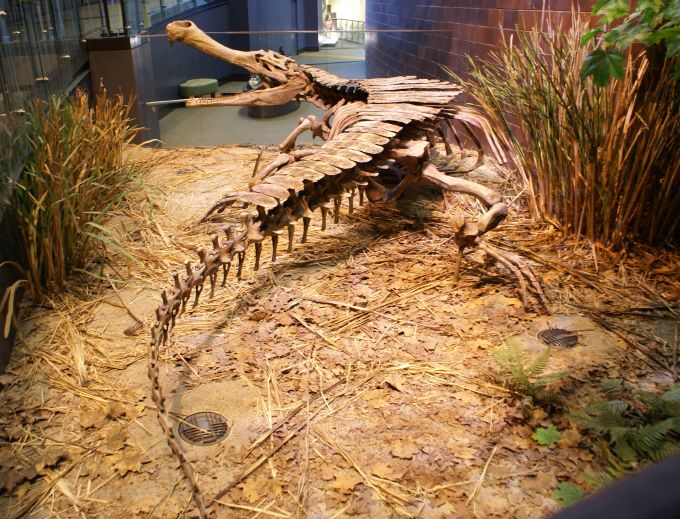
Sarcosuchus reached massive proportions, with fully grown individuals estimated to have reached up to 9 to 9.5 m (29.5 to 31.2 ft) in total length and 3.45 to 4.3 metric tons (3.80 to 4.74 short tons) in weight. It had 132 huge, conical teeth inside its 5-foot (1.5-meter) long head, and could easily crush bone with its powerful jaws, with a bite force possibly up to 7.25 tonnes (8 tons). This incredible force exceeded even that of Tyrannosaurus rex by about a ton.
Living during the Early Cretaceous, from the late Hauterivian to the early Albian stages, 130 to 112 million years ago, Sarcosuchus inhabited what is now Africa and South America. Based on the broader snout of fully grown S. imperator when compared with the living gharial, along with a lack of interlocking teeth, it likely had a generalized diet similar to that of the Nile crocodile, which would have included large terrestrial prey such as the abundant dinosaurs that lived in the same region.
The most striking feature was its massive skull, which alone measured as large as a full-grown human. It probably competed for food or territory with the spinosaurid dinosaurs, such as Suchomimus or Spinosaurus, also semi-aquatic reptiles that probably hunted fish as well.
Spinosaurus – The Fish-Eating Giant with Crocodilian Features
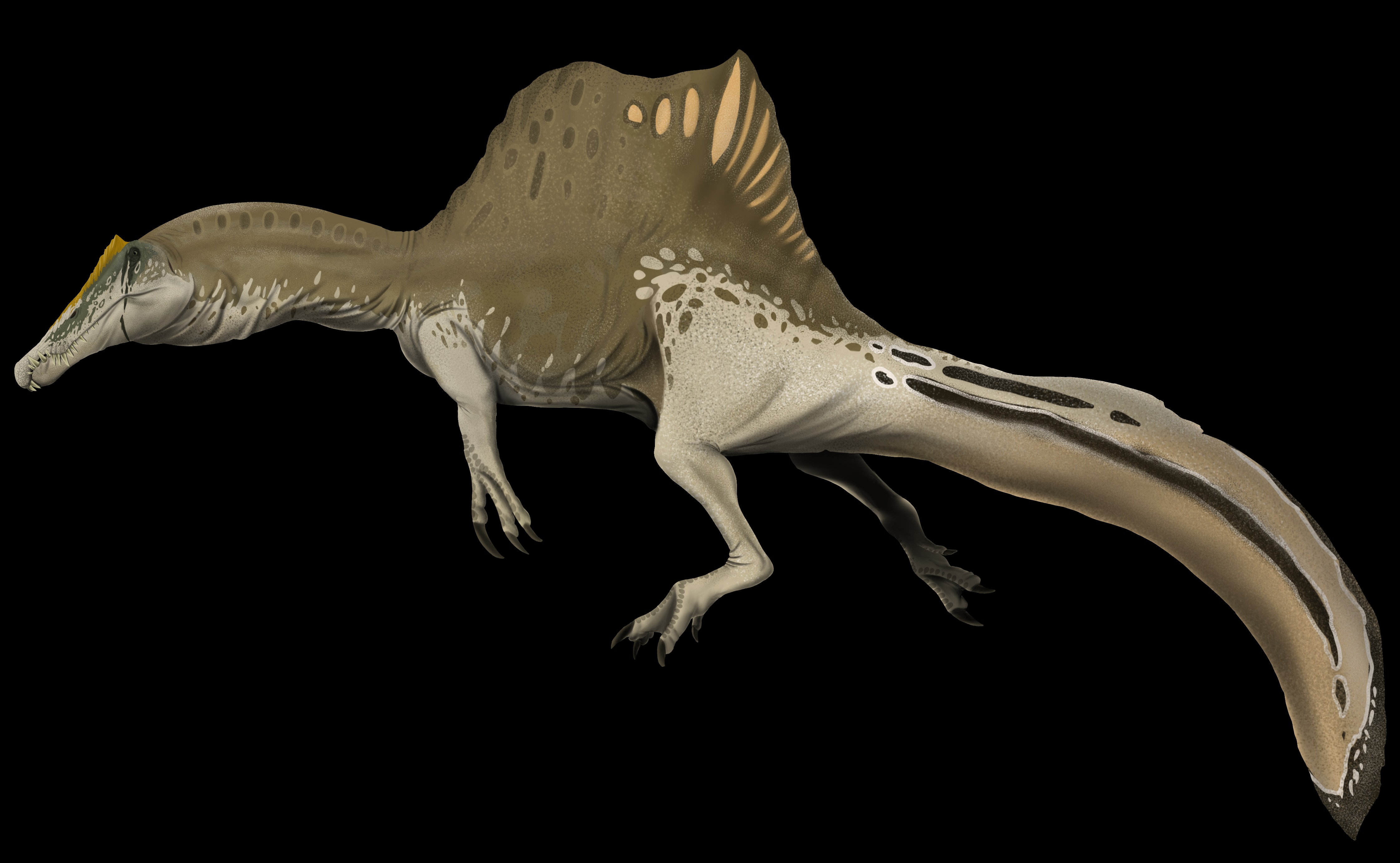
The skull of Spinosaurus was long, low, and narrow, similar to that of a modern crocodilian, and bore straight conical teeth with few to no serrations. The most recent study suggests that S. aegyptiacus could have reached 14 m (46 ft) in length and 7.4 t (8.2 short tons) in body mass. This made it one of the largest known terrestrial carnivores, comparable to other massive theropods.
The tail projected significantly elongated, thin neural spines, resulting in a deep and narrow tail with a paddle or fin-like shape comparable to the tails of newts and crocodilians, indicating that Spinosaurus was able to swim in a similar manner to modern crocodilians. The discovery indicates that Spinosaurus may have had a lifestyle comparable to modern alligators and crocodiles, remaining in water for long periods of time while hunting.
A 2010 isotope analysis found that oxygen isotope ratios of spinosaurid teeth indicate semiaquatic lifestyles, with Spinosaurus teeth having ratios closer to those of turtles and crocodilians when compared with other theropod teeth. Studies of its tail vertebrae revealed adaptations perfectly suited for aquatic propulsion, making it eight times more efficient at forward thrust than terrestrial theropods.
Deinosuchus – The Terror Crocodile That Hunted Dinosaurs
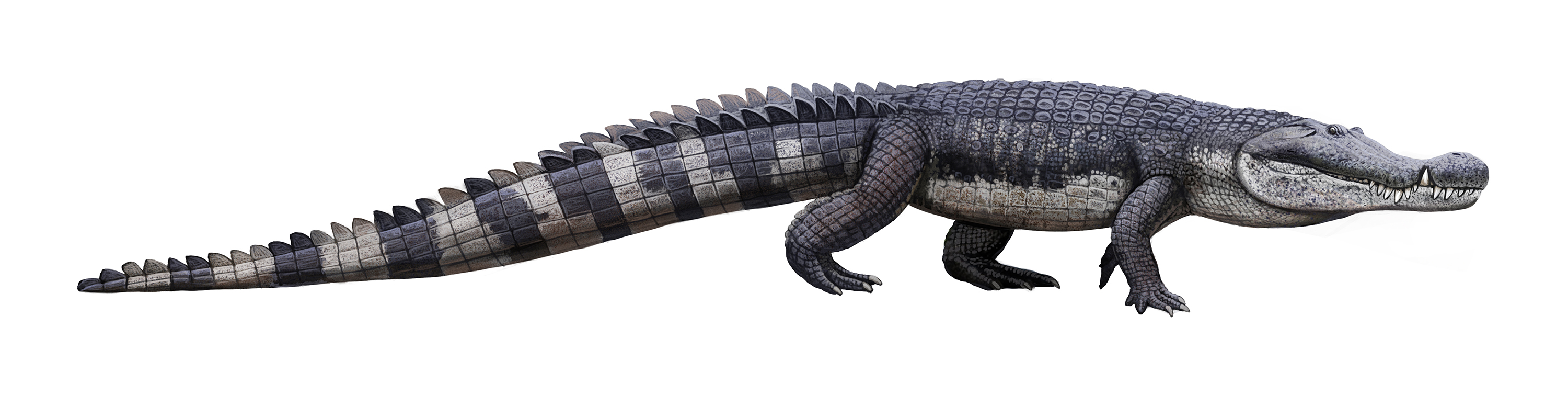
Deinosuchus comes from the Greek meaning “terrible crocodile”, and was one of the largest crocodilians that ever lived, with a body nearly as long as a bus and teeth the size of bananas. Size estimates for specimens varied from 8-12 meters (26-33 feet) and 2.5-14 tonnes, with some individuals potentially reaching even larger dimensions.
David R. Schwimmer proposed that several hadrosaurid tail vertebrae found near Big Bend National Park show evidence of Deinosuchus tooth marks, strengthening the hypothesis that Deinosuchus fed on dinosaurs in at least some instances. Deinosuchus is generally thought to have employed hunting tactics similar to those of modern crocodilians, ambushing dinosaurs and other terrestrial animals at the water’s edge and then submerging them until they drowned.
Unlike alligatoroids, Deinosuchus retained the salt glands of ancestral crocodilians, enabling it to tolerate salt water, with modern crocodiles having these glands which collect and release excess sodium chloride. This adaptation allowed it to spread across vast distances during the Cretaceous period.
Suchomimus – The Crocodile Mimic Dinosaur
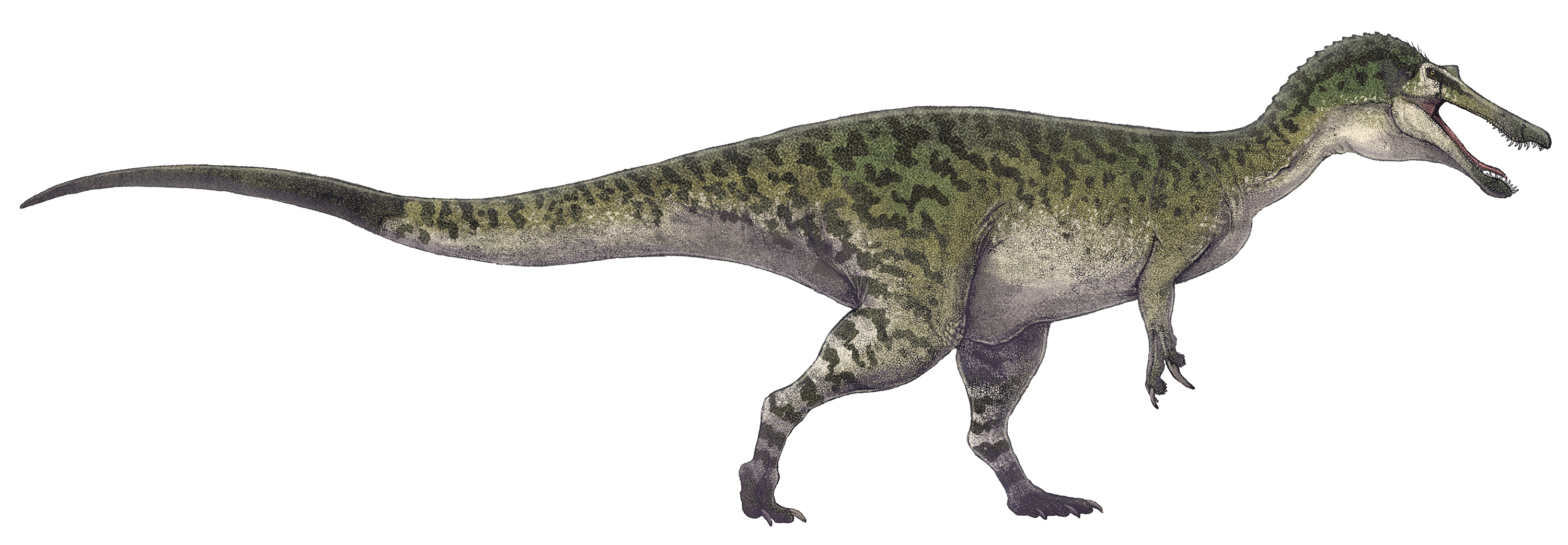
The generic name Suchomimus derives from Ancient Greek meaning “crocodile mimic”, in reference to its elongated snout and piscivorous adaptations, with a very crocodilian-like skull featuring a long, low snout and narrow jaws. With an estimated length of 9.5–11 metres (31–36 ft) and a body mass ranging from 2.5–3.8 metric tons, Suchomimus was a particularly large theropod.
The jaws had about 122 conical teeth, pointed but not very sharp and curving slightly backwards, with the tip of the snout enlarged sideways and carrying a “terminal rosette” of longer teeth. Suchomimus lived in what is now Niger during the late Aptian to early Albian stages, in an inland habitat of extensive freshwater floodplains and fast-moving rivers with a tropical climate.
Unlike its more aquatically adapted relatives, Suchomimus was more suited to hunting in shallow water due to its lighter bone structure. While Baryonyx and Spinosaurus were capable of fully submerging underwater and diving after prey due to denser bones, Suchomimus itself was more adapted to a life hunting in shallow water.
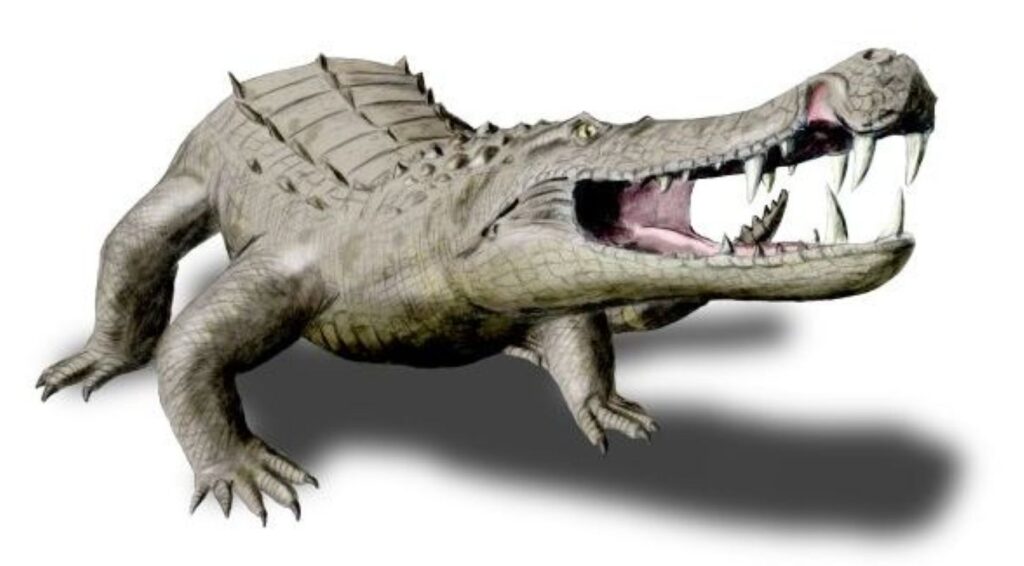
Kaprosuchus – The Boar Crocodile with Terrifying Tusks
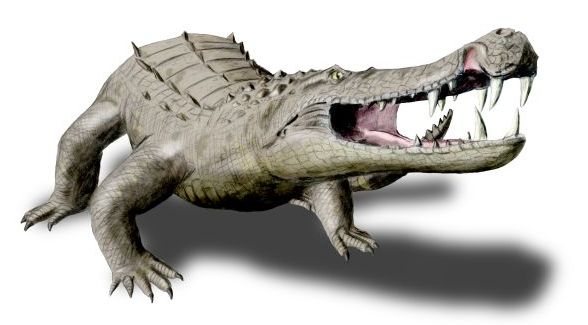
The name means “boar crocodile” in reference to its unusually large caniniform teeth which resemble those of a boar, with three sets of tusk-like teeth that project above and below the skull. Its total body length is estimated to be around 6 metres (20 ft). It has been nicknamed “BoarCroc” by Paul Sereno and Hans Larsson, who first described the genus in 2009.
Another unique characteristic of Kaprosuchus is the presence of large, rugose horns formed from the squamosal and parietal bones that project posteriorly from the skull, with the orbits opening laterally and angled slightly forward rather than upward. Kaprosuchus is thought to have been a primarily terrestrial predator, with evidence including the positioning of the orbits laterally and somewhat anteriorly, which suggests an overlap in vision.
These 5-inch fangs, plus forward-facing eyes for depth perception, indicate this was likely an active land hunter, and based on its leg structure, it probably could gallop after prey, using its tusks to slash at dinosaurs’ legs. This combination of features made it unlike any other known crocodyliform.
Mahajangasuchus – The Horned River Hunter
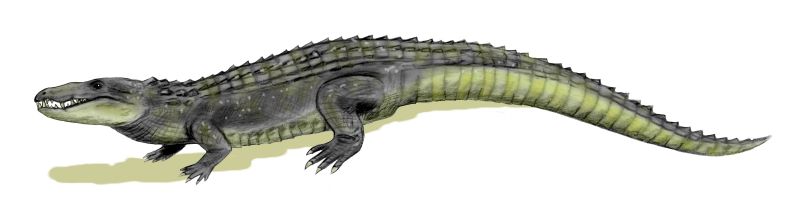
Mahajangasuchus lived 100.5-66 million years ago and was estimated to be 16 feet long based on skull size, with fossils found in Madagascar. Smaller projections are seen in the closely related Mahajangasuchus, similar to those in Kaprosuchus. This crocodyliform shared many characteristics with its more famous relative but developed its own unique adaptations.
In terms of differences in their adaptation, Mahajangasuchus was a primarily aquatic predator, while Kaprosuchus was semi-aquatic. The specimens of both genera show cranial adaptations usually found in “definitively semiaquatic” crocodylomorphs, “such as elongate platyrostral or tube-like snouts, orbits located dorsally on the skull, and/or dorsally-facing external nares”.
Living in the rivers and wetlands of ancient Madagascar, Mahajangasuchus occupied a similar ecological niche to modern crocodilians but with distinctive horn-like projections that set it apart from contemporary species. Subsequent studies have placed it within the Mahajangasuchidae family, which includes other African and Madagascan crocodyliforms.
Baurusuchus – The Land-Running Terror
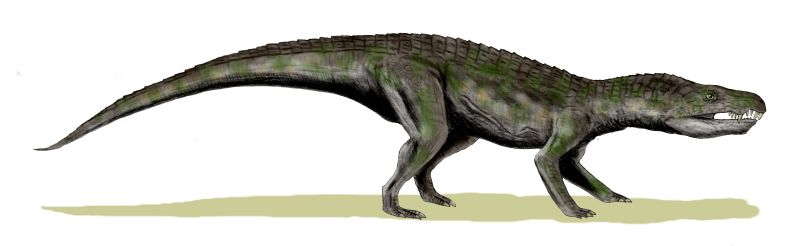
Baurusuchus lived 93.9-89.8 million years ago, was a genus of land crocodiles with eyes and nostrils on the side of the skull, 11-13 feet long, with fossils found in Brazil. Baurusuchus belonged to a group called baurusuchids – land predators that ruled South America while tyrannosaurs dominated the north, and in South America, land crocodiles like Baurusuchus were the top predators.
Species like Baurusuchus had long legs positioned directly under their bodies (not sprawling like modern crocs), which likely let them run and even gallop like dogs or horses. Many sphagesaurians may have been capable of omnivory thanks to their bizarre teeth, in sharp contrast to the hyper-carnivorous Baurusuchus.
Unlike the semi-aquatic lifestyle of most crocodilians, Baurusuchus was fully terrestrial and actively pursued prey across the landscape. Land specialists like Baurusuchus likely could run 15-25 miles per hour in short bursts – similar to modern monitor lizards. This made them the apex predators of their South American ecosystem.
Purussaurus – The Amazonian Giant
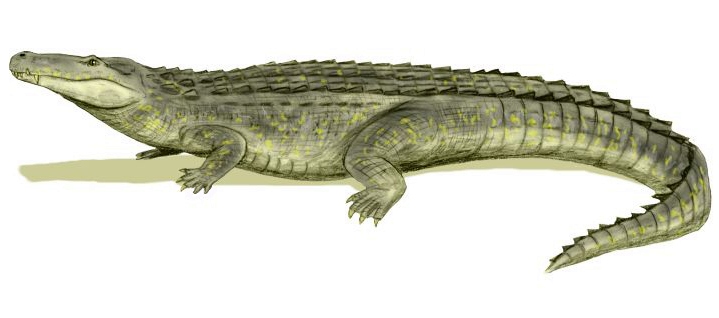
Purussaurus lived during the Miocene epoch and was one of the largest crocodilians ever, with lengths estimated up to 10.3 metres (34 ft) and weights up to 5.16 tonnes, with fossils found in South America. Gryposuchus lived alongside Purussaurus but they didn’t fight over food, while Purussaurus crushed large prey with its broad snout.
Purussaurus was truly massive, potentially reaching lengths that rivaled even Sarcosuchus. Living in the ancient Amazon basin, it dominated freshwater environments with its enormous skull and crushing bite force. The broad snout design indicated a diet focused on large vertebrate prey rather than the fish-catching specialization seen in narrow-snouted species.
This giant occupied a similar ecological role to modern saltwater crocodiles but on a much larger scale. This division of resources allowed both giants to coexist – an ancient example of niche partitioning that ecologists study today. The Amazonian rivers of the Miocene were truly dominated by these crocodilian titans.
Dakosaurus – The Ocean-Going Crocodile Shark
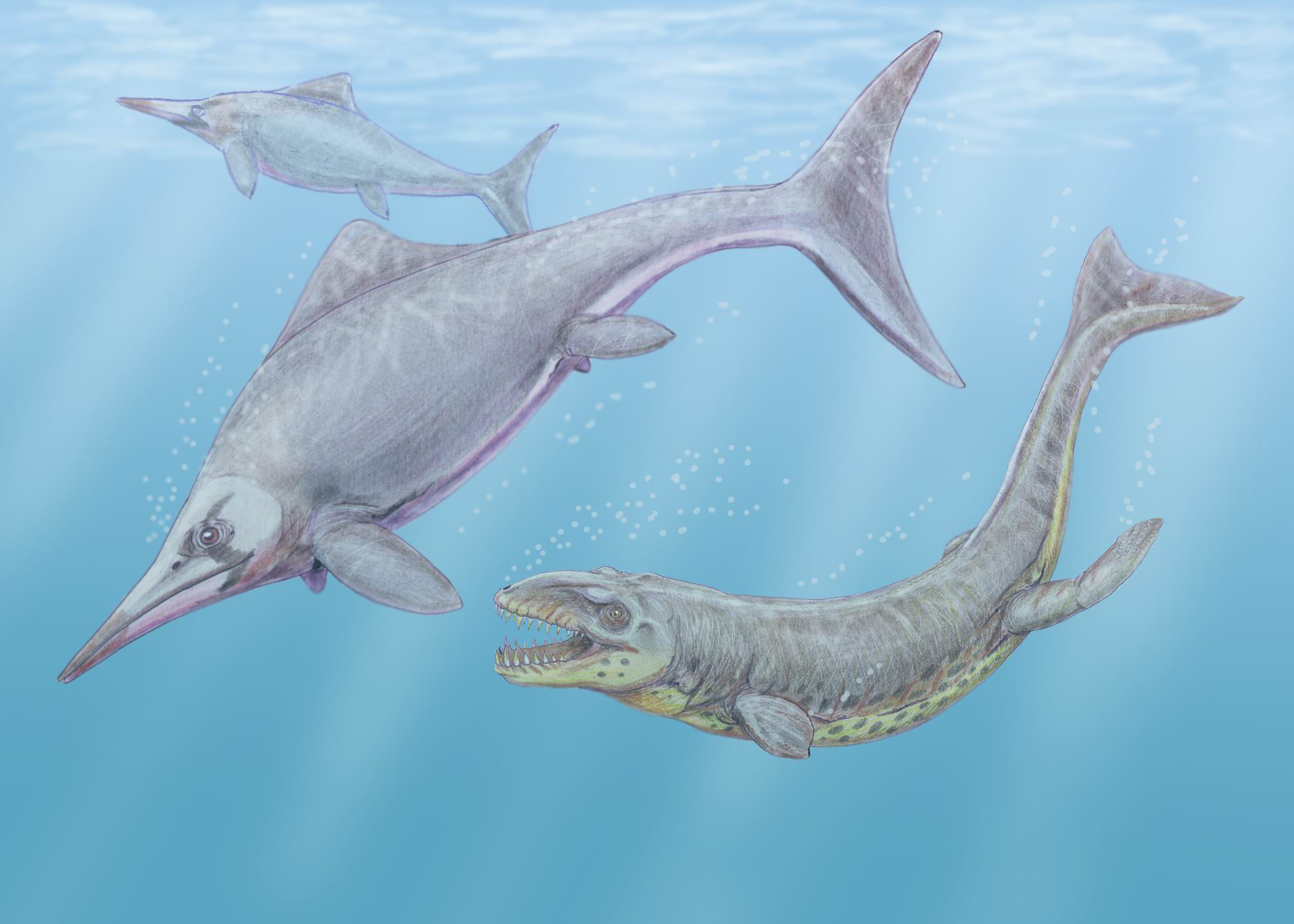
While most ancient crocodilians stuck to rivers and swamps, Dakosaurus took a completely different evolutionary path. Metriorhynchus lived 163.5-145 million years ago as a marine crocodile with a fluke tail like a dolphin, around 10 feet long, with many fossils from Europe. Dakosaurus was even more specialized for marine life than its relative Metriorhynchus.
This remarkable predator developed adaptations that made it look more like a shark than a crocodile. Its limbs had evolved into flippers, and its tail developed a vertical fin structure similar to that of sharks and dolphins. The skull became elongated and streamlined for cutting through water at high speeds.
Ocean species like Dakosaurus ate fish, squid-like animals, and marine reptiles. Living alongside marine reptiles like plesiosaurs and ichthyosaurs, Dakosaurus carved out its own niche as a fast-swimming apex predator. This shows just how diverse ancient crocodilians could be when adapting to different environments.
Conclusion
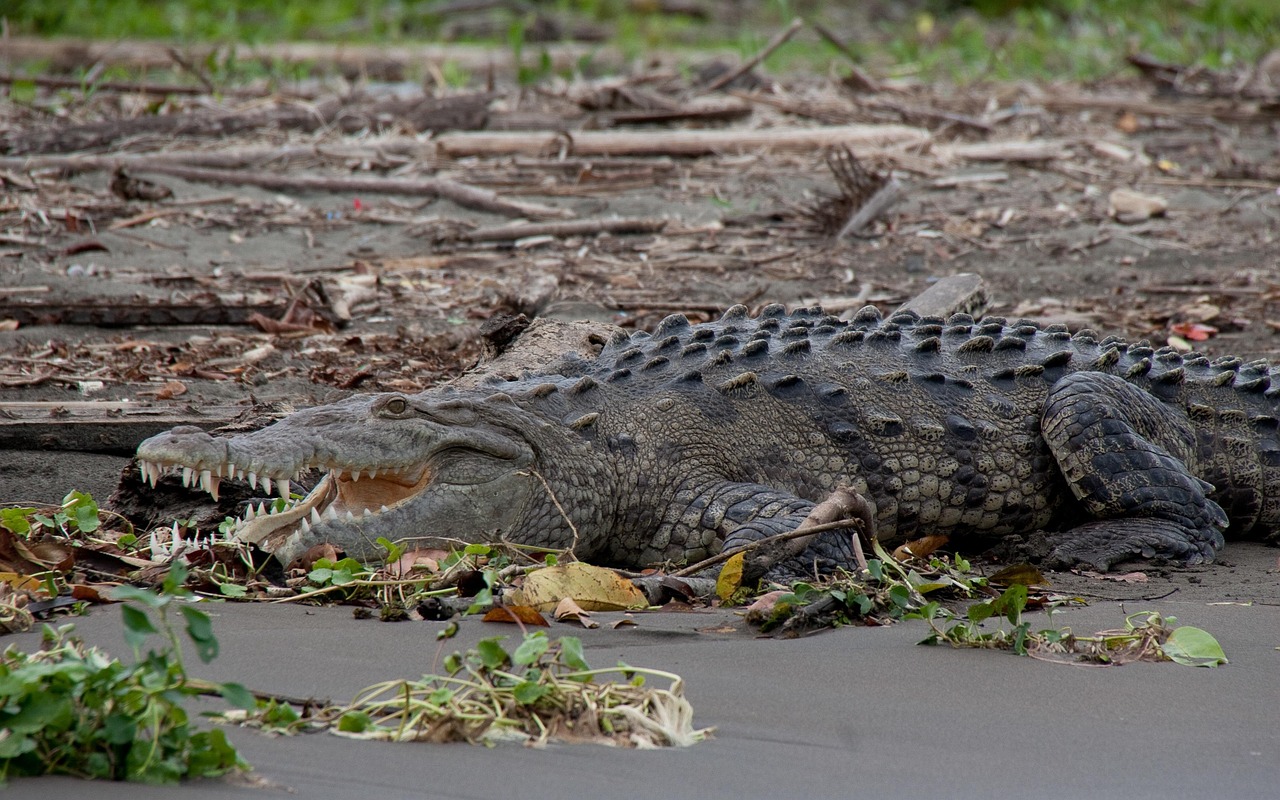
These nine ancient giants reveal just how diverse and terrifying the prehistoric world truly was. Prehistoric crocodiles and dinosaurs lived together for over 135 million years in what wasn’t a peaceful relationship, but an endless battle for survival. From the massive river-dwelling Sarcosuchus to the tusk-wielding Kaprosuchus and the ocean-going Dakosaurus, these creatures dominated every aquatic environment on Earth.
What makes these ancient predators even more fascinating is their incredible diversity compared to today’s relatively uniform crocodilian species. They ate almost everything you can imagine: dinosaurs, huge fish, other marine reptiles, and some were even plant-eaters, showing variety way beyond modern crocodiles, which only eat meat. The next time you see a modern alligator or crocodile, remember that their ancestors once included galloping land hunters, ocean-swimming sharks, and river monsters that could crush T. rex bones.
What do you think about these prehistoric giants? Can you imagine encountering one of these terrifying creatures in their ancient world? Tell us in the comments.