Picture this: You’re standing on the shore of an ancient inland sea that once split North America from Mexico to the Arctic. The sun beats down on your face as massive shadows glide overhead. These aren’t birds, though – they won’t evolve for millions of years. Instead, you’re witnessing the aerial monarchy of the Mesozoic, when flying reptiles ruled the skies with wingspans rivaling modern fighter jets.
Pterosaurs were the first vertebrate creatures to evolve powered flight and conquer the air – long before birds took wing. Though many people use the term “raptor” when thinking about flying predators, these ancient aerial titans deserve their own spotlight. It was the western interior seaway that divided much of the United States and Canada during the age of the Pterosaurs. This shallow inland sea split North America and served as the environment where most Pterosaurs flourished.
Giants Over the Great Seaway
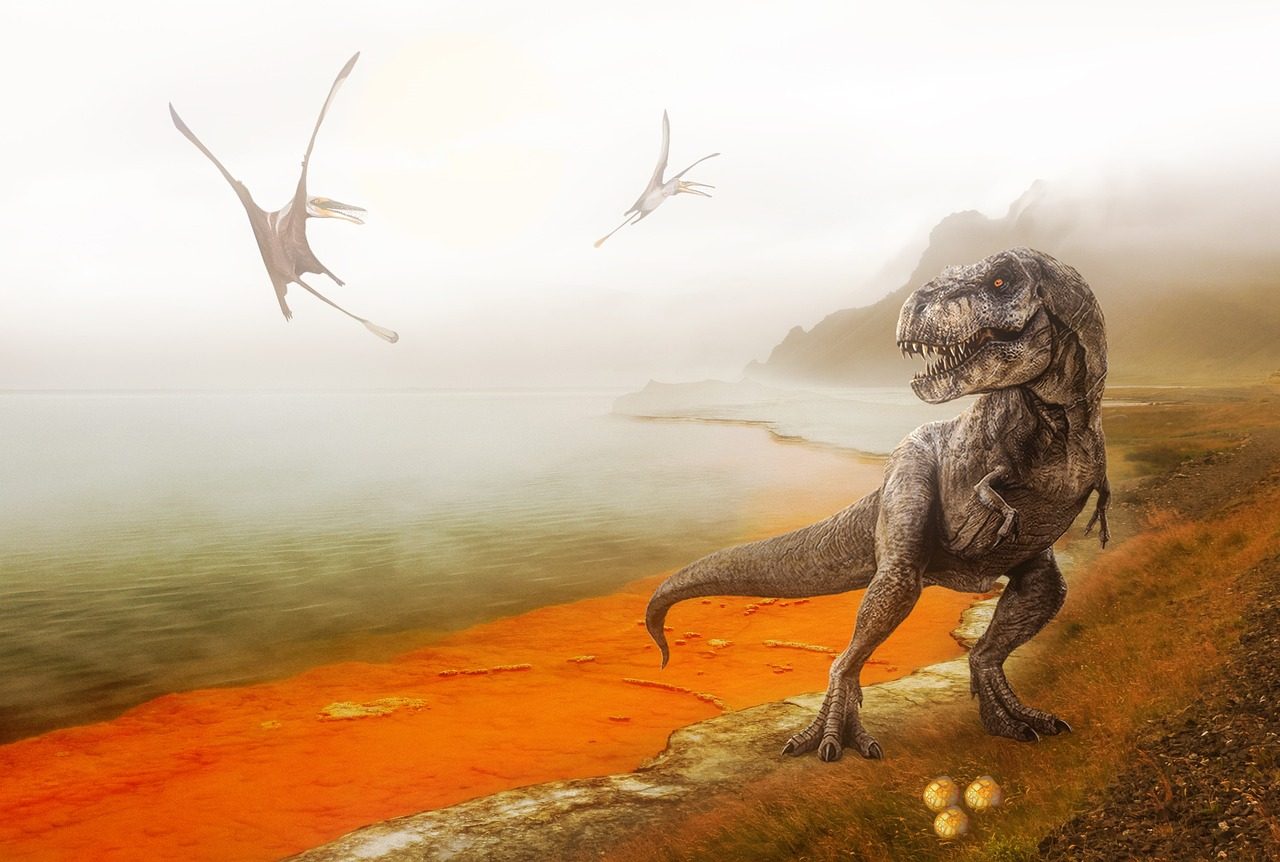
These chalk beds were deposited at the bottom of what was once the Western Interior Seaway, a large shallow sea over what now is the midsection of the North American continent. You might imagine this ancient waterway as a pterosaur superhighway, where massive flying reptiles soared above waves teeming with marine life. Its fossils first were found by Othniel Charles Marsh in 1871, in the Late Cretaceous Smoky Hill Chalk deposits of western Kansas. This discovery changed everything we thought we knew about ancient life.
The Western Interior Seaway wasn’t just any body of water – it was a pterosaur paradise. The initial fossils were unearthed primarily in North America, particularly within the Western Interior Seaway region. This area provided a rich historical context for the study of marine reptiles, as it was once a vast inland sea teeming with life. Here, these flying giants found abundant fish populations and perfect thermal updrafts for soaring.
Pteranodon: The Toothless Terror
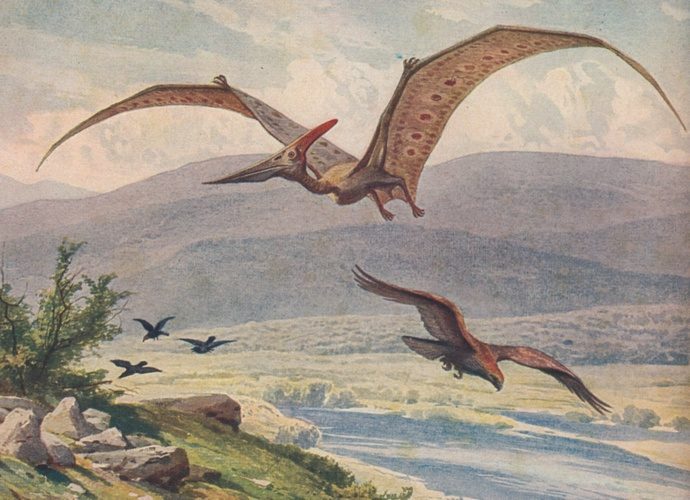
These skulls showed that the North American pterosaurs were different from any European species, in that they lacked teeth and had bony crests on their skulls. Marsh recognized this major difference, describing the specimens as “distinguished from all previously known genera of the order Pterosauria by the entire absence of teeth.” Imagine encountering a creature with a wingspan exceeding twenty feet, armed not with teeth but with a razor-sharp beak designed for snatching fish from the water’s surface.
More fossil specimens of Pteranodon have been found than any other pterosaur, with numerous specimens known to science, many of them well preserved with nearly complete skulls and articulated skeletons. This abundance tells us that Pteranodon absolutely dominated North American skies during the Late Cretaceous. However, with the largest males having a wingspan close to 7 meters, it still dwarfs today’s largest birds by a massive margin.
Sexual Dimorphism in the Sky
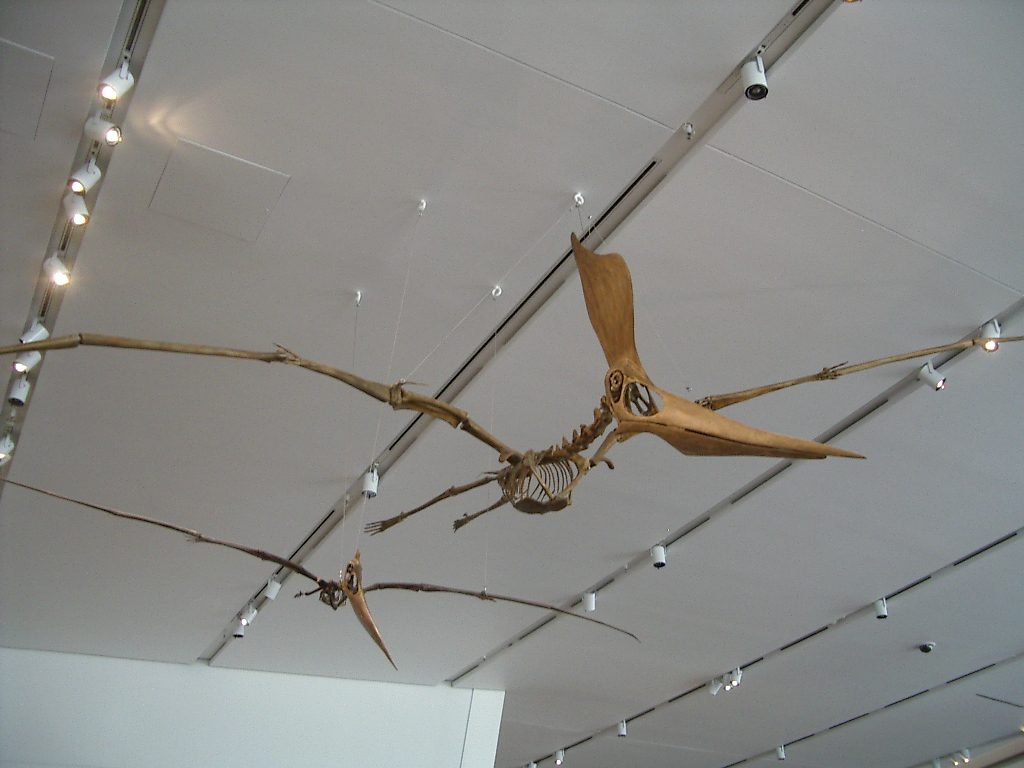
Also female Pteranodons were half the size of males and had just a small nubbin for a crest. This suggests a harem-based reproductive system, with massive males competing with each other for numerous small females. Think of it as nature’s version of peacock tail feathers, except these displays happened hundreds of feet above the ground. The massive crests of male Pteranodon weren’t just for show – they likely played crucial roles in aerial courtship displays and species recognition.
The young themselves were most likely precocious and it is fair to assume that they followed a different lifestyle to their parents, even though no Pteranodon hatchlings have actually been discovered. We do know, however, that like all pterodactyloid pterosaurs, growth was exceptional, with young reaching near-adult sizes in under an year. This rapid growth rate meant that young pterosaurs had to quickly master the art of flight or face certain death.
The Ultimate North American Giant: Quetzalcoatlus
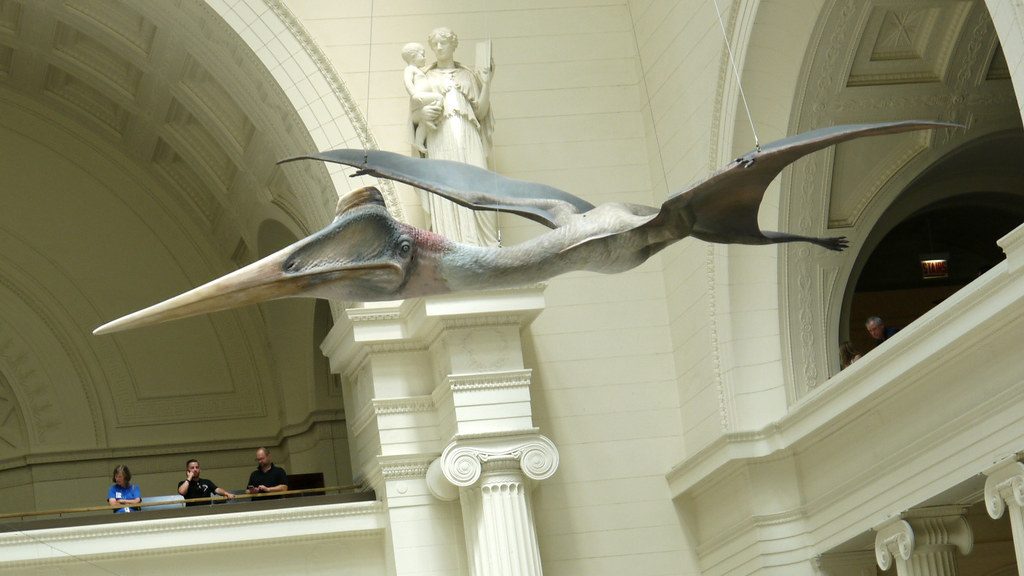
The first fossil of this giant creature was discovered in the Javelina Formation in 1971 by Douglas A. Lawson, who at the time was a graduate student at the University of Texas at Austin. The genus Quetzalcoatlus is based on fossils discovered in rocks pertaining to the Late Cretaceous Javelina Formation in Big Bend National Park, Texas. This discovery would rewrite the rulebook on just how massive flying animals could become.
It is one of the largest flying animals ever discovered, and originally lived in North America during the Maastrichtian age of the Cretaceous period between 68 and 66 million years ago. Their powerful wings likely allowed them to travel extremely long distances, with some paleontologists suggesting that they could have made intercontinental flights with fairly little difficulty. Imagine a creature the size of a small airplane soaring over the Mesozoic landscape, capable of crossing entire continents in search of food.
Masters of Terrestrial Hunting
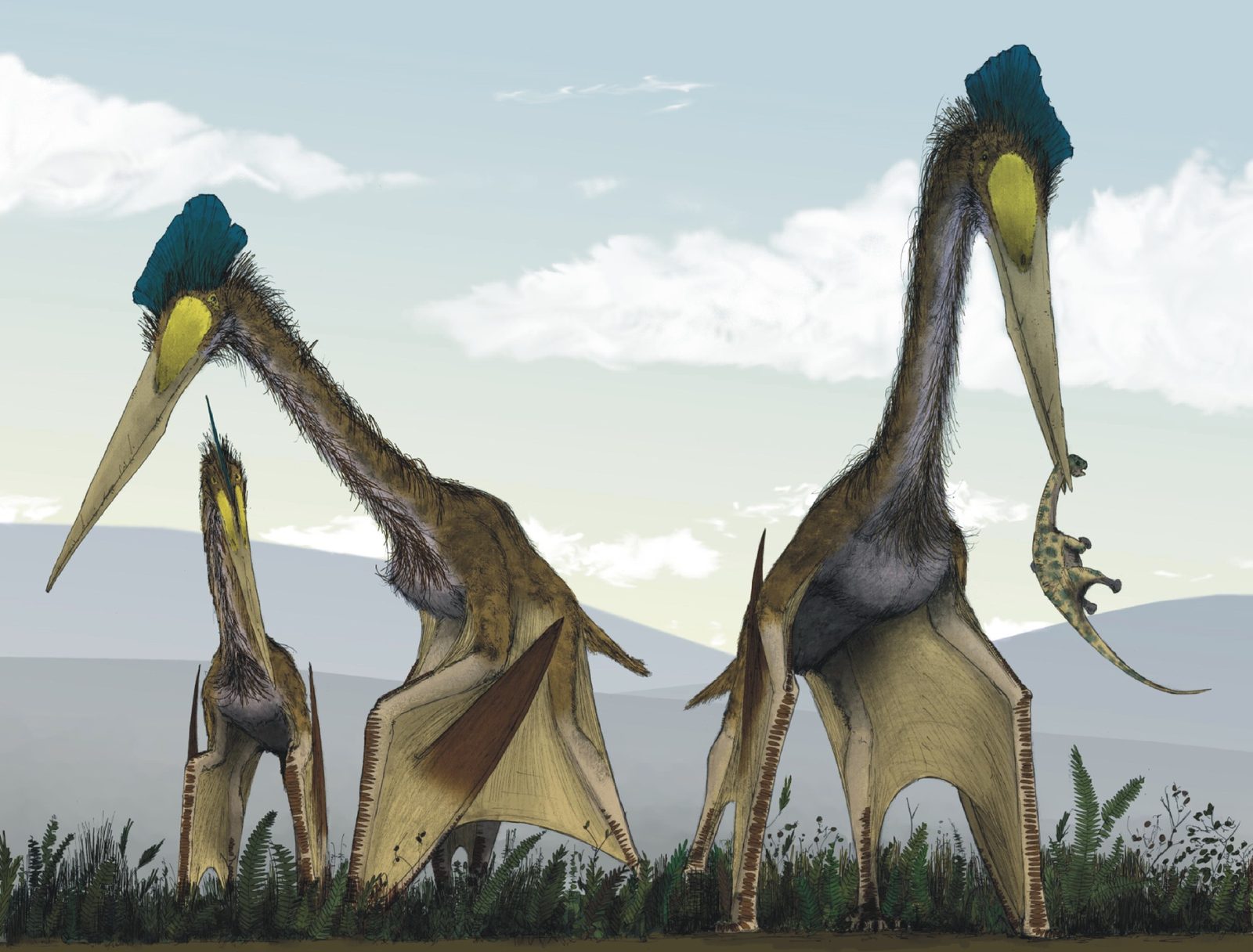
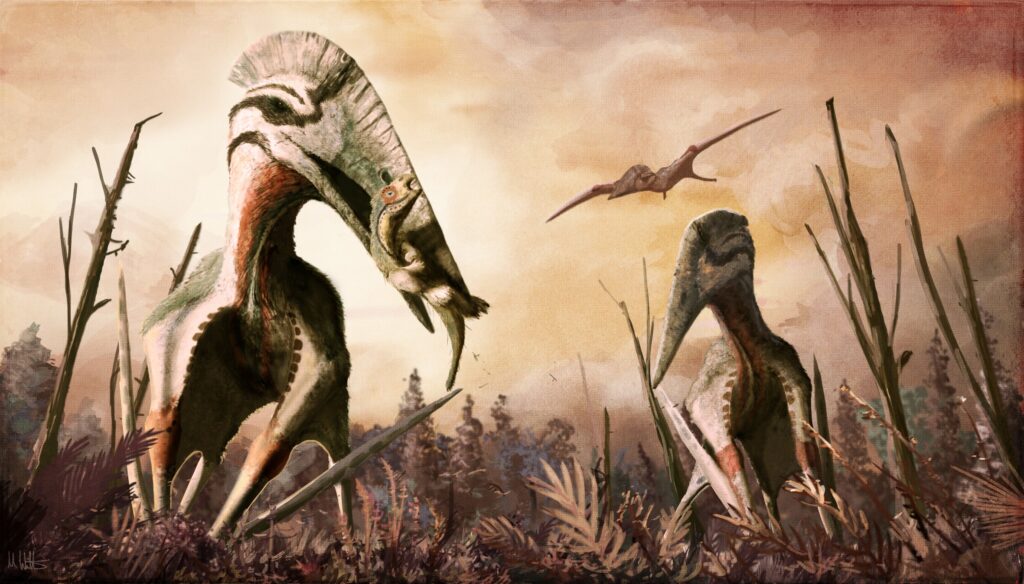
Hence, although azhdarchid anatomy is unique in a number of aspects, they appear to have been stork- or ground hornbill-like terrestrial stalkers, with the best modern analogues being the most generalized storks, such as the Ciconia species. You might picture these giants differently than Hollywood portrays them – not as soaring sea birds, but as ground-stalking predators that could snatch up baby dinosaurs with their massive beaks.
A juvenile titanosaur has been procured by one pterosaur, while the others stalk through the scrub in search of small vertebrates and other foodstuffs. These animals were probably apex predators in their ancient ecosystems, coexisting with many of North America’s largest species. The thought of encountering one of these giants stalking through a Mesozoic forest would have been absolutely terrifying for any creature unfortunate enough to be the right size for a meal.
The Romanian Connection: Hatzegopteryx in Europe
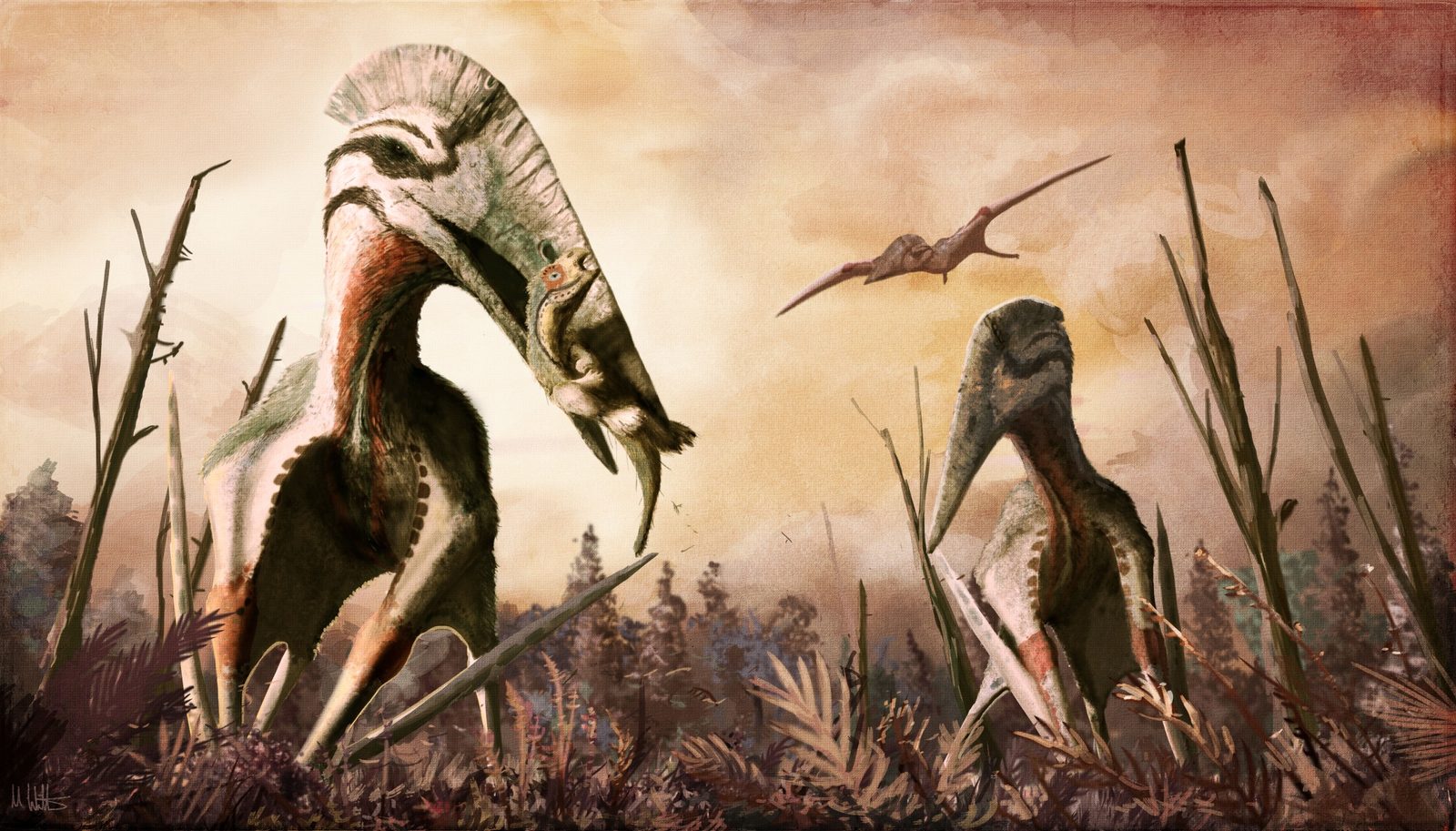
Though our focus is North America, it’s worth noting that these giants weren’t exclusive to one continent. In the absence of large theropods, Hatzegopteryx was likely the apex predator of Hațeg Island, tackling proportionally larger prey (including dwarf titanosaurs and iguanodontians) than other azhdarchids. Unusually among giant azhdarchids, Hatzegopteryx had a very wide skull bearing large muscular attachments, bones with a spongy internal texture instead of being hollow, and a short, robust, and heavily muscled neck measuring 1.5 m long.
Hatzegopteryx is the only carnivorous animal we know of from this time and place which was large enough, and robust enough, to tackle good-sized prey, and we postulate that it may have taken the ‘arch predator’ niche occupied by theropods elsewhere in the world. This European giant shows us that the age of pterosaur dominance wasn’t limited to North American skies.
Flight Mechanics of the Giants

Based on the work of Mark P. Witton and Michael Habib in 2010, it now seems likely that pterosaurs, especially larger taxa such as Quetzalcoatlus, launched quadrupedally (from a four-legged posture), using the powerful muscles of their forelimbs to propel themselves off the ground and into the air. Picture these massive creatures crouching like enormous bats before vaulting themselves skyward with incredible force. Despite the considerable size of the forelimbs, the bones were hollow and thin-walled, which kept weight low. The skull, with its long, slender beak, was delicate but strong, with most of the component bones being fused.
The engineering marvel of pterosaur flight becomes even more impressive when you consider the physics involved. These weren’t clumsy, struggling fliers – they were sophisticated aerial predators perfectly adapted to their environment. Their wing membranes contained complex fiber systems that provided both strength and sensitivity, allowing them to detect air currents with remarkable precision.
The End of an Era

In spite of their success, they became extinct when a massive asteroid collided with their habitat, completely destroying the ecosystem in which they lived. Pterosaur fossils are found right up until the end of the Cretaceous, but, at this point, their record suddenly goes dry. The reign of these magnificent aerial hunters came to an abrupt end sixty-six million years ago.
Given that pterosaurs were apparently diverse and adaptable enough to exist for approximately 150 million years prior to their disappearance, it’s not unreasonable to ask why they should vanish so absolutely at the end of the Mesozoic. Most pterosaurs of this time are of medium or large size, for instance, and most are azhdarchids. This suggests that pterosaurs were being forced into specialist roles, an action suggested by some to be accredited to those feisty young upstarts, the birds. The rise of birds may have pushed pterosaurs into increasingly specialized niches, making them more vulnerable to extinction.
When you imagine the skies above ancient North America, don’t think of empty blue expanses waiting for birds to evolve. Instead, picture a world where giants ruled the air with wingspans that dwarfed anything flying today. These weren’t just oversized reptiles with wings – they were sophisticated aerial predators that dominated their ecosystems for over 150 million years. Their story reminds us that evolution has produced flying giants far more spectacular than anything we see today. What would you have thought if you’d looked up and seen one of these magnificent creatures soaring overhead?