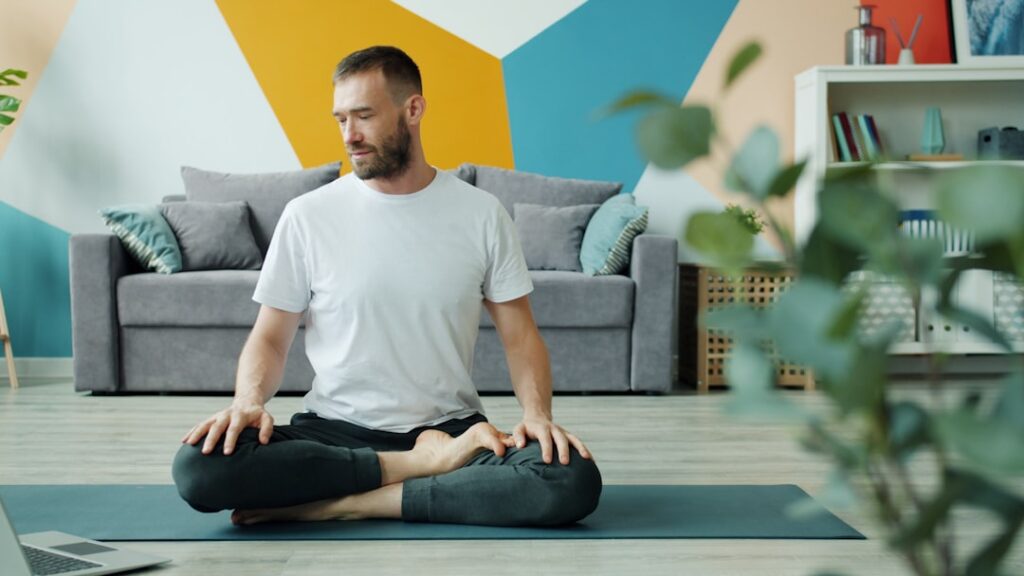
You know that feeling when life seems to be spinning out of control and your mind won’t stop racing? It’s exhausting. Most of us spend years chasing external fixes, thinking a new job or a perfect vacation will finally bring us the calm we crave. Here’s the thing, though: lasting inner peace isn’t something you stumble upon or buy. It’s something you build from the inside out, one small habit at a time.
What if you could train your mind to stay grounded even when chaos surrounds you? What if peace wasn’t about escaping stress, but learning to stay centered through it? The truth is, you can cultivate this kind of deep, enduring tranquility. Let’s dive in.
Practice Breath Awareness Daily

Your breath is always with you, and taking regular time throughout the day to stop and observe it can help you cultivate inner peace and tie your mind to the present moment. Think about it: when you’re stressed, your breathing becomes shallow and quick. When you’re calm, it slows down naturally.
Try taking just five to ten minutes during the morning, afternoon, and evening to focus awareness on the natural flow of your in-breath and out-breath. You don’t need fancy equipment or a special location. Just pause, breathe, and experience your existence. You’ll notice that you can rely on your breath to cultivate inner peace, and it becomes your pause button whenever you feel like the world is spinning too fast.
Label and Release Your Worries

Let’s be real, your mind is probably carrying a heavy load of worries right now. Work stress, relationship concerns, financial pressure. The weight can be crushing. Yet trying to solve every problem the moment it appears only makes things worse.
Rather than seeking to understand or solve any problems, simply acknowledge that the problem exists as a psychological weight you’re carrying and give it a label such as health worry, relationship issue, or work problem, then let go of it and allow it to be. This labeling and objectifying of your problems helps separate you from them and realize they don’t need to define you, which gives you an opportunity to step back and reconnect with yourself.
Welcome Your Emotions Instead of Avoiding Them

Because painful emotions feel bad, our natural instinct is to avoid them. You push them down, distract yourself, maybe grab your phone or turn on the TV. Honestly, it makes sense on the surface. Why would you want to feel sadness, anger, or fear?
If you treat your painful emotions like enemies by running away from them or trying to eliminate them, you train your brain to see them that way in the future, which only makes you more reactive to them and keeps your mind constantly stressed out and worried, but by welcoming and expressing your emotions instead of running away from them, you teach your brain to be calmer in the face of difficult feelings. If you want a little more inner peace, get in the habit of talking about how you feel emotionally. It sounds simple, yet it changes everything.
Adjust Your Expectations of People and Situations

You expect your spouse to be in a good mood when you get home. You expect that project to go smoothly. You expect your friend to reply to your text immediately. Then reality happens.
The world and most of the people in it are surprisingly indifferent to your expectations, which means that much of the time your expectations are going to be violated. Surprise is like an emotional amplifier: seeing your spouse in a bad mood may be mildly disappointing, but seeing them in a bad mood when you expected them to be in a good one is majorly disappointing. If you want more peace of mind, you must let go of unrealistic expectations for people. This doesn’t mean becoming cynical. It means becoming realistic about human nature.
Cultivate a Daily Gratitude Practice

The psychological benefits of gratitude have been championed repeatedly in the field of happiness research, and practicing gratitude is another way to quickly access that state of inner peace. You might roll your eyes at this one because it’s become trendy. Yet there’s solid science behind it.
There are two simple ways to get into the habit: keeping a gratitude journal and smiling as soon as you sit up in bed in the morning, because when you smile it signals to your brain that things are good and that you’re happy. Gratitude shifts the mind’s attention from what is lacking to what is present, and each day you can pause to acknowledge three things you’re grateful for, whether it’s small or large. The taste of your morning coffee, a kind word from someone, even just having a comfortable bed to sleep in.
Limit Digital Overload and Mental Busyness

Your phone buzzes. A notification pops up. You check it. Another one appears. Before you know it, an hour has vanished and your brain feels like scrambled eggs.
To cultivate inner peace, we need to create a certain degree of space and quiet in the mind, which is difficult to do if the mind is always busy or distracted, and having a mind that is constantly busy not only reduces our capacity for self-awareness but also can make us prone to feeling restless and dissatisfied. Constant notifications and scrolling disrupt your mental peace, so set tech-free hours, especially in the morning and before bed. Give your brain permission to rest.
Engage in Acts of Kindness Without Expecting Returns

When performing an act of kindness or generosity, try to do so with a genuine feeling of peace and warmth inside you and of wanting that person to be happy and well, and try to give to others without expecting anything in return. I know it sounds counterintuitive, but helping others actually helps you.
Relating to others in a selfless, kind, and compassionate way helps take the focus away from ourselves and our own problems, and people are very good at becoming absorbed in their own problems which induces a cycle of negative thoughts that eventually results in exhaustion, but using kindness and giving to become more other-focused can help us break this cycle and help peace enter our hearts and minds. Research has suggested that the eudemonic happiness that people feel from doing something like volunteering or making someone else feel good is more rewarding and longer-lasting than hedonic well-being, thus building up a reserve of eudemonic happiness through acts of service could potentially up your general inner-peace baseline.
Create a Consistent Sleep Ritual

Sleep isn’t just about resting your body. It’s when your mind processes emotions, consolidates memories, and resets for the next day. Without quality sleep, inner peace becomes nearly impossible.
An important part of cultivating a peaceful mind is making sure we are getting enough quality sleep, which is difficult to achieve if the mind is busy prior to going to bed, so around ninety minutes before going to sleep make a conscious effort to slow things down and create relaxation in your body, mind, and external environment. This could be by listening to calming music, lighting candles, practicing meditation, or reading a book that relaxes you. Your mind needs this wind-down time to transition from the chaos of the day to restful sleep.
Practice Single-Tasking Over Multitasking

In a culture that glorifies multitasking, the art of doing one thing at a time is deeply healing, and whether it’s drinking tea, reading a page, or washing dishes, try to immerse yourself fully in the moment or task, because when the mind is focused on one task it stops scattering itself in different directions and quietness emerges naturally.
You’re probably doing three things right now while reading this. Checking your phone, planning dinner, worrying about tomorrow. Yet peace lives in presence, not in scattered attention. Choose one activity and be fully there with it. Notice the warmth of the mug in your hands. Feel the rhythm of your footsteps. Experience the sensation of water on your skin while washing dishes. It’s harder than it sounds, yet incredibly rewarding.
Spend Regular Time in Nature

Nature has a soothing mental effect, and spending some time connecting with nature can instill a sense of peace within. You don’t need to climb a mountain or plan an elaborate hiking trip. Sometimes just opening a window works.
Spending time outdoors restores mental balance, and whether you sit under a tree, listen to the chirping of birds, or simply open a window to let fresh air in, nature has a grounding effect, and research shows that exposure to natural environments reduces stress and enhances feelings of peace. Take a walk in your neighborhood. Sit in a park for ten minutes. Garden. Watch the clouds. Whether it’s a hike in the forest or sitting in a small garden, nature has a grounding effect that restores inner peace.
Conclusion: Building Your Foundation for Lasting Peace
Inner peace isn’t a destination where you finally arrive and never feel stress again. It’s a practice, a series of small daily choices that gradually reshape how your mind responds to life’s inevitable challenges. You won’t master all ten habits overnight, and that’s perfectly okay.
Start with one or two that resonate most with you right now. Maybe it’s breath awareness when you wake up, or limiting your phone use before bed. Perhaps it’s simply talking about your emotions instead of bottling them up. The key is consistency, not perfection.
Remember, peace of mind is not something you do or find immediately, it’s something that’s cultivated slowly and intentionally, and peace of mind comes from good habits formed deliberately over time. When you commit to these psychological habits, you’re not just coping with stress better. You’re fundamentally changing your relationship with your inner world, creating a stable foundation that can weather any storm.
What small habit will you start building today? Your future, more peaceful self is waiting.