
You probably think you’re making rational decisions every day, right? From choosing what to eat for lunch to deciding whether to invest in that promising stock, you believe you’re weighing the pros and cons carefully. Here’s the uncomfortable truth: your brain is constantly playing tricks on you.
Your mind relies on cognitive shortcuts that allow you to make quick decisions that are often good enough and frequently correct. Sometimes these mental hacks serve you well. Other times, though, they lead you down surprisingly irrational paths. These systematic tendencies in human judgment can make your decisions vulnerable to inaccurate, suboptimal, or wrong outcomes.
Let’s be real, you’ve probably made choices that seemed perfectly sensible at the time, only to wonder later what you were thinking. The fascinating part? Biased decision making feels quite natural and self evident, such that you are quite blind to your own biases, often not recognizing how they influence your choices. So let’s dive in and discover which invisible forces might be steering your life more than you realize.
Confirmation Bias: Why You Only See What You Want To See

Think about the last time you had a strong opinion about something. Did you actively seek out information that challenged your view, or did you gravitate toward sources that agreed with you? You give special treatment to information that supports your personal beliefs, and studies show you can generate and remember more reasons supporting your side of a controversial issue than the opposing side.
This isn’t because you’re stubborn or close minded. It’s actually an efficient way to process information, since you’re incessantly bombarded with information and cannot possibly take the time to carefully process each piece. Your brain takes shortcuts to conserve mental energy.
You also seek information that supports existing beliefs to protect your self esteem, because discovering that a belief you highly value is incorrect makes you feel bad about yourself. It’s hard to admit you might be wrong, especially about things that matter to you. Social media algorithms make this worse by feeding you content based on your previous likes and searches, creating echo chambers that reinforce whatever you already think.
Anchoring Bias: When First Impressions Control Everything

Imagine you’re shopping for a jacket and see one priced at two hundred dollars. You walk away, thinking it’s too expensive. Then you spot another jacket for one hundred and fifty dollars. Suddenly that feels like a bargain, even though you’d originally budgeted only eighty dollars. The anchoring bias causes you to rely heavily on the first piece of information you receive about a topic, and you interpret newer information from the reference point of that anchor instead of seeing it objectively.
First impressions or data become anchors and influence your subsequent thoughts and judgments, like a comment suggested by a colleague or a statistic in a newspaper. This happens automatically, without you even noticing.
Salary negotiations are highly susceptible to anchoring, where the first number thrown out, whether low or high, sets the stage for the entire negotiation. If you let the other person name a figure first, you’ve already been anchored. The tricky part is that anchoring works through a mechanism where you latch onto the first piece of information and adjust from there, but you rarely adjust enough.
Availability Heuristic: The Vividness Trap

Have you ever avoided swimming in the ocean after watching a documentary about shark attacks? Or felt nervous about flying after hearing news about a plane crash? The availability heuristic is the tendency to overestimate the likelihood of events with greater availability in memory, influenced by how recent the memories are or how unusual or emotionally charged they may be.
Your brain gives disproportionate weight to information that comes to mind easily. If you see multiple headlines about shark attacks in a coastal area, you might form a belief that the risk is higher than it is, because information that is readily available around you is more likely to be remembered and seems more reliable.
You’re likely to set aside impressions based on consumer reports and similar information in the face of a neighbor’s story about bad experiences with a type of car, because the latter information is more vivid and seems more important than cold, unemotional numbers. Vivid stories stick with you far longer than statistics ever will. This is why news organizations focus on dramatic individual cases rather than broader trends, because they know emotional narratives capture attention and shape your perception of risk.
Sunk Cost Fallacy: Throwing Good Money After Bad
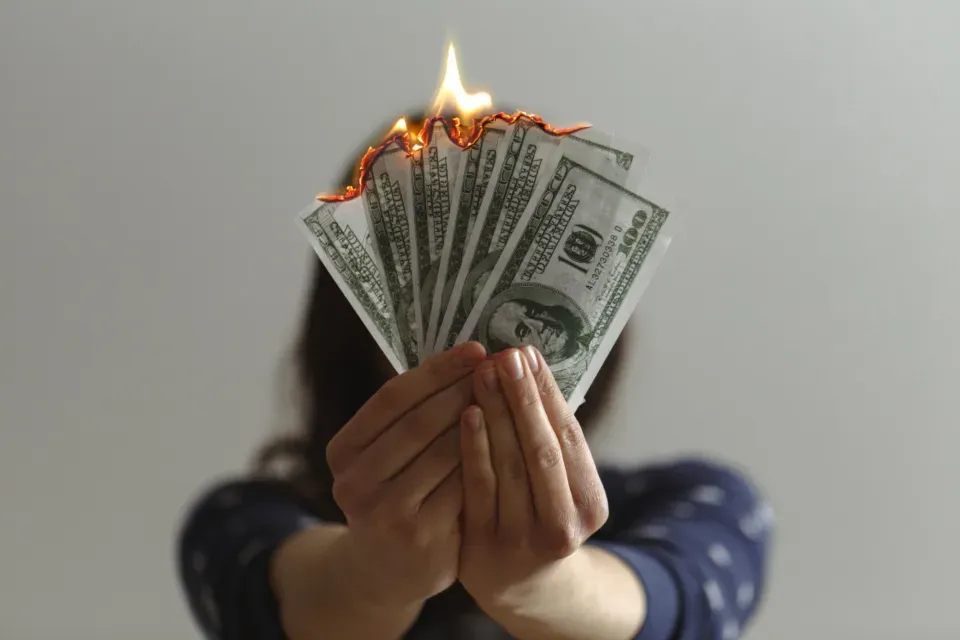
You bought a concert ticket weeks ago for fifty dollars. The day arrives, and you’re feeling sick with a headache. Do you stay home and rest, or drag yourself to the concert because you already paid for it? You’re likely to continue an endeavor if you’ve already invested in it, whether it’s a monetary investment or the effort you put into the decision, often going against evidence that shows it’s no longer the best decision.
The sunk cost fallacy is the tendency for you to continue an endeavor or course of action even when abandoning it would be more beneficial, because you feel that your invested time, energy, or other resources would all have been for nothing if you quit.
Let’s be honest, this shows up everywhere in your life. You might continue studying something that doesn’t interest you simply because you already paid high tuition fees, stay in an unhappy relationship because of all the years spent together, or think you can’t change your dissertation topic because you’ve invested so much time into it. Loss aversion plays a major role here, because losses tend to feel much worse than gains, making you more likely to try to avoid losses than seek out gains.
Framing Effect: How Presentation Changes Everything

Would you buy meat labeled as seventy five percent lean or twenty five percent fat? Most people prefer the first option, even though they’re exactly the same thing. The framing effect is a cognitive bias where your decisions change depending on how options or statements are framed, even when they are logically identical.
You’re generally biased toward picking an option you view as a gain over one you view as a loss, even if both options lead to the same result, and you’re also more likely to make a riskier decision when the option is presented as a gain as opposed to a loss. Marketing professionals exploit this constantly.
Think about a product advertised as “ninety five percent effective” versus “a five percent risk of failure.” When both choices are framed positively as gains, the majority of people prefer a certain gain over a probable gain, while when both choices are framed negatively as losses, you tend to choose an uncertain loss over an inevitable loss. The wording matters more than the actual numbers. The framing effect has consistently been shown to be one of the largest biases in decision making, which means you’re probably falling for it more often than you realize.
Loss Aversion: Why Losing Hurts More Than Winning Feels Good

Imagine someone offers you a bet: flip a coin, and if it’s heads you win fifty dollars, but if it’s tails you lose fifty dollars. Would you take it? Most people wouldn’t, even though it’s mathematically a fair bet. Loss aversion is encapsulated in the expression losses loom larger than gains, and it’s thought that the pain of losing is psychologically about twice as powerful as the pleasure of gaining.
This isn’t just about money. The presence of negative information represented by loss, rather than positive information represented by gain, is seen as a threat to your survival, so more attention is devoted to the loss than to the gain so that it can be avoided. Your brain evolved this way as a survival mechanism.
Loss aversion shows up when the perceived disutility of giving up an object is greater than the utility associated with acquiring it. This explains why you might hold onto a losing stock investment longer than you should, hoping it will recover, or why you’re reluctant to get rid of clothes you never wear. Loss aversion has been used to explain the endowment effect and sunk cost fallacy, and it may also play a role in the status quo bias. Everything connects back to your deep seated fear of losing what you have.
Overconfidence Bias: When You Don’t Know What You Don’t Know

The Dunning Kruger effect is a cognitive bias that describes the systematic tendency of people with low ability in a specific area to give overly positive assessments of this ability. Put simply, the less you know about something, the more confident you might feel about your understanding of it.
In a famous study, psychologists tested participants on their logic, grammar, and sense of humor, and found that those who performed in the bottom quartile rated their skills far above average, with those in the twelfth percentile self rating their expertise to be in the sixty second percentile, attributed to a problem of metacognition where those with limited knowledge suffer a dual burden of reaching mistaken conclusions and their incompetence robs them of the ability to realize it.
Here’s the thing: this bias doesn’t just affect incompetent people. The effect has been found in domains ranging from logical reasoning to emotional intelligence and financial knowledge, and most people have weak points where the bias can take hold, with individuals rating as high as the eightieth percentile for a skill still overestimating their ability to some degree, possibly because gaining a small amount of knowledge in an area about which you were previously ignorant can make you feel like you’re suddenly a virtual expert.
The opposite happens too. Highly skilled people sometimes underestimate their abilities because they assume tasks that are easy for them must be easy for everyone else. It’s a cognitive trap that affects everyone, regardless of intelligence or education level.
Conclusion

Your brain is an incredible machine, processing thousands of decisions daily while conserving precious mental energy. These cognitive biases aren’t flaws exactly; they’re features that evolved to help you survive in a complex world. In natural and primordial situations, these mental shortcuts may lead to quick, practical, and satisfying decisions, but they may be poor and risky in a broad range of modern, complex, and long term challenges.
The good news? Awareness is the first step toward better decision making. Simple awareness and self reflection, making the effort to examine your own work and pinpoint instances in which psychological processes may have undermined the true meaning behind information, can help minimize bias. You can’t eliminate these biases entirely, because they’re wired into how you think. You can, though, learn to recognize when they might be influencing you and take a moment to step back and question your initial reactions.
You can honestly and routinely question your knowledge base and the conclusions you draw rather than blindly accepting them, be your own devil’s advocate by challenging yourself to probe how you might possibly be wrong, or seek others whose expertise can help cover your own blind spots by turning to a colleague or friend for advice or constructive criticism.
The next time you’re making an important decision, pause for a moment. Ask yourself which of these biases might be at play. Are you anchoring to the first piece of information you heard? Are you only seeking evidence that confirms what you already believe? Is your fear of loss outweighing a realistic assessment of potential gain? These questions might feel uncomfortable, yet they could save you from choices you’ll regret later. What biases do you think have influenced your biggest decisions?