
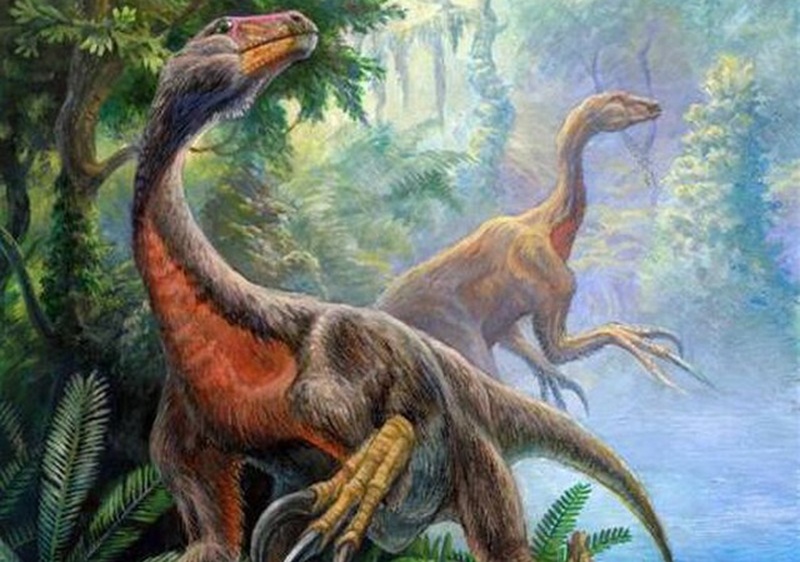
When we picture dinosaurs, many of us still envision the scaly, reptilian creatures popularized by films like Jurassic Park. However, paleontological discoveries over the past few decades have dramatically transformed our understanding of these ancient animals. One of the most revolutionary findings has been the widespread presence of feathers among dinosaurs, particularly theropods (the group that includes Tyrannosaurus rex and eventually gave rise to modern birds). Far from being rare, feathers appear to have been common across numerous dinosaur species, challenging our traditional perception of these fascinating creatures. Let’s explore twelve dinosaurs that sported feathers—some of which might surprise you!
Yutyrannus Huali: The Feathered Tyrant
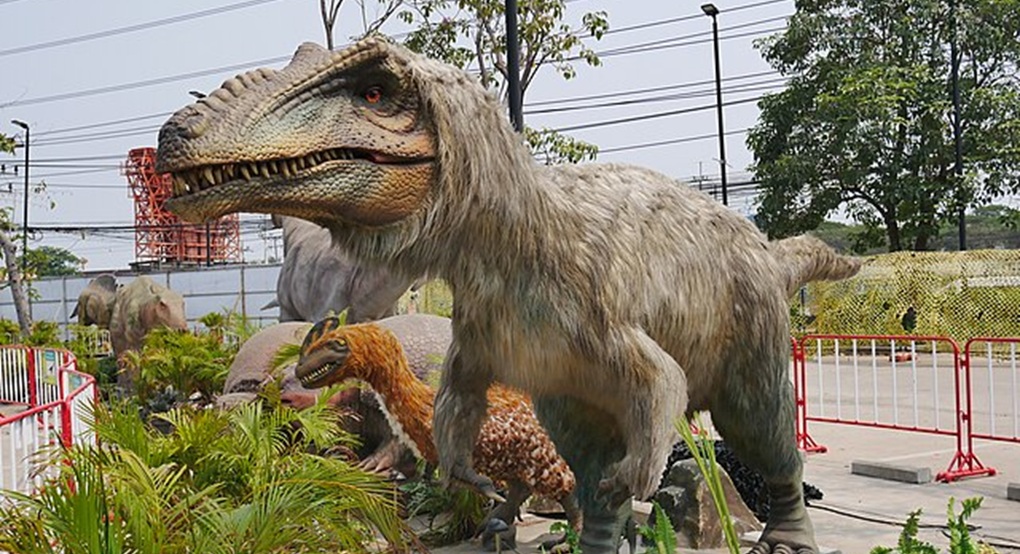
Discovered in China and described in 2012, Yutyrannus huali stands as one of the most impressive feathered dinosaurs ever found. At approximately 30 feet long and weighing over 1.5 tons, this predator shattered the notion that only small dinosaurs possessed feathers. Its name aptly translates to “beautiful feathered tyrant,” and paleontologists have found extensive evidence of primitive feathers covering much of its body.
These feathers likely served as insulation rather than for flight, helping this massive predator regulate its body temperature in the relatively cool climate of Early Cretaceous China. Yutyrannus is particularly significant because it’s closely related to Tyrannosaurus rex, suggesting that even the most iconic dinosaur predators might have sported some form of feathery covering.
Velociraptor: Not As Seen in the Movies
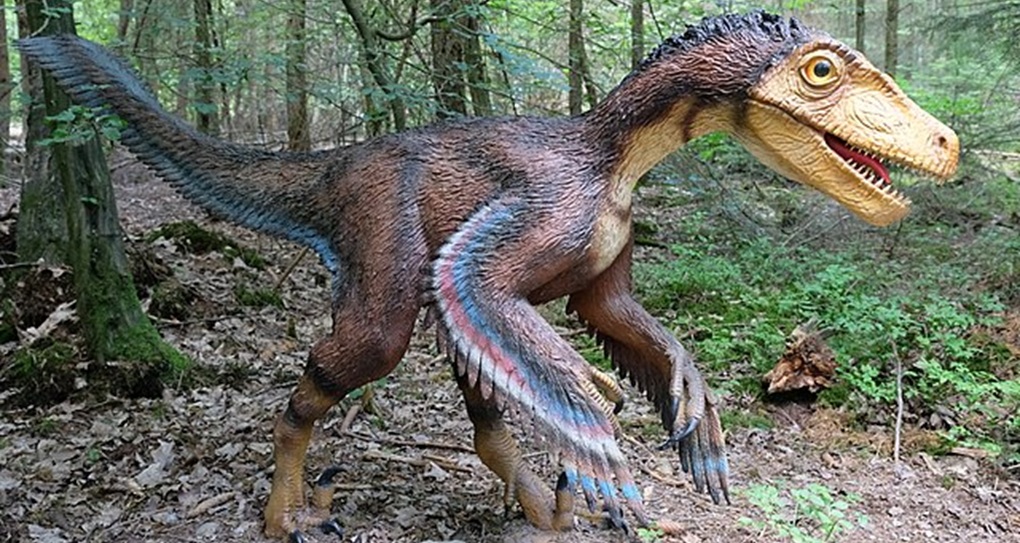
Despite its portrayal in popular culture as a scaly, reptilian hunter, Velociraptor was actually covered in feathers. In 2007, paleontologists discovered quill knobs on a Velociraptor forearm fossil—these are the same structures that anchor wing feathers in modern birds. Far from the human-sized movie monsters, real Velociraptors were about the size of large turkeys, standing roughly 1.6 feet tall at the hip and measuring around 6.8 feet long.
Their bodies were likely covered in feathers, with particularly well-developed plumage on their arms that may have resembled primitive wings. While they couldn’t fly, these feathers might have served multiple purposes, including insulation, display during mating rituals, and possibly even providing additional stability when running or pouncing on prey.
Sinosauropteryx: The First Feathered Dinosaur Discovery
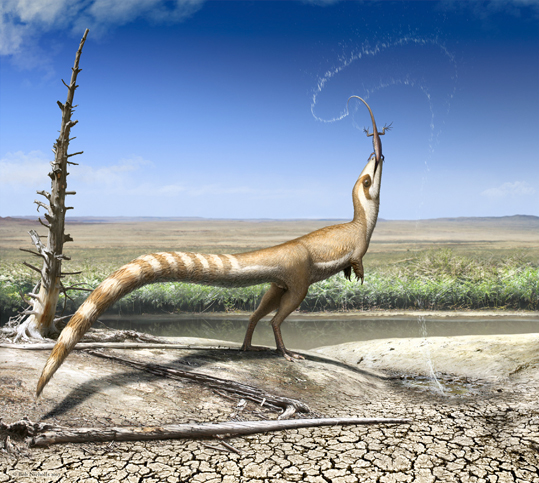
Sinosauropteryx holds a special place in paleontological history as the first non-avian dinosaur discovered with clear evidence of feathers, dramatically changing our understanding of dinosaur appearance. Unearthed in China’s Liaoning Province in 1996, this small predator (about the size of a turkey) lived approximately 125 million years ago during the Early Cretaceous period.
The remarkable preservation of its fossils revealed a covering of simple, hair-like feathers called proto-feathers that formed a fuzzy coat along its back, tail, and likely its entire body. Even more remarkably, advanced analysis techniques have revealed that Sinosauropteryx had a russet-colored back and a banded tail, making it one of the few dinosaurs for which we have reliable color information. This groundbreaking discovery sparked what paleontologists now call the “Feather Revolution” in dinosaur science.
Microraptor: The Four-Winged Wonder

Perhaps one of the most unusual feathered dinosaurs ever discovered, Microraptor possessed a feature that no modern bird can claim—four wings. This crow-sized dinosaur, which lived about 120 million years ago in the forests of what is now China, had long flight feathers not only on its arms but also on its legs, creating a bizarre four-winged configuration. The feathers were asymmetrical and had the same structure as the flight feathers of modern birds, suggesting Microraptor was capable of some form of aerial locomotion.
Most paleontologists believe it used these four wings to glide between trees in dense forests, possibly even capable of limited powered flight. Remarkably, scientists have even been able to determine that Microraptor’s feathers were iridescent black, similar to the sheen seen in modern crows and ravens, giving us a vivid picture of this ancient glider.
Anchiornis: Detailed Feather Coloration
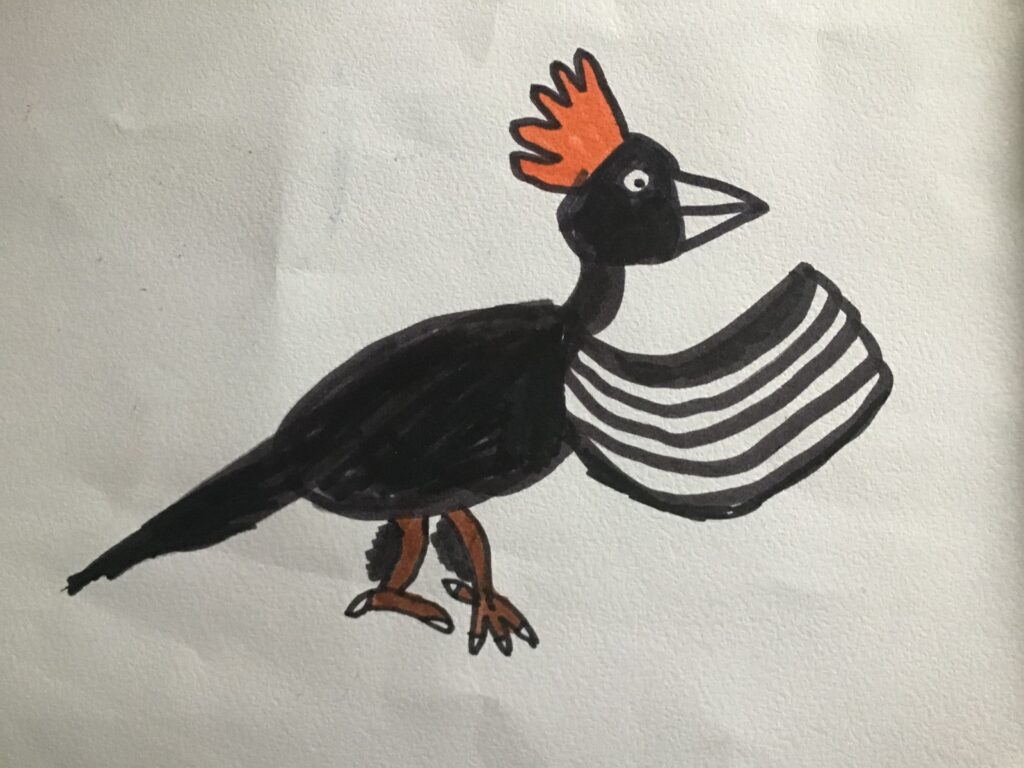
Anchiornis huxleyi has provided paleontologists with one of the most complete pictures of dinosaur coloration ever discovered. This crow-sized dinosaur lived approximately 160 million years ago during the Late Jurassic period, predating Archaeopteryx, often considered the first bird. Extraordinarily well-preserved fossils from China’s Tiaojishan Formation have revealed not just the presence of feathers but their precise coloration and pattern.
Through analysis of fossilized melanosomes (pigment-containing structures), scientists determined that Anchiornis had a mainly gray body with white feathers on its wings and legs, tipped with black spangles, and a rusty red crown on its head. Its detailed and complex feather pattern disproves the notion that early feathered dinosaurs had simple coverings and shows that elaborate plumage evolved long before true birds appeared. This small dinosaur effectively gives us a “dinosaur in living color,” allowing for accurate reconstructions unlike almost any other prehistoric creature.
Caudipteryx: The Peacock-Like Dinosaur
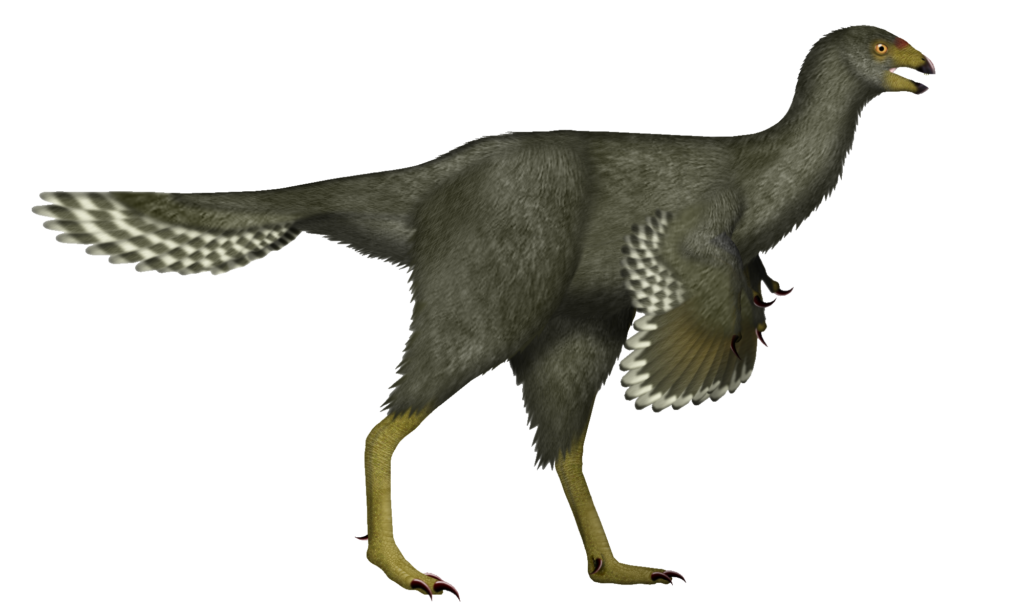
Caudipteryx represents one of the most bird-like of all non-avian dinosaurs, with fossil evidence revealing a creature that would have looked remarkably avian to modern eyes. Living around 125 million years ago in what is now China, this ostrich-sized omnivore possessed well-developed feathers on its arms and, most distinctively, a fan-shaped arrangement of long feathers on its tail. This tail fan bears a striking resemblance to the ornamental displays of modern peacocks, suggesting it served a similar function in courtship displays and mate attraction rather than flight.
Caudipteryx moved primarily on two legs and could run quickly, with its short, feathered arms unsuitable for flying. Multiple specimens have been found with preserved stomach contents, revealing it dined on seeds, stones (likely used as gastroliths to grind food), and possibly small animals, giving us a remarkably complete picture of this feathered dinosaur’s life and appearance.
Beipiaosaurus: The Shaggy Vegetarian
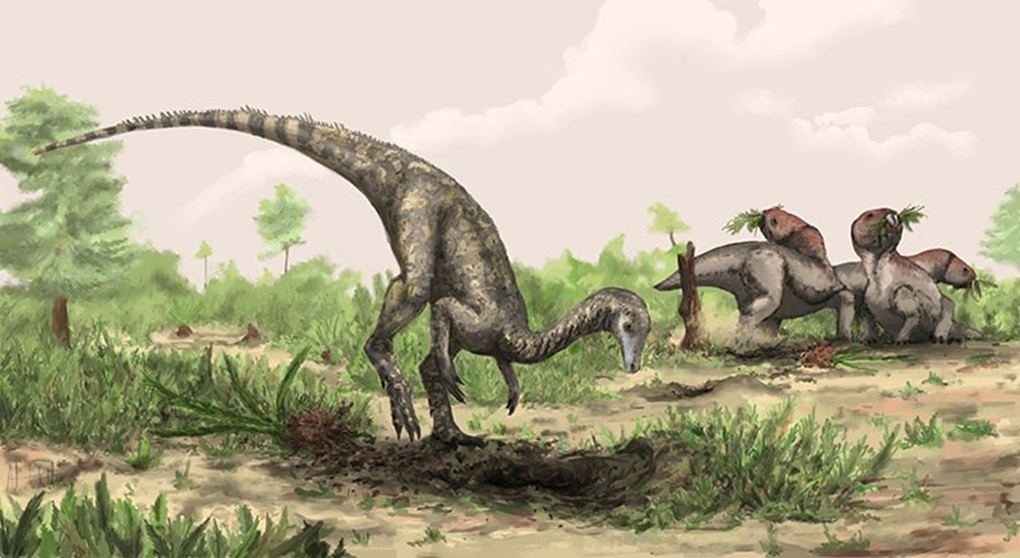
Beipiaosaurus represents one of the most unusual combinations of features among feathered dinosaurs, belonging to the therizinosaur group—bizarre theropods that evolved to become plant-eaters. Discovered in the Yixian Formation of China and dating to about 125 million years ago, this dinosaur stood approximately 7 feet tall and had an almost comical appearance by modern standards. Its body was covered in primitive, simple feathers that resembled shaggy hair more than the complex feathers of birds, giving it a distinctly unkempt appearance.
Most notably, Beipiaosaurus possessed extraordinarily long feathers on its arms and shoulders that paleontologists call “streamers” or “EBFFs” (elongated broad filamentous feathers), unlike anything seen in modern birds. Combined with its pot-bellied body, small head, downturned beak for cropping vegetation, and massive claws up to 8 inches long on its hands, Beipiaosaurus demonstrates just how diverse feathered dinosaurs could be, far beyond the bird-like forms most commonly depicted.
Dilong: The Feathered Tyrannosaur Ancestor
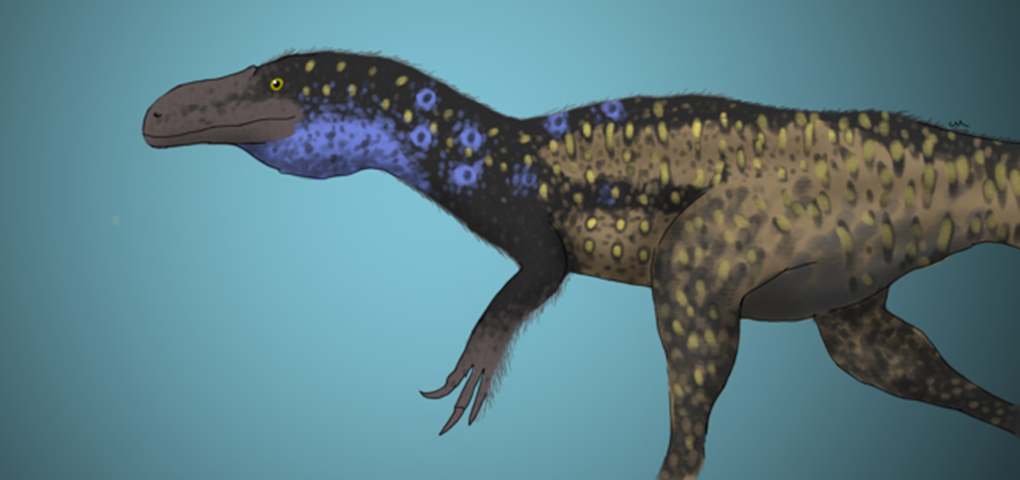
Dilong paradoxus represents a crucial evolutionary link in understanding how the mighty Tyrannosaurus rex might have evolved from smaller, feathered ancestors. Discovered in the Yixian Formation of China and dating to about 126 million years ago, this early tyrannosaur was relatively small, measuring only about 5-6 feet in length and weighing approximately 15 pounds.
Unlike its famous descendant, Dilong was covered in simple, filamentous feathers that would have given it a fuzzy appearance, providing insulation and possibly serving display functions. The name “Dilong” means “emperor dragon” in Chinese, reflecting its position as an early member of the lineage that would eventually produce the “tyrant lizard king.” What makes Dilong particularly significant is that it demonstrates feathers were present at the base of the tyrannosaur family tree, strongly suggesting that even T. rex itself may have retained some feathery covering, at least during some part of its life cycle.
Zhenyuanlong: The “Fluffy Poodle From Hell”

Zhenyuanlong suni represents one of the most visually striking feathered dinosaurs ever discovered, with remarkably preserved plumage that has led some paleontologists to informally describe it as a “fluffy poodle from hell.” Unearthed in China’s Liaoning Province and dating to about 125 million years ago, this dromaeosaurid dinosaur measured approximately 5 feet long and was covered in complex feathers remarkably similar to those of modern birds.
Most impressively, Zhenyuanlong possessed large, vaned feathers on its arms, effectively forming proper wings despite the animal being far too large to fly. Its tail was also adorned with feathers, and it likely had plumage covering much of its body. The presence of these advanced, flight-like feathers on a non-flying dinosaur has prompted scientists to reconsider the original purpose of feathers, suggesting they may have evolved first for display, insulation, or brooding behavior long before being co-opted for flight. Zhenyuanlong’s discovery in 2015 provided one of the most complete pictures of a feathered dinosaur’s appearance, offering a glimpse of just how bird-like some dinosaurs truly were.
Ornithomimus: Feathered “Ostrich Mimic”

Ornithomimus, whose name literally means “bird mimic,” has proven to be even more bird-like than paleontologists initially suspected when fossils with preserved feathers were discovered in Canada’s Dinosaur Provincial Park. This ostrich-like dinosaur, which lived approximately 75 million years ago during the Late Cretaceous, grew up to 12 feet long and ran on powerful hind legs while possessing long arms with hands that couldn’t grasp effectively. The 2012 discovery of feathered specimens revealed that adult Ornithomimus had wing-like structures with long feathers on their arms, while the rest of their bodies were covered in more filamentous, down-like feathers.
Interestingly, juvenile specimens lacked the wing feathers, suggesting these structures developed as the animals reached sexual maturity and likely served display functions rather than any aerodynamic purpose. This discovery was particularly significant because it extended the known range of feathered dinosaurs into North America and into a completely different dinosaur family than most previous feathered dinosaur finds.
Sinornithosaurus: The Possibly Venomous Feathered Predator

Sinornithosaurus represents one of the most intriguing feathered dinosaurs, not just for its plumage but for controversial suggestions it might have been venomous. Discovered in China’s Liaoning Province and dating to about 125 million years ago, this dromaeosaurid dinosaur was roughly the size of a turkey and covered in feathers with particularly well-developed plumage on its arms and tail.
Its name means “Chinese bird-lizard,” reflecting its position close to the evolutionary split between dinosaurs and birds. In 2009, a study suggested that Sinornithosaurus possessed specialized grooved teeth and possible venom glands similar to those in modern venomous snakes, potentially making it the first identified venomous dinosaur.
While this interpretation remains controversial among paleontologists, with many arguing the features were the result of fossil distortion or misinterpretation, the possibility has made Sinornithosaurus one of the most discussed feathered dinosaurs. Its extensive feather covering, regardless of the venom debate, confirms it would have looked remarkably bird-like in life, with a coat of complex feathers covering most of its body.
Yi Qi: The Dinosaur With Bat-Like Wings
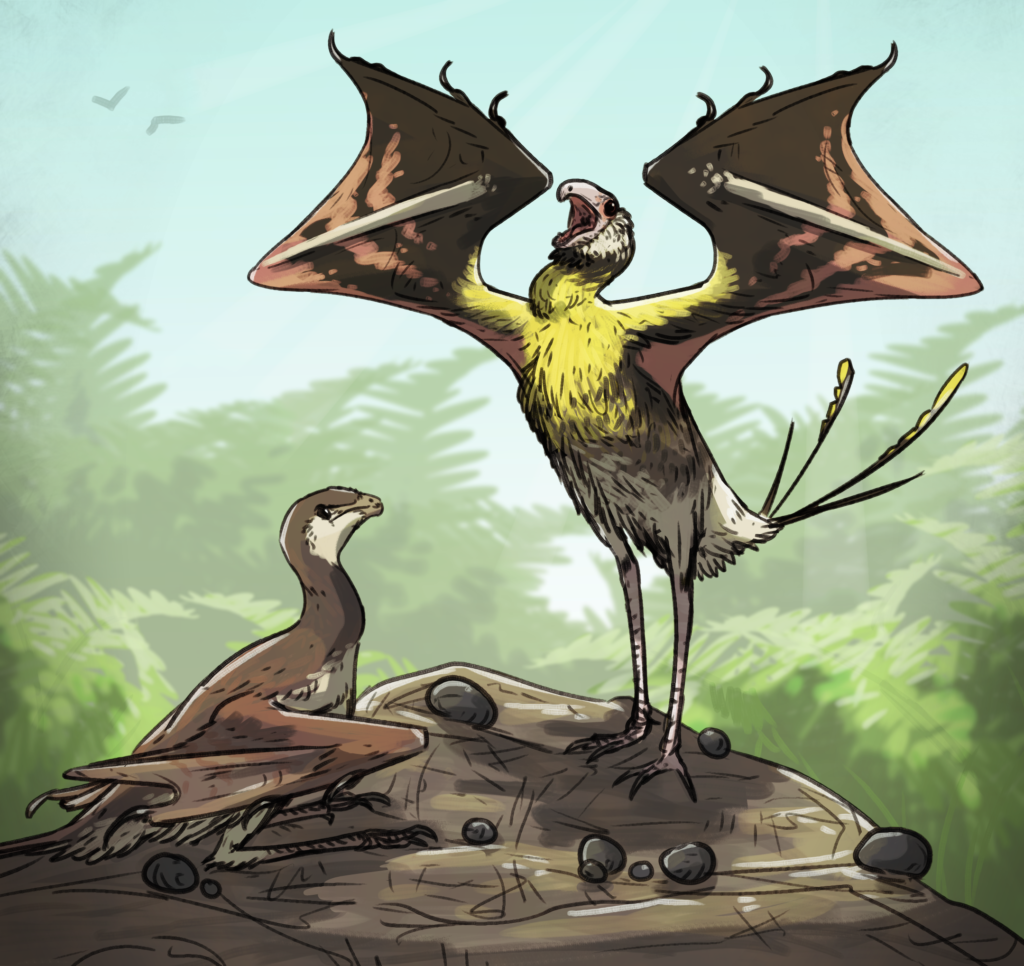
Perhaps the strangest feathered dinosaur yet discovered, Yi qi (pronounced “ee chee”) revealed an evolutionary experiment that no one had predicted. Discovered in China and dating to about 160 million years ago, this small dinosaur, about the size of a pigeon, belonged to the scansoriopterygid family—small, likely tree-dwelling dinosaurs close to the origin of birds.
While Yi qi had feathers covering its body like other dinosaurs in its family, it possessed an absolutely unique feature: a rod-like bone extending from each wrist that appears to have supported a membrane forming a bat-like or pterosaur-like wing structure. This is completely different from the feather-based wings of birds and other dinosaurs. Its name means “strange wing” in Mandarin, perfectly capturing its bizarre anatomy.
The discovery of Yi qi in 2015 demonstrated that dinosaurs experimented with different flight structures beyond feathered wings, exploring evolutionary pathways that ultimately did not survive. This remarkable fossil shows that dinosaur evolution included even more varied and experimental forms than previously imagined, with some developing solutions to aerial locomotion that resembled bats more than birds.
Conclusion

The discovery of feathered dinosaurs has revolutionized our understanding of these ancient creatures and their evolutionary relationship to modern birds. From the massive Yutyrannus to the bizarre wing membranes of Yi qi, these twelve examples demonstrate the incredible diversity of feathered dinosaur forms that existed millions of years before modern birds took to the skies.
What’s particularly striking is how widespread feathers were among theropod dinosaurs, suggesting that the scaly dinosaurs of popular culture represent the exception rather than the rule. As new fossil discoveries continue to emerge, particularly from the exceptionally preserved specimens of China’s Liaoning Province, our picture of dinosaur appearance continues to evolve—becoming increasingly colorful, feathery, and bird-like. Far from diminishing these impressive animals, the presence of feathers adds a new dimension to our appreciation of dinosaurs as complex, dynamic creatures whose legacy continues in every bird that flies overhead today.