

You like to think you’re rational. You weigh the facts, consider your options, and make smart choices. That’s what we all believe, right? Here’s the thing though. Your brain is constantly working behind the scenes, taking shortcuts and applying mental filters you never consciously approved.
These invisible forces are called cognitive biases, and they’re running the show far more often than you’d care to admit. The fascinating part is that these biases exist for good reason. Your brain processes millions of bits of information every day, and to cope with that overwhelming flood, it developed shortcuts. Some work brilliantly. Others lead you astray without you even realizing it.
So what exactly are these hidden puppeteers pulling your strings? Let’s dive in.
1. Confirmation Bias: Seeing Only What You Want to See
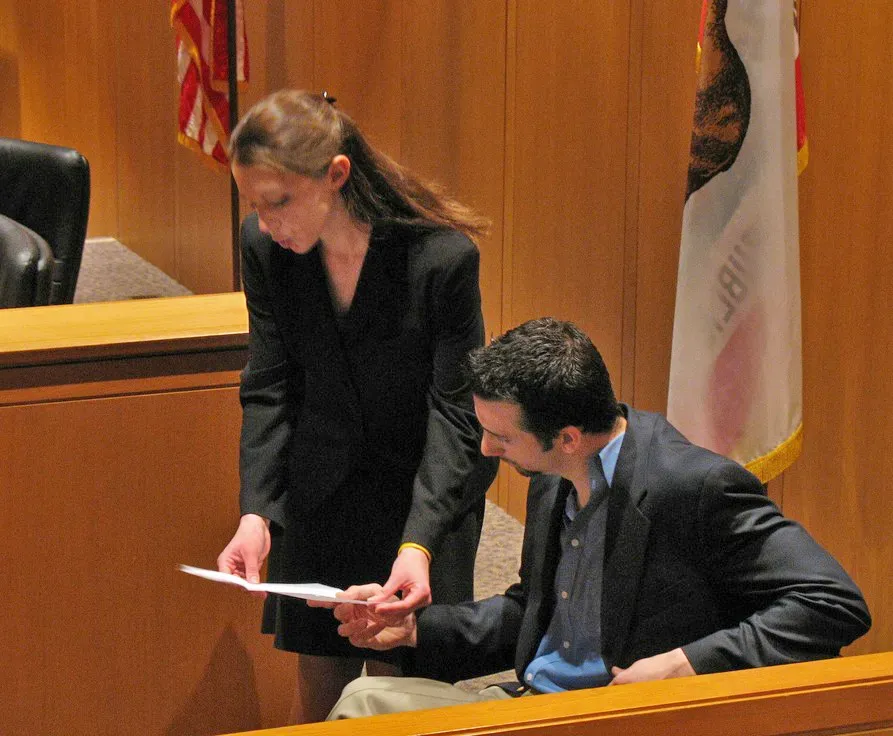
You’ve probably experienced this one more times than you can count. Confirmation bias is the tendency to search for, interpret, focus on and remember information in a way that confirms one’s preconceptions. Basically, you cherry-pick evidence that supports what you already believe and conveniently ignore anything that contradicts it.
Think about the last time you had a strong opinion about something. Maybe it was a political issue or a product you were considering buying. Did you actively seek out opposing viewpoints, or did you find yourself clicking on articles and videos that already aligned with your thinking?
Confirmation bias drives individuals to seek out and favor information that supports their existing beliefs, often disregarding contradictory evidence. It’s comfortable to have your worldview validated, but this mental trap can keep you stuck in echo chambers where growth becomes nearly impossible.
2. Anchoring Bias: The First Number That Sticks

Anchoring bias describes people’s tendency to rely too heavily on the first piece of information they receive on a topic. Once that initial anchor drops into your mind, everything else gets measured against it. The scary part? That first piece of information doesn’t even need to be accurate or relevant.
Retailers understand this perfectly. When you see a jacket marked down from two hundred dollars to one hundred, you feel like you’re getting a deal. The original price becomes your anchor, even if that jacket was never truly worth two hundred dollars to begin with.
Once the anchor is set, subsequent judgments are made by adjusting away from that anchor, while staying within the range set by it. This is why negotiators always try to throw out the first number. They’re setting the frame for everything that follows.
3. Availability Heuristic: What Comes to Mind First

Here’s a question for you: What’s more dangerous, flying in an airplane or driving a car? Most people would say flying feels scarier, even though statistically, driving is far more deadly. Why? The availability heuristic is the tendency to overestimate the likelihood of events with greater availability in memory, which can be influenced by how recent the memories are or how unusual or emotionally charged they may be.
Plane crashes make headlines. Car accidents, unless they’re particularly dramatic, barely register in the news cycle. Your brain uses ease of recall as a proxy for frequency, which can seriously distort your perception of risk.
The availability heuristic leads people to overestimate the likelihood of events based on how readily examples come to mind. Recent, vivid, or emotional memories dominate your thinking, crowding out more accurate statistical realities. It’s hard to say for sure, but this might be one of the sneakiest biases we face daily.
4. Sunk Cost Fallacy: Throwing Good Money After Bad

You’ve invested three years into a relationship that clearly isn’t working. Or maybe you’ve poured thousands into a failing business venture. Walking away feels impossible because you’ve already invested so much. The sunk cost fallacy is a prominent cognitive bias, valuing an option more highly because of the resources already invested in it, instead of just considering expected future returns. In other words, people often stick with their poor decisions if they have already invested time, effort, or money in these decisions, even if the rational, that is, return-maximizing, behavior would be to abandon the investment and seek new opportunities.
Let’s be real: the past is gone. You can’t get back the time, money, or effort you’ve already spent. Yet your brain tricks you into continuing down a losing path simply because you’ve already committed resources to it.
The sunk cost fallacy is our tendency to continue with an endeavor we’ve invested money, effort, or time into – even if the current costs outweigh the benefits. Honestly, recognizing this bias is painful but necessary. The only question that matters is whether continuing forward makes sense now, not what you’ve already sacrificed.
5. Dunning-Kruger Effect: The Incompetence You Can’t See

Dunning-Kruger effect, the tendency for unskilled individuals to overestimate their own ability and the tendency for experts to underestimate their own ability. It sounds almost comical, right? The less you know about something, the more confident you are. Meanwhile, true experts are plagued by doubt and second-guessing.
I’ve seen this play out countless times. Someone takes a weekend course and suddenly considers themselves an authority, while seasoned professionals hesitate to make definitive statements because they understand the complexity involved.
This phenomenon shows that those who lack competence in a task tend to overestimate their skills. The problem is that incompetence prevents you from recognizing your own incompetence. You don’t know what you don’t know, and that gap in awareness creates a dangerous illusion of mastery.
6. Negativity Bias: Why Bad Feels Stronger Than Good

Negativity bias or Negativity effect: The phenomenon of having better recall of unpleasant memories than of pleasant ones. Think about the last time someone complimented your work and then offered one small criticism. Which comment stuck with you longer?
Your brain is wired to pay more attention to negative information than positive. From an evolutionary standpoint, this made sense. Remembering where danger lurked was more important for survival than recalling pleasant meadows.
Negativity bias is the notion that negative things have a greater impact on one’s psychological state and processes than neutral or positive things. For example, you might put more weight on the one time your partner forgot your anniversary than all the times they remembered. It’s exhausting, honestly, how much mental real estate we give to negative experiences. One harsh word can erase ten compliments in your mind.
7. Optimism Bias: It Won’t Happen to Me

On the flip side of negativity bias sits its sunny cousin. Optimism bias: The tendency to be over-optimistic, underestimating greatly the probability of undesirable outcomes and overestimating favorable and pleasing outcomes. You genuinely believe you’re less likely than others to experience divorce, illness, or financial hardship.
This bias serves a purpose. If you truly understood how much could go wrong in life, you might never get out of bed. Optimism keeps you moving forward, taking risks, and pursuing goals.
For example, we might believe that we’re less likely to get cancer, get in a car accident, or get divorced, even when these risks are widespread. Still, this rosy outlook can leave you dangerously unprepared. You skip insurance, ignore warning signs, or fail to plan for contingencies because deep down, you believe bad things happen to other people, not you.
8. Halo Effect: When One Good Trait Colors Everything

The halo effect occurs when our overall positive impression of a person, product, or brand is based on a single characteristic. Someone is attractive, so you assume they’re also intelligent and kind. A company has sleek marketing, so you believe their product must be superior.
This mental shortcut saves time but creates blind spots. You stop evaluating individual qualities and instead paint everything with the same broad brush based on one standout feature.
While the halo effect refers to positive evaluations, a similar spillover effect occurs when a negative first impression warps our perception. The horn effect is the tendency for a negative impression made in one context to influence our judgment in another. Either way, you’re making assumptions that haven’t been properly tested, which can lead to poor decisions in hiring, relationships, and purchases.
9. Bandwagon Effect: Following the Herd

Bandwagon effect, the tendency to do (or believe) things because many other people do (or believe) the same. Humans are social creatures, and there’s immense psychological comfort in doing what everyone else is doing. Safety in numbers, right?
This bias shows up everywhere. You buy a product because it has thousands of five-star reviews. You adopt opinions because they’re popular in your social circle. You vote a certain way because momentum seems to be building.
Also known as herd behavior, the bandwagon effect is a psychological phenomenon in which people do something primarily because others are doing it, regardless of their own beliefs. This can often be observed in voting where individuals vote according to a perceived majority, fashion trends, and product popularity. For example, you might buy a product because all your friends are talking about it, not necessarily because you need it. I know it sounds crazy, but independent thinking is surprisingly rare. Most people, most of the time, are just following the crowd.
10. Recency Bias: The Power of What Just Happened

Recency bias is the tendency to overemphasize the importance of recent experiences or the latest information we possess when estimating future events. Your memory isn’t a perfect recording device. It’s more like a highlight reel, and recent events get the best lighting and camera angles.
This shows up dramatically in performance reviews. A manager might judge an employee’s entire year based on what happened in the last month, completely overlooking earlier achievements or struggles.
Recency bias occurs due to how our memory works: we are better at recalling items that are stored in our short-term memory, which can only hold a small amount of information at a time. Short-term memory stores the most recent information we’ve encountered, allowing us to access it easily during recall. The problem is that recent doesn’t necessarily mean important or representative, but your brain hasn’t quite figured that out yet.
11. Framing Effect: How You Say It Matters
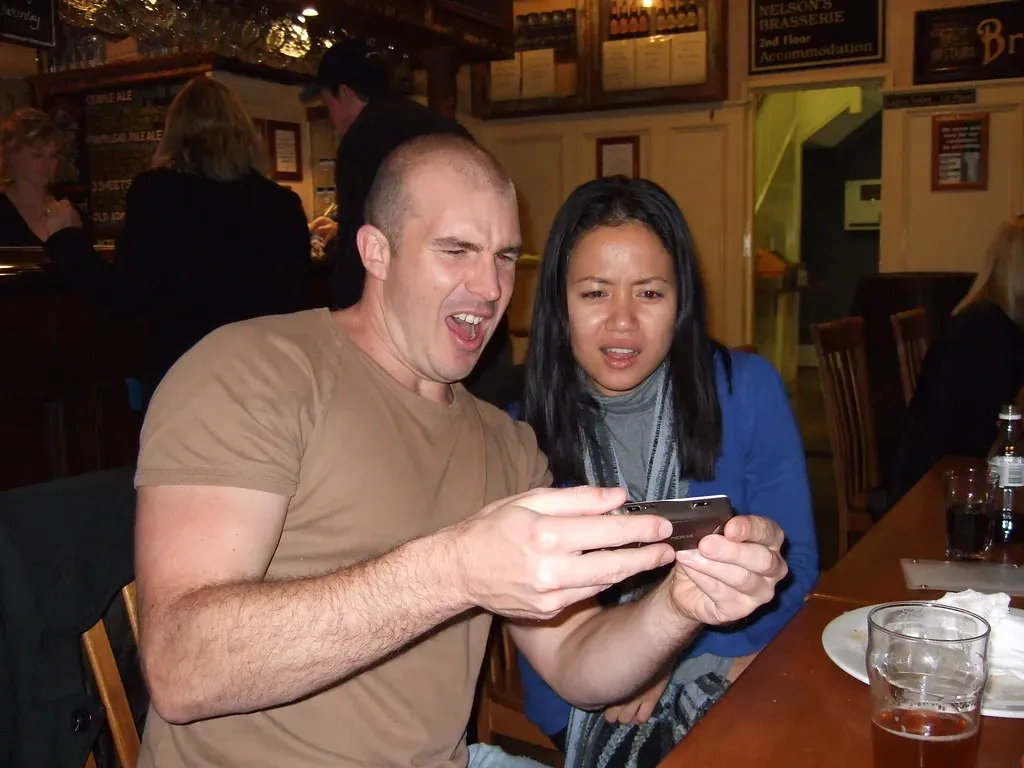
The framing effect occurs when people react differently to something depending on whether it is presented as positive or negative. The exact same information can lead to completely opposite decisions based purely on how it’s packaged.
Consider this: would you choose a medical treatment with a ninety percent survival rate or one with a ten percent mortality rate? Mathematically, they’re identical. Psychologically, they feel worlds apart.
Framing refers to whether an option is presented as a loss (negative) or a gain (positive). People are generally biased toward picking an option they view as a gain over one they view as a loss, even if both options lead to the same result. Marketers, politicians, and negotiators exploit this bias constantly. The information hasn’t changed, but the way it’s presented reshapes your entire perception.
12. Fundamental Attribution Error: Blaming Character Over Circumstance
In social psychology, the fundamental attribution error is a cognitive attribution bias in which observers underemphasize situational and environmental factors for the behavior of an actor while overemphasizing dispositional or personality factors. When someone cuts you off in traffic, you immediately assume they’re a selfish jerk, never considering that maybe they’re rushing to the hospital.
Yet when you make that same mistake, you’re quick to explain the circumstances. You were late for an important meeting. You didn’t see the other car. The rules are different when we judge ourselves versus others.
Observers tend to overattribute the behaviors of others to their personality and underattribute them to the situation or context. This bias damages relationships and fuels misunderstandings. We give ourselves grace and context but deny the same courtesy to others, creating a double standard we rarely acknowledge.
Understanding Your Mind’s Hidden Architecture
These twelve biases are just the tip of the iceberg. Cognitive biases can be generally described as systematic, universally occurring, tendencies, inclinations, or dispositions in human decision making that may make it vulnerable for inaccurate, suboptimal, or wrong outcomes. The real kicker is that simply knowing about these biases doesn’t make you immune to them.
Awareness helps, certainly. When you catch yourself relying too heavily on first impressions or following the crowd without questioning why, you can pause and reconsider. You can seek out contradictory information, question your assumptions, and make more deliberate choices.
Still, these mental shortcuts are deeply embedded in how your brain functions. They evolved over millennia and served important purposes. The goal isn’t to eliminate them entirely, which would be impossible anyway. The goal is to recognize when they’re helping you make quick, efficient decisions and when they’re leading you astray. What surprised you most about your own thinking patterns? Tell us in the comments.