Have you ever felt your stomach drop when facing a situation where you had no idea what was coming next? Maybe it was waiting for test results, starting a new job, or simply thinking about what next year might look like. That knot of anxiety, that overwhelming urge to control the uncontrollable, is your brain doing what it thinks is best. Humans are wired to seek patterns, predict outcomes, and find safety in what we know. When that certainty vanishes, something primal kicks in.
The interesting thing is, we all experience uncertainty differently. Some people barely flinch at life’s curveballs, while others spiral into worry at the mere thought of ambiguity. This isn’t about being strong or weak. It’s about how your brain interprets the absence of information and what that means for your survival, at least from an evolutionary standpoint. What if I told you that your fear of the unknown isn’t just a personality quirk but a deeply rooted survival mechanism? Let’s dive in.
The Evolutionary Roots of Our Fear

From an evolutionary standpoint, fear exists to ensure the continued survival of a species. Think about it: your ancestors who were quick to fear uncertain situations, like strange noises in the dark or unfamiliar territories, were far more likely to survive than those who wandered fearlessly into danger. Early humans that were quick to fear dangerous situations were more likely to survive and reproduce; preparedness is theorized to be a genetic effect that is the result of natural selection.
Over millions of years fear has kept our ancestors alive, and fear has evidently been a key trait of the survivors. This hardwired response helped them avoid predators, navigate hostile environments, and make split-second decisions when information was scarce. Uncertainty was dangerous because it meant you couldn’t prepare adequately. Not knowing whether that rustling in the bushes was wind or a predator could literally mean the difference between life and death. So your brain learned to treat uncertainty as a threat, triggering fear to keep you alert and ready to flee or fight.
Your Brain on Uncertainty

Neuroscientists at MIT’s McGovern Institute for Brain Research have homed in on key brain circuits that help guide decision-making under conditions of uncertainty, finding neurons that stop the brain from using unreliable information. Essentially, your brain has specialized circuits dedicated to managing the unknown. When you face ambiguous information, specific regions like the mediodorsal thalamus spring into action, helping the prefrontal cortex process conflicting signals.
Here’s the thing: A study from University College London found that uncertainty triggers more stress than physical pain, with participants feeling greater anxiety when they might receive an electric shock than when they knew they would. Your brain would rather know something bad is coming than sit with the discomfort of not knowing. This heightened stress response isn’t irrational; it’s your neural wiring trying to protect you by staying hypervigilant. The amygdala, your brain’s fear center, becomes more active when uncertainty enters the picture, scanning for potential threats even when none exist.
Intolerance of Uncertainty and Anxiety

Fear of the unknown is one of the most common sources of stress and anxiety, as human beings crave control and predictability, and when life becomes unpredictable, many people feel unsettled, anxious, or even paralyzed by fear. Some individuals are significantly more sensitive to uncertainty than others. Psychologists call this “intolerance of uncertainty,” and it plays a massive role in anxiety disorders.
Intolerance of uncertainty is a characteristic predominantly associated with generalized anxiety disorder; however, emerging evidence indicates that IU may be a shared element of emotional disorders. People with high intolerance of uncertainty tend to interpret ambiguous situations as inherently threatening. Researchers tested the startle reflex by subjecting adults to unpredictable sounds and shocks, and found that those with social anxiety disorder and specific phobias blinked more and harder when they were anticipating an unknown, unpleasant experience, leading researchers to conclude that these individuals were more sensitive to anxiety about the unknown.
When Worry Becomes a False Safety Net

Many of us use worrying as a tool for trying to predict the future and avoid nasty surprises, with worrying making it seem like you have some control over uncertain circumstances and believing that it will help you find a solution to your problems or prepare you for the worst. Sound familiar? You might spend hours running through every possible scenario in your head, convinced that if you just think hard enough, you’ll figure out a way to control the outcome.
The uncomfortable truth? None of this works, as chronic worrying can’t give you more control over uncontrollable events; it just robs you of enjoyment in the present, saps your energy, and keeps you up at night. The human mind, in its attempt to keep us safe, equates uncertainty with potential loss, and by anticipating problems and giving the brain problems to solve, we falsely create a sense of safety, but we cannot know the unknowable, and our efforts to do so are exhausting and unproductive, keeping us trapped in fear.
The Physical and Mental Toll
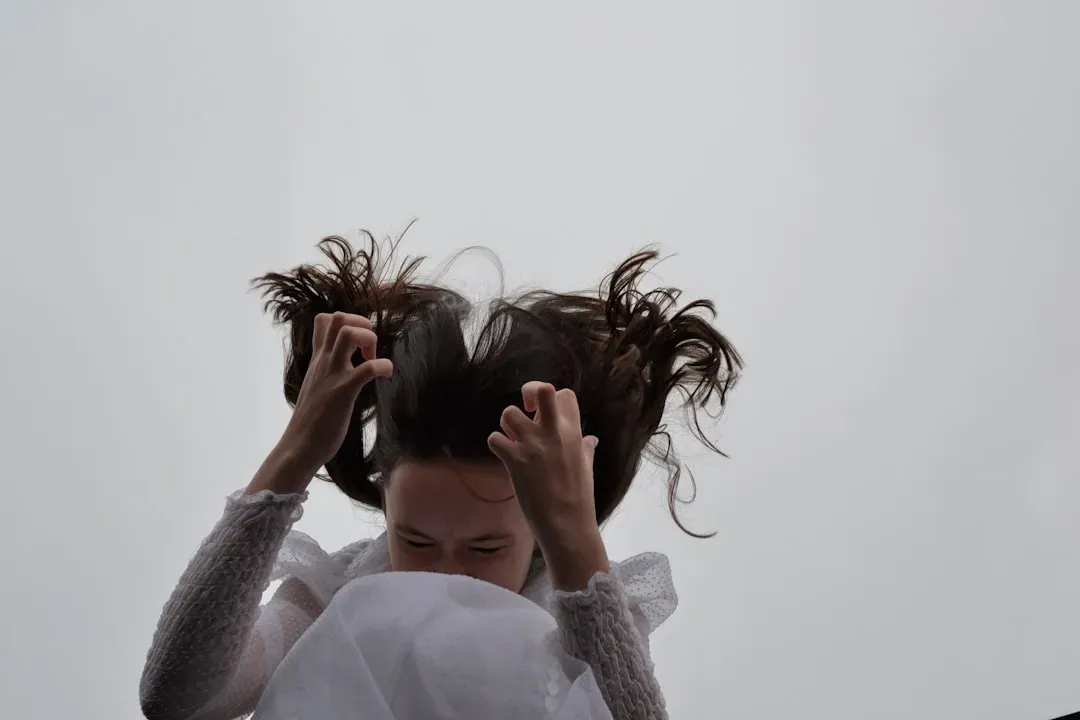
The uncertainty discrepancy is correlated with emotional responses, showing a positive correlation with negative emotions such as anxiety, fear, pain, and tension, and a negative correlation with positive emotions such as optimism, happiness, and pride. When you’re stuck in a state of chronic uncertainty, your body pays the price. Anxiety about the unknown manifests in restlessness, difficulty concentrating, irritability, muscle tension, and sleep disturbances.
People who struggle with chronic anxiety may have an even harder time tolerating ambiguity, experiencing an amplified emotional response to unknowns and interpreting them as threats rather than possibilities, which often leads to mental rumination, avoidance, or excessive planning, all of which can increase distress rather than reduce it. The vicious cycle continues because your brain keeps scanning for threats, your stress hormones remain elevated, and you never quite feel safe. Over time, this can contribute to broader mental health challenges including depression.
Cultural and Modern Factors

In a 2017 meta-analysis, researchers found a potential link between rising intolerance for uncertainty and rising cell phone and internet use, as it seems that people use their phones as a constant source of reassurance throughout the day, and over time, this habit may reduce your tolerance for ordinary uncertainties, causing fear of the unknown to build up. We live in an era of instant answers. Don’t know something? Google it. Wondering what your ex is doing? Check social media. This constant access to information has actually made us less capable of sitting with not knowing.
In today’s culture, knowledge is often treated as the ultimate symbol of progress and productivity, as we’re taught that to know more is to do better, to be safer, smarter, and more successful. Yet this cultural obsession with certainty might be backfiring. We’ve become so accustomed to having answers at our fingertips that the absence of information feels almost unbearable. The pandemic amplified this dramatically, as people faced unprecedented levels of uncertainty about health, jobs, and the future.
Learning to Tolerate the Unknown

The more you can tolerate uncertainty, the less anxious you will feel. Sounds simple, right? The challenge is retraining your brain to stop treating ambiguity as an emergency. Grounding yourself in the present moment is one of the most effective tools available, as mindfulness helps interrupt spiraling negative thoughts and brings your attention to what’s happening right now, not what could happen tomorrow.
Another powerful shift involves placing emphasis on your ability to cope with whatever may happen, rather than the fear of what may happen, as recognizing your resources, both internal and external, to cope with whatever happens means you will have less fear of the unknown. Instead of asking “What if something terrible happens?” you might ask “How would I handle it if it did?” This subtle reframe moves you from helplessness to agency. You’re acknowledging that while you can’t control every outcome, you do have the capacity to respond and adapt.
Finding Meaning in the Midst of Ambiguity

The opposite of uncertainty is not certainty; it’s presence, and instead of imagining a scary and unknown future, we can bring our attention to our breath. When everything feels chaotic and unpredictable, coming back to the present moment offers an anchor. Your breath, your body, the sensations around you – these are the things you can actually know for certain right now.
Uncertainty isn’t an absence of information; it’s a fertile space where mystery, curiosity, and growth coexist, and when we stop fearing what we don’t know, we open ourselves to the vastness of what life can offer. This perspective asks you to flip the script entirely. What if uncertainty wasn’t something to avoid but something to explore? What if not knowing created space for possibility rather than panic? Learning to tolerate it, cope with it, and even grow through it is one of the most empowering shifts you can make for your mental health. It’s not about eliminating fear but about changing your relationship with it.
Conclusion

Fearing the unknown is neither weakness nor flaw. It’s an ancient survival mechanism doing exactly what it evolved to do: keep you alert to potential danger. Your brain doesn’t distinguish between a hungry predator and an uncertain job market; it just knows that ambiguity equals risk. Yet in our modern world, where most uncertainties won’t actually threaten your physical survival, this fear can become a burden rather than a benefit.
The good news is you’re not stuck with your default settings. By understanding the neuroscience and psychology behind your fear, you can start to gently challenge it. You can practice mindfulness, shift your focus from catastrophizing to coping, and learn that uncertainty doesn’t have to equal danger. Some of life’s most meaningful experiences emerge precisely because we couldn’t predict them. Maybe the unknown isn’t something to fear after all, but something to meet with curiosity and resilience. What would your life look like if you let go of the need to know everything?