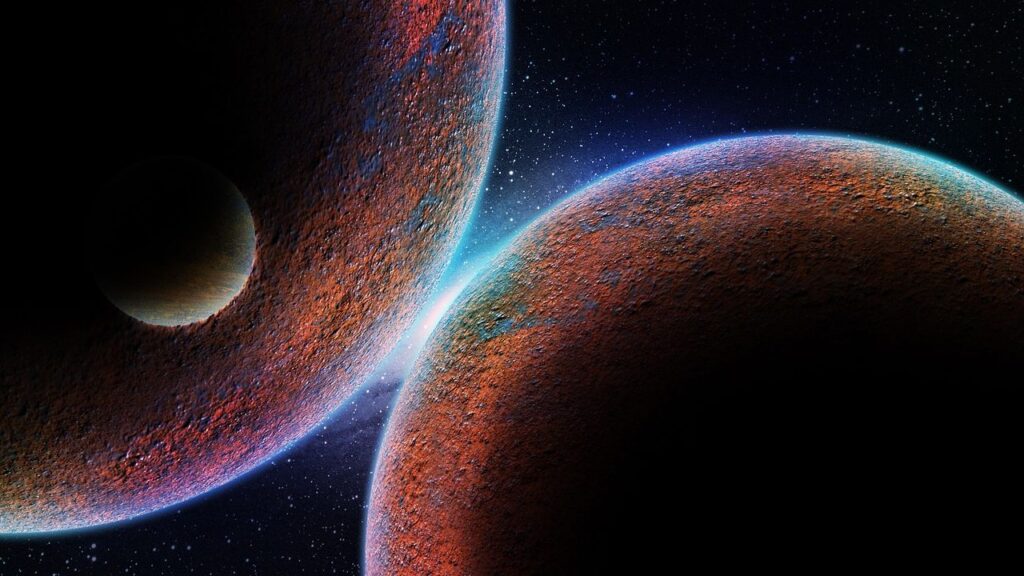
Have you ever wondered what life might be like if you had taken a different path? That job you didn’t accept, that city you never moved to, or even that decision you made five minutes ago. What if those alternate versions of your life are actually unfolding somewhere else, in a universe stacked right next to ours?
This isn’t just the stuff of science fiction anymore. Physicists are seriously entertaining the possibility that parallel universes might be more than just a thought experiment. They could be woven into the very fabric of reality itself. Think of it like this: every time something happens at the quantum level, reality might be branching off in countless directions, creating infinite copies of you making infinite variations of choices. It sounds crazy, honestly. Still, what you’re about to discover might just shift how you think about existence itself.
The Quantum Mechanics Foundation: Where Parallel Worlds Begin
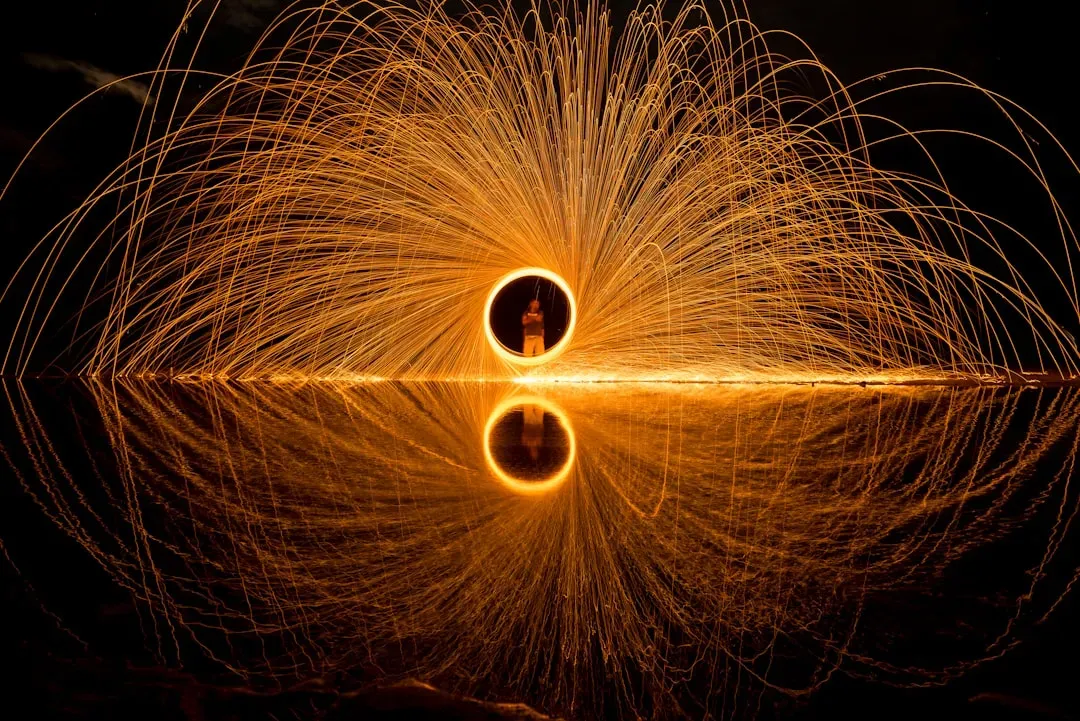
At the heart of the parallel universe discussion sits quantum mechanics, the wild and unpredictable branch of physics that governs the behavior of the tiniest particles in our universe. Quantum mechanics is the physics framework that describes the behavior of tiny particles, and one quirk of this theory is that no one is sure what results they get until they look. Particles can exist in what scientists call a superposition, meaning they’re in multiple states all at once until someone observes them.
Here’s where things get weird. In quantum mechanics, a particle exists in a superposition of all possible states at once – until someone tries to make a measurement of it. Imagine flipping a coin that remains both heads and tails simultaneously until you peek at it. The act of looking forces it to pick a side. This behavior at the subatomic level defies everything we know about how objects behave in our everyday world, where a coin is either heads or tails the moment it lands.
Let’s be real, quantum mechanics has puzzled even the brightest minds for over a century. The reason it matters so much to the multiverse conversation is simple: if particles can exist in multiple states at once, could entire realities do the same? That’s the question physicists have been wrestling with, leading to one of the most mind-bending theories ever proposed.
The Many-Worlds Interpretation: Every Possibility Becomes Real
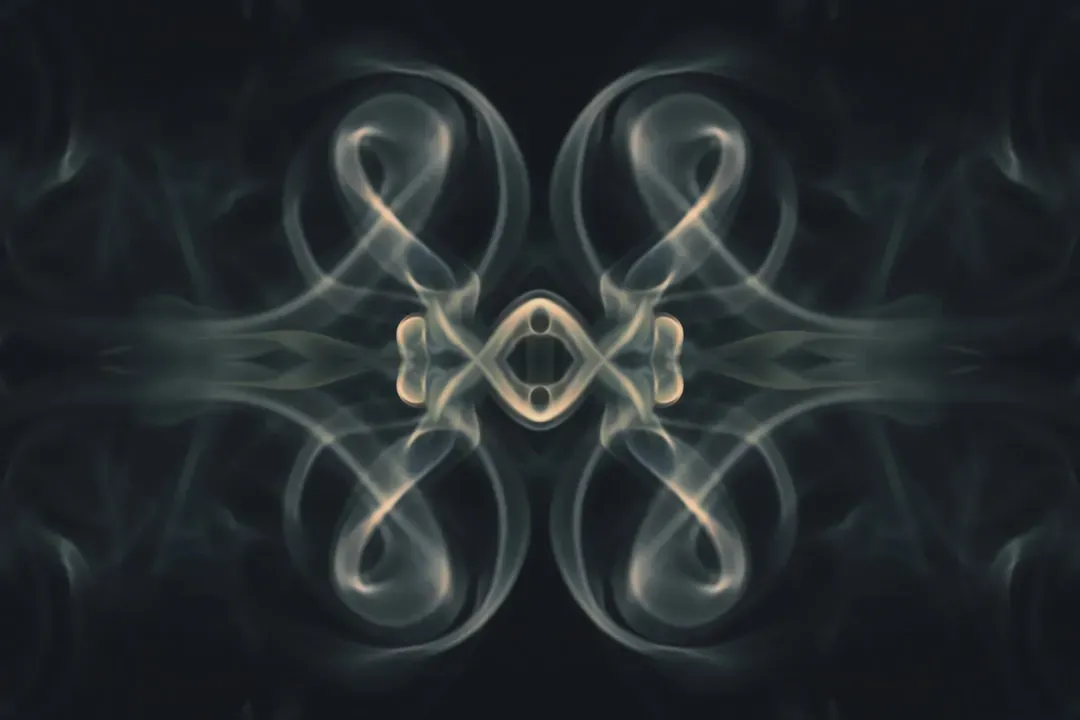
The universe (or multiverse in this context) is composed of a quantum superposition of an uncountable or undefinable amount or number of increasingly divergent, non-communicating parallel universes or quantum worlds. This interpretation was first proposed by physicist Hugh Everett back in 1957, and it completely revolutionized how some scientists think about reality. Instead of quantum possibilities collapsing into one outcome when observed, Everett suggested they all happen, just in different universes.
The interpretation views time as a many-branched tree, wherein every possible quantum outcome is realized. Think of it like a vast cosmic tree where each decision point, each quantum event, causes reality to split into separate branches. You live in one branch, experiencing one set of outcomes, while countless versions of you exist in other branches, living out every other possibility. In one universe you ordered coffee this morning. In another, you chose tea. In yet another, you skipped breakfast entirely.
The parallel worlds can never communicate with one another. This means you’ll never meet your alternate selves or know what they’re experiencing. Each universe becomes isolated the moment it branches off, evolving independently with its own unique history. It’s both fascinating and a little unsettling when you really think about it.
When Quantum Computers Hint at Hidden Realities
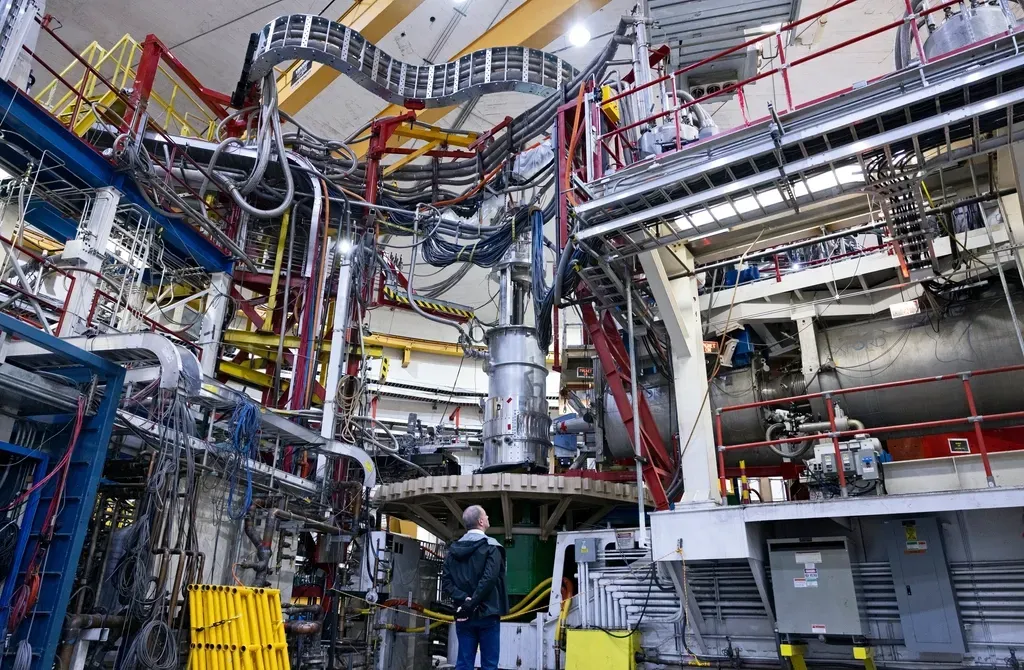
Something remarkable happened recently that reignited the multiverse debate. Google Quantum AI team founder Hartmut Neven argued that the chip’s success supports the idea of quantum computation occurring in many parallel universes. Their quantum chip, called Willow, performed calculations so mind-bogglingly fast that some scientists wondered if it was tapping into parallel realities to do its work.
Willow’s ability to perform calculations exponentially faster than classical computers relies on the phenomenon of superposition, where qubits exist in multiple states simultaneously, and in the multiverse interpretation, these states correspond to computations occurring across parallel universes. Imagine if your laptop could somehow access infinite versions of itself in other universes, all working on the same problem at once. That’s essentially what some physicists think might be happening with quantum computers.
Now, before you get too excited, not everyone agrees with this interpretation. Critics argue that quantum phenomena, including superposition and entanglement, can be explained without invoking the multiverse, suggesting that such success may arise from purely physical and mathematical principles within a single universe. The debate rages on, but the very fact that cutting-edge technology is making us reconsider the nature of reality is pretty incredible.
Schrödinger’s Cat and the Universe That Never Chose
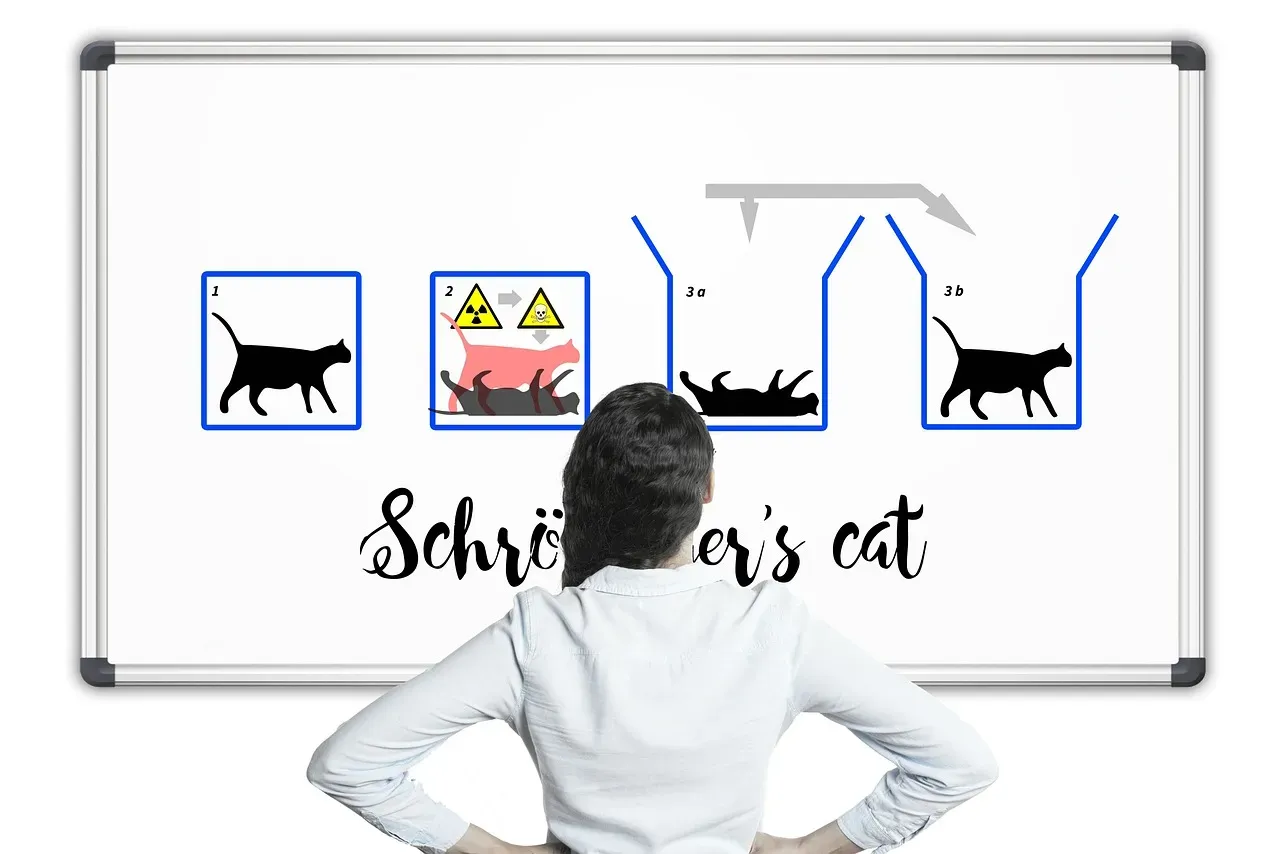
You’ve probably heard of Schrödinger’s cat, that famous thought experiment where a cat in a box is both alive and dead until someone opens it. There are two parallel universes, or worlds, in one of which the cat lives, and in one of which it dies, and there always were two worlds that had been identical to one another until the moment when the device determined the fate of the cat(s). This bizarre scenario perfectly illustrates what the Many-Worlds Interpretation suggests about reality.
The traditional interpretation of quantum mechanics said the cat was in a superposition until observed, then the wave function collapsed and the cat became either alive or dead. Everett threw that idea out the window. Instead, he proposed that both outcomes happen: the cat lives in one universe and dies in another. The universe doesn’t choose. It splits.
There is no collapse of the wave function. Everything just continues evolving according to the laws of quantum mechanics, with reality branching endlessly to accommodate every possible outcome. It’s hard to say for sure, but this might be the most elegant solution to quantum measurement we’ve ever conceived, even if it requires accepting that infinite versions of reality exist.
The Evidence Problem: Can We Ever Prove Parallel Universes Exist?
The biggest challenge for any multiverse theory, especially the Many-Worlds Interpretation, is the lack of direct empirical evidence, and since parallel universes are theorized to be non-interacting, observing them directly seems impossible. This is the elephant in the room that critics love to point out. How can you call something science if you can’t test it or observe it?
Even though certain features of the universe seem to require the existence of a multiverse, nothing has been directly observed that suggests it actually exists, and so far, the evidence supporting the idea of a multiverse is purely theoretical, and in some cases, philosophical. Scientists have looked for telltale signs in cosmic background radiation, searched for evidence of universe collisions, and analyzed data from powerful telescopes. So far, nothing definitive has emerged.
At this point in time, parallel universes are a fascinating idea and concept worth considering, but there’s no evidence we can point to that suggests they’re likely to be physically real in any way that impacts our observed reality. That’s the honest truth. We’re dealing with a theory that might forever remain beyond our ability to confirm or deny. Still, the lack of evidence doesn’t necessarily mean it’s wrong. It might just mean we haven’t figured out how to look yet.
The Cosmic Inflation Theory: Universes Budding Like Soap Bubbles
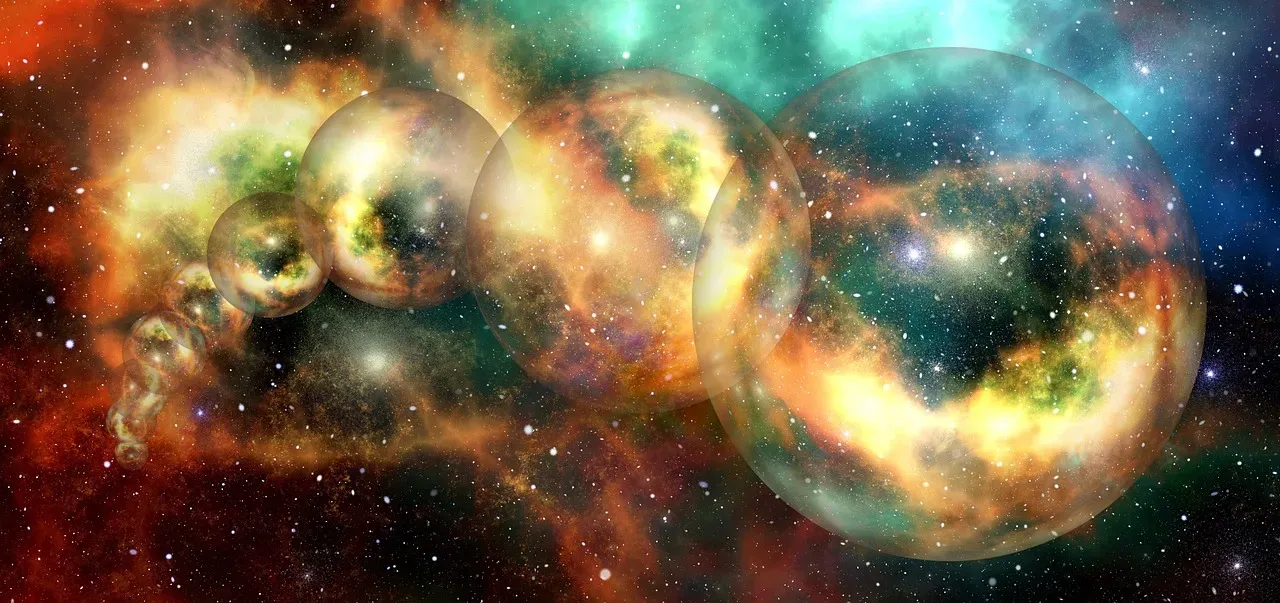
The cosmological multiverse is the idea that a process called inflation, the rapid expansion believed to be an early stage of the universe, is relatively easy to achieve in the early universe and elsewhere and happens all the time, and it results in other bubble universes that expand, and our universe has also expanded, so they’re currently beyond our scope. This version of the multiverse doesn’t come from quantum mechanics but from cosmology, the study of the universe’s origin and structure.
Inflation could happen over and over again, perhaps infinitely, creating a constellation of bubble universes, and not all of those bubbles will have the same properties as our own – they might be spaces where physics behaves differently. Imagine an infinite ocean where bubbles constantly form, each one a complete universe with its own laws of physics, its own constants, and perhaps even its own forms of life or no life at all.
Our universe would be just one bubble in this cosmic foam, forever separated from its siblings by vast stretches of inflating space. You can’t travel to them. You can’t communicate with them. They simply exist, parallel to ours in the grandest sense possible, each one a complete reality unto itself.
The Fine-Tuning Mystery: Why Our Universe Seems Too Perfect
The parameters of our universe seem to be within the right range for galaxies, stars, planets and life to form, and if these constants – the strength of gravitation, the strength of the electromagnetic interactions, and so forth – were adjusted just a bit, then planets and life as we know it never would have formed. This is called the fine-tuning problem, and it’s one of the strongest arguments for why a multiverse might exist.
Maybe there’s an array of possible universes, and we happen to be in one of the few that could support structure formation and eventually lead to life as we know it, but in most of the other versions, we would not be here. It’s like winning the cosmic lottery. The odds of our universe having just the right conditions for life seem impossibly small unless there are countless other universes with different settings, most of which are lifeless and barren.
The biggest piece of evidence for the multiverse is that life exists, particularly intelligent life capable of making cosmological observations. We can only observe a universe that allows observers to exist. If there are infinite universes with random properties, we naturally find ourselves in one that permits our existence. The alternative is accepting an extraordinary cosmic coincidence, which some scientists find harder to swallow than the idea of a multiverse.
The Philosophical Storm: What Does This Mean for Reality?
If parallel universes truly exist, what does that mean for concepts like choice, identity, and meaning? The concept of parallel universes profoundly impacts our understanding of identity, free will, and the very nature of existence, and it pushes us to consider that reality might be far more expansive and intricate than we perceive. Every decision you make spawns new realities where you chose differently. Are those other versions of you still you?
Some philosophers argue that if every possibility happens somewhere, then nothing you do really matters because every alternative plays out anyway. Others counter that your choices matter intensely within your branch of reality, the one you actually experience. The debate gets messy quickly, crossing from physics into philosophy and even touching on questions about consciousness and what it means to be an individual.
The question that most people want answered is simply, “Which interpretation of quantum mechanics is correct? Which one is right?” And to this question we have no answer, no consensus, and until you can concoct an experimental test that can distinguish between these various interpretations, all of these interpretations remain equally valid. For now, we’re left pondering these deep questions without definitive answers, which might be the most human thing about this entire scientific endeavor.
Looking Forward: The Quest Continues
While the existence of quantum physics multiple realities remains firmly in the realm of theory and interpretation, the ongoing research and debate fuel our curiosity and drive scientific advancement, and as we continue to probe the mysteries of the universe, our insights into quantum mechanics and cosmology will undoubtedly refine our understanding of these extraordinary possibilities. Scientists aren’t giving up on finding evidence. New telescopes, more powerful quantum computers, and innovative experimental designs might one day provide the breakthrough we need.
The parallel universe concept forces us to confront the limits of human knowledge and our ability to understand reality. It challenges our assumptions about what’s real and what’s possible. Whether or not parallel universes exist, the journey to find out has already expanded our understanding of quantum mechanics, cosmology, and the nature of existence itself.
The quantum realm might hold secrets that forever remain just beyond our grasp, or tomorrow might bring the experiment that finally proves we’ve been living in a multiverse all along. Either way, the search continues, driven by humanity’s endless curiosity about our place in the cosmos and the fundamental question of what it means for something to be real. What would you do if you suddenly learned that infinite versions of you were living out every possible life you could have led?