Have you ever wondered why you can remember your breakfast this morning but not what you’ll eat next Tuesday? Or why a shattered glass never spontaneously reassembles itself on your kitchen floor? These everyday puzzles point to something far more profound happening in the fabric of our universe. Time, that seemingly simple companion ticking away on your wrist, is actually one of the most perplexing phenomena physicists have ever grappled with.
Here’s the thing: the fundamental laws of physics don’t actually prefer one direction of time over another. You could run the equations backward and they’d work just fine. Yet everything around you insists that time marches stubbornly forward. That milk you spilled this morning will never unspill itself, no matter how long you wait. This mysterious one-way street is what scientists call the arrow of time, and honestly, after over a century of brilliant minds wrestling with it, we still don’t have all the answers. What we do have is a collection of fascinating theories, mind-bending implications, and some truly cosmic mysteries that might just change how you think about your place in the universe. So let’s dive in.
The Thermodynamic Arrow: Entropy’s Relentless March
The thermodynamic arrow of time is provided by the second law of thermodynamics, which says that in an isolated system, entropy tends to increase with time. Think of entropy as nature’s tendency toward disorder, though honestly that’s a bit of an oversimplification. Imagine dropping an ice cube into your hot coffee. The heat spreads out, the ice melts, and you end up with lukewarm coffee that you probably don’t want to drink anymore.
It explains why a broken egg doesn’t reassemble and why memory works in one direction. Once the yolk is splattered, the number of microscopic configurations has vastly multiplied; the original ordered state becomes nearly impossible to recreate. The universe seems to have an overwhelming preference for spreading things out, for mixing rather than unmixing. This isn’t just some abstract concept; it’s literally why your bedroom gets messy but never spontaneously cleans itself.
The Paradox of Time-Symmetric Laws

Let’s be real: this is where things get really weird. The laws that govern the particles making up everything we see don’t actually prefer past to future. In fact, if you took the equations of Newton, Einstein, Schrödinger, or Maxwell and ran them backward, they’d work just fine. Picture watching a film of billiard balls colliding. Whether you play it forward or backward, the physics looks equally plausible at that level.
At the microscopic level physical processes are believed to be either entirely or mostly time-symmetric: if the direction of time were to reverse, the theoretical statements that describe them would remain true. Yet at the macroscopic level it often appears that this is not the case: there is an obvious direction (or flow) of time. So how does a universe built on reversible laws create the irreversible world we experience? That’s the trillion-dollar question. Some physicists suspect the answer lies in the initial conditions of our universe, the extremely low-entropy state it started in right after the Big Bang.
The Big Bang’s Special Starting Conditions
The universe began in a state of extremely low entropy. This is surprising because small, hot, dense regions usually have high disorder. Yet the early universe was extremely smooth and orderly. This low-entropy beginning is what allows entropy to rise over billions of years. Imagine the universe as a massive wound-up spring, primed and ready to unwind. That initial orderly state is why we have an arrow of time at all.
But here’s what keeps cosmologists up at night: why was the early universe so ordered to begin with? If the universe had started in a state of high entropy, there would be no preferred direction for time’s flow. Some theories suggest unknown physical laws set these initial conditions. Others propose we might be just one universe among countless others in a multiverse, each with different starting points. It’s hard to say for sure, but what we do know is that this cosmic setup billions of years ago determines which direction your morning coffee cools.
Quantum Mechanics and Time’s Strange Behavior
At the quantum level, the fundamental equations governing particles are time-symmetric, meaning they work equally well forwards and backwards in time. Particles exist in superpositions of multiple states simultaneously until measured. The quantum world operates under rules that seem completely divorced from our everyday experience of time flowing in one direction.
Yet something interesting happens when quantum systems interact with their environment. When quantum systems interact with their environments, a process known as decoherence occurs, leading to the emergence of classical behaviour and an apparent arrow of time. Decoherence effectively “collapses” the multitude of possible quantum states into a single, definite state, aligning with the second law of thermodynamics by increasing entropy. It’s like the quantum realm reluctantly submits to time’s arrow when it bumps up against the messiness of the real world. Some researchers have even used quantum mechanics to develop novel computing schemes, showing that time’s mysteries aren’t just philosophical; they have practical applications.
The Psychological Arrow: How Your Brain Experiences Time
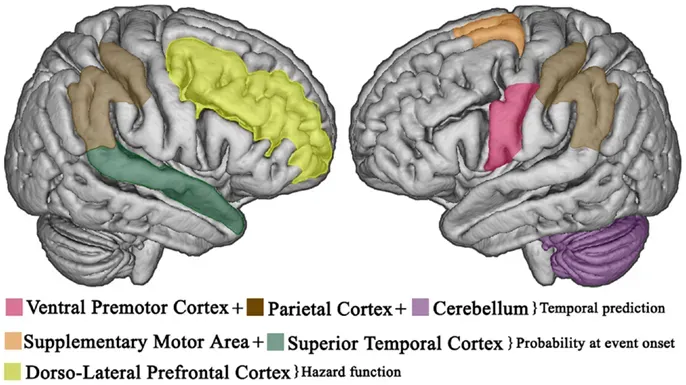
The Psychological Arrow of Time refers to our perception of time’s flow, which may not be an inherent property of the universe but rather a result of how our brains process information. We remember the past but not the future, creating the illusion that time moves forward. This asymmetry aligns with the Thermodynamic Arrow of Time, as memories are formed by physical processes that increase entropy in the brain.
Your experience of time passing might actually be a clever trick your brain plays on you. Neuroscientists suggest that our sense of time arises from the way we store and retrieve memories, making the passage of time feel linear. Some theories propose that if our brains were wired differently – or if entropy worked in reverse – our experience of time might be completely different. I know it sounds crazy, but consider this: your brain creates the sensation of “now” by constantly updating its model of reality based on sensory input. The flowing river of time you feel might be more about neural processing than fundamental physics.
Time Dilation: When Clocks Disagree

If you were to orbit a black hole just outside its event horizon, you would experience a phenomenon called gravitational time dilation. An hour for you could be years for someone far away. This isn’t science fiction. Einstein’s theory of relativity predicts that time actually runs at different rates depending on how fast you’re moving or how strong the gravitational field is around you.
GPS satellites, orbiting above Earth’s surface, need to correct for time dilation to maintain accuracy. But near a black hole, this effect becomes so extreme that, in theory, you could witness the far future of the universe in mere moments – before you cross the event horizon and are lost to time entirely. The universe doesn’t have one universal clock ticking at the same rate everywhere. Time is relative, personal, and depends entirely on your reference frame. Astronauts aboard the International Space Station age ever so slightly slower than people on Earth, though the difference amounts to mere milliseconds over months in orbit.
The Block Universe: Is Time an Illusion?

Some forms of eternalism give time a similar ontology to that of space, as a dimension, with different times being as real as different places, and future events are “already there” in the same sense other places are already there, and that there is no objective flow of time. According to this view, often called the block universe theory, past, present, and future all exist simultaneously. Your birth, your death, and everything in between are equally real, laid out in a four-dimensional spacetime block.
Eternalism, for instance, fits well with the block universe view of relativity, where time is just another coordinate. But this clashes with our lived experience of temporal flow. If this perspective is correct, then your future self is out there somewhere in spacetime, as real as you are right now, just located at a different temporal coordinate. The passage of time you experience would be similar to driving past scenery on a highway; the scenery doesn’t change, but your position relative to it does. Some philosophers find this view deeply unsatisfying because it seems to rob the present moment of its special significance.
Where Do We Stand Today?
The arrow of time remains a mystery. Despite over a century of investigation, physicists haven’t definitively explained why time flows forward when the fundamental laws are reversible. Since entropy always goes up, and time always moves forward, there might be a connection there. It is, after all, the only serious place in physics where a concrete “arrow of time” appears. But despite that connection, physicists have not been able to tease out any more details or explain how that connection works.
Perhaps gravity plays a crucial role we haven’t fully understood yet. Using a simple simulation of gravitationally interacting particles, researchers show that an orderly universe should always arise naturally at one point in time. From there, the universe branches in opposing temporal directions. Within each branch, time flows toward increasing disorder, essentially creating two futures that share one past. Other physicists explore whether quantum mechanics holds deeper clues, or if the answer lies in reconciling relativity with quantum theory. The truth is we’re still figuring it out, piecing together this cosmic puzzle one experiment at a time.
Conclusion: Living in Time’s Current
Time’s forward flow shapes everything about our existence. It gives meaning to memory and anticipation, cause and effect, birth and death. Whether time’s arrow is a fundamental feature of reality or an emergent property of complex systems remains hotly debated. What we know for certain is that the universe started in a highly ordered state and has been unwinding ever since, with entropy steadily increasing and giving time its direction.
The mystery of time touches the deepest questions we can ask about reality. Why does the universe exist the way it does? What is the nature of consciousness and our subjective experience of the present? Could the flow of time be different elsewhere in the cosmos, or in other universes? These aren’t just abstract philosophical musings; they’re questions at the cutting edge of physics and cosmology.
As we stand here in 2026, armed with powerful telescopes, particle accelerators, and increasingly sophisticated theories, we’re closer than ever to understanding time’s enigmatic nature. Yet the mystery endures, reminding us that the universe still has secrets to reveal. What do you think about time’s one-way journey? Does the idea that your future might already exist in a block universe change how you see your choices? The cosmos isn’t finished surprising us yet.