
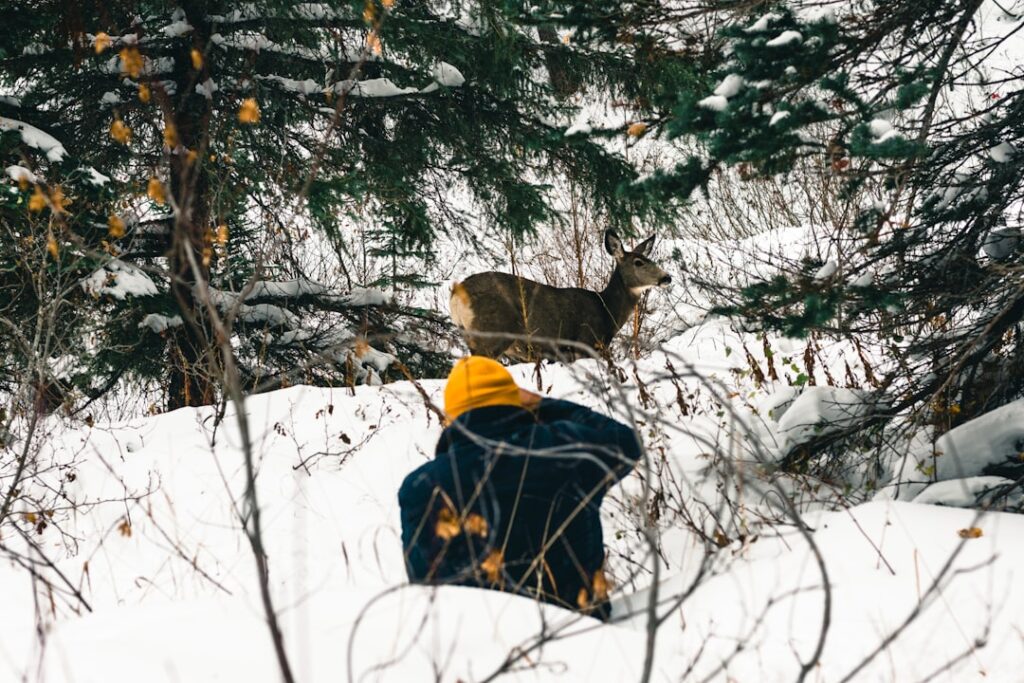
In the grip of a severe winter storm, a deer’s desperate struggle against encroaching ice captured the attention of passersby who turned a routine hike into a lifesaving mission.
The Chilling Discovery

The Chilling Discovery (Image Credits: Unsplash)
Two hikers ventured into the snow-covered wilderness during an unusually harsh cold snap that blanketed parts of North America. Temperatures plummeted well below freezing, turning the landscape into a treacherous expanse of ice and snow. As they navigated the trail, they spotted a deer standing motionless, its face encrusted with thick layers of frozen moisture.
The animal’s eyes, mouth, and ears had sealed shut under the relentless assault of the weather. It pawed weakly at the ground, unable to forage or even see its surroundings clearly. The hikers realized the deer had likely been digging through snow for food when the moisture froze solid, trapping it in a vulnerable state. Without intervention, survival seemed unlikely in such conditions.
Swift and Careful Action
Approaching with caution, the hikers assessed the situation to avoid startling the frightened creature. They spoke softly and moved slowly, ensuring the deer did not bolt into deeper peril. Using their hands and available tools, they began gently chipping away at the ice formations around the deer’s face.
The process demanded patience; each layer revealed more of the animal’s distress but also progress toward freedom. First, they cleared the eyes, allowing the deer to blink and regain its vision. Next came the mouth, where the ice had prevented it from grazing or even breathing comfortably. The ears followed, restoring the deer’s ability to detect sounds in the wild. Within minutes, the deer shook off the remnants and bounded away, restored and alert.
Viral Echoes of Empathy
The rescue unfolded in a video that quickly spread across social media platforms, amassing millions of views. Posted initially on Reddit’s r/HumansBeingBros community, the footage highlighted simple human decency amid nature’s fury. Users praised the hikers’ quick thinking, with comments flooding in about the power of compassion in unexpected moments.
Similar stories have surfaced in recent years, underscoring a pattern of wildlife facing extreme weather challenges. For instance, firefighters in Connecticut used an inflatable boat to save a deer stranded on thin ice, while residents in Ottawa Valley wrapped a chilled animal in blankets for warmth. These accounts remind viewers that everyday people can make a difference when wildlife intersects with human paths.
Winter’s Toll on Wildlife
Extreme cold poses significant risks to animals like deer, which rely on natural insulation and foraging to endure. Harsh storms can lead to hypothermia, frozen extremities, and impaired mobility, making routine survival tasks impossible.
Experts note that climate variability exacerbates these issues, with sudden temperature drops catching animals off guard. Conservation groups emphasize the importance of observing wildlife from a distance and contacting professionals for rescues, but in remote areas, immediate aid from bystanders often proves crucial.
- Deer may freeze while feeding if snow turns to ice on their fur.
- Reduced visibility heightens collision risks with humans or vehicles.
- Energy depletion from cold forces animals into open, exposed areas.
- Post-rescue monitoring ensures no underlying injuries from the ordeal.
- Community awareness campaigns promote safer winter habitats.
Lessons from a Frozen Moment
This deer’s narrow escape serves as a poignant reminder of nature’s fragility and humanity’s capacity for good. In an era of escalating environmental pressures, acts like these inspire broader conversations about coexistence with wildlife. The hikers’ intervention not only saved one life but also sparked a wave of positivity online, encouraging others to look out for vulnerable creatures in their midst.
Ultimately, the story transcends the cold, illustrating how empathy bridges the gap between species. It prompts reflection on personal actions during harsh seasons – whether reporting sightings to authorities or simply pausing to help.
Key Takeaways
- Quick, gentle intervention can reverse the effects of extreme cold on wildlife.
- Social media amplifies stories of kindness, fostering community support for animal welfare.
- Preparation, like carrying basic rescue tools on hikes, enhances safety for both humans and animals.
As winter persists, such tales of resilience and care offer warmth in more ways than one. What do you think about this rescue? Tell us in the comments.