
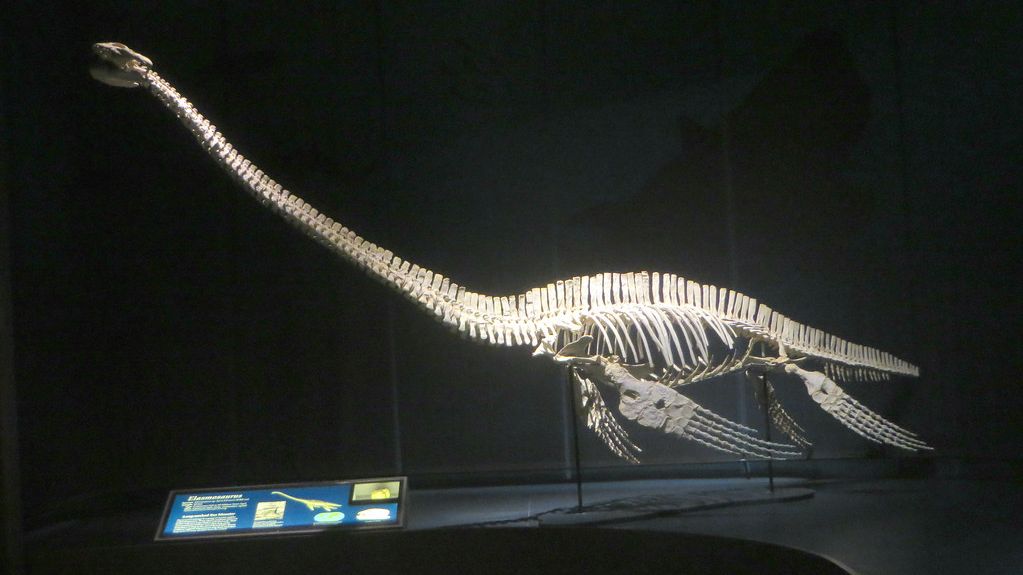
You know what’s kind of crazy? When we think of prehistoric terrors, dinosaurs always steal the spotlight. T-Rex, Velociraptor, Triceratops – they’ve got all the fame. Yet beneath the waves of ancient seas, creatures far more nightmarish lurked in the shadows. We’re talking about marine reptiles that would make even the fiercest land dinosaur think twice before taking a swim.
These ocean predators didn’t just hunt fish. They crushed bones, ambushed prey from impossible depths, and ruled food chains for millions of years. Some had teeth the size of bananas, others had skulls longer than your car. The seas back then? Honestly, they were a completely different level of dangerous. So let’s get started and discover which ancient sea monsters truly earned their terrifying reputations.
Mosasaurus: The Ultimate Late Cretaceous Predator
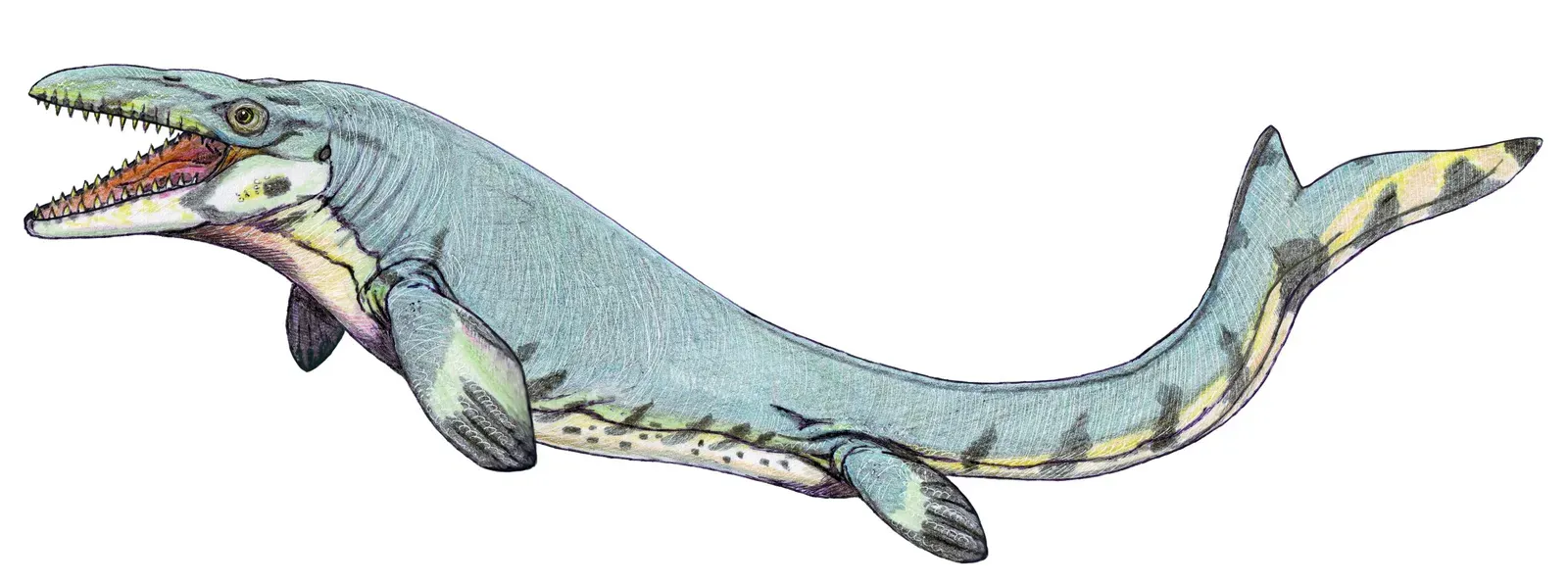
Growing up to 50 feet in length, Mosasaurus was an apex predator of the late Cretaceous period, and honestly, this beast was basically the oceanic equivalent of a nightmare on steroids. Equipped with powerful jaws and conical teeth, this marine reptile could easily crush the shells of ammonites and turtles or grasp slippery prey such as sharks and other marine reptiles. Think about that for a second – it ate other massive marine creatures for breakfast. Its long, serpentine body allowed it to glide through water with terrifying grace, ambushing victims before they even knew what hit them.
The mosasaurs differ from other groups of Mesozoic-aged marine reptiles in that they’re part of the reptilian order known as Squamata, which comprises lizards and snakes, and they were the last major group of marine reptiles to make an appearance around 94 million years ago. After ichthyosaurs and pliosaurs faced extinction in the early Late Cretaceous, mosasaurs took over and ruled the oceans up until 66 million years ago. They seized their moment and became the undisputed rulers of ancient seas, dominating until the asteroid impact wiped out most life on Earth.
Kronosaurus: The Titan of Australian Seas
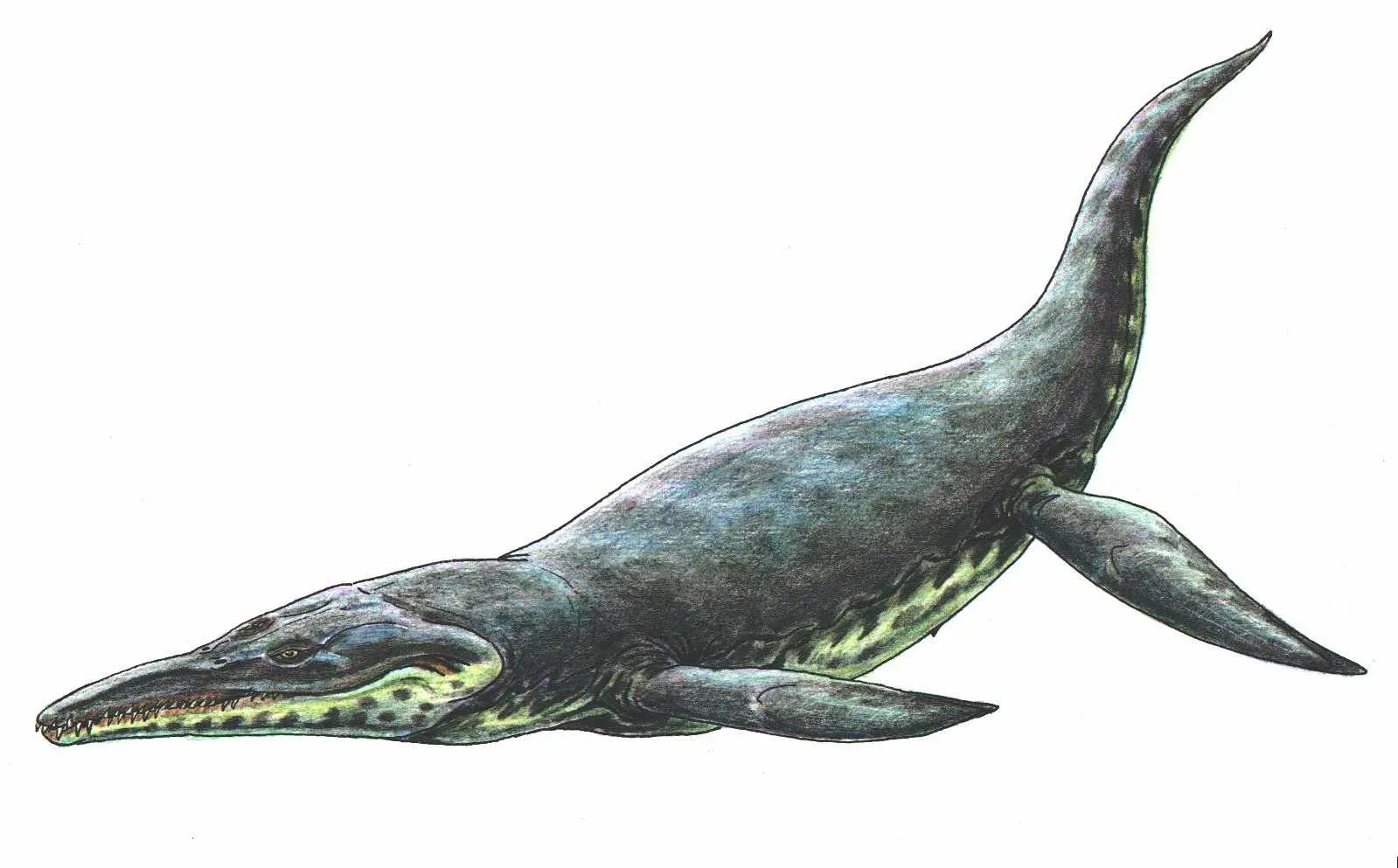
Named after the Greek Titan Kronos, Kronosaurus was one seriously intimidating pliosaur. Most estimates suggest that Kronosaurus queenslandicus was around 9 to 11 meters in length according to reconstructed fossil specimens, making it roughly the length of a school bus but far more lethal. Though Kronosaurus teeth weren’t particularly sharp, the strength of the organism’s jaw likely made up for it, as its duller teeth likely punctured flesh through the sheer strength of its jaw, and the Kronosaurus jaw is evidenced to have been strong enough to crush the skulls of its prey.
Kronosaurus would likely have been an apex predator in the Eromanga Sea, with fossil evidence showing that it preyed on sea turtles and other plesiosaurs. Here’s the thing – it didn’t just hunt. The skull of a juvenile specimen shows that it would have been attacked by an adult, indicating intraspecific aggression or even potential evidence of cannibalism within the genus. So yeah, these giants were so terrifying they even attacked their own kind. That takes brutality to another level entirely.
Liopleurodon: The Ambush Specialist
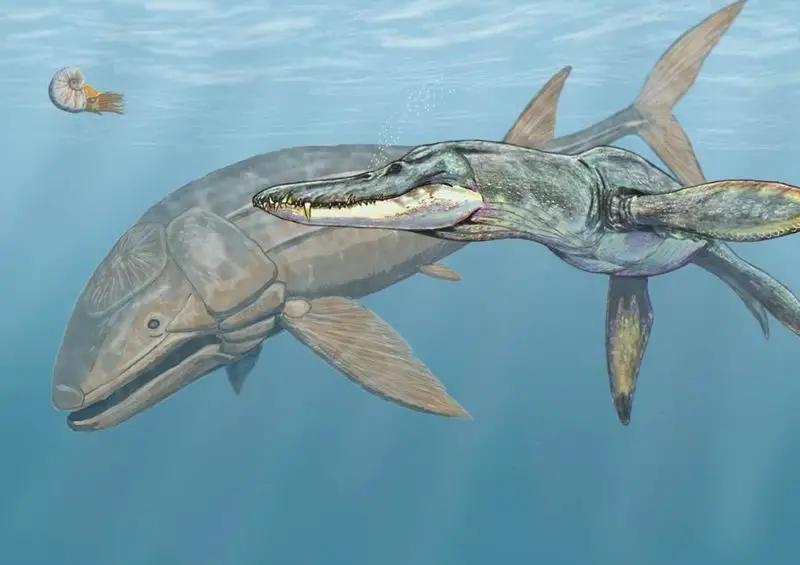
Let’s be real, Liopleurodon has gotten a bit of a sensationalized reputation thanks to certain documentaries. The different attributed specimens show that the animal could reach a size ranging from 4 to 8 m (13 to 26 ft) long, with some researchers estimating a maximum length of approximately 10 m (33 ft). Still, that’s absolutely massive when you consider what these creatures actually did.
Some anatomical studies have found that Liopleurodon was likely a very fast and agile swimmer, built for ambushing its prey from below. Various studies show that Liopleurodon would have been an ambush predator, feeding on fish, cephalopods and other marine reptiles. Picture this: you’re swimming along in a Jurassic sea, minding your business, when suddenly a creature with jaws one-fifth the length of its entire body explodes from the depths below. That kind of hunting strategy is what made Liopleurodon such a successful predator for millions of years.
Tylosaurus: The Mosasaur That Ate Everything
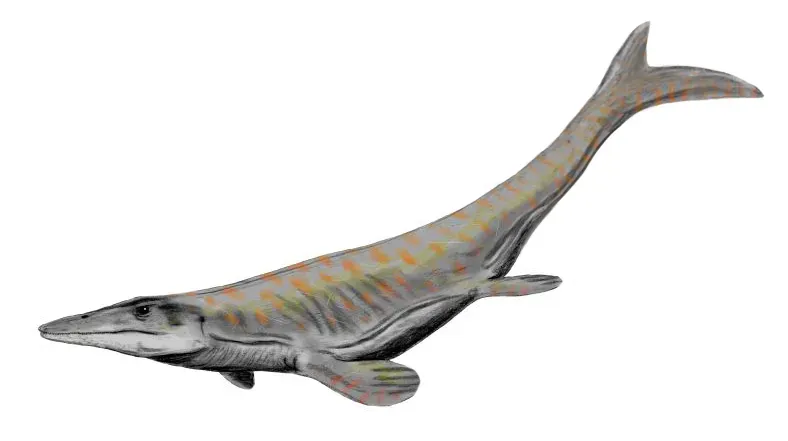
If Mosasaurus was terrifying, Tylosaurus was its equally nightmarish cousin. Tylosaurus was a Mosasaur species with a massive size of about 15.2 meters(50 feet) long, and it had an appetite that would put any modern predator to shame. The fossil remains of its stomach show signs of fish, sharks, smaller mosasaurs, plesiosaurs, and even some flightless birds. Yes, you read that right – it ate other mosasaurs. Cannibalism wasn’t just occasional; it was part of the menu.
Like other mosasaurs, Tylosaurus had a streamlined body with a long, muscular, and vertically flattened tail that helped propel the reptile through water, and it also had paddle-like limbs for steering in the water. They are known to have existed during the Late Cretaceous in the sea of North America, where they dominated food chains with ruthless efficiency. When you’re big enough and fierce enough to eat your own relatives, you’ve pretty much reached the peak of terrifying.
Nothosaurus: The Triassic Ambusher
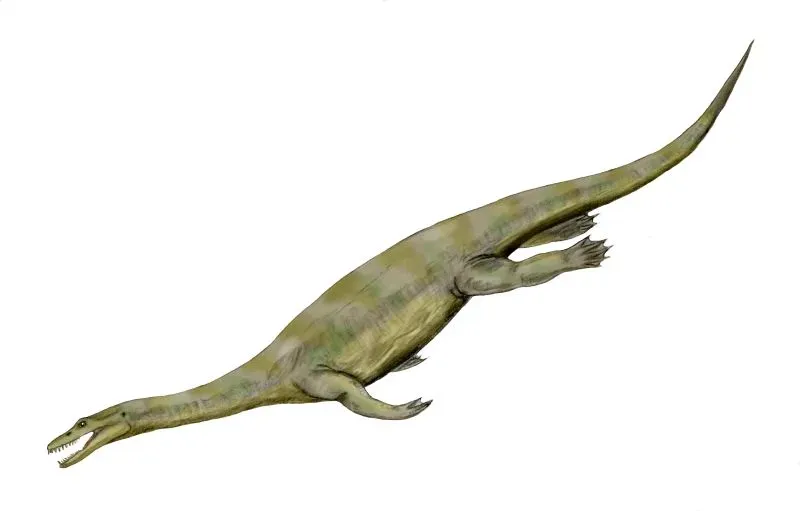
Don’t let Nothosaurus’s smaller size fool you into thinking it was any less dangerous. Nothosaurus was a nearly 4 meters(13 feet) long sauropterygian reptile dating back to the Triassic period that was about 240-210 million years ago. The massive mouth with sharp, outward-pointing teeth suggests that it preyed mostly on squid and fish, and being an ambush predator, it sneakily attacked the prey with its sleek reptilian stature.
Nothosaurus lived a semi-aquatic lifestyle similar to that of present-day seals, and it had a streamlined body, a long tail, and webbed feet, which it used to propel and steer itself through the water. Think of it as a prehistoric seal mixed with a crocodile, lurking in shallow waters waiting for the perfect moment to strike. Its ability to move between land and sea made it an incredibly versatile predator – nowhere was truly safe from Nothosaurus. It might not have been the largest, but it was definitely one of the most cunning hunters of its time.
Shonisaurus: The Whale-Sized Enigma
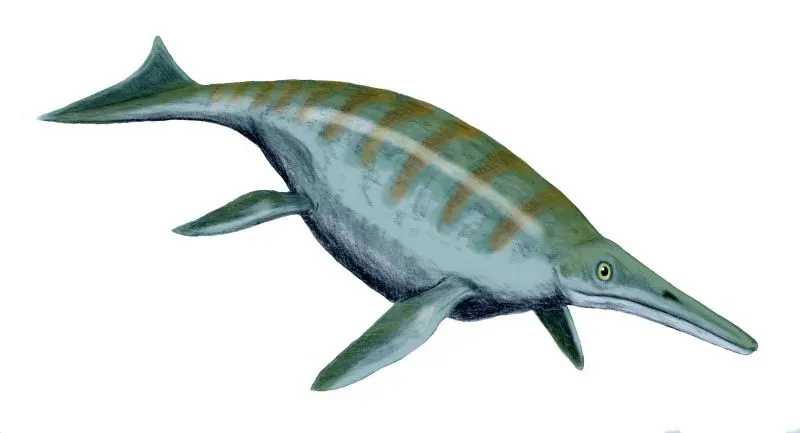
Shonisaurus was the largest of the ichthyosaur genera, growing to approximately 50 feet long, making it one of the most massive marine reptiles to ever exist. Giant Triassic ichthyosaurs like Shastasaurus and Shonisaurus were the largest marine reptiles ever, at around 20 meters long and 30-70 tonnes, the size of a sperm whale. What makes Shonisaurus particularly fascinating is its unusual feeding strategy.
Fossils from Nevada’s Berlin-Ichthyosaur State Park reveal growth stages, suggesting tooth loss was a developmental shift, not decay. Adults completely lost their teeth, specializing instead in consuming soft-bodied prey like squid. Mass graves of Shonisaurus of all ages hint at social groups or environmental disasters, such as toxic algal blooms or strandings, and despite being likened to dolphins, the deaths of Shonisaurus remain a Triassic enigma. The mystery surrounding these creatures adds another layer to their already impressive legacy – were they social animals, or did something catastrophic wipe out entire populations at once?
Dakosaurus: The Marine Crocodile Nightmare
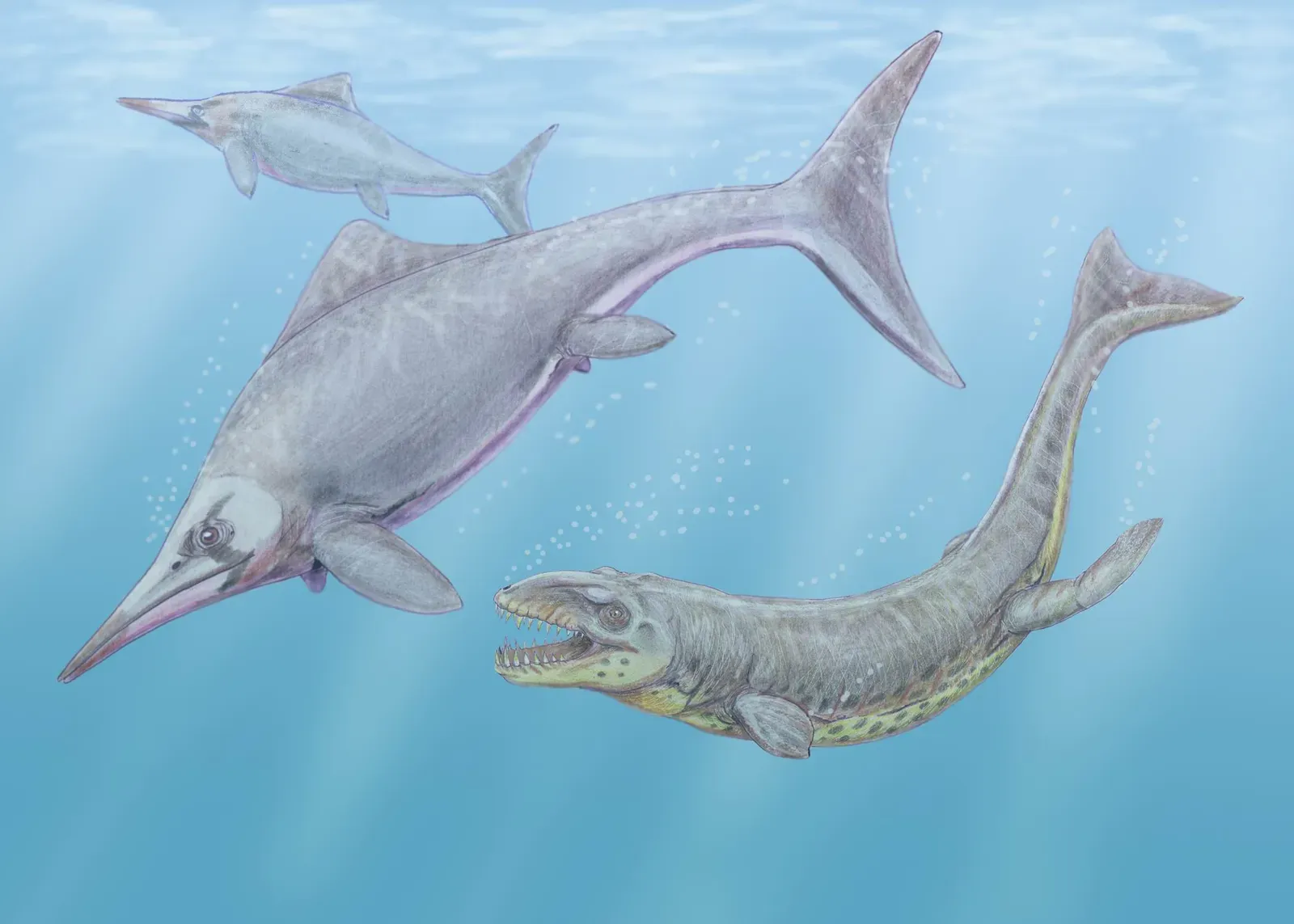
Nicknamed “Godzilla” for its deep, serrated-toothed skull, Dakosaurus was a 4-5 meter marine crocodile ruling Jurassic-Cretaceous oceans. I mean, when scientists nickname something “Godzilla,” you know it’s legitimately terrifying. Having an unusual reptilian-cum-fishy body, scientists regard it as an apex predator because of its extraordinary jagged teeth, and Dakosaurus was nearly 5 meters(16 feet) long.
Unlike piscivorous marine crocodiles, Dakosaurus’s anatomy suggests apex predation: bone-crushing bites and salt glands (inferred from cranial cavities) to expel seawater toxins. Fossils of these marine dinosaurs span Europe, the Americas, and Russia, marking it a global threat. What’s wild is that Dakosaurus managed to thrive as a marine crocodile when most of its relatives stuck to rivers and swamps. It carved out its own niche as a macropredator, proving that adaptation can turn any creature into something truly monstrous.
Conclusion
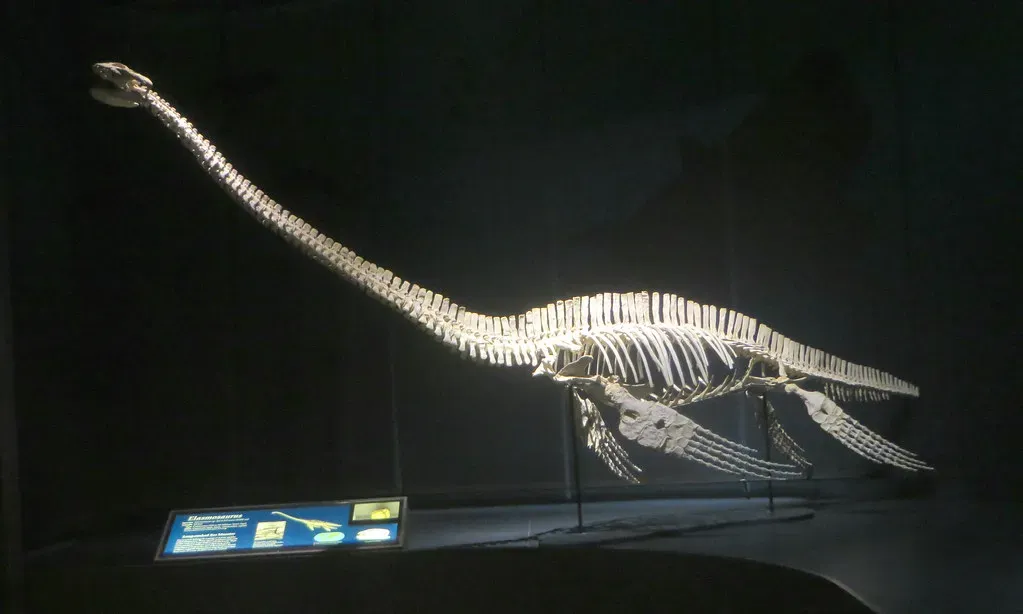
While dinosaurs have long captured our imaginations, these ancient marine reptiles prove that the real monsters lived beneath the waves. From bone-crushing pliosaurs to serpentine mosasaurs, these predators dominated ocean food chains with strategies and adaptations that would put most land-based predators to shame. They didn’t just survive – they ruled with absolute authority for millions of years.
The prehistoric oceans were essentially a battleground where only the most fearsome hunters thrived. These creatures remind us that evolution crafted terrors far beyond what we typically imagine when thinking about ancient life. What do you think about these underwater nightmares? Which one would you least want to encounter if time travel were possible? Share your thoughts in the comments.