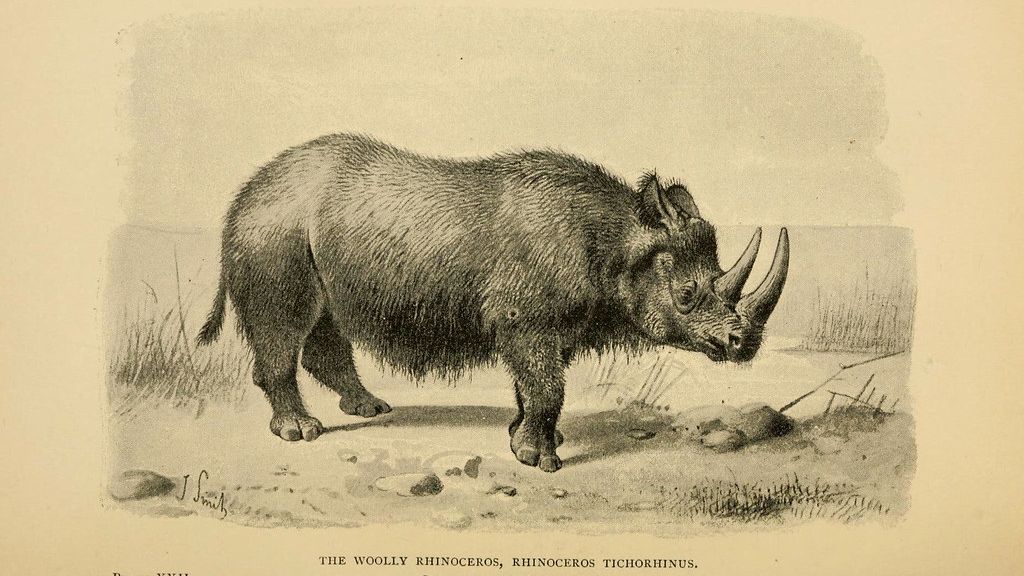
Picture a massive creature covered in shaggy fur, two enormous horns jutting from its face, trekking across endless frozen plains. For hundreds of thousands of years, the woolly rhinoceros thrived in conditions that would kill most modern animals. Yet around fourteen thousand years ago, this formidable beast simply vanished from the face of Earth. The question that has puzzled scientists for decades isn’t just how these Ice Age giants died, but why they disappeared so rapidly when they’d survived countless climate shifts before.
Recent discoveries have given us unprecedented glimpses into the final days of these magnificent animals. In 2011, mammoth ivory hunters in northeastern Siberia stumbled upon something extraordinary: two mummified wolf pups frozen for over fourteen millennia. Inside one pup’s stomach, researchers found chunks of grayish meat covered with strands of golden hair. It was woolly rhino tissue, perfectly preserved and holding secrets to one of paleontology’s most intriguing mysteries.
A Fortress on Four Legs
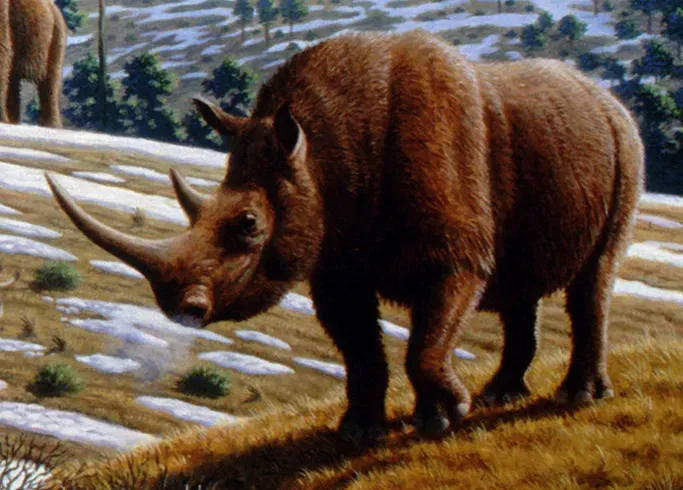
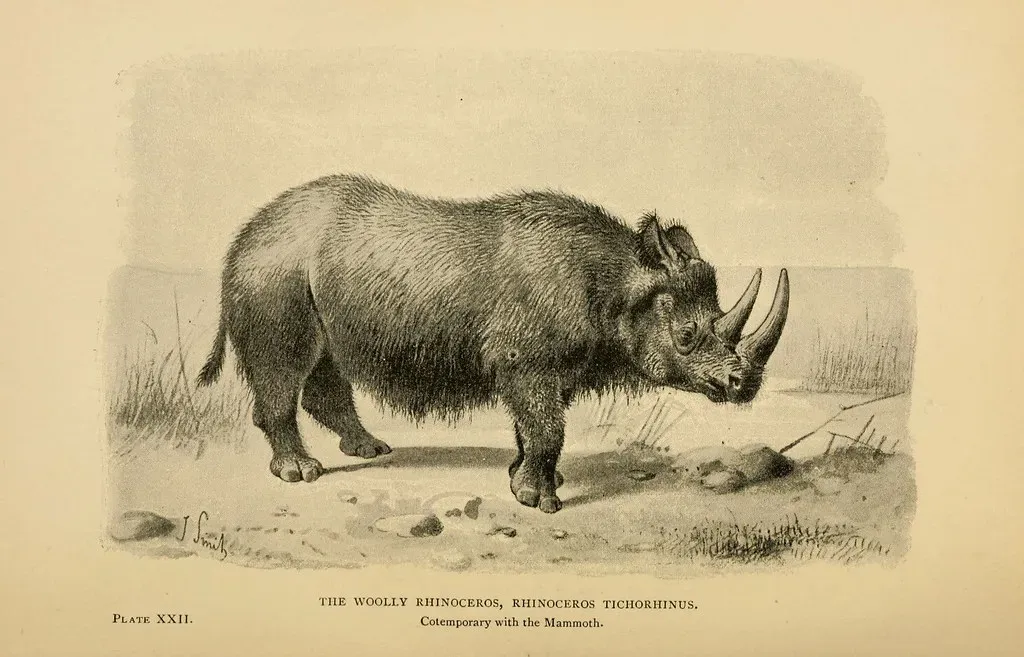
The woolly rhinoceros was comparable in size to the largest living rhinoceros species, the white rhinoceros, and covered with long, thick hair that allowed it to survive in the extremely cold, harsh mammoth steppe. Think about that for a moment. These animals were roughly the size of modern SUVs, weighing anywhere from four thousand to six thousand pounds. Their thick, reddish-brown coat wasn’t just for show.
It had a massive hump reaching from its shoulder and fed mainly by grazing on herbaceous plants that grew in the steppe. That distinctive hump served dual purposes: supporting the animal’s enormous front horn and storing fat reserves to survive the brutal winters. The woolly rhino’s horns were particularly interesting, with the front horn sometimes reaching two feet in length and featuring a flattened cross-section rather than the conical shape seen in modern rhinos. Researchers believe these specialized horns functioned like snow plows, sweeping aside snowfall to expose the low-growing vegetation underneath.
Masters of the Frozen Steppe
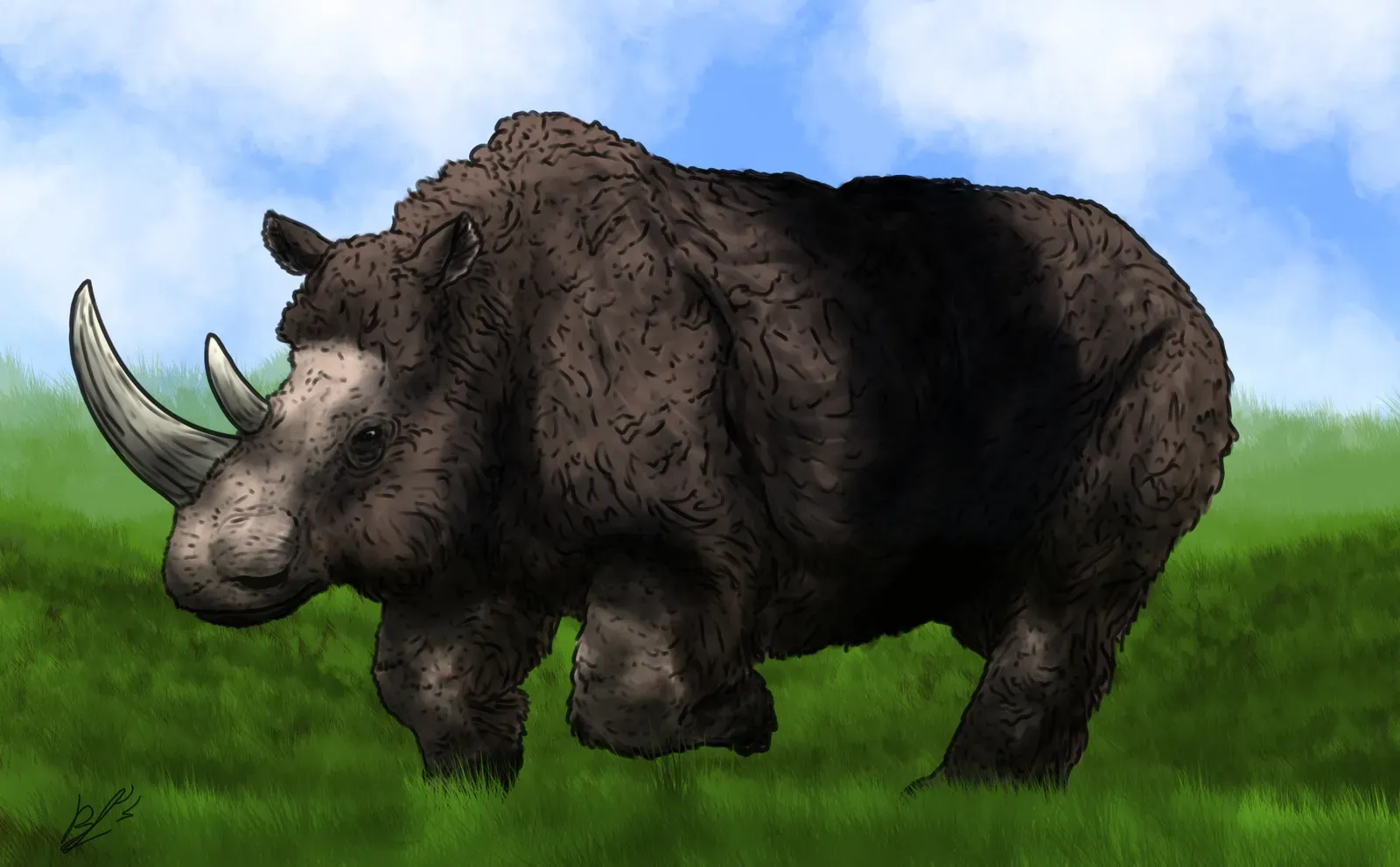
By the end of the Riss glaciation about 130,000 years ago, the woolly rhinoceros lived throughout northern Eurasia, spanning most of Europe, the Russian Plain, Siberia, and the Mongolian Plateau. Their range was enormous, stretching from what is now France all the way to northeastern Siberia. These weren’t creatures confined to tiny ecological pockets. They dominated vast territories across an entire continent.
The rhino’s main habitat was the mammoth steppe, a large, open landscape covered with wide ranges of grass and bushes. The woolly rhinoceros lived alongside other large herbivores, such as the woolly mammoth, giant deer, reindeer, saiga antelope and bison. Imagine witnessing this incredible Ice Age ecosystem in person. The mammoth steppe wasn’t the frozen wasteland many people envision. It was a surprisingly productive grassland ecosystem that supported massive herds of megafauna. Honestly, it must have been one of the most spectacular wildlife spectacles in Earth’s history.
Climate Champions with a Fatal Weakness
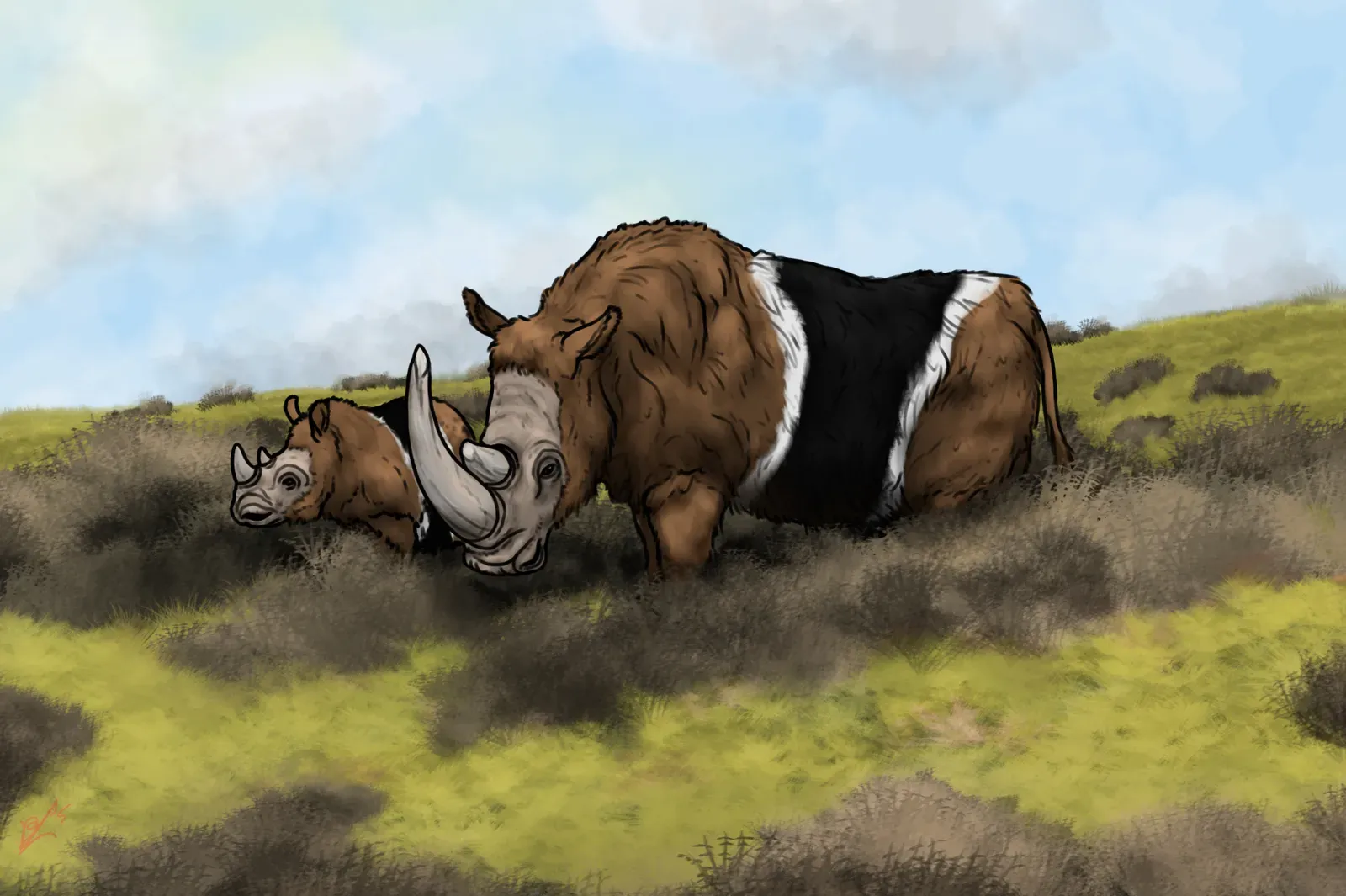
Here’s where things get fascinating. The creature had survived other instances of warming between glacial periods – even some as warm as today. So why did they suddenly disappear around fourteen thousand years ago? The answer appears to lie in a specific type of climate change they simply couldn’t handle.
The youngest records of the species coincide with the onset of the Bølling–Allerød warming (which began around 14,700 years ago), which likely resulted in increased precipitation (including snowfall), which transformed the woolly rhinoceros’ preferred low-growing grass and herb habitat into one dominated by shrubs and trees. It wasn’t just the temperature increase that doomed them. The warming brought something far more insidious: deep snow. The woolly rhinoceros was likely intolerant of deep snow, which its short limbs were inefficient in moving through. Those stocky legs that served them so well on firm ground became a death sentence when the snow piled high.
The Human Factor Nobody Expected
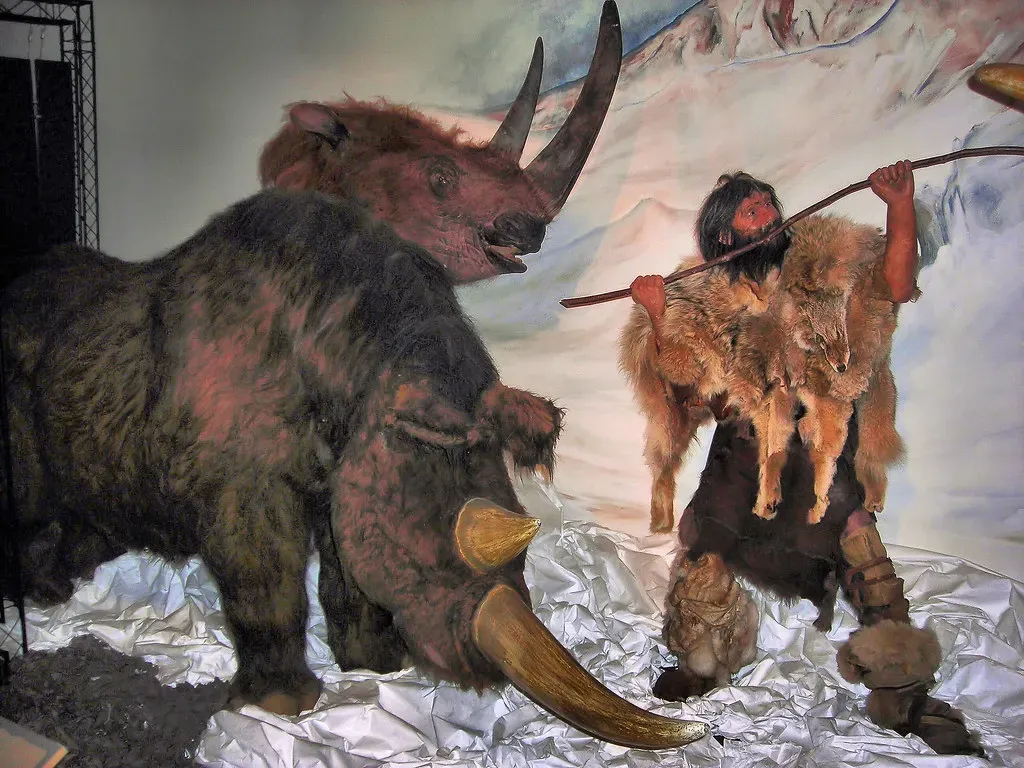
For years, scientists debated whether humans hunted woolly rhinos to extinction. Early genetic studies suggested climate was the sole culprit, but newer research reveals a more complex story. A combination of climate-driven habitat fragmentation and low but persistent levels of hunting by humans weakened metapopulation processes and caused their extinction.
Think about it this way: humans didn’t need to slaughter every rhino they encountered. Low level human hunting (~10% of every woolly rhinoceros generation) may have played a decisive role in the extinction by reducing the ability of woolly rhinoceros populations to colonise newly suitable habitat. Just roughly one in ten rhinos per generation being hunted was enough to prevent populations from expanding into new territories. As cooling temperatures around thirty thousand years ago pushed the rhinos southward, they encountered increasing numbers of human settlements. They were being squeezed between expanding glaciers to the north and human populations to the south.
A Discovery That Rewrote the Textbooks
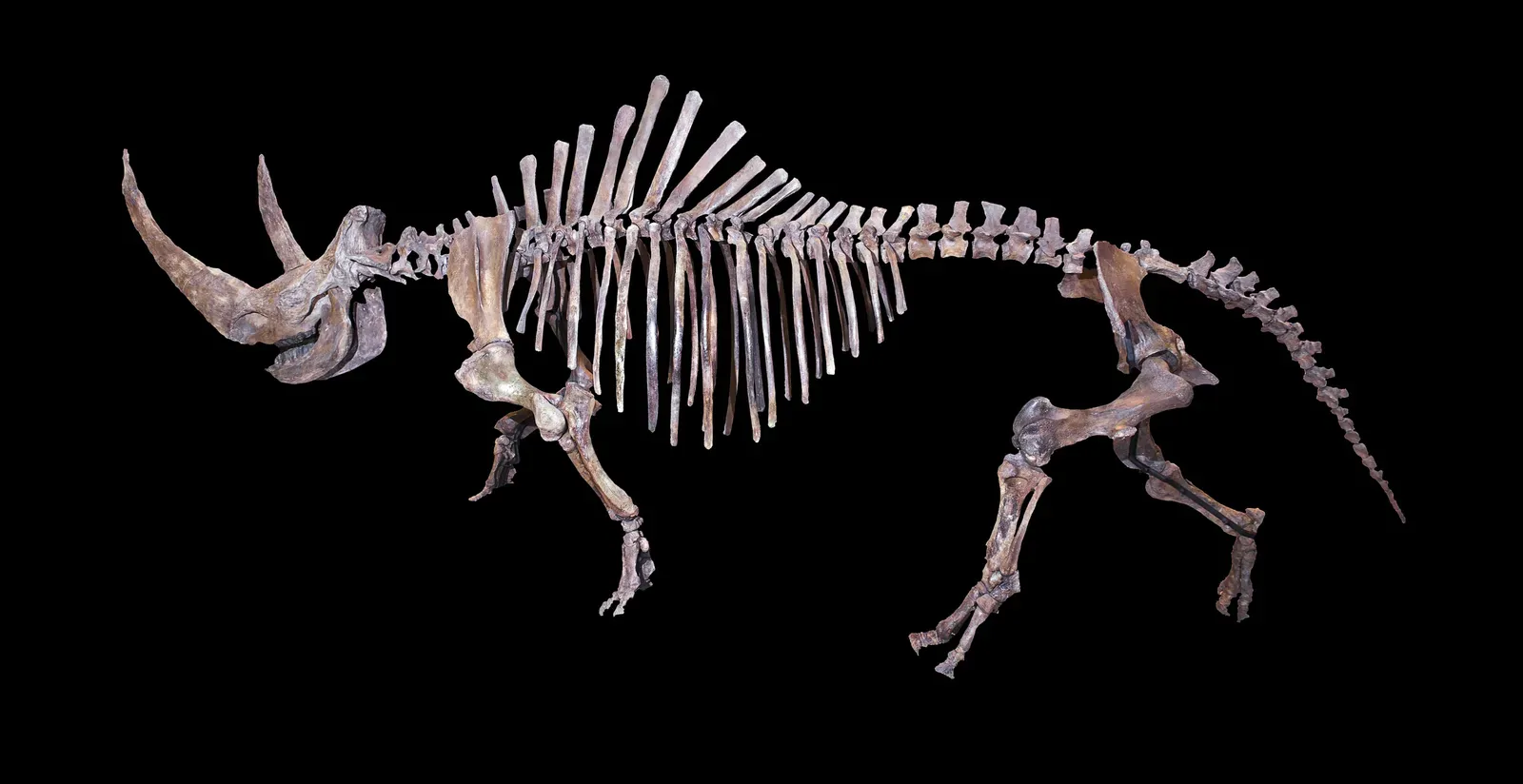
On the vast expanse of the Siberian steppe 14,000 years ago, a 2-month-old wolf pup gobbled down some woolly rhinoceros flesh. Moments later, its underground den collapsed, killing the pup and its sister. The wolf’s stomach contents, frozen in permafrost along with its corpse, have allowed scientists to sequence the DNA of one of the last known woolly rhinos. Let’s be real: the odds of this discovery were astronomical.
The study found no signs of genetic deterioration as the species approached extinction, suggesting the woolly rhinoceros probably maintained a stable and relatively large population until just before the species disappeared. This finding stunned researchers. When species decline slowly over millennia, their DNA tells a clear story of inbreeding and genetic erosion. The woolly rhino’s genome showed none of these warning signs. After the genome of this specimen was sequenced in 2025, scientists announced that they did not find any evidence of genetic erosion. This observation suggests that the woolly rhinoceros died out over the course of only a few hundred years rather than succumbing slowly over several thousand years.
The Perfect Storm of Extinction
A 52,000-year reconstruction of distribution-wide metapopulation dynamics supports a pathway to extinction that began long before the Holocene, when the combination of cooling temperatures and low but sustained hunting by humans trapped woolly rhinoceroses in suboptimal habitats along the southern edge of their range. Scientists used sophisticated computer simulations, running them over forty-five thousand times with different parameters to reconstruct exactly what happened.
The picture that emerged was sobering. Around thirty thousand years ago, advancing glaciers forced woolly rhinos into southern refuges where human populations were concentrated. Then, when warming finally arrived, it brought increased precipitation and deeper snow. Hunting limited the movements of the rhinos, as did their short, stubby legs, which made it difficult for them to trek through thick snow. They couldn’t migrate to newly suitable habitats in the north because human hunting pressure prevented population expansion. I know it sounds like a cruel twist of fate, and honestly, it was. They were trapped in an ecological dead end with no way out.
Lessons from a Vanished Giant
The species disappearing from Europe during the interval between 17 and 15,000 years ago, with its youngest confirmed reliable records obtained from bones being from the Urals, dating to 14,200 years ago, and northeast Siberia, dating to around 14,000 years ago. Some researchers suggest environmental DNA evidence points to survival until roughly 9,800 years ago, though this remains controversial. Either way, the collapse happened with shocking speed.
Our findings reveal how climate change and human activities can lead to megafauna extinctions. This understanding is crucial for developing conservation strategies to protect currently threatened species, like vulnerable rhinos in Africa and Asia. Modern rhinos face eerily similar threats: habitat fragmentation, climate disruption, and human pressure. The woolly rhino’s story isn’t just ancient history. It’s a warning written in ice and bone about what happens when multiple threats converge on a species simultaneously.
The woolly rhinoceros survived for hundreds of thousands of years through countless climate cycles. It evolved remarkable adaptations to thrive in one of Earth’s harshest environments. Yet when faced with rapid environmental change combined with even modest human impacts, these magnificent giants disappeared in just a few centuries. Their sudden extinction reminds us that even the most successful species can reach a tipping point from which there’s no recovery. What does this tell us about the modern extinction crisis we’re witnessing today?