
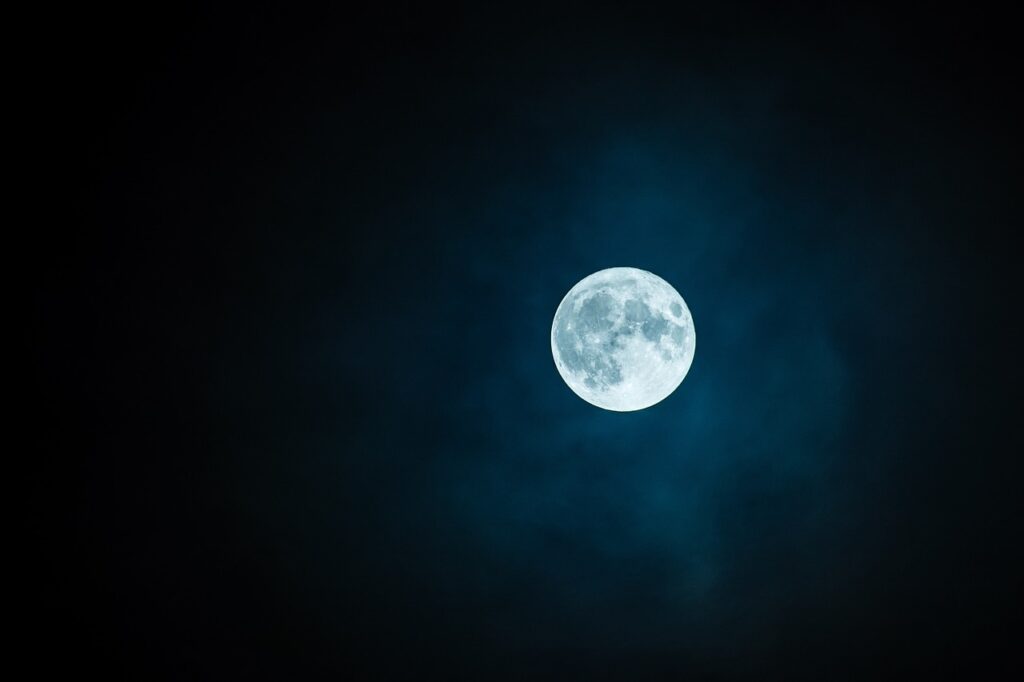
A celestial trio featuring the Moon, Saturn, and Neptune promises a memorable sight in the southwestern sky on the evening of January 23, 2026.
Morning Alignments Pave the Way for Nighttime Views

Morning Alignments Pave the Way for Nighttime Views (Image Credits: Pixabay)
Early on January 23, the Moon executed precise passes near two outer planets, creating anticipation for observers worldwide. At 8 A.M. EST, it positioned itself 4 degrees north of Saturn. Just three hours later, at 11 A.M. EST, the Moon shifted to 4 degrees north of Neptune.
These daytime events remained invisible to the naked eye but aligned the bodies perfectly for later observation. Saturn, with its distinctive rings, and the faint Neptune set themselves up alongside the bright Moon. Evening brought the group into view, low in the southwest after sunset.
Prime Time to Spot the Trio
The southwestern sky hosts this gathering for several hours after dusk, offering ample time for casual viewers. The Moon’s glow highlights its planetary companions against the deepening twilight. Saturn appears as a steady, yellowish point, while Neptune requires steady eyes or binoculars due to its dimmer profile.
Visibility peaks as darkness falls, with the group remaining accessible until they dip below the horizon. Clear weather enhances the display, though urban light pollution may challenge fainter details. Patience rewards those who scan the horizon systematically.
Tips for Successful Observation
Preparation ensures the best experience during this brief window. Start by locating the Moon, which serves as the easiest anchor in the southwest. From there, sweep slightly northward to find Saturn about 4 degrees away, then continue to Neptune nearby.
Here are key steps to maximize your viewing:
- Choose a location with an unobstructed southwestern horizon, away from city lights.
- Arrive shortly after sunset to catch the planets before they fade into the night.
- Use binoculars or a small telescope for Neptune’s subtle blue hue and Saturn’s rings.
- Check local weather forecasts to avoid cloudy interference.
- Allow eyes 20 minutes to adapt to darkness for sharper contrasts.
- Pair with a sky app for precise positioning if needed.
Context in the Broader Sky Calendar
This event caps a week rich in astronomical highlights. The day prior, on January 22, the Rosette Nebula offered deep-sky enthusiasts a target in the constellation Monoceros. That emission nebula, resembling a cosmic flower, rewards imagers with its intricate hydrogen clouds.
January’s skies continue to deliver, blending lunar motions with planetary stands. Saturn and Neptune, both ice giants, remind viewers of the solar system’s vast scale. Such alignments occur periodically, drawing renewed interest to backyard astronomy.
Key Takeaways
- The Moon passes 4° north of Saturn at 8 A.M. EST and Neptune at 11 A.M. EST on January 23, 2026.
- View the trio in the southwestern sky for hours after sunset.
- Binoculars enhance Neptune’s visibility amid the Moon’s brilliance.
This January 23 alignment underscores the accessible wonders overhead, inviting everyone to pause and gaze upward. Simple tools and timing unlock these moments, fostering a deeper connection to the cosmos. What are your plans for catching this sky show? Share your observations in the comments.