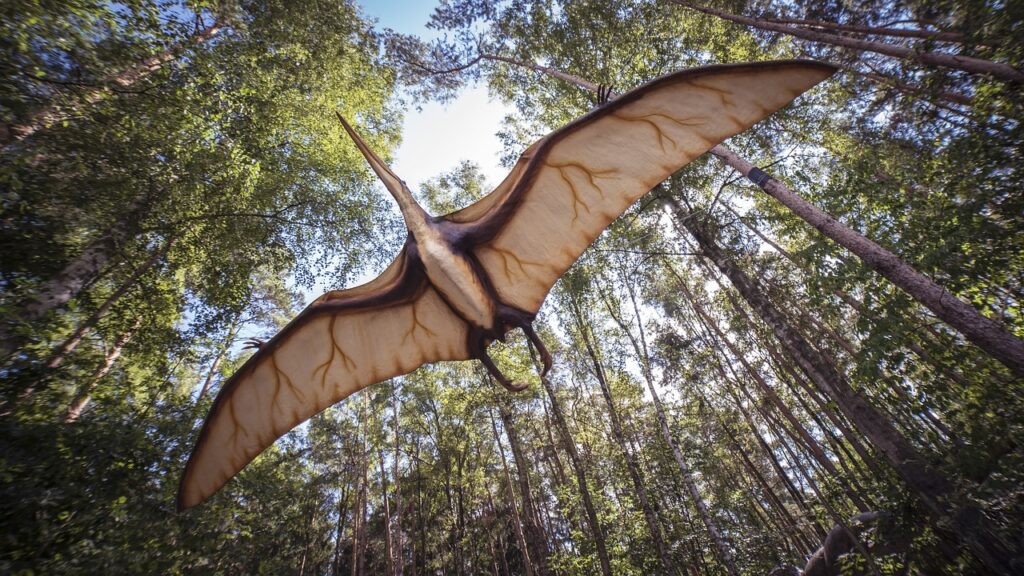
Have you ever looked up at the sky and wondered what it was like when giants soared overhead? Long before eagles and hawks claimed dominion over the clouds, enormous winged reptiles patrolled the air above what would become North America. These weren’t birds or dinosaurs, though they lived alongside the latter for millions of years. They were pterosaurs, and some of them were as large as small aircraft.
Think about it. Imagine walking along an ancient riverbank only to see a shadow pass over you, cast by something with wings wider than a giraffe is tall. These creatures ranged from seagull-sized hunters to behemoths that could travel thousands of miles without landing. Let’s dive into the most remarkable flying reptiles that once commanded the skies over ancient America.
Quetzalcoatlus: The Flying Giant With A Giraffe’s Height
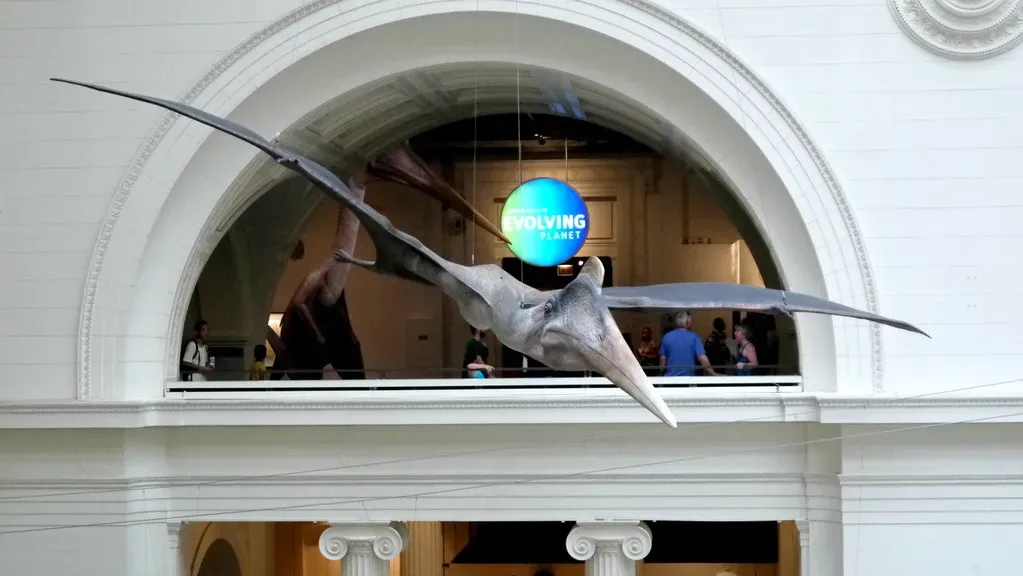
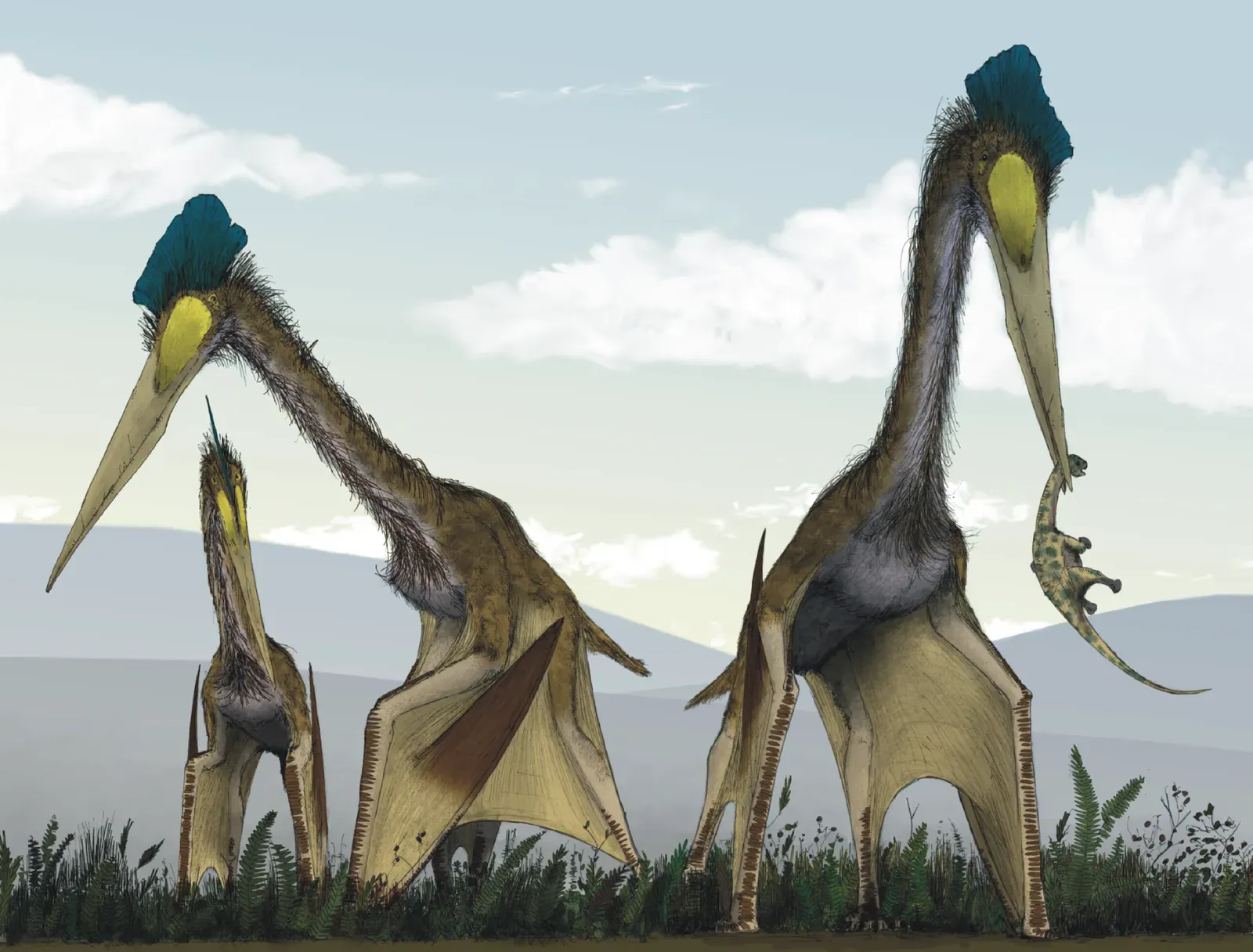
Quetzalcoatlus was an azhdarchid pterosaur that lived during the Late Cretaceous in North America, with fossils recovered from the Javelina Formation of Texas. This massive creature dominated the skies at the end of the Dinosaur Age and flew high over famous creatures like Tyrannosaurus and Triceratops. The larger species, Quetzalcoatlus northropi, stood as tall as a giraffe on the ground, more than five meters tall and weighed 250 kilograms.
Named after the Aztec serpent god of the sky, Quetzalcōātl, the specific name honors Jack Northrop, designer of a tailless fixed-wing aircraft. An animal the size of Quetzalcoatlus could consume victims as large as small dinosaurs, picking them up in its huge toothless jaws. They could likely travel nonstop for 16,000 kilometers after launching, only rarely flapping to keep themselves in the air and to steer their path.
Cryodrakon Boreas: The Frozen Dragon Of The North
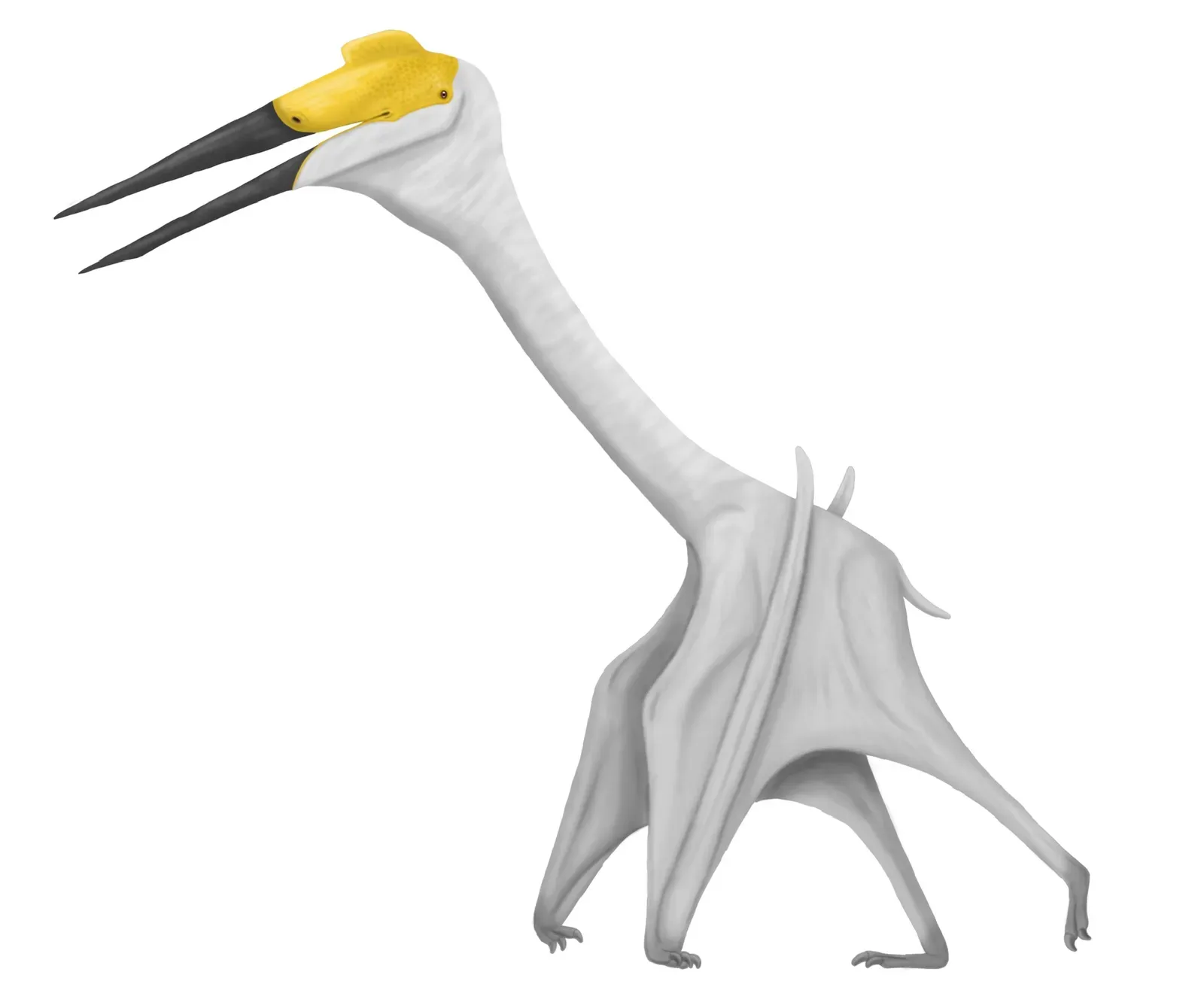
The pterosaur Cryodrakon boreas was one of the largest flying animals that ever lived, its name meaning “frozen dragon of the north wind,” and it flew over North America 77 million years ago. This gigantic flying reptile had a wingspan up to 32.8 feet or 10 meters. Discovered in Canada, this creature was initially confused with Quetzalcoatlus for three decades before researchers realized they were looking at something entirely different.
While Cryodrakon and Quetzalcoatlus probably had a very similar size and build, with similar flight muscles and characteristics, it appeared they were not actually the same species. Compared to Quetzalcoatlus, which weighed around 250 kilograms, Cryodrakon was slightly heavier and relatively robust. A journey of a few hundred or even thousands of miles shouldn’t have been a big deal for this creature.
Pteranodon: America’s Most Abundant Flying Reptile
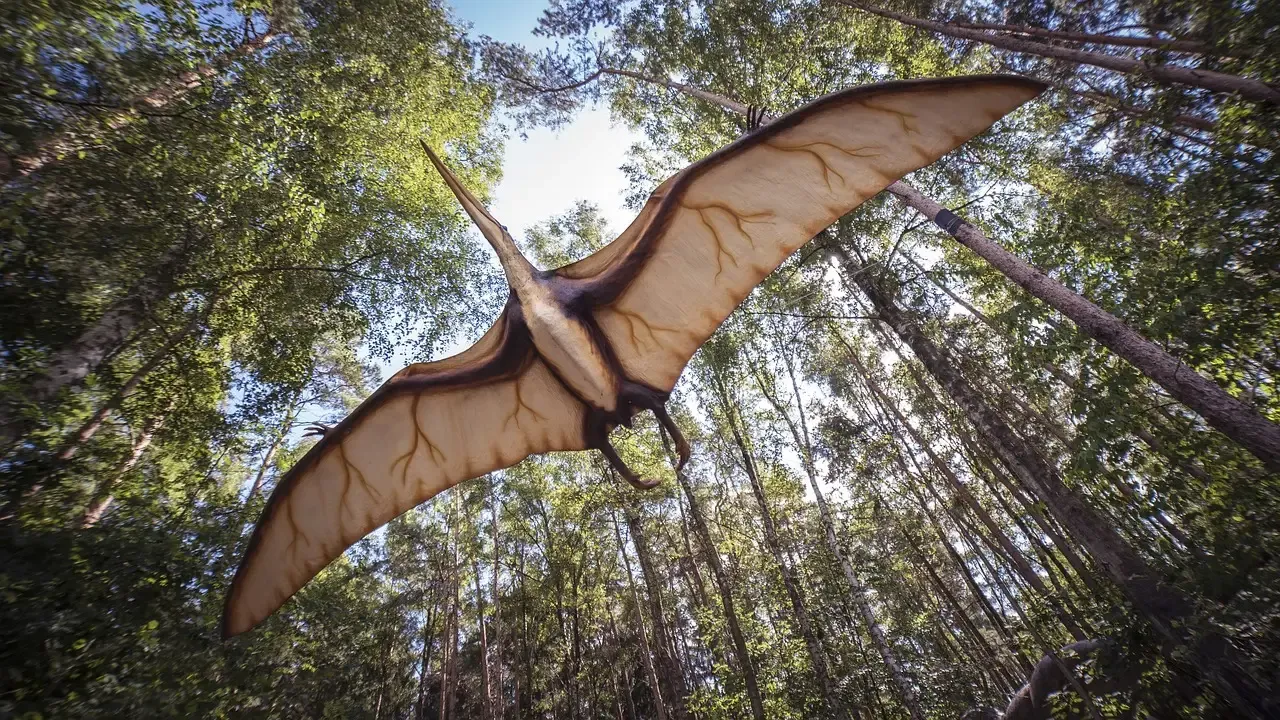
Pteranodon is arguably the most famous pterosaur and probably the creature most people immediately think of when thinking about flying dinosaurs. A resident of what would eventually become North America, over 1,200 fossilized specimens have been unearthed, the most of any prehistoric flying reptile. In 1870, Othniel Charles Marsh discovered Pteranodon in the Niobrara Chalk, then the largest known pterosaur, the first toothless one and the first from America.
This creature has become iconic precisely because of how many fossils paleontologists have found. Having more than a thousand specimens means scientists understand its anatomy far better than most other pterosaurs. The abundance of these remains tells us that Pteranodon thrived across what was once the Western Interior Seaway, a vast shallow sea that split North America in two during the Cretaceous period.
Eotephradactylus Mcintireae: North America’s Oldest Sky Hunter
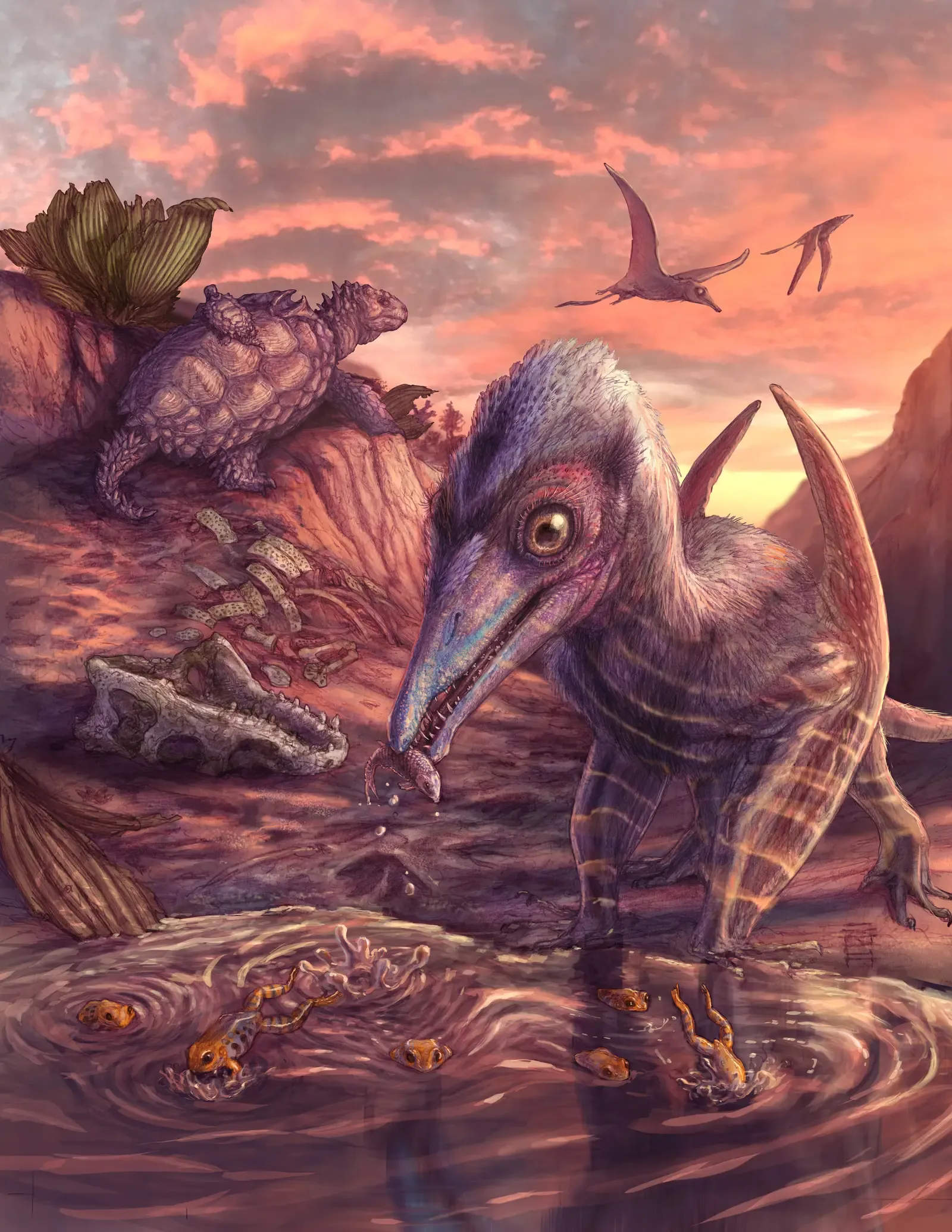
Fossils from Petrified Forest National Park, Arizona, include North America’s oldest known pterosaur, Eotephradactylus mcintireae, dating to about 209 million years ago in the late Triassic. This new species of pterosaur is one of the oldest species found outside of Europe, and the winged reptile would have been small enough to comfortably perch on a person’s shoulder.
Because the tips of the teeth were worn down, the team concluded that the pterosaur likely fed on fish, many of which were encased in armor-like scales. The generic name means ‘ash-winged dawn goddess’ and references the site’s volcanic ash and the animals’ position near the base of the pterosaur evolutionary tree. This discovery matters because it shows pterosaurs were thriving in North America much earlier than previously understood.
Cimoliopterus Dunni: The Texas Traveler With English Cousins
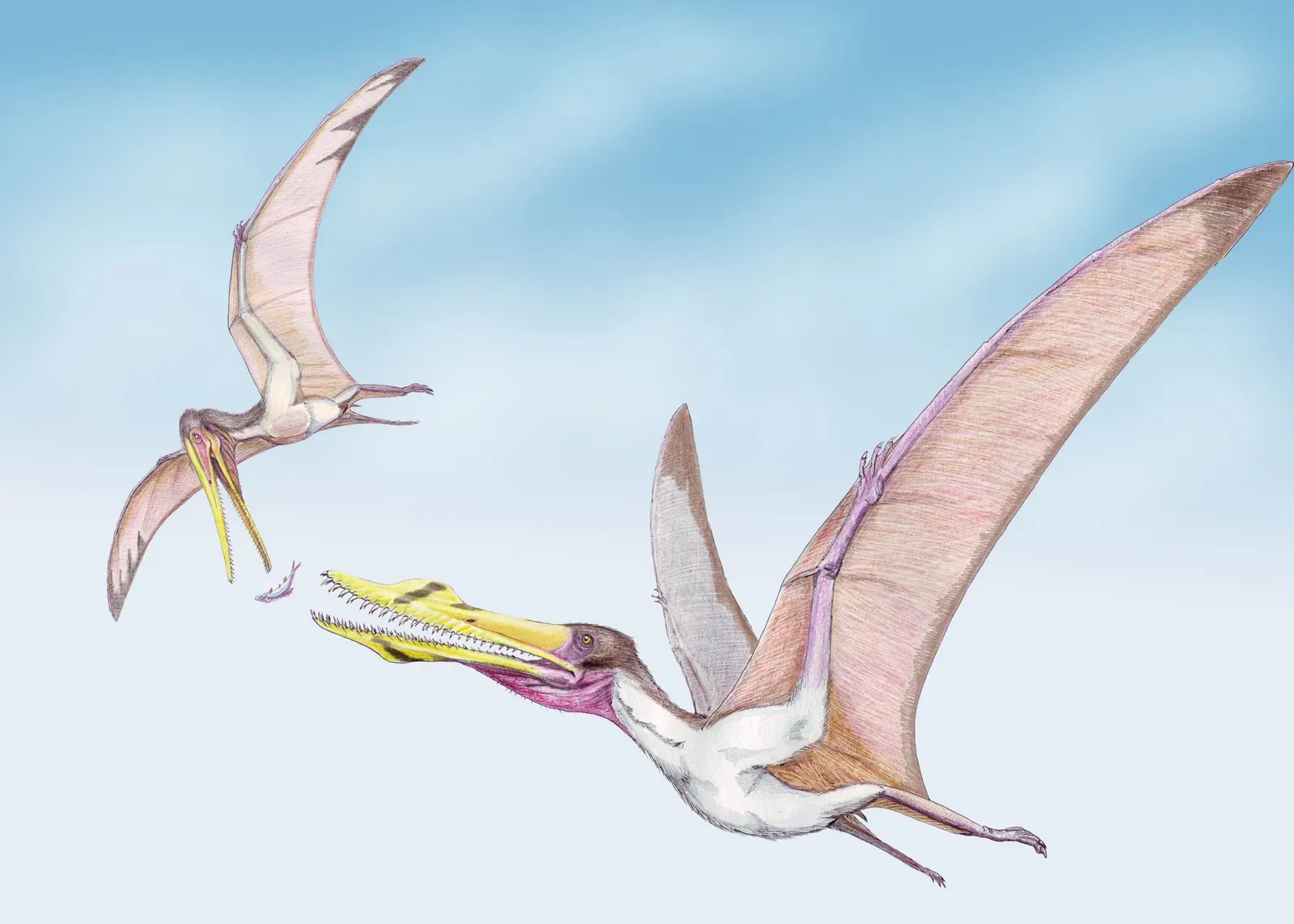
The new Texas native, Cimoliopterus dunni, is only the third pterosaur species with teeth from the Cretaceous of North America, and all three of the toothy Cretaceous-era pterosaurs discovered so far from North America are Texans. Cimoliopterus dunni is most closely related to England’s Cimoliopterus cuvieri. This fascinating connection between continents raises questions about how these creatures moved across the widening Atlantic Ocean.
Cimoliopterus dunni likely hunted fish just off shore in the shallow Western Interior Seaway. As a group, ornithocheirids are noted for their dentition, the long and pointed fangs of these creatures being particularly well suited to catching fish. The discovery of this species helps solve a puzzle about why North American pterosaurs show such strong ties to European species rather than South American ones.
Quetzalcoatlus Lawsoni: The Social Flyer
The remains of a second Quetzalcoatlus species were found between 1972 and 1974, around 40 kilometers from the Q. northropi locality, and in 2021, these remains were assigned to the name Quetzalcoatlus lawsoni. Quetzalcoatlus lawsoni had a shorter wingspan than its giant relative, at around the length of a car.
Unlike its massive cousin, this smaller species exhibited very different behavior. Quetzalcoatlus lawsoni appears to have been associated with alkaline lakes with a diet of small aquatic invertebrates suggested, and appears to have been highly gregarious or social. Together, these pterosaurs would have fed on a range of fish and small aquatic prey. The existence of two distinct species in the same region shows how these creatures divided ecological niches.
Azhdarchid Pterosaurs: The Stork-Like Terrestrial Hunters
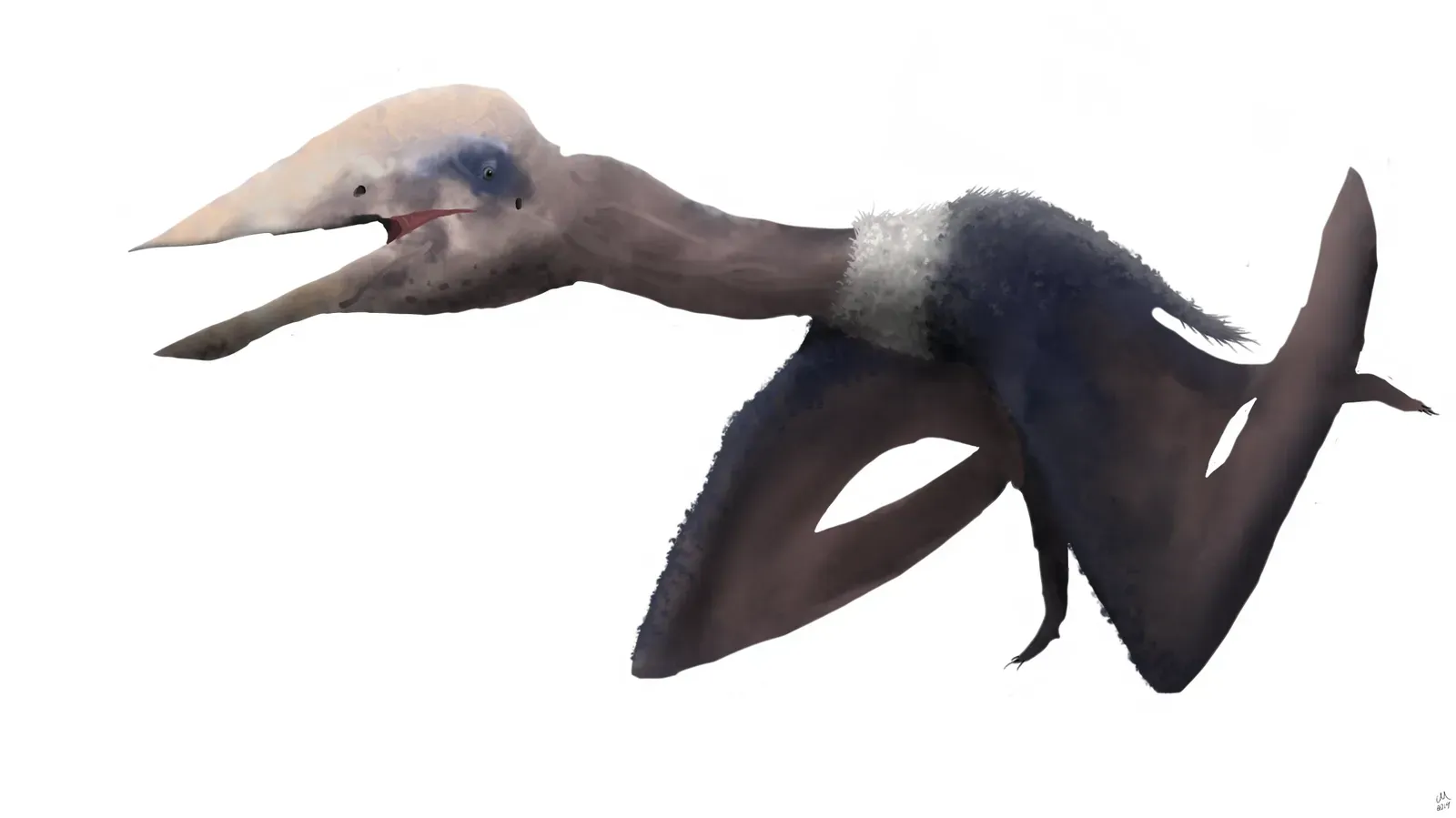
The azhdarchid family represents the pinnacle of pterosaur evolution, containing the largest flying animals that ever existed. Named after a Mesoamerican deity, the azhdarchid family of pterosaurs was limited to the Cretaceous period, the time between 144 and 66 million years ago. Azhdarchid pterosaurs from the late Cretaceous epoch between 76.9 and 75.8 million years ago included the biggest flying creatures ever, with a wingspan of 30 feet and weighing 500 pounds, capable of sailing across continents and oceans.
More recently, the azhdarchids were cast as stork-like terrestrial stalkers that picked up small animals while walking overland on dry ground. Like all flying reptiles, they launched off the ground in a four-footed leap. These creatures spent considerable time hunting on land rather than over water, a revelation that changed how scientists understand pterosaur ecology.
Conclusion
The skies of ancient North America were far more crowded and dangerous than anything we see today. These seven incredible pterosaurs represent just a fraction of the diversity that once existed, from tiny fish-catchers perching on your shoulder to massive terrestrial stalkers as tall as modern giraffes. They weren’t dinosaurs, yet they lived alongside them for over 150 million years, perfecting the art of powered flight long before birds dominated the air.
Each new fossil discovery rewrites what we thought we knew about these magnificent creatures. From the frozen north of Canada to the warm wetlands of Texas, pterosaurs adapted to every environment imaginable. What other secrets remain buried in ancient rock formations, waiting to reveal even more astonishing creatures?