You probably picture Florida as a land of sunshine, beaches, and modern wildlife. Think again. Thousands of years ago, this peninsula was a vastly different world, teeming with creatures that would seem more at home in the wildest corners of your imagination than on sandy shores.
Florida’s Pleistocene sediments are actually regarded as the best source of fossils from this era in the entire world, especially for mammals. Pleistocene Florida had a greater diversity of terrestrial vertebrates than any other place and time in North American history. That’s not hyperbole. Picture elephant cousins, towering sloths, and armored tanks on legs wandering through vastly expanded savannas. Let’s dive in.
When Florida Was Twice Its Size
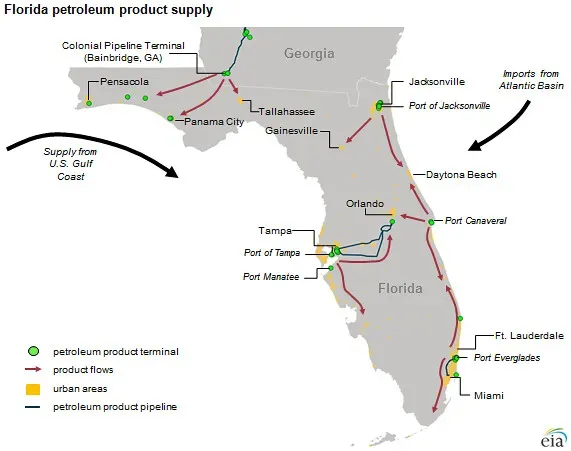
During glacial periods when sea levels dropped, Florida was more than twice as large as it is today. Warmer periods caused the peninsula to shrink in size. Hard to imagine, honestly. The coastline you know today would have been nowhere near the water.
Where the Gulf of Mexico laps at beaches now, vast grasslands stretched for miles. The ice ages of the Pleistocene wreaked climatic havoc on the northern continents, but Florida was buffered from the worst effects by the warm waters of the Gulf of Mexico. Nevertheless, rapid pulses of climate change profoundly affected the area. The climate fluctuated wildly between cool and warm periods, creating a mosaic of habitats that supported an astonishing variety of life.
The Gentle Giants: Ground Sloths of Epic Proportions
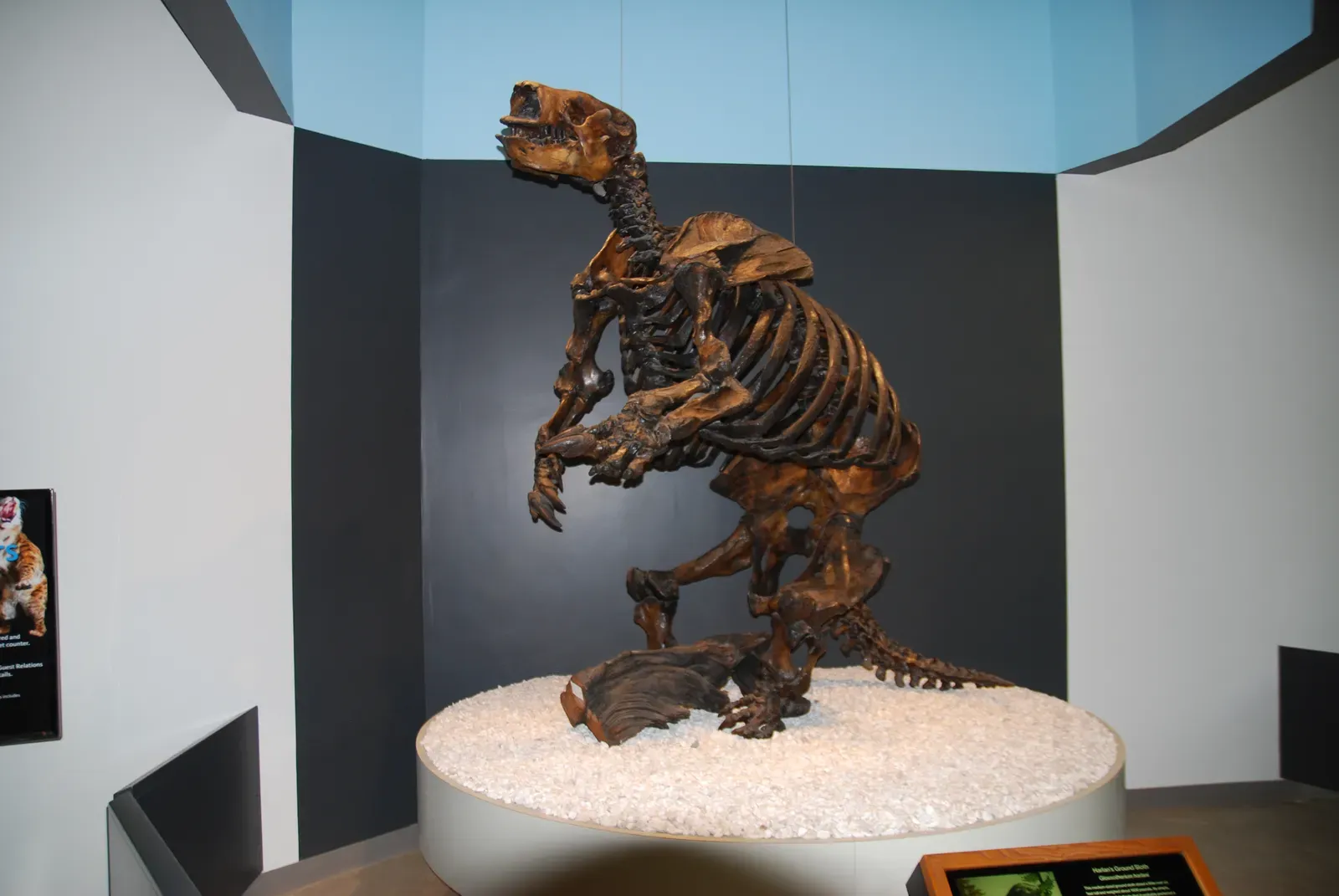
Giant ground sloths stood 13 feet tall, and species like Eremotherium towered up to 20 feet tall when standing on their hind legs. Let that sink in for a moment. These weren’t the adorable, slow tree sloths you see in nature documentaries. These were massive herbivores that could look down on modern giraffes.
Weighing approximately four tons, about the same as a modern elephant, Eremotherium laurillardi was the largest ground sloth species in North America. Their enormous curved claws weren’t designed for climbing. Instead, they pulled down branches and defended against predators. The giant ground sloth discovered just three miles south of the Museum of Arts and Sciences is the most complete skeleton in the world. These peaceful vegetarians shaped the Florida landscape in ways we’re only beginning to understand.
Mastodons and Mammoths: The Elephant Cousins
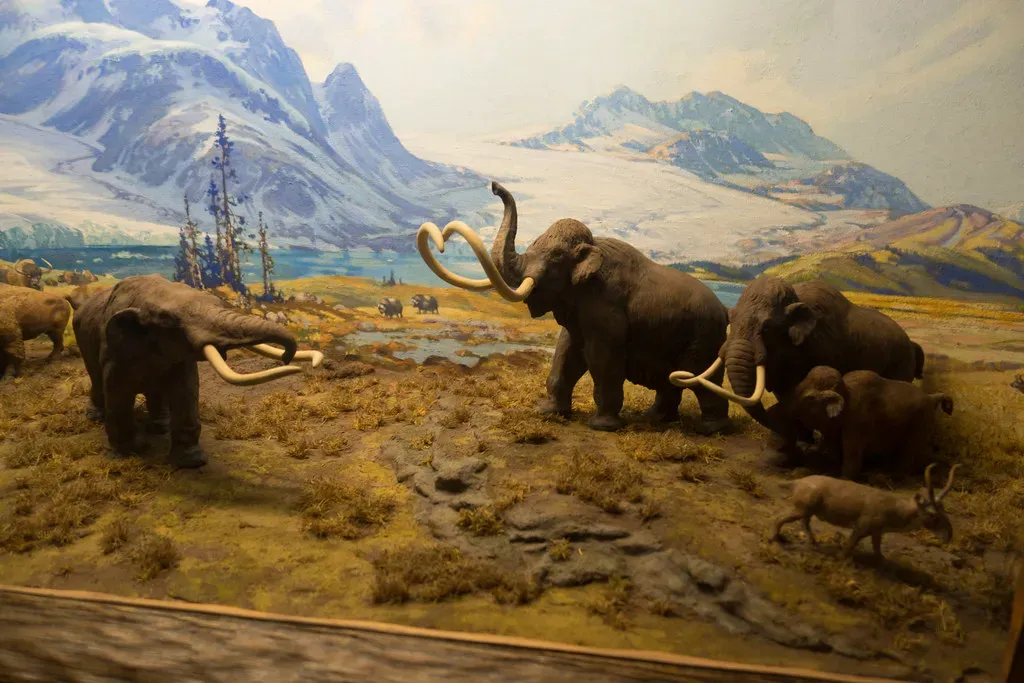
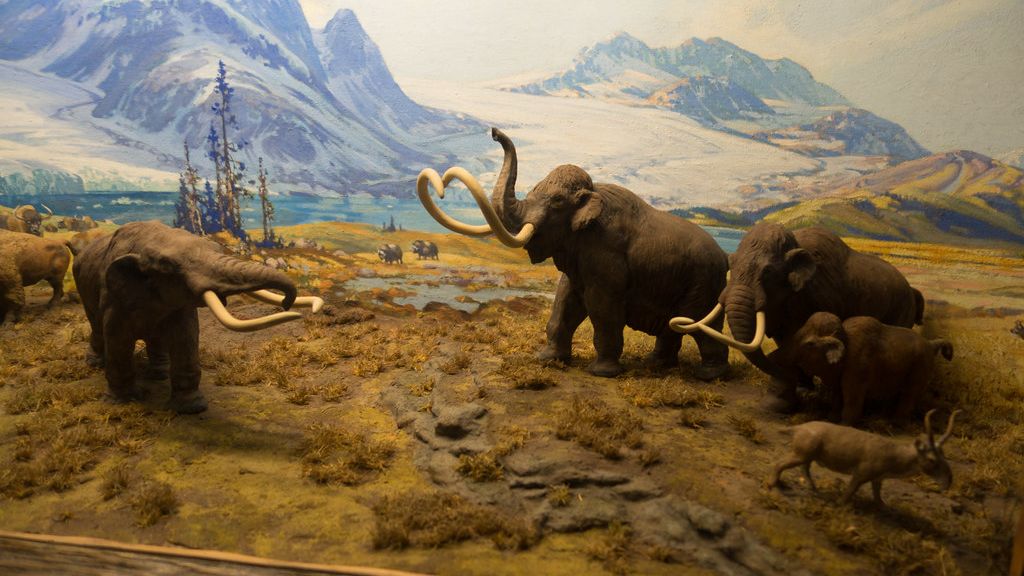
Florida’s lush vegetation supported incredible herds of these proboscideans. Mastodons were extinct prehistoric elephants that vanished from the fossil record 11,000 years ago. This large mammal was short, stocky, heavily muscled and stood about seven-and-a-half-feet tall when measured at the shoulders. They roamed through forests in herds, munching on trees, bushes, and grasses.
Herds of American mastodon and Columbian mammoth browsed and grazed on the local foliage. The gigantic ground sloth Eremotherium was another contemporary large herbivore. Picture this ecosystem. Massive herds moving across open savannas, their footsteps echoing through a landscape teeming with life. Through study, it has been discovered that mastodons separated from elephants about 27 million years ago. The mastodons eventually moved out of Africa and in to Asia, and ultimately crossed the Bering Land Bridge into North America and finally migrated in to Florida.
Armored Tanks: The Bizarre Glyptodont
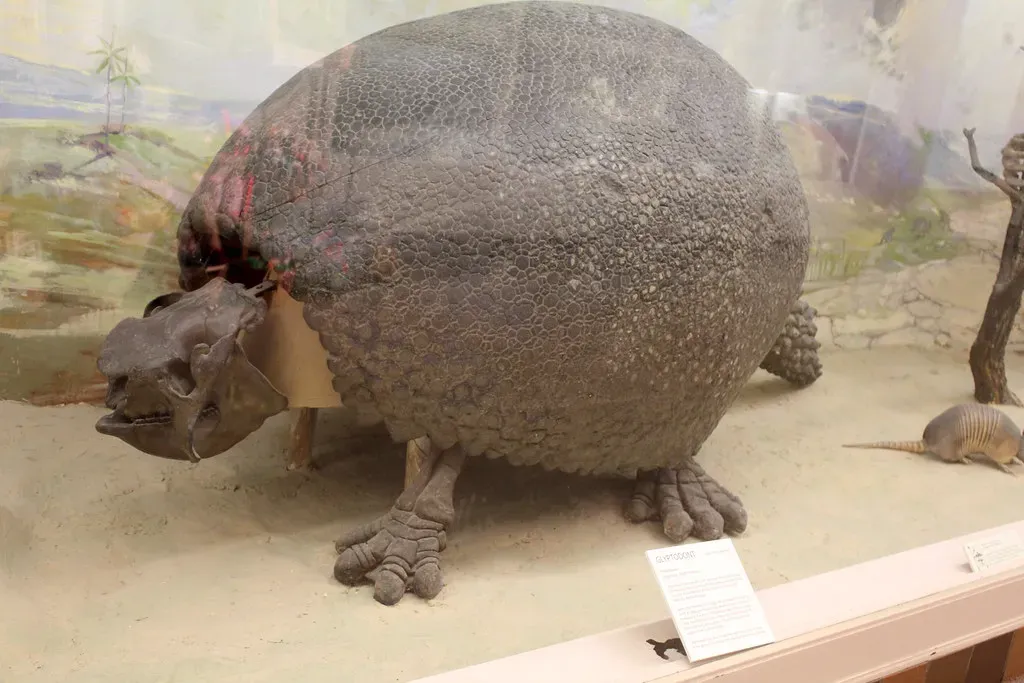
Here’s the thing about glyptodonts. They looked like something out of a fantasy novel. Glyptodonts are one of the favorite Ice Age fossils because there is nothing like them today. They are large round animals which could reach heights up to 5 feet tall and weigh 2 tons. Imagine a small car with armor plating wandering through prehistoric Florida.
This unique species was almost covered head-to-toe in armor that was made up of about 1,000 osteoderms, which are bony plates about 2.5 centimeters thick. Their legs were short and stout, the perfect size to hold the weight of the shell. Glyptodonts came from South America around 3 million years ago when North and South America merged. They were related to armadillos, yet resembled a bizarre cross between an armadillo and a giant tortoise. These odd herbivores grazed on low vegetation, likely moving slowly due to their massive protective shells.
Predators That Would Make Your Blood Run Cold
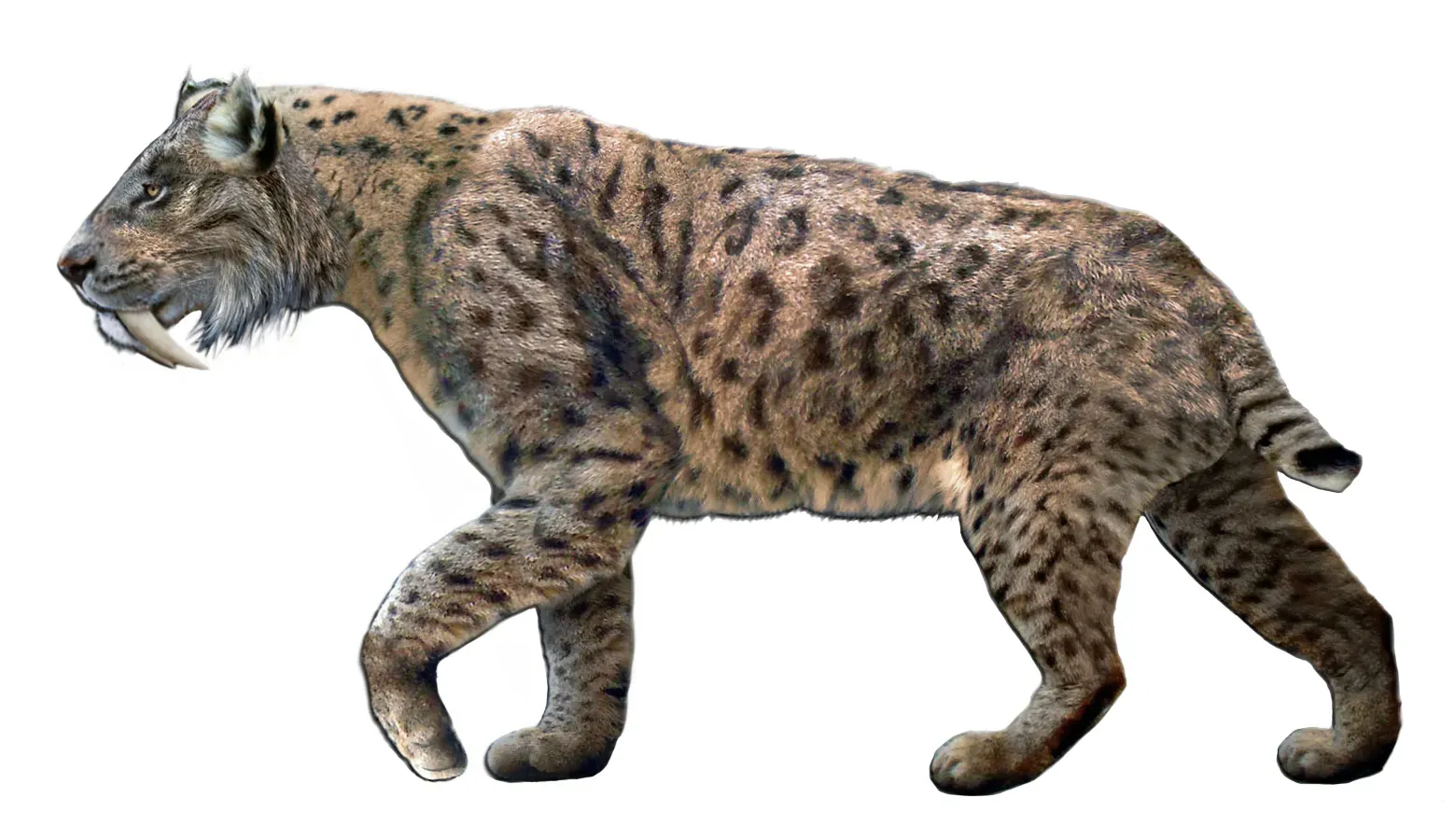
All those plant-eaters needed something to fear. Predators like the saber-toothed cat and the speckled bear were here too. The American lion, one of the largest cats in history, prowled Florida’s grasslands. Dire wolves hunted in packs, their powerful jaws designed for taking down prey much larger than themselves.
Dire wolves hunted in packs and were equipped with powerful jaws for taking down large prey. Fossils of dire wolves have been discovered in Florida’s fossil-rich areas, such as the Peace River. The landscape must have resembled the African Serengeti. Vast herds of herbivores, constantly alert, scanning the horizon for apex predators. Saber-tooth cats could weigh 1,000 pounds, making them formidable hunters. You can almost hear the tension in the air.
Unexpected Residents: Horses, Camels, and More
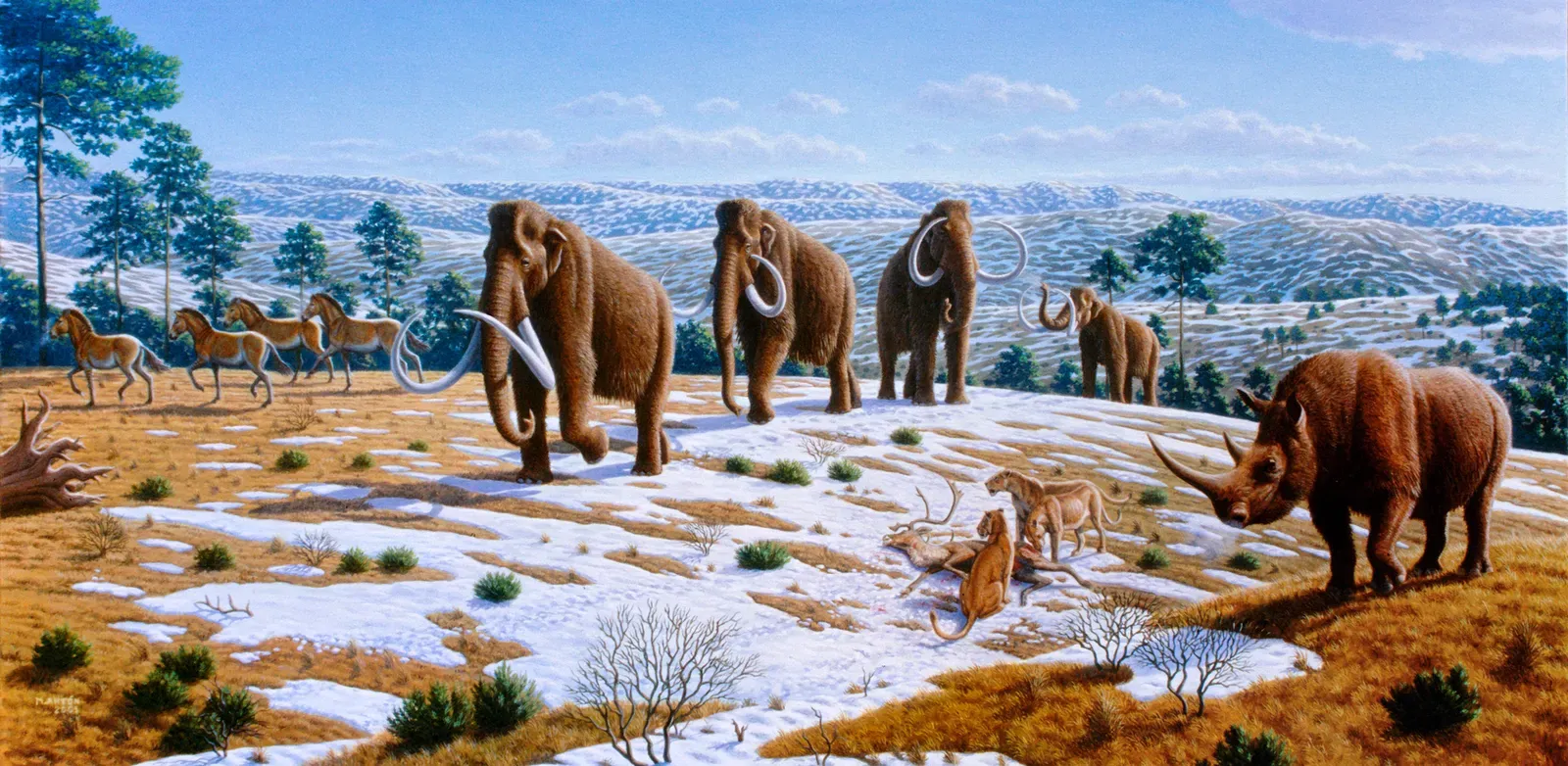
This might surprise you. Big camels and horses migrated south into Florida in search of food and warmth. Yes, camels in Florida. Seems absurd, I know. These weren’t the desert camels we think of today, though. They were adapted to the cooler, grassier landscape of Ice Age Florida.
Several species of ancient horses, such as Equus simplicidens, grazed the plains of Florida. Unlike modern horses, these were smaller and adapted to the region’s grassy landscapes. Tapirs also inhabited the swamps and hardwoods. Unusual animals such as camels, llamas, horses, tapirs, giant armadillos called glyptodonts, dire wolves and huge rodentlike capybaras gave way to lesser mammals. It was a menagerie unlike anything you’d find anywhere on Earth today.
The Mystery of the Megafaunal Extinction
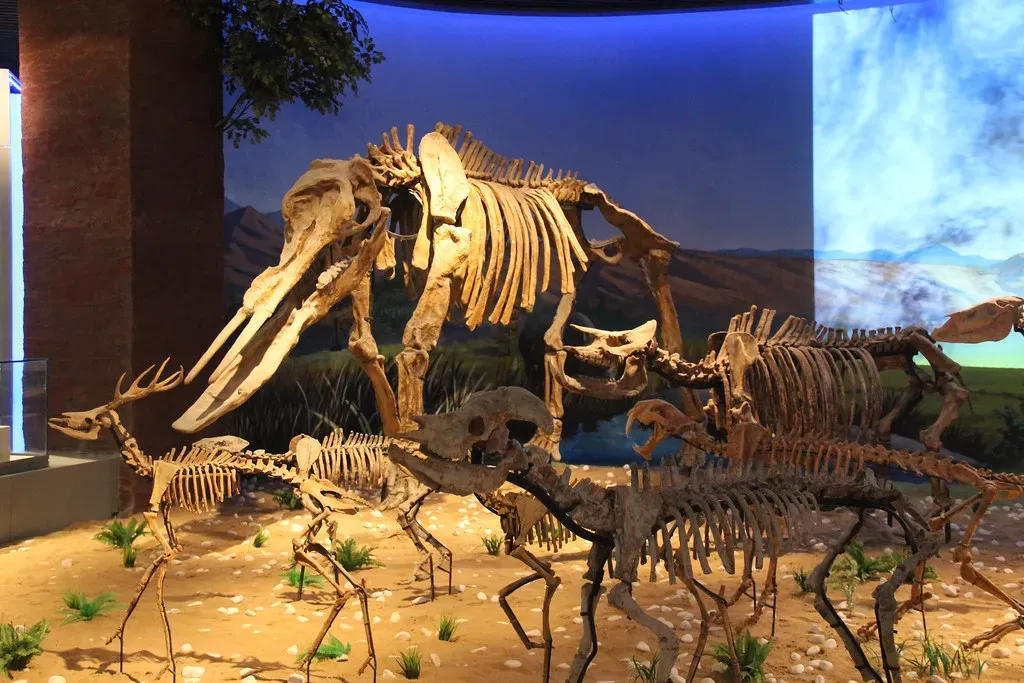
Then, roughly 10,000 to 12,000 years ago, they vanished. Almost thirty animal species disappeared from Florida by the end of the last ice age, just under 12,000 years ago. The different species didn’t all go extinct at once, it was a process that unfolded over thousands of years. Scientists still debate what happened. Was it climate change as the ice sheets retreated? Human hunting pressure?
Determining whether the first arrival of humans or the warm-up of the American continent at the end of the last Ice Age was responsible for the demise of prehistoric sloths has puzzled scientists because both events occurred at the same time, about 11,000 years ago. By using radiocarbon to date fossils from Cuba and Hispaniola, where humans appeared later than on the North American continent, long after the last Ice Age occurred, researchers found the last record of West Indian ground sloths coincided with the arrival of humans 4,400 years ago. The evidence increasingly points toward humans playing a significant role. Human population size and specific human activities, not climate change, caused rapidly rising global mammal extinction rates during the past 126,000 years. Around 96% of all mammalian extinctions over this time period are attributable to human impacts.
Conclusion: A Lost World Beneath Our Feet
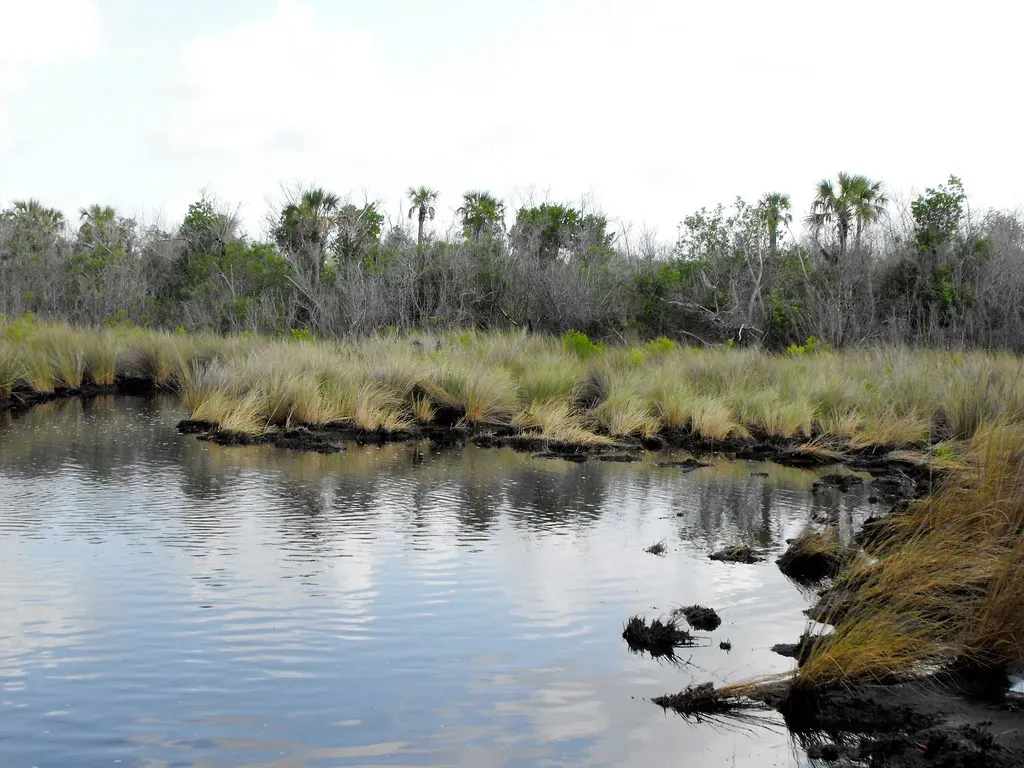
Florida’s rivers and sinkholes continue to reveal this hidden past. Over 750 different locations in Florida have produced fossils of vertebrate animals. Florida has the richest fossil record of vertebrate animals of the eastern United States. Every fossil discovery adds another piece to the puzzle of what this peninsula once was.
Perhaps no other place in the world had such a rich and interesting role in the Pleistocene Epoch as Florida. It was the last epoch of glorious extremes and its closure opens the door to our time. Walking on Florida soil today, it’s hard to fathom that giant sloths once lumbered where shopping malls now stand, that mammoths trumpeted where highways cut through. The next time you’re wading in a Florida river, remember what once roamed these lands. What do you think caused their extinction? The debate continues, and perhaps the answer lies buried somewhere, waiting to be discovered.