Picture yourself snorkeling down a murky Florida river on a lazy Sunday afternoon, running your hand along the sandy bottom, when suddenly you touch what feels like a log. Except it’s not a log at all. It’s a four-foot-long, fifty-pound femur from a creature that walked the earth tens of thousands of years ago. Hard to wrap your head around, right?
Yet discoveries like this are happening more frequently than you might expect in Florida’s waterways. The Sunshine State is sitting on a treasure trove of Ice Age secrets, and scientists are piecing together a fascinating puzzle about the massive mammals that once roamed where your favorite beach now stands. These weren’t your typical wildlife either. We’re talking about elephantine behemoths that would make today’s African elephants look modest by comparison.
When Florida Was Twice Its Size
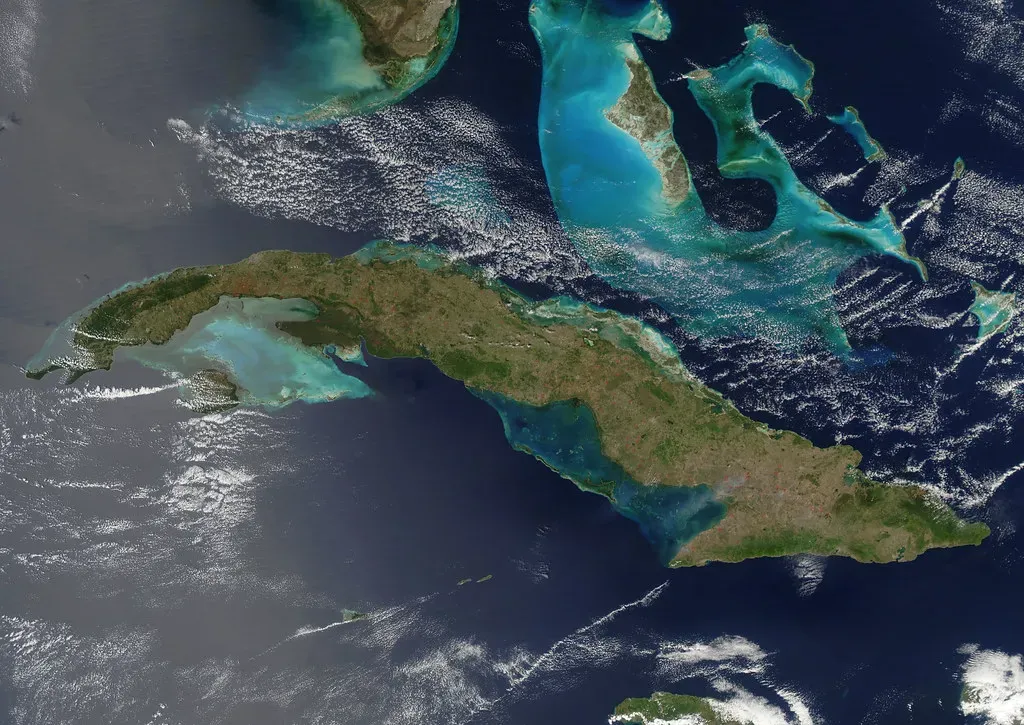
During the Ice Age, Florida was a dramatically different landscape, buffered from the worst glacial effects by the warm Gulf of Mexico but still experiencing profound climate changes. When sea levels dropped during glacial periods, Florida expanded to more than twice its current land area.
Imagine nearly three times as much Florida real estate sprawling out into what is now the Gulf of Mexico and the Atlantic Ocean. Worldwide sea levels plummeted some 300 feet as water became locked in ice, greatly expanding dry land along the Florida peninsula and creating a desert or dry savannah landscape where megafauna including mammoths roamed. This wasn’t the humid, swampy Florida you know today. This was open grassland territory, perfect grazing grounds for the giants.
The Columbian Mammoth’s Florida Kingdom
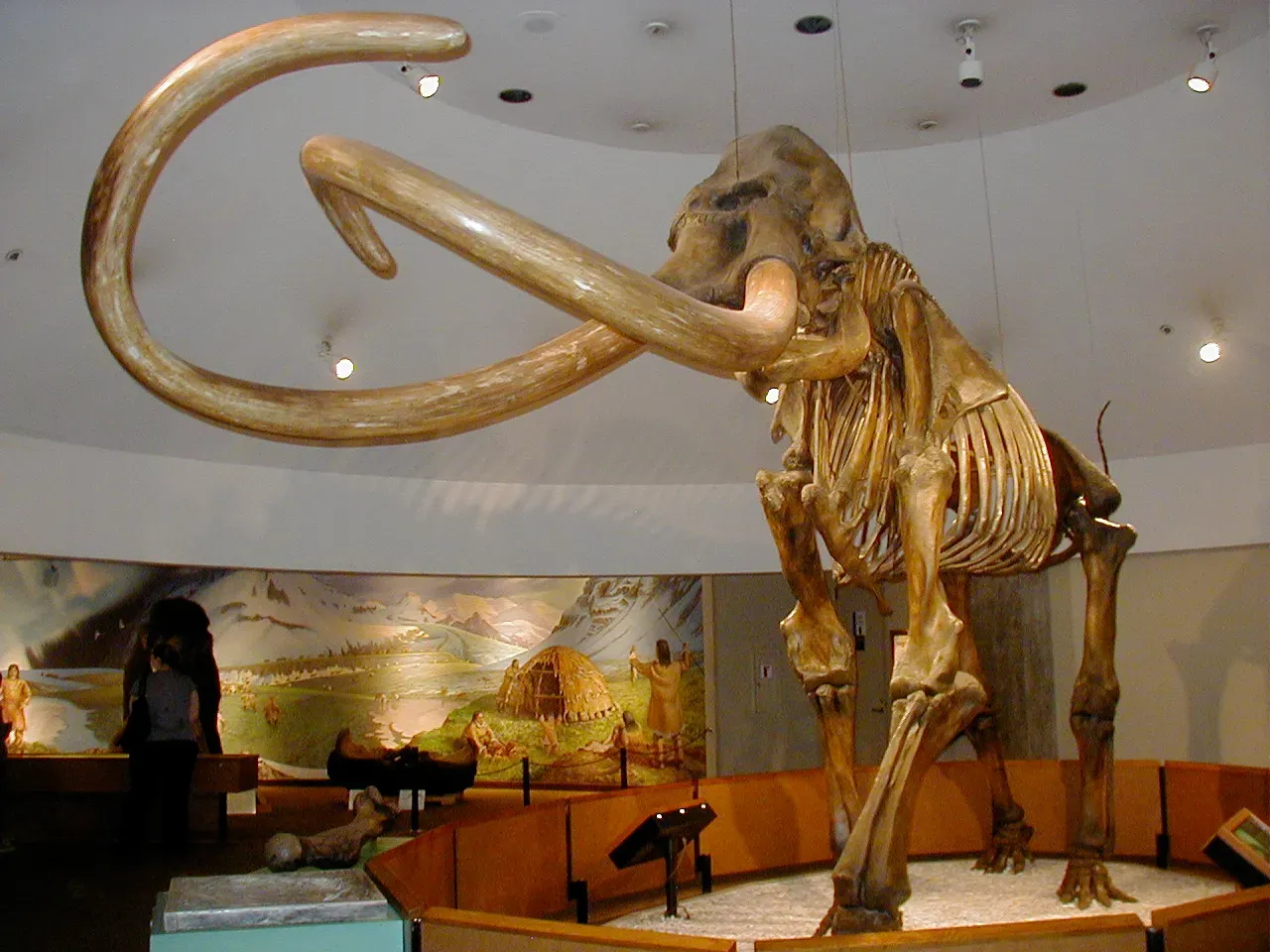
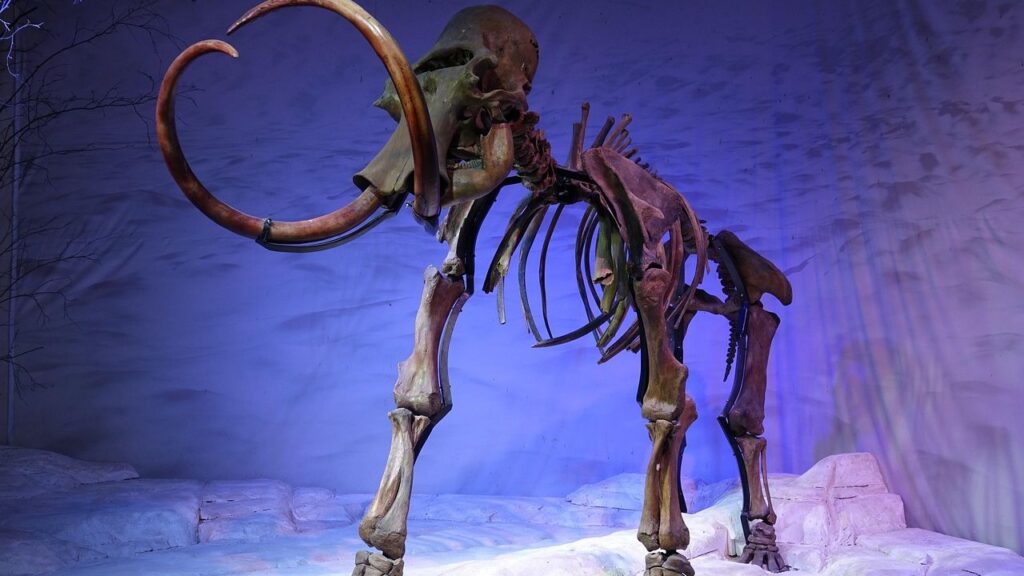
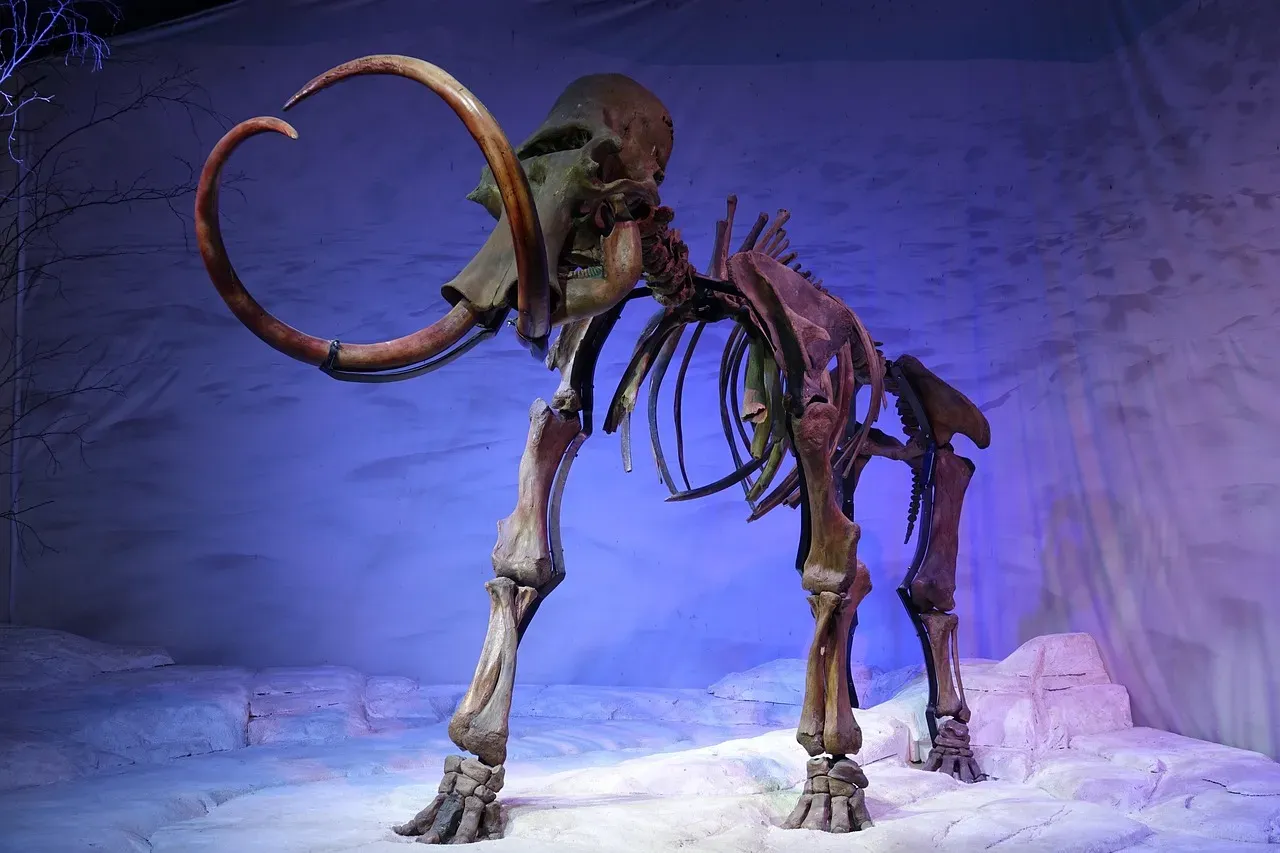
The Columbian mammoth skeleton on display at the Florida Museum represents the largest fossil animal in the museum and was found submerged on the bottom of the Aucilla River in North Central Florida. These creatures were absolutely massive. The animals could have grown up to 14 feet tall and could have weighed up to 22,000 pounds.
Think about that for a second. That’s roughly the weight of about six large pickup trucks stomping around ancient Florida. The Columbian mammoth was one of the largest elephant species to have ever lived, measuring 4 meters tall and weighing up to 10,000 kilograms, with impressive spiraled tusks that typically extended to 6.5 feet. Columbian mammoths lived in Florida during the Pleistocene era between 2.6 million and 10,000 years ago, at the same time as saber-toothed tigers. Talk about a neighborhood you wouldn’t want to wander into at night.
Underwater Time Capsules
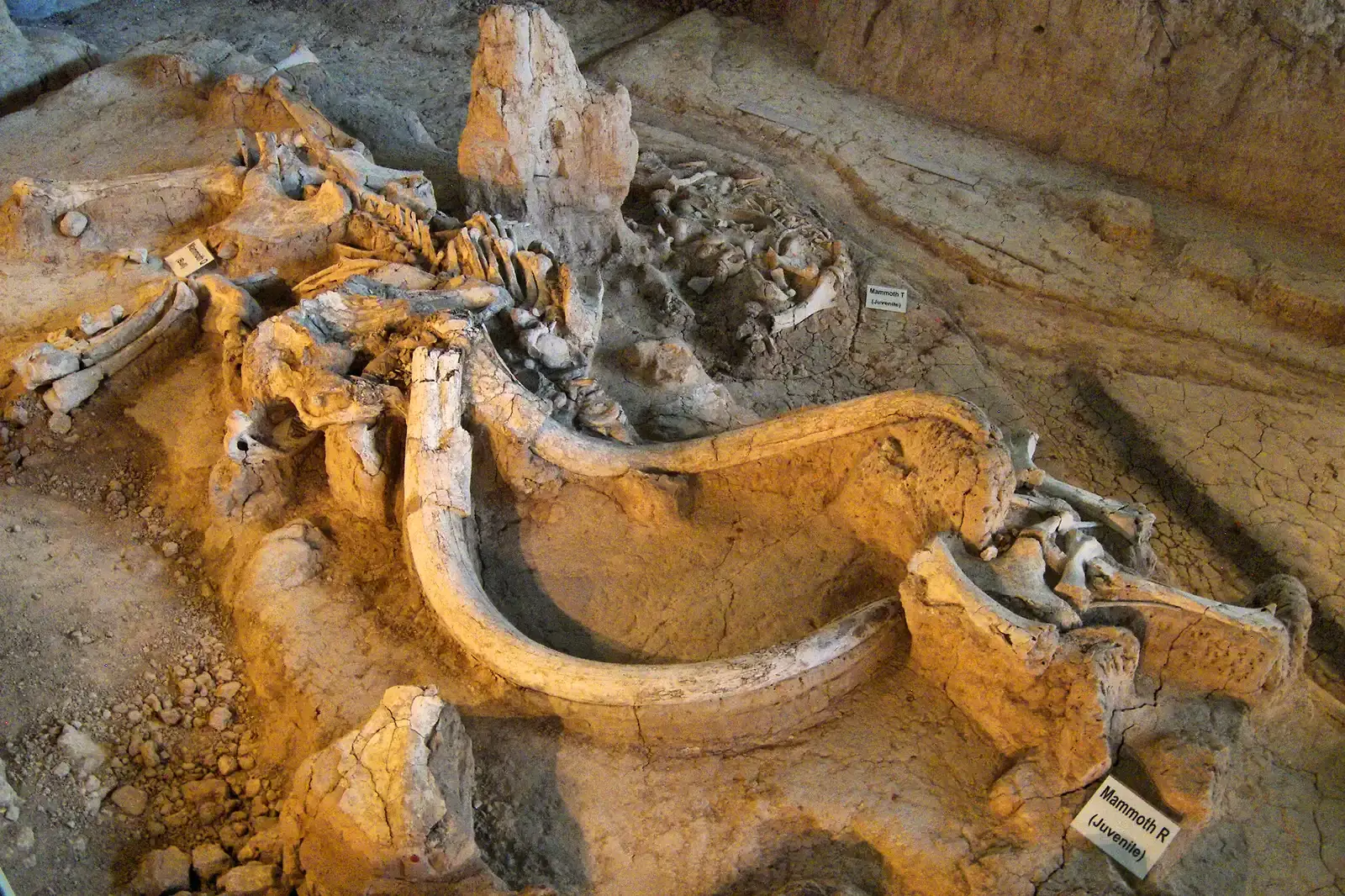
One of the main locations in Florida to search for fossils of Ice Age animals is the Peace River in Southwest Florida, where you can find evidence of magnificent Ice Age mammals ranging from giant ground sloths to mammoths resting on the river bottom. Florida’s rivers have become archaeological goldmines, preserving bones that would have long since disintegrated on dry land.
Aquatic environments preserve bones and artifacts better than those buried on land, with underwater sites offering stability and consistent pH levels and temperatures, especially in spring-fed rivers. This unique preservation quality is why amateur fossil hunters keep making remarkable finds. Two fossil hunters recently found a Columbian mammoth leg bone measuring 4 feet long and weighing 50 pounds in Florida’s Peace River, dating back to the Ice Age and potentially tens of thousands of years old. The dark, silty water holds secrets that continue to surface, literally.
Ancient Hunters Met Ancient Giants
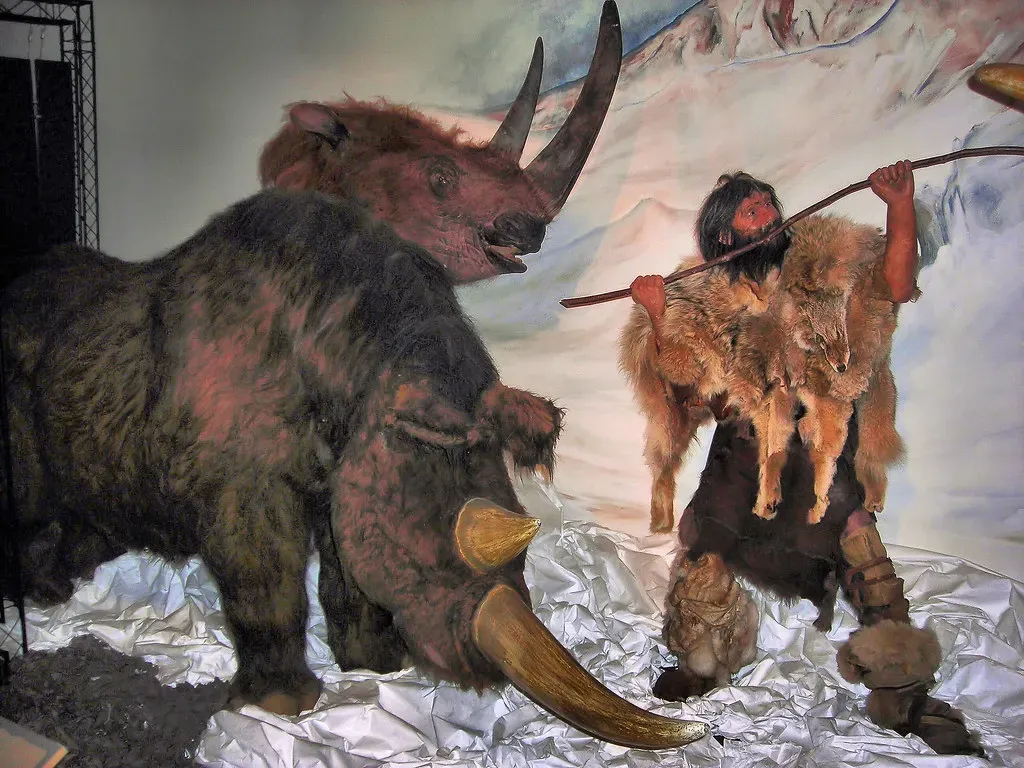
Here’s where things get really interesting. Humans lived alongside mammoths, mastodons and giant sloths 13,000 years ago in the area now known as Vero Beach, Florida, according to research. This discovery fundamentally changed what scientists thought they knew about early human settlement in the Americas.
Scuba diver George William Guest found mammoth bones and artifacts eroding from the bed of the Silver River, with excavations revealing two juvenile Columbian mammoth skeletons bearing butcher marks on the bones in close association with paleolithic artifacts such as a Clovis spear point and curved ivory shaft. At the time, it wasn’t believed that humans had interacted with large prehistoric mammals east of the Mississippi, with Columbian mammoths going extinct about 11,000 years ago. The evidence suggests these early Floridians weren’t just observing these giants from a safe distance. They were hunting them.
The Only Ice Age Art in the Americas
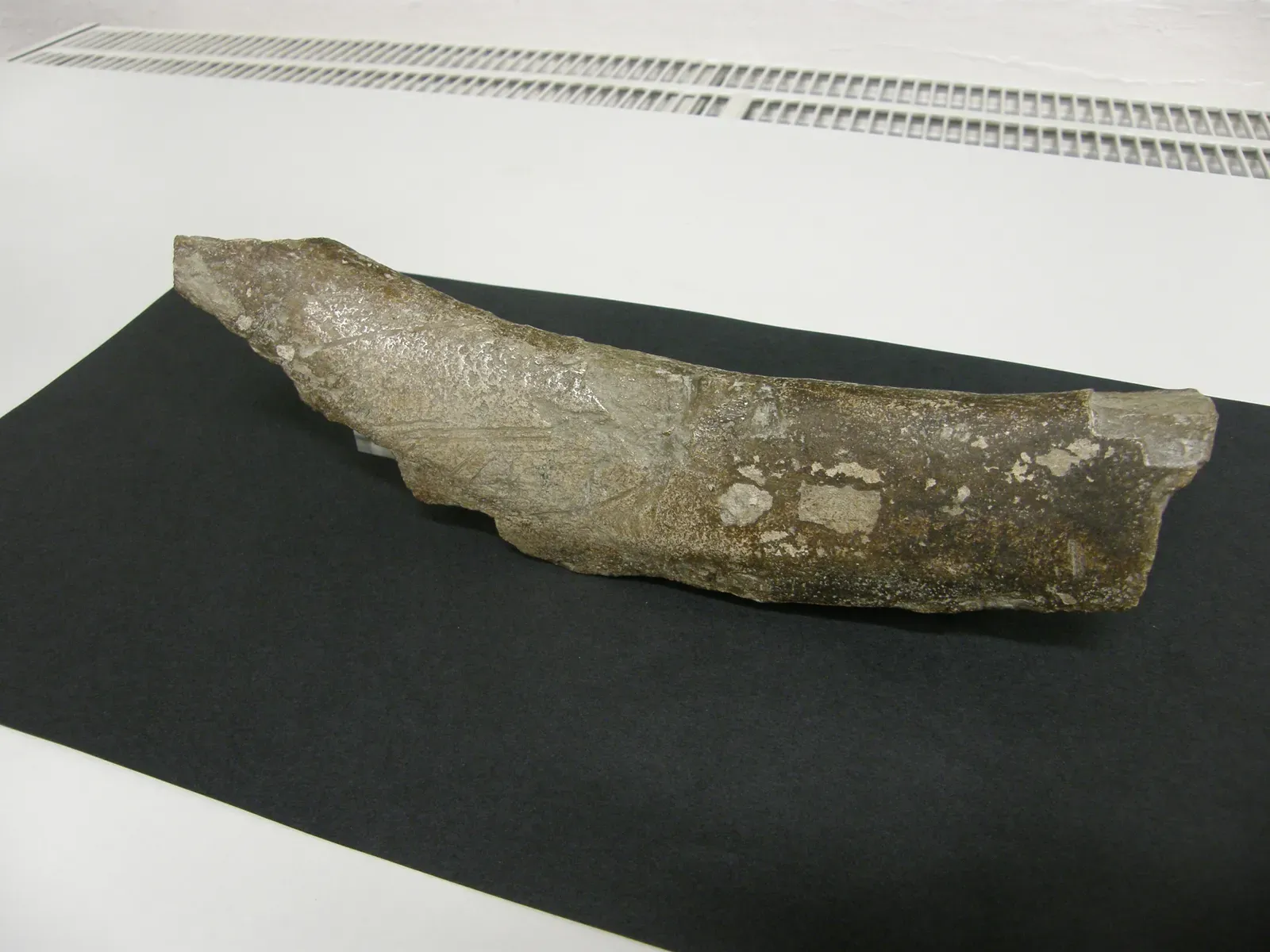
Researchers from the Smithsonian Institution and the University of Florida announced the discovery of a bone fragment approximately 13,000 years old in Florida with an incised image of a mammoth or mastodon, representing the oldest and only known example of Ice Age art depicting a proboscidean in the Americas. Let that sink in for a moment.
The bone was discovered in Vero Beach by James Kennedy, an avocational fossil hunter, who collected the bone and later discovered the engraving while cleaning it. The engraving measures 3 inches long from the top of the head to the tip of the tail and 1.75 inches tall from the top of the head to the bottom of the right foreleg. Someone living more than 13,000 years ago carefully carved an image of the very animal they hunted, providing a direct artistic connection to Florida’s prehistoric past. It’s hard not to wonder what they were thinking as they etched those lines.
Diving for Discovery in Dangerous Waters
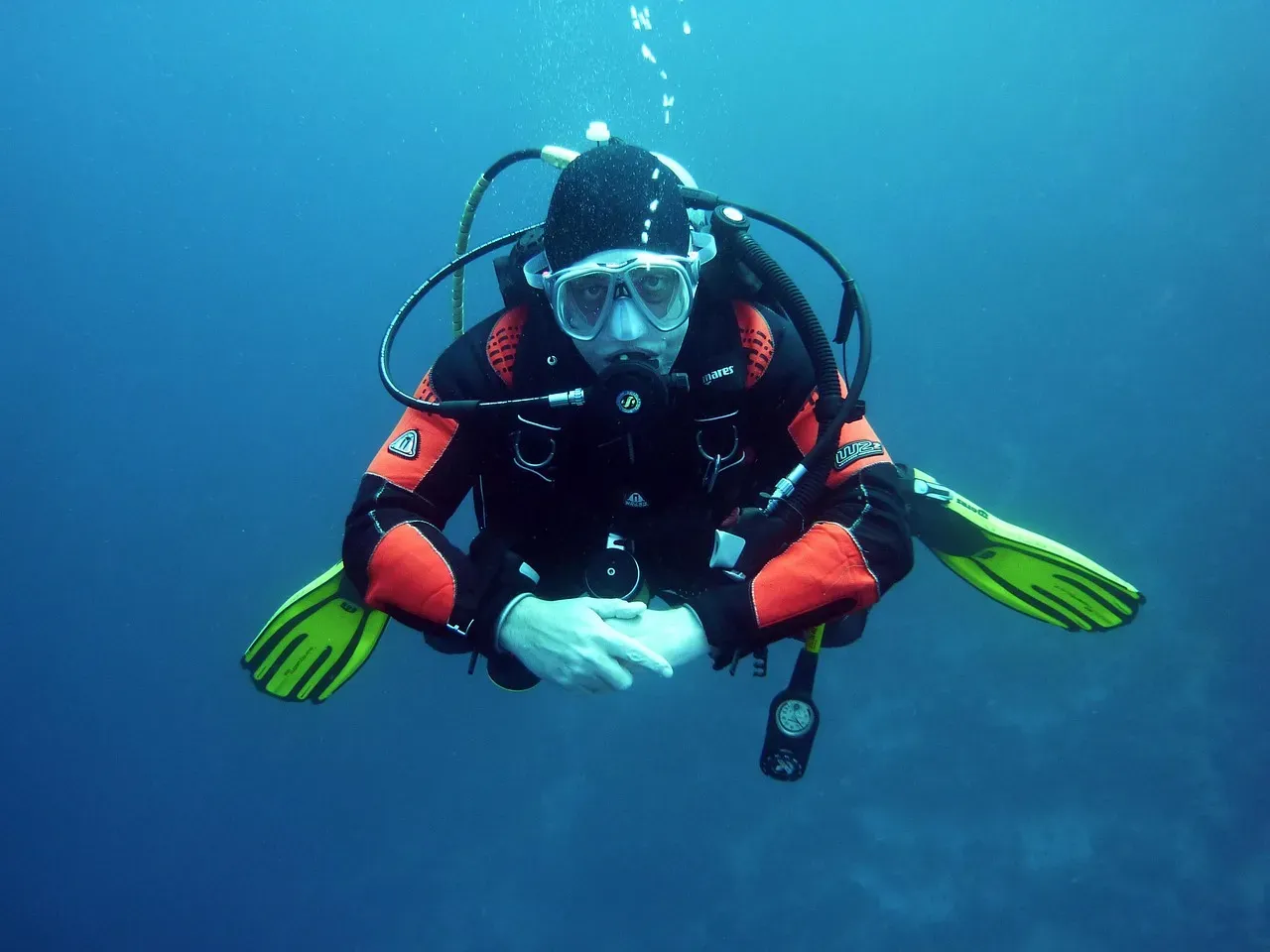
Two educators often dive for fossils together in the Peace River, and although the dark water isn’t ideal for spotting predators like alligators and water moccasin snakes, the risk is worth it when they make discoveries that help give context to what inhabited the state long before humans. Modern fossil hunting in Florida requires a certain kind of courage, or perhaps controlled recklessness.
One fossil hunter diving in the Peace River near Arcadia in early November initially thought he touched a log, but it turned out to be an ancient sixty-pound jawbone, along with a pair of mammoth molars. Along with mammoth leg bones, fossil hunters have found megalodon shark teeth, fish teeth, stingray spines, scallop shells, barnacles, and pieces of mammoth jaw and vertebra. Every dive is like opening a grab bag from prehistory. You never know what you’ll pull up from the muck.
The Great Extinction Debate
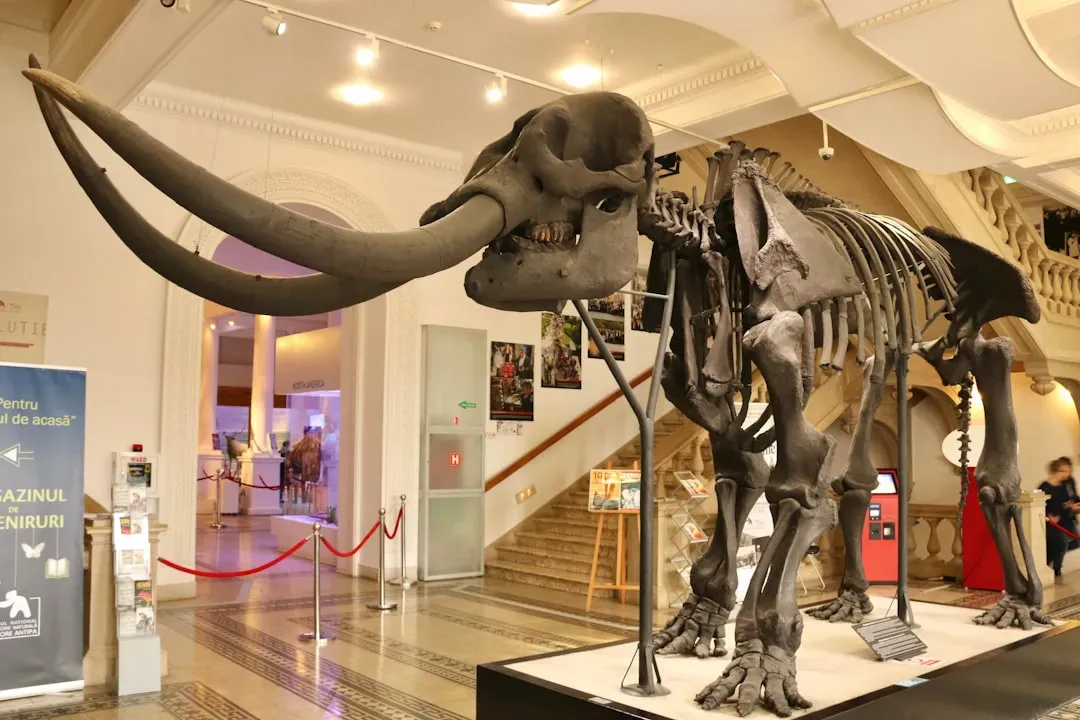
Scientists are unsure why megafauna extinctions occurred during the late Pleistocene, with changing climates, disease, or human hunting by Homo sapiens potentially causing their demise. This remains one of paleontology’s biggest puzzles.
Populations of big animals seemed to radically decrease everywhere when humans first appeared in their ecosystem, with atlatl tools enabling humans to catapult spears at high velocity over long distances to bring down slow-moving mammoths, potentially hunting these animals to extinction in a short time span. In both southern Europe and Florida, climate events caused rapid alternation between forest and non-forest vegetation in less than 240 years. The truth probably lies somewhere in the middle, a perfect storm of climate chaos and hunting pressure that these giants simply couldn’t weather. Almost thirty animal species disappeared from Florida by the end of the last Ice Age, just under 12,000 years ago.
What Florida’s Fossils Tell Us Today
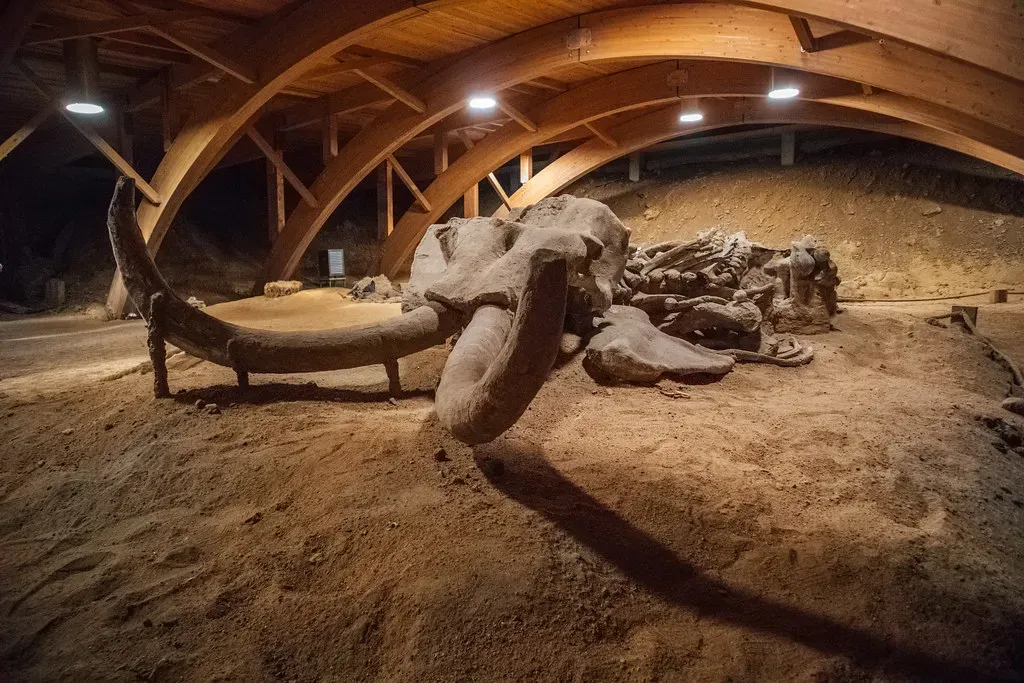
Both mammoths and mastodons were facing a new predator when humans invaded the North American continent and used their bones and tusks for tools, with only two known mounted skeletons on public display of mammoths from Florida existing today. These fossils aren’t just museum curiosities. They’re teaching tools, conversation starters, and windows into a world that existed right beneath our feet.
One middle school teacher in St. Petersburg stationed a mammoth bone discovery in his classroom so students are able to see it, touch it, feel it and really get a history of the natural world. There’s something deeply moving about that tangible connection to deep time. Florida is an epicenter of submerged prehistory, with archeologists finding prehistoric sites here, some of which are older than many had previously thought would be possible in Florida, with the last decade or so seeing a renewed effort to excavate sites. The research is far from over. Every season brings new discoveries, new questions, and new pieces of the puzzle.
Conclusion
Florida’s mammoth mystery reminds us that the ground beneath our shopping malls and theme parks holds stories beyond imagination. These colossal creatures walked grasslands where waves now crash, shared the landscape with early humans brave enough to hunt them, and left behind bones that continue to emerge from rivers and sinkholes throughout the state. Scientists are still debating exactly what combination of climate change and human activity pushed these giants into extinction, though the evidence increasingly suggests both played crucial roles.
What makes Florida unique is not just the abundance of fossils, but their remarkable preservation in underwater environments. The state’s rivers and springs have become time machines, allowing us to literally touch bones tens of thousands of years old. Each new discovery adds another brushstroke to the portrait of Ice Age Florida, a place dramatically different from today yet intimately connected to our present. The mammoth mystery isn’t fully solved, but the clues keep surfacing. What do you think ultimately sealed the fate of Florida’s Ice Age giants?