
East Kalimantan, Indonesia – The Dayak Bahau people of Long Isun have safeguarded one of Borneo’s last intact rainforest corridors for generations, yet a World Bank-backed carbon program now threatens to overlook their unresolved land claims.
Ancestral Stewards Face Modern Encroachment
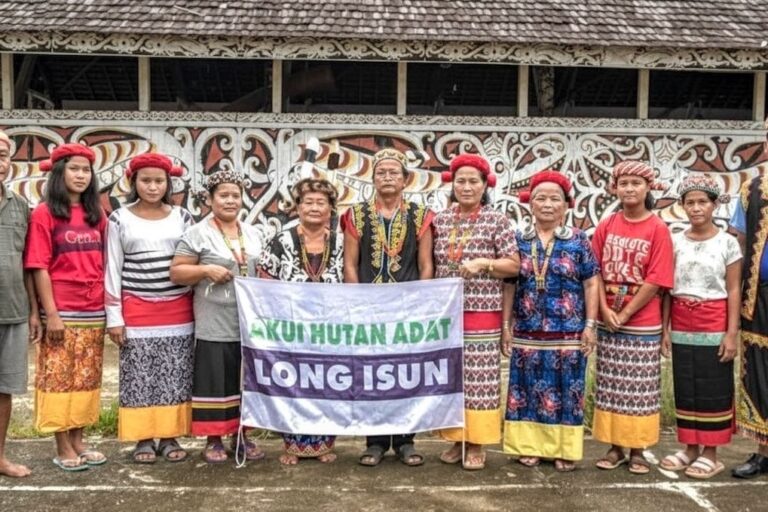
Ancestral Stewards Face Modern Encroachment (Image Credits: Imgs.mongabay.com)
Generations of Dayak Bahau in Long Isun patrolled the upper Mahakam River basin, enforcing customary laws known as adat to protect their 80,000-hectare territory. Women managed rotational forest gardens, elders conducted rituals to affirm boundaries marked by rivers and peaks, and youth documented violations through photos and testimonies. These practices sustained the rainforest long before national maps reduced their presence to mere codes. Still, industrial logging arrived in 2008 when companies under the Harita Group secured permits for over 21,000 hectares of their land.
In 2014, tensions peaked during an adat hearing. Community member Theodorus Tekwan seized a logger’s chainsaw as evidence, leading to his three-month detention without trial by armed police. Upon release, he struggled to communicate, a stark reminder of the risks in defending ancestral grounds. Despite this, the community persisted, securing the Forest Stewardship Council’s revocation of one firm’s certification in 2017 after presenting detailed archives.
Carbon Finance Enters Disputed Territory
The World Bank’s East Kalimantan Emissions Reduction Program, launched in 2020 through the Forest Carbon Partnership Facility, promised up to $110 million for curbing deforestation emissions. Indonesia received an initial $20.9 million payment in 2022 after meeting targets in the province.World Bank announcement Officials highlighted safeguards and benefit-sharing plans that supposedly prioritized Indigenous inclusion. However, the program incorporated areas still contested by Long Isun into its emissions accounting without resolving prior disputes.
Consultations in 2019 and 2023 proved inadequate, with overly technical presentations delivered top-down to village officials rather than the full community. Long Isun representatives described the sessions as confusing and perfunctory, lacking cultural sensitivity or true decision-making input. Benefit distributions favored only formally recognized administrative villages, sidelining the Dayak Bahau whose Masyarakat Hukum Adat status applications stalled since 2018.
Filing Grievance Ignites International Pushback
Efforts to gain legal recognition hit roadblocks amid district politics and overlapping claims. In March 2024, Long Isun lodged an initial complaint with the World Bank’s Grievance Redress Service, seeking acceleration of land titling. Authorities responded with intimidation, pressuring withdrawal and consent during recognition meetings. By November 2025, supported by groups like Forest Peoples Programme and Accountability Counsel, they escalated to a formal grievance.
- Violation of free, prior, and informed consent through coercive processes.
- Discriminatory benefit-sharing excluding unrecognized Indigenous groups.
- Failure to resolve land disputes, a stated project goal.
- Environmental harms from unmonitored activities on ancestral lands.
Theodorus Tekwan stated, “We cannot talk about carbon while our land boundaries are still disputed and our rights remain unrecognized.”[2] Demands include mediation, halting disbursements of the remaining $89.1 million tranche, and project opt-out rights.
Lessons for Global Climate Efforts
The case exposes tensions in jurisdictional REDD+ pilots, where carbon credits rely on forests protected by Indigenous practices yet bypass their governance. Critics argue such programs risk perpetuating dispossession if they prioritize emissions metrics over rights. Long Isun’s shift to global advocacy – leveraging safeguards like Environmental and Social Standard 7 – marks savvy diplomacy from a remote riverside village.
Outcomes could set precedents: withhold funds until disputes resolve, reform benefits for equity, and embed Indigenous focal points in future initiatives.
Key Takeaways
- Resolve land claims before carbon accounting to ensure legitimacy.
- True FPIC demands cultural adaptation and opt-out power.
- Indigenous recognition unlocks sustainable stewardship, not just payments.
Long Isun’s resolve underscores that effective climate action roots in justice for forest guardians. As patrols continue along the Mahakam, their story challenges financiers to align emissions goals with human rights. What steps should global institutions take next? Share your thoughts in the comments.