
Kenya – President William Ruto’s ambitious commitment to plant 15 billion trees by 2032 marked a pivotal shift in national environmental policy following his 2022 election.
Steady Progress Amid High Stakes
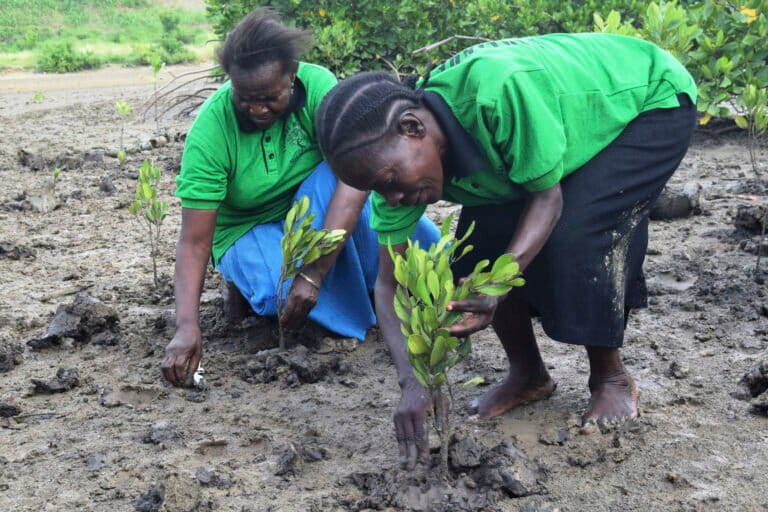
Steady Progress Amid High Stakes (Image Credits: Imgs.mongabay.com)
The initiative gained traction quickly, with government records showing about 1.5 billion trees planted by early 2026. Officials shifted focus from sheer volume to survival and stewardship, drawing inspiration from Nobel laureate Wangari Maathai’s community-led efforts. Environment Cabinet Secretary Deborah Barasa highlighted this evolution during a recent interview in Nairobi.
Barasa noted the campaign’s alignment with Maathai’s legacy, observed at a December 2025 ceremony honoring her work. The event underscored Kenya’s resolve to combat deforestation and desertification through grassroots action. Early successes included nationwide planting drives, such as Mazingira Day in October 2025, where fruit trees went into school grounds to link environmental care with food security.
Political Will as the Driving Force
Barasa emphasized unwavering support from the presidency as crucial to momentum. “Political will is everything,” she stated. “When you have support from the highest office, things move more smoothly.” This backing addressed years of neglect in forestry, positioning it central to economic growth and employment.
Funding flowed from diverse channels, including the national treasury, private firms, local communities, and international partners. Barasa described the effort as a “rallying call for all Kenyans,” fostering broad participation. Such leadership facilitated resource allocation and policy enforcement, vital for scaling operations across diverse landscapes.
Tackling Challenges Through Smart Strategies
Droughts, funding shortfalls, and monitoring gaps posed risks, yet Barasa expressed confidence in adaptive measures. The ministry prioritized seedling production suited to local conditions, from wetlands to arid zones. Community nurturing ensured higher survival rates over hasty plantings.
Job creation emerged as a key incentive, with agroforestry and commercial ventures targeting youth. Digital tools tracked progress in related areas, like renewable energy, where Kenya already sourced over 90% of electricity from green methods. Barasa outlined further steps:
- Boosting seedling nurseries for sustained supply.
- Integrating trees with livelihoods, such as fruit-bearing species.
- Enhancing enforcement against threats like illegal logging.
- Leveraging 2026 global forums on forests and climate.
- Promoting circular economy practices, building on the plastic bag ban’s success.
Broadening the Green Agenda
Beyond trees, Kenya advanced on plastics regulation and asbestos removal, yielding cleaner landscapes. The plastic ban, enforced rigorously, curbed pollution noticeably. Barasa affirmed its impact: “If you had visited years ago, you would have seen much more pollution. Now the environment is cleaner.”
Aiming for 100% renewable electricity by 2030, the nation used data platforms to bridge access gaps equitably. Hosting UN conferences in 2026 on REDD+ and desertification reinforced Kenya’s global role. These steps complemented the tree drive, weaving environmental health into economic resilience.
Kenya’s tree initiative stands as a testament to visionary leadership and collective action, with 1.5 billion trees planted signaling real potential to meet the 2032 goal. As Barasa put it, true success lies in nurturing a culture of protection: “What we need is community ownership.” What steps can your community take to support such efforts? Share your thoughts in the comments.
Key Takeaways
- 1.5 billion trees planted toward 15 billion target by 2032.
- Political will and community involvement drive success.
- Strategies emphasize survival, jobs, and ecosystem fit.
For more details, read the full interview with Minister Barasa.