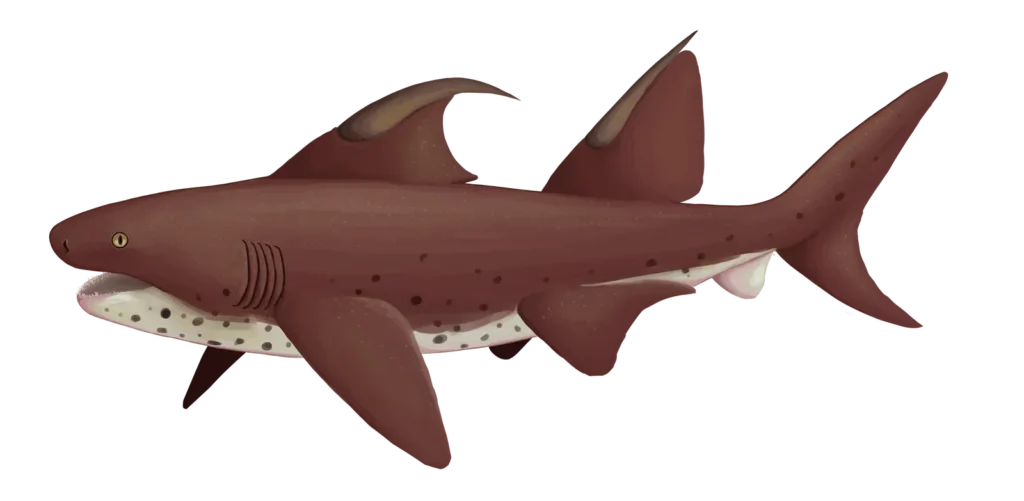
Have you ever heard of a shark that could give Godzilla a run for its money? Picture this: a creature from the depths of time, lurking in shallow ancient waters with jaws like a dragon and spines that could rival a monster from Japanese cinema. , or Dracopristis hoffmanorum, is no fictional beast. This extinct predator roamed the oceans roughly 307 million years ago, long before dinosaurs ever set foot on Earth.
What makes this discovery so captivating is how much it challenges what you might think you know about sharks. Its story is one of patient science, unexpected finds, and a fossil so well preserved that researchers could barely believe their luck. Let’s dive into the fascinating world of this prehistoric predator and uncover the secrets hidden in its ancient bones.
A Nickname Fit for a Monster
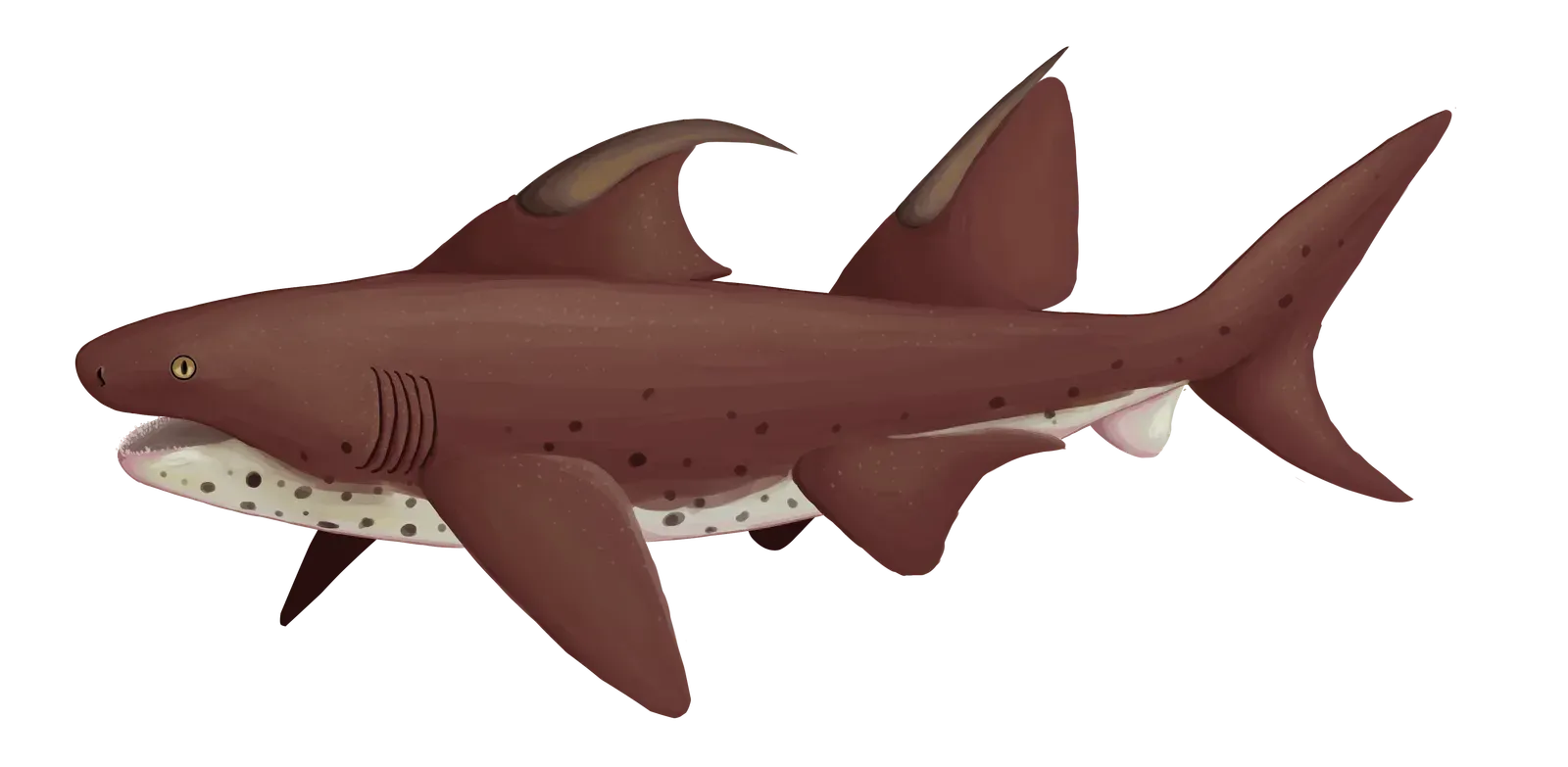
When scientists first stumbled upon this fossil, they couldn’t help but nickname it the Godzilla Shark. Honestly, can you blame them? The creature had 12 rows of piercing teeth in robust jaws and two massive fin spines on its back, each measuring around two and a half feet long. These features gave it an appearance that screamed monster movie rather than marine biology textbook.
John-Paul Hodnett, the researcher who discovered the fossil, admitted he was a big fan of the Godzilla film franchise, making the nickname feel like the perfect fit. The intimidating spines and dragon-like jawline were impossible to ignore. Eventually, the creature received its formal name, Dracopristis hoffmanorum, which translates to Hoffman’s Dragon Shark, honoring both its monstrous traits and the Hoffman family who owned the land where it was found.
An Accidental Discovery in the Desert
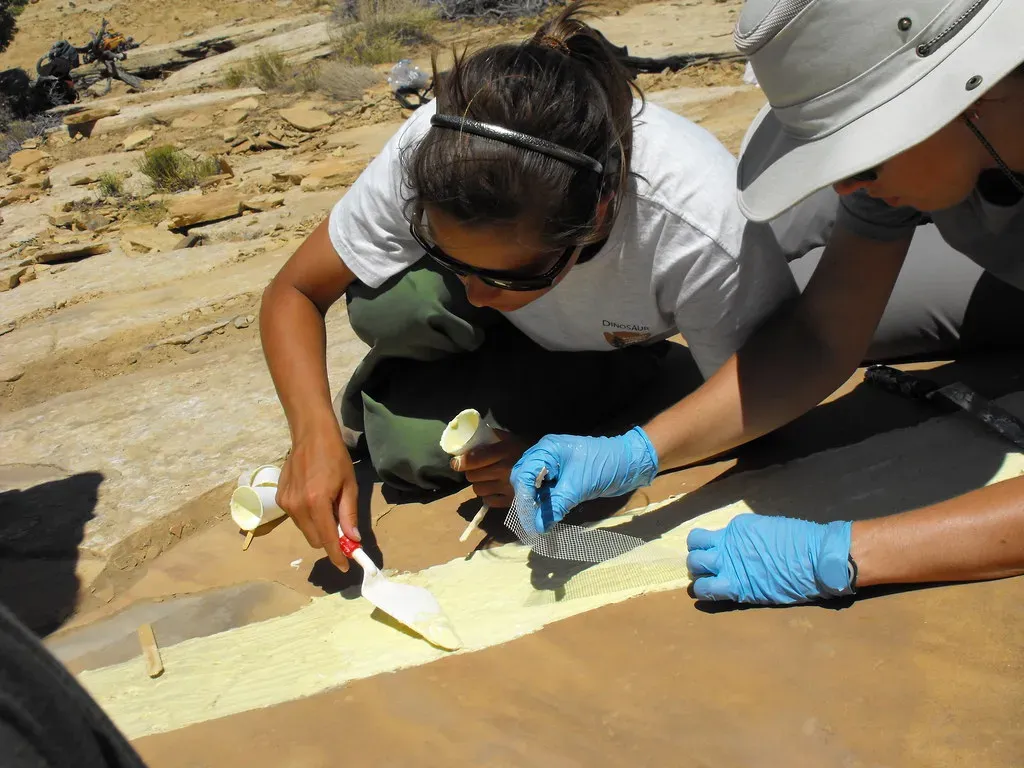
Back in May 2013, Hodnett was a graduate student sitting in a shady spot in the Manzano Mountains, casually using a pocket knife to split through shaley limestone. He wasn’t expecting much beyond plant fragments and fish scales. Suddenly, he hit something denser, and at first thought it might be a limb bone from a large tetrapod, which would have been exciting since none had been found at that site before.
The next day brought even bigger news. Tom Suazo, the museum’s fossil preparatory specialist, came in with a cardboard tray and a huge grin, revealing that what Hodnett found wasn’t a tetrapod at all but a really big shark. It wasn’t until 2021, after years of careful excavation and study, that the fossil was fully excavated, studied, and formally named. Sometimes the best discoveries happen when you’re least expecting them.
One of the Most Complete Fossils Ever Found
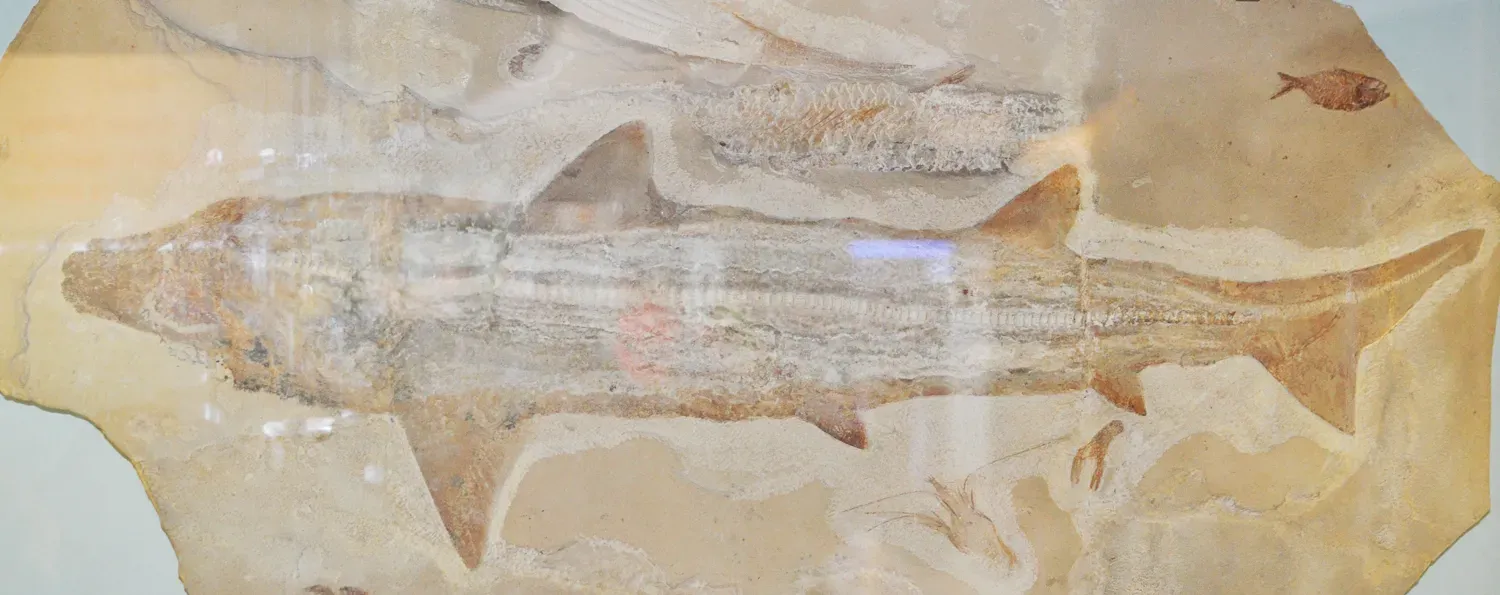
The skeleton was remarkably well-preserved, with up to 90 percent of the original bones intact, making it the most complete specimen in the ctenacanthiform family on record. This level of preservation is incredibly rare for ancient sharks, which typically leave behind only teeth and occasional fragments since cartilage doesn’t fossilize well. You’d be hard-pressed to find a better example.
Finding skeletal material of ancient sharks is very rare, let alone a complete skeleton that also includes body outline and other soft tissue impressions. Although the specimen was crushed, the skull, gill arches, and dorsal fins remained articulated, and the pelvic girdle and anal fins were particularly well preserved. For researchers, it was like winning the paleontological lottery.
Not a True Shark After All
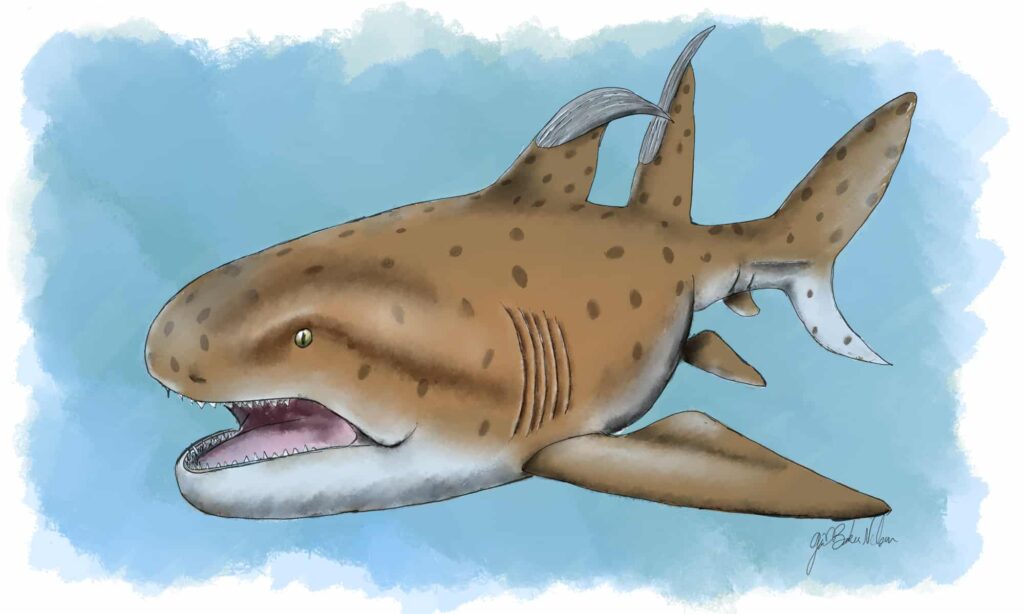
Here’s where things get interesting. The Godzilla shark belonged to a separate group of sharks known as ctenacanthiformes, which are different from present-day true sharks. Think of them as distant cousins rather than direct ancestors. Dracopristis was part of the chondrichthyan order Ctenacathiformes, which were likely relatives of living sharks and rays, but despite often being informally called sharks, ctenacanths were not considered true sharks.
Their jaws were larger and more firmly attached to the cranium, making them less flexible, and this fixed jaw structure may indicate the ancient sharks were not apex predators as modern sharks are. Dracopristis and other ctenacanth sharks represent a unique evolutionary branch that split off from modern sharks and rays approximately 390 million years ago but went extinct by the end of the Paleozoic Era, about 252 million years ago.
A Body Built for Ambush
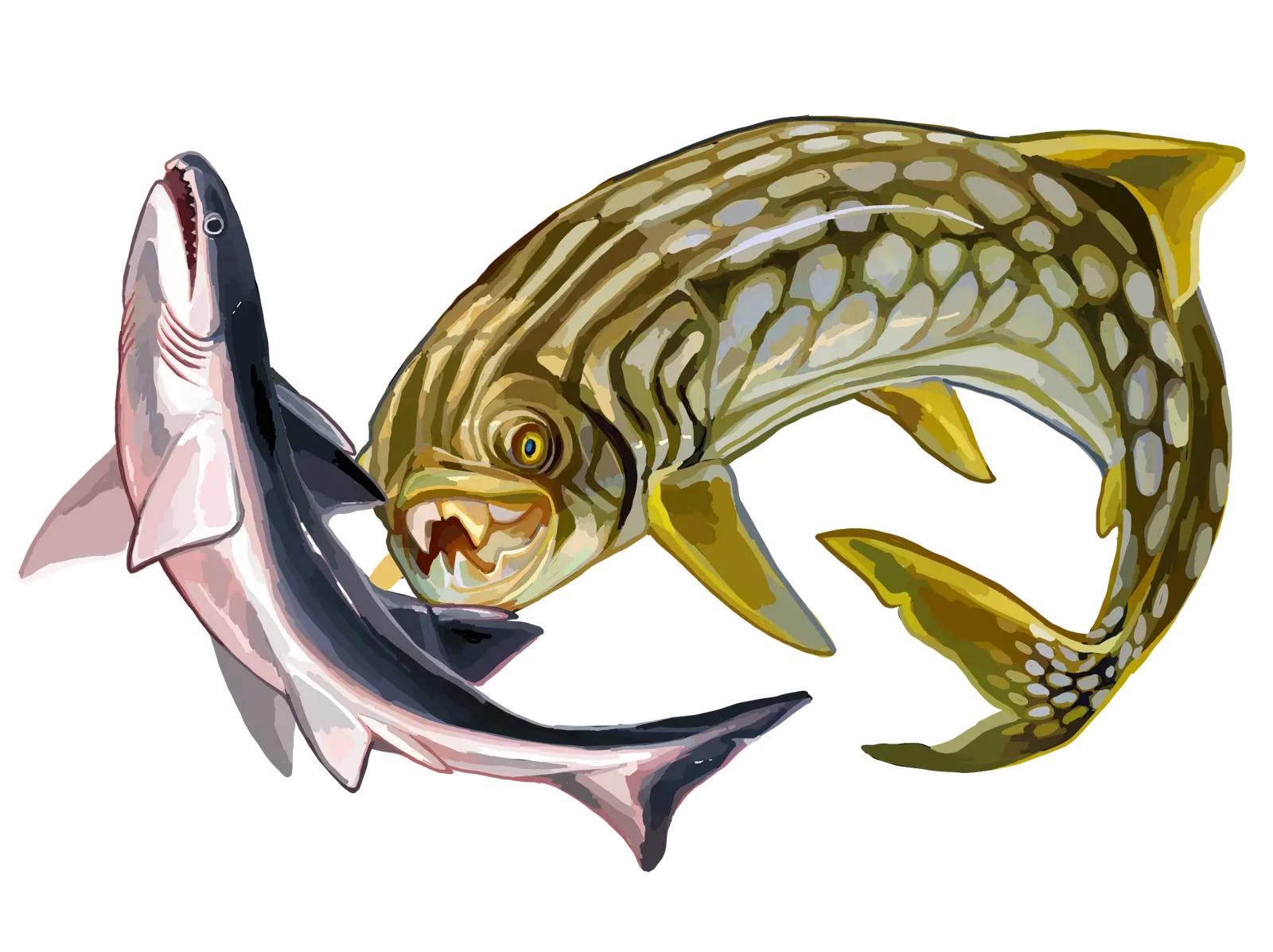
Dracopristis had an elongated and dorsoventrally flattened body, from top to bottom, which is indicated by the shape of preserved soft tissue impressions. This body shape wasn’t just for show. Dracopristis would have lived in the shallow coastal waters of a vast seaway and probably would have been an ambush predator, hunting small animals such as fish and crustaceans.
Instead of taking a massive bite out of prey like a great white would, their teeth were better adapted for grasping and crushing prey. Instead of the spear-like rows of teeth you would see in today’s sharks, theirs were shorter and squatter, about 0.79 inches long. The shape of its pectoral fins suggests it lived a nektobenthic or bottom-dwelling lifestyle, due to similarities to those of living benthic sharks. Picture it lying in wait on the ocean floor, ready to strike when unsuspecting prey wandered too close.
Defensive Spines Against Bigger Threats
The large spines on the back of Hoffman’s Dragon Shark may have been used as defense against larger sharks, and many large shark teeth were found in the area as evidence to prove this conclusion. Even though this creature was intimidating, it wasn’t the top dog in its ecosystem. Dracopristis shared the estuary with the larger, related ctenacanthiform Glikmanius occidentalis, which may have preyed upon it.
Those impressive spines weren’t just for decoration. They served as a warning to potential predators: attack at your own risk. It’s hard to say for sure, but the evidence strongly suggests these spines played a crucial role in survival. When you’re not the biggest fish in the sea, you need every advantage you can get.
Life in an Ancient Seaway

Back then, eastern New Mexico was covered by a seaway that extended deep into North America. According to researchers, Hoffman’s Dragon Shark most likely lived in the shallows along the coast, stalking prey like crustaceans, fish, squid, and even other sharks. Its ecology has been compared with that of the bull shark and common sawfish, and it may have been a specialist of brackish water habitats.
In total, more than 31 other distinct fish genera are known from the site, and it is considered one of the most diverse and well-preserved fossil fish faunas in the Southwestern United States. The area where the fossil was found was once a thriving ecosystem teeming with life. It’s remarkable to think that what is now high desert was once underwater, bustling with prehistoric creatures.
Why This Discovery Matters Today
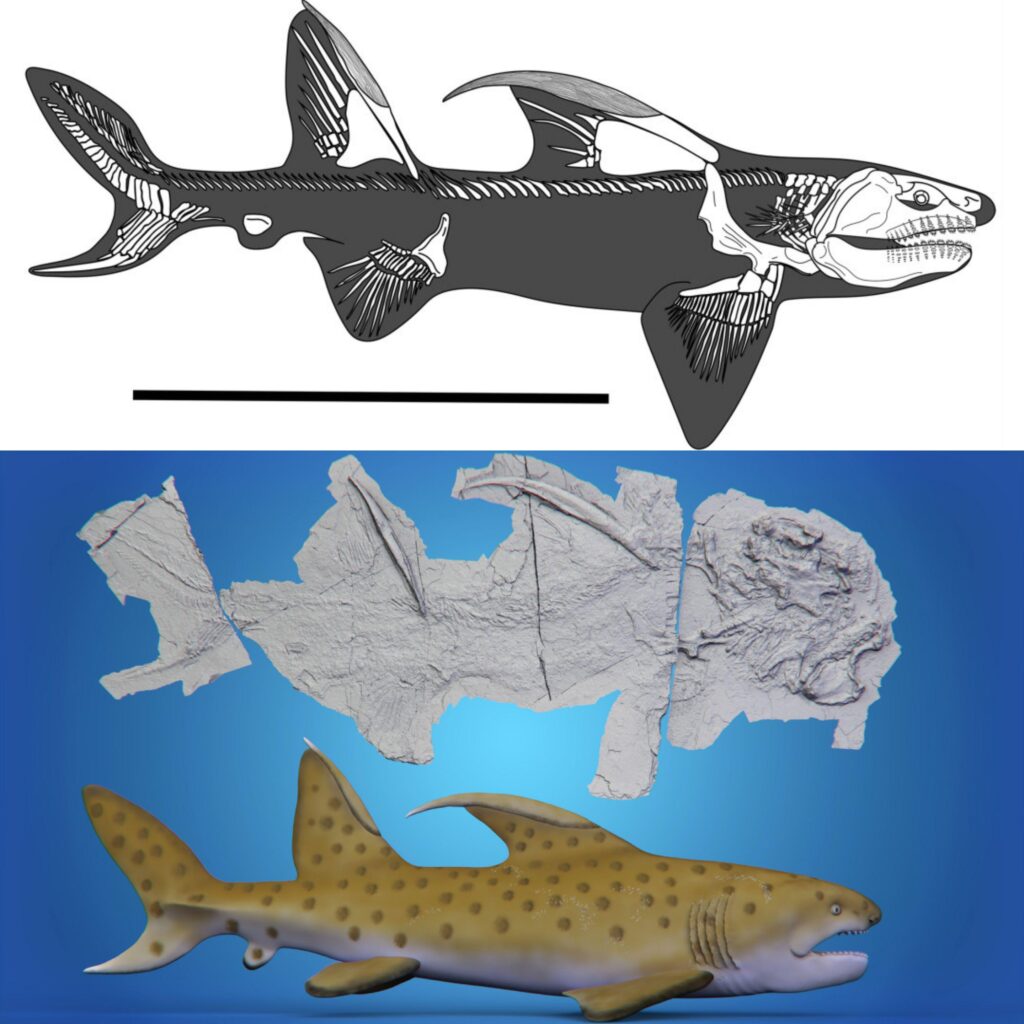
isn’t just a cool fossil with a catchy nickname. The new skeleton offers new insight into how ctenacanths fit on the family tree of sharks. Understanding these ancient relatives helps researchers piece together the evolutionary puzzle of modern sharks and rays. Researchers are still puzzled about the exact reason of the shark’s extinction, and more field work and studies continue in the area to deepen knowledge of their evolutionary characteristics such as longevity, growth rate, age of reproductive maturity, and reproductive output.
This discovery also highlights how much we still don’t know about life in ancient oceans. Many have nicknamed the area where it was found a fossil mining ground, with several fossil discoveries apart from . Each fossil uncovered adds another piece to the story of life on Earth, reminding us that our planet’s history is filled with creatures stranger and more fascinating than we could ever imagine. What other secrets are still buried beneath the desert sand?