
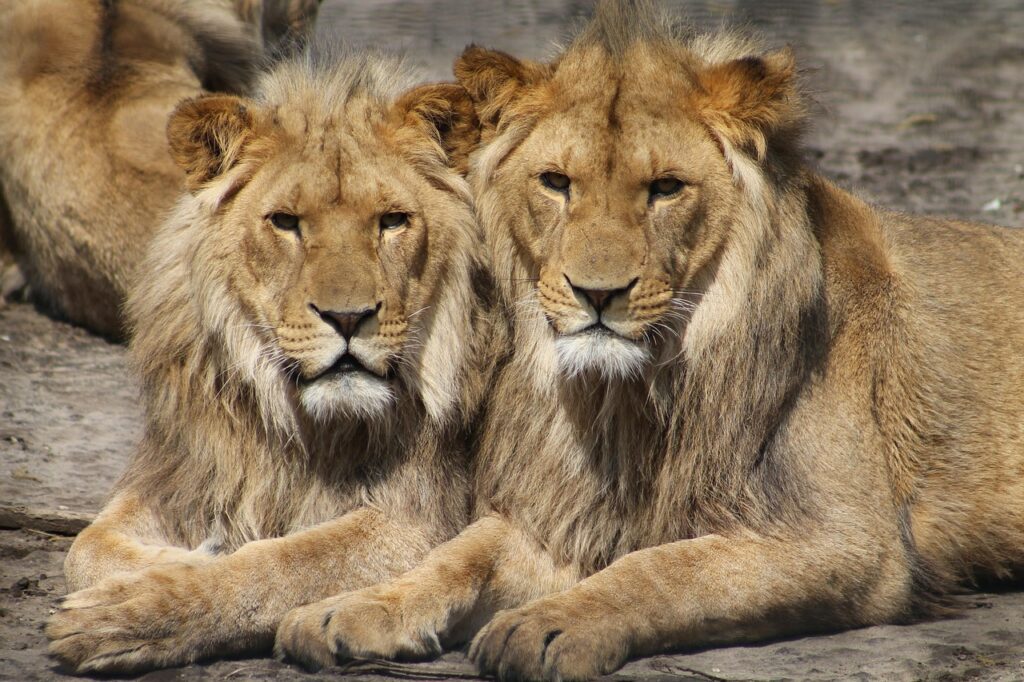
Saudi Arabia – The Prince Mohammed bin Salman Royal Reserve stands ready to reintroduce Asiatic lions to its expansive wilds, marking a pivotal moment in regional conservation efforts more than 100 years after the species vanished from the Arabian Peninsula.
Ambition Fuels Desert Restoration

Ambition Fuels Desert Restoration (Image Credits: Pixabay)
Envision majestic lions reclaiming ancient territories amid rugged mountains and vast deserts. The Prince Mohammed bin Salman Royal Reserve, Saudi Arabia’s largest protected area spanning 2,450,000 hectares, leads this initiative. Reserve chief executive Andrew Zaloumis described the effort as part of a broader program targeting 23 endangered or locally extinct species.
This vast landscape dwarfs many global icons, exceeding twice the size of parks like Yellowstone or Kruger. It already harbors over 300 bird and mammal species alongside more than 300 plant varieties. Zaloumis emphasized community engagement and habitat restoration as priorities before any tourism expansion. The reserve aims to emerge as the world’s premier desert sanctuary.
Lions’ Deep-Rooted Arabian History
Ancient rock art across the region depicts lions prowling for millennia, evidence of their longstanding presence. These big cats shaped ecosystems until hunting drove them to extinction in the early 20th century. Asiatic lions, distinct from their African relatives, feature shorter, darker manes and larger tail tufts. They form smaller prides with overlapping territories.
Today, wild populations survive solely in India’s Gir Forest, Gujarat, numbering around 900. Success here would position Saudi Arabia as the second nation hosting free-roaming Asiatic lions. The project draws on this sole stronghold while addressing genetic and ecological needs.
Proven Track Record in Rewilding
Past achievements bolster confidence in the lion project. The reserve established a thriving Arabian oryx population, now at 86 individuals since 2022. Other successes include the Arabian gazelle, Nubian ibex, and Persian onager, absent for over a century until recent returns.
Common ostriches bred in the country after an 80-year hiatus, a milestone in restoration. These efforts demonstrate effective strategies for large herbivores and birds. Plans extend to the critically endangered Arabian leopard, with breeding underway in Taif.
- Arabian oryx: Reintroduced in 2022; population reached 86.
- Persian onager: Returned after 100+ years of local extinction.
- Common ostrich: Successful breeding after 80 years.
- Arabian gazelle and Nubian ibex: Established populations.
- Future: Arabian leopard reintroduction.
Overcoming Hurdles for Long-Term Success
Releasing apex predators near human settlements poses unique challenges. Zaloumis acknowledged these risks but highlighted strong backing from the reserve’s board, chaired by Crown Prince Mohammed bin Salman. The initiative remains in consultation, with no set release date.
Local community relations and staff involvement prove essential. Detailed planning ensures ecological balance and minimizes conflicts. Habitat enhancements precede any releases, fostering resilient environments.
Key Takeaways:
- The reserve spans 2.45 million hectares, supporting diverse wildlife.
- Asiatic lions vanished early 20th century; ancient art confirms prior abundance.
- Project part of restoring 23 species; builds on oryx, ostrich successes.
This reintroduction signals Saudi Arabia’s commitment to biodiversity revival, potentially reshaping desert ecosystems. What do you think about bringing back these iconic predators? Share your views in the comments.