Have you ever wondered what it would be like to come face to face with a creature whose jaws could snap you in half before you even realized what was happening? Picture this: you’re swimming in ancient seas, and suddenly, a massive armored fish appears. Its mouth opens in a flash, creating a vacuum that pulls you toward razor-sharp bone blades capable of crushing through nearly anything. This isn’t science fiction. This monster actually existed, and its bite was more powerful than you might imagine.
What makes this prehistoric predator even more fascinating is that it wasn’t a dinosaur or even a typical shark. It was something entirely different, something that ruled the oceans long before T. rex ever walked the Earth. Let’s dive into the world of this ancient terror and discover why scientists are still amazed by its incredible power.
Meet Dunkleosteus: The Armored Terror of Ancient Seas
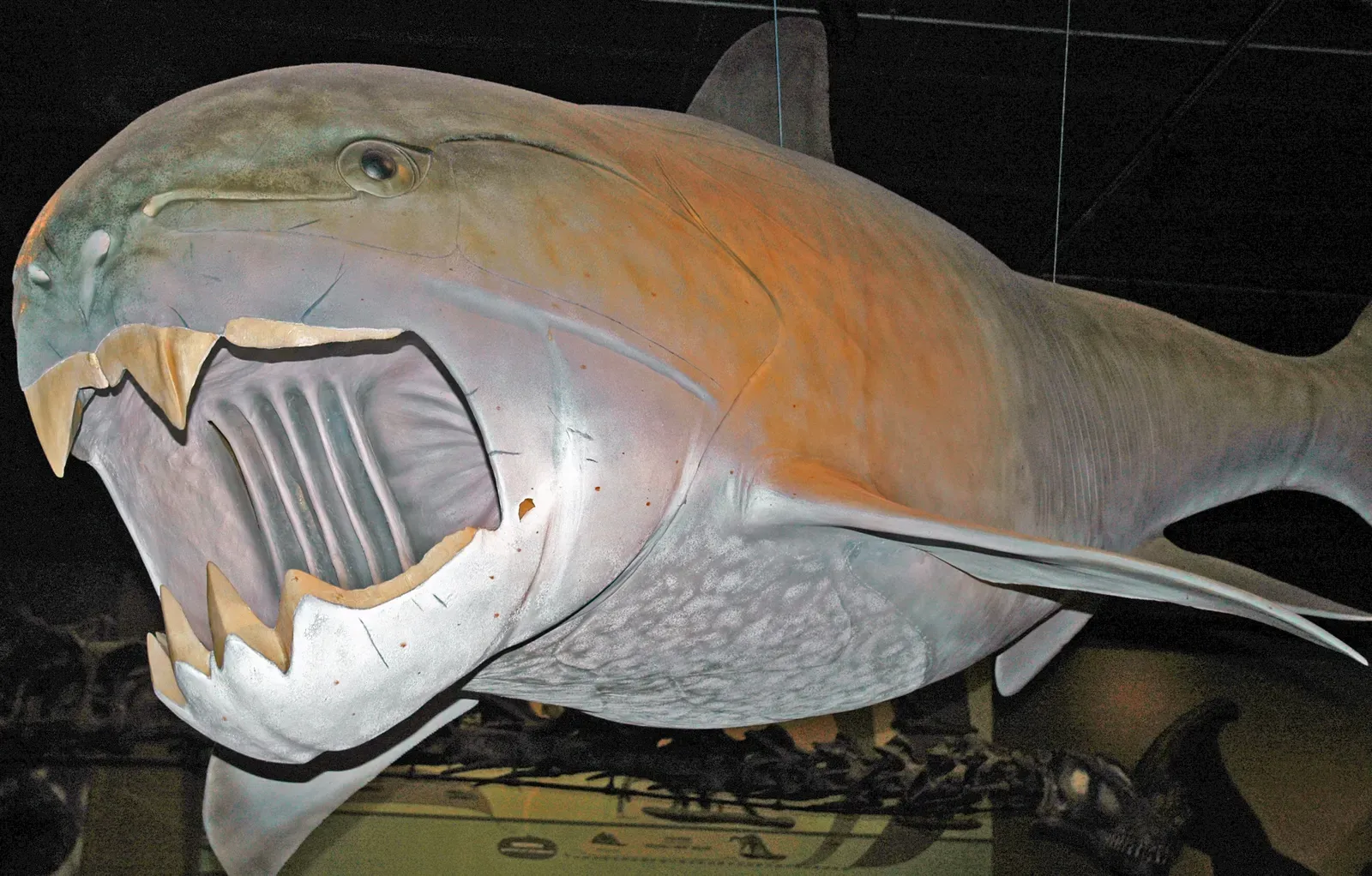
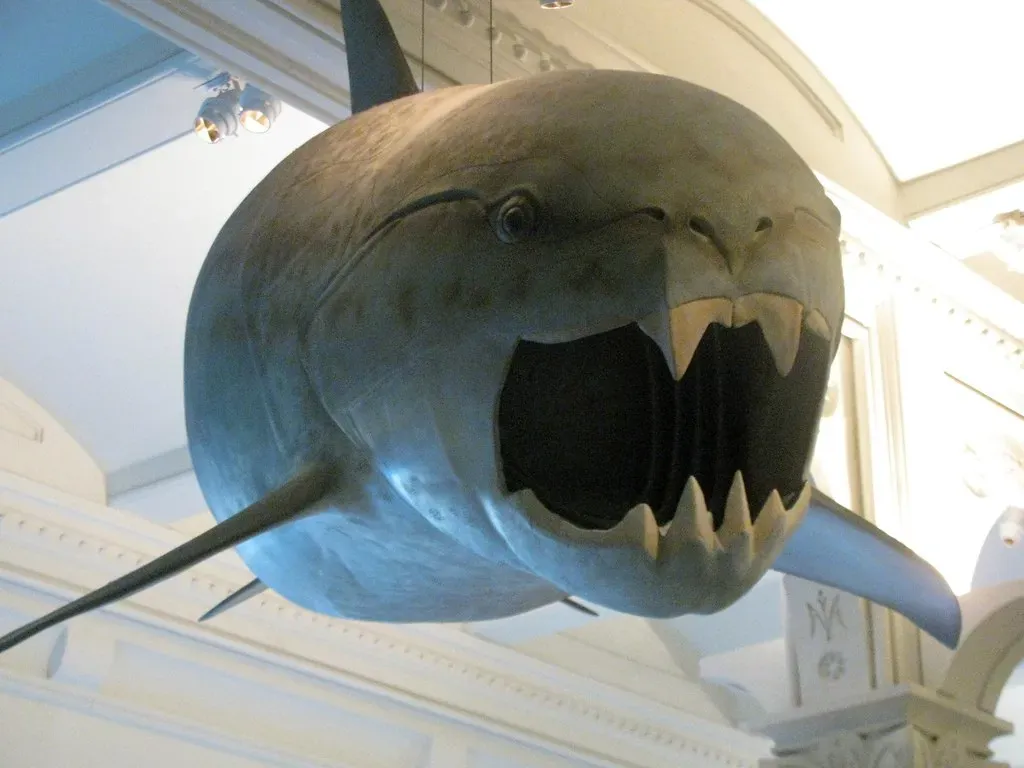
Dunkleosteus terrelli lived 400 million years ago, grew up to 33 feet long and weighed up to four tons. Though recent research suggests it may have been slightly smaller, closer to around eleven to thirteen feet for typical adults, this fish was still an absolute nightmare for anything sharing its waters. Here’s the thing: placoderms are a diverse group of armoured fishes that dominated the aquatic ecosystems of the Devonian Period, 415–360 million years ago.
Unlike anything swimming in our oceans today, Dunkleosteus belonged to a now-extinct group of armored fish. Instead of teeth, it had something arguably more terrifying: two pairs of long, bony blades that protruded from its upper jaws and its lower jaws, creating a cutting apparatus that crudely resembled a guillotine. Imagine being on the receiving end of that. These weren’t designed to simply pierce flesh; they were built to shear through bone and shell like industrial machinery.
The Bone-Crushing Power Behind Those Jaws
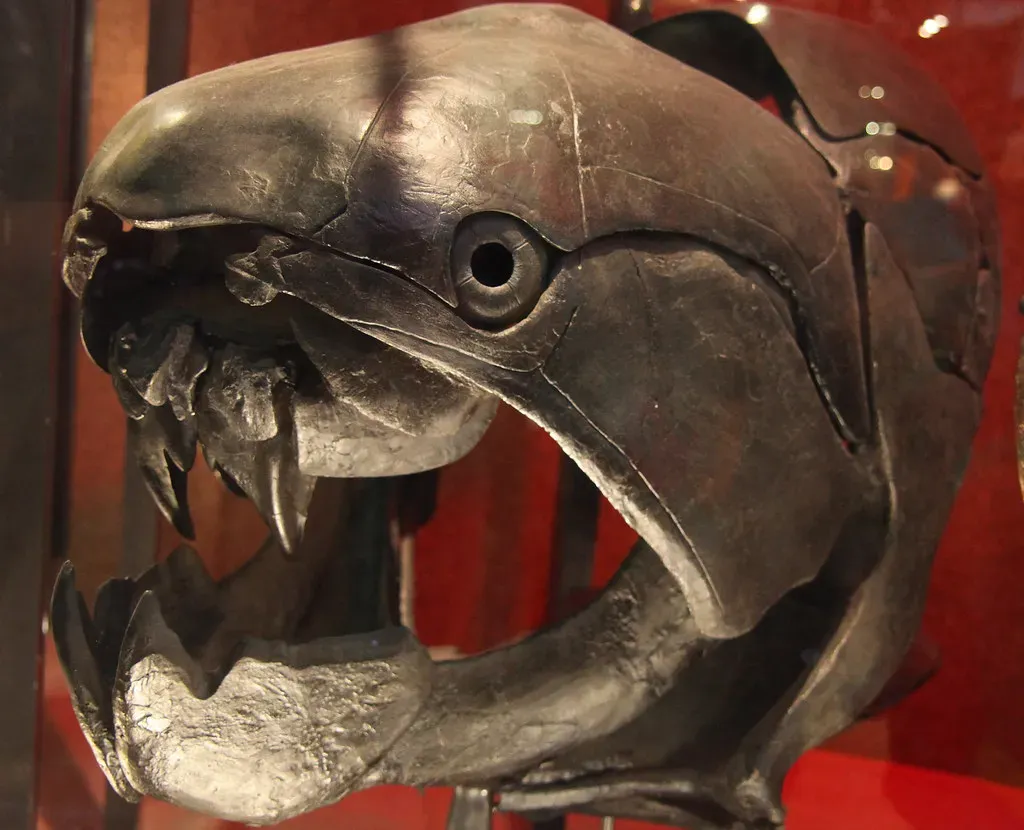
Let’s talk numbers, because they’re genuinely staggering. Jaw closing muscles power an extraordinarily strong bite, with an estimated maximal bite force of over 4400 N at the jaw tip and more than 5300 N at the rear dental plates, for a large individual (6 m in total length). To put that in perspective, this is the strongest bite force of any fish ever, and rivals the bite of large alligators and T. rex.
Even more mind-blowing is what happened when you factor in the blade-like structure of those jaws. The bladed dentition of this 400-million-year-old extinct fish focused the bite force into a small area, the fang tip, at an incredible force of 80,000 pounds per square inch. That kind of concentrated pressure could puncture steel. Think about that for a moment. This was a fish that could theoretically bite through modern submarine hulls.
Lightning-Fast Attack Strategy
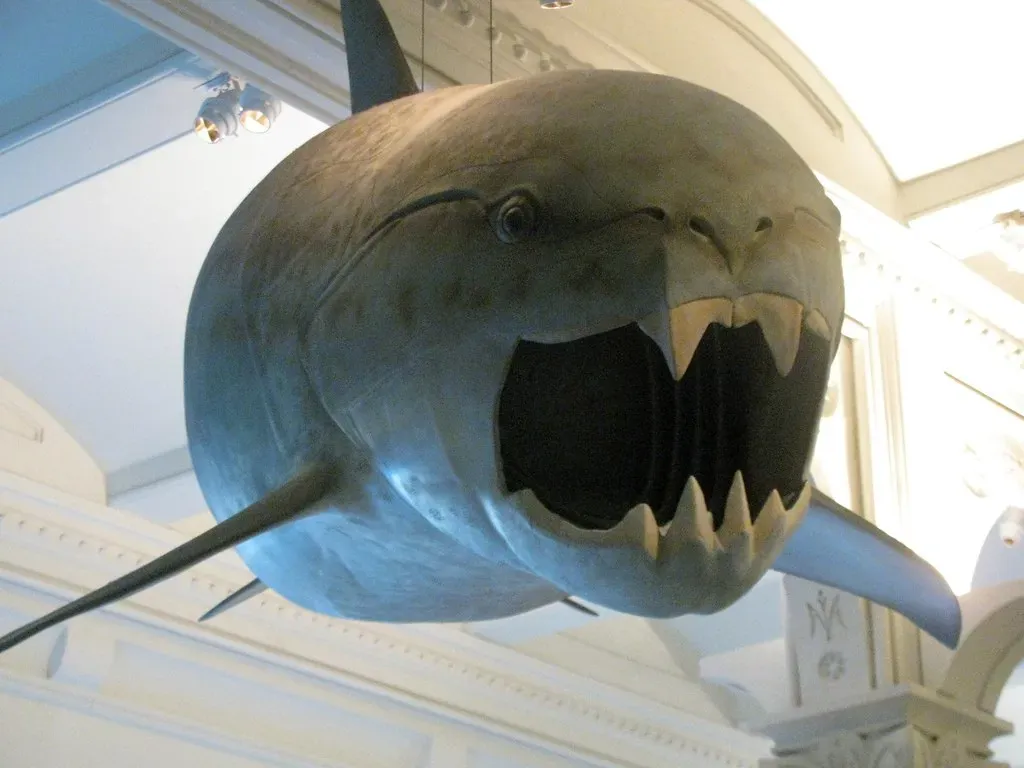
This fish could also open its mouth very quickly–in just one fiftieth of a second–which created a strong suction force, pulling fast prey into its mouth. That’s faster than you can blink. The combination of speed and power is exceptionally rare in nature. Usually a fish has either a powerful bite or a fast bite, but not both.
The engineering behind this dual capability is remarkable. Dunkleosteus had a unique four-bar linkage mechanism in its skull, allowing different muscle groups to control opening versus closing. When it spotted prey, it could create a miniature vacuum in the water, essentially sucking its victim toward those devastating jaws before clamping down with catastrophic force. No wonder scientists believe this fish into one of the first true apex predators seen in the vertebrate fossil record.
What Did This Monster Actually Eat?
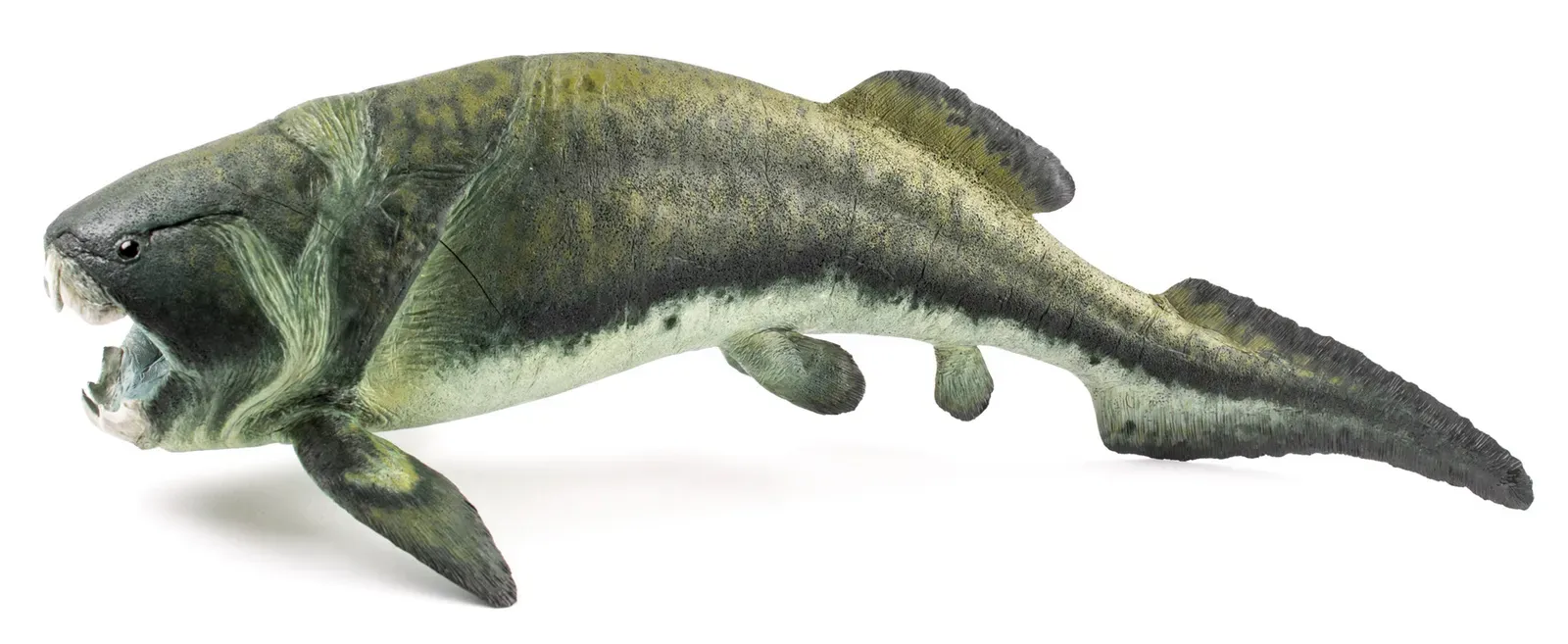
With jaws like that, Dunkleosteus wasn’t picky. Dunkleosteus was able to feast on armored aquatic animals that also lived during the Devonian, including sharks, arthropods, ammonoids, and others protected by cuticle, calcium carbonate, or dermal bone. Everything from early sharks to hard-shelled creatures was on the menu. It could bite a shark in two.
Evidence suggests these predators weren’t above cannibalism either. A specimen of Dunkleosteus actually shows damage consistent with bites from another Dunkleosteus – proof enough that this monstrous fish wasn’t above hunting others of its own kind. When you’re the apex predator and nothing else poses a threat, even your own species becomes potential prey. That’s both terrifying and oddly logical from an evolutionary standpoint.
How Does It Compare to Famous Prehistoric Predators?
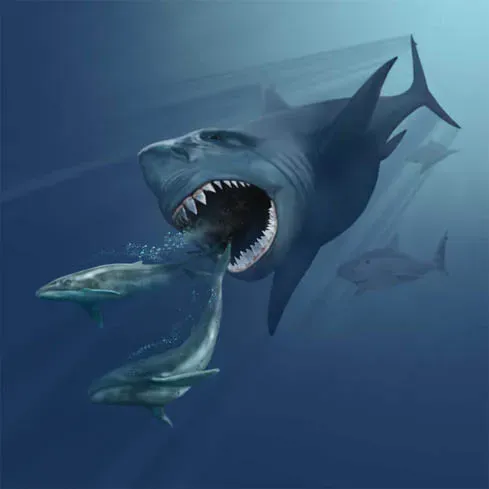
You’ve probably heard about Megalodon, the giant prehistoric shark that’s become a pop culture icon. The huge shark Megalodon (Otodus megalodon) terrorized the seas from 15 million to 3.6 million years ago with a bite force of up to 182,200 newtons. That’s significantly more powerful than Dunkleosteus in absolute terms. Similarly, the chomp of T. rex may have been king, at a killer 35,000 newtons when it stomped the Earth from about 68 million to 66 million years ago.
Still, comparing these creatures isn’t entirely straightforward. Megalodon was massive, potentially reaching lengths over fifty feet and weighing dozens of tons. T. rex was similarly enormous. Dunkleosteus, at roughly ten to thirty feet depending on which estimates you believe, packed an extraordinary amount of biting power into a relatively smaller package. Although Dunkleosteus may have been the clamp-down champ of its era, the fish generated only about half the bite force of the dinosaur Tyrannosaurus rex. Yet it existed hundreds of millions of years before either of them, pioneering the very concept of a crushing bite.
Speed and Hunting Prowess Beyond Expectations
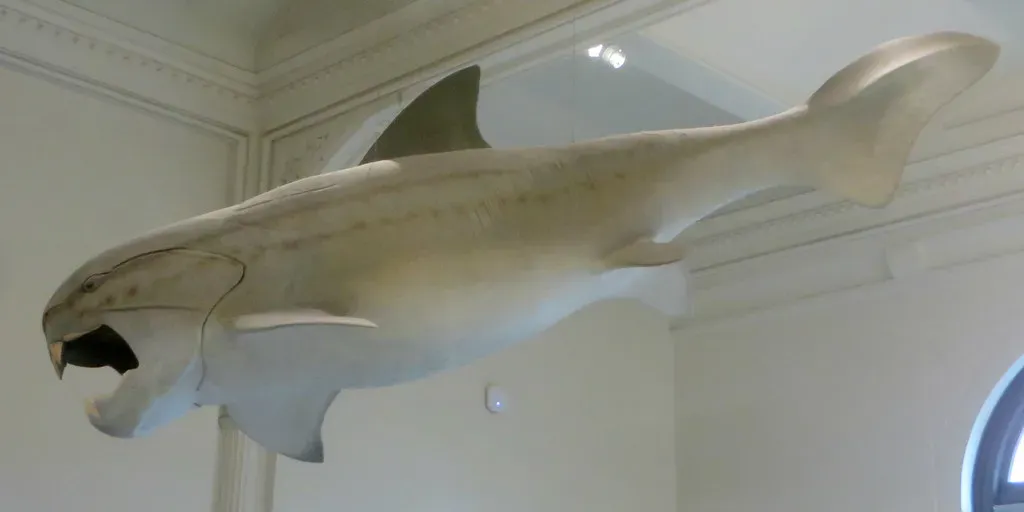
For a long time, scientists assumed Dunkleosteus was a sluggish ambush predator, relying on its armor and bite rather than speed. Recent discoveries have challenged that assumption. After the teeth of a fast-swimming shark known as Orodus were found in the stomach contents of a Dunkleosteus, there’s now evidence to suggest that it was fast enough to catch some of the fastest fish that it lived alongside.
This revelation fundamentally changes our understanding of this creature. It wasn’t just a heavily armored tank waiting for prey to wander by. It actively pursued fast-moving targets in open water. Combining speed, suction feeding, armor protection, and a bone-crushing bite made Dunkleosteus perhaps the most well-rounded predator of its time. Few creatures in the history of life have possessed such a complete arsenal.
The Mysterious Disappearance of a Dominant Predator
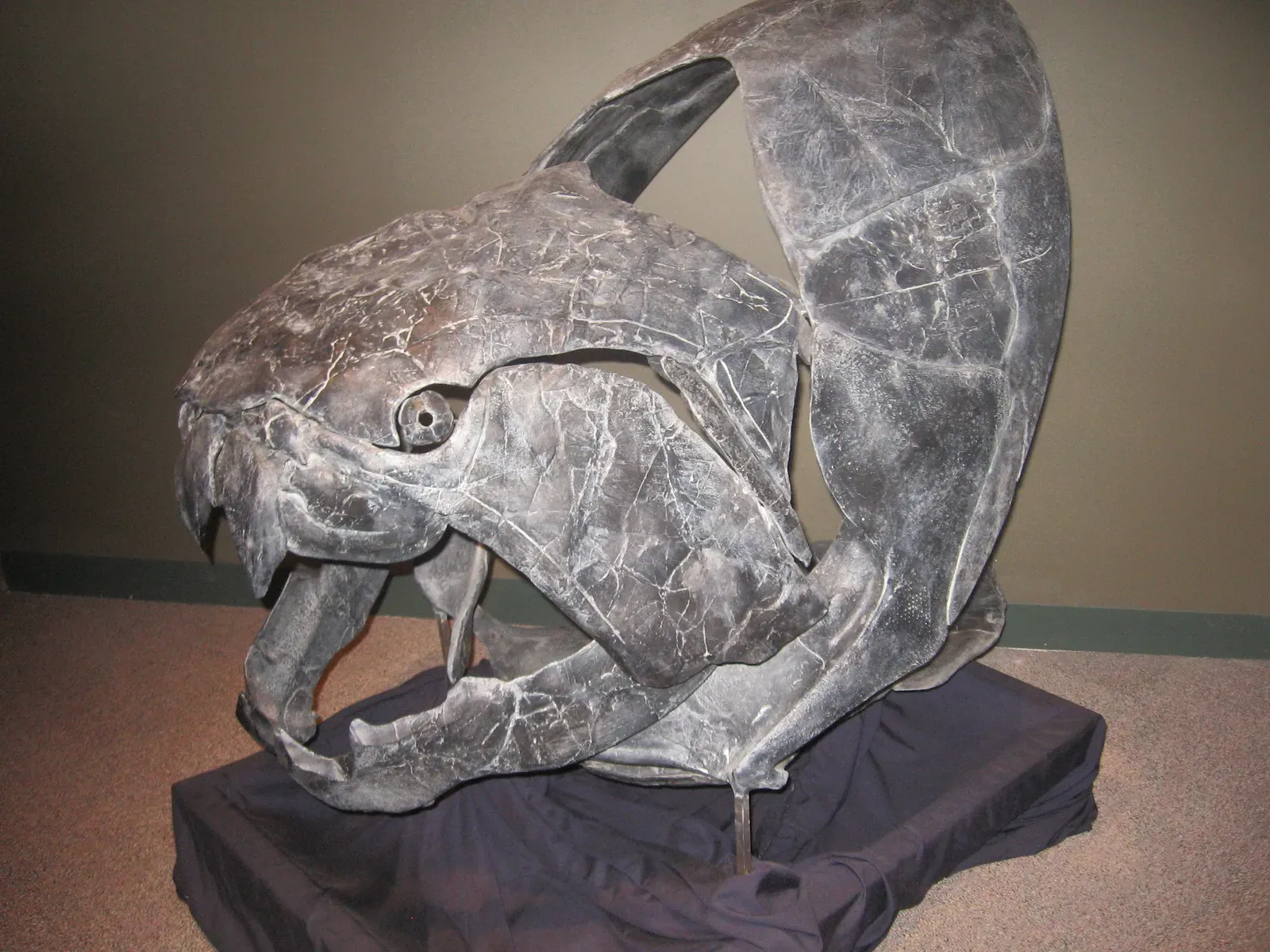
Many diverse groups of animals died out at the end of the Devonian. The placoderms, the group that includes Dunkleosteus and other giants such as Titanichthys, were completely wiped out. After dominating the oceans for millions of years, these armored fish vanished during a mass extinction event roughly 360 million years ago.
What’s particularly interesting is which animals survived and which didn’t. Other jawed, non-armoured fish, such as the chondrichthyans (sharks) and osteichthyans (bony fish), were less strongly affected by this mass extinction. They diversified post-extinction, filled the niches left by the placoderms and the ostracoderms, and ultimately went on to establish the ecosystems we recognise in our oceans today. The heavily armored placoderms, despite their power, couldn’t adapt to changing environmental conditions as effectively as their more flexible competitors.
Why This Ancient Fish Still Matters Today
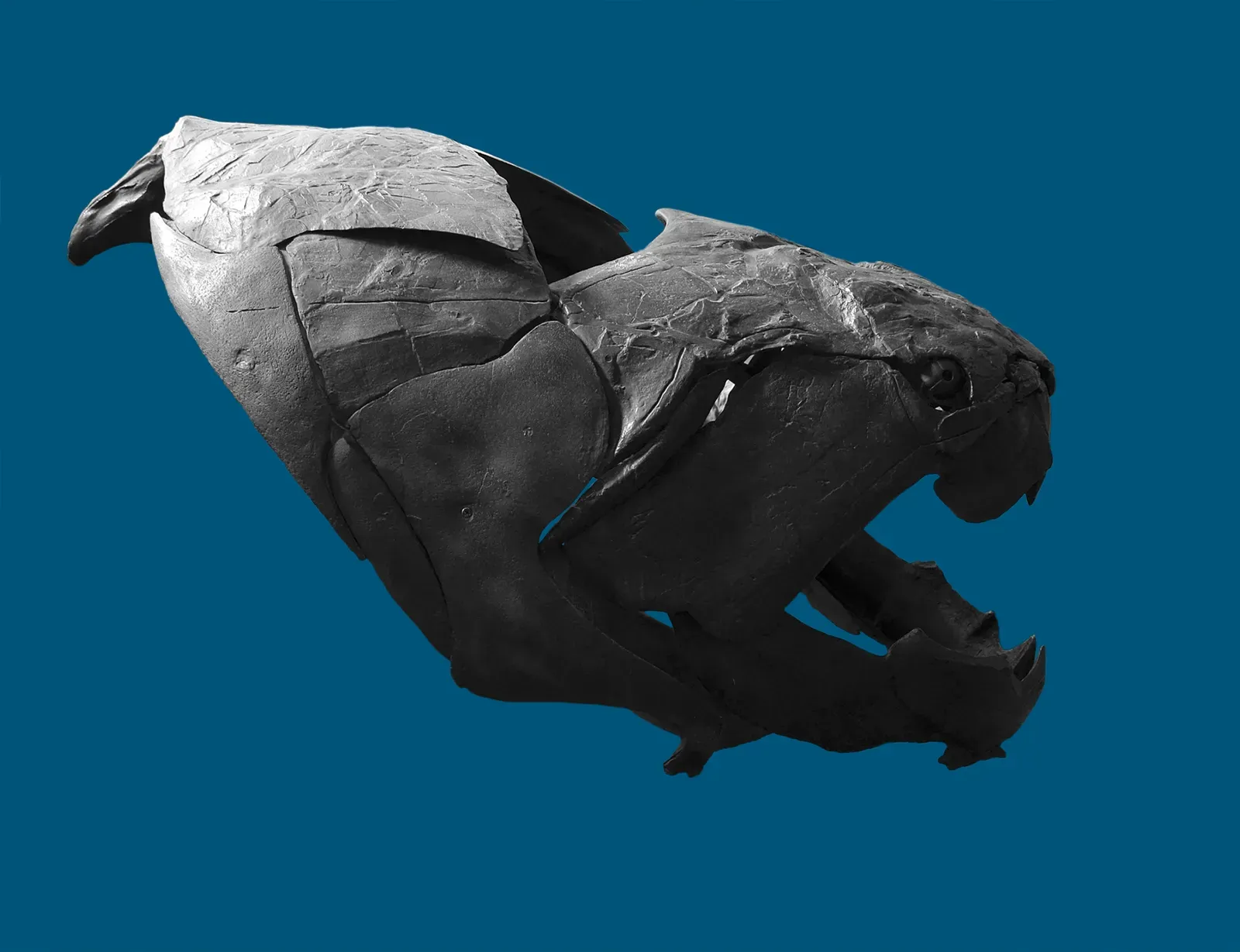
You might wonder why we should care about a fish that’s been extinct for hundreds of millions of years. The answer lies in what Dunkleosteus teaches us about evolution and adaptation. This creature represents a crucial step in the development of predatory strategies. The bladed jaws of predators such as Dunkleosteus suggest that these animals were the first vertebrates to use rapid mouth opening and a powerful bite to capture and fragment evasive prey items prior to ingestion.
Beyond evolutionary biology, studying Dunkleosteus has practical modern applications. The biomechanical models scientists create to understand its bite force are surprisingly similar to techniques used in medical reconstruction and engineering. The same principles that help us understand how an ancient fish crushed bones now help design better facial reconstruction procedures and even improve underwater equipment design. Nature’s ancient solutions continue to inspire modern innovation in unexpected ways.
Conclusion: The Legacy of the Ultimate Predator
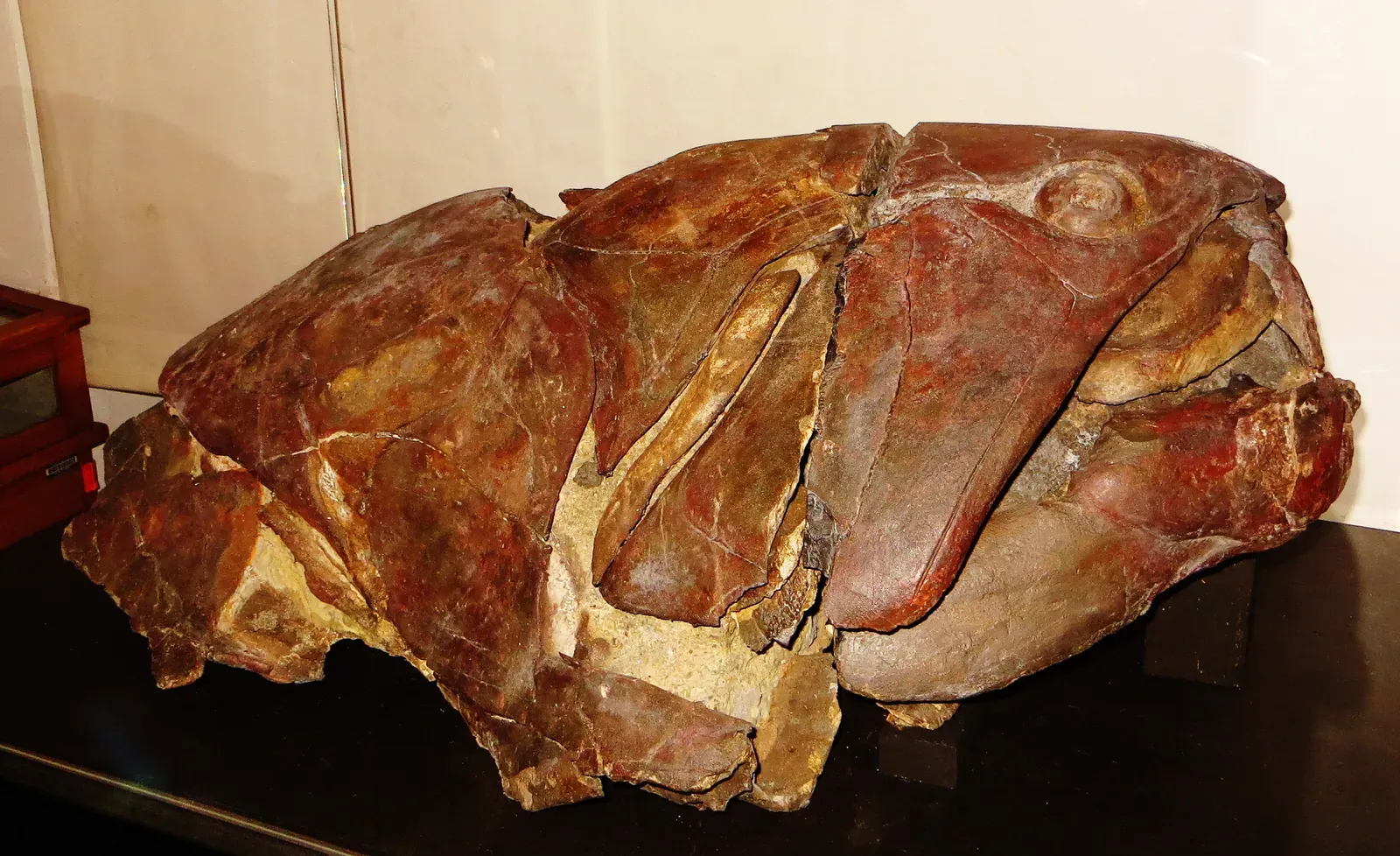
Dunkleosteus terrelli stands as a testament to nature’s capacity for creating specialized killing machines. With the strongest bite of any fish that has ever lived, lightning-fast jaw mechanics, and an arsenal of adaptations that made it virtually unstoppable in its environment, this armored predator ruled the seas long before dinosaurs walked on land. Though it’s been extinct for hundreds of millions of years, it pioneered predatory strategies that would echo through evolutionary history.
The next time you see a modern fish or shark, remember that their ancient cousin possessed jaws powerful enough to crush through nearly anything in its path. Dunkleosteus reminds us that the oceans once held terrors we can barely imagine, and that Earth’s history is filled with creatures that push the boundaries of what we think is possible. What other prehistoric monsters are waiting to be discovered, hiding in rocks, ready to rewrite our understanding of life’s incredible diversity? The ocean’s ancient secrets continue to surprise us, one fossil at a time.