
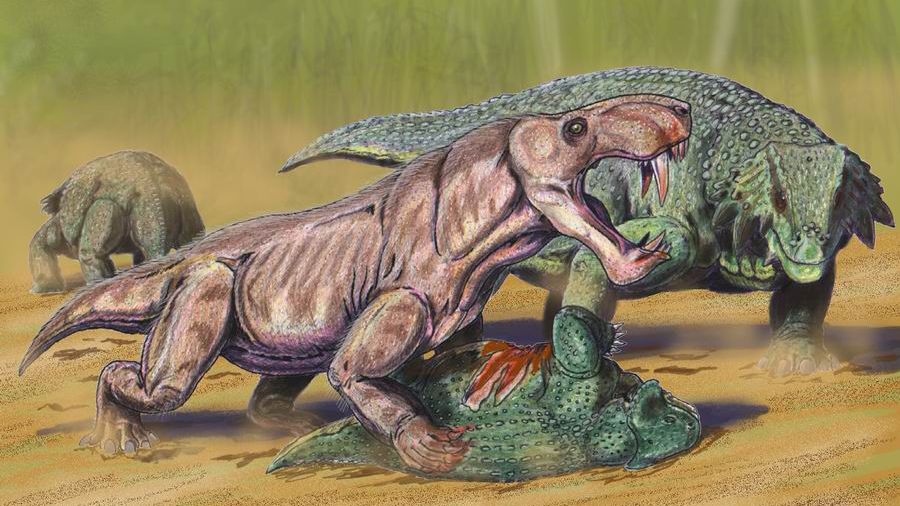
When you think of prehistoric monsters, the mind instantly conjures images of Tyrannosaurus rex or Velociraptors tearing through Jurassic jungles. That’s what the movies taught us. That’s what decades of pop culture drilled into our collective imagination.
Here’s the thing, though. Dinosaurs were late to the party. Long before they stomped across the continents, Earth was already crawling with apex predators that would make your skin crawl. These creatures ruled in ways that were bizarre, brutal, and often more terrifying than anything that came after them. From saber-toothed mammal ancestors to armored sea beasts with guillotine jaws, the ancient world hosted a parade of killers that rewrote the rules of survival. Let’s dive in.
Gorgonopsids: The Original Saber-Toothed Nightmares
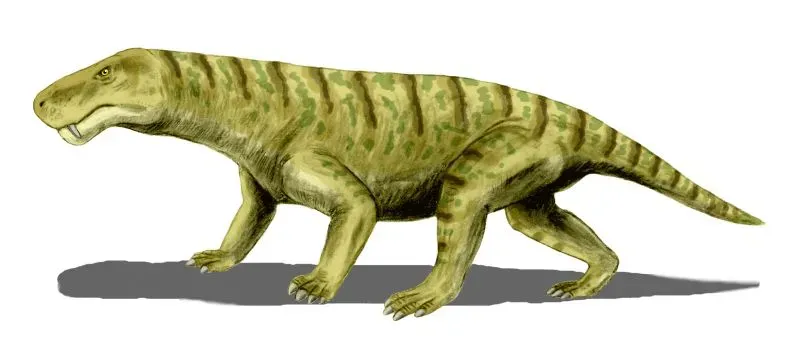
Gorgonopsids were sabre-toothed therapsids from the Middle to Upper Permian, roughly between 270 and 252 million years ago, characterised by long, narrow skulls and elongated canine teeth used as slashing weapons. Honestly, the first time you see a reconstruction of one, it’s hard not to do a double take. These weren’t dinosaurs. They weren’t even close.
The largest gorgonopsian, Inostrancevia, may have weighed half a tonne, or the size of a very large tiger. They possibly used a bite-and-retreat tactic, ambushing prey, taking a debilitating bite, and following at a safe distance before the injuries exhausted it. Think of a lion-sized predator with massive fangs that could gape its jaws beyond ninety degrees. That’s the stuff of nightmares, not bedtime stories. These beasts were the apex predators of their time, long before T. rex was even a twinkle in evolution’s eye.
Dimetrodon: The Sailback That Ruled Before Mammals
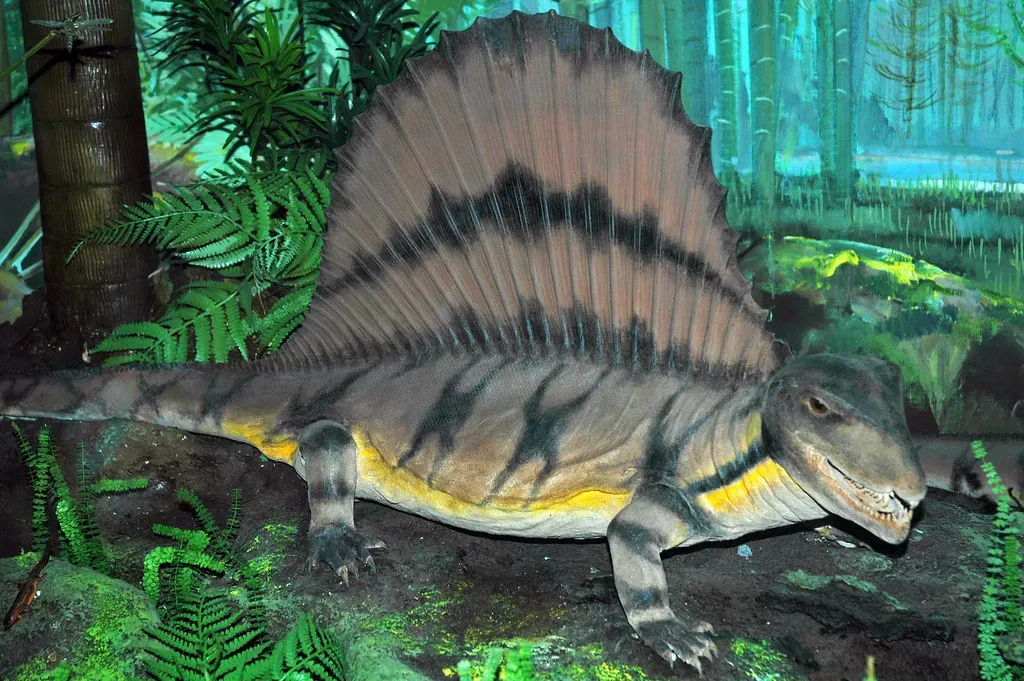
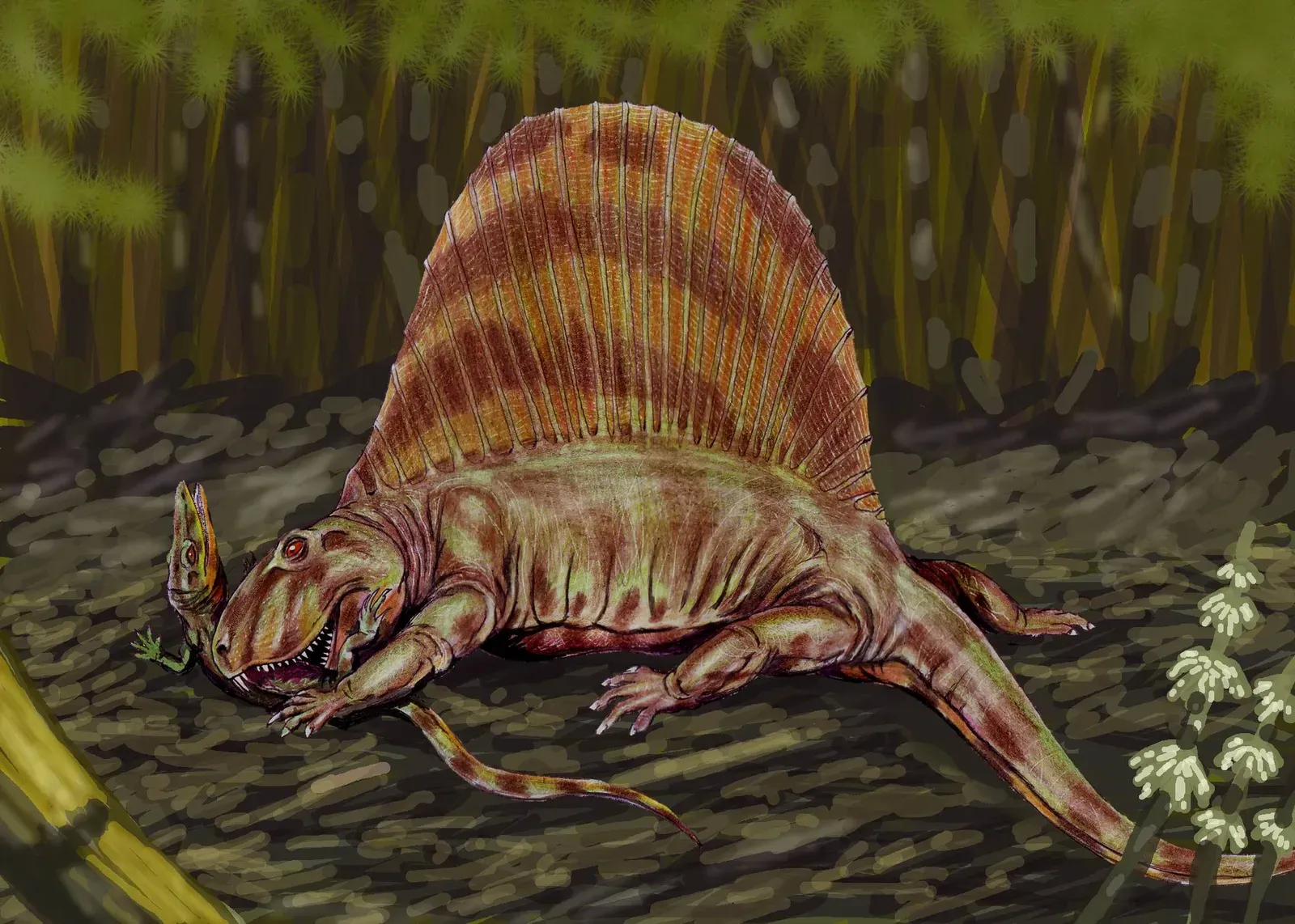
Let’s be real, Dimetrodon is one of the most misunderstood creatures in paleontology. People toss it into dinosaur toy sets all the time, yet it has nothing to do with dinosaurs. Dimetrodon lived during the Early Permian epoch, around 295 to 272 million years ago, which places it tens of millions of years before the first dinosaur ever existed.
Dimetrodon was probably one of the apex predators of the Cisuralian ecosystems, feeding on fish and tetrapods, including reptiles and amphibians. With that iconic sail on its back and jaws lined with different-sized teeth, it dominated the swamps and rivers of what’s now North America. The sail likely wasn’t just for temperature regulation, as once thought. The sail was most likely used in courtship display, including threatening away rivals or showing off to potential mates. Picture a three-meter predator flashing its sail like a billboard while hunting your ancestors.
Anomalocaris: The Cambrian Seas’ First Apex Hunter
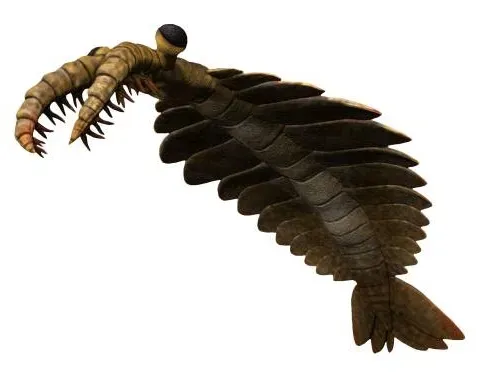
If we’re talking about firsts, we need to go way back. Anomalocaris was the great white shark of its day, cruising the shallow Cambrian seas in search of prey 500 million years ago. Half a billion years. Let that sink in for a moment.
This bizarre creature looked like something out of a fever dream. It could grow to the length of a modern human, was fast, had good eyesight and possessed a large circular mouth made from razor-sharp plates. Its stalked eyes were 30 times more powerful than those of trilobites, with one specimen having over 24,000 lenses in one eye, rivalled only by the modern dragonfly. This thing was basically an underwater nightmare with compound eyes that could spot you from across a murky ancient ocean. As the first top apex predator, Anomalocaris may have been responsible for an early evolutionary arms race, forcing other animals to develop hard shells for protection.
Eurypterids: Giant Sea Scorpions That Stalked Ancient Oceans
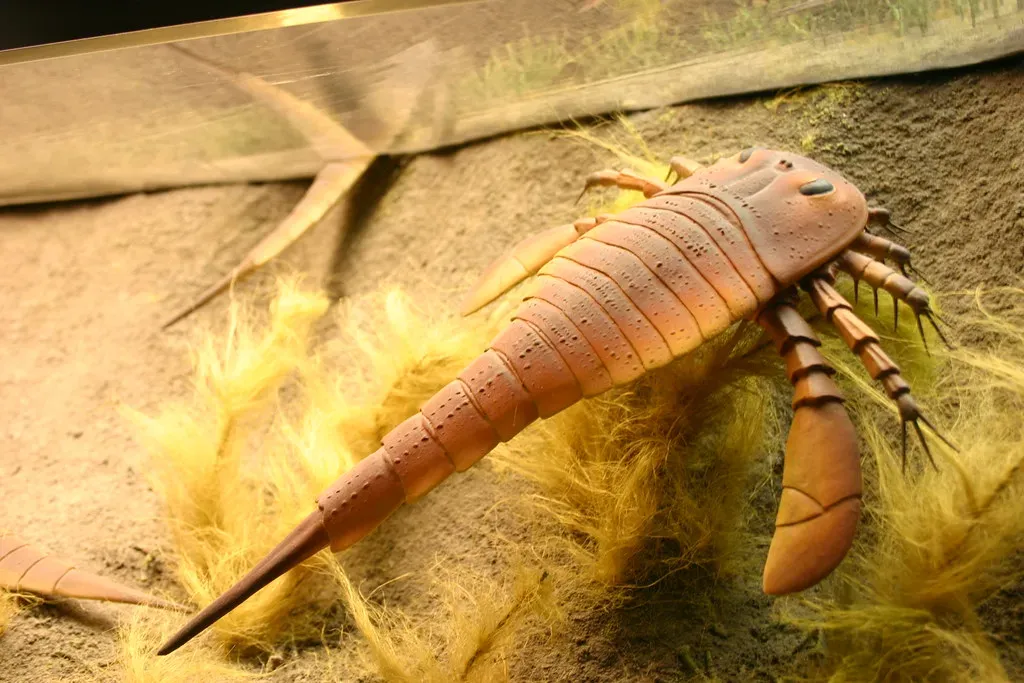
You know what’s worse than a scorpion? A scorpion the size of a grown human. In the oceans around Australia during the Paleozoic Era, giant sea scorpions called Eurypterids could grow more than eight feet long and are the cousins of modern scorpions.
Fossil records show these creatures preyed the way great white sharks do today, earning them a top spot on the food chain, with powerful clawed front limbs to snatch food and teeth-like structures on their legs called gnathobasic spines to crush prey. Imagine diving in those ancient seas and coming face to face with an armored arthropod longer than your dining room table. Eurypterids, also known as “sea scorpions,” were formidable predators, and they dominated the food chain long before sharks became the ocean’s enforcers. They’re a reminder that evolution didn’t need to invent dinosaurs to produce monsters.
Dunkleosteus: The Armored Fish With a Bite Like a Guillotine
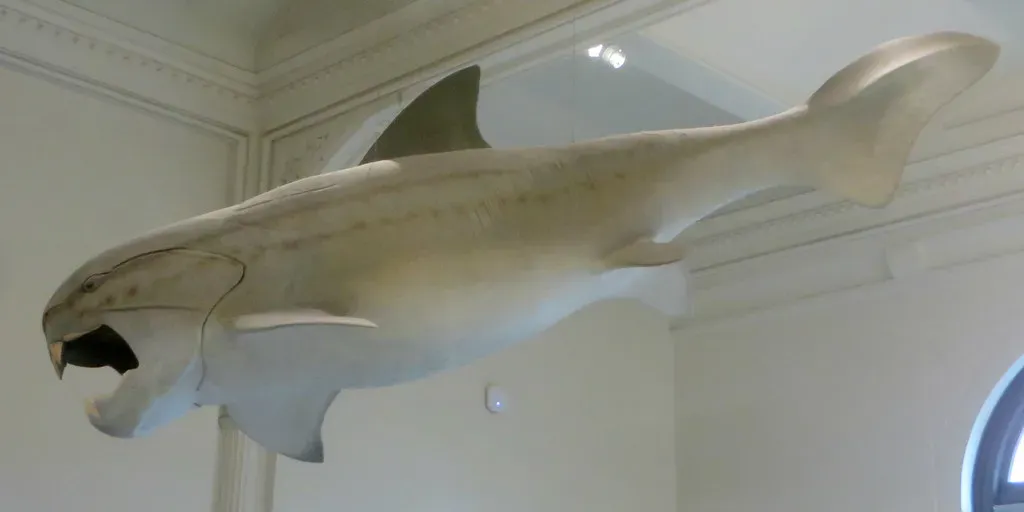
Dunkleosteus existed during the Late Devonian period, about 382 to 358 million years ago, and was one of the first vertebrate apex predators of any ecosystem. This wasn’t your average fish. This was a heavily armored killing machine that patrolled ancient seas with jaws that could shear through bone.
Biomechanical modelling suggested D. terrelli could open their jaws in 20 milliseconds and produce bite forces estimated at 4,414 to 7,495 N, which would be the highest of any living or fossil fish. Dunkleosteus lacked proper teeth; instead it had bony blades that created a guillotine-like cutting apparatus, capable of biting down at a force of 80,000 psi, comparable to a T. rex. Even more unsettling? A specimen of Dunkleosteus shows damage consistent with bites from another Dunkleosteus, proof enough that this fish wasn’t above hunting others of its own kind.
Cotylorhynchus: The Barrel-Bodied Herbivore Giant
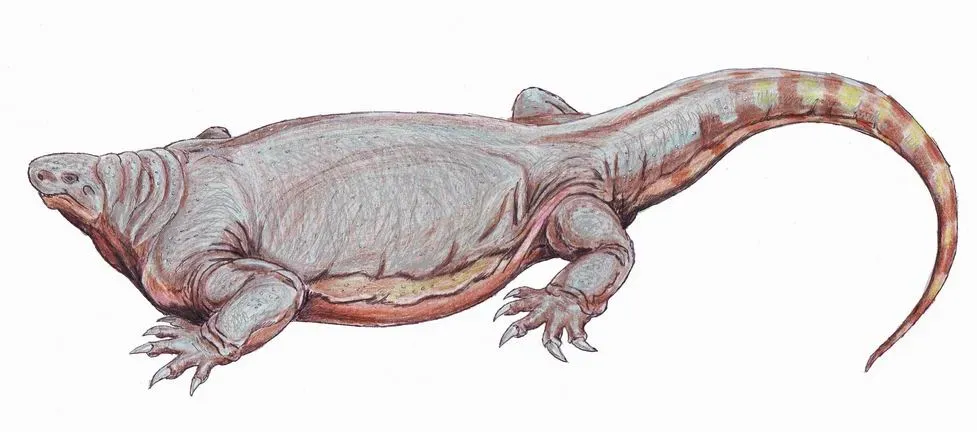
Now, not every ancient predator ate meat. Some were just so massive and bizarre they deserve a mention. Cotylorhynchus was estimated to have topped 4.5 meters in length and weighing around 330 kilograms. It wasn’t exactly a predator, true, but in an ecosystem where being big meant survival, this thing was an important player.
It had a barrel-shaped body and broad, thick skull, and was one of the earliest large herbivores. Think of it as the cow of the Permian world, except way weirder looking and way less cuddly. These creatures were prey for the apex hunters we’ve been talking about, but their sheer size made them formidable in their own right. Evolution was experimenting wildly during this time, and Cotylorhynchus was one of the successful experiments that helped shape early ecosystems.
Titanichthys: The Gentle Giant Filter Feeder
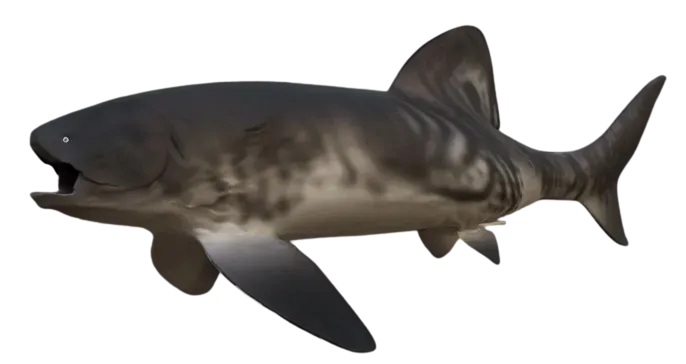
The Titanichthys was 33 feet long and had an armored body, a giant-armored fish from the late Devonian Period. Unlike its cousin Dunkleosteus, this massive creature wasn’t out for blood.
Scientists believe this enormous fish was the first large-sized vertebrate filter feeder, using its mouth to inhale anchovy-like fish. Still, its size alone made it an imposing presence in ancient seas. Imagine swimming alongside something the length of a school bus, even if it was just peacefully gulping down plankton and small fish. The fact that such giants could coexist with hyper-carnivores like Dunkleosteus shows just how complex and diverse these prehistoric ecosystems were. Sometimes being massive was the best defense.
Arthropleura: The Seven-Foot Millipede of Your Nightmares
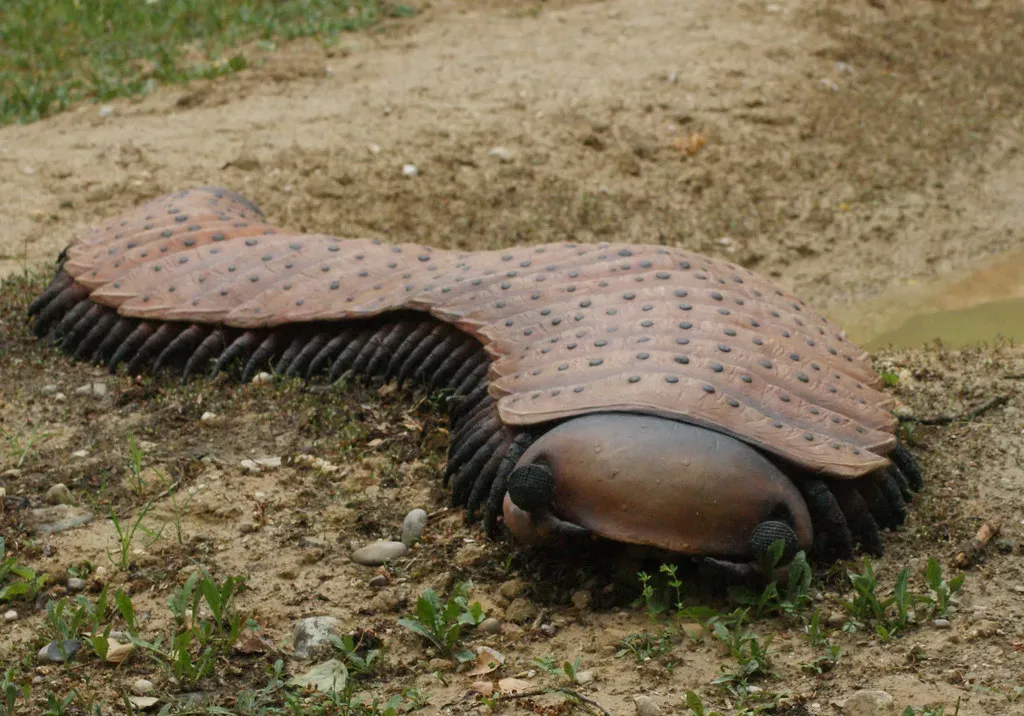
If you think spiders are creepy, brace yourself. Three hundred forty-five million years ago, gigantic millipede arthropods roamed massive forests in North America and Europe, growing to well over seven feet and capable of standing upright and spraying acid.
Yes, you read that right. A millipede the size of a human that could spray acid. Despite their fearsome features, these millipedes were some of the first plant-eaters, using their powerful jaws to break down tough vegetative matter. They weren’t hunting you, but honestly, does that make it better? These colossal invertebrates are a reminder that the ancient world didn’t play by today’s rules. Size, armor, and chemical weapons were all on the table.
Postosuchus and Fasolasuchus: Crocodile Cousins That Walked Upright
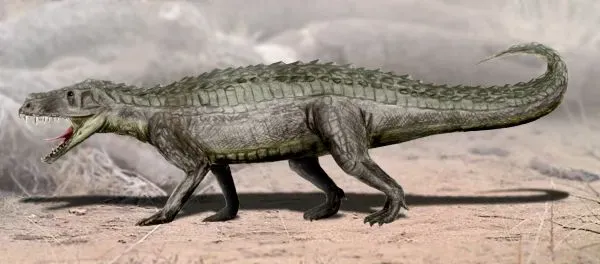
By the time the Triassic rolled around, life on land was getting interesting again after the devastation of the Permian extinction. Enter the rauisuchians, crocodile relatives that stood upright and terrorized early dinosaurs. Fasolasuchus was truly the king of the Triassic age in South America.
These weren’t your lazy river crocodiles. They walked on two or four legs, had powerful jaws, and were apex predators in their own right. They coexisted with early dinosaurs, and for a while, it wasn’t clear which group would dominate. Spoiler alert: dinosaurs eventually won, but these croc cousins put up a serious fight. They were fast, heavily built, and absolutely lethal.
Inostrancevia: The Permian’s Saber-Toothed Apex Killer
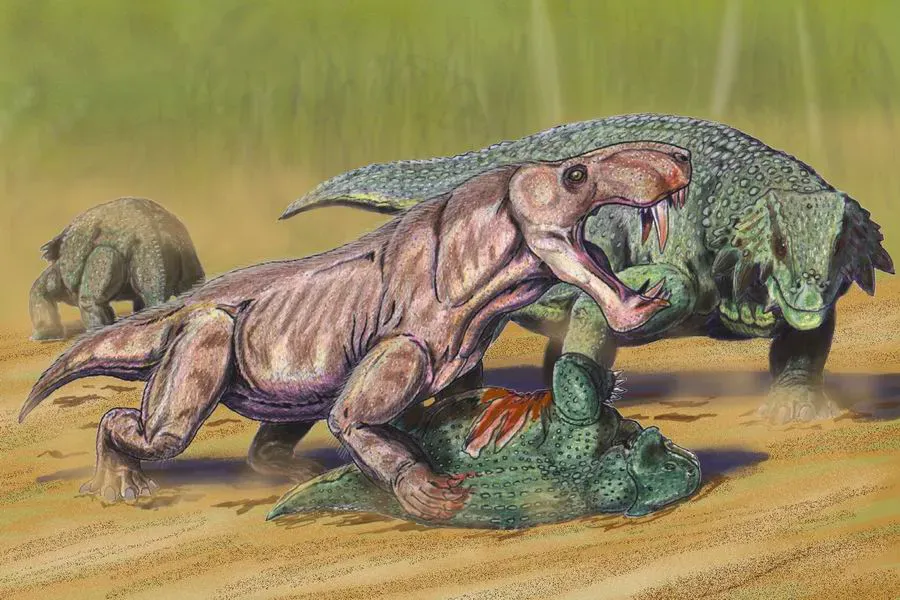
We’ve mentioned gorgonopsids, but Inostrancevia deserves its own spotlight. Inostrancevia was one of the largest and most fearsome of the Gorgonopsids. The largest gorgonopsid of its family, Inostrancevia was the apex predator of its environment and hunted giant reptiles as well as other proto-mammals.
Roger Smith and Peter Ward measured the skull at about 30 inches long, with a backbone more than 6.5 feet long and an overall length of nearly 9.75 feet. This was the monster under the Permian bed, a saber-toothed killer that stalked the ancient supercontinent of Pangaea. Gorgonopsids were the largest predators of the late Paleozoic, the era just before dinosaurs. They were built like tanks, armed like assassins, and utterly dominant.
The Legacy of Pre-Dinosaur Predators
Here’s what strikes me most about these ancient hunters. They thrived in worlds we can barely imagine. The Permian ended with the largest mass extinction in the history of Earth: some 90% of all plant and animal life was wiped out. Yet even after that apocalypse, life found a way to come roaring back.
Dinosaurs get all the glory, all the movies, all the museum gift shop merchandise. They earned it, sure. They ruled for over 160 million years. That’s an impressive résumé. Still, the predators that came before them were no less remarkable. They pioneered hunting strategies, developed armor and weapons, and shaped ecosystems in ways that influenced everything that followed. The Triassic forms the transition between the late Palaeozoic Era, mainly populated by synapsids, and the Mesozoic Era, when the archosaurian reptiles came to dominate. The torch was passed, but the flame had been burning bright long before.
What do you think about it? Did any of these ancient predators surprise you? Tell us in the comments.