You’ve probably looked up at the night sky and wondered if we’re truly alone in this vast universe. Honestly, it feels like one of those questions that gnaws at the edge of our consciousness, doesn’t it? With countless stars scattered across galaxies and billions of potentially habitable worlds out there, logic would suggest somebody else should be around. Yet here we are, met only by cosmic silence.
The Great Filter theory emerged as one possible answer to the Fermi Paradox, suggesting there’s a barrier somewhere in the development of life that makes intelligent civilizations exceedingly rare. Think of it as an impossibly difficult level in the game of cosmic evolution. Maybe we’ve already beaten it, or perhaps the worst is yet to come.
What Exactly Is the Fermi Paradox?
Back in 1950, physicist Enrico Fermi famously asked during a lunch discussion, “But where is everybody?” It seems like such a simple question, right? Yet it captures something deeply unsettling about our place in the cosmos.
Since Fermi posed his paradox, scientific discoveries have revealed that at least one in four stars hosts Earth-sized, potentially habitable planets. With the Milky Way containing billions of stars, some billions of years older than our sun, the mathematical probability suggests countless opportunities for intelligent life. We should be swimming in evidence of alien civilizations. The silence feels almost intentional.
Recent surveys show that roughly most scientists in relevant fields agree there’s at least basic extraterrestrial life out there, with a significant majority believing intelligent aliens exist. Still, we haven’t heard a peep.
Understanding the Great Filter Concept
Economist Robin Hanson proposed the Great Filter in 1996, arguing that very few civilizations in the universe make it to the advanced spacefaring stage. The theory breaks down the journey from lifeless planets to galaxy-spanning civilizations into multiple steps. Somewhere along that path lurks a barrier so insurmountable that most potential civilizations never pass through.
The concept suggests something is fundamentally wrong with our assumptions about the likelihood of advanced intelligent life, acting as a probability threshold that could lie either in our past or future. Here’s where it gets interesting. This filter might work by preventing the evolution of intelligent life in the first place, or it could manifest as an almost inevitable tendency toward self-destruction once civilizations reach a certain technological threshold.
The chilling part? The more probable it seems that other life could evolve to humanity’s current stage, the bleaker our future prospects probably are. Let that sink in for a moment.
Is the Filter Behind Us or Ahead of Us?
This question keeps scientists up at night for good reason. For researchers, there are two basic possibilities regarding the Great Filter: it’s either behind us or in front of us. Each option carries wildly different implications for humanity’s future.
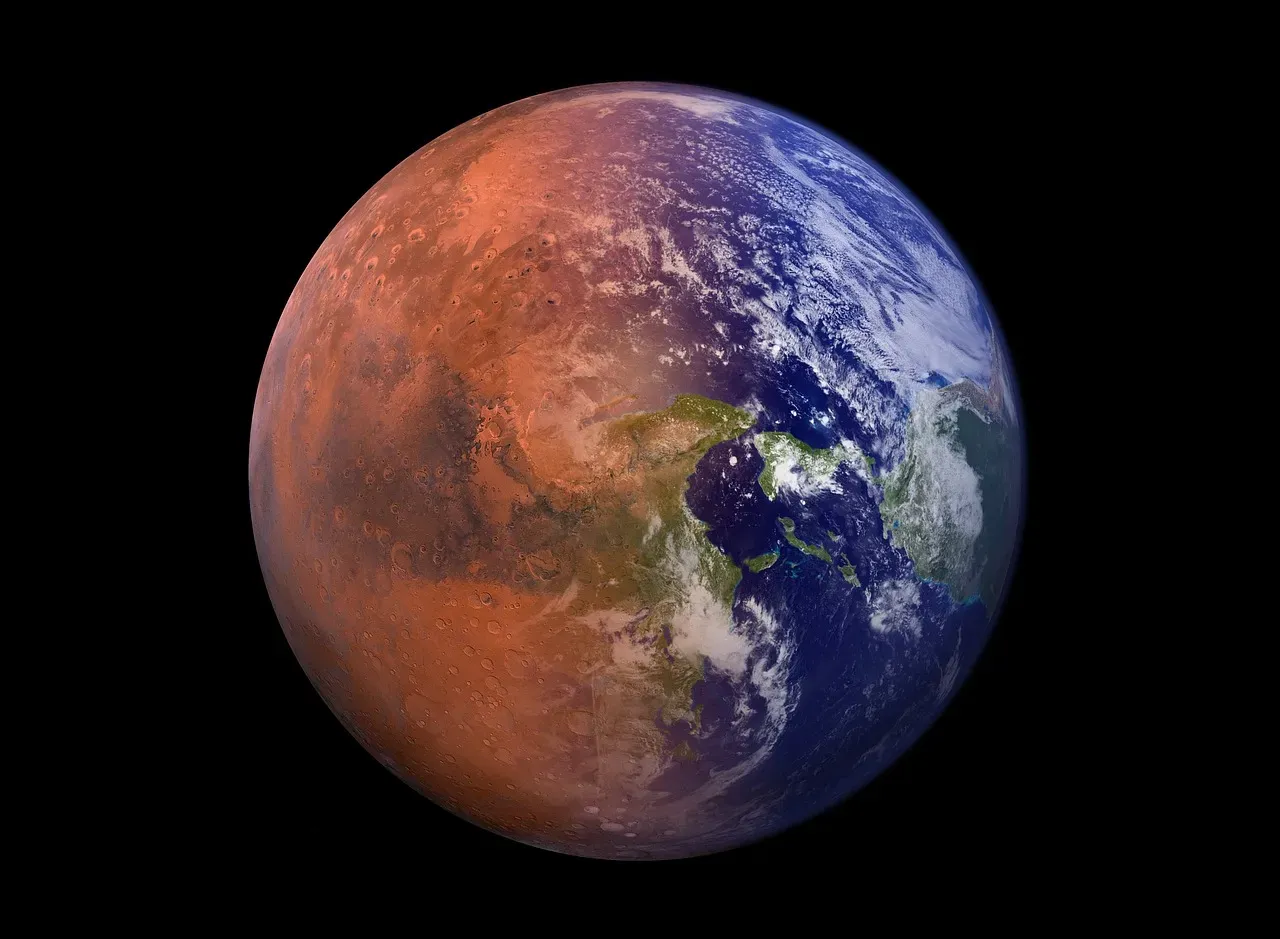
Philosopher Nick Bostrom suggested that discovering even simple life on Mars would be devastating news, because it would eliminate potential Great Filters behind us. Finding fossilized complex life on Mars would be even worse, suggesting the Great Filter almost certainly lies ahead of us. Imagine hoping to find a barren, lifeless rock as the best-case scenario for humanity’s survival. The logic feels backward until you really think about it.
If the Great Filter is behind us, the universe may be ours for the taking, but if it still lies ahead, we may be doomed. Maybe we’ve already overcome the impossible odds by developing intelligence, technology, and complex civilization. Or maybe every species that reaches our level eventually faces an unavoidable catastrophe. There’s no way to know for certain which scenario we’re living through.
Possible Filters in Our Past
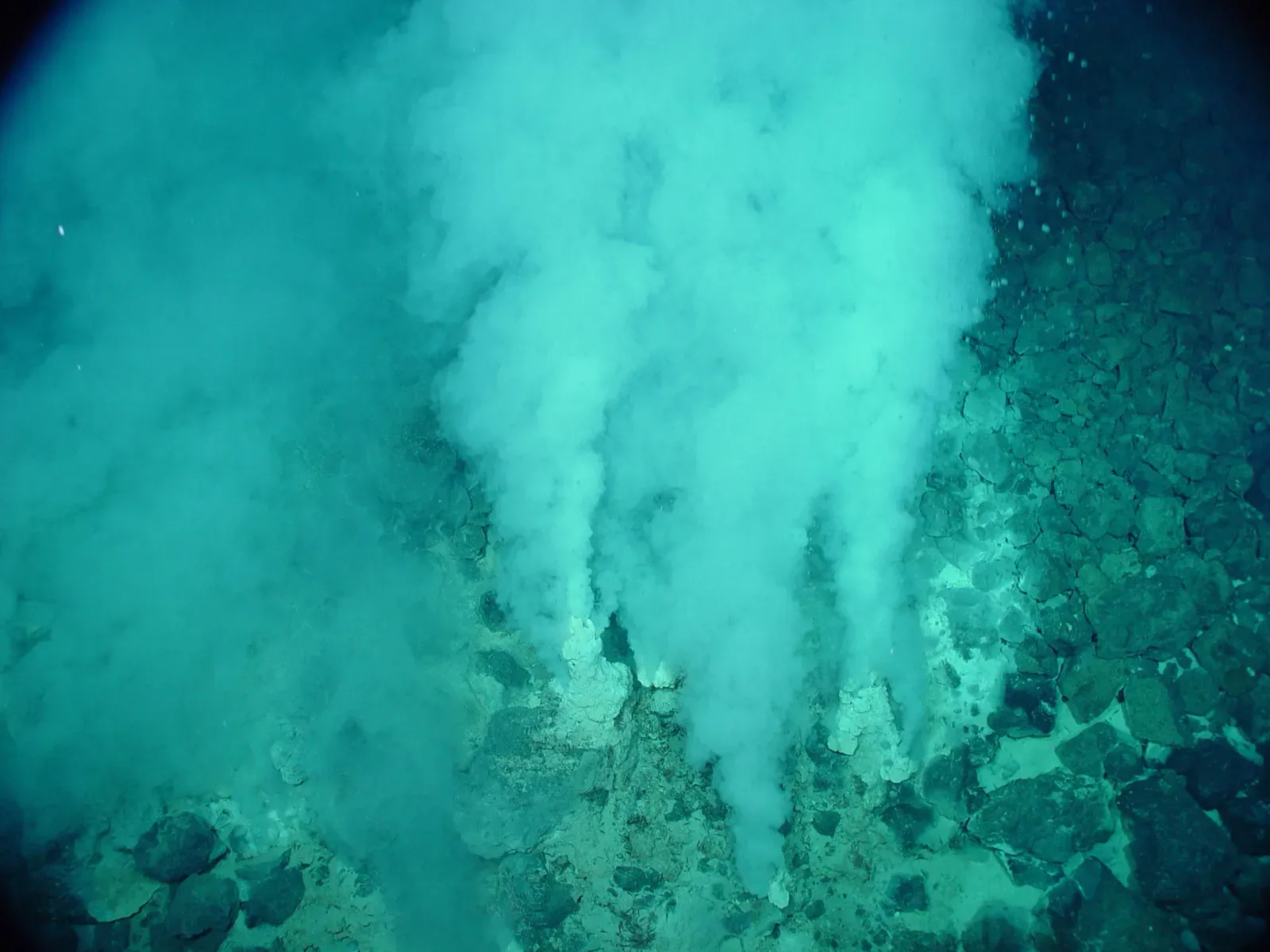
Let’s consider what might have already been incredibly difficult to achieve. Abiogenesis, the process of life arising from inorganic matter, requires specific chemical elements, energy sources, liquid water, and stable environmental conditions, a combination that may be extremely rare in the universe. We take for granted that life emerged on Earth, yet the transition from organic molecules to self-replicating cells remains shrouded in mystery.
Scientific reviews of Earth’s history suggest that transitions such as oxygenic photosynthesis, the eukaryotic cell, multicellularity, and tool-using intelligence are likely to occur on Earth-like planets given enough time. So perhaps these weren’t the filters after all. The jump from prokaryotes to eukaryotes took nearly two billion years on Earth. That’s an almost incomprehensibly long wait for what seems like a simple step.
Some scientists argue that the leap from semi-intelligent to intelligent life might be the Great Filter, though any potential filter must be a one-in-a-billion occurrence requiring total freak accidents. We might genuinely be the cosmic lottery winners who cleared an impossibly high bar. If so, that’s simultaneously humbling and terrifying.
The Threat of Self-Destruction Ahead
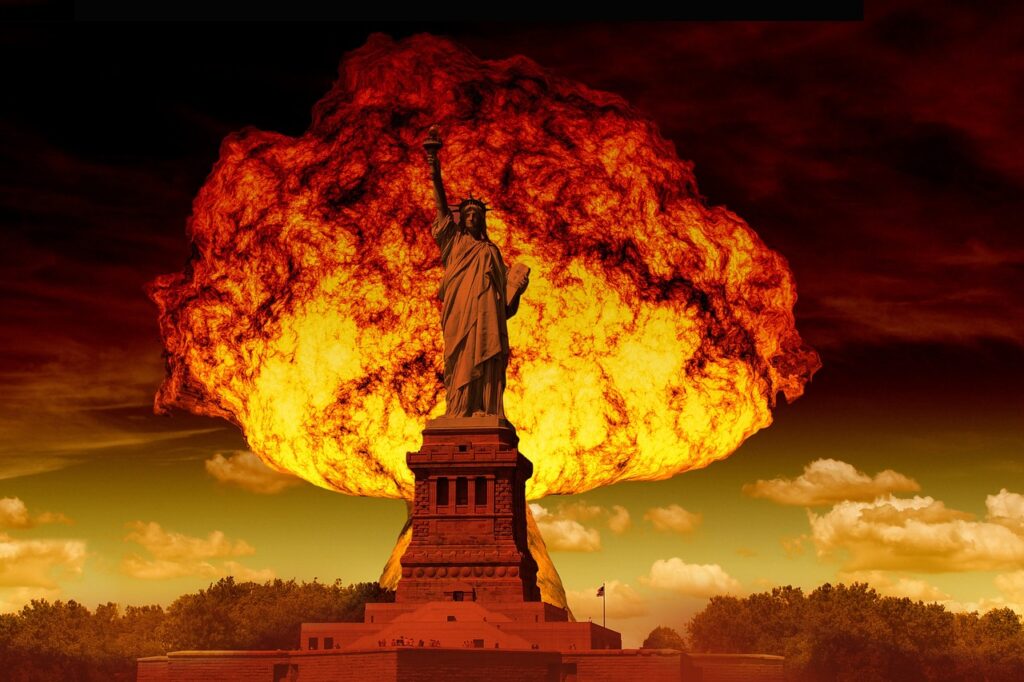
The darker possibility haunts researchers more persistently. Major Great Filter candidates identified by scientists include nuclear war, pandemics or pathogens, artificial intelligence, asteroid impacts, and climate change, with most being human-caused events. Technology capable of taking us to the stars might also contain the seeds of our destruction.
As discussed in historical accounts of Fermi’s conversations, advanced weaponry could lead to wars where extensive use of nuclear bombs destroys all life or at least all civilization and technology, suggesting that great technological civilizations might inevitably destroy themselves. It’s hard to ignore the parallels with our current situation. We’ve possessed world-ending weapons for decades now, walking a tightrope between progress and annihilation.
Recent studies propose that rapid development of Artificial Intelligence culminating in Artificial Superintelligence could act as a Great Filter, suggesting the typical longevity of a technical civilization might be less than 200 years. Two hundred years. That’s barely a blip on cosmic timescales. Think about how quickly our technology has accelerated just in the last century.
Can Humanity Survive Its Own Great Filter?

There’s a glimmer of hope in all this cosmic dread. NASA scientists propose that existential disasters acting as the Great Filter include both anthropogenic and natural hazards that can be prevented with reforms in individual, institutional, and intrinsic behaviors. In other words, our fate isn’t necessarily sealed. We might actually have agency in determining whether we pass through or get stuck at the filter.
Using our demonstrated inventiveness to recognize, diagnose, and formulate countermeasures to the most serious threats could allow humanity to avert the Great Filter and emerge as a near Type I civilization on the Kardashev scale. It requires global cooperation, long-term thinking, and a willingness to confront uncomfortable truths about our own behavior. The challenges are enormous, ranging from climate change to nuclear proliferation to artificial intelligence safety.
If civilization possesses enough wisdom and political will, we might avoid a second Great Filter and make it to the future. That’s a big if, considering humanity’s track record with cooperation on existential threats. Still, awareness is the first step toward meaningful action.
What This Means for Our Cosmic Future
If the Great Filter lies behind us, we may be among the first intelligent civilizations, but if the filter is ahead, technological civilizations may inevitably destroy themselves, making our survival far from guaranteed. Every answer to the Fermi Paradox and the Great Filter carries profound implications for how we view ourselves and our place in the universe.
While humanity’s fate is not sealed and the Great Filter is not the only solution to the Fermi paradox, we might already be on the other side of the filter, making the galaxy essentially our cosmic playground. Imagine that scenario for a moment. An entire galaxy of worlds, waiting to be explored, with no one else around to stake a claim. It sounds like science fiction, yet it might be our reality.
Perhaps we should be working harder to ensure we actually make it that far. The universe has been around for billions of years. Civilizations on planets billions of years older than Earth should have had ample time to colonize the galaxy. Their absence speaks volumes, though we’re still trying to figure out what exactly it’s saying. Are we witnessing the graveyard of failed civilizations, or are we truly the first to reach this threshold?
The Great Filter theory doesn’t offer comforting answers, only sobering questions about whether we possess the wisdom to survive our own success. Every technological breakthrough brings us closer to either transcendence or catastrophe. The silence of the cosmos might be our most important warning sign. What do you think our chances are? Does humanity have what it takes to become the exception rather than the rule?