You’ve probably looked at rocks before without giving them much thought. Maybe kicked a pebble down the street or skipped a stone across a lake. Yet beneath your feet lies a story nearly impossible to imagine, a four-and-a-half-billion-year epic written in stone, crystal, and layered sediment. Our planet keeps secrets, and honestly, some of them are stranger than fiction.
Scientists have spent lifetimes piecing together Earth’s ancient past, searching for tiny traces of evidence scattered across continents and buried deep within the crust. What they’ve discovered challenges everything we thought we knew about how our world began. From microscopic crystals that survived Earth’s most violent collisions to layered rocks that document the first breath of oxygen in our atmosphere, these clues tell us where we came from and, perhaps, where we’re headed. So let’s dive into the hidden evidence that reveals the dramatic transformation of our planet over billions of years.
Microscopic Time Travelers from Earth’s Violent Birth
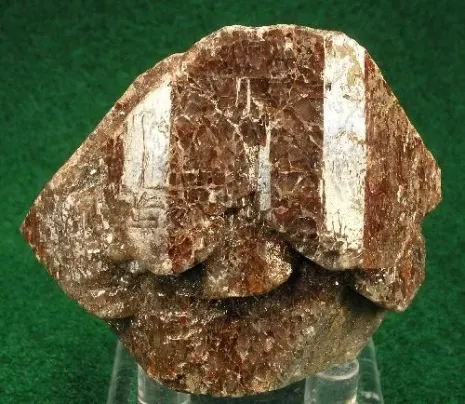
Tiny zircon crystals found in Western Australia are roughly 4.4 billion years old, making them the oldest dated material on Earth. Think about that for a second. Our planet formed around 4.5 billion years ago, which means these minuscule minerals crystallized when Earth was practically a newborn, still cooling from its fiery beginning. What makes zircons so special is their incredible durability.
These crystals are extremely durable, resistant to melting, cracking, dissolving, or crushing, and able to withstand repeated cycles of metamorphism and erosion. They lock in the chemical environment in which they were created, acting like microscopic time capsules that preserve snapshots of ancient Earth. Uranium atoms embedded within zircons decay to lead at a specific rate, giving scientists a reliable natural clock to date these crystals with remarkable precision. The story they tell is surprising.
Analysis reveals that the Earth had continents interacting with liquid water oceans far earlier than previously thought possible. Before these zircon discoveries, many scientists assumed early Earth was a hellish molten ball incapable of supporting anything resembling modern geological processes. Some zircons contain chemical signatures of rocks weathered by water to form clay, while others bear signatures of dissolved minerals that crystallize in lakes or oceans. These hardy survivors have rewritten the opening chapters of planetary history.
Fossilized Breath Marks from Earth’s First Life
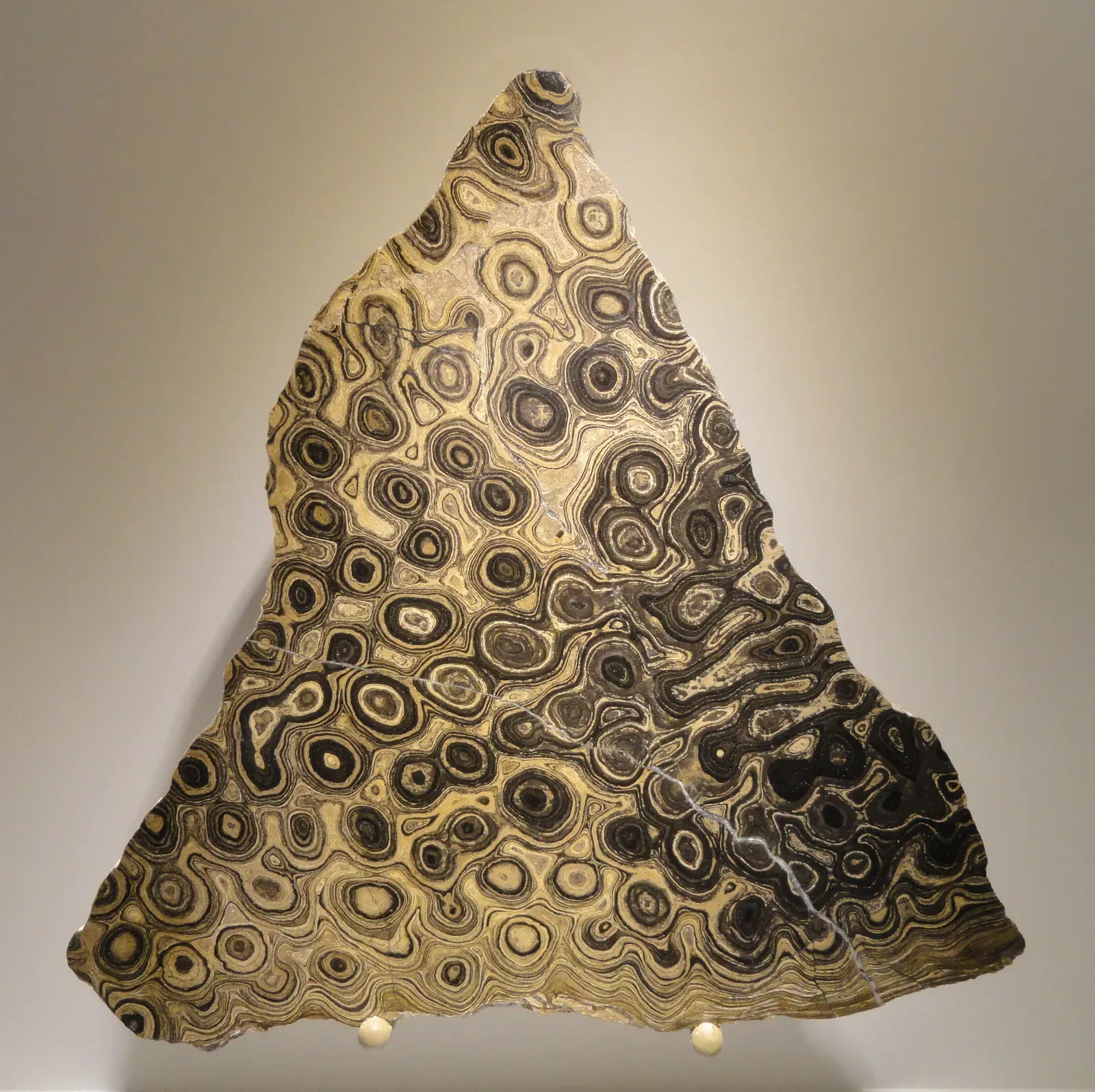
Stromatolites first appeared in the fossil record during the Archean Eon, roughly three billion years ago. You might walk right past these layered rock formations without realizing you’re looking at evidence of some of the earliest life on our planet. They are layered structures formed in shallow water by the trapping, binding and cementation of sedimentary grains in biofilms, through the action of certain microbial lifeforms, especially cyanobacteria.
Here’s the thing about stromatolites that really gets scientists excited. Cyanobacteria are thought to be largely responsible for increasing the amount of oxygen in the primeval Earth’s atmosphere through their continuing photosynthesis. Picture ancient shallow seas dominated by these microbial communities, quietly producing oxygen as a waste product while building their distinctive domed structures layer by layer, season after season. Stromatolite fossils are known from rocks as old as 3.45 billion years, more than six times as old as the first corals.
Today, living stromatolites still exist in a few isolated locations. Hamelin Pool in Australia hosts living examples, where unusually high salt levels protect the stromatolites from animals and provide a fascinating look at what Earth’s habitats might have looked like billions of years ago. It’s hard to say for sure, but standing before these ancient life forms feels like staring into a window back to the dawn of biology itself.
Rust-Colored Evidence of Oxygen’s Deadly Debut
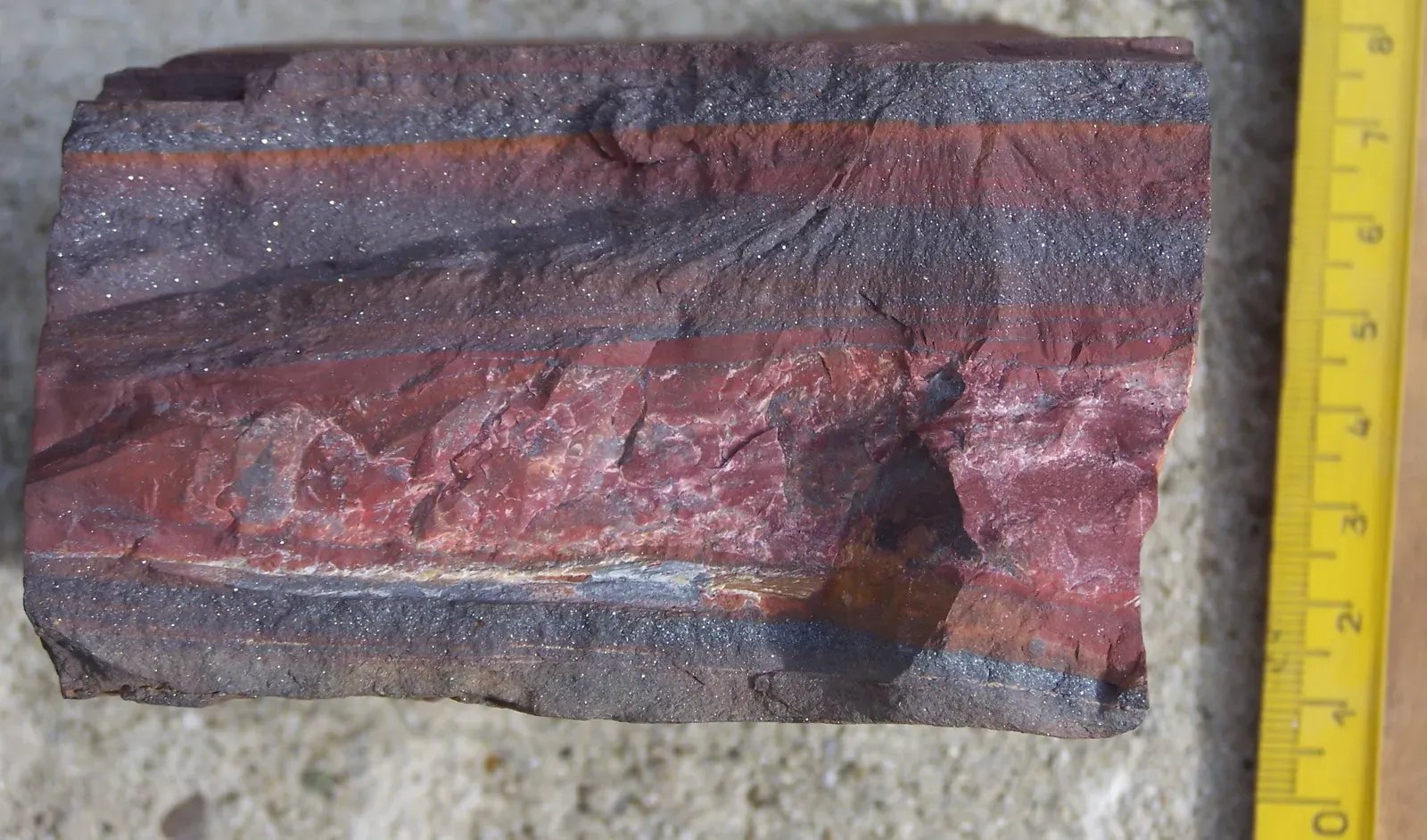
Banded iron formations are distinctive units of sedimentary rock consisting of alternating layers of iron oxides and iron-poor chert, and almost all are of Precambrian age, theorized to record the oxygenation of Earth’s oceans. Walk into certain geological museums and you’ll see these striking rocks with their red and dark bands stacked like pages in a book. Each stripe tells part of a dramatic story about environmental catastrophe and transformation.
A nearly three-billion-year-old banded iron formation from Canada shows that the atmosphere and ocean once had no oxygen, as photosynthetic organisms were making oxygen but it reacted with iron dissolved in seawater to form iron oxide minerals on the ocean floor. Honestly, this was probably one of the most significant pollution events in Earth’s history. Cyanobacteria make energy from sunlight by photosynthesis, creating oxygen as a waste product, and as they prospered they made more and more oxygen until it poisoned the cyanobacteria themselves.
The timeline preserved in these formations is remarkable. The peak of banded iron formation deposition coincides with the permanent appearance of oxygen in the atmosphere between 2.41 and 2.35 billion years ago, accompanied by the development of a stratified ocean. The end of deposition at 1.85 billion years ago is attributed to the oxidation of the deep ocean. What began as microbial waste gradually transformed the entire planet, paving the way for complex life that depends on oxygen to survive.
Continental Puzzle Pieces That Once Fit Together
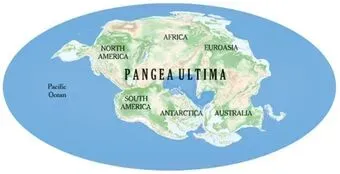
Pangaea was a supercontinent that existed during the late Paleozoic and early Mesozoic eras, assembling approximately 335 million years ago and beginning to break apart about 200 million years ago. Looking at a modern map, you might notice how the coastlines of different continents seem like they could fit together. That’s not your imagination playing tricks.
The first and most obvious clue about Pangaea’s existence was that the continents fit together like a tongue and groove. Geologist Alfred Wegener was intrigued by occurrences of unusual geologic structures and plant and animal fossils found on matching coastlines of South America and Africa, and the presence of identical fossil species along coastal parts was the most compelling evidence that the two continents were once joined. Imagine trying to convince the scientific community of this radical idea in 1912, when most people assumed continents were permanently fixed.
Coal deposits found in Pennsylvania have a similar composition to those spanning across Poland, Great Britain and Germany from the same time period, indicating that North America and Europe must have once been a single landmass. The geological record doesn’t lie. Magnetic differences in rocks whose age varies by millions of years show both magnetic polar wander and continental drift, and the polar wander component can be subtracted to show portions that help reconstruct earlier continental latitudes and orientations. Today we understand these movements through plate tectonics, though Wegener died before seeing his ideas vindicated.
Isotopic Whispers from Proto-Earth
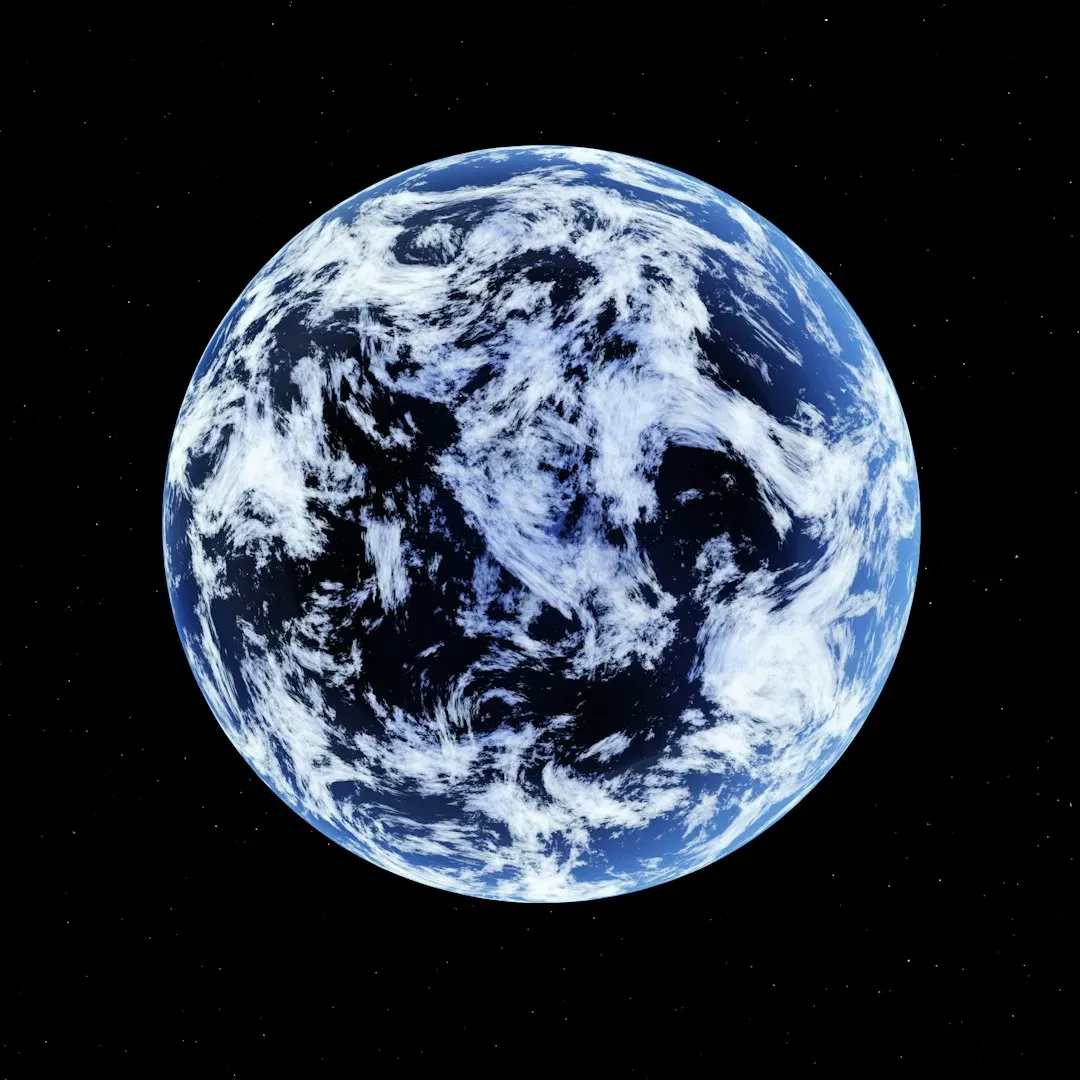
Scientists have discovered a subtle imbalance in potassium isotopes in samples of very old and very deep rocks. This might sound impossibly technical, yet the implications are staggering. Researchers determined that the potassium imbalance could not have been produced by any previous large impacts or geological processes occurring in Earth presently, and the most likely explanation is that they must be leftover material from proto-Earth that somehow remained unchanged.
Let’s be real, most people assume that nothing could survive from before the giant impact that created our Moon. The young solar system was a swirling cloud that formed the first asteroids and planets, and a Mars-sized object collided with proto-Earth in an event so violent it melted and remixed nearly the entire planet, with scientists long suspecting that this giant impact wiped away nearly all chemical traces of what came before. The discovery of these chemical signatures changes that narrative completely.
Research suggests this is maybe the first direct evidence that proto-Earth materials have been preserved, showing a piece of the very ancient Earth from even before the giant impact, which is amazing because this very early signature was expected to be slowly erased through Earth’s evolution. These unusual chemical signatures appear as a slight imbalance in potassium isotopes discovered in ancient rock samples. Think of it as finding a message in a bottle from before Earth as we know it even existed.
Oxygen Levels Frozen in Ancient Sediments
Stanford-led expeditions to a remote area of Yukon, Canada, uncovered a 120-million-year-long geological record of a time when land plants and complex animals first evolved and ocean oxygen levels began to approach those in the modern world. The Peel River cuts through layers that preserve an incredibly detailed chronicle spanning hundreds of millions of years. What scientists found there challenged existing timelines.
Data show low oxygen levels likely persisted in the world’s oceans for millions of years longer than previously thought, well into the Phanerozoic when land plants and early animals began to diversify, meaning early animals were still living in a low oxygen world. Picture complex creatures struggling to survive in an environment we would find suffocating. When oxygen eventually did tick upward in marine environments, it came about just as larger plant life took off, and results are consistent with a hypothesis that as plants evolved and covered the Earth, they increased nutrients to the ocean, driving oxygenation.
The connection between terrestrial plant evolution and ocean chemistry might not seem obvious at first. Rocks older than 2.3 billion years have low ratios of heavy to light iron isotopes suggesting little oxygen and lots of iron in the water, while between 2.3 and 1.8 billion years ago the ratio increased, suggesting the atmosphere gained oxygen while oceans remained mostly oxygen-free. The delayed oxygenation of deep ocean waters created a strange two-tiered system that persisted for hundreds of millions of years.
Subduction Zone Signatures in Billion-Year-Old Rocks
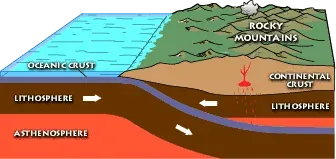
A study published in Science Advances highlights the intricate connections between Earth’s evolving mantle and crust and the tectonic forces that shaped the planet, providing new ways to explore when plate tectonics began and how subduction dynamics operated billions of years ago. Research focused on anorthosites from North America’s Grenville region that are about 1.1 billion years old, and analysis revealed that magmas forming these rocks were rich in melts derived from oceanic crust altered by seawater at low temperatures.
This discovery matters because it helps nail down when modern-style plate tectonics actually started operating. A compositional shift likely marks the onset of modern-style plate tectonics and potentially could signal the emergence of life on Earth. High-aluminum zircons can form by melting rocks deeper beneath Earth’s surface under extreme geologic conditions, and this sign that rocks were being melted deeper meant the planet’s crust was getting thicker and beginning to cool, indicating the transition to modern plate tectonics was underway.
Because these rock types don’t form on Earth today, evidence linking them to very hot subduction on early Earth opens new approaches for understanding how these rocks chronicle the physical evolution of our planet and shed light on broader implications for Earth’s tectonic and thermal history. Plate tectonics created the dynamic crust that makes our planet uniquely habitable, from regulating atmospheric composition to building continents and generating the magnetic field that shields us from solar radiation.
Conclusion
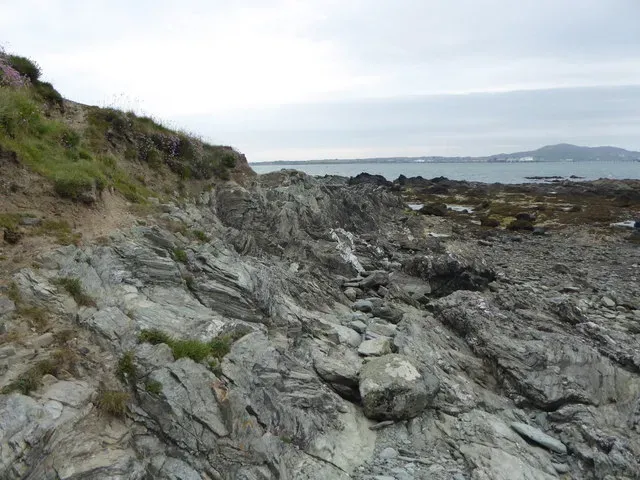
Earth’s ancient evolution isn’t just an academic curiosity locked away in university geology departments. Every clue scientists uncover adds another piece to the puzzle of how our world became the life-sustaining planet we inhabit today. From nearly indestructible zircon crystals that witnessed the planet’s violent infancy to the rust-colored bands recording the first oxygen pollution crisis, these hidden traces reveal a dynamic world constantly transforming itself over billions of years.
The evidence is scattered across continents, buried in rock formations, and locked within microscopic mineral structures. It tells a story of cataclysmic impacts, atmospheric revolutions, drifting continents, and the gradual emergence of conditions suitable for complex life. What’s truly remarkable is how much information can be extracted from a single rock sample when examined with the right tools and questions. What do you think about these ancient mysteries? Could there be even more surprising discoveries waiting in the rocks beneath your feet?