
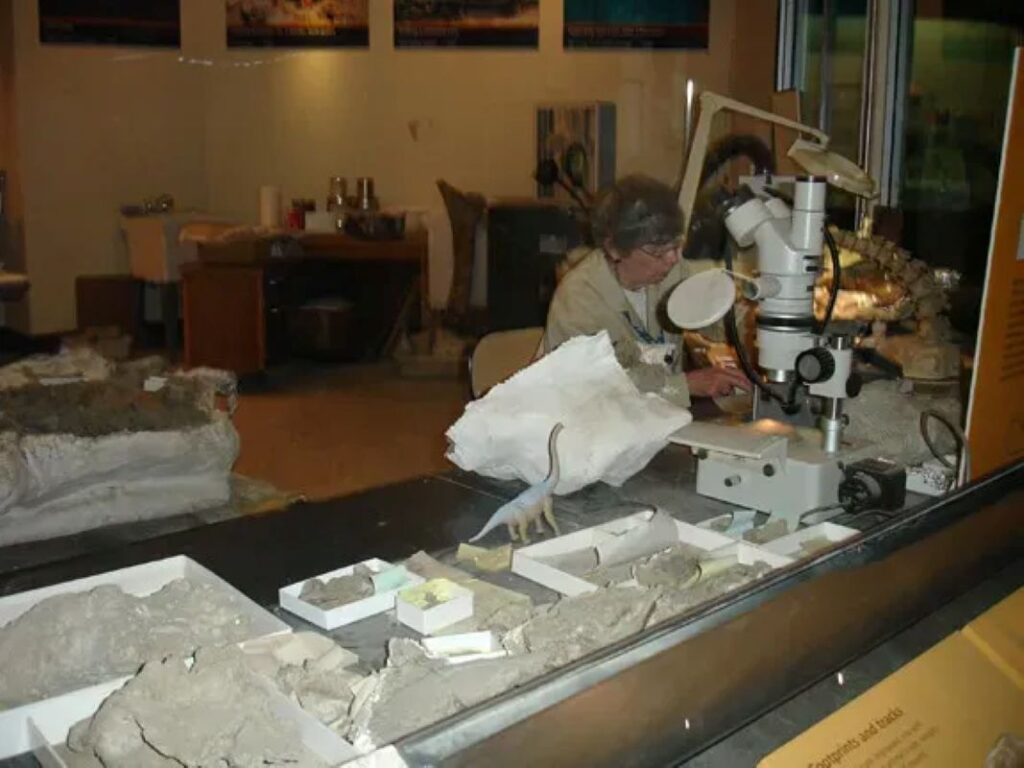
You’ve probably heard the phrase before. Missing link. It conjures images of dusty bones hiding secret stories, of gaps in our family tree that might one day reveal where we truly came from. The term itself has fallen out of favor with scientists, yet the mysteries it represents remain as compelling as ever. We’re living in 2026, equipped with tools Charles Darwin could never have imagined, yet some puzzles in the fossil record continue to resist easy answers.
Think about it like this: evolution doesn’t work like a neat ladder with rungs leading predictably from simple to complex. It’s more like a tangled bush, with branches going every direction, some flourishing and others breaking off into extinction. The creatures we’re hunting for aren’t really missing at all; they’re just exceptionally hard to find, buried under millions of years of sediment or lost forever to the relentless march of erosion. So let’s dig into seven evolutionary enigmas that still keep paleontologists scratching their heads, debating, and venturing to remote dig sites around the globe.
Romer’s Gap: The Vanishing Act of Early Tetrapods
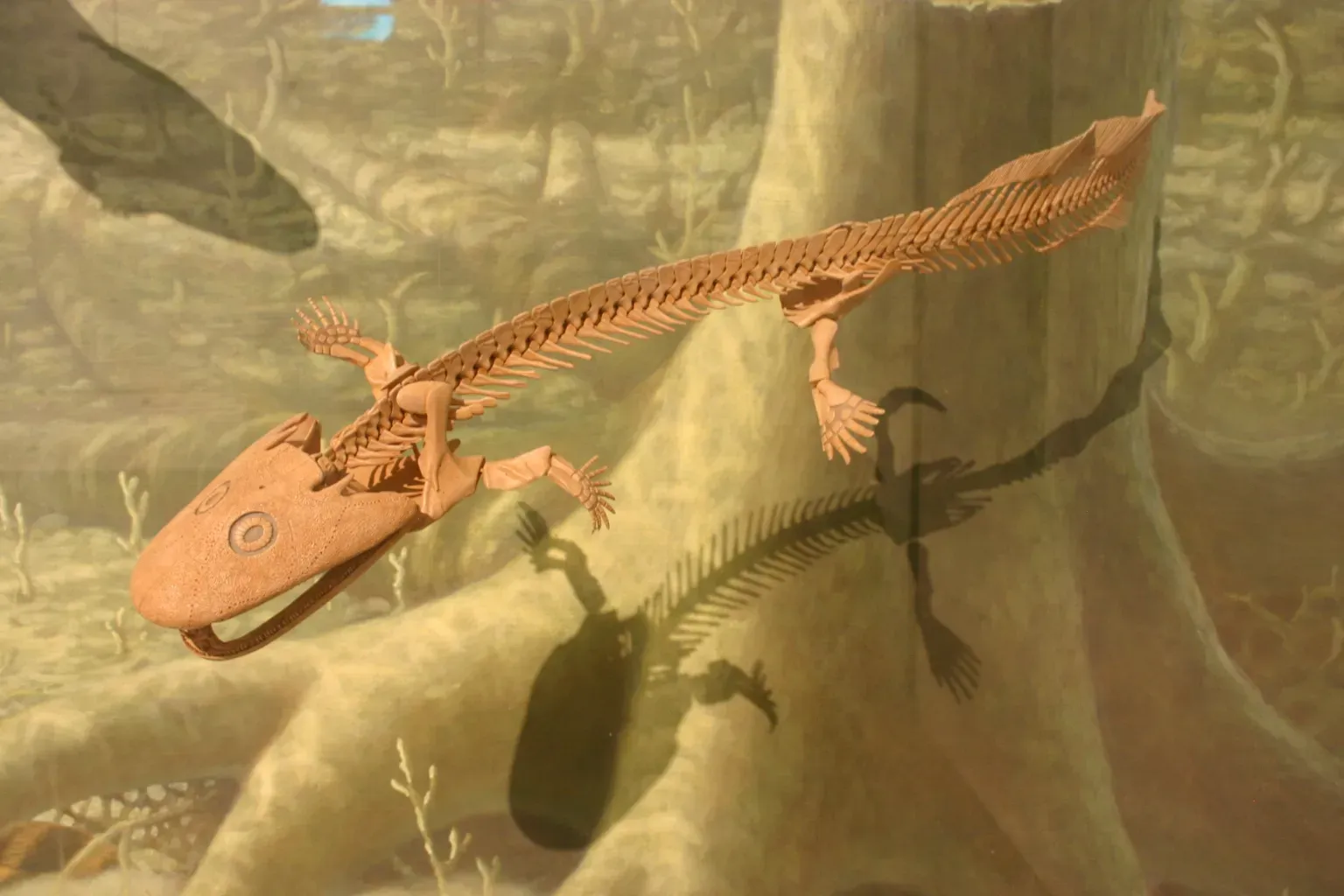
There was a fifteen million year gap in the fossil record where very few tetrapod fossils from this period had been found, leaving no evidence to show how a giant evolutionary step had taken place. Picture this: creatures with legs emerging from water, ready to conquer land, and then… nothing. Romer’s gap spanned from approximately three hundred sixty to three hundred forty-five million years ago, corresponding to the first fifteen million years of the Carboniferous Period.
Before this mysterious interval, we find fish-like animals with primitive limbs awkwardly navigating ancient riverbeds. After it, land-walking amphibians with five-toed feet suddenly appear, fully adapted for terrestrial life. What happened during those missing years? Some believed that oxygen levels were too low for tetrapods to survive on land, so they thought they simply hadn’t existed. However, recent discoveries in Scotland have started to crack this case open, revealing that tetrapods did exist during this time. Still, the scarcity of fossils makes reconstructing their evolutionary journey frustratingly difficult.
The Cambrian Explosion: Life’s Big Bang Moment
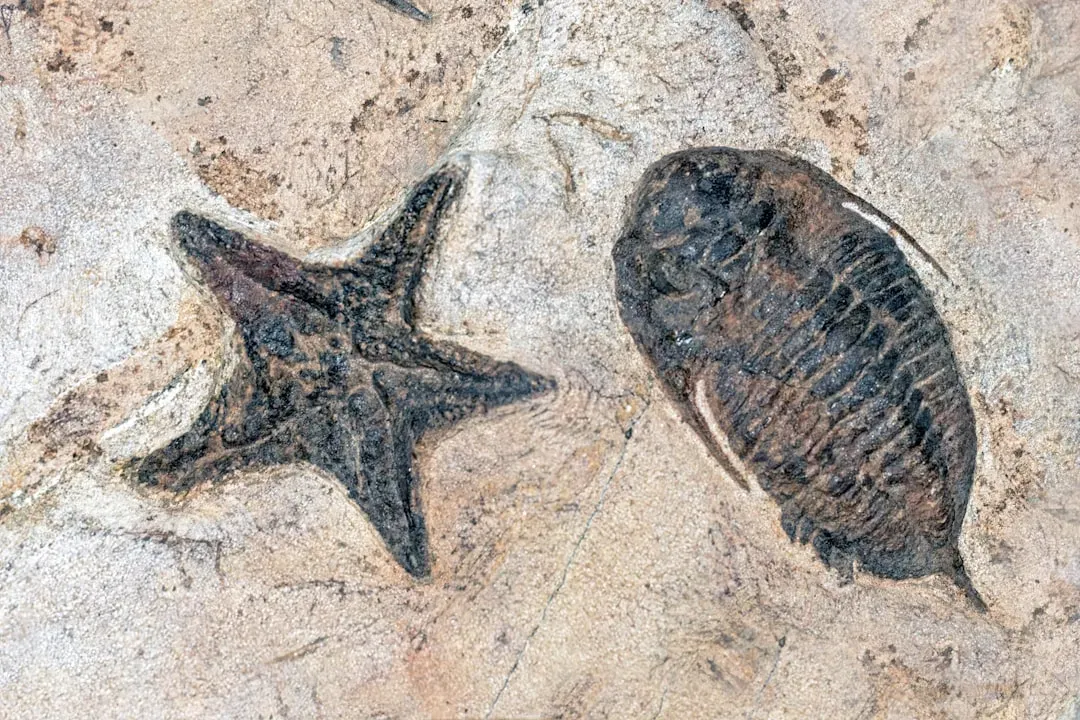
The Cambrian explosion is an interval of time beginning approximately five hundred thirty-eight point eight million years ago in the Cambrian period when a sudden radiation of complex life occurred and practically all major animal phyla started appearing in the fossil record, lasting for about thirteen to twenty-five million years. Imagine the ocean suddenly teeming with arthropods sporting compound eyes, predators with tooth-rimmed jaws, and creatures so bizarre they seem designed by committee.
Here’s the thing: the rocks below the Cambrian are mostly empty of complex animals. Then boom – trilobites, mollusks, early vertebrates, all showing up like guests at a party nobody planned. The Cambrian explosion is widely regarded as one of the fulcrum points in the history of life, yet its origins and causes remain deeply controversial, though new data indicate that the assembly of body plans is largely a Cambrian phenomenon. Was it a spike in oxygen levels? The development of predation triggering an evolutionary arms race? Honestly, it’s hard to say for sure, but the speed of this diversification challenges everything we thought we knew about gradual evolution.
From Land to Sea: The Whale Evolution Puzzle
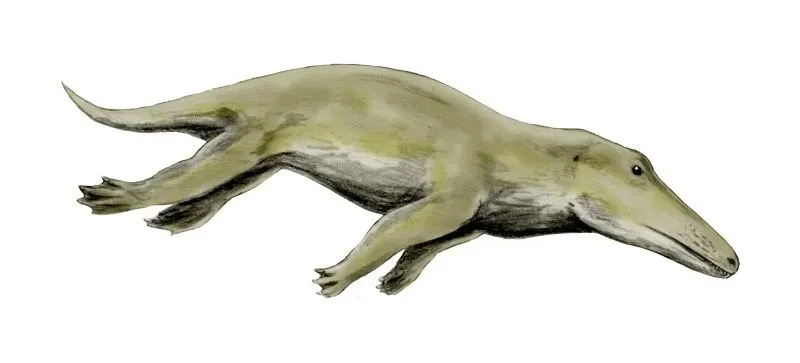
You’d think going from a four-legged land mammal to a massive ocean-dwelling giant would leave plenty of fossils along the way, yet whale evolution presents some head-scratching gaps. These first whales, such as Pakicetus, were typical land animals with long skulls and large teeth that could be used for eating meat. Picture a wolf-sized creature prowling ancient shorelines roughly fifty million years ago. It doesn’t look like a whale at all from the outside.
Then we have Ambulocetus, the so-called walking whale. Compared to other early whales like Indohyus and Pakicetus, Ambulocetus looks like it lived a more aquatic lifestyle with shorter legs and hands and feet enlarged like paddles, plus a longer and more muscular tail. But connecting these dots to modern cetaceans remains contentious. The intermediate forms exist, sure, but debates rage over their exact relationships and whether they truly represent direct ancestors or merely evolutionary cousins exploring similar lifestyles. It’s a reminder that evolution rarely preserves a neat, linear story.
The Origin of Flight: Feathers Before Birds?
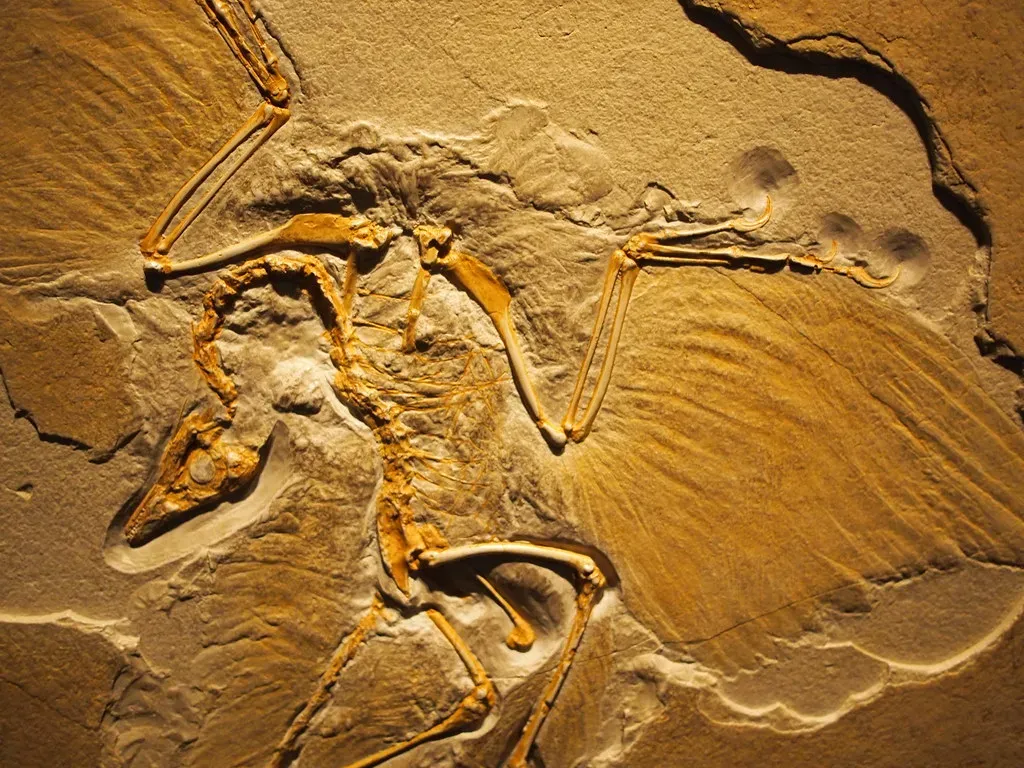
Archaeopteryx has long held the crown as the poster child for bird evolution. Archaeopteryx is a beautiful fossil recognized in eighteen sixty that unmistakably combines features of two major groups of animals: birds and reptiles, with exquisite feathered wings bearing most unbirdlike claws, a birdlike skull containing an avian brain but carrying sharp reptilian teeth, and a feathered tail underlain by a long bony tail typical of a small dinosaur.
Yet here’s where it gets interesting. Recent discoveries of feathered dinosaurs have thrown the timeline into question. Did feathers evolve specifically for flight, or did they serve other purposes first, like insulation or display? The fossil record suggests flight evolved multiple times in different lineages, making it tough to pinpoint exactly when and where powered flight truly began. Let’s be real: every new discovery seems to add another branch to the evolutionary tree rather than simplifying it. The boundary between bird and dinosaur grows fuzzier with each expedition to fossil-rich formations in China and Mongolia.
Human Origins and the Denisovan Dilemma
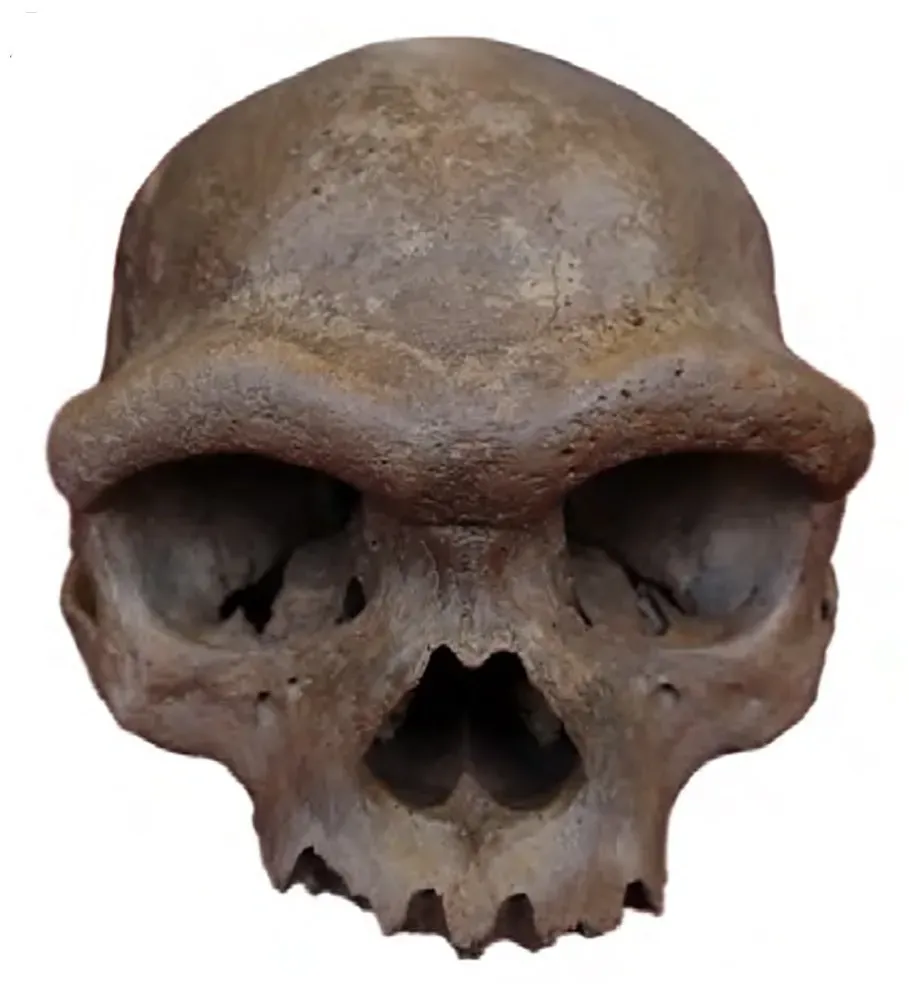
A team of Moroccan and French researchers suggests that they have identified the remains of the last common ancestor of modern humans, Neanderthals, and Denisovans. We know Denisovans existed from genetic evidence, yet their fossils remain maddeningly scarce. Most of what we know comes from a finger bone and a few teeth found in a Siberian cave.
Recent claims suggest a skull found in China might belong to a Denisovan, but controversy swirls around the identification. The problem? Denisovans interbred with both modern humans and Neanderthals, leaving genetic traces across Asia and Oceania, yet we can’t quite pin down what they looked like or how they fit into our family tree. It’s like knowing someone exists from their signature on documents but never seeing their face. This gap frustrates researchers because understanding Denisovans could reshape our entire picture of human evolution and migration patterns across prehistoric Asia.
The Terrestrial Plant Invasion Mystery
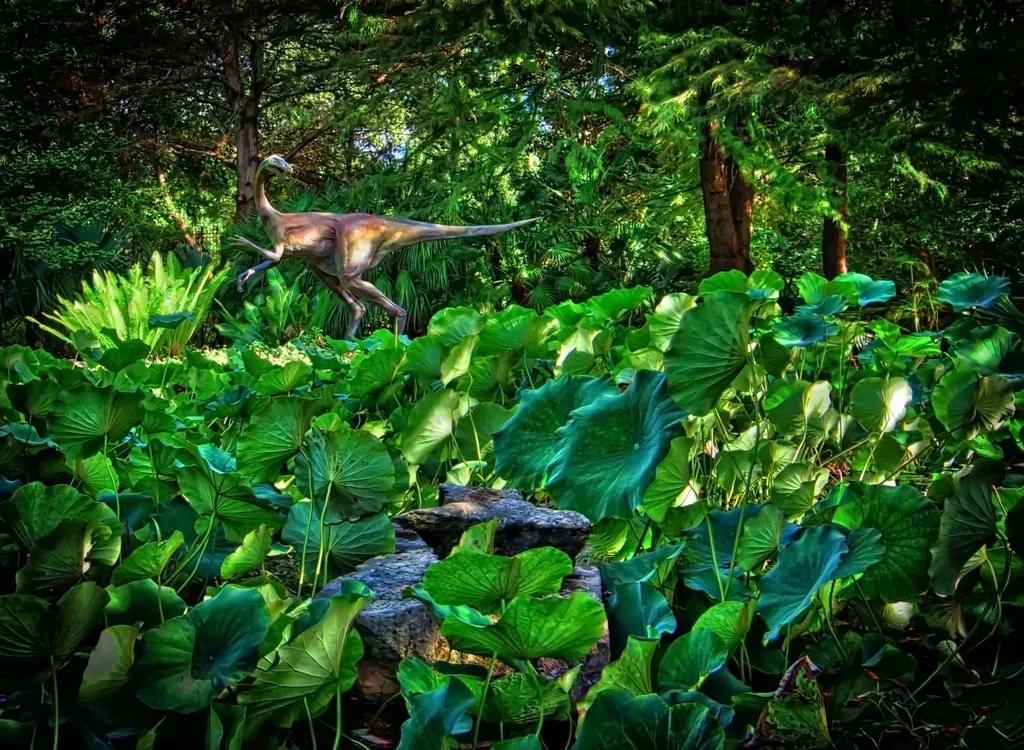
Plants colonized land somewhere around four hundred seventy million years ago, but the exact sequence of events remains murky. Early land plants didn’t have roots, seeds, or even proper leaves as we’d recognize them today. They were simple, moss-like organisms clinging to damp rocks near ancient shorelines. The jump from these humble pioneers to complex forests with towering trees happened remarkably fast in geological terms, yet crucial intermediate fossils are sparse.
Inside ancient fish fossils, we can see structures that likely evolved into teeth, offering invaluable insights into how organisms change over time. Similarly, plant fossils should show us gradual changes in vascular systems, reproductive structures, and root development. However, the fossil record for early plants is notoriously patchy because soft plant tissues rarely preserve well. Without hard parts like wood or seeds, most early plant experiments simply vanished without a trace. We’re left inferring major evolutionary leaps from fragmentary evidence, trying to reconstruct an entire revolution in Earth’s ecosystems from incomplete snapshots.
The Arthropod Explosion and Missing Ancestors
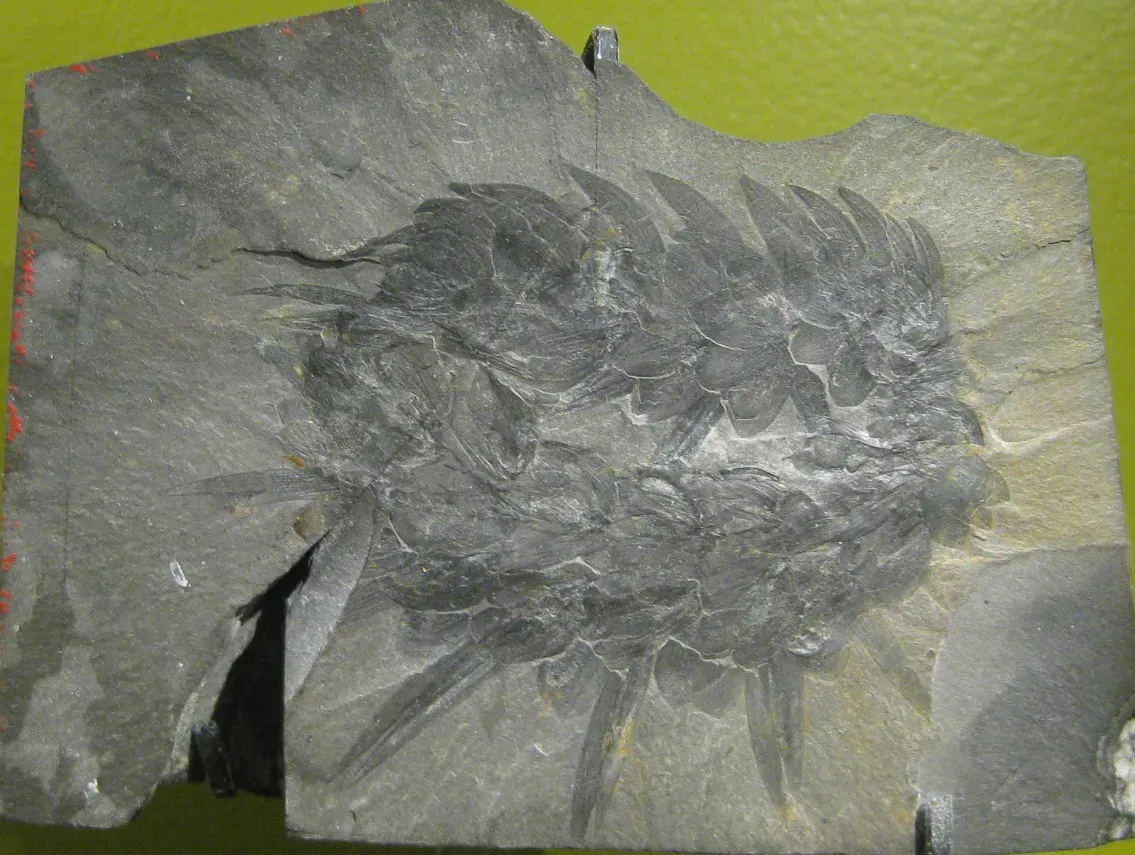
Arthropods rule the planet today in terms of sheer diversity. Insects, spiders, crustaceans, and their relatives make up roughly eighty percent of all known animal species. Yet their origin story contains frustrating blanks. The most common organism from the Burgess Shale, Marrella, was clearly an arthropod but not a member of any known arthropod class, while organisms such as the five-eyed Opabinia and spiny slug-like Wiwaxia were so different from anything else known that researchers assumed they must represent different phyla.
The transition from soft-bodied worm-like ancestors to hard-shelled, segmented, jointed-limbed creatures should have left a trail of fossils. Instead, arthropods appear suddenly in the Cambrian with astonishing complexity already in place. Where are their Precambrian ancestors? Fossils are tricky to find and searching for a specific fossil is even harder, but paleontologists can make educated guesses about where to search based on geological knowledge and where other fossils have been found. Perhaps they simply lacked hard parts that could fossilize, or maybe they lived in environments where preservation was nearly impossible. Either way, this gap represents one of the most significant mysteries in invertebrate evolution.
Conclusion: The Beautiful Incompleteness of the Fossil Record
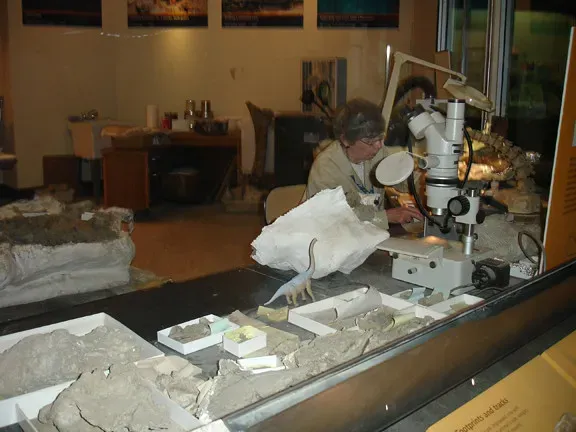
Recent research found that the incompleteness itself is actually not such a big issue, and if a lot of data is missing but the gaps are regular, evolutionary history could still be reconstructed without major problems. That’s actually reassuring when you think about it. The mysteries we’ve explored don’t undermine evolution; they highlight how much we’ve learned and how much remains to discover.
Finding a missing link is a life’s ambition for many paleontologists, often taking years of hard work, travel to remote regions and more than a generous dollop of luck, though the aftermath of finding a missing link is more subtle than might be supposed. Every new fossil adds detail to the picture, sometimes confirming predictions and other times forcing scientists to completely rethink established theories. That’s not weakness – it’s science working exactly as it should.
Think about this: we’re solving mysteries from hundreds of millions of years ago using bones, molecules, and increasingly sophisticated technology. The gaps that remain aren’t evidence against evolution but rather invitations to keep digging, keep questioning, keep exploring. What other secrets lie buried beneath our feet, waiting for the next curious paleontologist to brush away the sediment and reveal? What do you think will be discovered next?