

Think you know dinosaurs? You probably know the basics – the enormous teeth, the asteroid, the extinction. You’ve likely sat through a Jurassic Park film or two and nodded along, feeling reasonably informed. Here’s the thing though: science has been quietly, relentlessly dismantling what most of us assume we know about these ancient creatures. Discovery after discovery keeps reshaping the story, and honestly, some of these findings are jaw-dropping.
From porcupine-like skin structures to a titan so massive it barely fits inside a museum, the world of paleontology in recent years reads more like science fiction than fact. You might want to hold onto your assumptions loosely. Let’s dive in.
1. The Dinosaur That Wore Hollow Spikes: Meet Haolong dongi
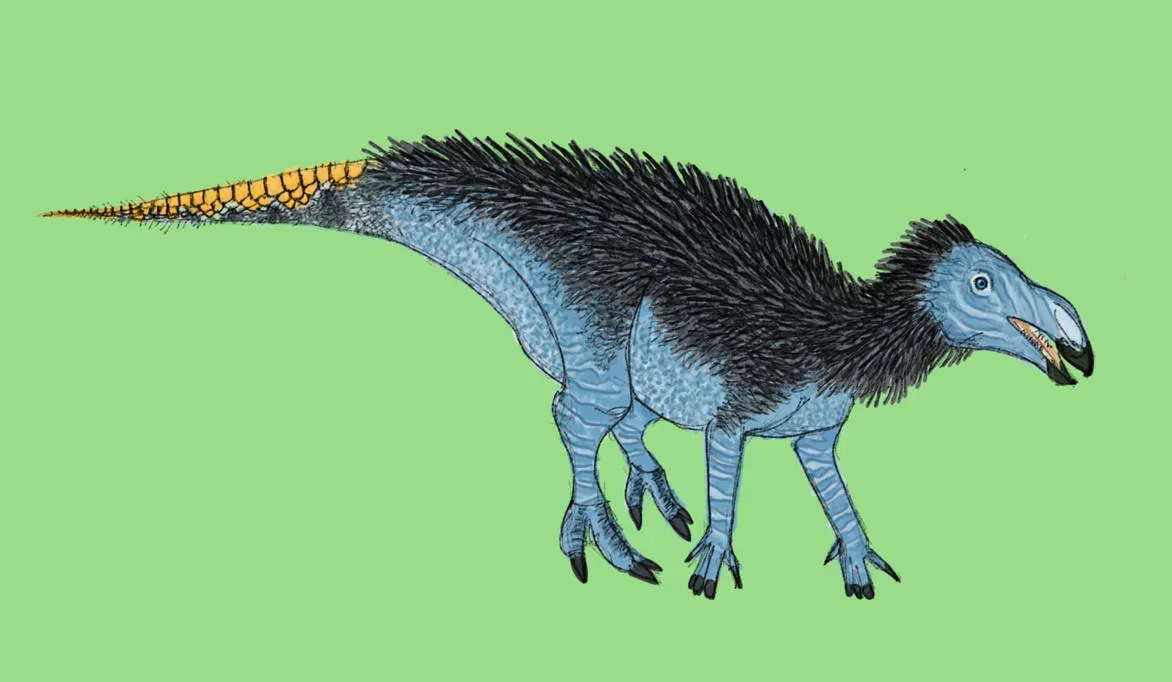
Imagine walking through a forest and coming face to face with a plant-eating dinosaur covered in hollow, porcupine-like spikes you’ve never seen on any creature before. That’s essentially what paleontologists encountered when they uncovered the fossil of Haolong dongi in China. Scientists uncovered an exceptionally preserved juvenile iguanodontian with fossilized skin so detailed that individual cells are still visible, and even more astonishingly, the plant-eating dinosaur was covered in hollow, porcupine-like spikes – structures never before documented in any dinosaur.
Using advanced imaging techniques such as X-ray scanning and high-resolution histological analysis, the team was able to study the fossil at the cellular level, finding that individual skin cells had been preserved for approximately 125 million years, and this level of detail allowed scientists to reconstruct the structure of unusual hollow spikes embedded in the skin. Unlike horns or bony plates, these structures were not solid extensions of bone – instead, they were hollow structures, a feature that has never previously been observed in dinosaurs.
The anatomy of the spikes sets them apart from both the protofeathers found in some other dinosaurs and the scaly spines seen in modern lizards, suggesting an independent evolutionary origin, while the form and placement of the spikes imply they served primarily as a deterrent against predators, though they might also have played roles in thermoregulation or sensory perception. This discovery not only adds a new species to the Iguanodontia group, but also reveals that dinosaur skin and body coverings were more varied and innovative than previously understood. Think about that for a second – after two centuries of studying this group of dinosaurs, we still had something this fundamental left to discover.
2. Dinosaurs Laid Soft Eggs – And It Rewrites Everything We Thought About Their Reproduction

For a very long time, it was simply assumed that dinosaurs laid hard-shelled eggs, much like modern birds and crocodiles do. Scientists thought they had that part figured out. They didn’t. For many years there was scant fossil evidence of dinosaur eggs, and all known examples were characterized by thick, calcified shells – leading paleontologists to speculate that all dinosaur eggs were hard-shelled, like those of modern crocodiles and birds. It seemed like a safe bet. It wasn’t.
New research found that the first dinosaurs actually laid soft-shelled eggs that resembled those of a turtle, contradicting the long-held thought that all dinosaur eggs were hard-shelled, and also suggesting that calcified eggs evolved independently at least three times in the dinosaur family tree. The researchers studied embryo-containing fossil eggs belonging to two species of dinosaur: Protoceratops, a sheep-sized plant-eating dinosaur that lived in what is now Mongolia between about 75 and 71 million years ago, and Mussaurus, a long-necked, plant-eating dinosaur that grew to 20 feet in length and lived between 227 and 208.5 million years ago in what is now Argentina.
This study of the Protoceratops clutch also helps explain why dinosaur eggs are relatively rare – many dinosaurs likely laid soft-shelled eggs, which are much less likely to fossilize than their hard-shelled counterparts. It’s almost poetic when you think about it – the reason we found so few eggs for so long is precisely because those eggs were too fragile to survive the millennia. These dinosaurs buried their eggs in clutches, like modern animals that lay soft eggs such as many lizards, snakes, and turtles – keeping the eggs moist and protected. Suddenly, the dinosaur story feels a whole lot more reptilian than bird-like.
3. Patagotitan mayorum: The Colossus That Redefined “Big”
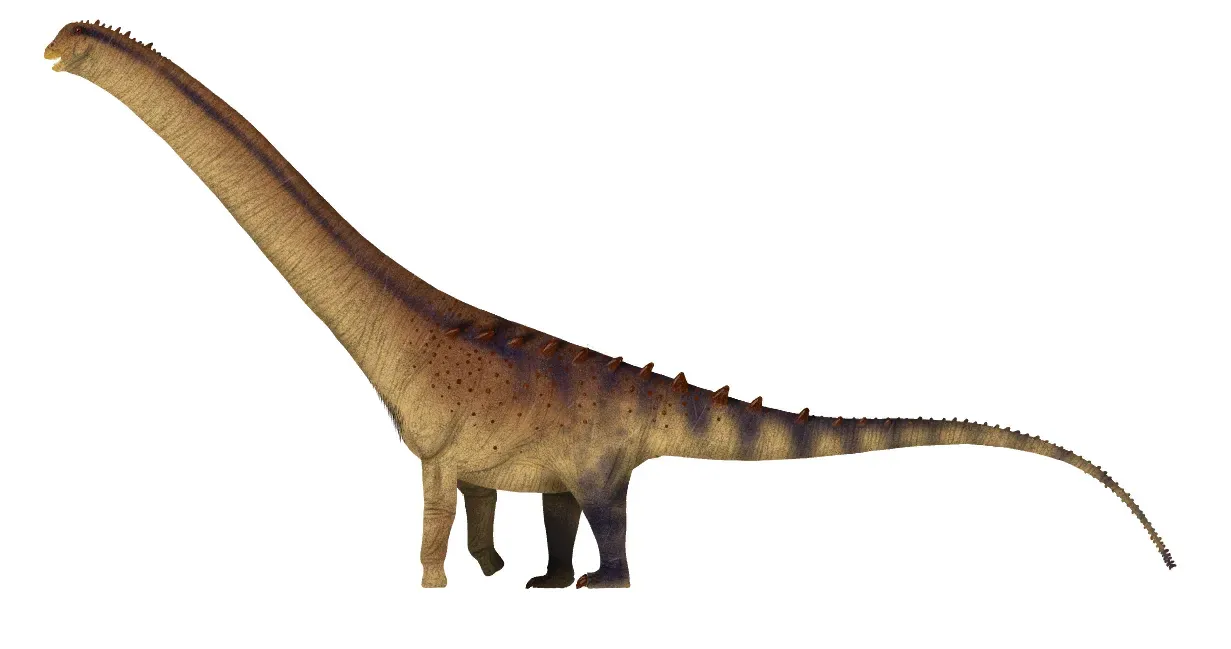
You’ve heard people say something is “as big as a dinosaur.” Here’s the thing – most of the time, that comparison wildly undersells it. When Patagotitan mayorum was formally named in 2017, it completely reset the bar for what we consider enormous. Clocking up some 57 tonnes in weight and measuring 37 meters from nose to tail, Patagotitan is the largest, most complete dinosaur currently known. For context, that’s roughly the weight of nearly a dozen African elephants.
Patagotitan mayorum’s remains were excavated by a team from the Museum of Paleontology Egidio Feruglio led by José Luis Carballido and Diego Pol, with the species living about 100 to 95 million years ago during the Late Cretaceous period, representing one of the largest species of titanosaur identified so far. Paleontologists excavated over 130 fossils from at least six different individual dinosaurs – all the same type of enormous sauropod – including an eight-foot-long femur and most parts of a very long spine.
Patagotitan didn’t really have to worry about predators, because an adult in its prime would have simply been too big for even the largest and most ferocious carnivores of the Cretaceous to overcome – even Tyrannotitan, a 12-meter, T. rex-like predator that would have been as terrifying as it was impressive, was just one tenth the size of Patagotitan. Honestly, it’s hard to wrap your head around an animal so massive that even the apex predators of its era basically had to leave it alone.
4. North America’s Oldest Dinosaur Rewrites Where the Story Began
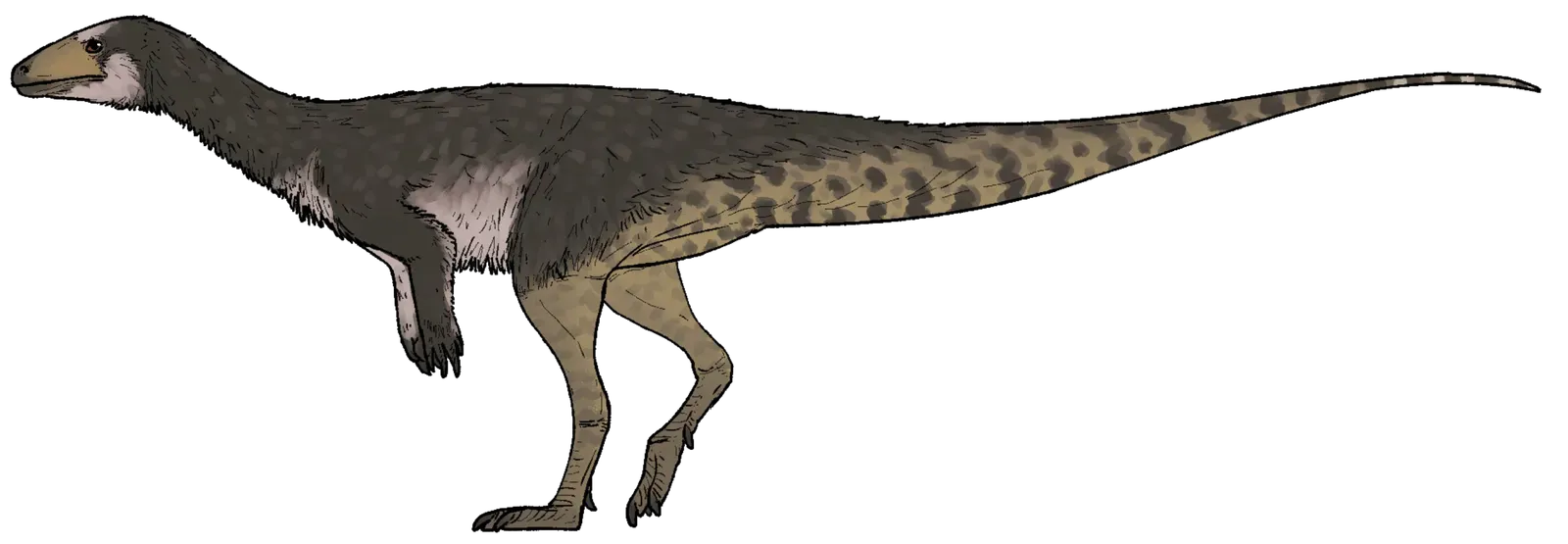
For a long time, scientists believed that dinosaurs originated in the southern hemisphere – specifically on the supercontinent Gondwana – and only later spread northward. That narrative now needs serious revision. Until recently, the origin of dinosaurs was thought to be deeply rooted in the high-latitude southern hemisphere on the supercontinent Gondwana, with Gondwanan dinosaur faunas and the oldest known dinosaur occurrence in the northern hemisphere separated by 6 to 10 million years.
Paleontologists in the United States uncovered the fossilized remains of a new species of sauropodomorph dinosaur that lived in the northern hemisphere during the Carnian age of the Late Triassic epoch, around 230 million years ago – recognized as the oldest known low-latitude dinosaur species globally. The newly described Laurasian species lived at the same time as the oldest known southern dinosaurs, and named Ahvaytum bahndooiveche, this sauropodomorph is the oldest known Laurasian dinosaur.
The presence of a 230-million-year-old, low-latitude, early sauropodomorph from the northern hemisphere, along with a silesaurid, challenges the hypothesis of a delayed dinosaurian dispersal out of high-latitude Gondwana. In other words, the textbook story of where dinosaurs started their global takeover may have been wrong all along. It’s hard to say for sure how dramatically this will reshape the full evolutionary picture, but this is one of those finds that makes paleontologists go back and question everything they thought they knew about the earliest chapter of dinosaur history.
5. The Dueling Dinosaurs Fossil and the Shocking Truth About T. rex’s World
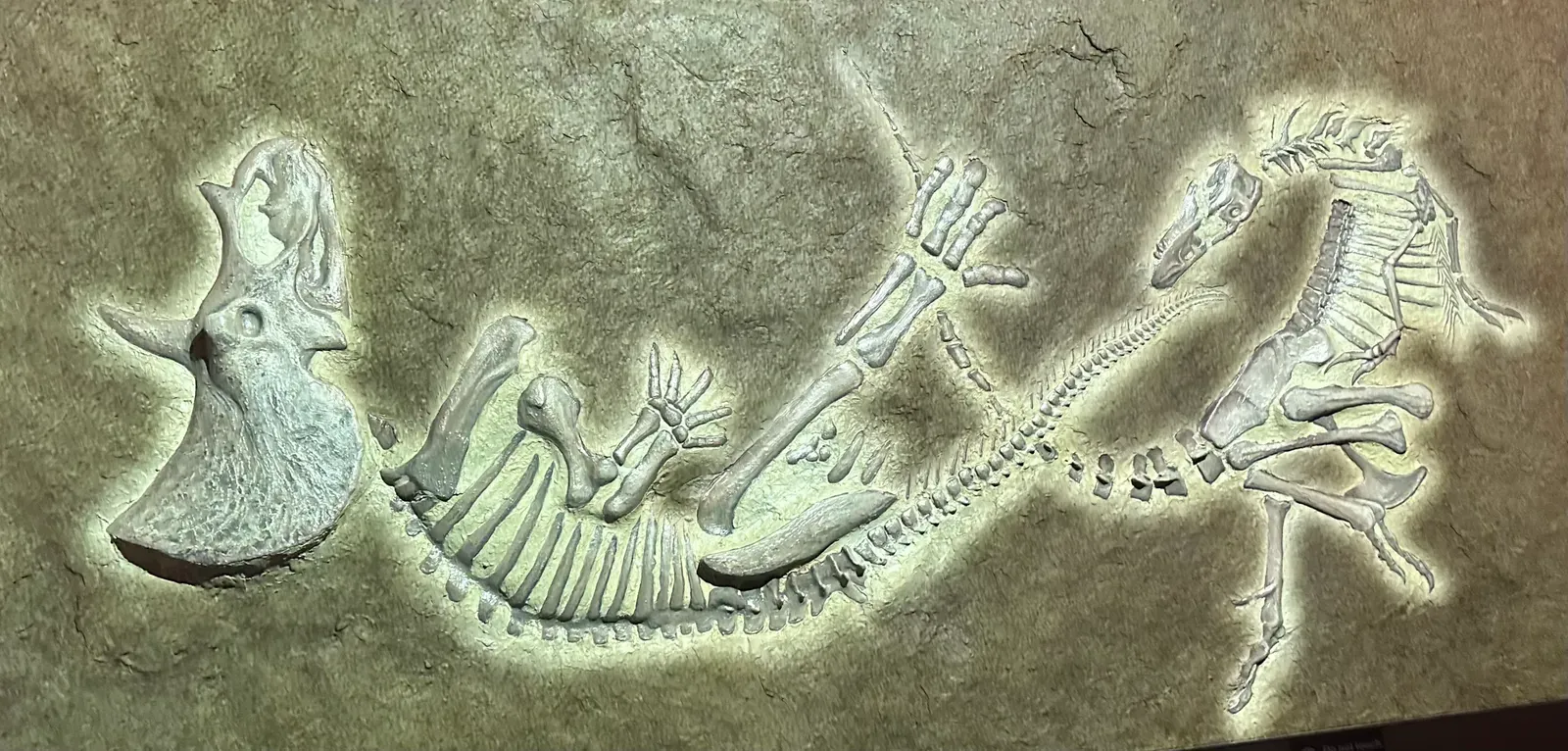
T. rex. The king. The undisputed apex predator of the late Cretaceous, roaming the landscape alone at the top of the food chain. That’s the story you know. Here’s what the fossils actually say. The Dueling Dinosaurs fossil, found in Montana, contains two dinosaurs locked in prehistoric combat: a Triceratops and a small-bodied tyrannosaur – and that tyrannosaur turns out to be the most complete skeleton ever found of Nanotyrannus lancensis, a dinosaur long debated as being either a distinct species or a teenage T. rex.
Nanotyrannus is not a juvenile T. rex – it belongs to a separate genus entirely, and one much more distantly related. For years, paleontologists used Nanotyrannus fossils to model T. rex growth and behavior, but this new evidence reveals that those studies were based on two entirely different animals – and that multiple tyrannosaur species inhabited the same ecosystems in the final million years before the asteroid impact. Think about how many scientific papers and educational resources were built on a case of mistaken identity.
This discovery completely reframes the idea that T. rex was the lone predator of its time, challenging long-held assumptions about late Cretaceous ecosystem dynamics, with multiple tyrannosaur species now known to have coexisted in the last million years before the asteroid impact – suggesting a richer, more competitive ecosystem than previously imagined. The find will cause paleontologists to reconsider how T. rex grew up and how both predatory species coexisted. It’s a bit like finding out that the world’s most famous celebrity was sharing the spotlight the entire time.
Conclusion: The Story Is Still Being Written

What’s remarkable about all five of these discoveries is that they share something in common: they shattered assumptions we were absolutely certain about. Hollow spikes no one predicted. Soft eggs that explained decades of mystery. A titan bigger than imagination allowed. A dinosaur origin story that started earlier and farther north than we thought. A prehistoric apex predator that turned out to share its throne. Each one of these finds arrived not with a gentle nudge but with a full rewrite of the chapter.
Over the past decade, paleontology has entered a new era of rapid discovery and scientific transformation, with breakthrough fossils unearthed across Asia, South America, North America, and Europe dramatically expanding our understanding of dinosaur evolution, biology, and behavior. Scientists estimate that most dinosaur species remain undiscovered, which means our ideas about them will only continue to change. We are, in a very real sense, still in the middle of the story – not at the end of it.
Every bone uncovered, every cellular structure analyzed, every fossil site mapped adds another sentence to a narrative that is far stranger and richer than any movie franchise could capture. The next world-altering discovery could already be sitting in a museum drawer, waiting for the right technology or the right question to reveal what it truly is. What do you think the next big dinosaur revelation will be? Drop your thoughts in the comments below.