Most people think the dinosaur story begins with a roar. A massive, terrifying creature crashing through lush jungle, shaking the earth beneath its feet. But honestly, the real beginning is far stranger and more dramatic than any Hollywood blockbuster has ever dared to show you. Before the giants came, the world had to nearly die first.
The Triassic Period was a time of great change, bookended by extinctions. This era saw huge shifts in the diversity and dominance of life on Earth, ushering in the appearance of many well-known groups of animals that would go on to rule the planet for tens of millions of years. You might think of this period as the ultimate comeback story. It’s where survival met opportunity, and where a set of small, scrappy creatures quietly laid the groundwork for one of the most extraordinary dynasties in the history of life on our planet. Get ready, because what follows is nothing short of astonishing.
A World Rising from the Ashes: The Great Dying and Its Aftermath
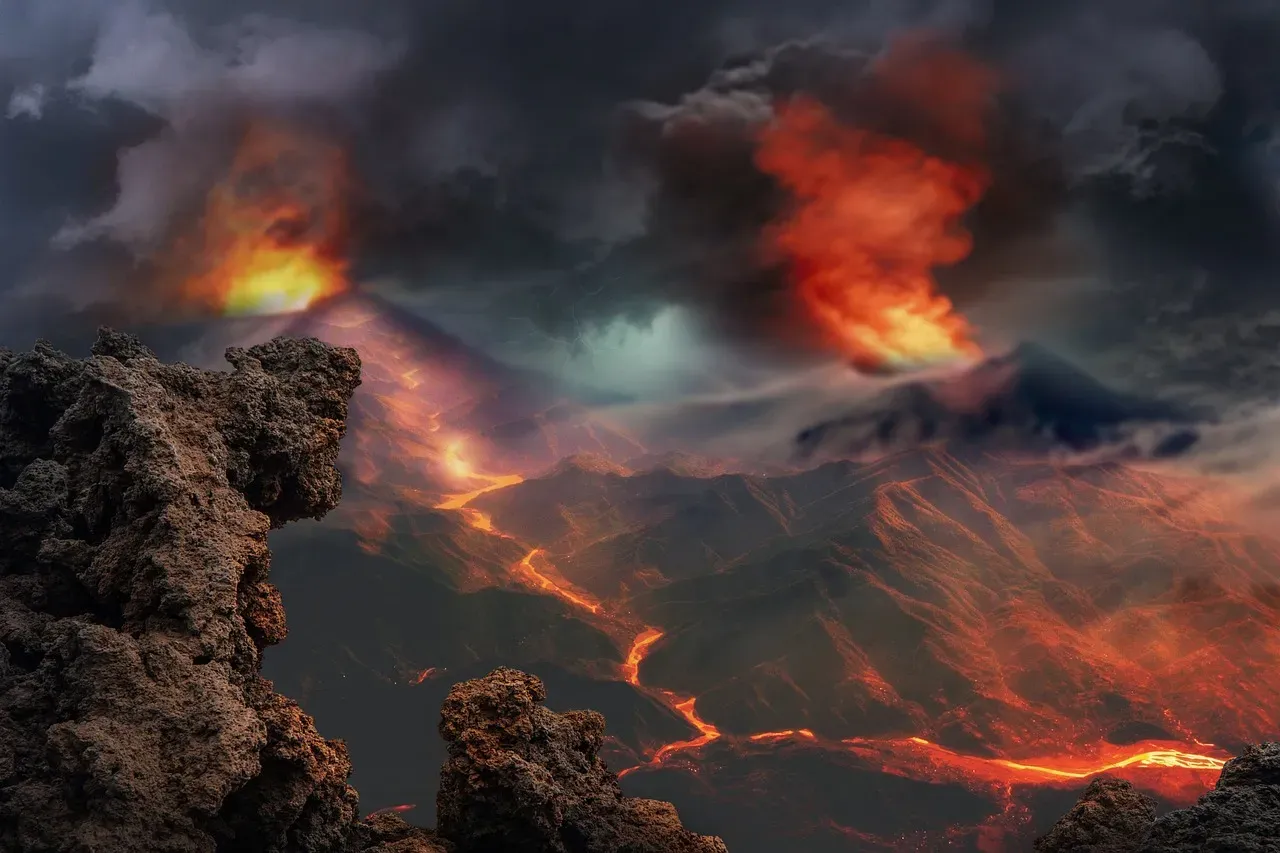
If you want to understand why the Triassic Period matters, you first need to grasp just how catastrophic things were right before it began. The Triassic followed on the heels of the largest mass extinction event in the history of the Earth. This event occurred at the end of the Permian, when between roughly 85 and 95 percent of marine invertebrate species and 70 percent of terrestrial vertebrate genera died out. Think about that for a moment. Nearly everything that lived was simply gone.
The start of the Triassic period was a desolate time in Earth’s history. Something, whether a bout of violent volcanic eruptions, climate change, or perhaps a fatal run-in with a comet or asteroid, had triggered the extinction of more than 90 percent of Earth’s species. Yet, as grim as that sounds, it was also the beginning of something remarkable. It was a time of tremendous change and rejuvenation. Life that survived the so-called Great Dying repopulated the planet, diversified into freshly exposed ecological niches, and gave rise to new creatures, including rodent-size mammals and the first dinosaurs.
One Supercontinent to Rule Them All: The World of Pangaea
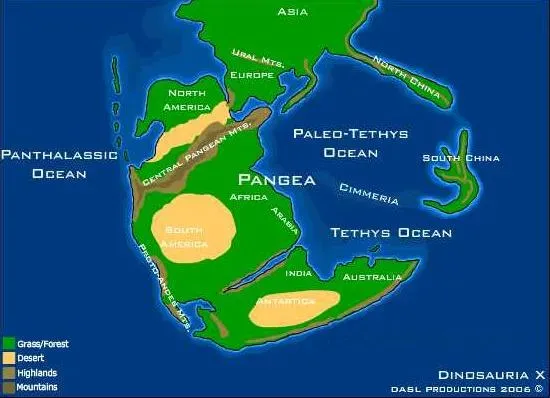
By the start of the Triassic, all the Earth’s landmasses had coalesced to form Pangaea, a supercontinent shaped like a giant C that straddled the Equator and extended toward the Poles. Imagine walking from what is now North America to Antarctica without ever crossing an ocean. That was the Triassic world. It’s a concept so alien to our modern understanding of geography that it almost sounds like science fiction.
Covering about one-quarter of Earth’s surface, Pangaea stretched from 85 degrees North to 90 degrees South in a narrow belt of about 60 degrees of longitude. It consisted of a group of northern continents collectively referred to as Laurasia and a group of southern continents collectively referred to as Gondwana. The rest of the globe was covered by Panthalassa, an enormous world ocean that stretched from pole to pole and extended to about twice the width of the present-day Pacific Ocean at the Equator. Already, the planet was cracking at the seams. Almost as soon as the supercontinent formed, it started to come undone. By the end of the period, tectonic forces had slowly begun to split the supercontinent in two: Laurasia in the north and Gondwana in the south.
Fire and Desert: The Extreme Climate of the Triassic
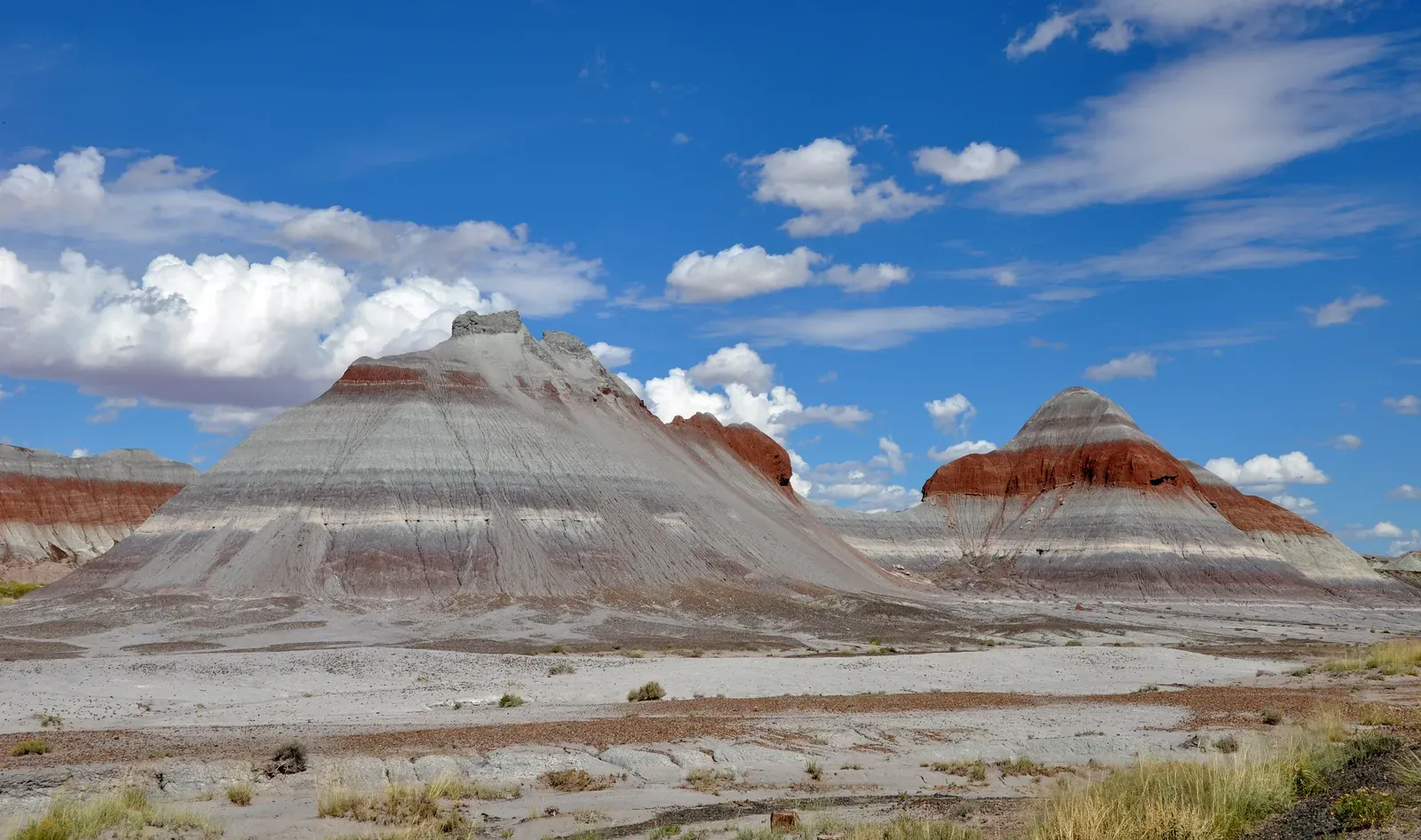
The global climate during the Triassic was mostly hot and dry, with deserts spanning much of Pangaea’s interior. However, the climate shifted and became more humid as Pangaea began to drift apart. Picture an enormous, scorching landmass where the interior felt like a furnace. No modern climate analogy quite does it justice. Worldwide climatic conditions during the Triassic seem to have been much more homogeneous than at present. No polar ice existed. Temperature differences between the Equator and the poles would have been less extreme than they are today, which would have resulted in less diversity in biological habitats.
This dilemma is best resolved by postulating a monsoonal climate, particularly during the Middle and Late Triassic, over wide areas of Pangaea. Under these conditions, cross-equatorial monsoonal winds would have brought strong seasonal precipitation to some areas, especially where these winds crossed large expanses of open water. Interestingly, research now suggests that a specific wet episode called the Carnian Pluvial Episode may have played a decisive role in early dinosaur evolution. This global increase in effective precipitation, lasting at least one to two million years, caused major floristic and faunal turnovers and possibly triggered the rise of the dinosaurs.
Before Dinosaurs: Who Actually Ruled the Early Triassic?
Here’s the thing most people get wrong. When you picture the Triassic, you probably picture dinosaurs everywhere. In reality, the early Triassic was nothing of the sort. The Triassic was a time of change, a transition from a world dominated by mammal-like reptiles to one ruled by dinosaurs. Those mammal-like reptiles, called synapsids, had been the dominant animals for millions of years and weren’t giving up their territory without a fight.
Therapsids such as Lystrosaurus were mammal-like reptiles that thrived early in the Triassic Period. The group survived the boundary crisis but became virtually extinct by the end of the Triassic, possibly because of competition from more-efficient predators, such as the thecodonts. Reptiles, especially archosaurs, were the chief terrestrial vertebrates during this time. Early dinosaurs were essentially background characters. Supporting actors in a drama that hadn’t yet cast them as the leads. That moment was still to come.
The Birth of the Dinosaurs: Small Beginnings, Giant Destiny
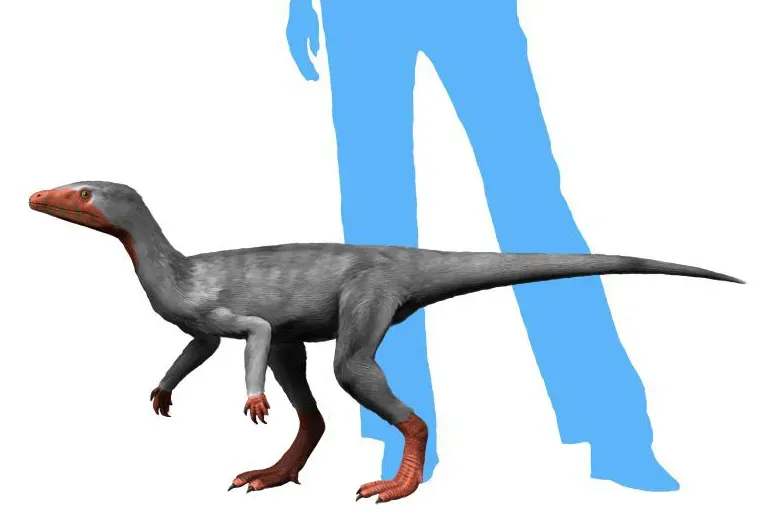
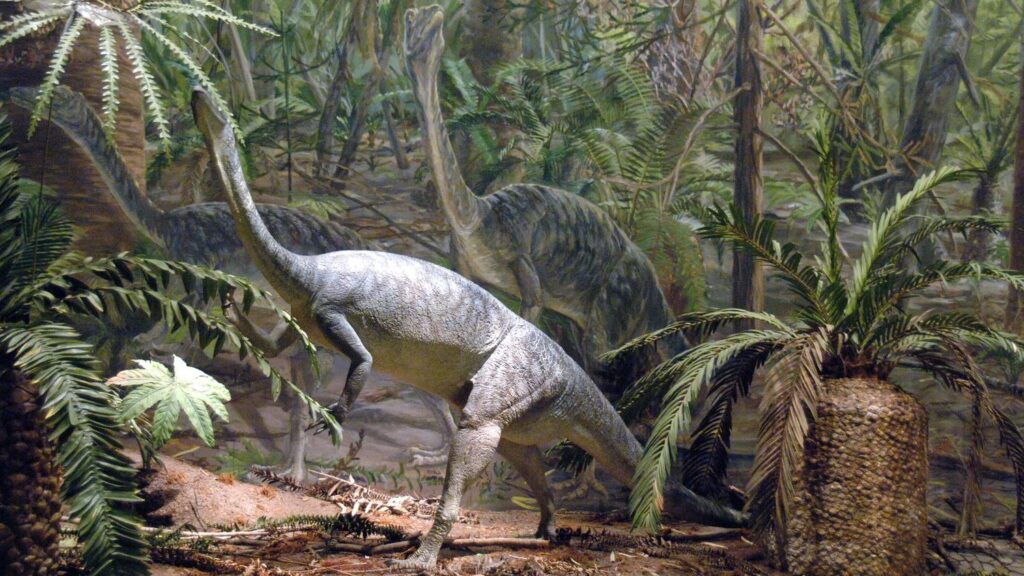
Dinosaurs first appeared during the Triassic period, between 243 and 233 million years ago, although the exact origin and timing of the evolution of dinosaurs is a subject of active research. I know it sounds crazy, but the ancestors of some of the largest creatures ever to walk the Earth were barely the size of a large crow. The ancestors of dinosaurs were one of several groups of reptiles that benefited from the Permian to Triassic extinction approximately 252 million years ago. These ancestors were lightly built two-legged animals, around the size of a crow.
The oldest dinosaur fossils known from substantial remains date to the Carnian epoch of the Triassic period and have been found primarily in the Ischigualasto and Santa Maria Formations of Argentina and Brazil, and the Pebbly Arkose Formation of Zimbabwe. The Ischigualasto Formation has produced the early saurischian Eoraptor, along with the herrerasaurids Herrerasaurus and Sanjuansaurus, and the sauropodomorphs Chromogisaurus, Eodromaeus, and Panphagia. South America, it seems, was where the dinosaur story quietly whispered its first words. Let’s be real, few people would have bet on those small creatures to one day rule a planet.
Triassic Creatures Beyond Dinosaurs: A World Teeming with Life
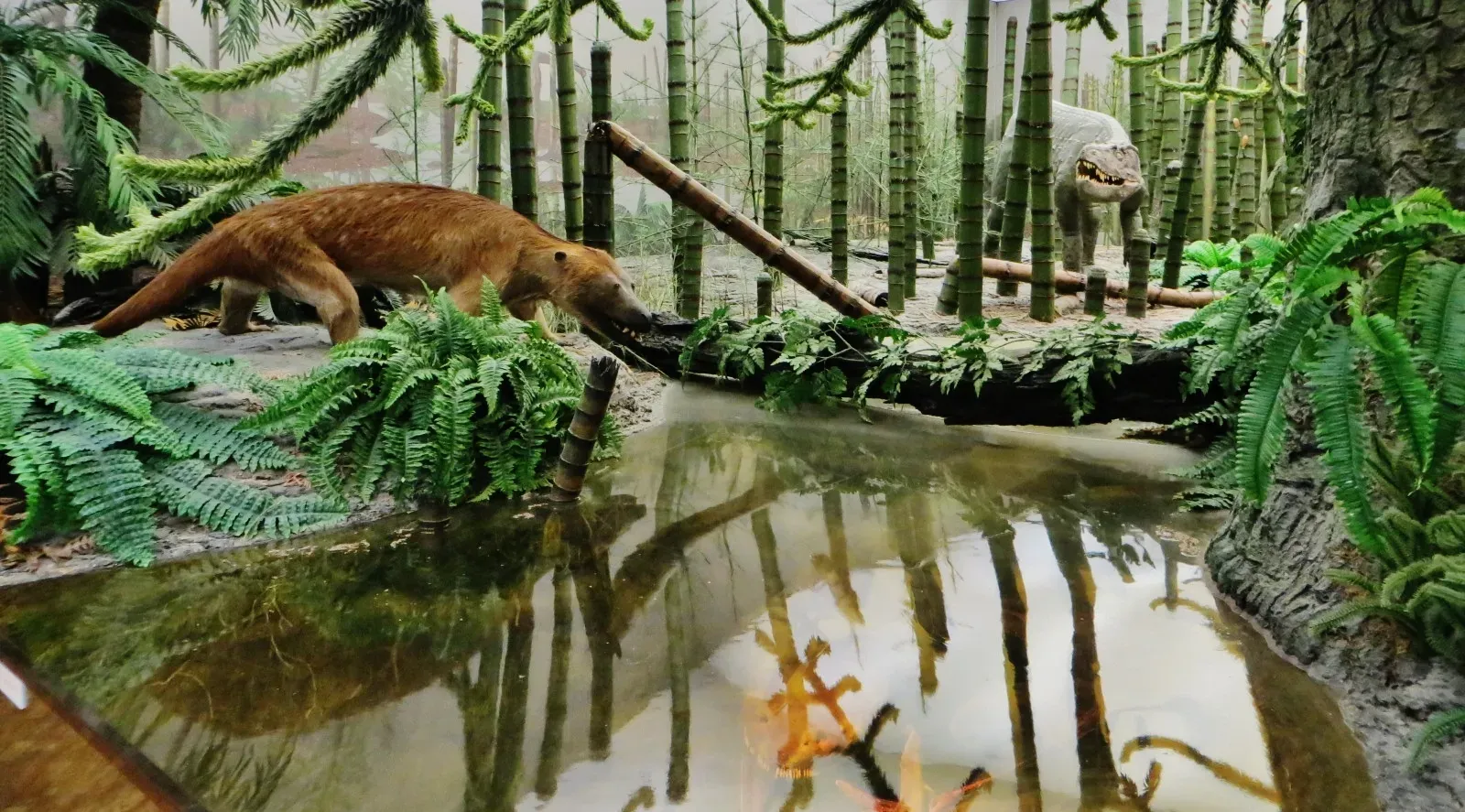
The Triassic wasn’t just a dinosaur preview. It was an explosion of entirely new life forms that would shape Earth’s future in ways just as profound. This period marks the rise and diversification of numerous vertebrate groups. Dinosaurs, neoselachian sharks, neopterygian bony fishes, lissamphibians, turtles, lepidosaurs, crocodylomorphs, mammals, and pterosaurs all arose in the Triassic. That is an extraordinary roll call for a single geological period.
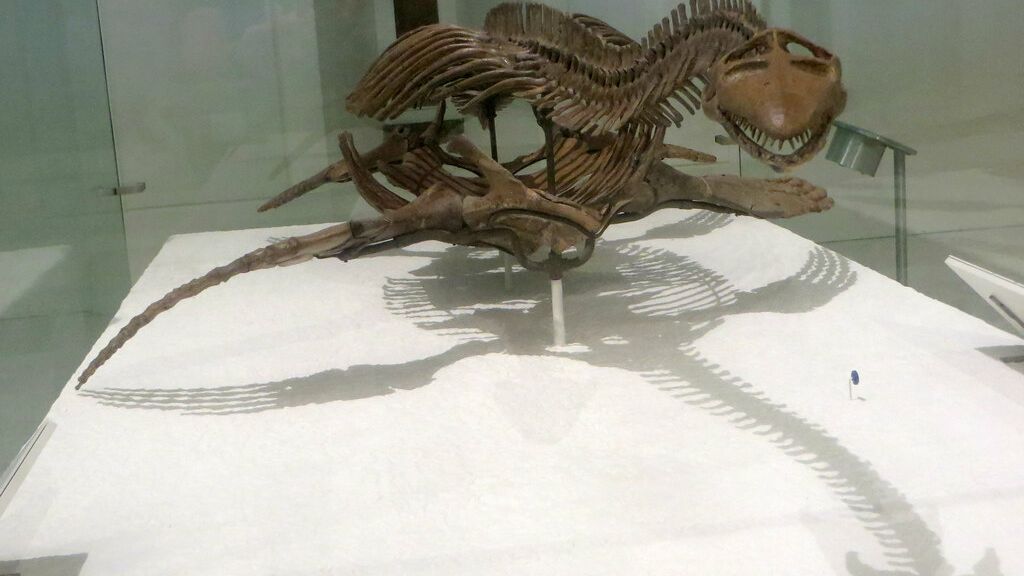
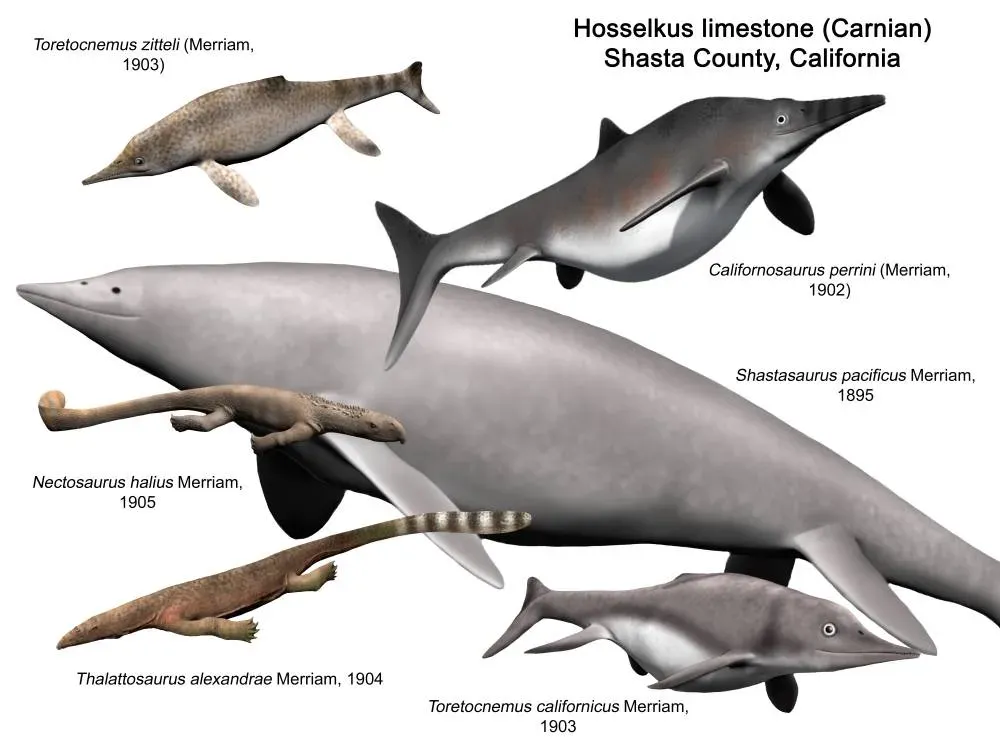
Later in the Triassic, ichthyosaurs evolved into purely marine forms with dolphin-shaped bodies and long-toothed snouts. Their vertebrae indicate they swam more like fish, using their tails for propulsion with strong fin-shaped forelimbs and vestigial hind limbs. These streamlined predators were air breathers and gave birth to live young. By the mid-Triassic, the ichthyosaurs were dominant in the oceans. Meanwhile, on land, frogs, salamanders, crocodiles, turtles, and snakes slunk and slithered on and off the Triassic coast, lakes, and rivers, while pterosaurs, a group of flying reptiles, took to the air. A remarkable world was assembling itself.
The Green World: Plants and Landscapes of the Triassic
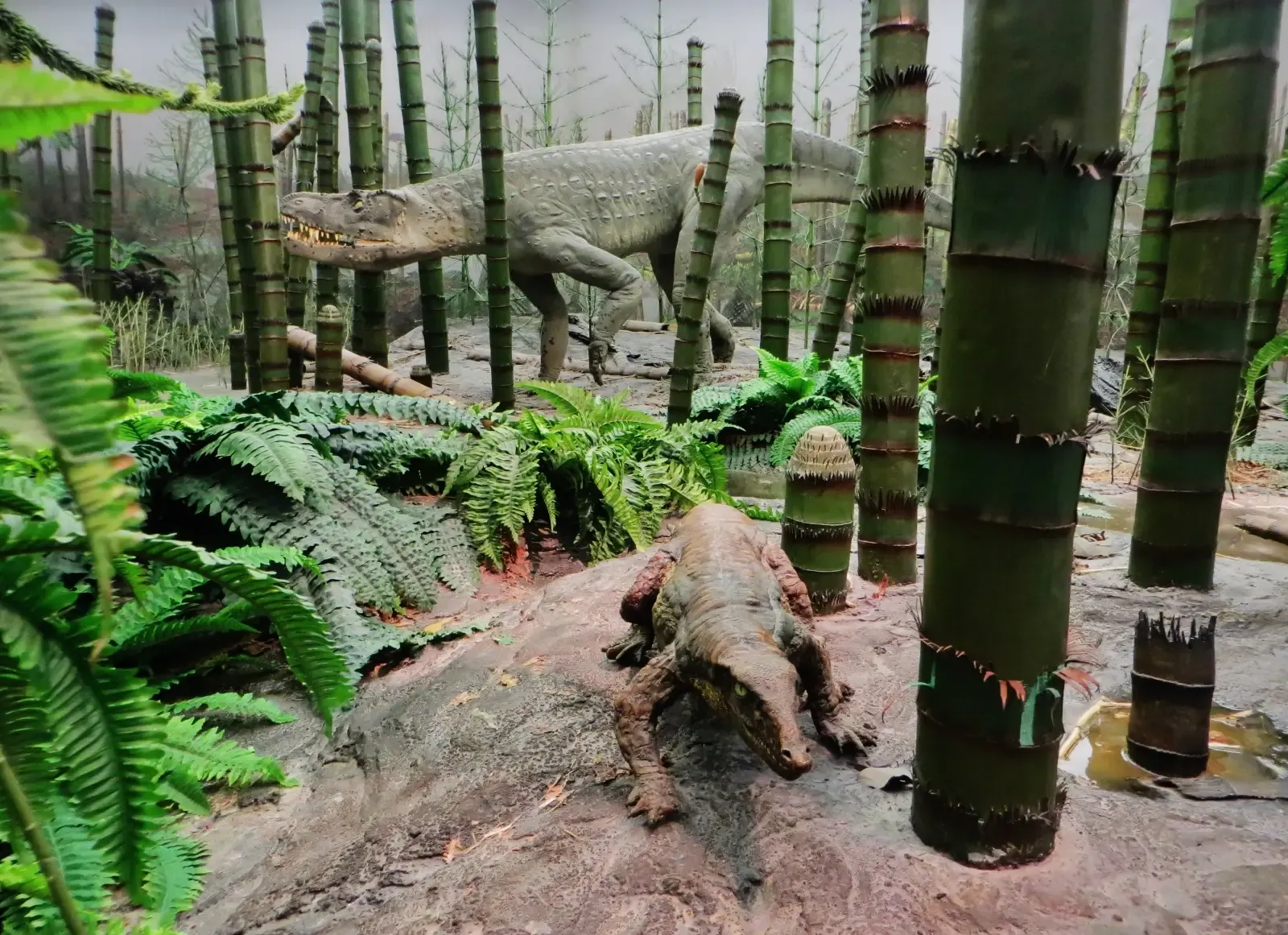
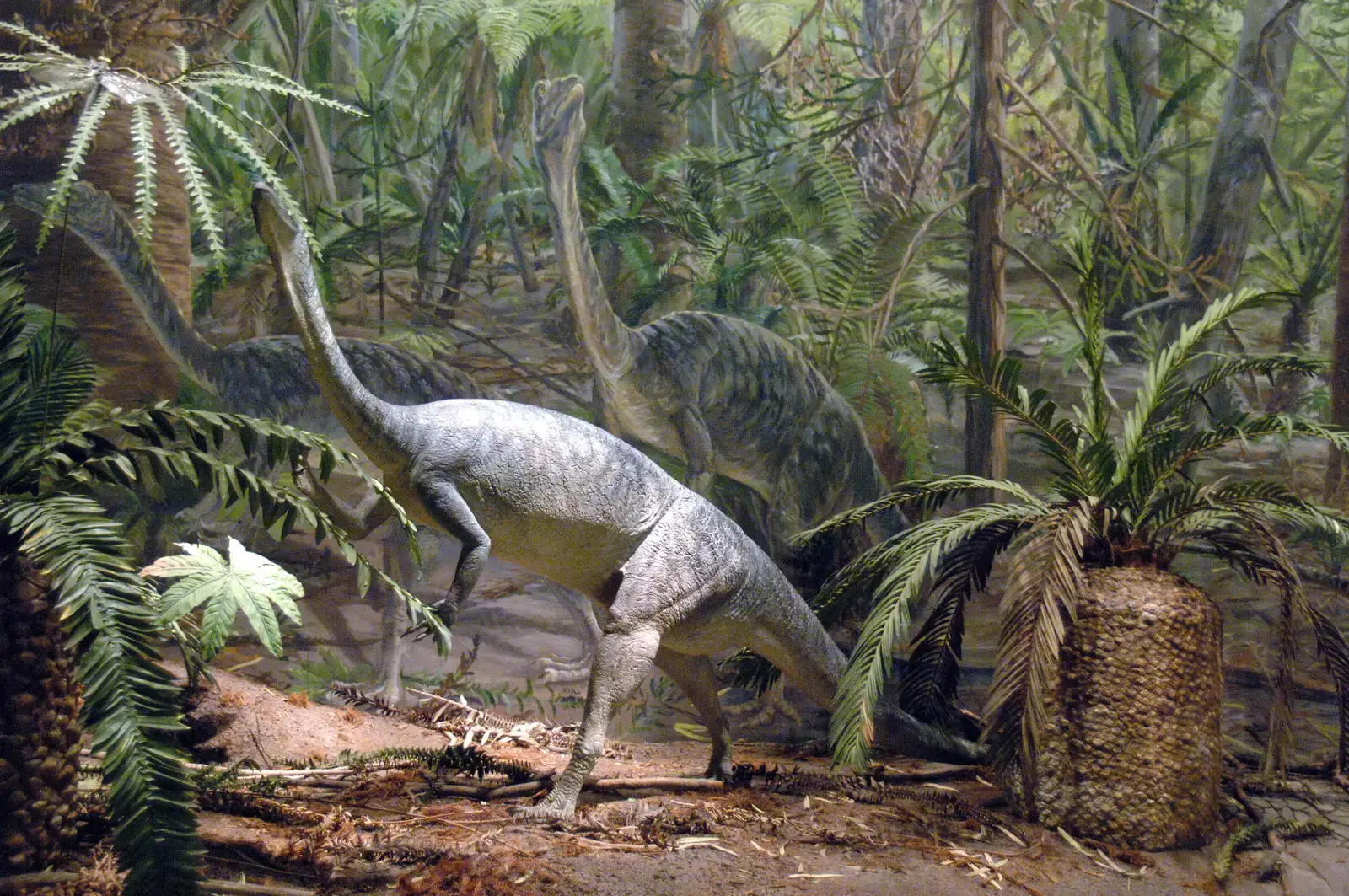
The environment was dominated by conifers, ferns and a now-extinct group of plants known as the seed ferns, or the Pteridospermatopsids. Flowering plants had not yet arrived. The landscapes of the Triassic were ancient and austere, carpeted in deep greens but without the colorful blooms we associate with nature today. It would have felt both beautiful and deeply alien to a modern human standing in it.
On firm ground, moss, liverwort, and ferns carpeted forests of conifers, ginkgoes, and palm-like cycads. Spiders, scorpions, millipedes, and centipedes thrived. Grasshoppers appeared. Gymnosperm plants, particularly conifers, a potential food source, radiated in the Late Triassic. These spreading conifer forests were essentially the fuel that early plant-eating dinosaurs began to rely on, quietly setting the stage for the herbivore dynasties that would follow in the Jurassic and Cretaceous periods.
The End-Triassic Extinction: Disaster Becomes Opportunity
At the terminus of the Triassic, there was an extreme warming event referred to as the End-Triassic Thermal Event, which was responsible for the Triassic-Jurassic mass extinction. Bubbles of carbon dioxide in basaltic rocks dating back to the end of the Triassic indicate that volcanic activity from the Central Atlantic Magmatic Province helped trigger climate change in this event. Ironically, this catastrophe was the best thing that ever happened to the dinosaurs. Timing, as they say, is everything.
On land, there was significant turnover as terrestrial life took a massive hit. All Triassic archosaurs, apart from dinosaurs, pterosaurs and crocodiles, went extinct. This opened up many of the environments that the archosaurs had occupied, paving the way for the surviving dinosaurs to take their place, while the small mammalian relatives still scurried around the forest floors. Dinosaurs became the dominant terrestrial vertebrates after the Triassic-Jurassic extinction event 201 million years ago, and their dominance continued throughout the Jurassic and Cretaceous periods. One era’s catastrophe became another creature’s golden ticket.
Conclusion: The Triassic, the Quiet Chapter That Changed Everything
The Triassic Period rarely gets the dramatic attention it deserves. We celebrate the Jurassic. We obsess over the Cretaceous. Yet without the Triassic, none of it would have happened. It was the crucible, the testing ground, the nearly-forgotten chapter where the greatest story in natural history actually began. In roughly 50 million years, this period took a devastated, barren world and transformed it into the platform on which dinosaurs would rise to global dominance.
What makes the Triassic genuinely fascinating is how quiet the beginning of the dinosaur story truly was. No fanfare. No cinematic entrance. Just small, bipedal survivors in a recovering world, slowly finding their footing. And from that modest beginning grew the most iconic group of animals our planet has ever seen. It’s a reminder that the greatest chapters in history rarely start with a bang. They start with survival.
Next time you see a towering dinosaur skeleton in a museum, take a moment to think about the Triassic. Think about the scorching deserts, the cracking supercontinent, the tiny crow-sized ancestors, and the world that nearly ended before it could truly begin. What do you think, did the dinosaurs earn their place, or were they simply the luckiest survivors of them all? Tell us in the comments.