
History, they say, is written by the victors. But what happens when the ground itself contradicts everything you thought you knew? Every few years, a shovel hits something unexpected, a scanner reveals a ghost beneath the soil, or a scientist stares at a bone and whispers, “This shouldn’t exist.” These moments don’t just add footnotes to what we know. They tear whole chapters out and rewrite them from scratch.
You might think the big revelations are behind us. That every cave has been explored, every tomb unsealed. Honestly, that couldn’t be further from the truth. The discoveries on this list didn’t just surprise experts. They genuinely shook the foundations of how we understand human civilization, prehistoric life, and our place in the deep story of this planet. Let’s dive in.
Göbekli Tepe: The Temple That Predates Civilization Itself
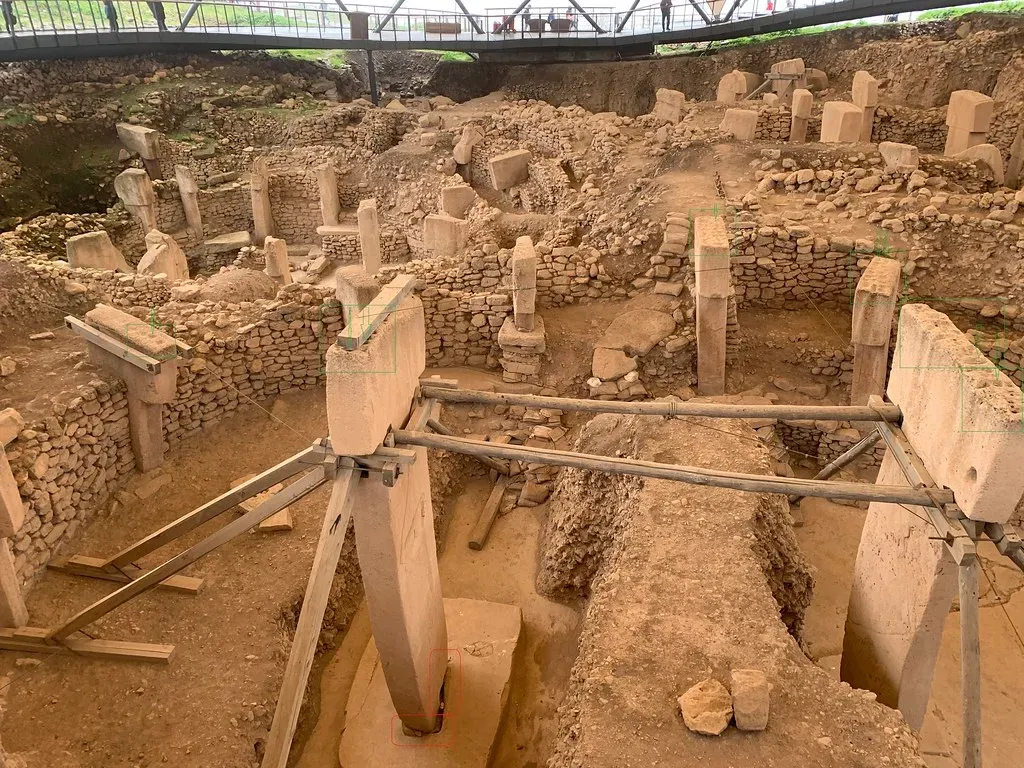
Here’s the thing about Göbekli Tepe. It’s not just old. It’s impossibly old in a way that forces you to rethink everything. This Turkish site knocked the archaeological world sideways when it was properly excavated in the 1990s. Built around 9,500 BCE, it predates Stonehenge by about 6,000 years and was constructed before agriculture even existed. Wrap your head around that for a moment. Imagine someone building a cathedral before humanity had figured out how to bake bread.
The massive stone pillars, some weighing 16 tons, were carved and arranged by hunter-gatherers who supposedly lacked the social organization for such projects, forcing a complete reconsideration of the capabilities of prehistoric societies. That consensus about the Neolithic Revolution lasting until the 1990s was shattered when archaeologists used radiocarbon dating to pinpoint the site’s construction to 11,000 years ago, pushing the birth of human settlement further back into prehistory. Not only that, but some archaeologists working at Göbekli Tepe believe it may have been home to the world’s first temple. What this site tells you, essentially, is that organized religion may have come before farming. Society may have been born from spirituality, not survival.
The World’s Oldest Cave Art Found in Indonesia
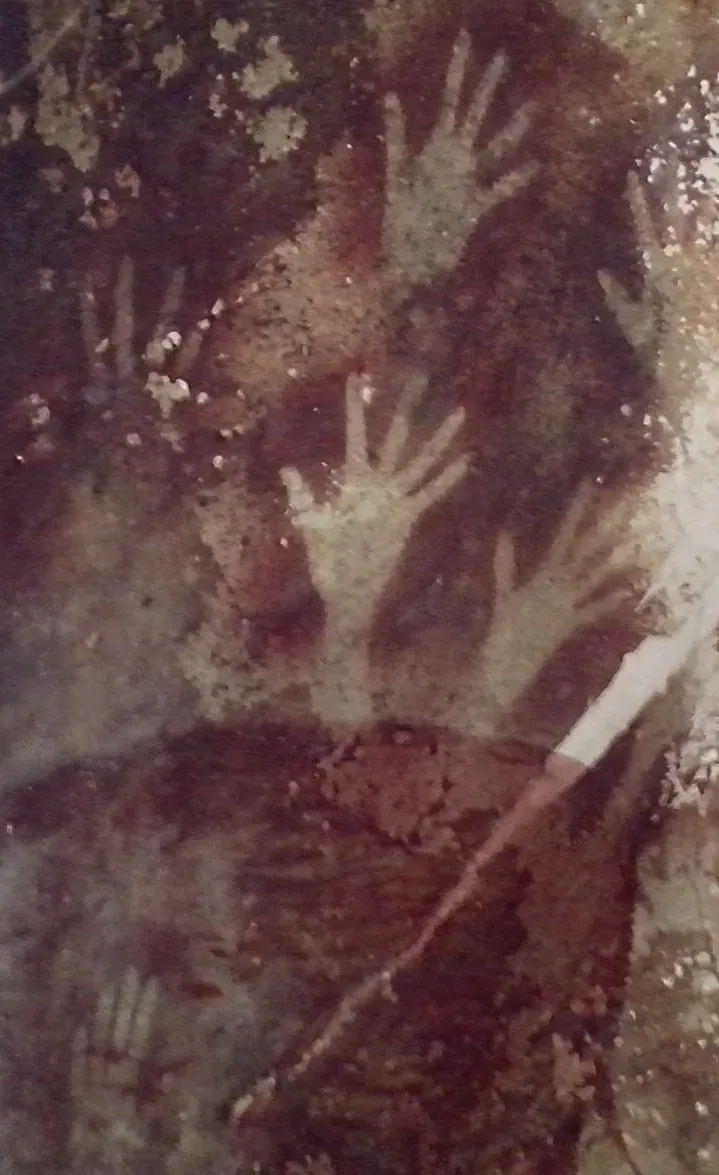
For a long time, Europe had a monopoly on the story of early human art. Altamira in Spain, Lascaux in France. These were the galleries of our ancestors. Then Indonesia quietly blew that entire narrative apart. Scientists announced in 2024 that a painted scene of people hunting pig-like animals found in a cave on the island of Sulawesi is at least 51,200 years old, beating out the previous contender for oldest cave art, also found in Indonesia, by around 5,000 years.
A cave painting discovered on Sulawesi is now believed to be the oldest story on record. The mural seems to depict a game drive, in which animals are flushed out of cover and toward armed hunters. Maxime Aubert, an archaeologist with Griffith University, suggests the mural may not represent a real-life scenario but rather a religious myth or story from folklore. If that interpretation is correct, the mural would not only be the oldest evidence of storytelling in recorded history, but also the first evidence of spiritual belief. That’s a staggering thought. The oldest story humanity ever told may not be about hunting at all. It might be about gods.
Göbekli Tepe’s Neighbor: Human Footprints 23,000 Years Old in New Mexico
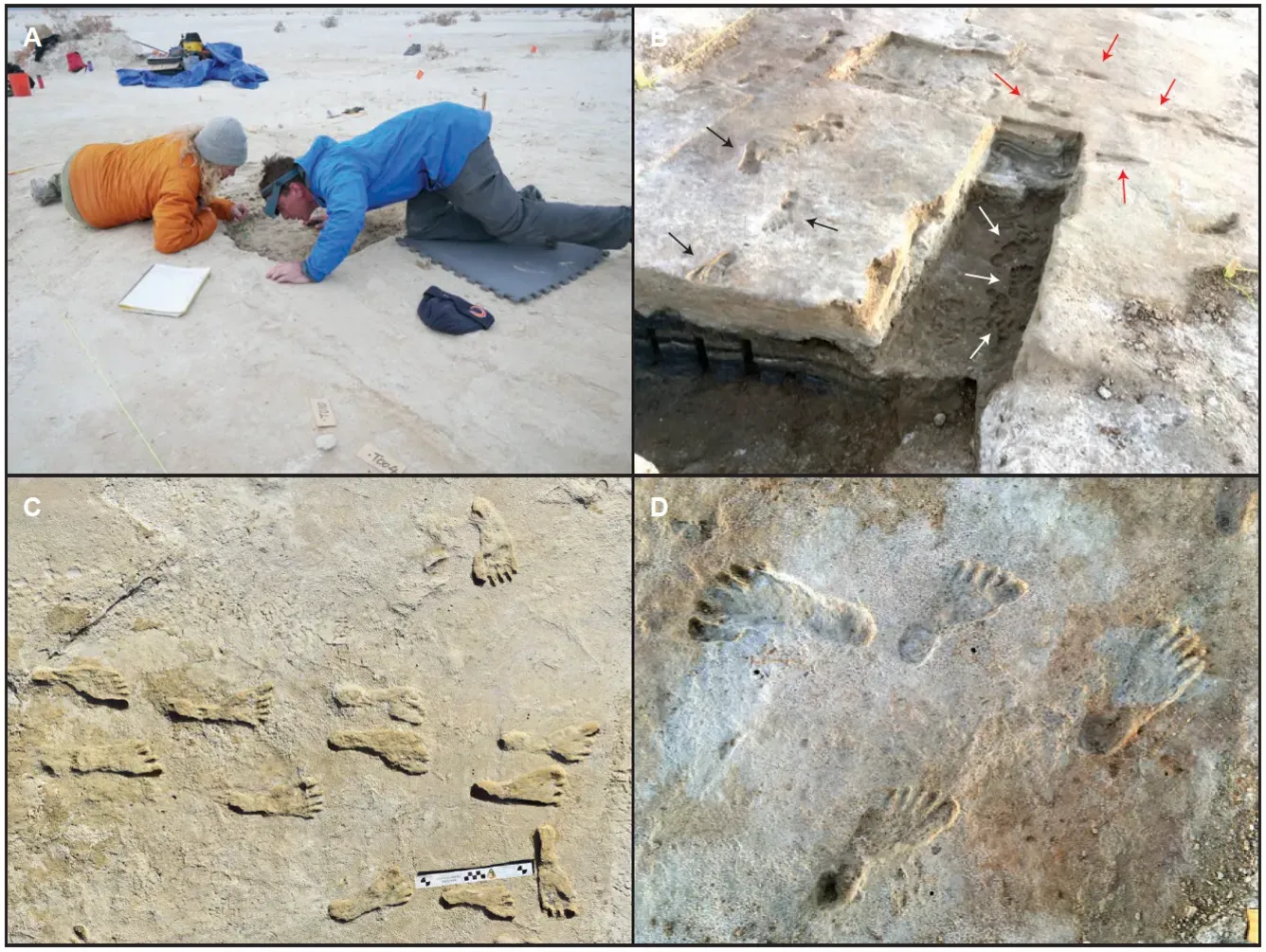
You probably learned in school that humans arrived in the Americas around 13,000 years ago. Crossed the Bering land bridge, followed the megafauna, and gradually spread south. Neat, tidy story. Then White Sands National Park in New Mexico happened. Around 23,000 years ago, a lake sat in what is now Tularosa Basin, and humans left footprints in the wet mud as they skirted its shore. These wanderers even interacted with Ice Age mammals such as mammoths. When their fossilized footmarks were discovered in 2021, it pushed back the earliest known arrival of humans in the Americas by up to 10,000 years.
Think about what that means on a human level. Somewhere, right now, there are people whose deep ancestry traces to individuals who watched mammoths walk past a lakeshore in New Mexico, thousands of years before anyone thought their ancestors were even there. The discovery of these fossilized footmarks pushed back the earliest known arrival of humans in the Americas by up to 10,000 years. The entire settlement history of an entire continent had to be redrawn because of some footprints preserved in ancient mud. It’s almost poetic, really.
The Antikythera Mechanism: An Ancient Computer from 2,000 Years Ago
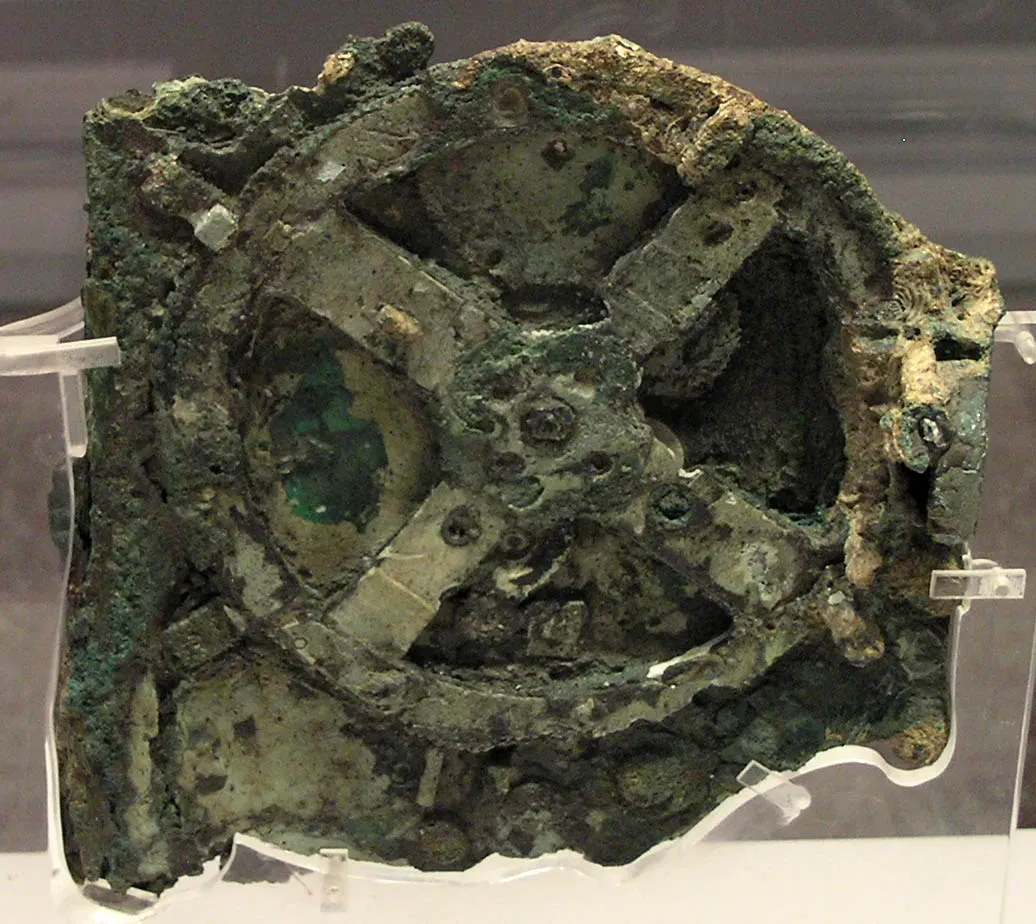
Most people picture ancient Greece as a place of togas, philosophy, and marble columns. They do not picture precision-engineered analog computers with interlocking gear systems. Yet that is exactly what sponge divers accidentally pulled from a shipwreck off the coast of the Greek island of Antikythera. This device is believed to be the oldest known example of an analog computer. This hand-powered mechanism was a way to model the positions of celestial bodies, including predicting the irregular orbit of the moon. The shipwreck in which it was found dated to 70 to 60 BCE, while scientists have estimated that the device itself might be as old as 204 BCE, completely changing how we think of ancient technology.
Referred to as an Ancient Greek computer, the Antikythera Mechanism was an astronomical clock which precisely tracked the movement of the heavens with rotating hands, interlocking gear wheels, and multiple dials. Though it was found at the turn of the 20th century, it took researchers 70 years to figure out its purpose. Seventy years. The device was so advanced that modern scientists struggled to understand it. I think that says more about our assumptions of ancient intelligence than it does about the Greeks themselves. The idea that technological sophistication is a recent invention suddenly looks very shaky indeed.
Neanderthals Were Artists: The 51,000-Year-Old Carved Deer Bone
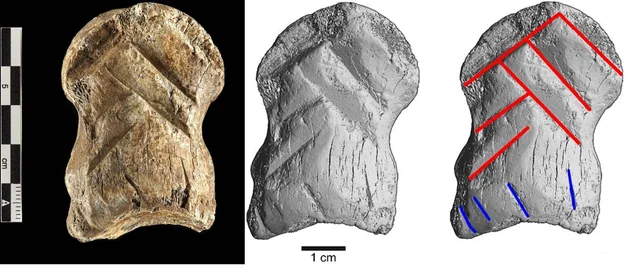
For generations, Neanderthals got an unfairly bad reputation. They were the dumb cousins, the brutes who couldn’t compete with clever Homo sapiens. Science has been dismantling that myth piece by piece, and few discoveries hit harder than a small deer bone found in a cave in Germany’s Harz Mountains. The toe bone of a prehistoric deer, carved with geometric lines by Neanderthals 51,000 years ago, was discovered in Einhornhöhle, or ‘Unicorn Cave’. It is one of the oldest works of art ever found.
Geometric lines. Not accidental scratches, not practical tool marks. Deliberate, patterned, intentional art. It’s tempting to think of Neanderthals as the brutish cousins of Homo sapiens, but archaeologists think a beautiful collection of decorative shells in a cave in Spain actually has Neanderthal origins. Taken together, these findings paint a picture of a species with symbolic thinking, aesthetic sensibility, and possibly even a spiritual life. The more you look, the more it seems the line between “us” and “them” was far blurrier than textbooks ever admitted.
The Lost City of the Amazon Revealed by LiDAR Technology
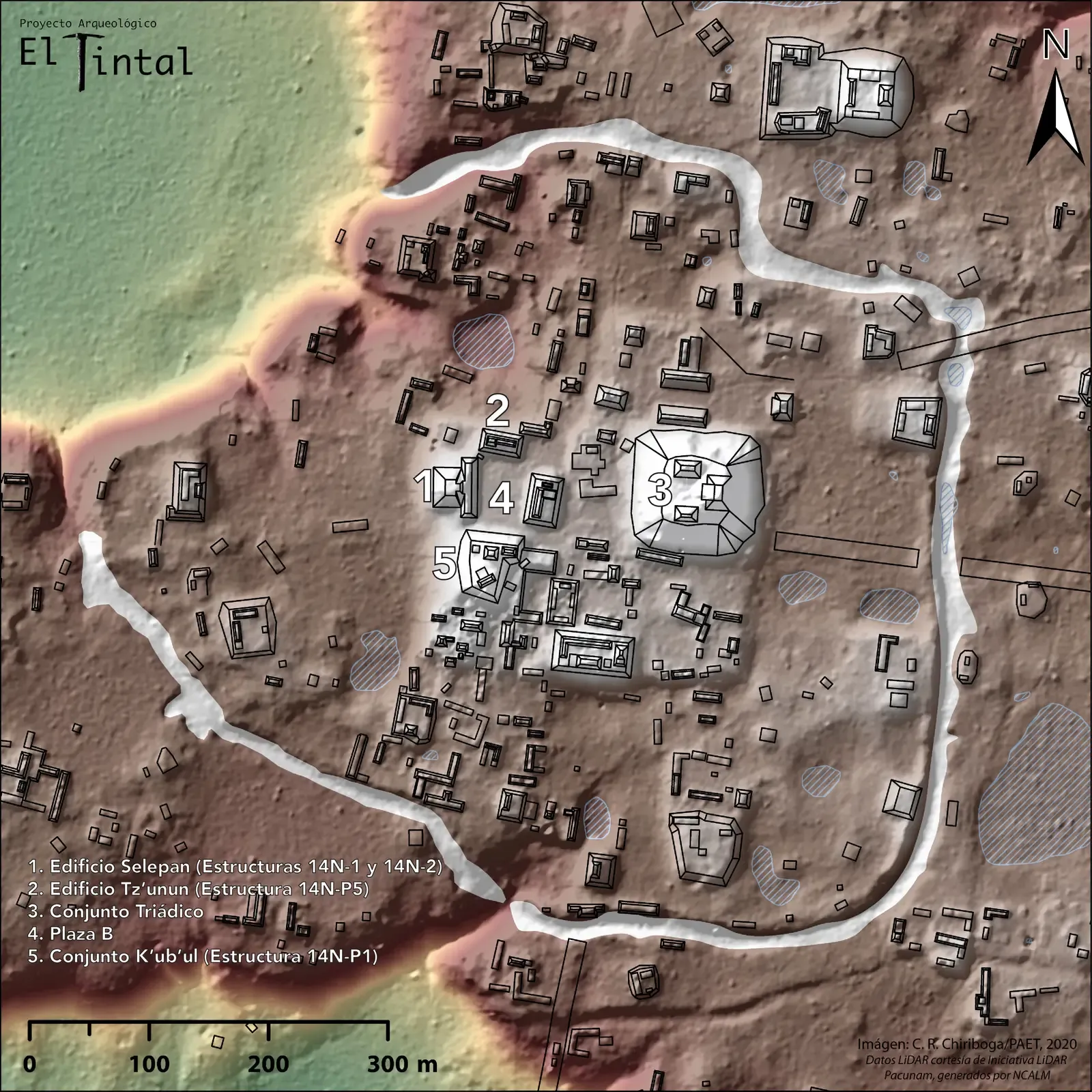
The Amazon rainforest had a reputation for being vast, wild, and essentially empty of large ancient civilizations. The dense jungle made large-scale settlement seem impractical to historians. LiDAR, a laser-based ground-scanning technology, tore right through that assumption like a machete through undergrowth. Ground-sensing technology uncovered over 6,000 interconnected earthen platforms in Ecuador that date back 2,000 years. These weren’t scattered huts. This was a network of cities.
In Ecuador, researchers discovered a massive urban network 2,500 years old, comprising five large and ten smaller settlements connected by wide, straight roads, with 6,000 platforms and rectangular earthen foundations for houses and ceremonies. The Amazon was long considered a “green desert” inhabited only by small tribes. LiDAR proved that wrong. What you once thought was untouched wilderness was actually home to one of the most organized and extensive prehistoric urban networks ever uncovered in the Americas. History doesn’t just get rewritten here. It gets completely restructured.
Stonehenge’s Altar Stone Came From Scotland, Not Wales
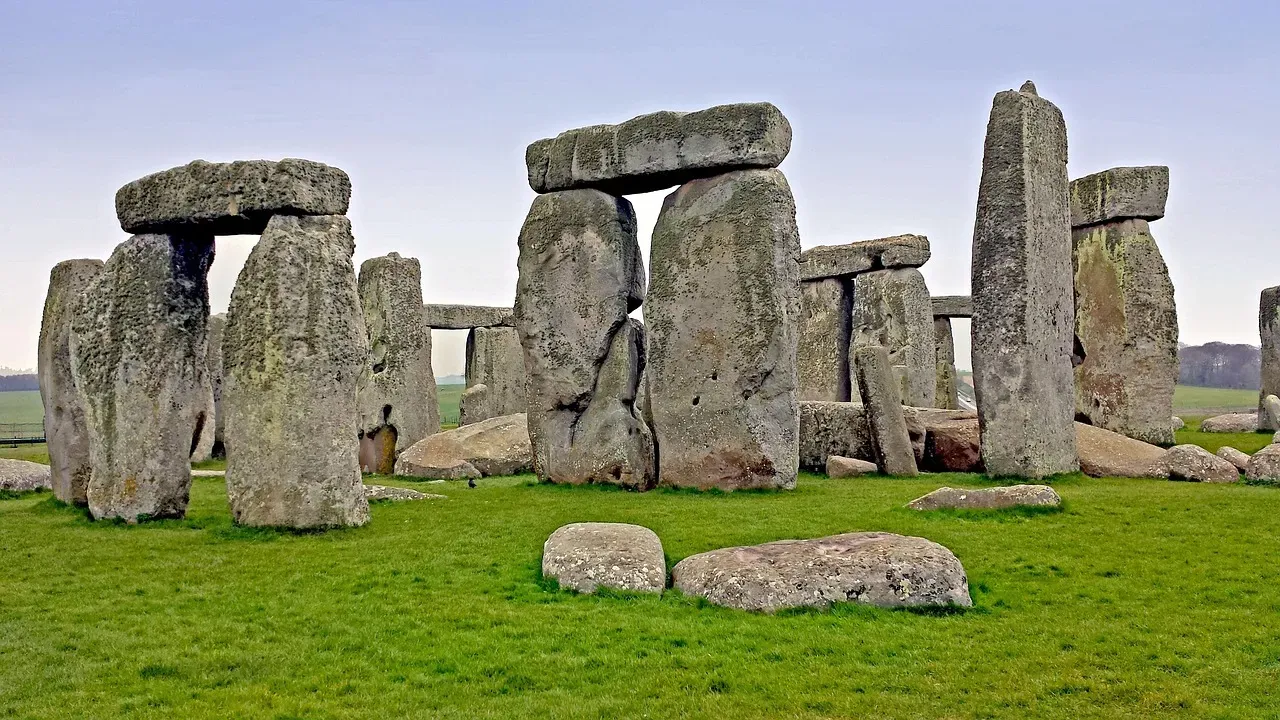
You’d think that after centuries of studying Stonehenge, the most famous prehistoric monument on Earth, scientists would have answered the basic questions. Like, where did the stones come from? Turns out, not quite. Researchers had long established that the famous bluestones were transported from Wales, hundreds of miles away. Impressive enough on its own. Then came the bombshell about the central Altar Stone. Researchers knew the bluestones of Stonehenge came from Wales. But the central Altar Stone, weighing six tons, was always a mystery. Chemical analysis in 2024 delivered the answer: it came from Scotland.
Scotland. That’s roughly 500 miles from Stonehenge, far further than anyone had suspected. Think about what it takes to move a six-ton slab of rock across hundreds of miles of prehistoric British landscape without wheels, without engines, without anything we’d recognize as infrastructure. Investigations at Durrington Walls, a Neolithic henge a couple of miles from Stonehenge, hint at the existence of 90 giant stone monoliths buried underground in a C-shape, leading some archaeologists to dub the entire area a “super-henge,” a vast site used for practicing spiritual rituals to do with life and death. The sheer scale of prehistoric ambition in this region continues to astonish even the most seasoned researchers.
A 125-Million-Year-Old Dinosaur With Hollow Porcupine-Like Spikes
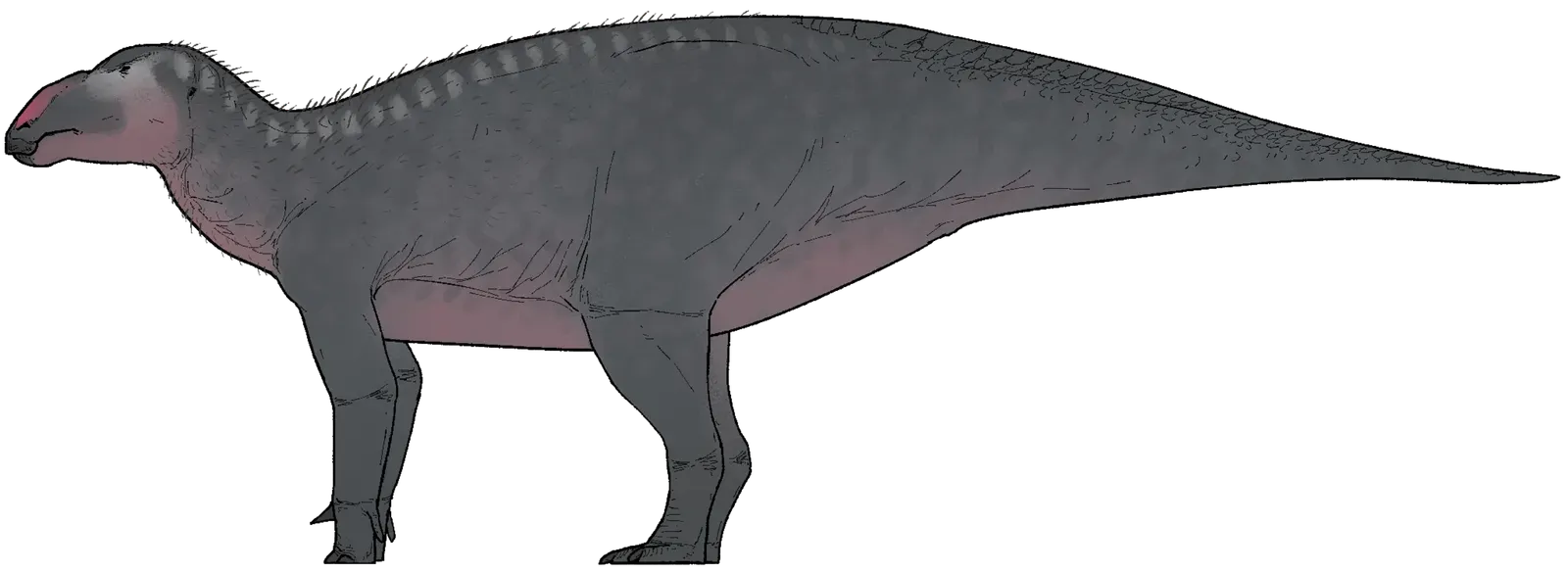
Just when paleontologists thought they had a reasonably good picture of dinosaur anatomy, a juvenile fossil from China reminded everyone how much is still left to learn. This isn’t ancient history in the human sense. This is deep time, and it still has secrets. A 125-million-year-old dinosaur just rewrote what we thought we knew about prehistoric life. Scientists in China uncovered an exceptionally preserved juvenile iguanodontian with fossilized skin so detailed that individual cells are still visible. Even more astonishing, the plant-eating dinosaur was covered in hollow, porcupine-like spikes, structures never before documented in any dinosaur.
Until this fossil came to light, there was no evidence that dinosaurs possessed hollow skin-based spines of this kind. Because the specimen is a juvenile, scientists cannot yet confirm whether adult individuals of the species retained the same structures as they matured. Further discoveries will be needed to answer that question. The findings, published in Nature Ecology and Evolution in February 2026, introduce an entirely new feature to the known diversity of dinosaur anatomy. This discovery not only adds a new species to the Iguanodontia group, but also reveals that dinosaur skin and body coverings were more varied and innovative than previously understood. It’s a humbling reminder that even after two centuries of paleontology, the prehistoric world still holds the capacity to completely surprise us.
Conclusion: The Past Is Never Truly Finished
If there’s one thread running through every single one of these discoveries, it’s this: the story of life on Earth is far stranger, richer, and more complex than any textbook has ever fully captured. Neanderthals were making art. Amazon civilizations built cities while Europe was still figuring itself out. Ancient Greeks engineered computers two millennia before the modern age. Dinosaurs had body features we never imagined. Every time science declares it has a solid grip on the past, the past wriggles free and surprises everyone.
These discoveries remind us that history is far from settled, and the ground beneath our feet still holds countless secrets waiting to reshape our understanding of the past. Each find forces us to question our assumptions and admit that ancient peoples were often far more capable, creative, and connected than we ever imagined. The tools are getting better every year, from LiDAR scanners to ancient DNA analysis, and that means the pace of discovery is only going to accelerate.
So the next time someone tells you the great discoveries are behind us, remember the fossilized footprints in New Mexico mud. Remember the spiked dinosaur that nobody saw coming. The earth still has things to say. We just have to keep listening. What discovery on this list surprised you the most? Drop your thoughts in the comments below.