
Imagine standing at the edge of today’s ocean and thinking you have a good sense of what lives beneath. You watch a whale breach, spot a shark fin, maybe glimpse a sea turtle. It feels rich, wild, teeming. Now consider this: what you’re seeing is likely a pale shadow of what once existed down there, millions of years ago, in waters so alive they would make your jaw drop. The fossil record doesn’t just hint at ancient ocean biodiversity. It screams it.
Every rock layer pulled from ancient seabeds is a chapter in a story far bigger and stranger than most people realize. From microscopic reef-builders that predate the dinosaurs to seven-story food chains ruled by creatures bigger than a bus, the evidence is extraordinary. So let’s dive in.
Before the Dinosaurs: The Earliest Ocean Architects
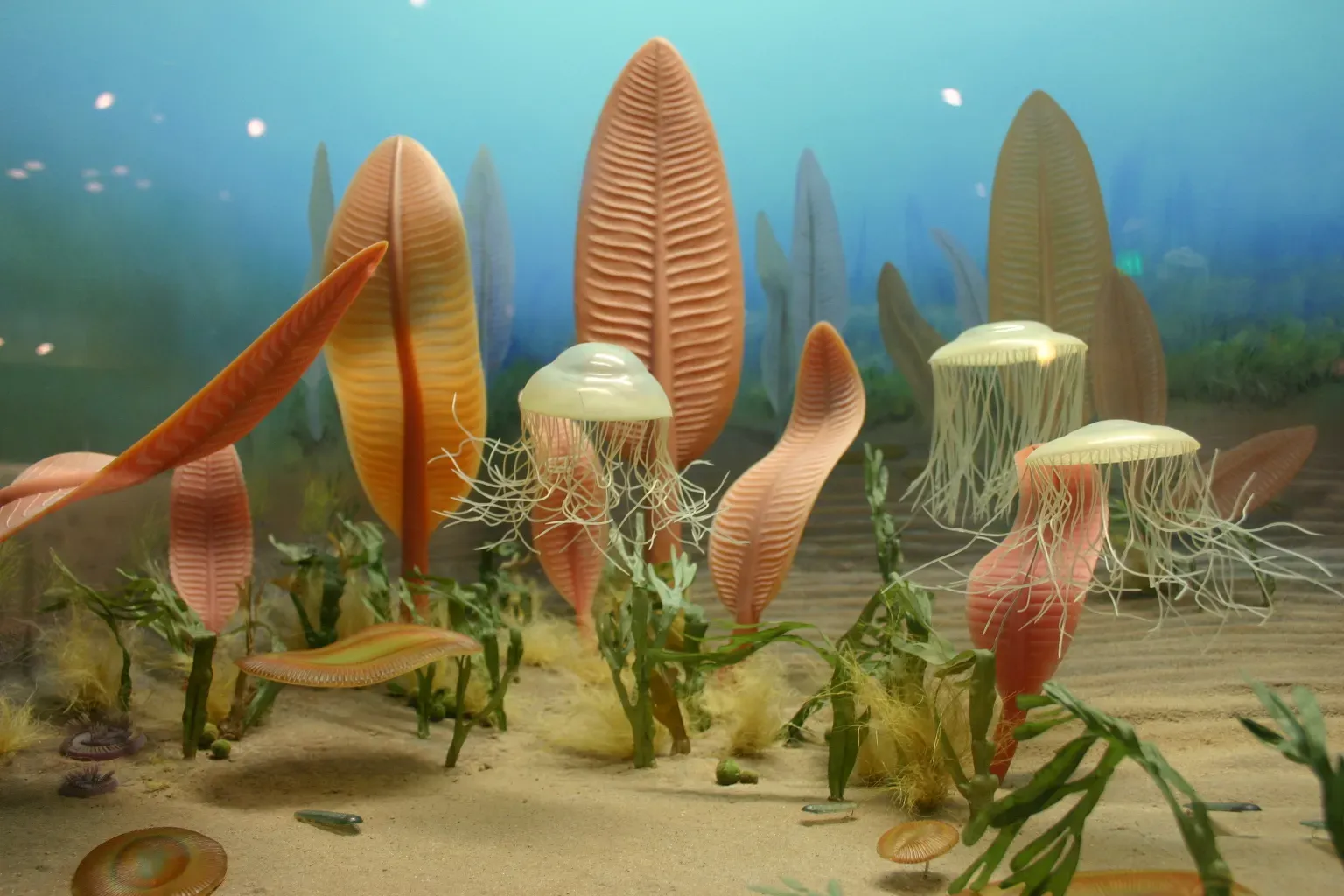
Most people think of coral when they picture a reef. But you’d be completely wrong to assume reefs are a modern invention. More than 514 million years ago, long before dinosaurs roamed Earth, sponge-like creatures called archaeocyathids were already busy building some of the planet’s earliest reefs, just north of Death Valley in present-day Nevada. That’s a mind-bending thought. Life had already figured out architecture before vertebrates even existed.
Other major changes that occurred in the Early Cambrian, between 541 to 510 million years ago, include the development of animal species that burrowed into the sediments of the seafloor, rather than lying on top of it, and the evolution of the first carbonate reefs, built by those sponge-like archaeocyathids. These weren’t simple smudges of life either. They were functional ecological structures, shaping the environment around them just as reefs do today.
The Cambrian Explosion: When the Ocean Went from Quiet to Chaotic
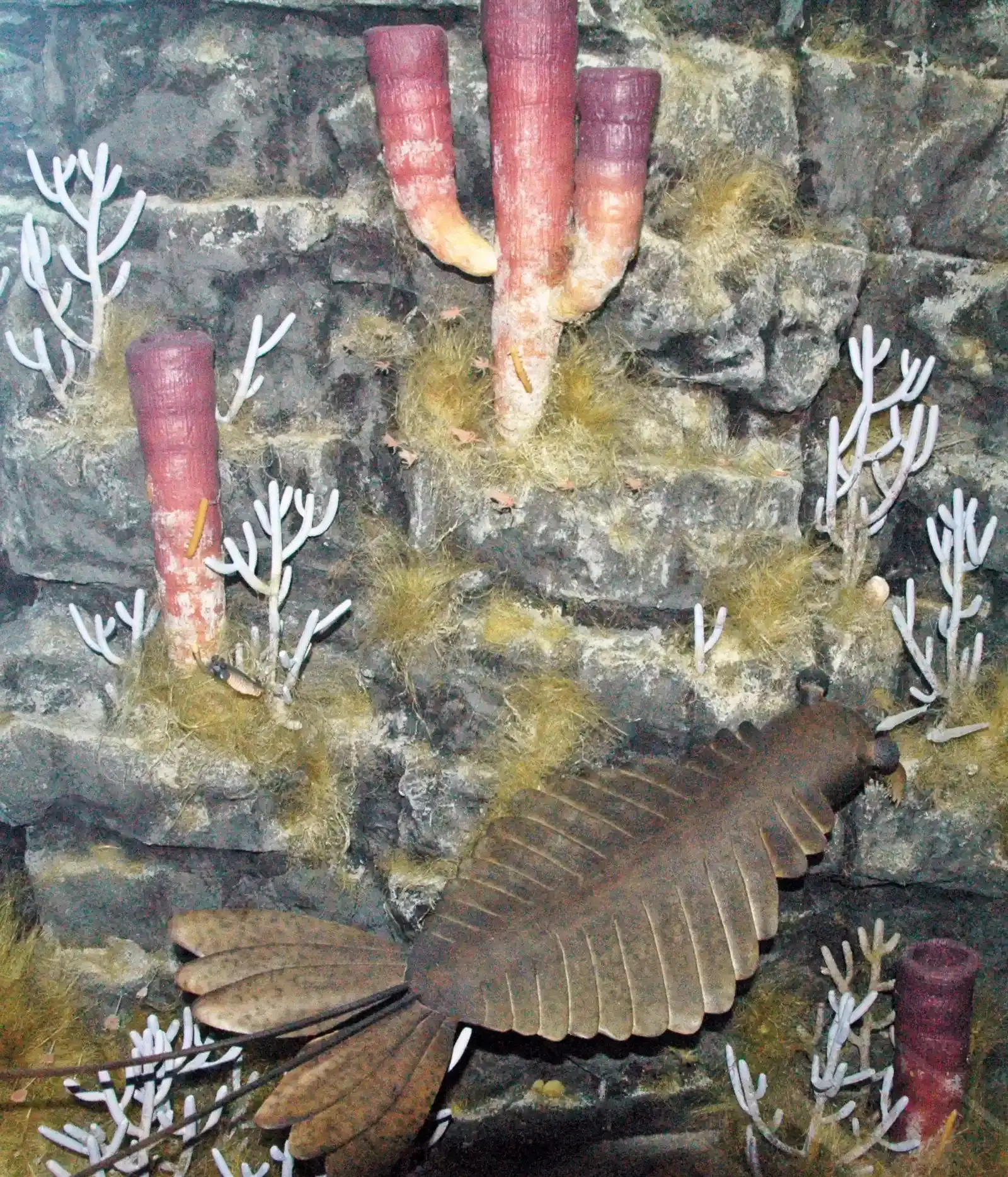
Here’s the thing about the Cambrian period. It represents one of the most spectacular bursts of biological creativity in all of Earth’s history. The Cambrian explosion began approximately 538.8 million years ago in the early Paleozoic, when a sudden radiation of complex life occurred and practically all major animal phyla started appearing in the fossil record, lasting for about 13 to 25 million years and resulting in the divergence of most modern metazoan phyla. Think of it like pressing a fast-forward button on evolution.
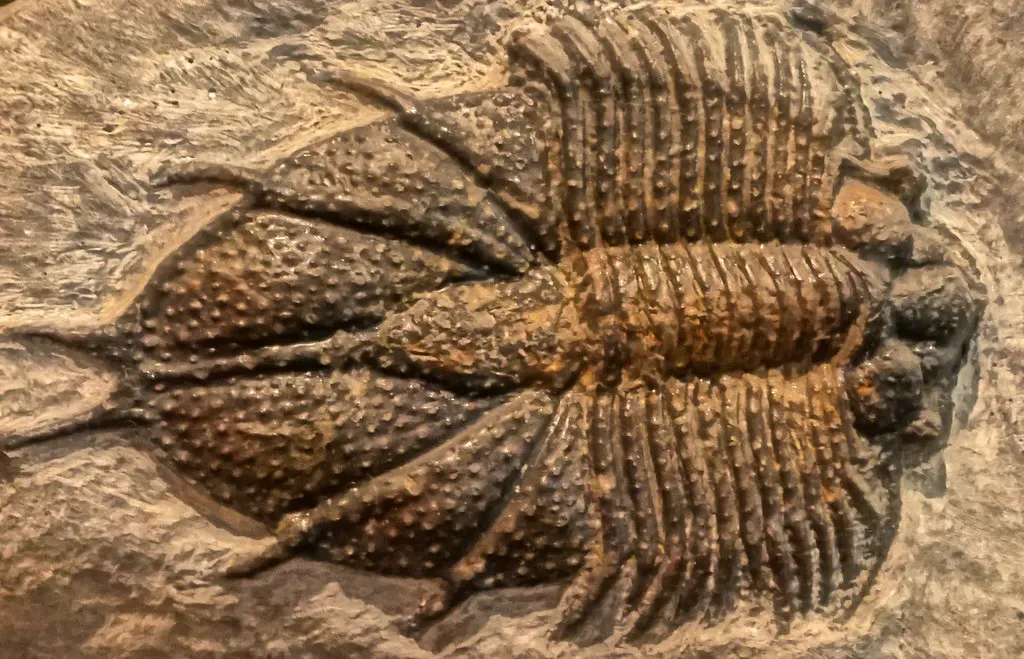
By the Early Cambrian, the bulk of the biosphere was confined to the margins of the world’s oceans. Life in the shallow regions of the seafloor was already well diversified, including the relatively large carnivore Anomalocaris, deposit-feeding trilobites and mollusks, suspension-feeding sponges, various scavenging arthropods, and possibly even parasites. You had predators, prey, scavengers, filter-feeders, all operating at once. A fully functional ocean ecosystem, half a billion years ago.
Reading the Rock: What Fossils Can Actually Tell You
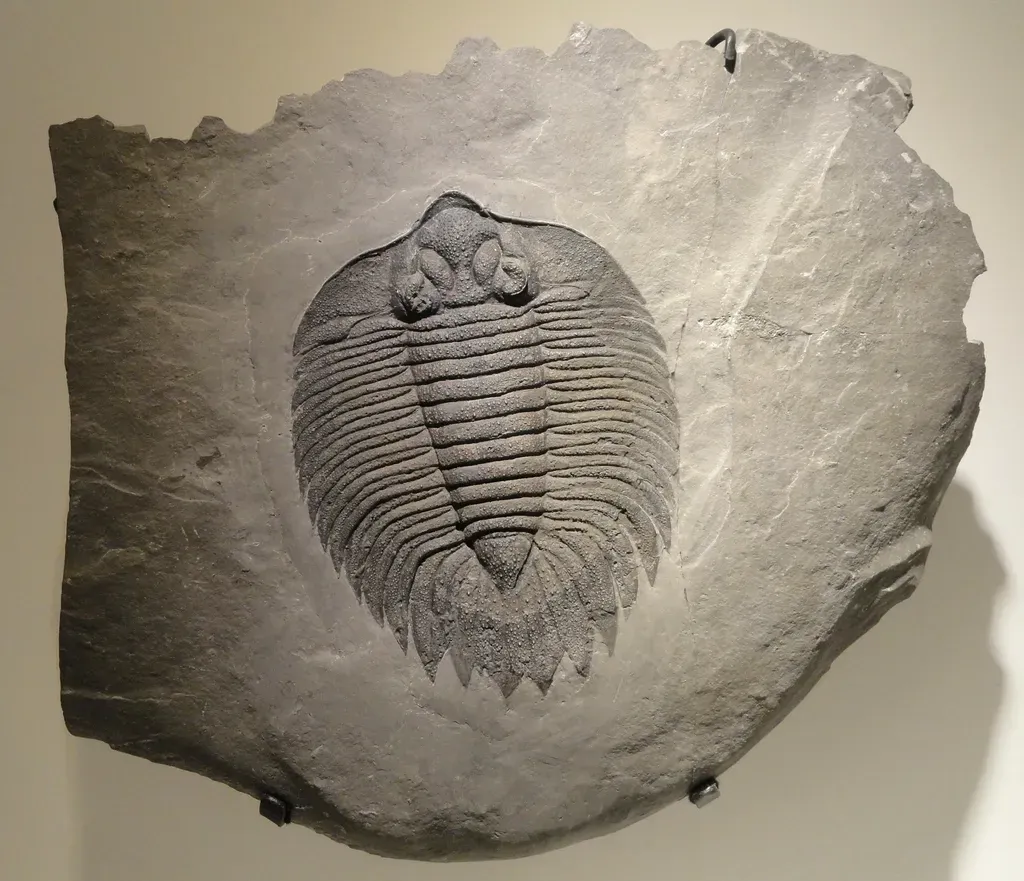
You might wonder: how much can a bunch of old bones really reveal? Honestly, a lot more than you’d expect. Biotic information preserved in the fossil record includes presence, relative abundance, geographic distribution, body size, and traces of biotic interactions, while data on abiotic factors including temperature, salinity, oxygen levels, and pH can commonly be reconstructed via geochemical, sedimentological, or paleontological proxies. In other words, fossils aren’t just a “here’s what existed” ledger. They’re a full environmental log.
Fossils provide direct evidence for the long history of life, allowing paleontologists to test hypotheses about evolution with data only they provide. From its beginnings more than three billion years ago to the present day, fossils record how life adapted or perished in the face of major environmental challenges. That’s not just historically interesting. It’s practically relevant for understanding what today’s oceans might face next.
Super Predators at Level Seven: A Food Chain Like Nothing Alive Today
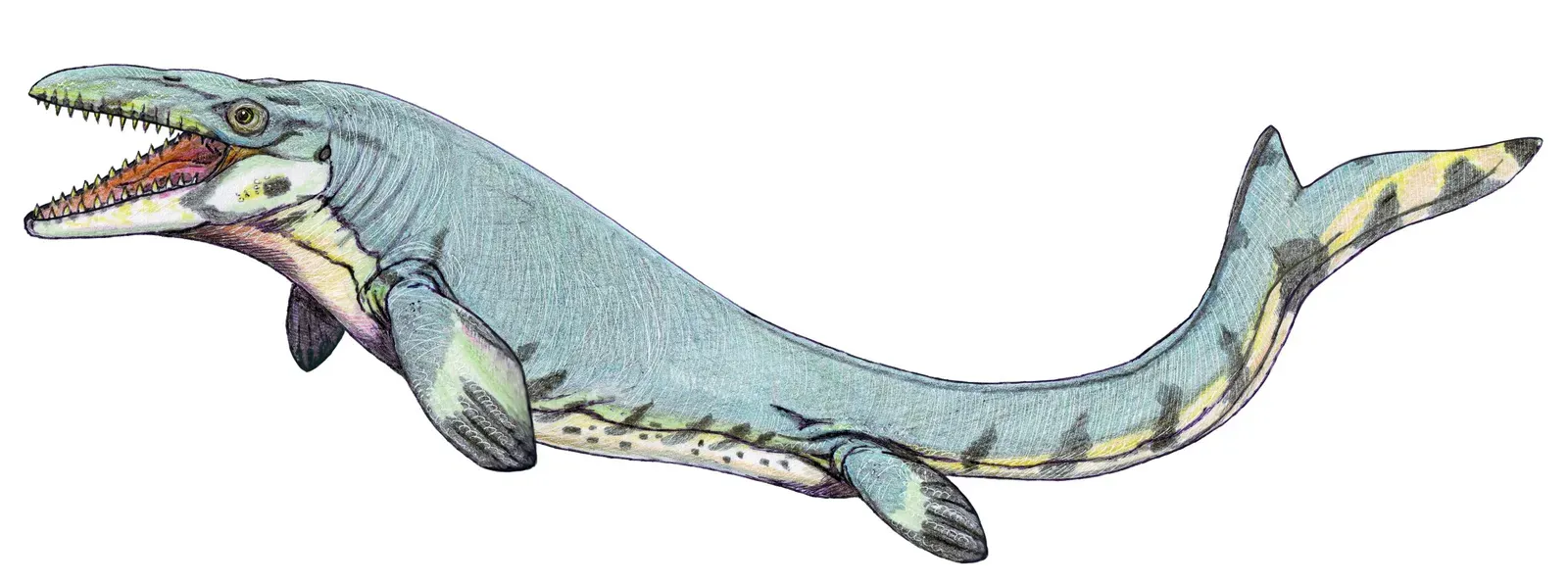
Let’s be real. Nothing in today’s oceans quite prepares you for what was lurking in ancient seas. Around 130 million years ago, the ocean’s most dominant hunters held far more power than any marine predator alive today. Recent research from McGill University reveals that during the Cretaceous period, some sea creatures sat at the very top of an extraordinarily complex food chain. The findings come from a study published in the Zoological Journal of the Linnean Society, which reconstructs the ancient marine ecosystem preserved in Colombia’s Paja Formation. According to the research, this prehistoric sea was filled with enormous marine reptiles, some growing longer than 10 meters, that occupied a previously unseen seventh level of the food chain.
In today’s oceans, food chains typically reach only six levels, with animals such as killer whales and great white sharks sitting at the top. The discovery of predators operating at a seventh trophic level highlights just how rich and complex the Paja ecosystem once was. It also offers rare insight into a deep evolutionary struggle, where predators and prey continuously adapted in response to one another. I think that’s one of the most astonishing facts in all of paleontology. A world so ferociously alive that it broke the rules we apply to every living ocean today.
Plesiosaurs, Ichthyosaurs, and the Reign of Marine Reptiles
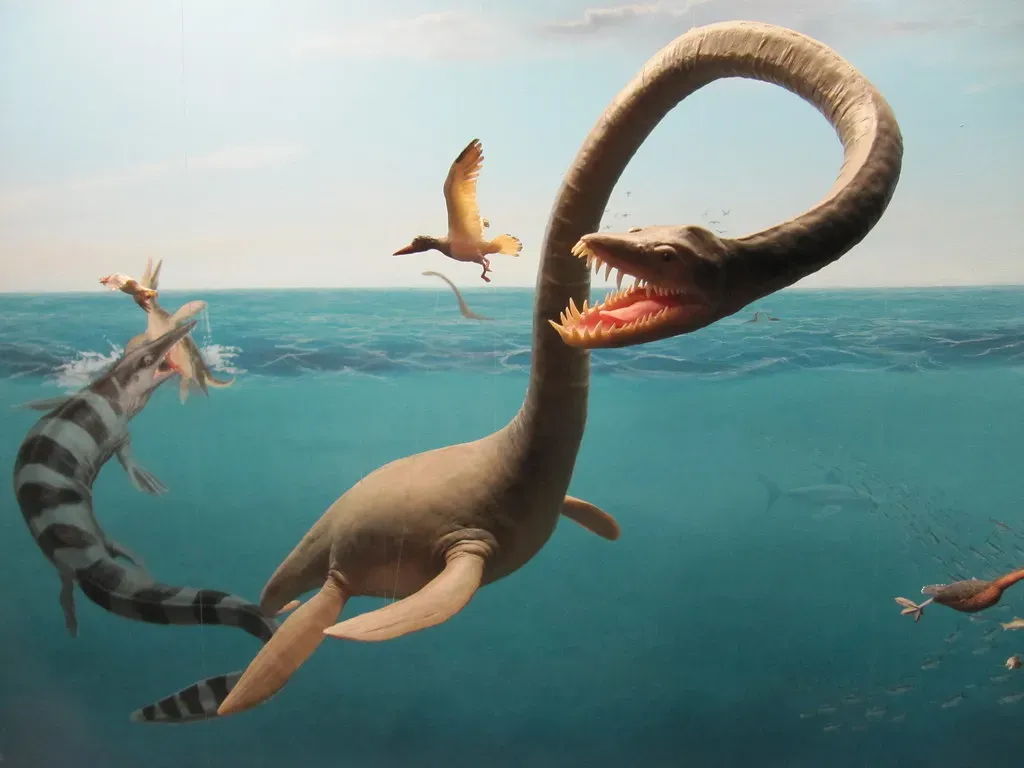
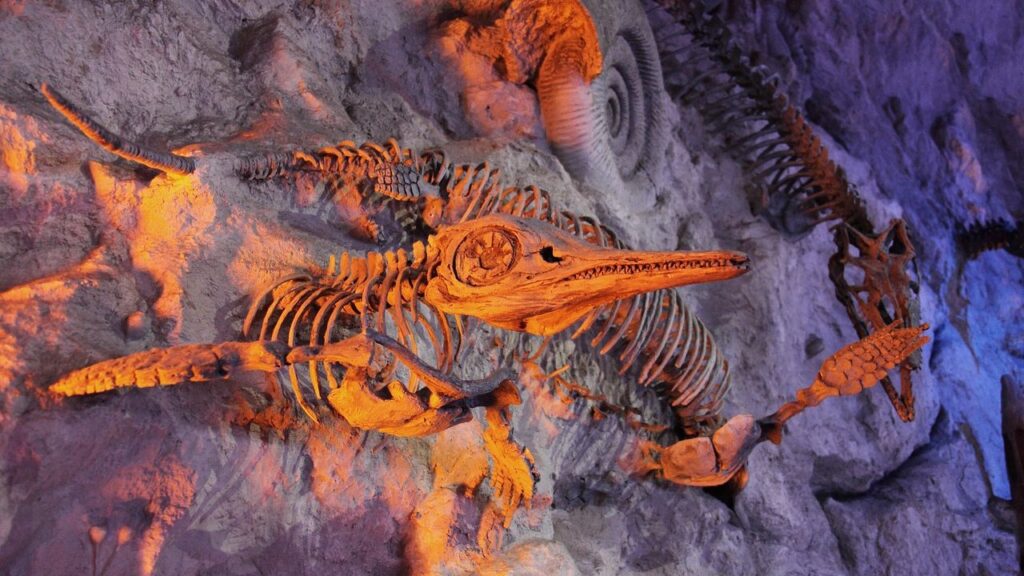
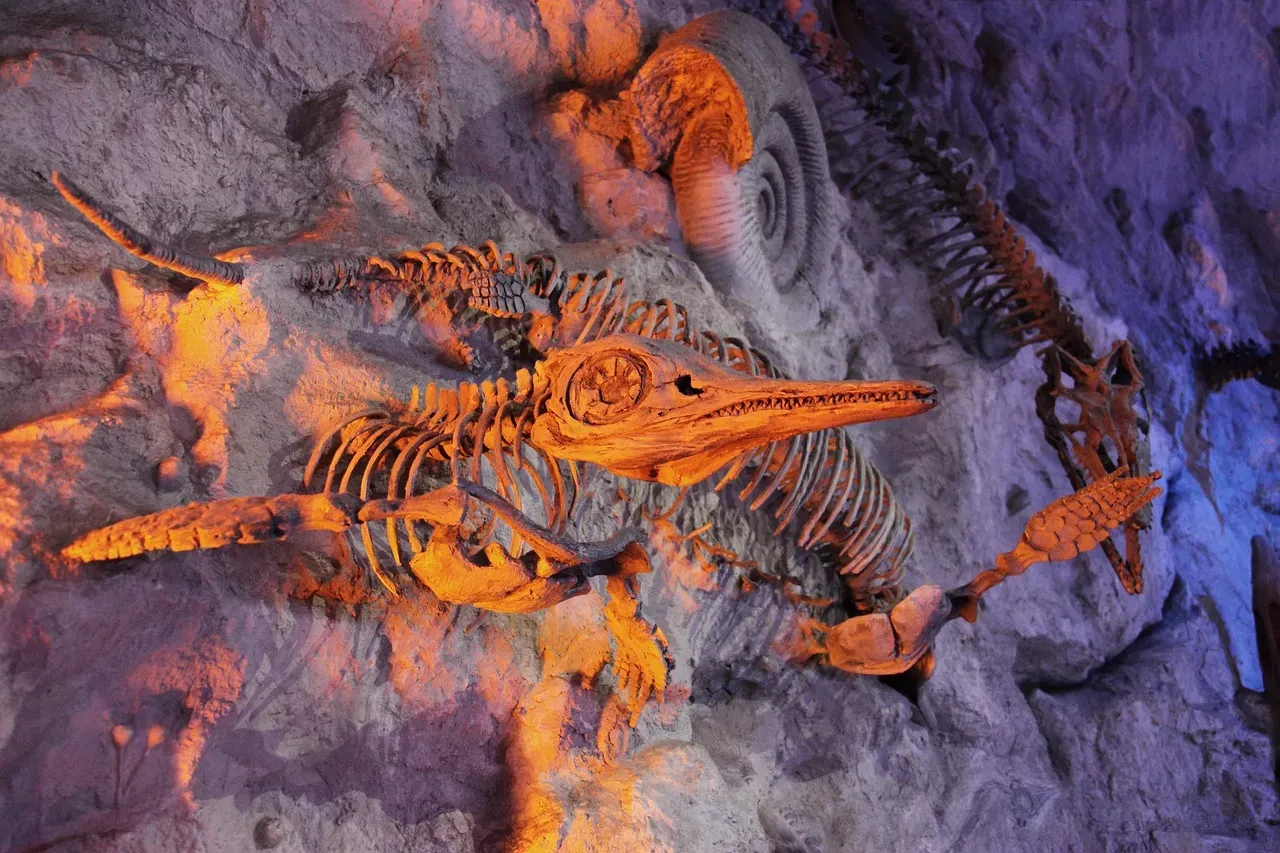
Over 230 million years ago, long-necked plesiosaurs and dolphin-shaped ichthyosaurs dominated the oceans, from open water to the shallow coasts. Within 30 million years, many of these marine reptiles went extinct. Their story is one of breathtaking rise and sudden fall, and the fossil record captures nearly every chapter of it. The highest trophic niches in Mesozoic oceans were filled by diverse marine reptiles, including ichthyosaurians, plesiosaurians, and thalattosuchians, dominating food webs during the Jurassic and Early Cretaceous.
One reason plesiosaurs fossilize so well is their dense skeletal construction. Unlike many marine animals with lightweight bones, plesiosaurs evolved heavy, compact bones that helped counteract lung buoyancy. This adaptation not only stabilized them underwater but also increased the likelihood of preservation after death. As a result, many specimens are preserved as articulated skeletons rather than scattered remains. Some even retain stomach contents, such as fish bones and cephalopod hooks, as well as gastroliths – smooth stones swallowed to aid digestion or fine-tune buoyancy. These are not dry old bones. They’re time capsules with lunch still inside them.
Life Bounces Back: Ocean Recovery After Mass Extinction
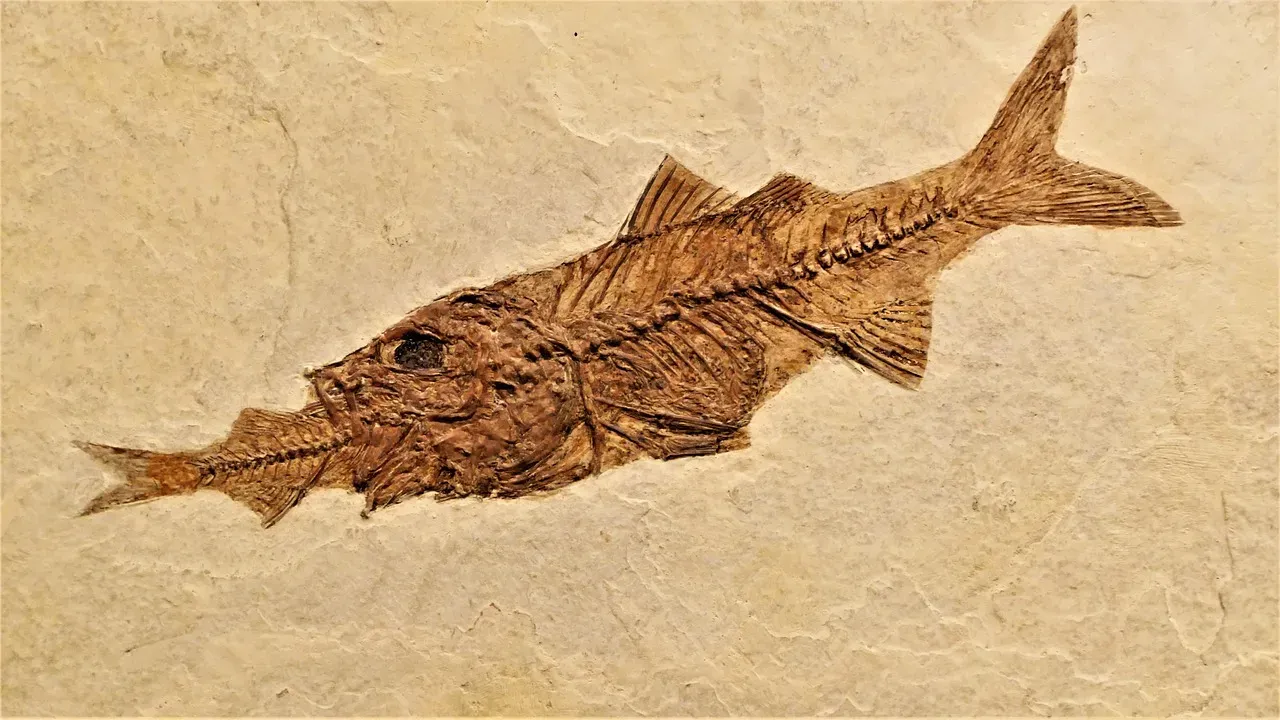
One of the most surprising things the fossil record reveals is how stubbornly resilient ocean life can be. A spectacular fossil trove on the Arctic island of Spitsbergen shows that marine life made a stunning comeback after Earth’s greatest extinction. Tens of thousands of fossils reveal fully aquatic life thriving just a few million years after the catastrophe. The bounce-back wasn’t slow or hesitant. It was explosive. Tens of thousands of fossils reveal fully aquatic reptiles and complex food chains thriving just three million years later, with some predators growing over five meters long, challenging the idea of a slow, step-by-step recovery.
In assessing the fossils of thousands of bivalve species, scientists found that at least one species from nearly all their modes of life, no matter how rare or specialized, survived the extinction event. Statistically, that shouldn’t have happened. Kill roughly seven in ten bivalve species, even at random, and some modes of life should disappear. Yet they didn’t. The ocean clung to its ecological diversity in ways that still puzzle researchers today.
Hidden Life and Lost Worlds Beneath the Seafloor
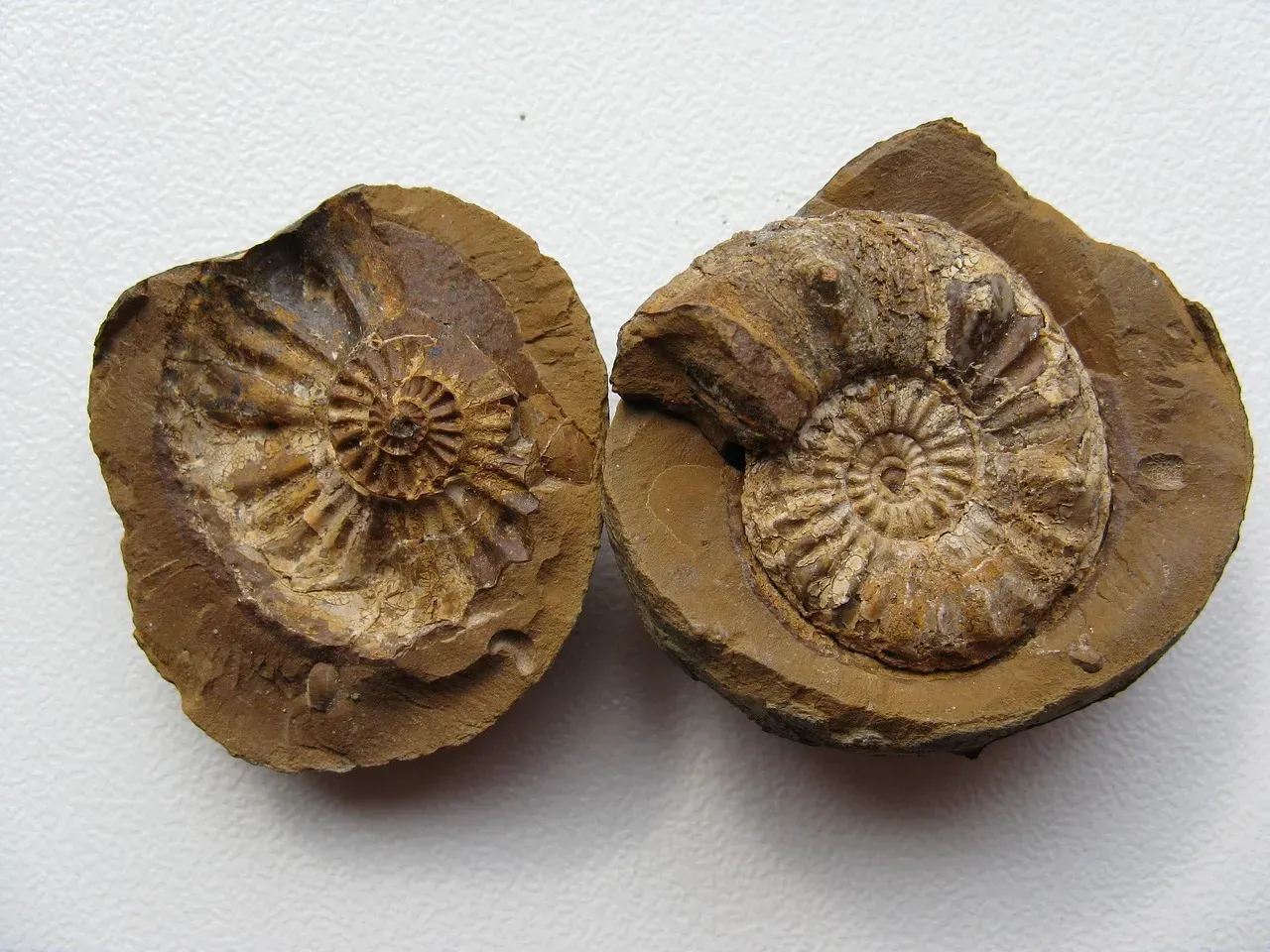
It’s not only what swam through ancient water columns that surprises us. Some of the most dramatic fossil discoveries are coming from below the seafloor itself. Buried beneath the Java Sea, scientists have uncovered a lost world frozen in time, revealing extinct creatures and signs of a thriving ecosystem swallowed by rising oceans. This kind of discovery completely rewrites the boundary between what we consider “ocean life” and what we once thought of as separate terrestrial ecosystems.
The fossil record from submerged landscapes has remained elusive, due in part to the technical and financial challenges of underwater excavation. But discoveries like this mark a breakthrough in underwater archaeology, proving that fossils and large faunal assemblages can survive beneath the seabed. Sites like this, preserved in shallow marine basins, could open new avenues in the study of early life on Earth. We are, in many ways, still just scratching the surface of what once existed beneath ancient waves.
What Ancient Oceans Teach Us About the Future of Our Own
Here’s the part that honestly keeps some scientists up at night. The fossil record is not just a window into the past. It’s a warning system for the present. Geohistorical records archive the state of pre-industrial oceans at local, regional and global scales, enabling the detection of recent extinctions and shifts in species distribution, abundance, body size and ecosystem function. Researchers can untangle the contributions of natural and anthropogenic processes by documenting centennial-to-millennial changes in the composition of marine ecosystems. This long-term perspective identifies recently emerging patterns and processes that are unprecedented, allowing us to better assess human threats to marine biodiversity.
The fossil record shows us that biodiversity has definite breaking points, usually during a perfect storm of climatic and environmental upheaval. It’s not just that species are lost, but the ecological landscape is overturned. As more discoveries emerge, scientists will be able to compare ecosystems across different regions and time periods, deepening knowledge of how ancient oceans influenced the modern seas we depend on today. That link between deep time and the present moment is arguably the most urgent lesson the fossil record has ever offered us.
Conclusion: The Ocean Has Always Been More Than We Imagined
Every time scientists crack open a new fossil site, they seem to find life that was bigger, stranger, and more complex than anyone had predicted. From tiny reef-builders half a billion years old to apex predators operating at a level of the food chain that no living creature reaches, the ancient ocean was a world of staggering biological ambition. You could think of it as nature operating without a ceiling, endlessly experimenting, endlessly scaling up.
The fossil record keeps rewriting what we thought we knew. New species keep emerging from museum drawers, from Arctic ice, from Colombian limestone, from the floor of the Java Sea. Each discovery is a reminder that the past is far from fully mapped. And if ancient oceans were this unexpectedly rich, one has to wonder: what else is still waiting to be found? What do you think is still out there, buried and waiting? Drop your thoughts in the comments below.