Picture a world where everything you walk on, breathe in, and eat is different from anything you know today. No grass. No birds singing in familiar trees. The sky is hotter, the land is wetter, the air thicker with greenhouse gases. Now imagine that this alien world was not from some distant galaxy but from our very own planet, hundreds of millions of years ago. And yet, it was precisely this strange, turbulent Earth that built one of the most spectacular biological stories ever told.
The dinosaurs did not just appear out of nowhere. They were sculpted, challenged, and defined by a planet in constant dramatic motion. Continents split apart like tearing paper. Volcanoes shook entire ecosystems into collapse. Oceans flooded inland landscapes. Every cataclysm, every shift in temperature, every new plant that dared to flower became a new chapter in the story of dinosaur evolution. You are about to find out just how wild that story truly was. Let’s dive in.
The World Before Dinosaurs: A Stage Being Set
Before you can understand the dinosaurs, you need to understand the wreckage they rose from. The Mesozoic Era began in the wake of the Permian–Triassic extinction event, the largest mass extinction in Earth’s history. Honestly, calling it a bad time for life is an understatement. Some ninety percent of all marine invertebrate species and seventy percent of terrestrial vertebrate genera disappeared at the boundary between the Paleozoic and Mesozoic.
On land, many seedless plant lineages disappeared, and the disappearance of some dominant species of Permian reptiles made it possible for the dinosaurs to emerge. The warm and stable climatic conditions of the following Mesozoic Era then promoted an explosive diversification of dinosaurs into every conceivable niche in land, air, and water. The slate had been wiped almost entirely clean. What came next was a biological renaissance unlike anything before or since.
Pangaea: One Giant Continent, One Giant Cage
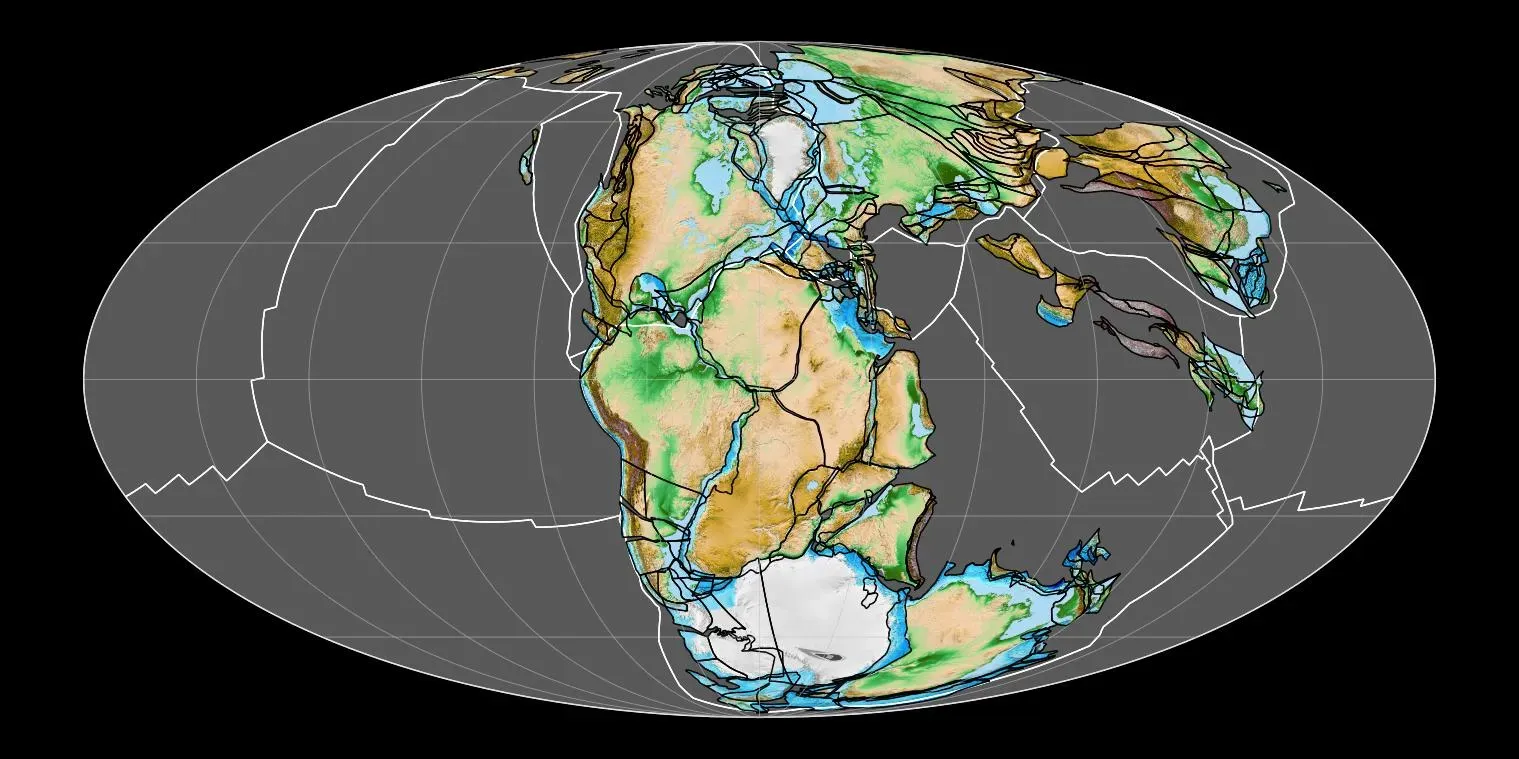
Here’s the thing most people overlook. When the very first dinosaurs appeared, every continent you know today was still fused together. All continents during the Triassic Period were part of a single landmass called Pangaea. This meant that differences between animals or plants found in different areas were minor. The Triassic climate was relatively hot and dry, and much of the land was covered with large deserts. Unlike today, there were no polar ice caps.
The combination of huge internal mountain ranges and vast unbroken expanses of land and sea led to much different climates compared to today. There were great interior deserts and more extreme temperatures from the poles to the equator. Animals could walk from one end of Pangaea to the other, but much of it would have been harsh to live in. Think of it as one vast, mostly hostile supercontinent where only the toughest, most adaptable creatures could find a foothold. The dinosaurs, it turns out, were exactly those creatures.
Volcanic Fire: The Catastrophe That Crowned Dinosaurs as Kings
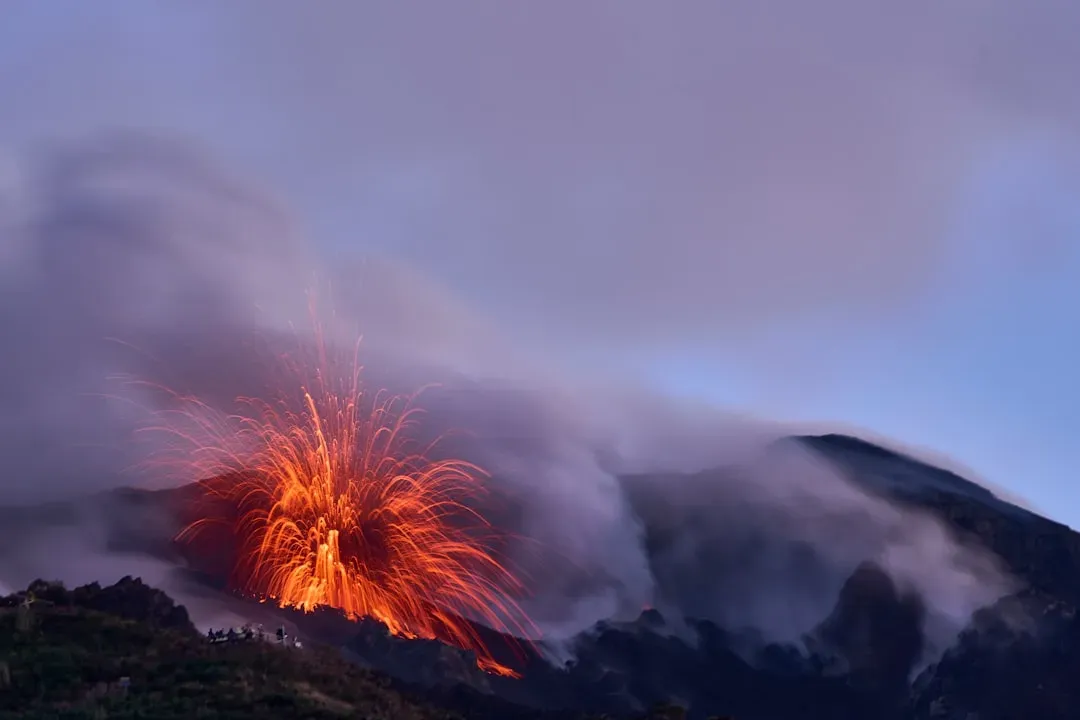
I think this is the part that shocks most people. The dinosaurs didn’t simply rise to dominance through superior strength. They were handed the keys to the world by a catastrophe. The end-Triassic extinction is perhaps best known for eliminating many groups of terrestrial vertebrates, leaving many niches open that were soon filled by dinosaurs. The most likely primary cause of this extinction is massive volcanic activity along the future Atlantic coasts of Africa, Europe, North America, and South America, set in motion by the beginning of the breakup of the supercontinent Pangaea.
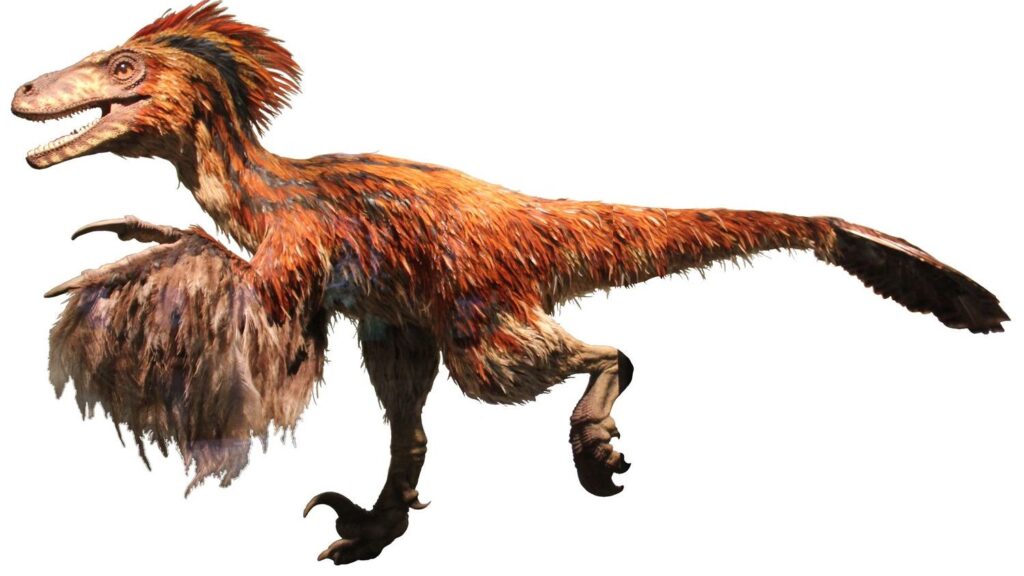
The dinosaurs and early pterosaurs that thrived during the Triassic likely retained warm-running metabolisms and insulating coats of their ancestors. Even though direct fossil evidence of fuzzy Triassic dinosaurs has yet to be found, paleontologists expect they were fluffy reptiles, given that both dinosaurs and pterosaurs of the Jurassic and Cretaceous had feathers and likely inherited them from a common ancestor. Paired together, warm body temperatures and insulating coats allowed dinosaurs to better survive the swings between warm and cold climates at the end of the Triassic. Other reptiles that lacked such insulation were more vulnerable to the shifts and the environmental changes that came with them. Nature, in its brutal way, was selecting exactly the right kind of survivor.
The Great Rift: When Continents Split and Evolution Exploded
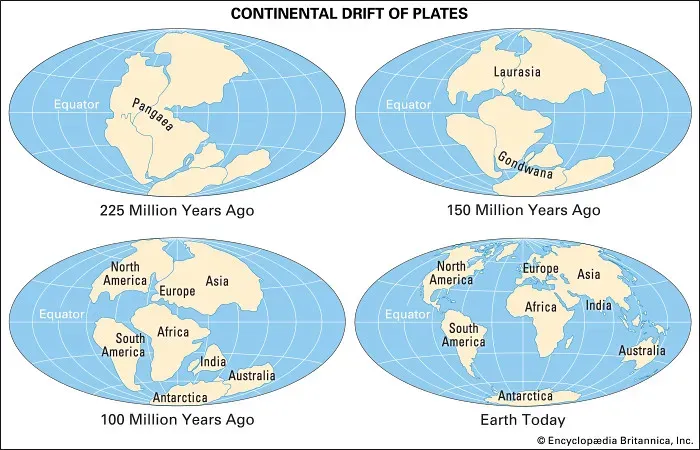
Starting around 200 million years ago, volcanic activity intensified along what would become the Atlantic Ocean’s mid-ocean ridge. These weren’t just ordinary volcanoes – they were massive fissure eruptions that split the continent apart. That geological upheaval changed everything. During this era, the land gradually split from one huge supercontinent into smaller ones, and the associated changes in the climate and vegetation affected how dinosaurs evolved.
The breakup of Pangaea not only shaped the modern world’s geography but biodiversity at the time as well. Throughout the Mesozoic, animals on the isolated, now-separated island continents took strange evolutionary turns. You can think of each separated landmass as its own evolutionary laboratory. The same basic dinosaur blueprint was now being run through wildly different environmental experiments, producing staggeringly different results across the globe.
Climate, Greenhouse Worlds, and the Rise of Giants
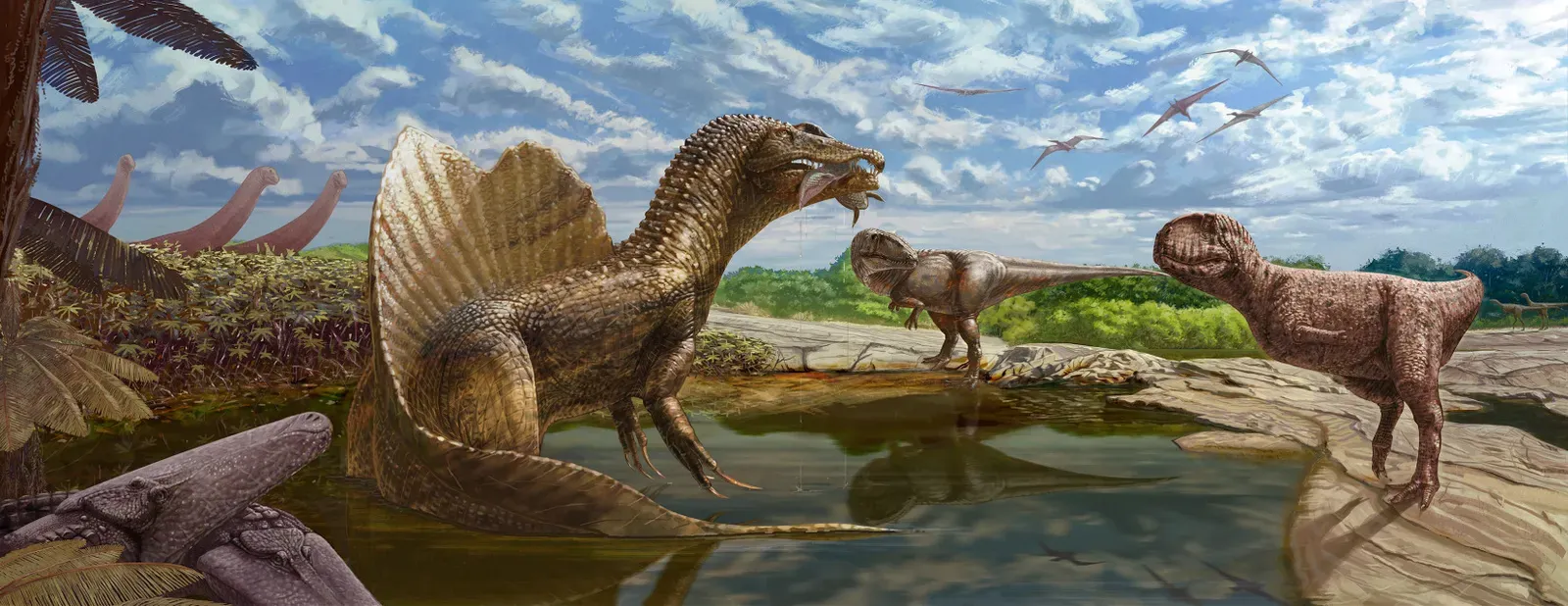
The climate was generally warm and humid, with no polar ice caps to speak of. This greenhouse world supported vast forests of conifers, ferns, and cycads that provided abundant food sources for the growing diversity of herbivorous dinosaurs. Meanwhile, the first large predators began establishing the ecological patterns that would define dinosaur evolution for the next 135 million years. This was the Jurassic at its most generous. Food was everywhere, in enormous quantities.
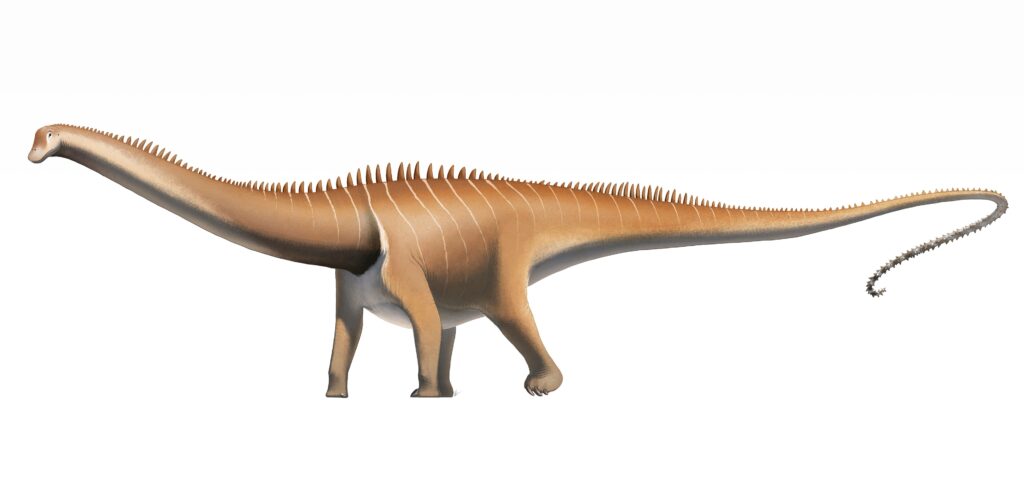
The Jurassic period is perhaps best known for the rise of the sauropods, the largest land animals that ever lived. These magnificent giants reached their peak diversity and size precisely because of the environmental changes triggered by Pangaea’s breakup. The warm, humid climate and abundant vegetation created perfect conditions for animals that needed enormous amounts of food to sustain their massive bodies. It’s a bit like imagining a buffet that never closes, stretching across entire continents. No wonder some of these creatures grew to the length of several school buses.
Ancient Oceans, Seaways, and the Shaping of Dinosaur Diversity
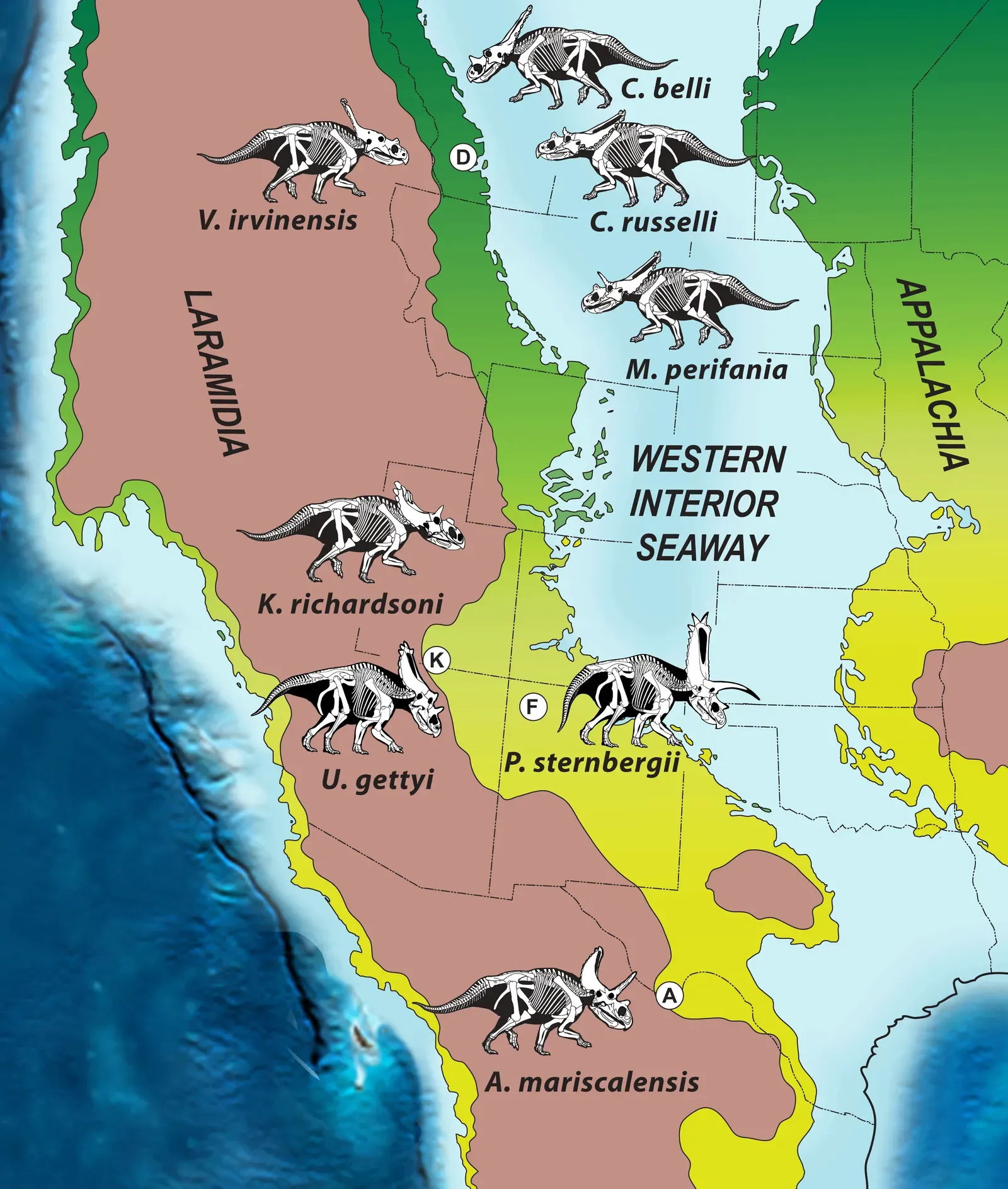
Marine transgression was so extensive that in North America, for example, a seaway spread all the way from the Arctic to the Gulf of Mexico in the Cretaceous Period. It’s hard to visualize, but vast interior seas divided what you now know as North America into separate landmasses for millions of years. During the Cretaceous, the land separated further into some of the continents we recognize today, although in different positions. This meant that dinosaurs evolved independently in different parts of the world, becoming more diverse.
In general, the Cretaceous was a time of significant turnover as continents separated, inland seas grew and then shrank, and flowering plants came on the scene. Many dinosaur communities streamlined, with fewer groups holding more diversity. The seaways acted like invisible walls. Dinosaur populations on each side of those inland oceans were cut off from each other, forced to evolve on their own terms. The results were spectacular and sometimes bizarre, like isolated wildlife islands each with its own distinct cast of characters.
Flowering Plants, Climate Shifts, and the Final Chapter

One of the biggest changes on land in the Cretaceous was the transition to angiosperm-dominated flora. Angiosperms, plants with flowers and seeds, originated in the Cretaceous, switching many plains to grasslands by the end of the Mesozoic. By the end of the period, they had replaced gymnosperms and ferns as the dominant plants in the world’s forests. This shift in plant life was staggering in its impact. When the menu changes, so does every creature that depends on it.
Theropods, the group that includes T. rex and modern birds, and ornithischians seem to have developed the ability to generate their own body heat. This adaptation allowed them to expand into colder regions, including the polar regions, by the time of the Jurassic period. This shift in climate tolerance may have contributed to their long-term evolutionary success. Yet even this remarkable adaptability had a limit. The Cretaceous period ended with the Cretaceous-Tertiary extinction event, when a six-mile-wide asteroid collided with Earth, leaving an impact crater more than 110 miles in diameter in the Yucatan Peninsula of what is now Mexico. A planet that had spent over 180 million years sculpting these extraordinary creatures erased most of them in what felt, in geological terms, like a single breath.
Conclusion: The Earth Was Always the Author
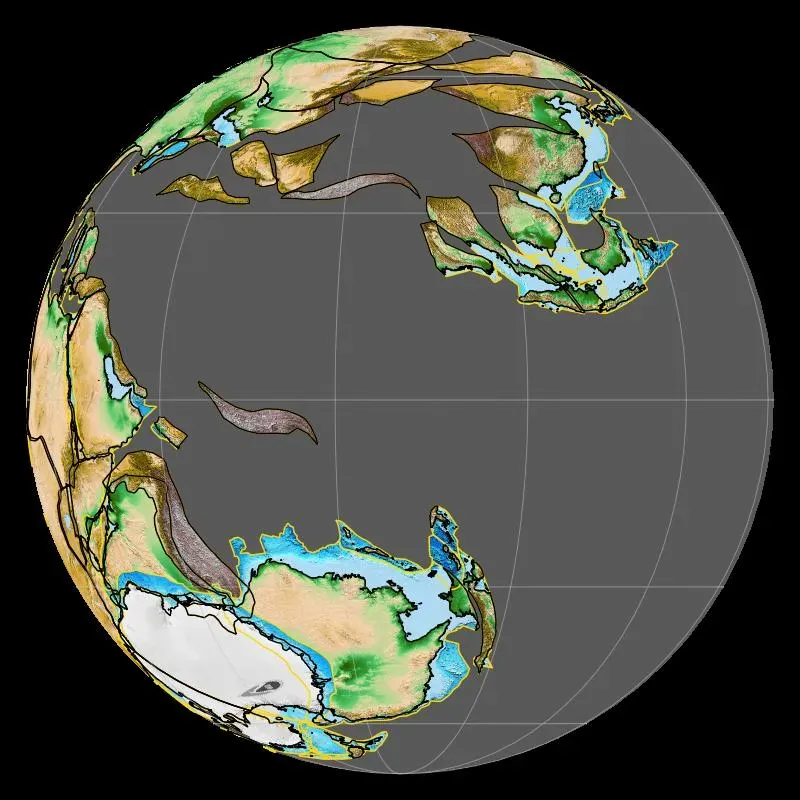
When you look back at the full arc of dinosaur evolution, one truth stands out above all others. The dinosaurs were never really in control of their own story. Earth’s shifting tectonic plates forged mountains, carved valleys, and both created and destroyed landmasses within an ever-changing assortment of oceans. All the while, various forms of life emerged, evolved, and faced extinction. The planet was always the author, and the dinosaurs were among its most dramatic characters.
Every volcanic eruption that cleared a landscape, every seaway that divided a continent, every flowering plant that rewrote the menu of life, all of it fed directly into the remarkable diversity that we still study and marvel at today. Dinosaurs are a group of reptiles that have lived on Earth for about 245 million years, and every single one of those years was shaped by a world in constant, breathtaking transformation. The real hidden wonder of ancient Earth is not just the fossils buried beneath your feet. It’s the extraordinary, planet-sized forces that decided what those creatures would become.
The next time you look at a museum skeleton or see a documentary about T. rex, ask yourself: what kind of world had to exist for that animal to become possible? You might find the answer is far more dramatic than the dinosaur itself. What would you have guessed was the single biggest force that shaped them?