You probably know T. rex. You’ve heard of Triceratops. You might even be able to sketch a rough Stegosaurus from memory. But here’s the thing – those famous faces represent only a tiny sliver of the staggering diversity that walked, crawled, burrowed, and sprinted across this planet for nearly 165 million years. The real dinosaur story is far stranger, weirder, and honestly more fascinating than any blockbuster movie has dared to show you.
Paleontology keeps rewriting the rulebook, and every year new fossils shake up what we thought we knew. Some of the most remarkable creatures ever to exist have been quietly sitting in museum basements or half-forgotten in academic journals, overshadowed by their more glamorous cousins. These are the dinosaurs you deserve to know about. Let’s dive in.
1. Nigersaurus: The Vacuum Cleaner of the Cretaceous
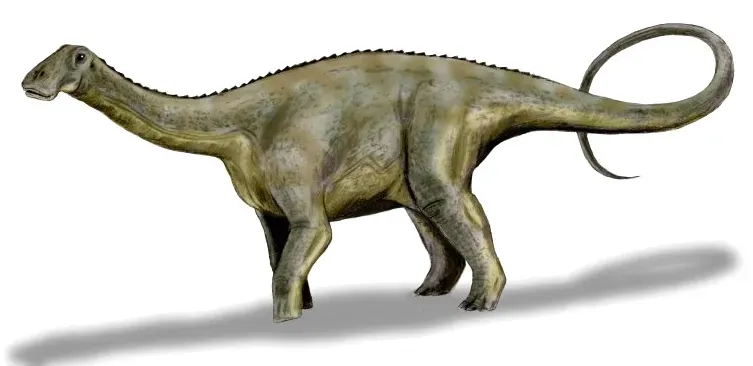
Imagine a sauropod dinosaur with a head that looks less like a noble prehistoric beast and more like a household appliance. That’s Nigersaurus for you – and honestly, it’s one of the most structurally bizarre creatures to ever graze a prehistoric floodplain. Nigersaurus lived during the middle Cretaceous period, about 115 to 105 million years ago, and was discovered in the Elrhaz Formation in an area called Gadoufaoua, in Niger.
It had a wide muzzle filled with more than 500 teeth, which were replaced at a rapid rate of around every 14 days. Think about that for a second – while you’re worrying about one tooth, Nigersaurus was casually cycling through an entire dental factory. The eyes of Nigersaurus were placed further towards the top of the skull than in most other sauropods, giving it an almost 360-degree visual field, which would have been critical for a vulnerable prey animal constantly on alert. A living, breathing lawnmower with eyes in the back of its head. Remarkable.
2. Amargasaurus: The Punk Rocker of Patagonia
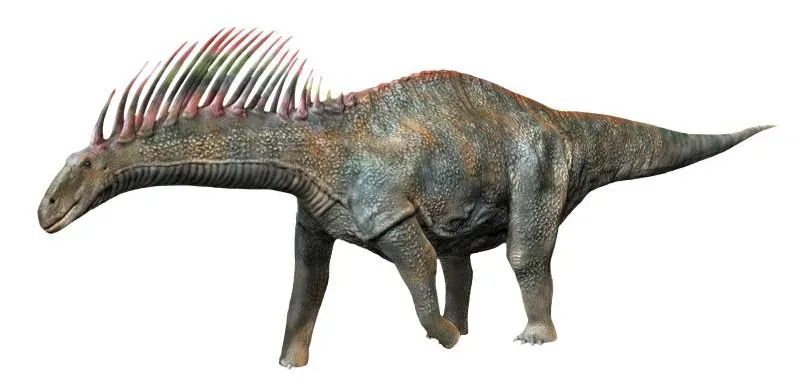
Most distinctively, Amargasaurus sported two parallel rows of tall spines down its neck and back, taller than in any other known sauropod. In life, these spines could have stuck out of the body as solitary structures that supported a keratinous sheath, or – in a hypothesis now more favored – they could have formed a scaffold supporting a skin sail. Scientists are still arguing about which explanation is correct, and honestly that debate makes it even more interesting.
Amargasaurus was small for a sauropod, measuring roughly 9 to 13 meters in length and weighing approximately 2.6 to 4 metric tons. Picture a long-necked dinosaur strutting around Early Cretaceous Argentina with what amounts to a natural mohawk running the full length of its spine. A herbivore, it shared its environment with at least three other sauropod genera, and probably fed at mid-height, with its snout habitually positioned only about 80 centimeters above the ground. Small, spiky, and full of personality – this is the dinosaur that should be on every band’s tour bus.
3. Carnotaurus: The Bull-Horned Speed Demon
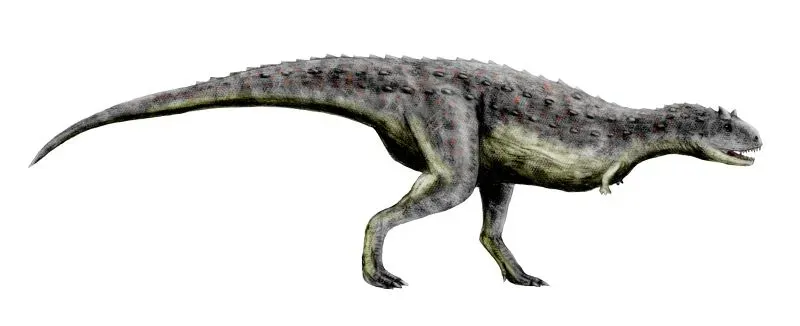
Carnotaurus is the only known carnivorous bipedal animal with a pair of horns on the frontal bone. Let that sink in. Not one horn, not a ridge, but actual thick bull-like horns sitting right above the eyes. Carnotaurus was a lightly built, bipedal predator, measuring roughly 7.5 to 8 meters in length and weighing between 1.3 and 2.1 metric tons. For comparison, that’s the rough weight of a large pickup truck charging at you on two legs.
As a theropod, Carnotaurus was highly specialized and distinctive. It had two thick horns above the eyes, a unique feature unseen in all other carnivorous dinosaurs, and a very deep skull sitting on a muscular neck. Carnotaurus was further characterized by small, vestigial forelimbs and long, slender hind limbs. Carnotaurus was probably well adapted for running and was possibly one of the fastest large theropods. So you’ve got a horned, nearly armless sprinter hunting across ancient South America. It sounds like something a child invented, yet it was absolutely real.
4. Deinocheirus: The Monster Nobody Could Figure Out
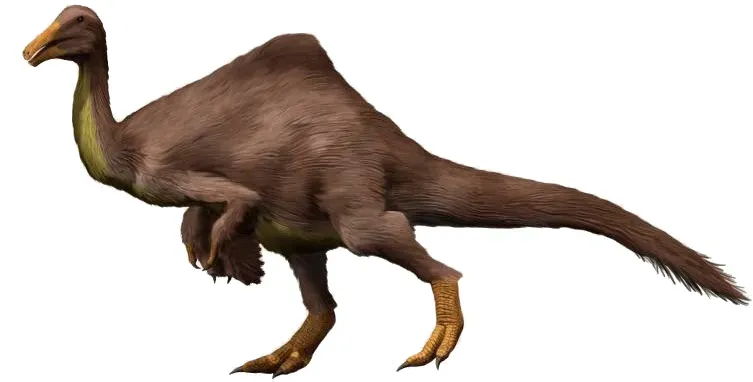
For decades, paleontologists knew Deinocheirus only from a single terrifying pair of arms stretching over two meters long. That was it. Nothing else. The mystery was maddening – those arms were enormous, clawed, and completely unmatched. When a complete specimen was finally found, the surprise was enormous: this dinosaur had a humped back, a duck-like bill, and long legs, and it likely fed on plants and fish in riverside habitats.
Known as the “terrible hand” due to its large, clawed forelimbs, Deinocheirus was an ornithomimosaur that roamed Mongolia during the Late Cretaceous period, around 70 million years ago, and grew approximately 11 meters in length. With a humped back similar to a camel’s and a duck-like beak, Deinocheirus was built for a specialized lifestyle. It’s hard to say for sure, but there may be no other dinosaur in history that rewrote expectations quite so dramatically upon its full discovery. It’s a camel, a duck, and a giant sloth rolled into one prehistoric package.
5. Therizinosaurus: Freddy Krueger’s Prehistoric Cousin
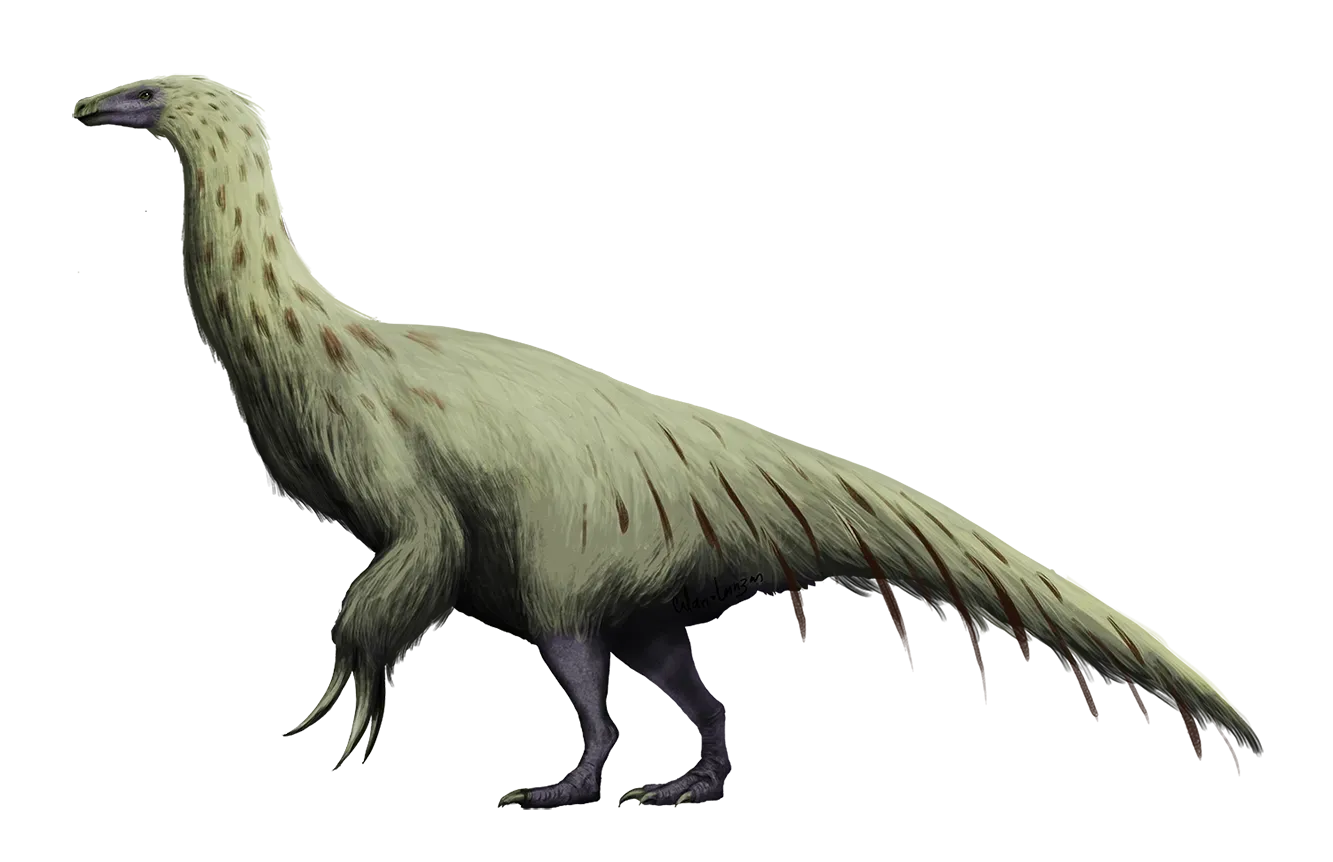
The Therizinosaurus was a herbivore, with its unique design of enormous claws intended primarily for gathering vegetation, while also potentially scaring away predators. Examples of these dinosaurs could grow up to sixteen feet tall and over thirty feet long, meaning no tall trees were safe from its reach. Here’s what makes this so delightfully ironic – those nightmare claws, which look designed to tear anything apart, belonged to a peaceful plant-eater.
Imagine a dinosaur with claws longer than a baseball bat, standing up to 10 meters long. Its pot-bellied stance and long neck made it one of the weirdest-looking dinosaurs ever. This theropod had enormous, curved claws that may have been used for stripping vegetation or defense. Despite its fearsome appearance, it likely fed on leaves and shrubs. It’s the prehistoric equivalent of a bear-sized panda with kitchen knives for fingers – absurd, impressive, and oddly charming all at once.
6. Oryctodromeus: The Dinosaur That Dug Its Own Home
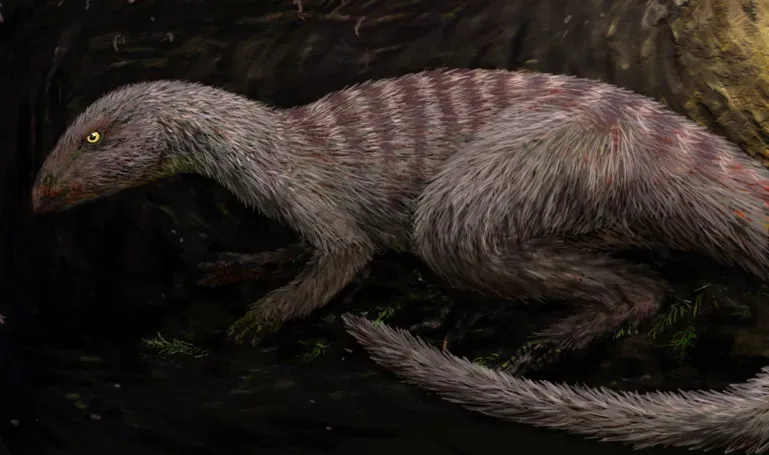
Oryctodromeus was discovered in 2007 after paleontologists unearthed a fossilized burrow in southwestern Montana that contained the remains of three partial skeletons from an adult and two juveniles. The burrow closely matched the proportions of the adult specimen, suggesting it had dug out its own home rather than squatted in a burrow made by another animal. The idea of a dinosaur building and living in a burrow feels almost impossible – but there’s the proof.
A closer examination of the burrow revealed a pronounced S-bend, a feature some think Oryctodromeus may have deliberately crafted to make it harder for predators to enter its home. Oryctodromeus is the first and so far only non-avian dinosaur that shows convincing evidence of burrowing behavior. It’s not beyond the realms of possibility that there may have been more burrowing dinosaurs, and that some may have even weathered the initial fallout from the asteroid inside their burrows, only to ultimately face extinction years later. A dinosaur architect. Think about that.
7. Miragaia: The Stegosaur With an Absurdly Long Neck
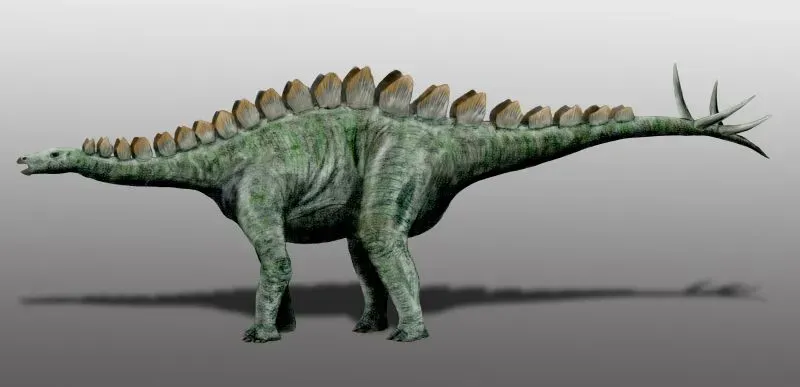
Stegosaurs aren’t exactly known for their long necks, so when scientists discovered remains of an unusual long-necked species in 150-million-year-old rocks from Portugal back in 1999, they were left scratching their heads. In total, Miragaia has 17 neck vertebrae, which is more than most sauropods – a group of dinosaurs renowned for their incredibly long necks. A stegosaur out-necking a sauropod is the kind of fact that makes you question everything you learned in elementary school.
This discovery went against the long-held view that stegosaurs were solely low-browsing herbivores with short necks, suggesting that some were capable of reaching leaves from the tops of tall shrubs and trees. Miragaia, like its cousin Stegosaurus, is also covered in plates and spikes. While it may be half the size of its more recognizable relative, it’s arguably spikier and has even longer tail spines. More spikes, a longer neck, and a smaller body. Miragaia is the overachiever of the stegosaur family.
8. Mamenchisaurus: The Dinosaur That Was Mostly Neck
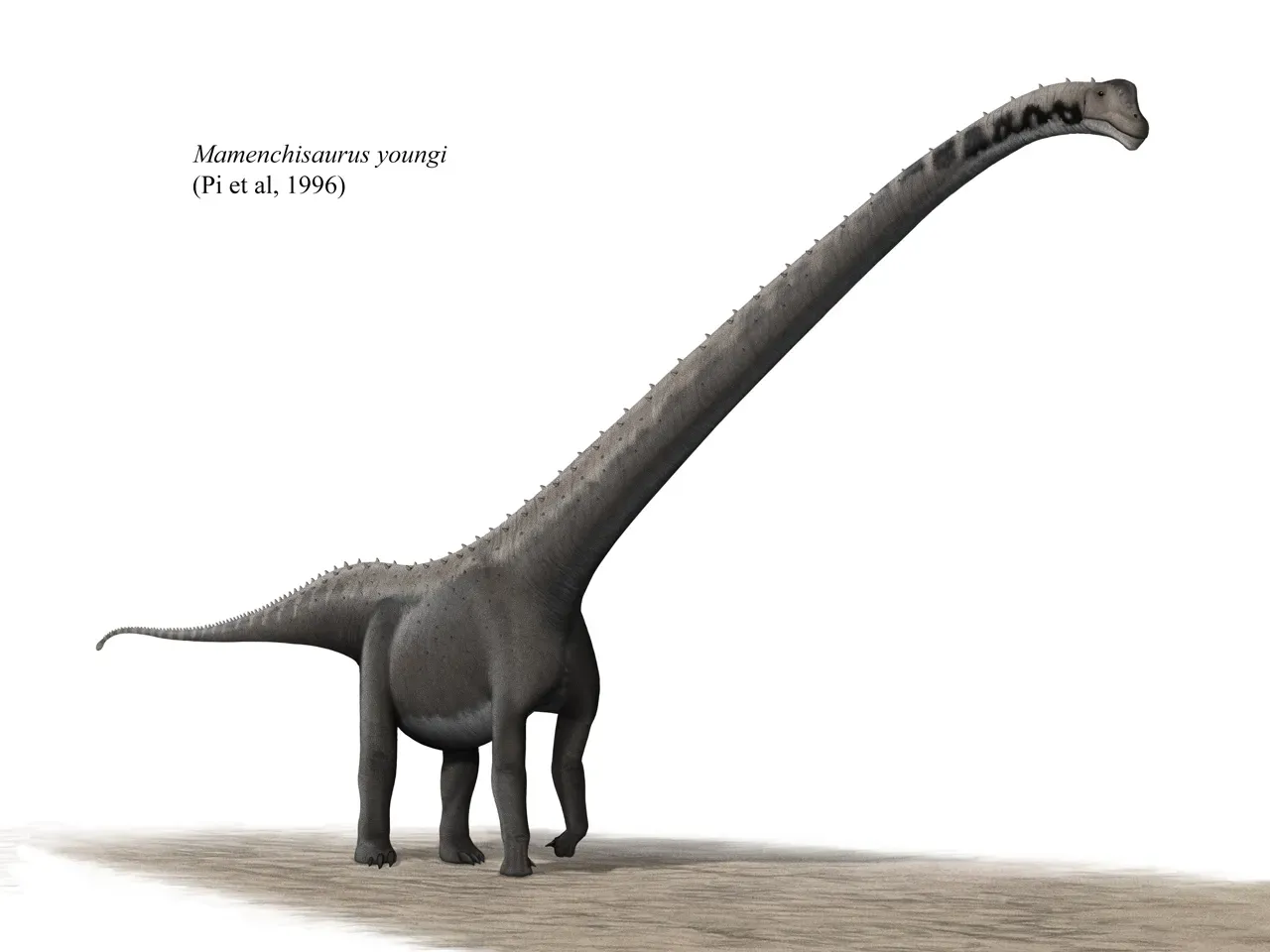
Mamenchisaurus stood out among Late Jurassic sauropods primarily for its extraordinary neck, which was nearly half its total body length. It inhabited what is now China’s Sichuan Province approximately 159 to 150 million years ago. Approximately 20 meters long and weighing up to 27 tons, Mamenchisaurus is one of the largest dinosaurs ever discovered. To put that in context, its neck alone could have been around 9 to 12 meters long – roughly the length of a city bus.
This giant sauropod’s elongated and pneumatic cervical vertebrae featured air sacs that lightened its skeletal structure. Without those clever air pockets, the neck would have been impossibly heavy to lift. While many people believe that long-necked animals, including giraffes, evolved to obtain food from taller trees, some paleontologists suggest Mamenchisaurus’s extraordinarily long neck may have originated partly from mate selection. Nature’s most extreme architectural experiment – and it worked for millions of years.
9. Halszkaraptor: Part Bird, Part Crocodile, Entirely Confusing
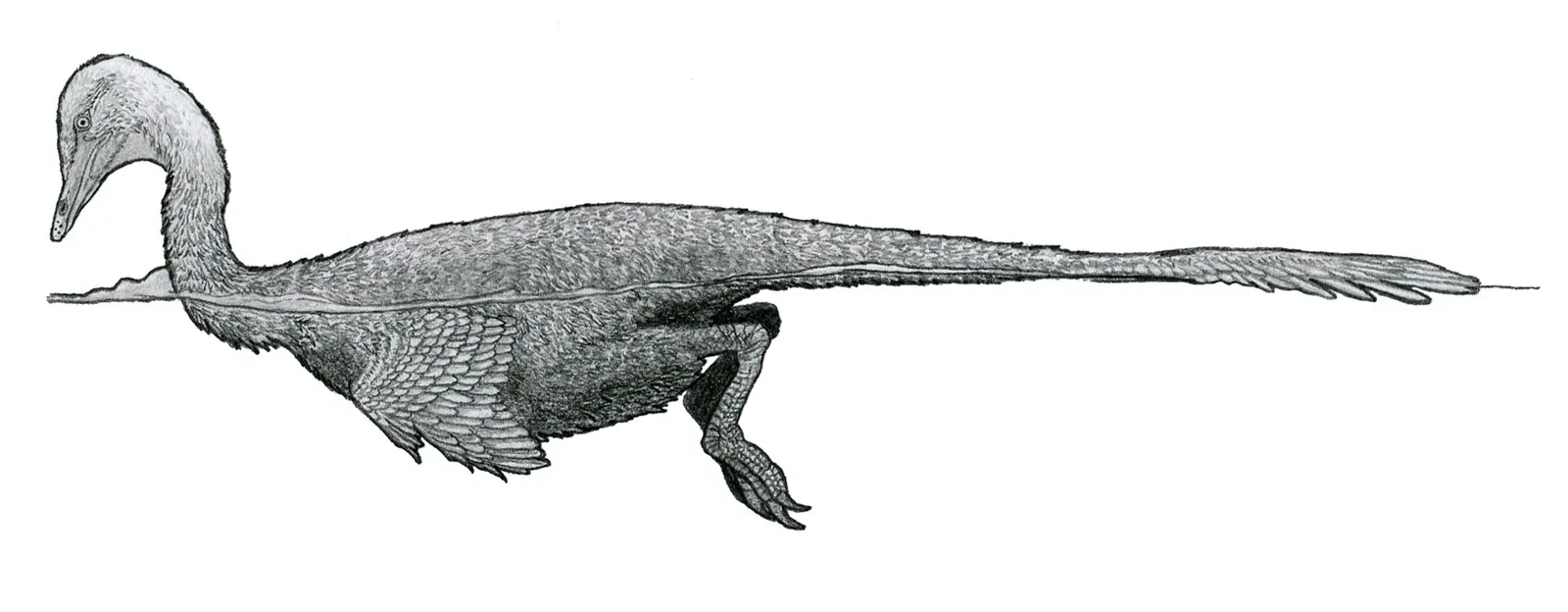
The Halszkaraptor, discovered in Mongolia, had a swan-like neck and semi-aquatic adaptations. This remarkable dinosaur, part bird and part crocodile in appearance, broadens our perspective on the variety of life during the Mesozoic era. It’s the kind of creature that makes even experienced paleontologists do a double-take, because nothing about its combination of features follows any expected pattern.
With its unexpected combination of traits, the Halszkaraptor stands as a testament to the extraordinary diversity of dinosaur adaptations. Think about it this way: if you asked someone to design a dinosaur that lived in water, hunted like a bird, and moved somewhat like a crocodile, they’d think you were making it up. Yet Halszkaraptor existed, swam, and thrived. Lesser-known dinosaur species like this one often exhibit unique physical features that fundamentally challenge our understanding of these ancient creatures. And that’s exactly why it deserves far more attention than it gets.
10. Haolong dongi: The Dinosaur With Hollow Porcupine Spikes
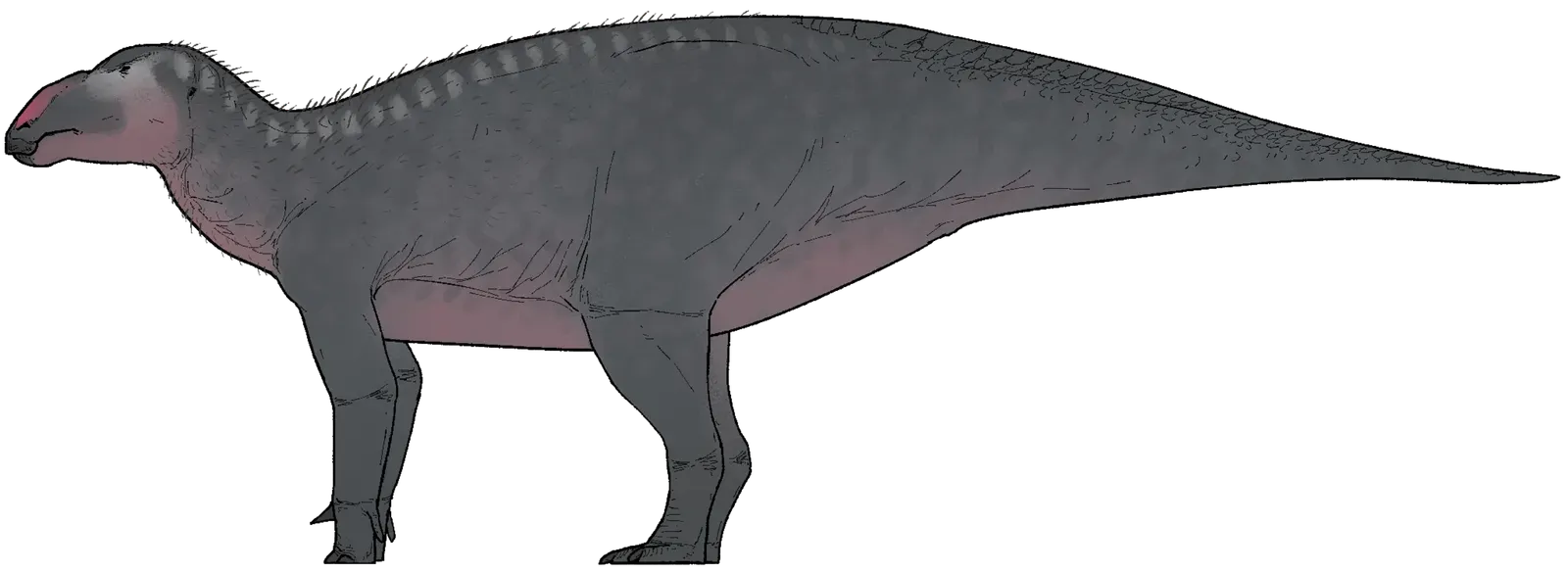
A 125-million-year-old dinosaur just rewrote what we thought we knew about prehistoric life. Scientists in China uncovered an exceptionally preserved juvenile iguanodontian with fossilized skin so detailed that individual cells are still visible. Even more astonishing, the plant-eating dinosaur was covered in hollow, porcupine-like spikes – structures never before documented in any dinosaur. This discovery, revealed in early 2026, is genuinely one of the most exciting paleontological finds in recent memory.
These spikes, described as cutaneous because they originate in the skin, covered much of the dinosaur’s body. Unlike horns or bony plates, they were not solid extensions of bone. Instead, they were hollow structures – a feature that has never previously been observed in dinosaurs. The hollow spikes may have served as a defensive adaptation, functioning in a way similar to the quills of a porcupine by discouraging predators from attacking. A porcupine the size of a car. Nature was clearly feeling adventurous 125 million years ago.
11. Pegomastax: The Tiny Fanged Herbivore Nobody Talks About
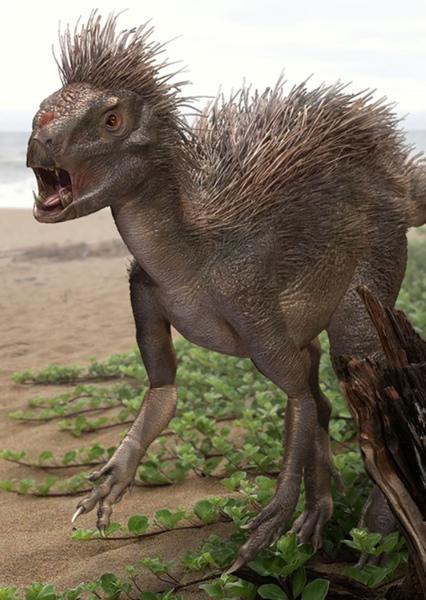
Pegomastax was a herbivore just 60 centimeters long and covered in quills. Described as a cross between a parrot and a porcupine, it had a beak and teeth which sharpened themselves against each other. Let’s be real – a self-sharpening, quill-covered, fanged herbivore the size of a housecat is one of the most gloriously bizarre animals to ever exist on this planet. It sounds like a Halloween decoration someone created by accident.
Its quilled body covering and unusual dentition make it one of the oddest herbivores from the Jurassic. Its quills may have been brightly colored to warn predators to stay away. So imagine a tiny, brilliantly colored, porcupine-parrot creature strutting through Jurassic vegetation with absolute confidence – because it had the quills, the bite, and apparently the attitude to back it up. Pegomastax is living proof that you don’t need to be enormous to be extraordinary. In a world dominated by giants, this little creature carved out its own remarkable niche, and that deserves a standing ovation.
Conclusion
The dinosaur kingdom was never just T. rex and Triceratops. It was a 165-million-year-long experiment in biological creativity – hollow spikes, self-sharpening teeth, burrowing habits, neck-first architecture, and bull horns on sprinting predators. Every one of the eleven creatures on this list challenges the idea that we already know what a dinosaur was supposed to look like.
What’s truly exciting is that we’re still finding new ones. As technology and scientific methods have advanced, the pace of dinosaur discoveries has only accelerated, with new species unearthed in remote regions of the world, each one adding to our understanding of the incredible diversity and adaptability of these ancient creatures. The more we dig, the stranger and more magnificent the story gets.
Honestly, the most astonishing dinosaur might still be buried somewhere out there, waiting. Which of these eleven surprised you most? Drop your thoughts in the comments – because if this list proves anything, it’s that the prehistoric world was wilder than any of us imagined.